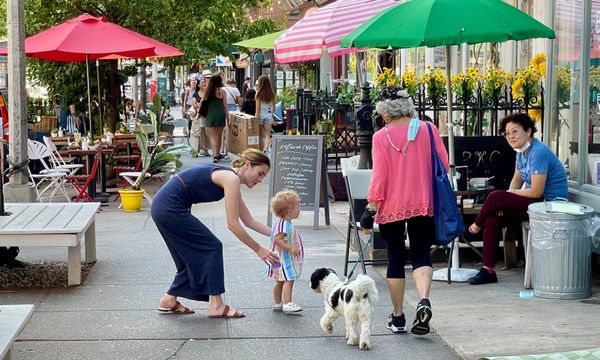

New York's beloved street dining sheds were taken down in response to a push by the mayor and city council president, despite the fact that they are beloved by communities and even supported by NYCDOT. They should be brought back.
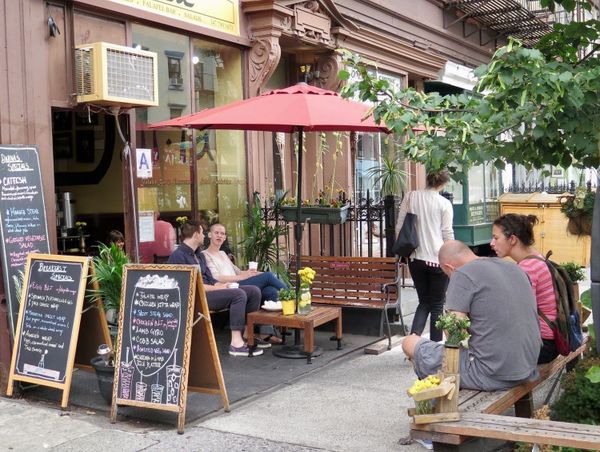
A wonderful new trend emerged in New York during the pandemic that transformed sidewalks into major social gathering hubs. “Dining sheds” and sidewalk seating areas popped up all over the city, expanding the areas where we can gather, connect, and enjoy life. These places became truly wonderful hangout spots for all members of the community and revitalized the streets of our city.
Unfortunately, these spaces have now been removed. Due to the new rules that put restrictions on street dining with the goal of returning space to cars and control to the government, the vast majority of dining sheds were torn down. This was a tragedy for our city because much more than outdoor dining was lost. We lost much of our social life, community connections, and a part of the city's soul.
Outdoor Dining - How It Started
Outdoor dining areas emerged in NYC around the time of the pandemic, as a response to the concerns that indoor dining was unsafe and therefore not allowed, which gravely impacted businesses across the city. What's more, the pandemic was taking a great toll on people's mental health because of how they were forced to isolate and be apart from each other. This separation was terrible for social connection, which elevated an already prevalent problem of loneliness into a full blown epidemic.
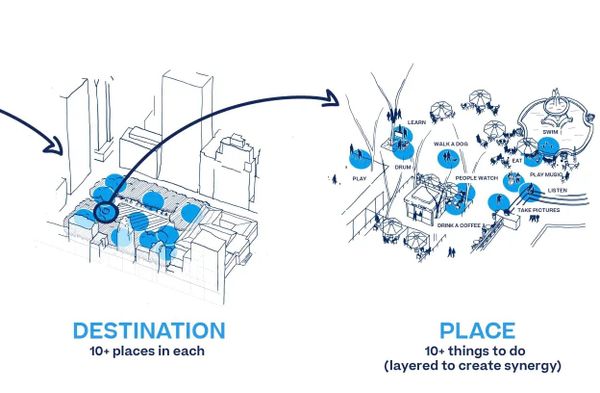
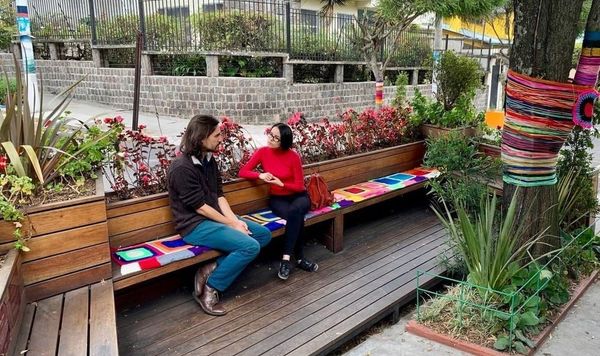
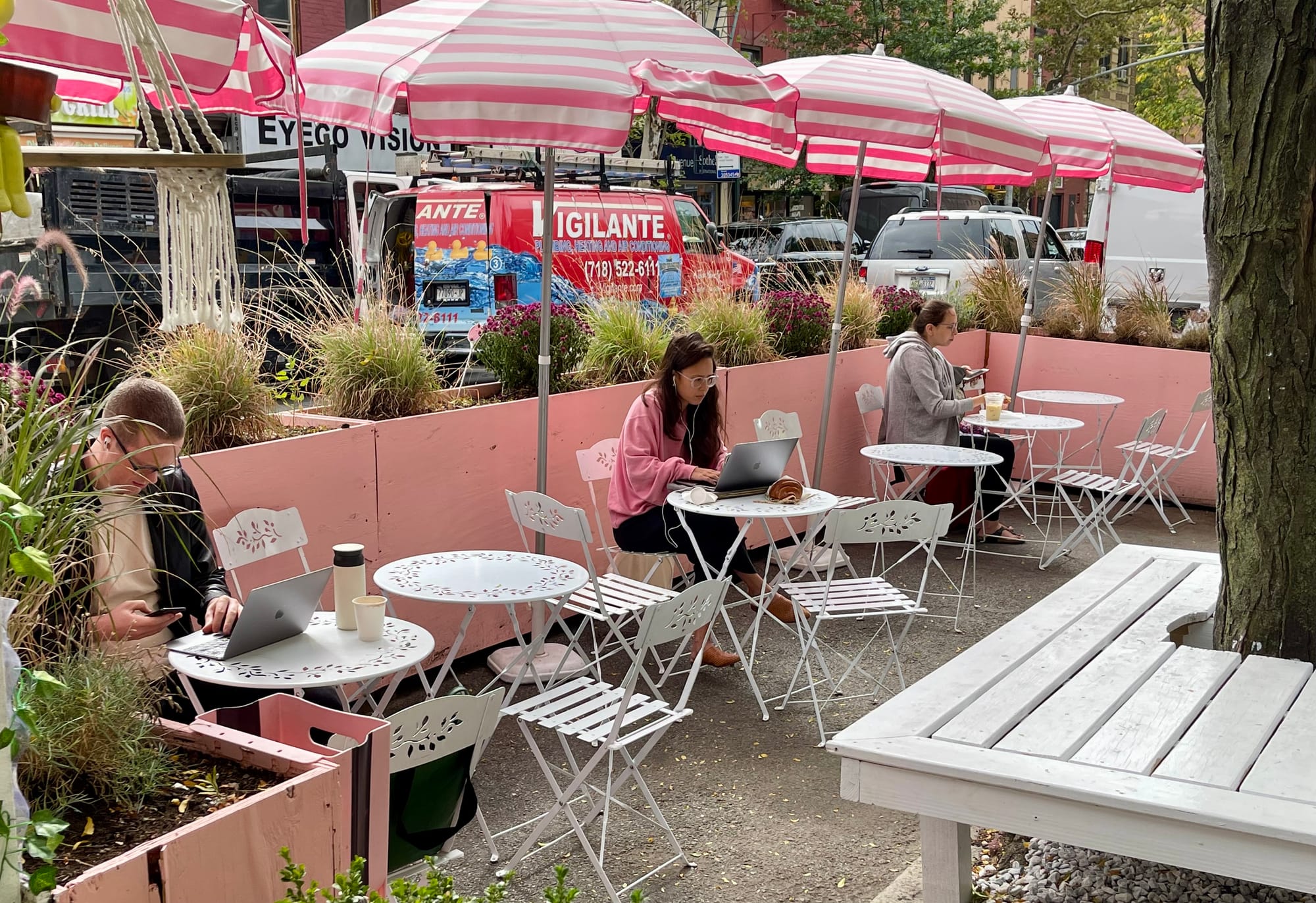
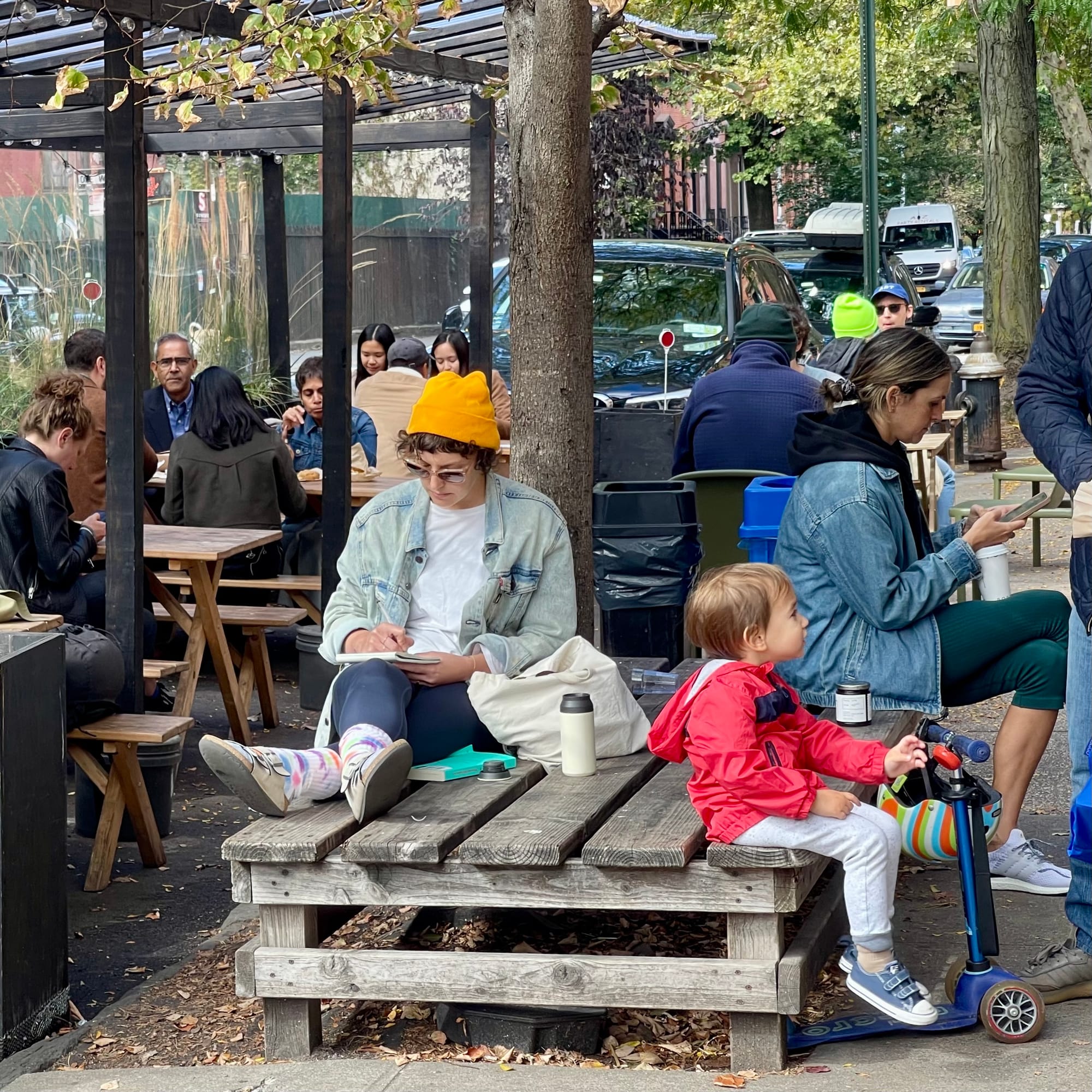
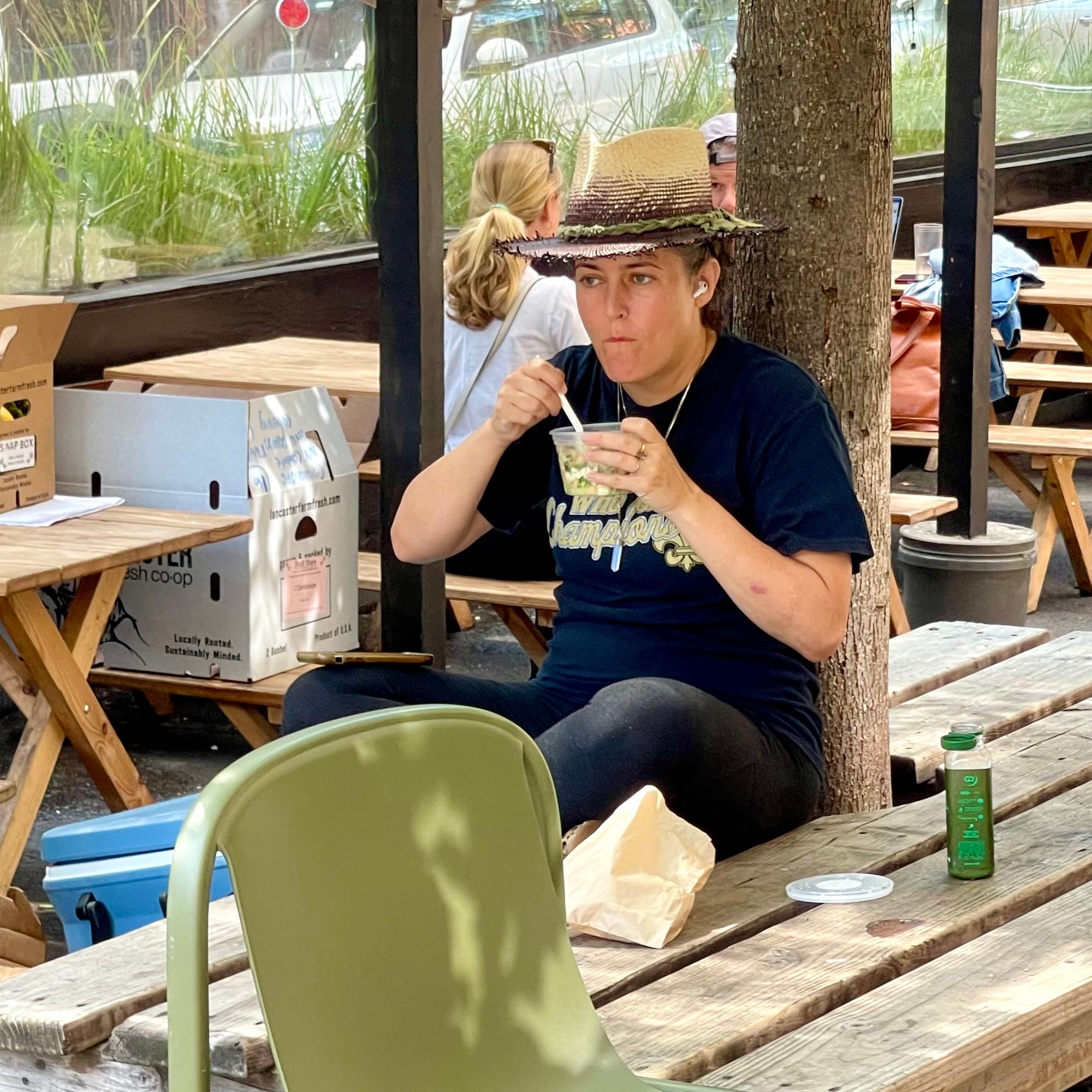
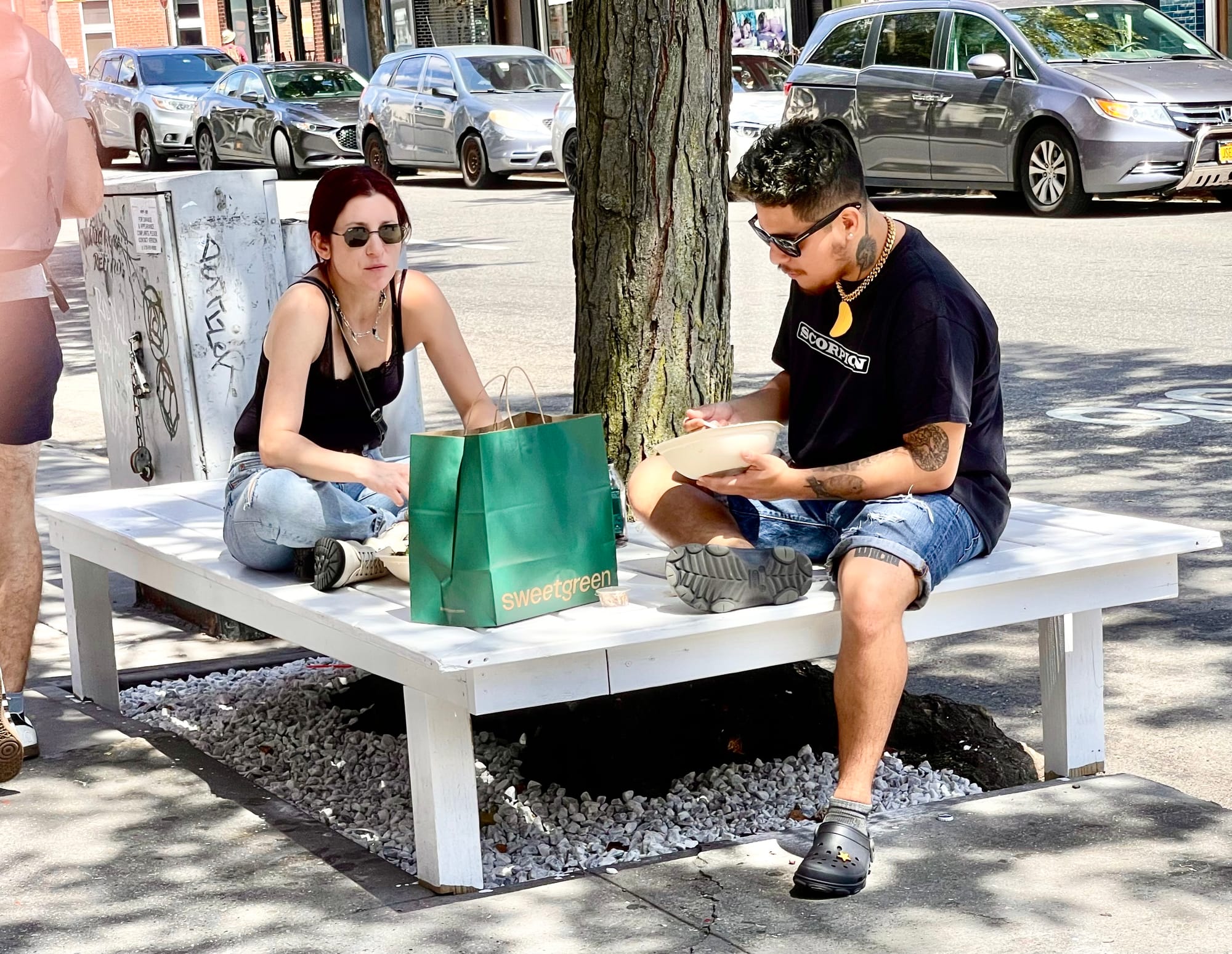
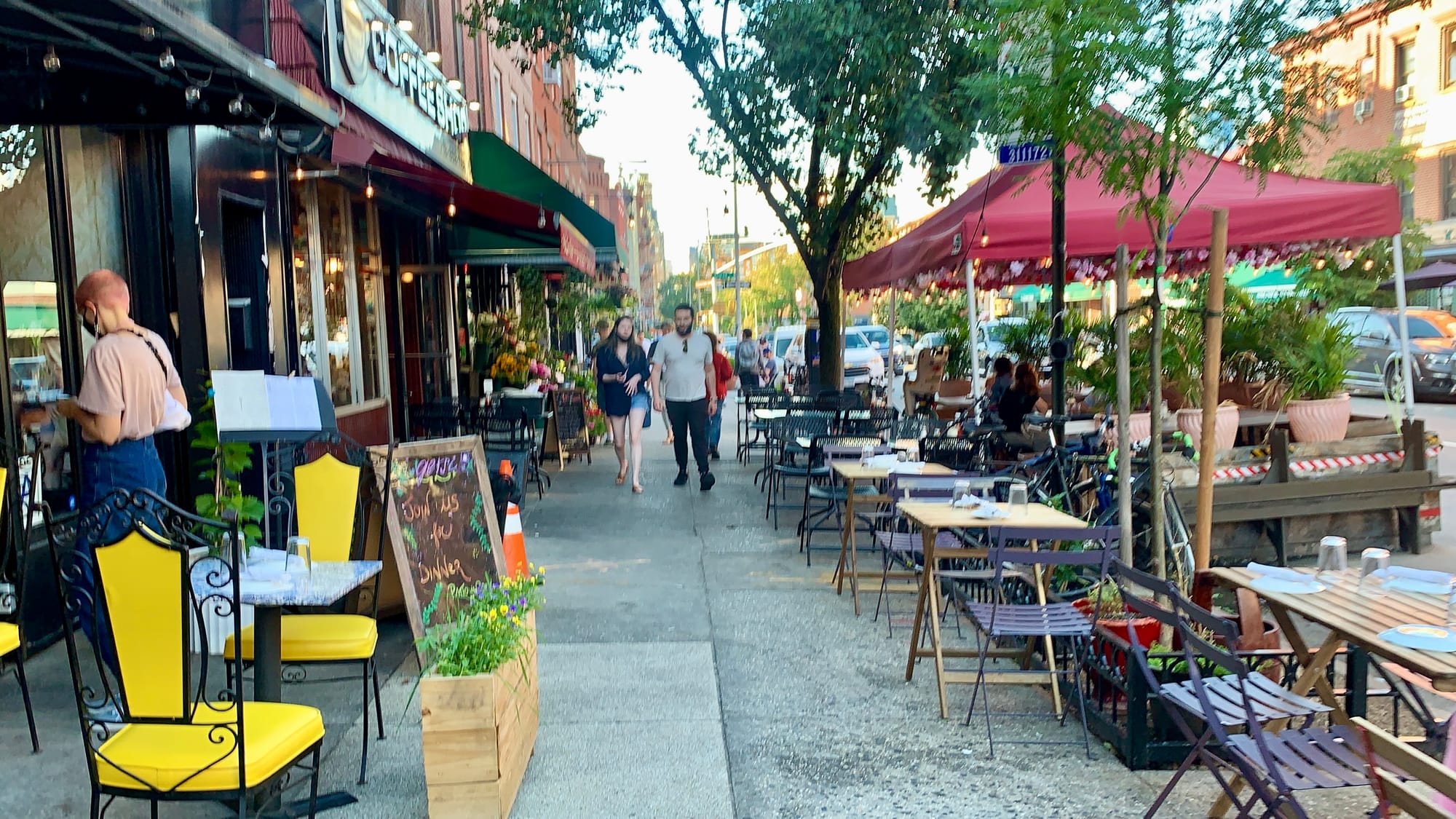
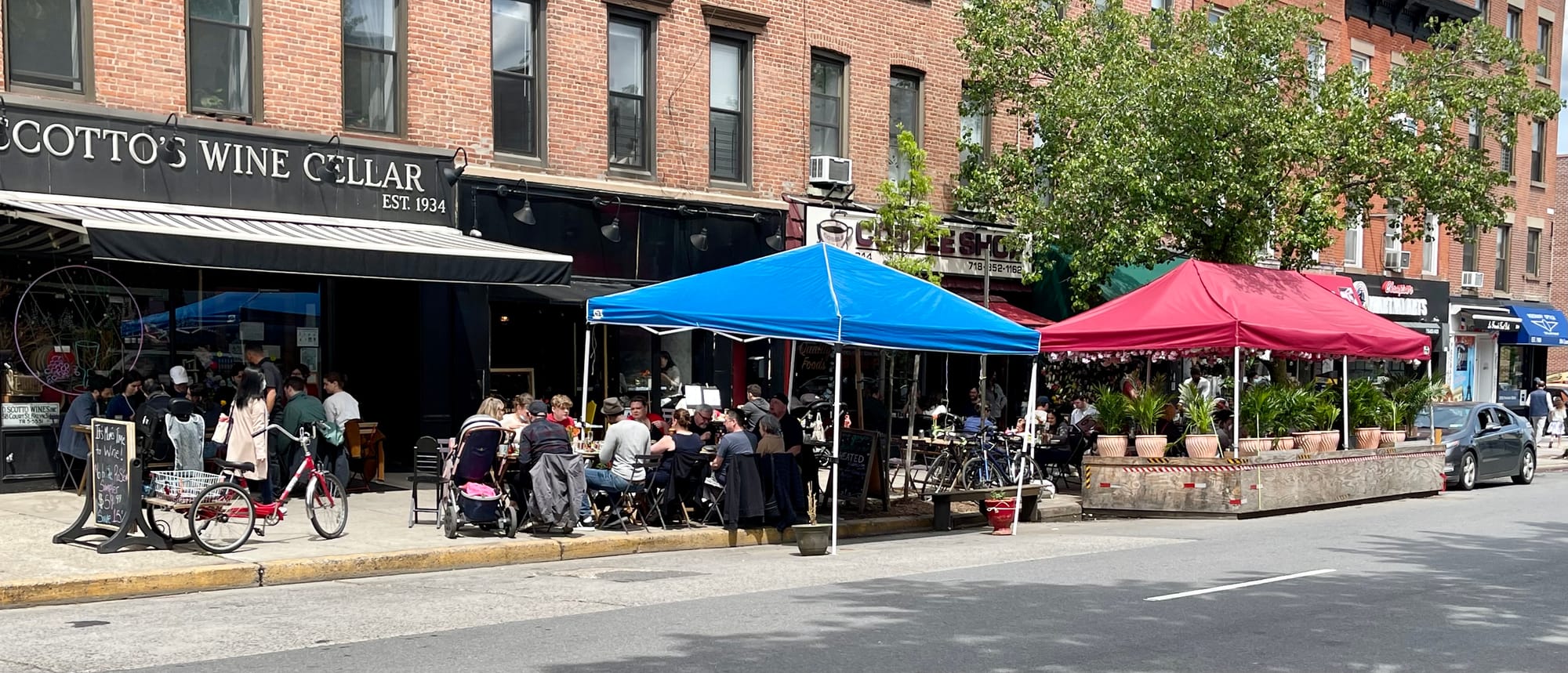
The outdoor dining areas that sprouted up were officially known as "dining sheds" or "streeteries." However, neither of those terms is quite right, because these places were more than a mere spot in which to eat – they transformed our sidewalks and streets into vibrant places that people wanted to be, places where friends and neighbors gathered to laugh, talk, and enjoy life. They became magnetic destinations because of how valued they were and how they brought people together. Each one had a unique story and together they showed how Placemaking can create a vibrant future. We like to call them social hubs.
The outdoor dining sheds were a brilliant solution
Since restaurants were allowed to pull their offerings outside in the fresh air where it was much safer to be, dining sheds turned into a savior of both commercial and social life in New York during the pandemic. This created a powerful moment of realization about how the shape of our cities – especially public spaces like sidewalks – impacts economic prosperity, health and wellbeing. This transformation gave us a new idea about how outdoor dining and social hubs in neighborhoods can lead to the creation of a new kind of "Main Street."
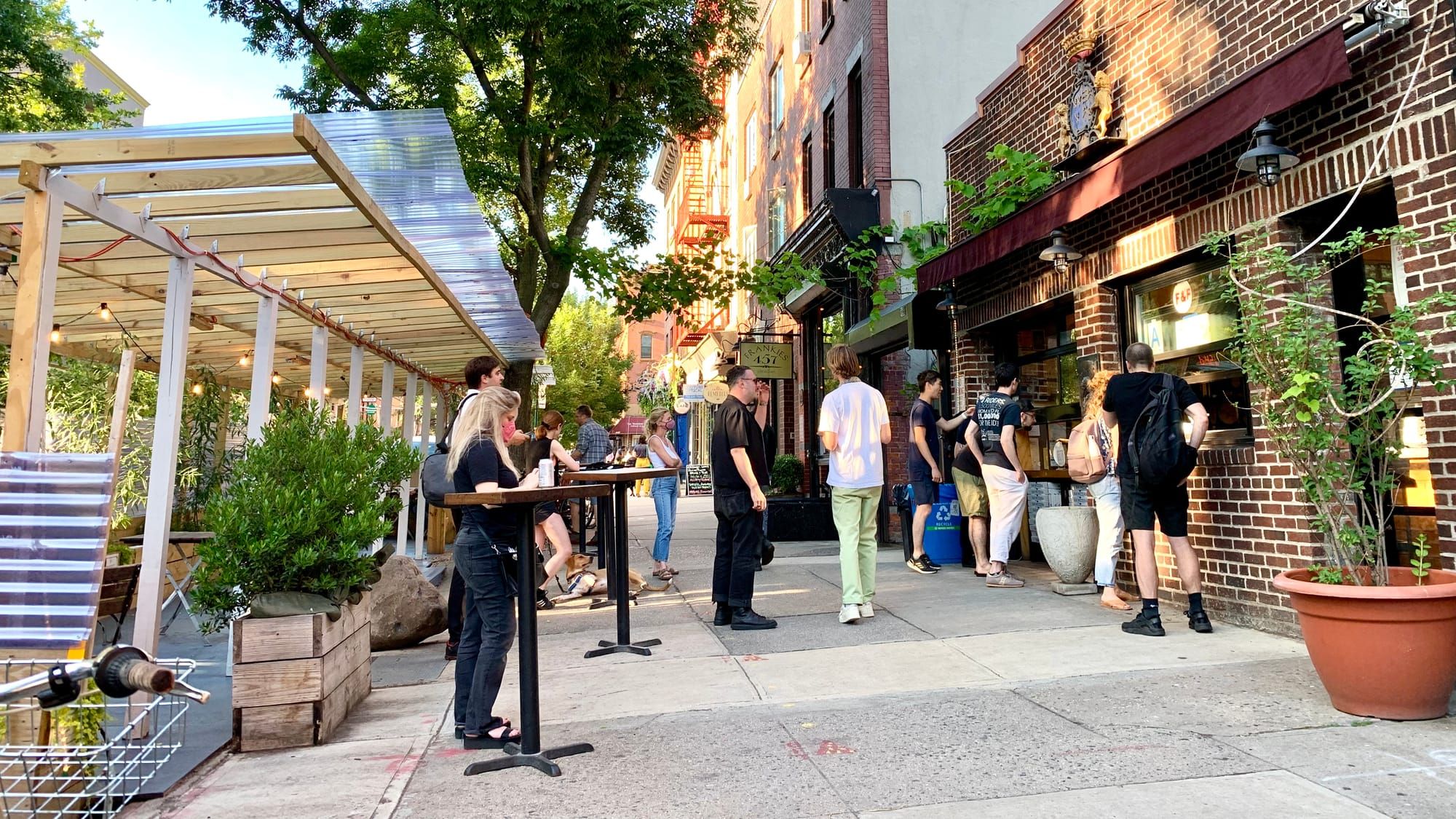
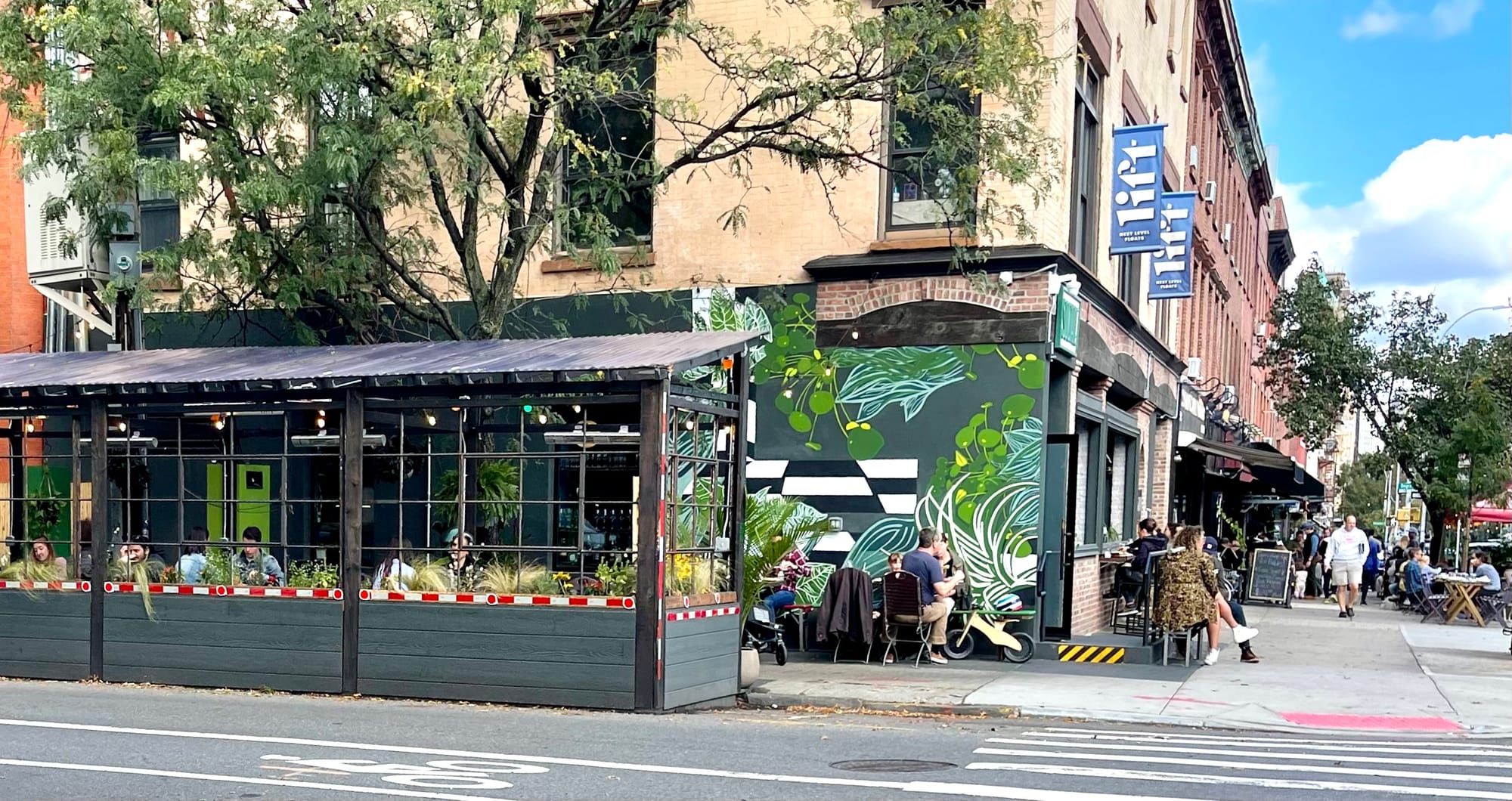
For example, before the pandemic, the area below was uninspired and lacking charm. With the boom of outdoor dining during Covid, it was transformed into a vibrant spot for dining and hanging out. It became a Main Street in the traditional sense of the word – a backbone of commercial and community life and a place neighbors gathered to connect with each other.
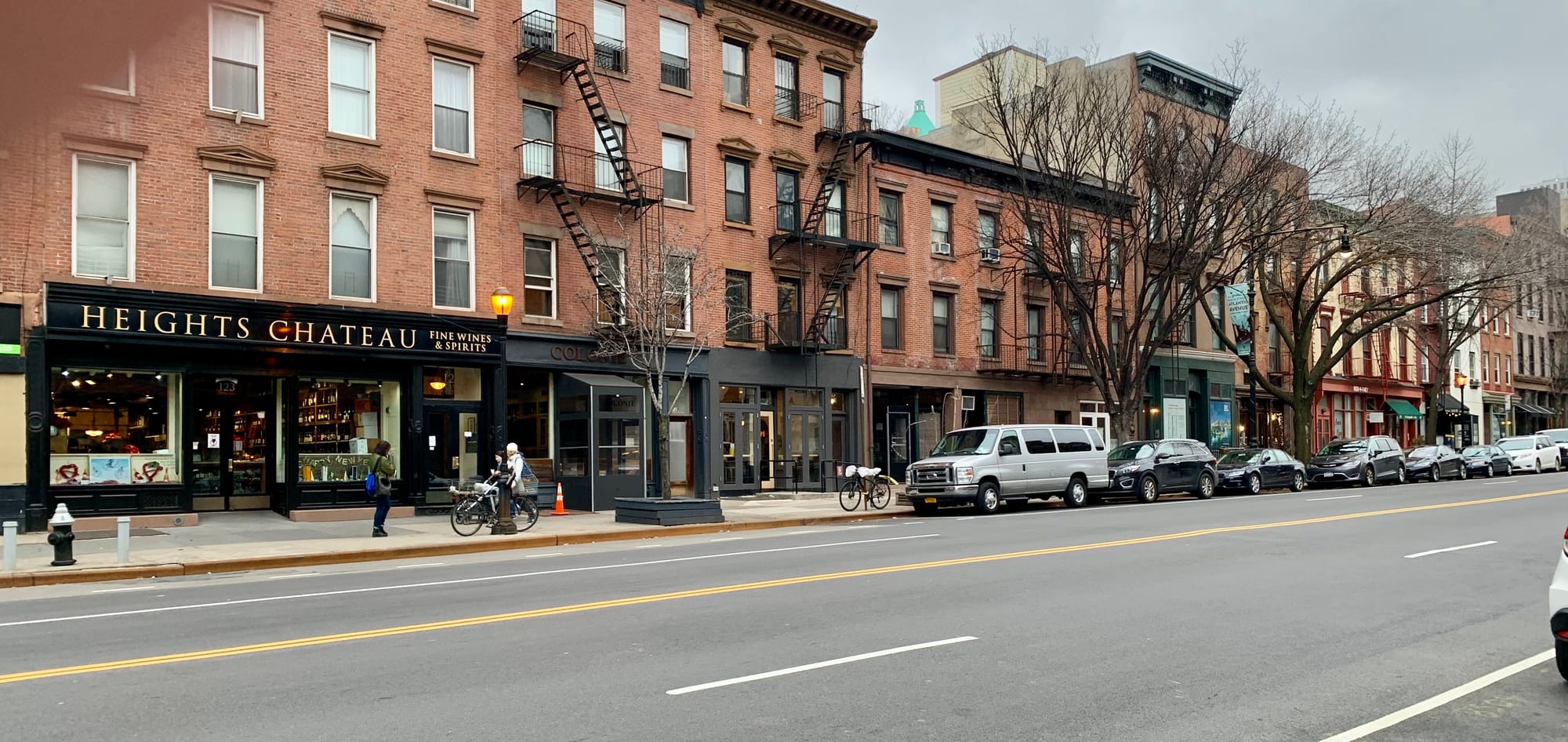
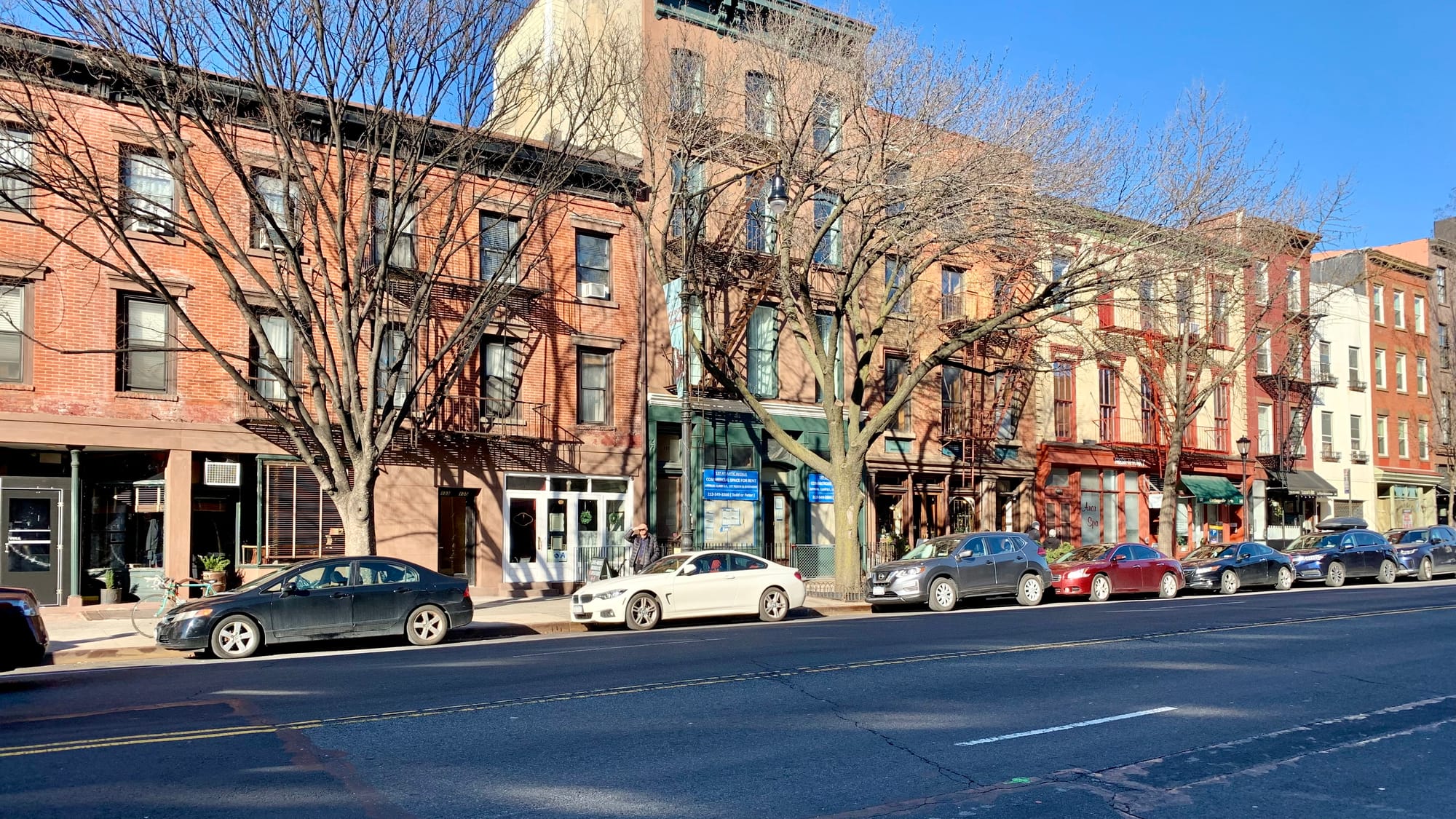
Atlantic Ave - Jan 2020
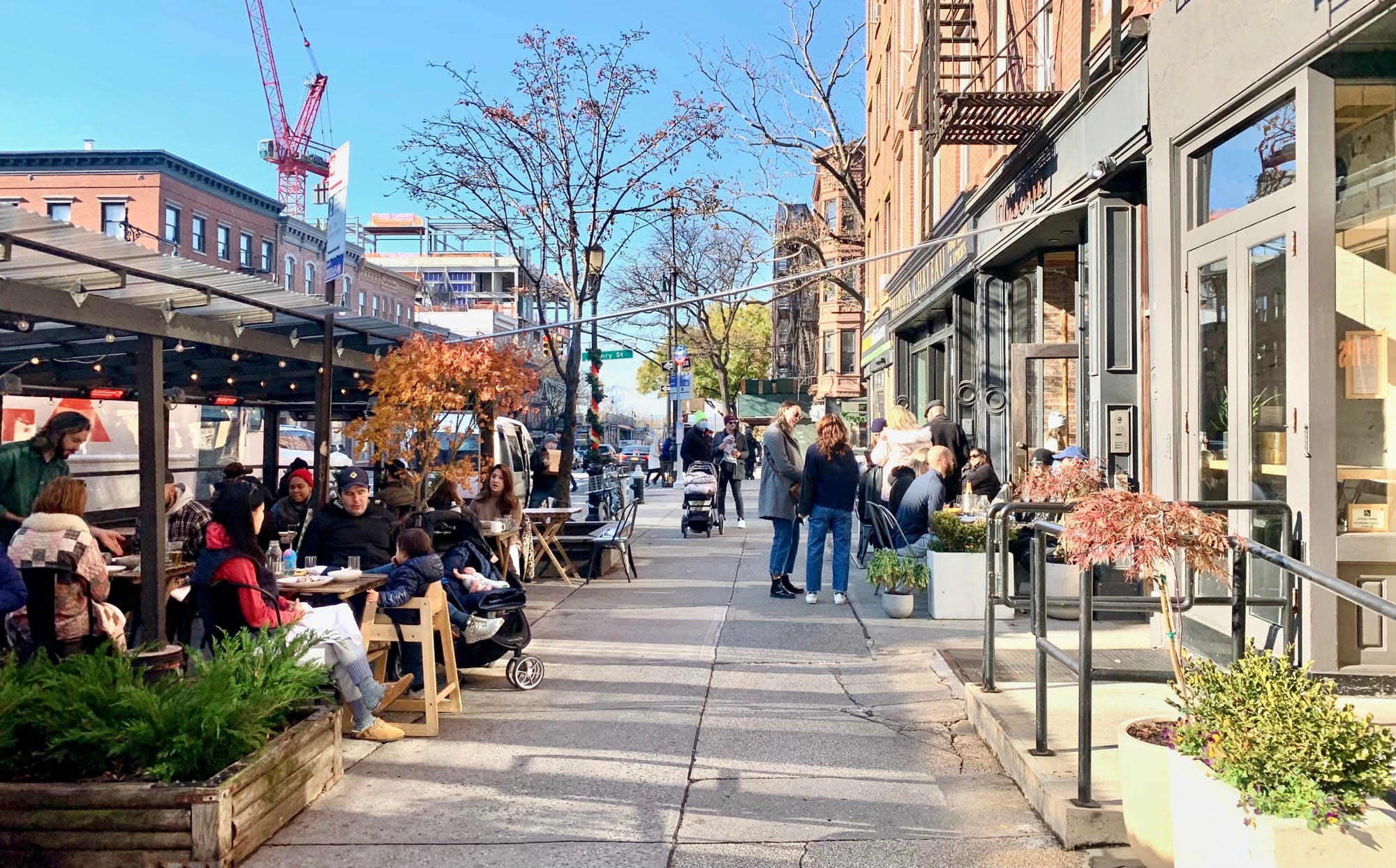
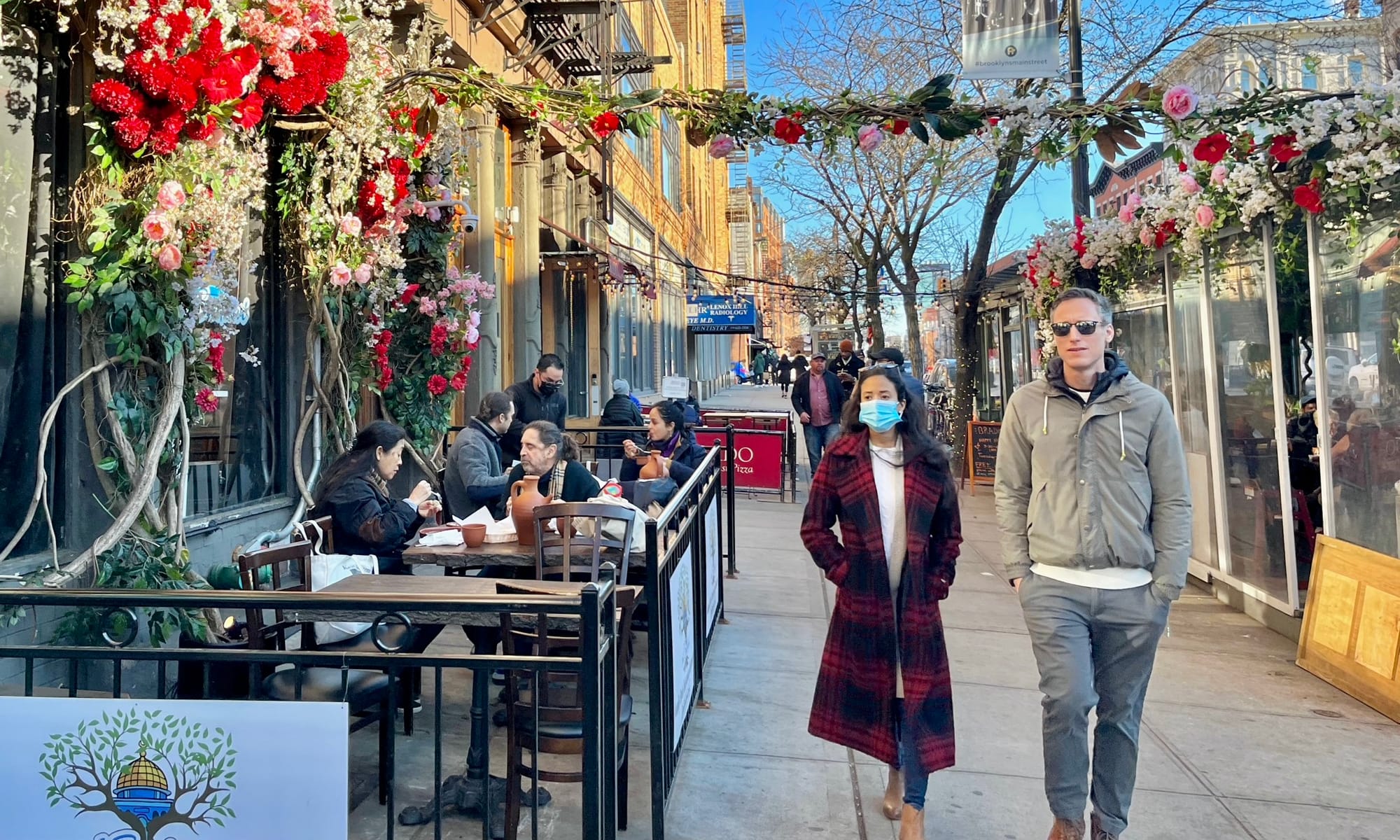
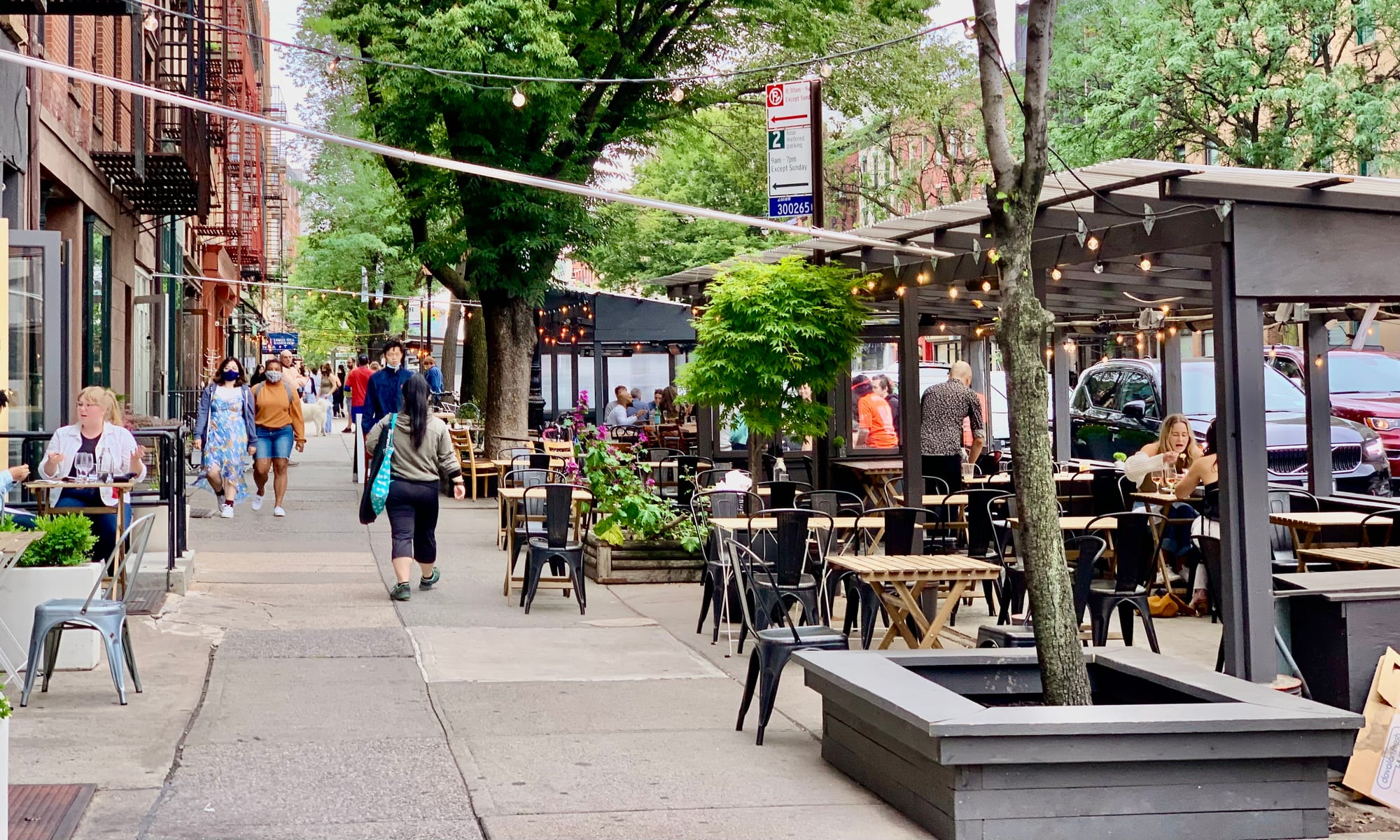
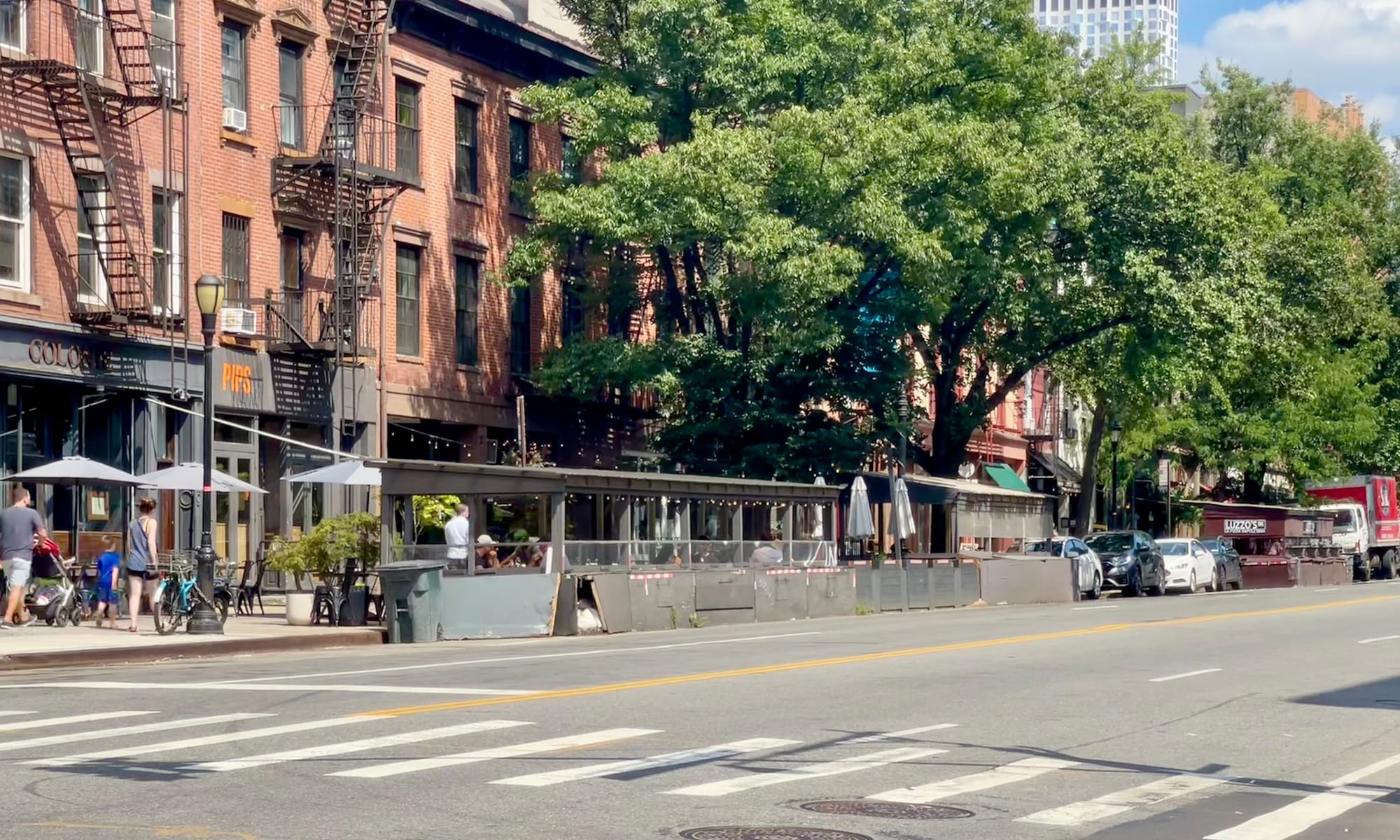
Covid era activations
What the sheds gave us and what we have lost
Despite the fact that New York's dining became a powerful catalyst for social hubs and a resurgence of community life, new regulations led to them being destroyed. A vocal minority pushed back against them, stuck on how things used to be and failing to realize that it hasn't been great for quite some time. They claimed dining sheds took up parking spots, attracted rats (we'd argue that the bags of trash on the street did that) and grasped at straws for arguments to get rid of them despite how popular they were and how much they improved our previously car-dominated streets.
To pull the dining sheds back under government control, an extensive set of new rules was passed that stripped many of these places of their charm and uniqueness and that allowed them to stay open for only half the year. These restrictive rules led to many dining sheds being completely removed and have put a stop to the progress we had made in revitalizing our streets. The new and exciting practice of owners making their businesses better through improvisation, initiative, and creativity – and in doing so improving their communities – largely ended in the name of more on-street parking spaces.
Let's look at some examples.
Poppy's
Poppy’s, a Brooklyn-based restaurant expanded its seating area into the street to create a wonderful outdoor eating and socializing environment that everyone enjoyed. Now, that lovely dining shed is a parking spot for ONE CAR...
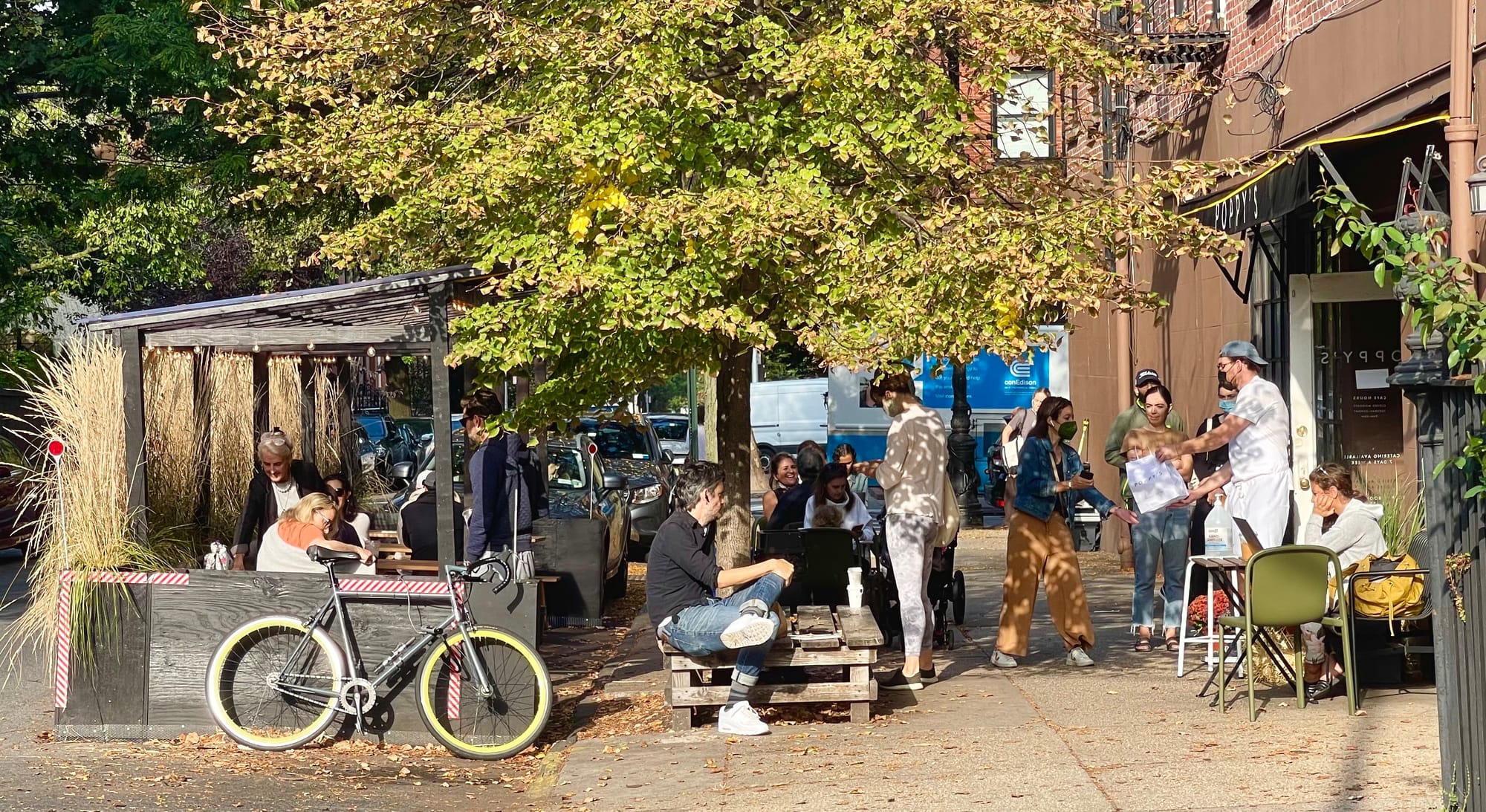
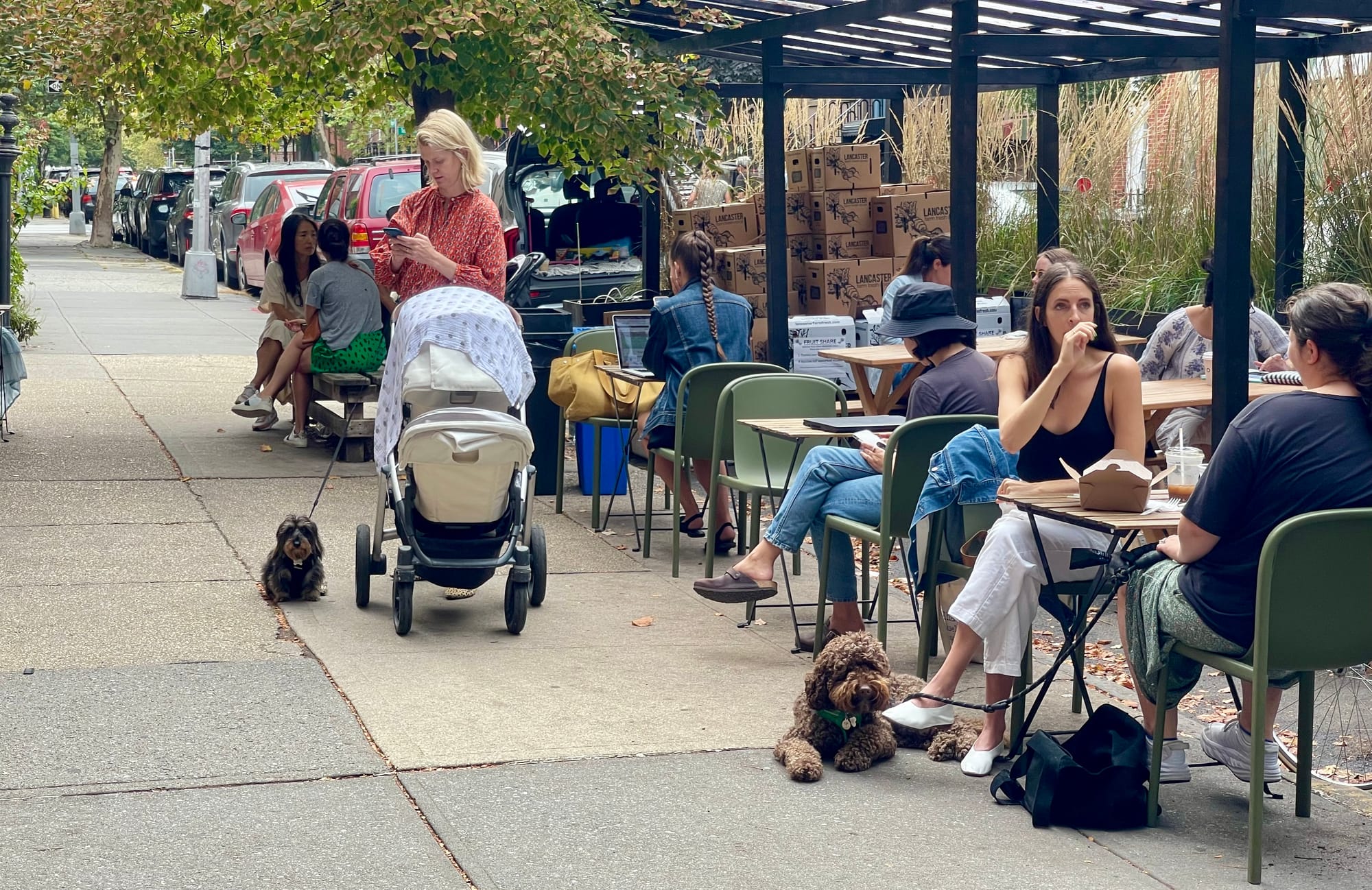
Before - dining sheds
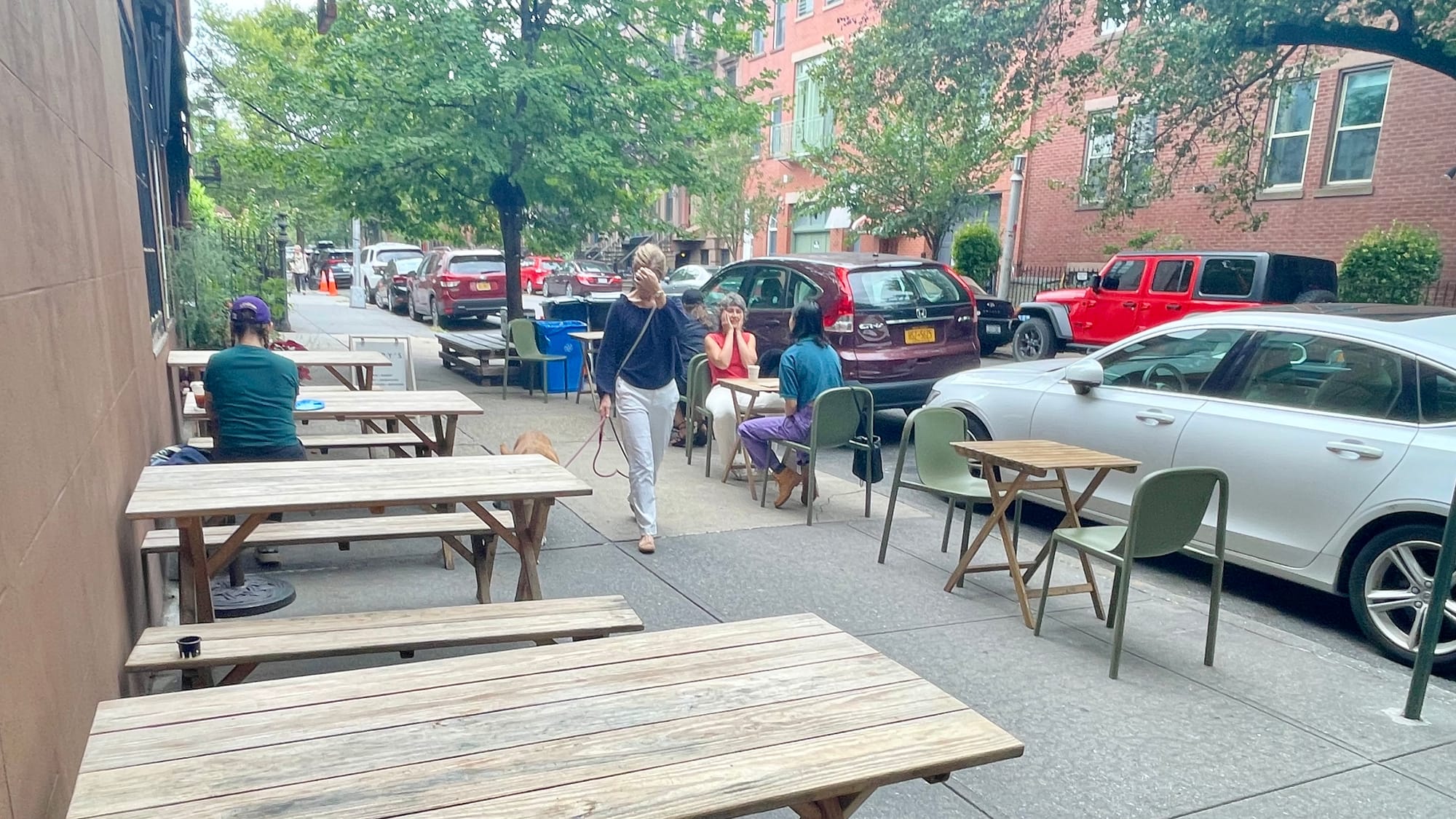
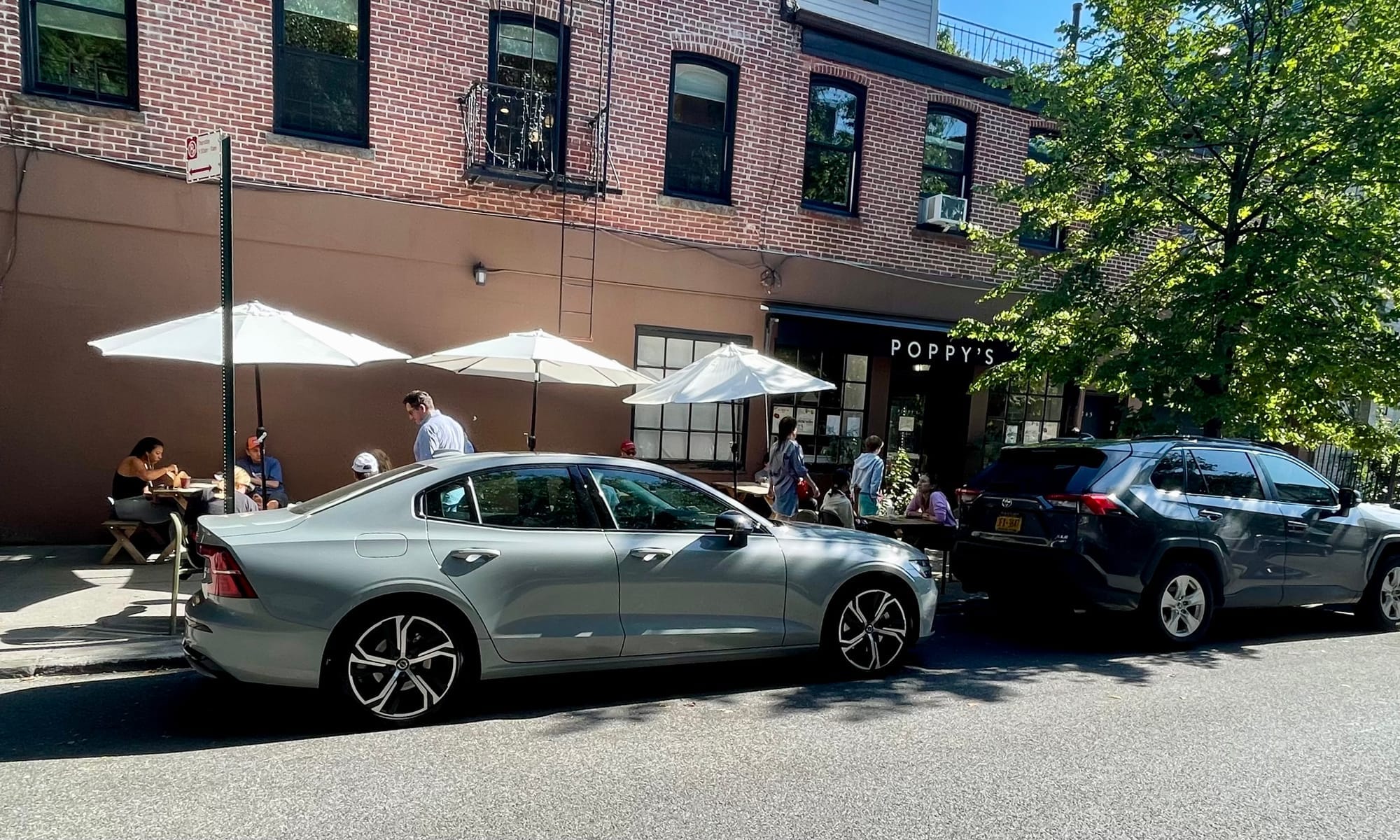
After - parking spot
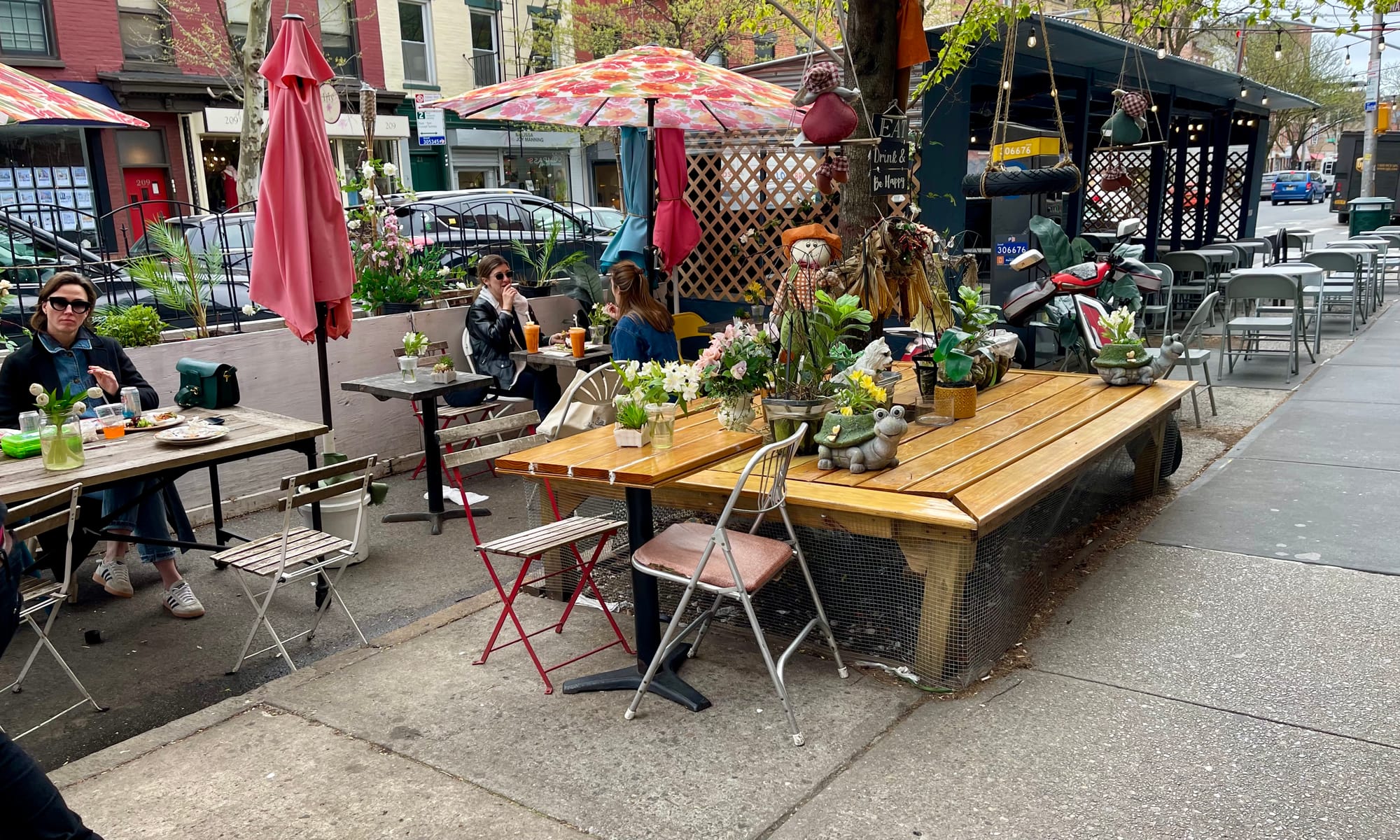
Darna
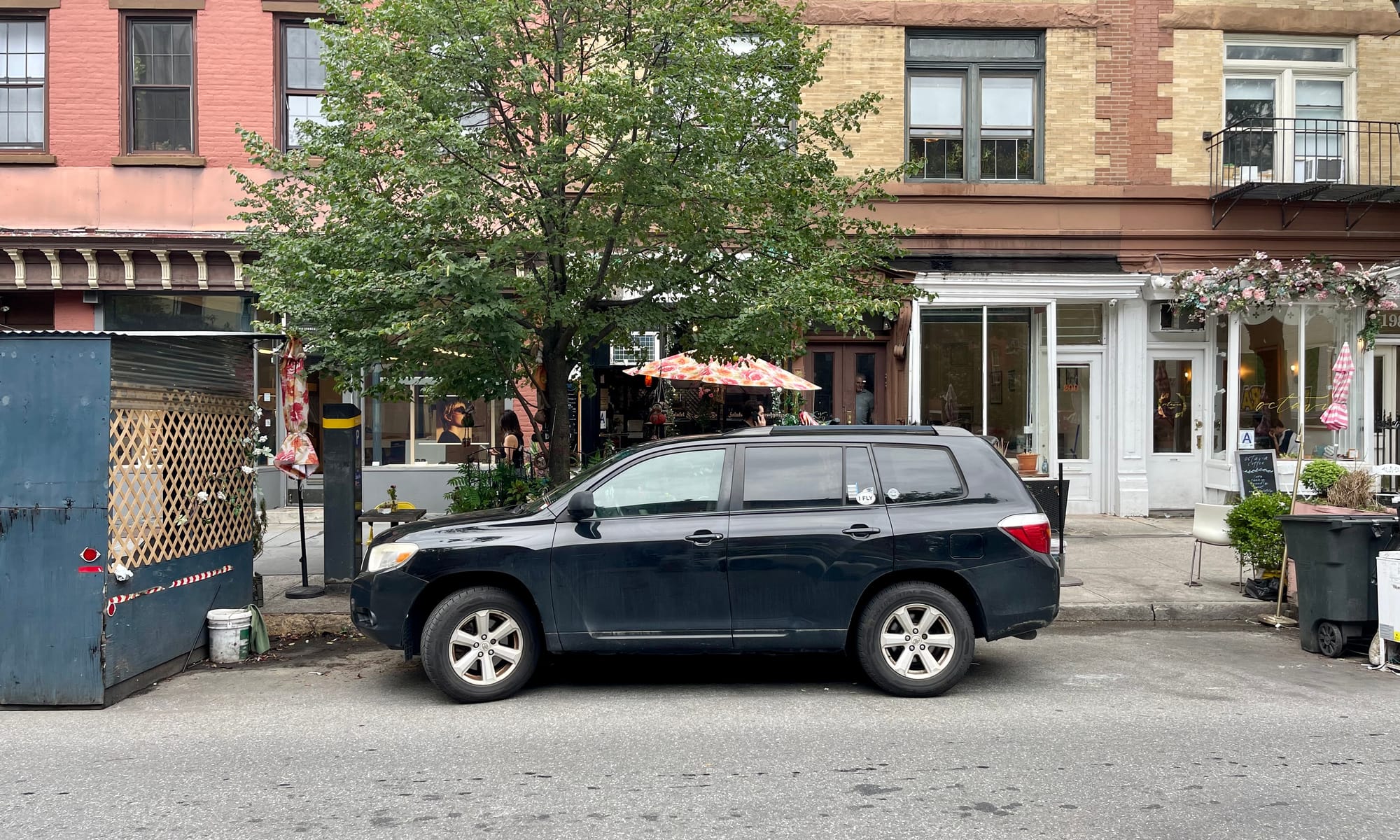
Darna's street seating led to the transformation of the whole block as other establishments followed suit, creating one of the best gathering places in the neighborhood. Now, instead of groups of friends, neighbors, and family members chatting and laughing in the open air, electrifying the area with social life and joy, there is one private vehicle taking up the space for hours.
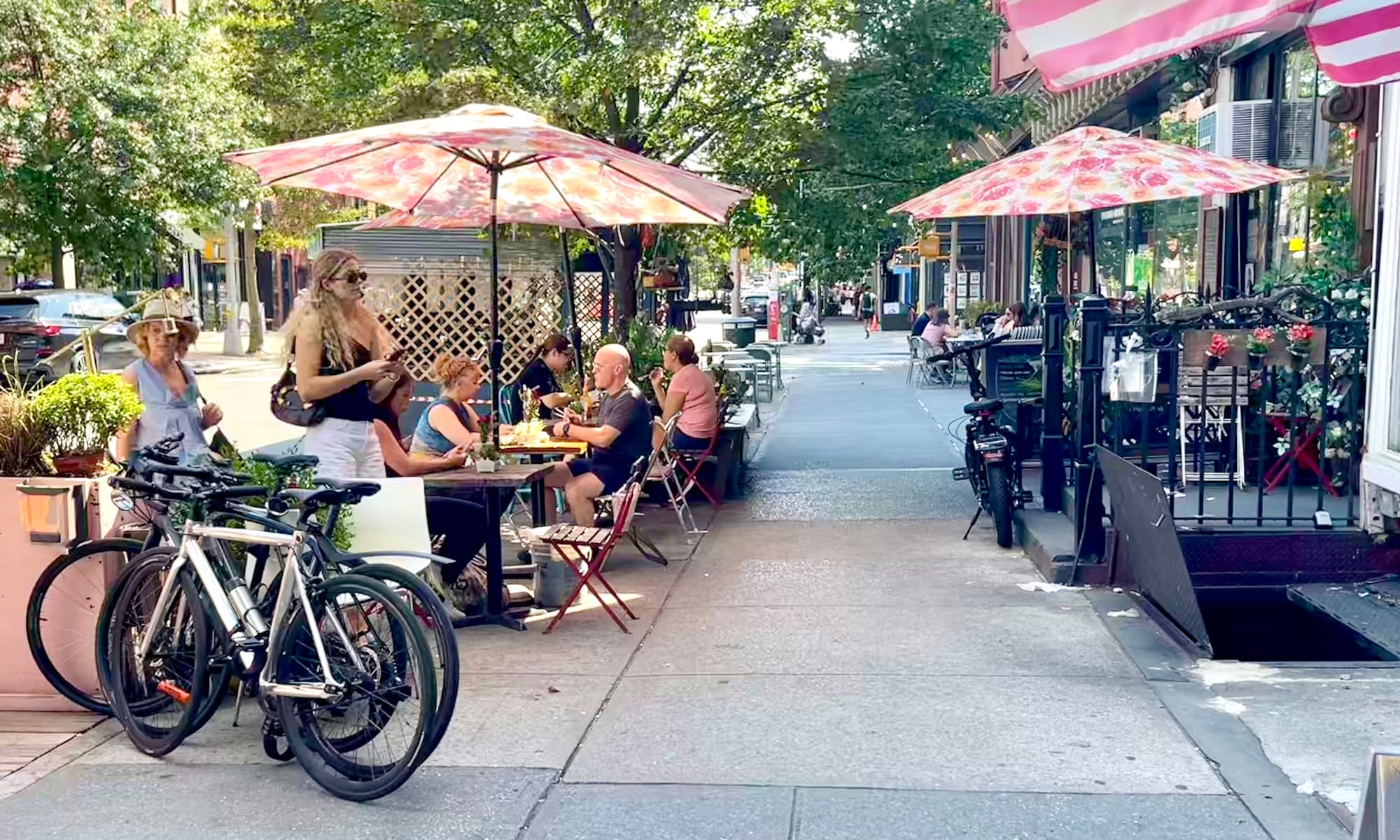
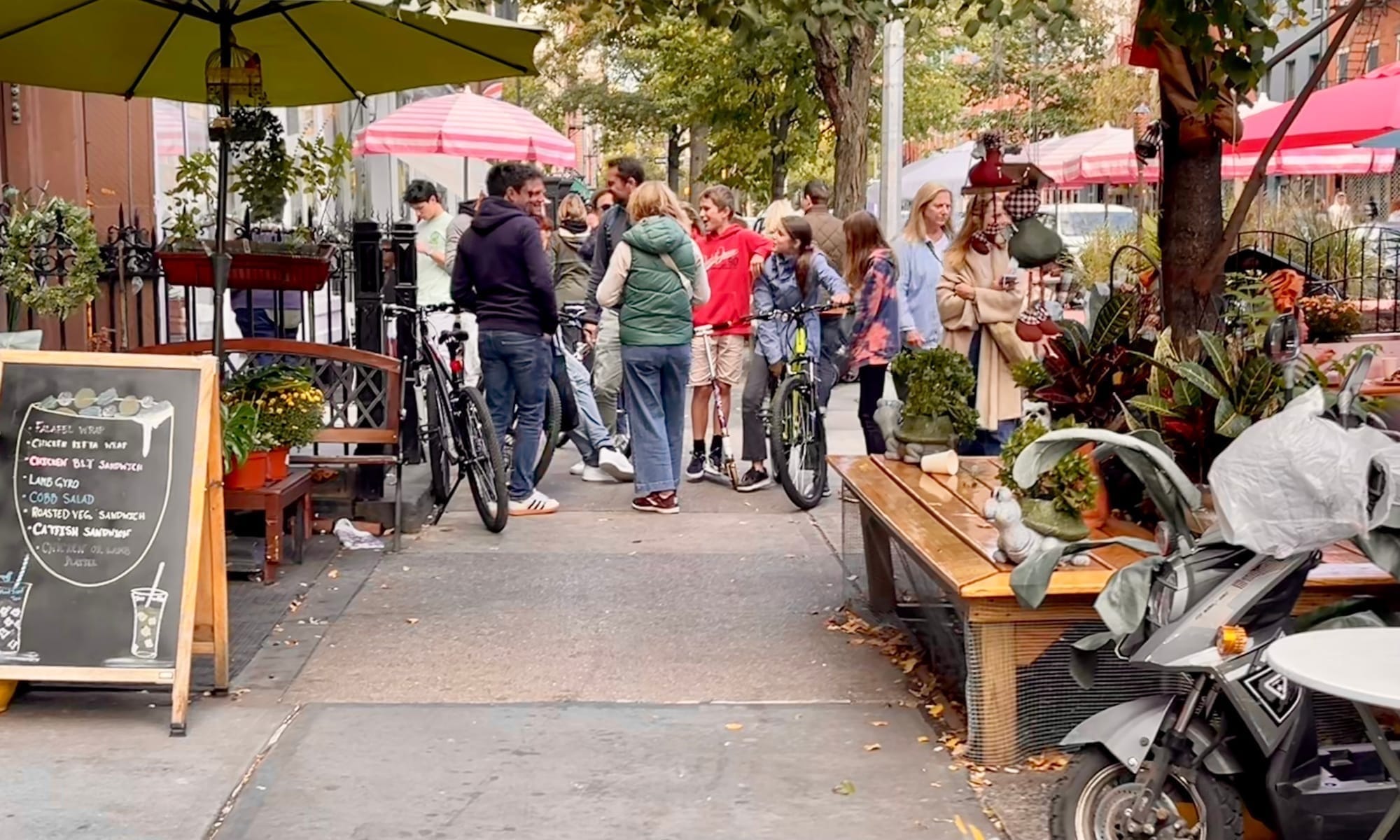
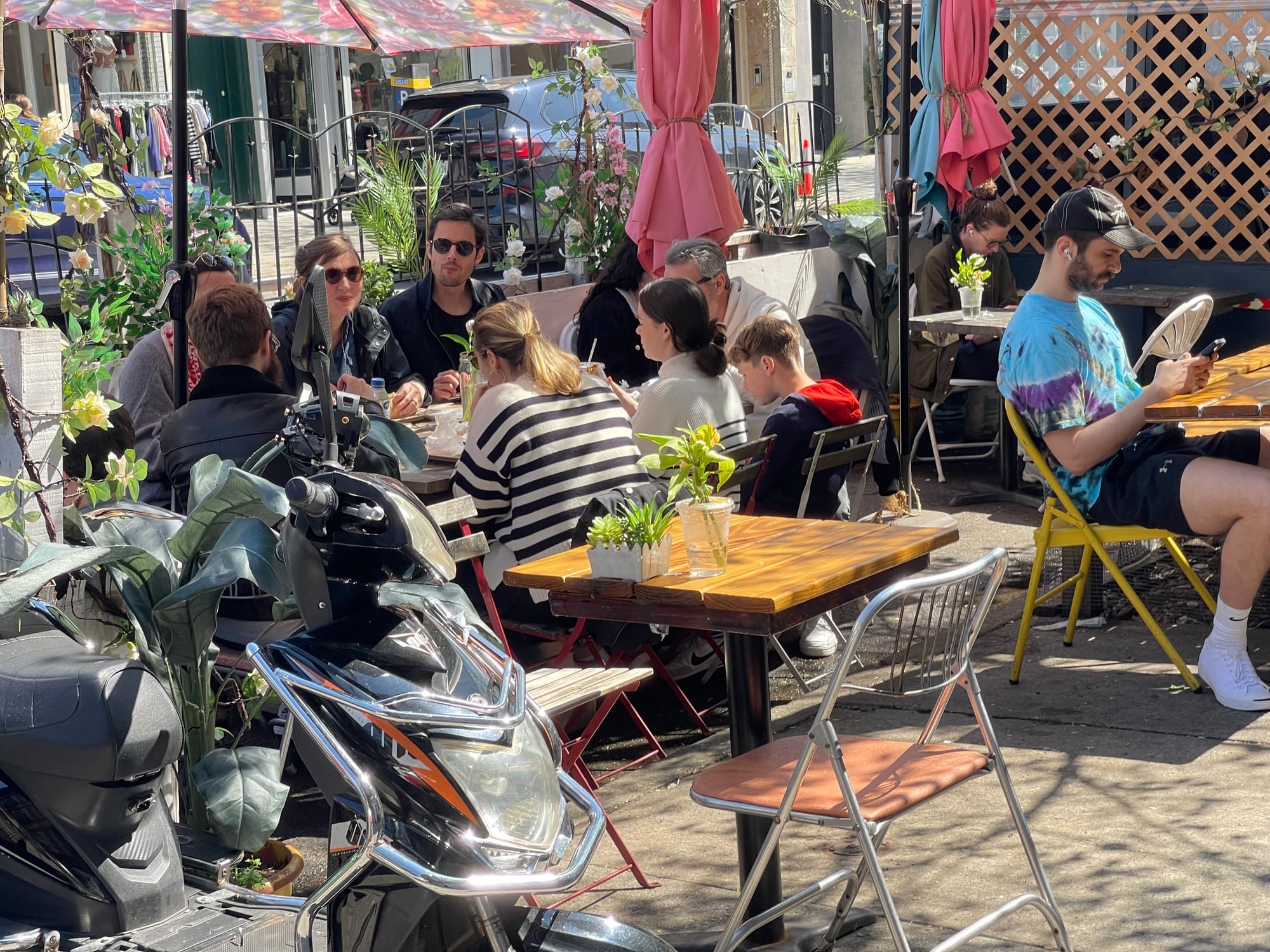

Before - with dining sheds
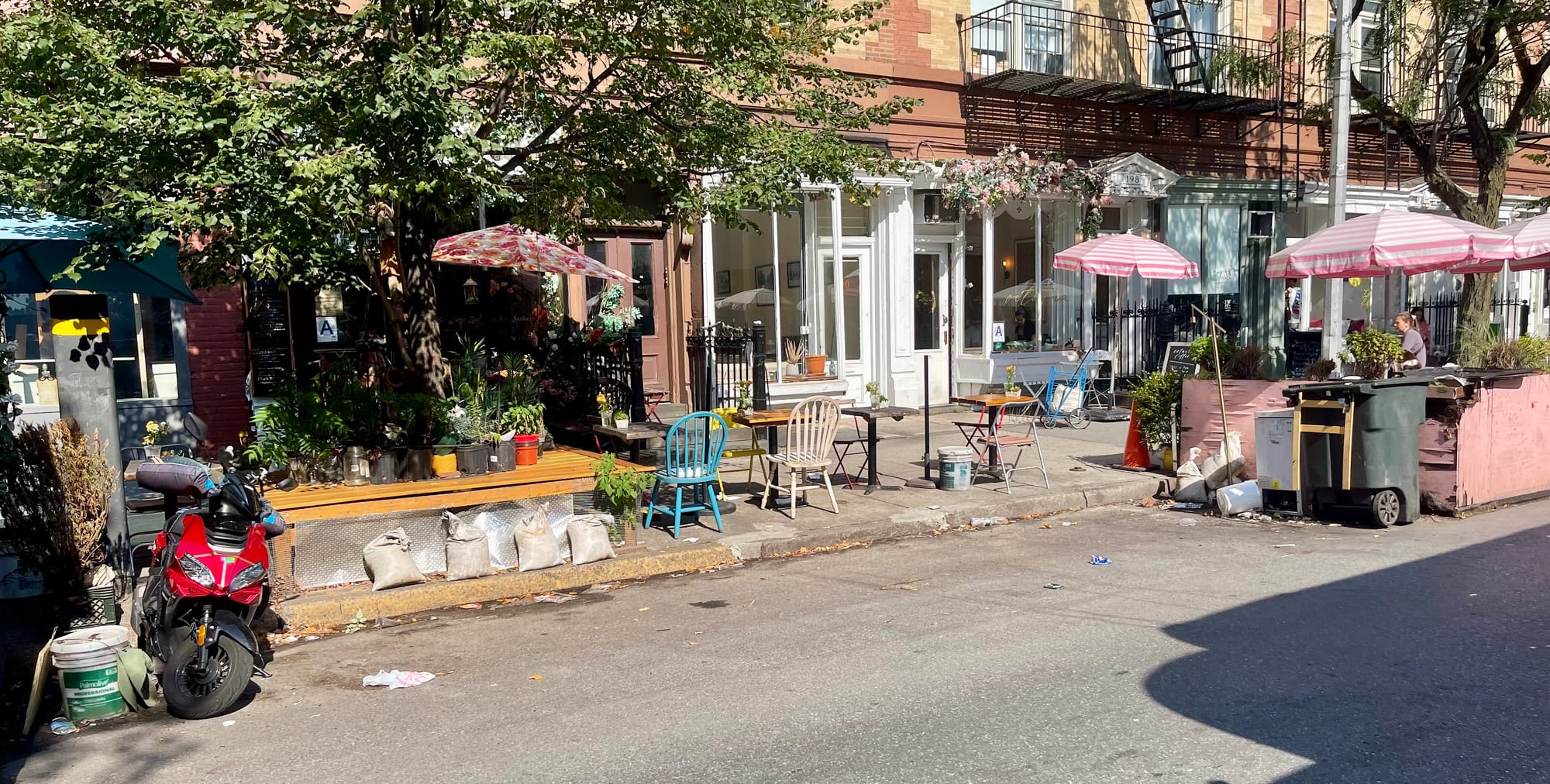
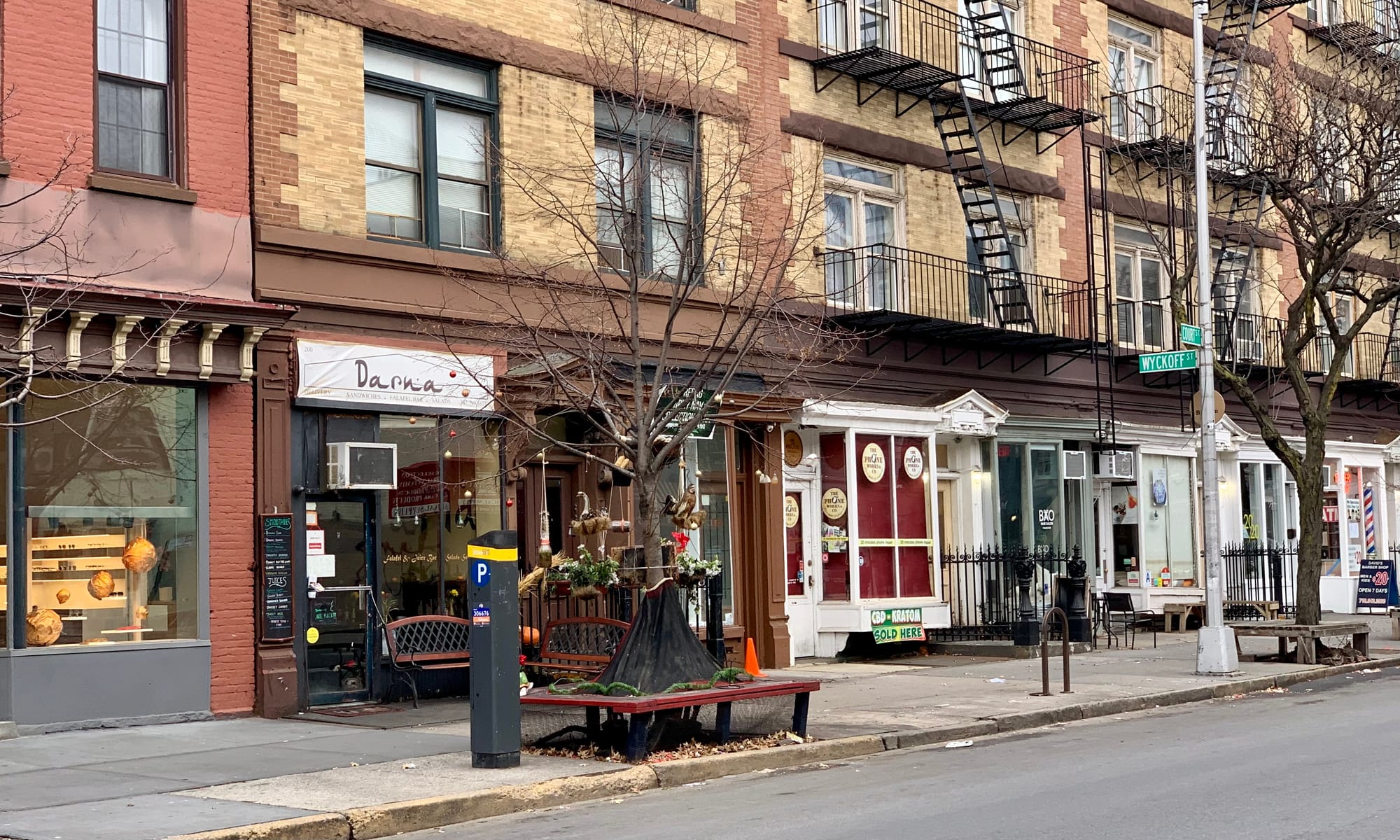
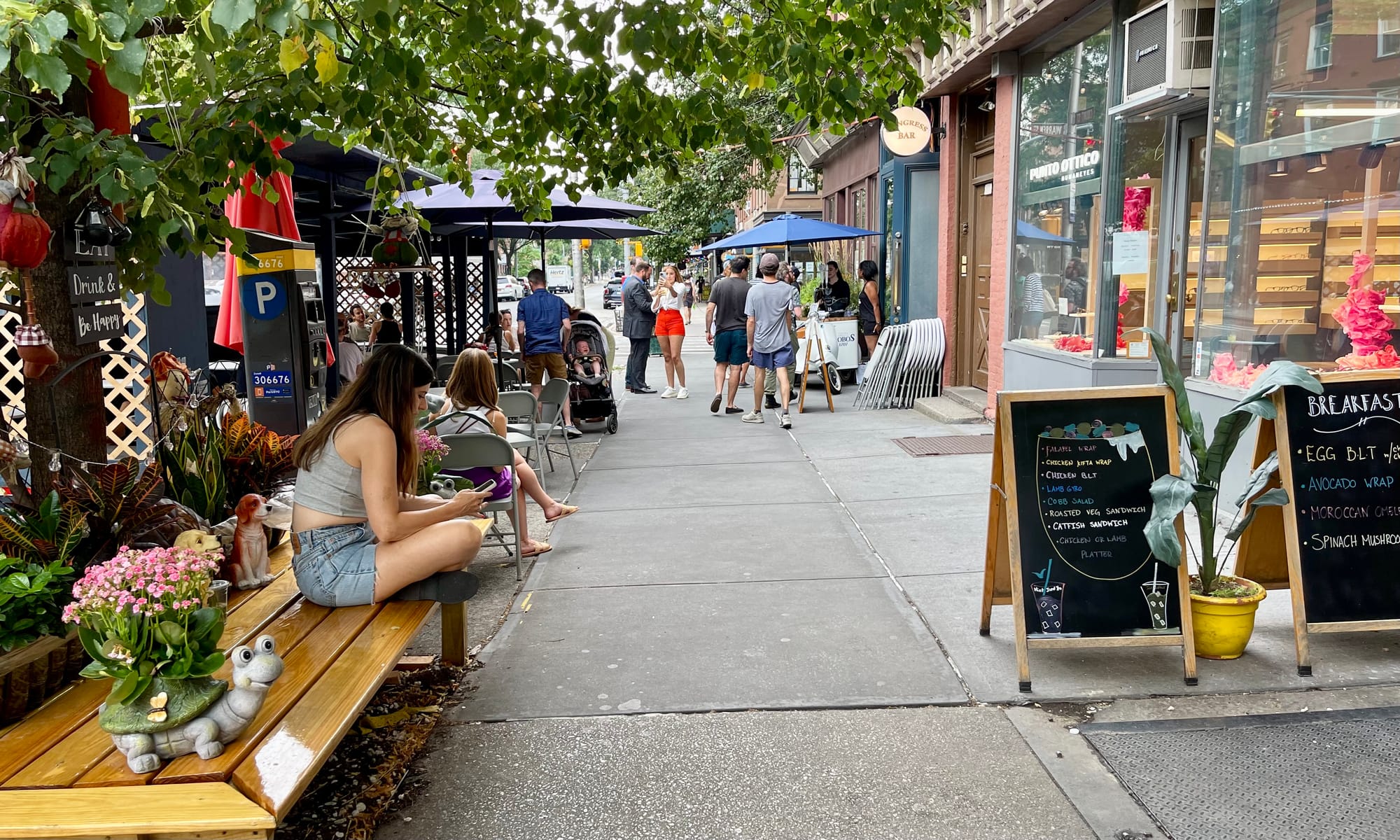
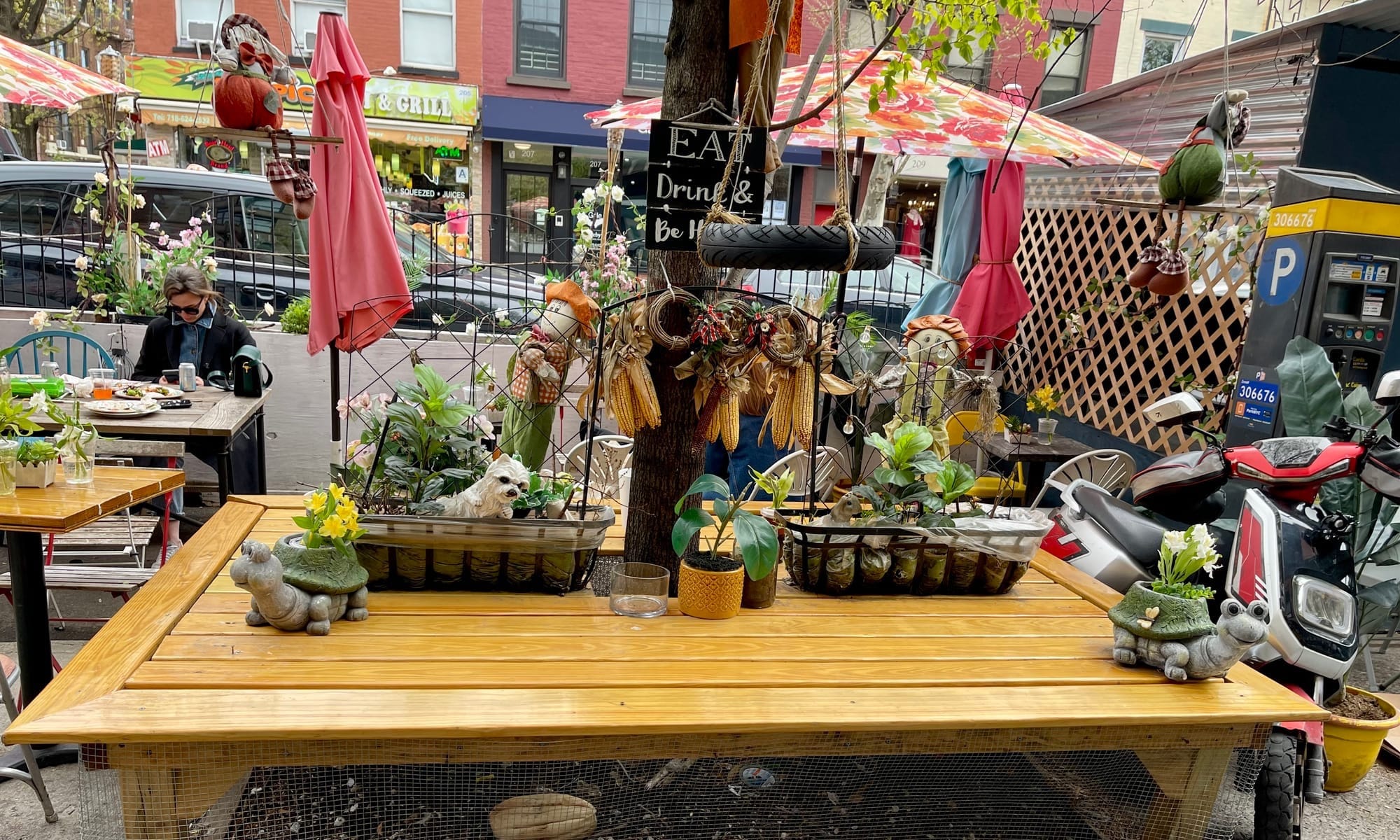
After Dining sheds Removed...replaced by parking
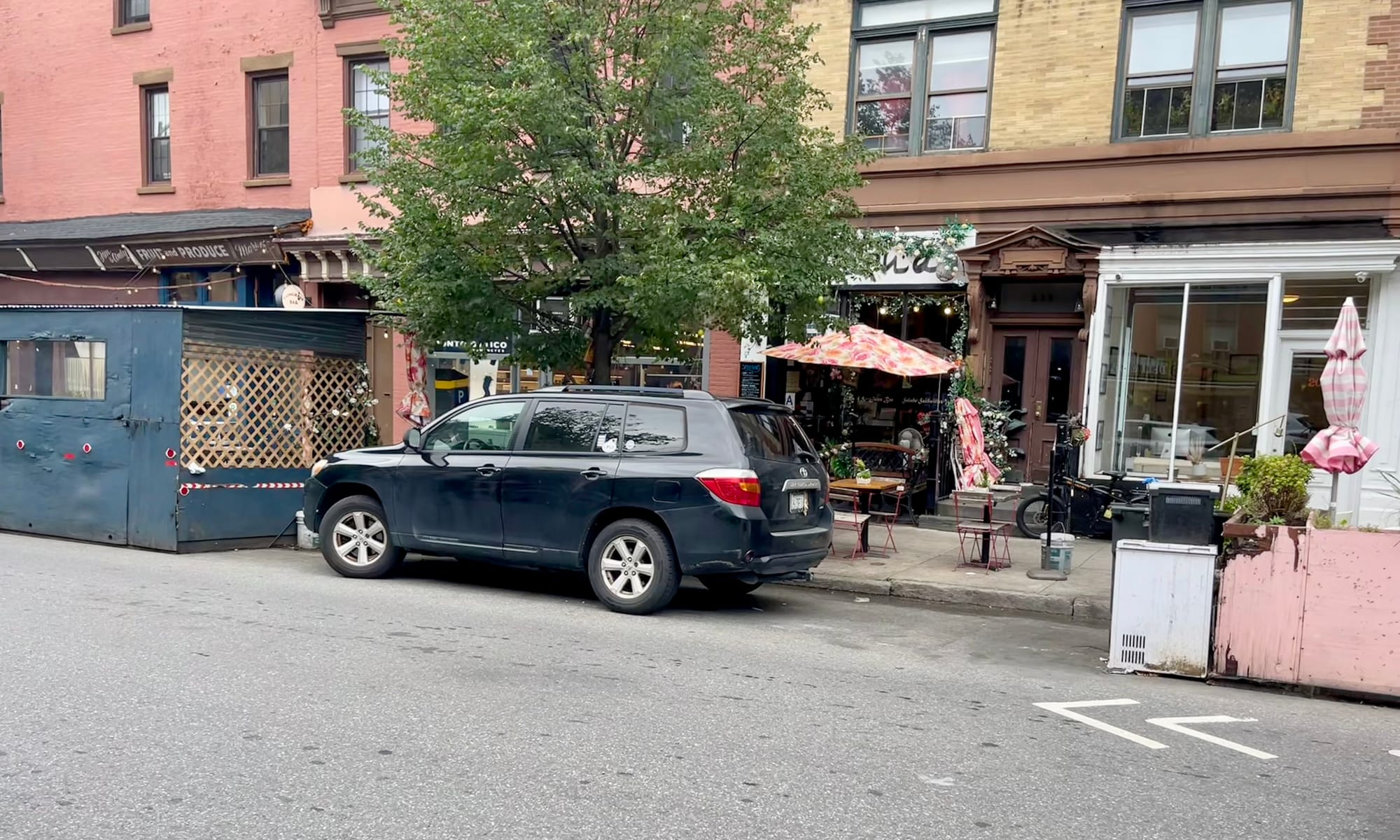
After - parking spot
Cobble Hill Cinemas and The Chocolate Room
This part of Cobble Hill was a true hub of activity as the chocolate shop and theater played off of each other to create a wonderful gathering place. People would go to the movie then hang out at the dining shed next door to discuss and grab a snack. That dining shed is now gone and, you guessed it, replaced by one parked car.
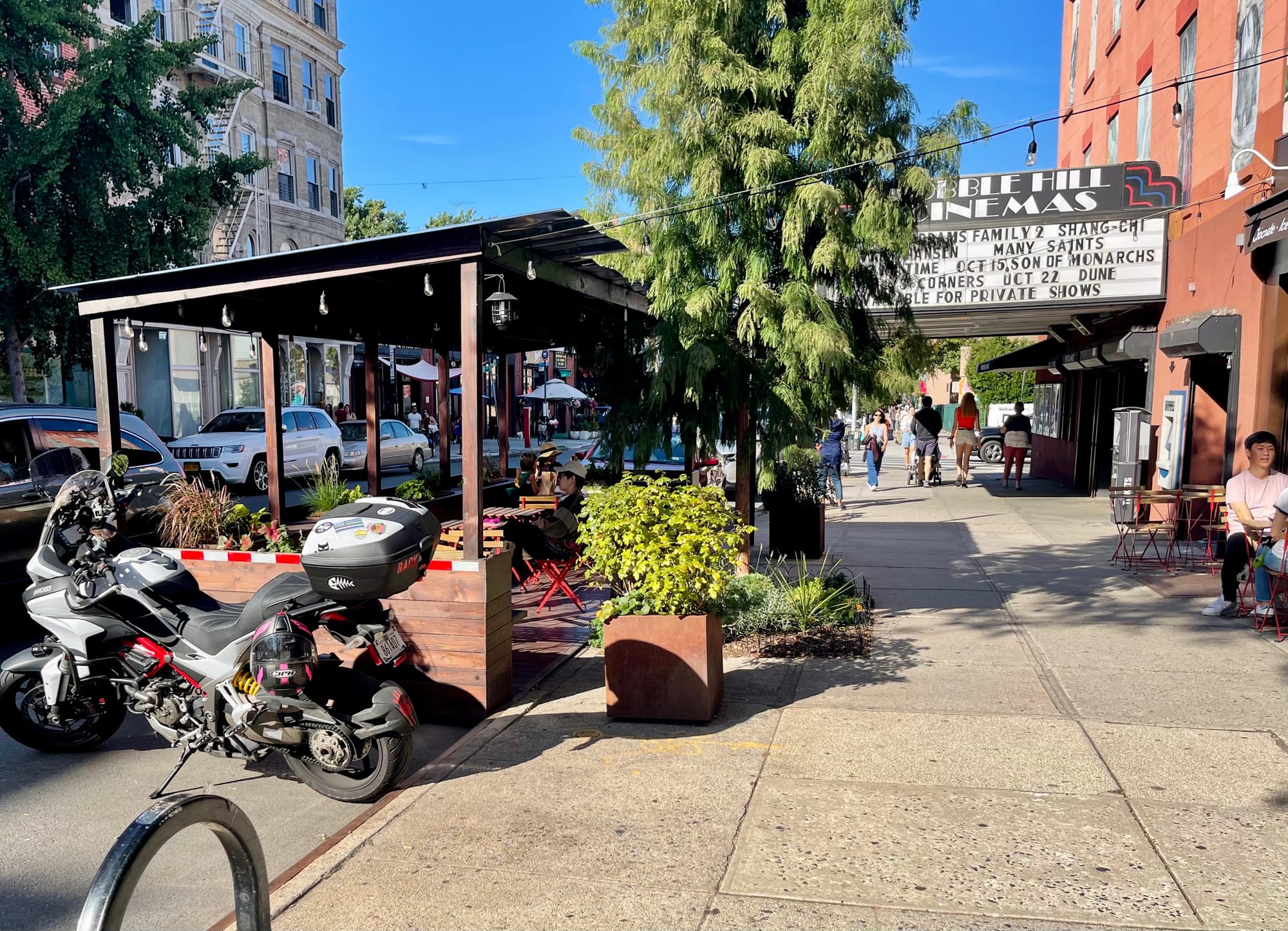
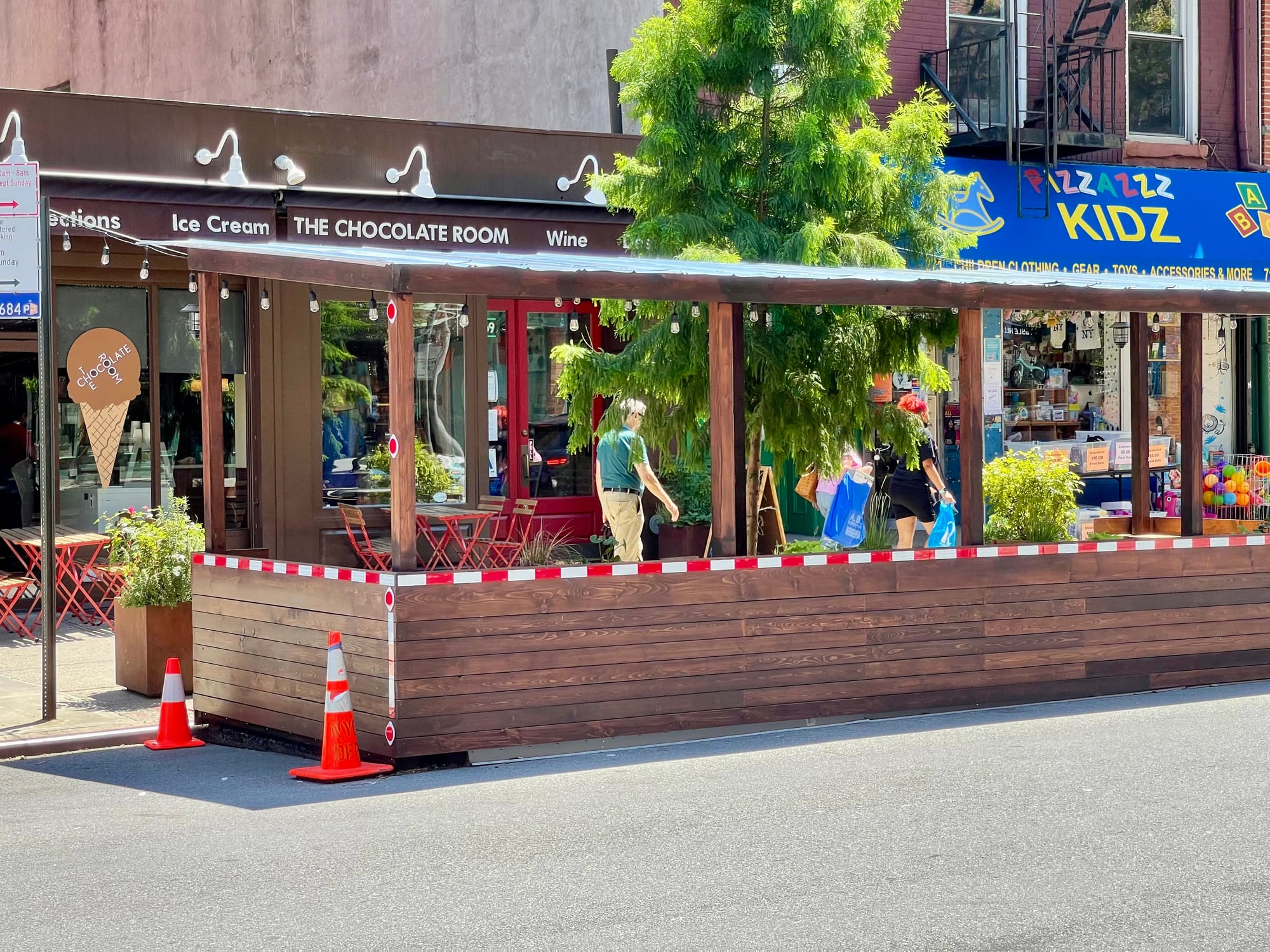
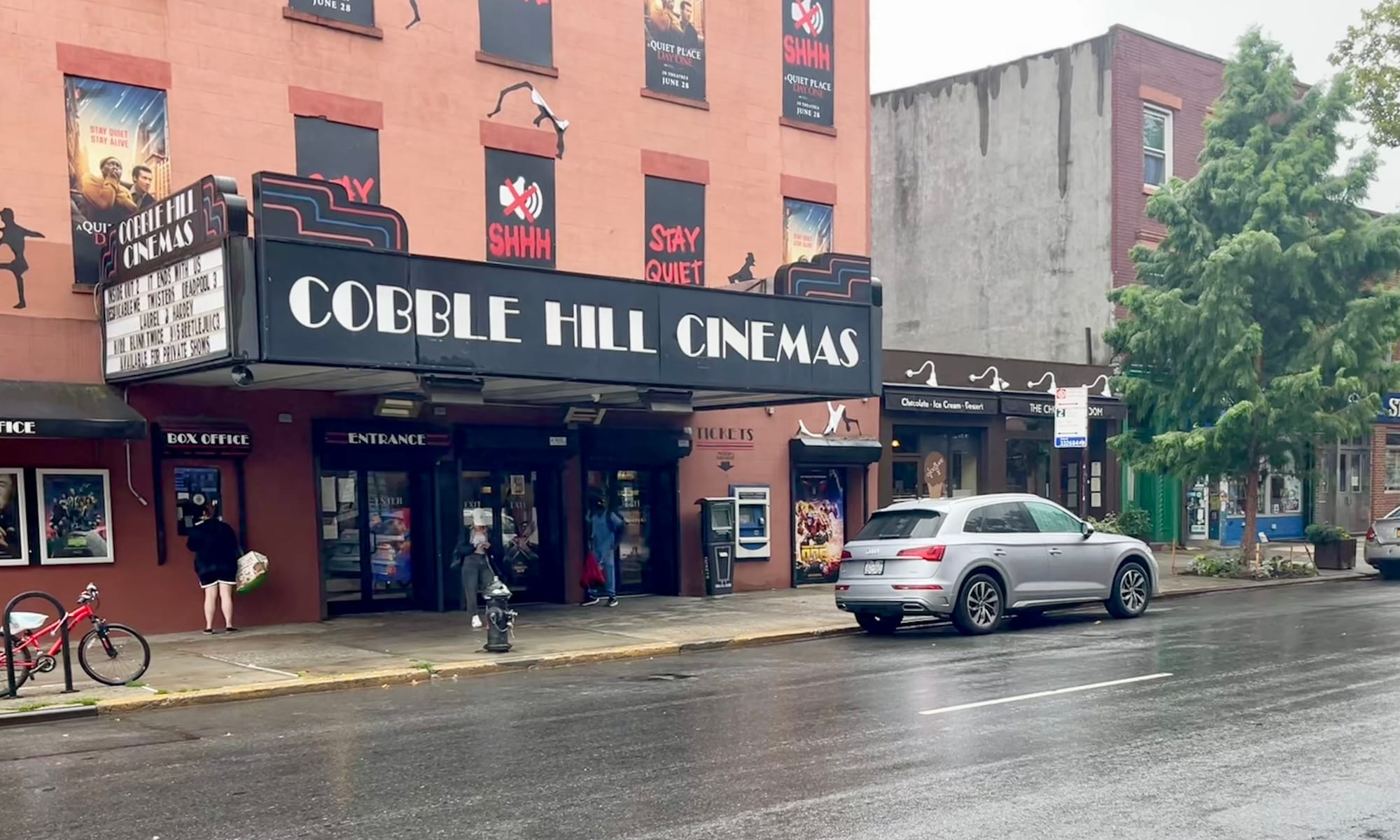
After - The car is where the dining shed used to be
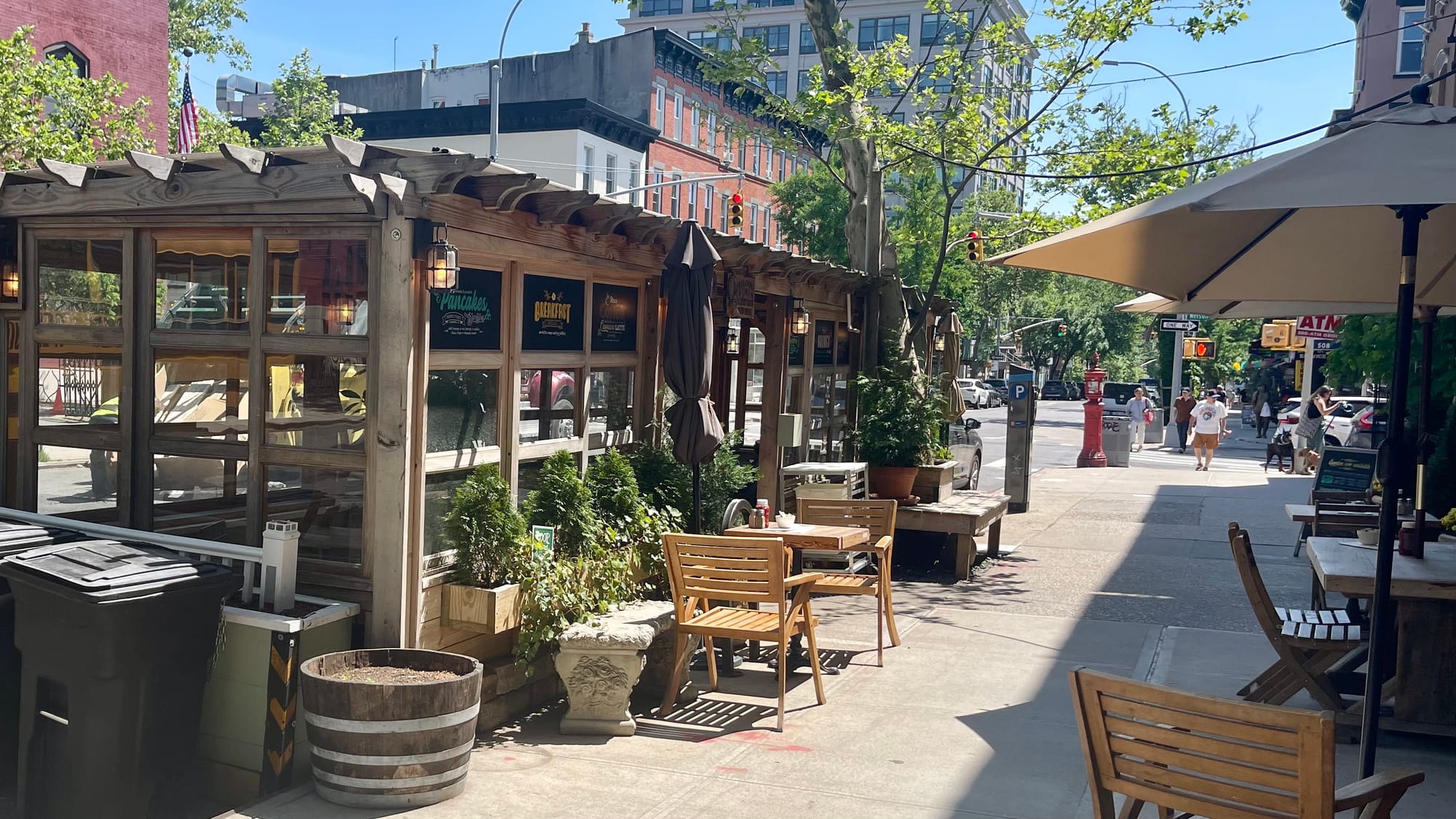
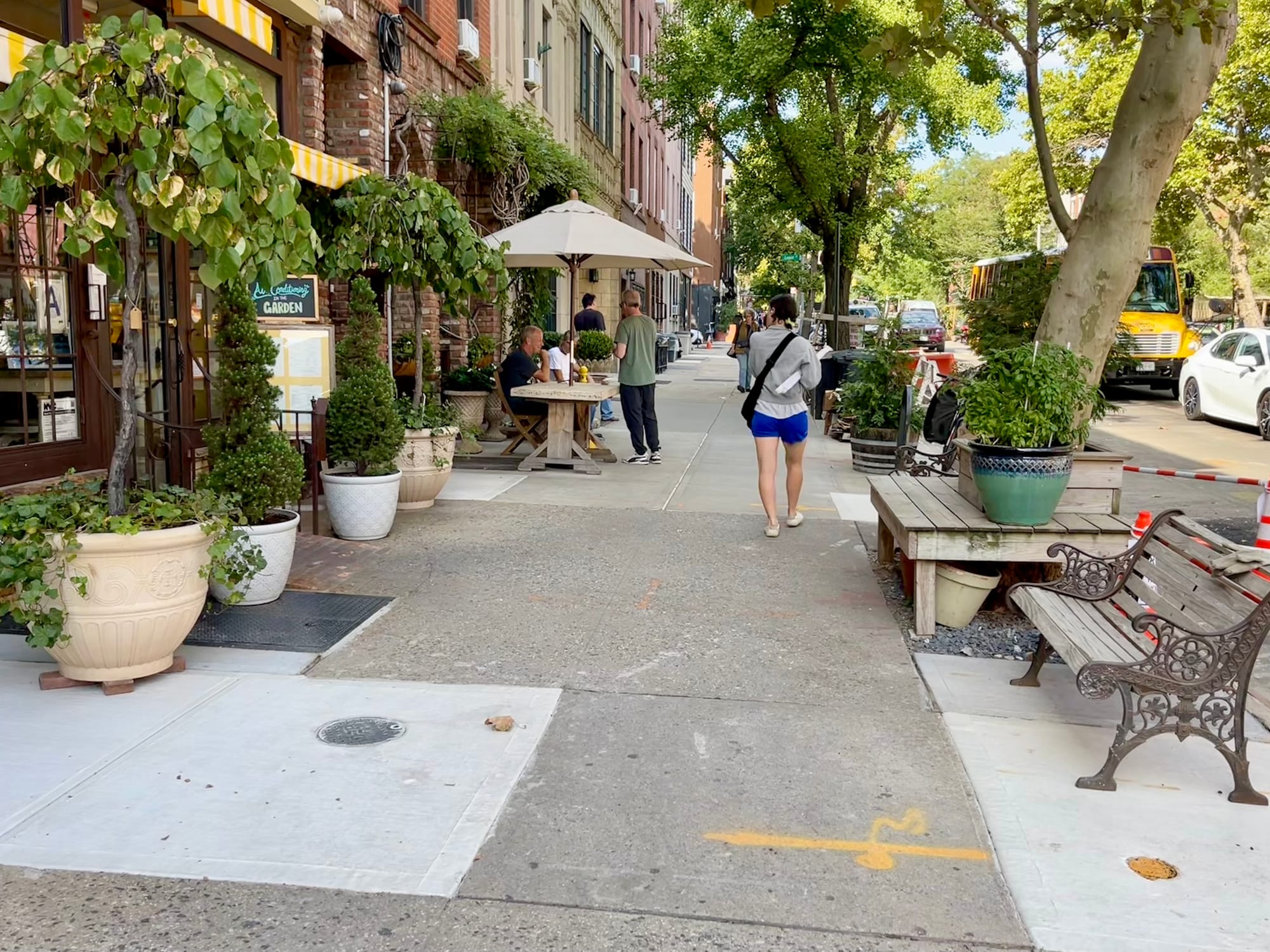
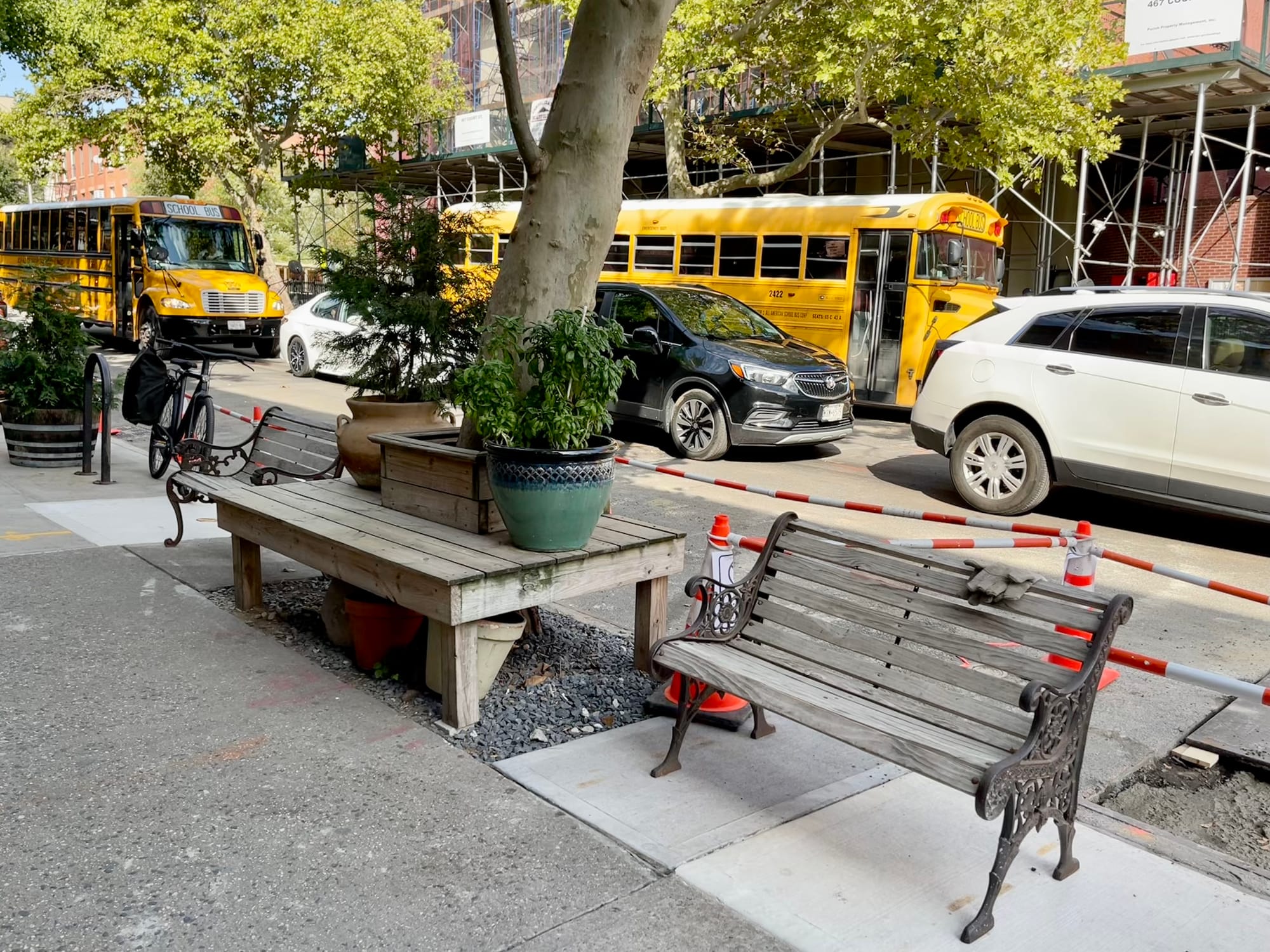
Le Petit Cafe shed is now gone
We thought of Le Petit Cafe as the Taj Mahal of Brooklyn cafes because of how beautiful it was, both its inside area and its outdoor dining shed. With the loss of its shed due to the new regulations, it is now a nice but regular sidewalk space. Much of its one magical appeal has been lost.
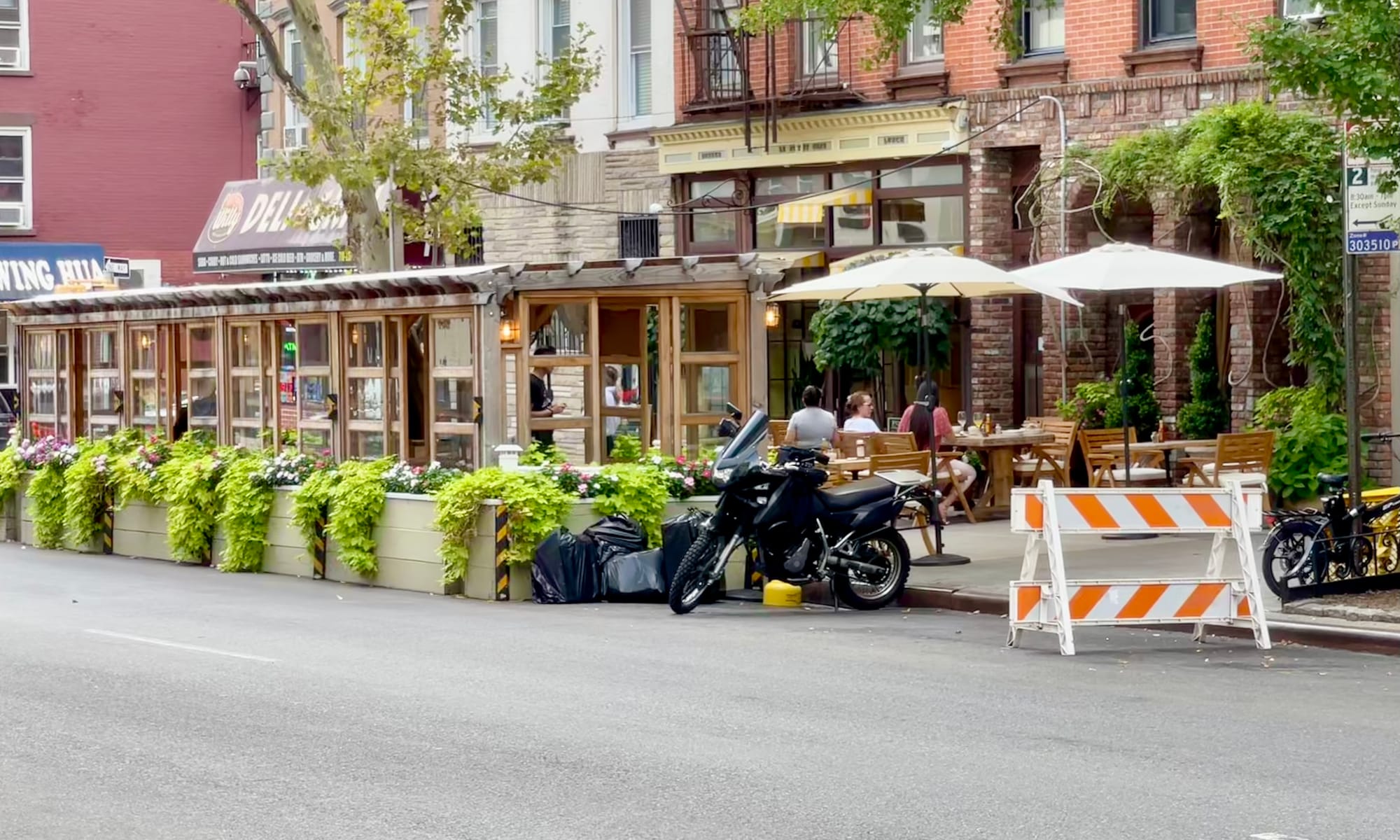
Le Petit Cafe
Sociale block
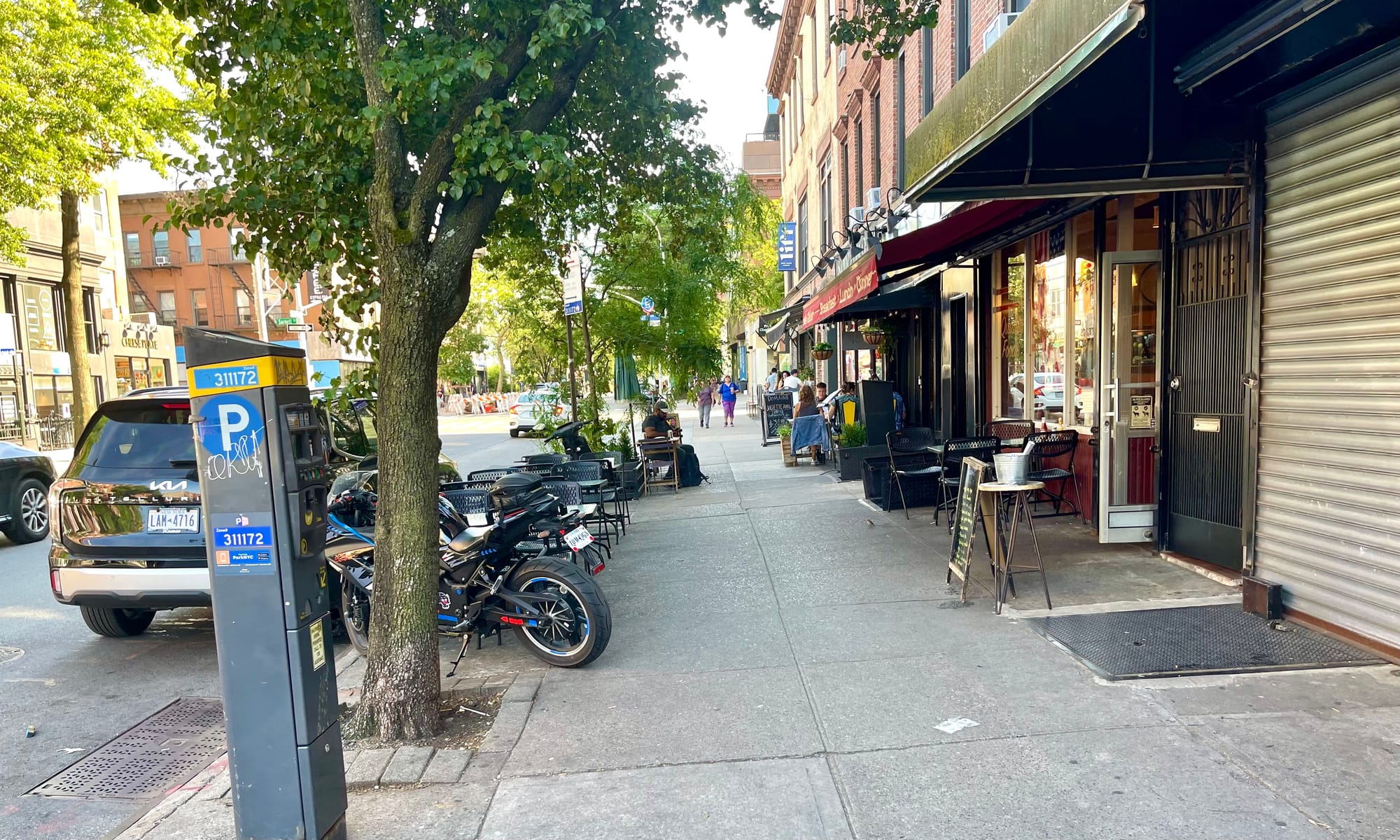
Before the new dining shed regulations took action, this block was an exceptionally well-done collection of destinations crafted by each individual merchant and adding up to one of the best blocks in Brooklyn.
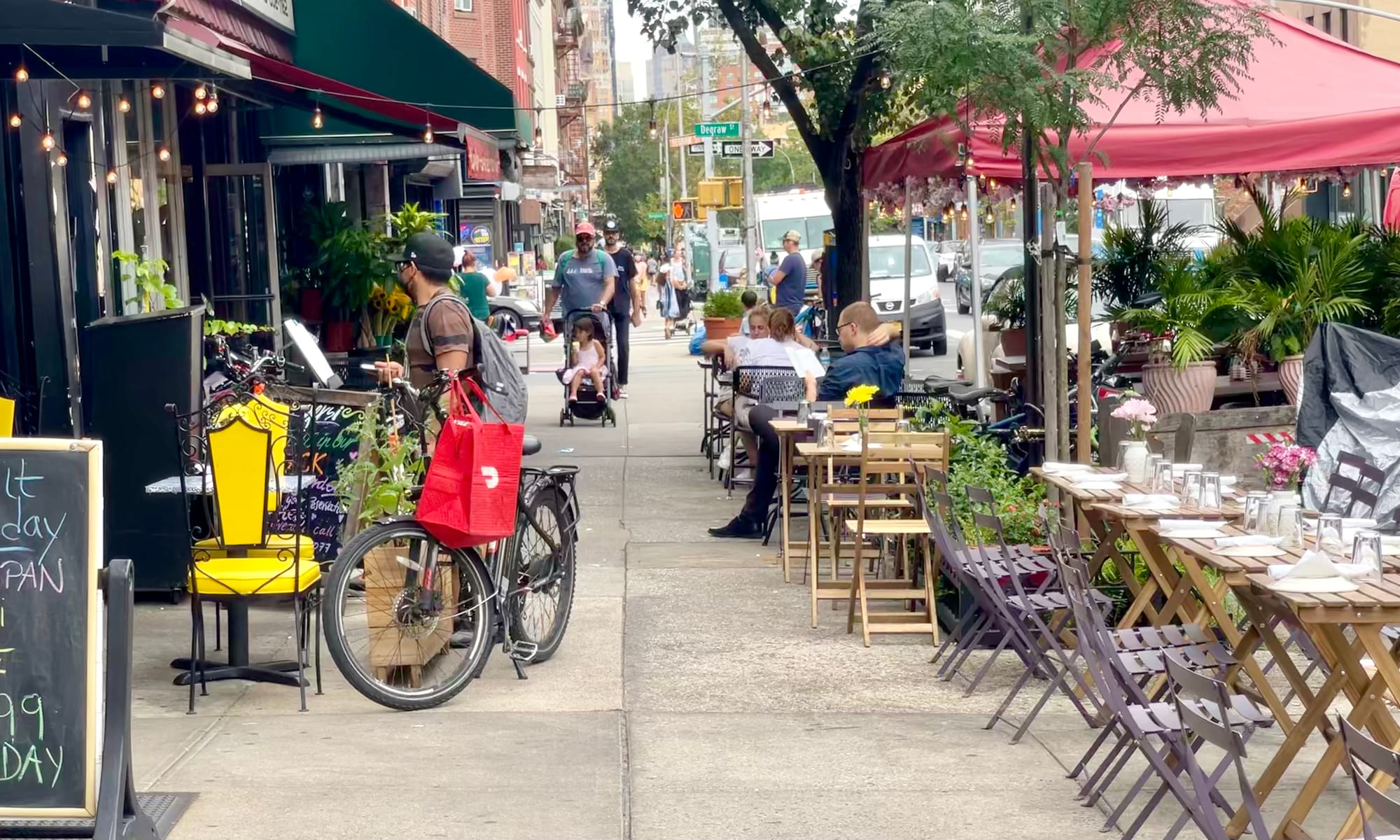
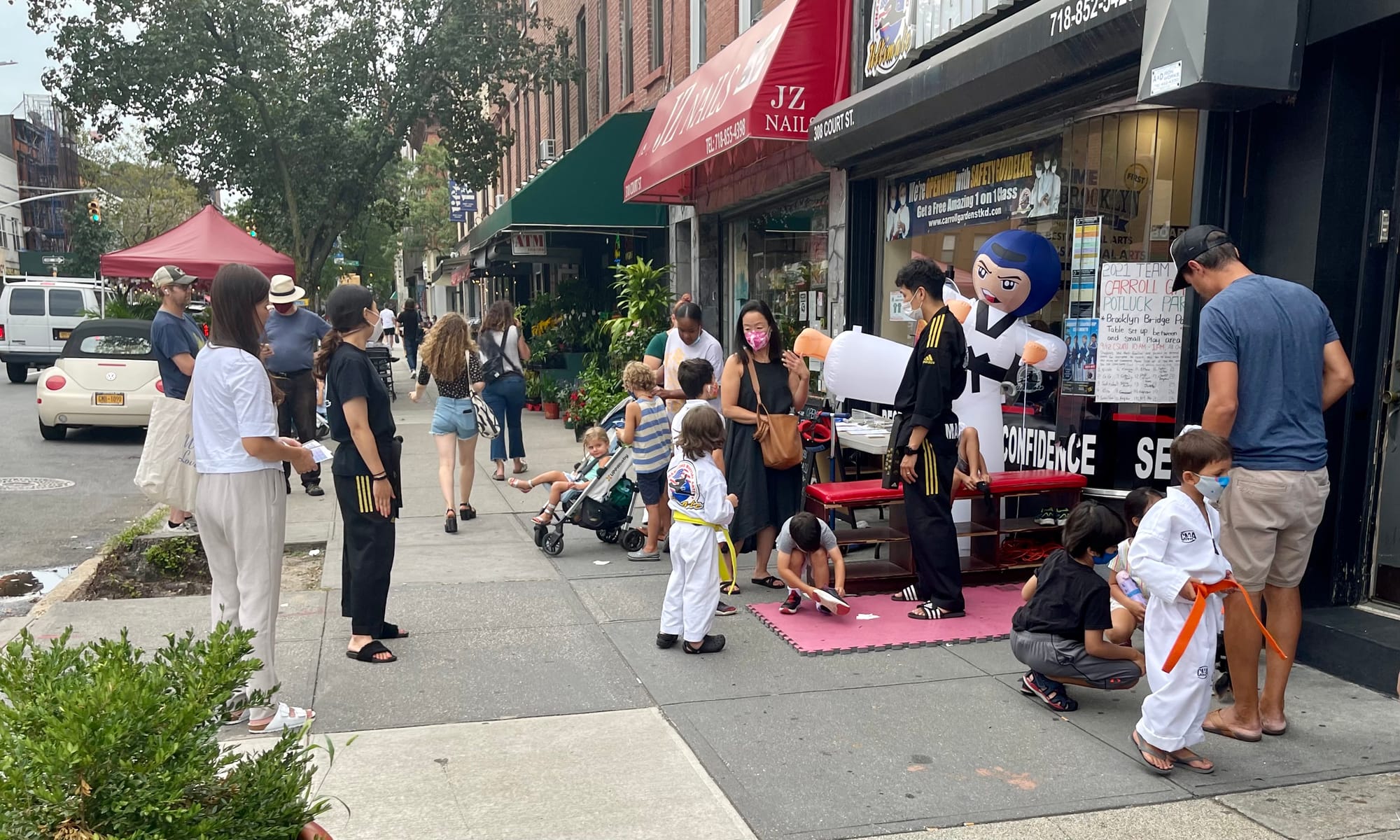
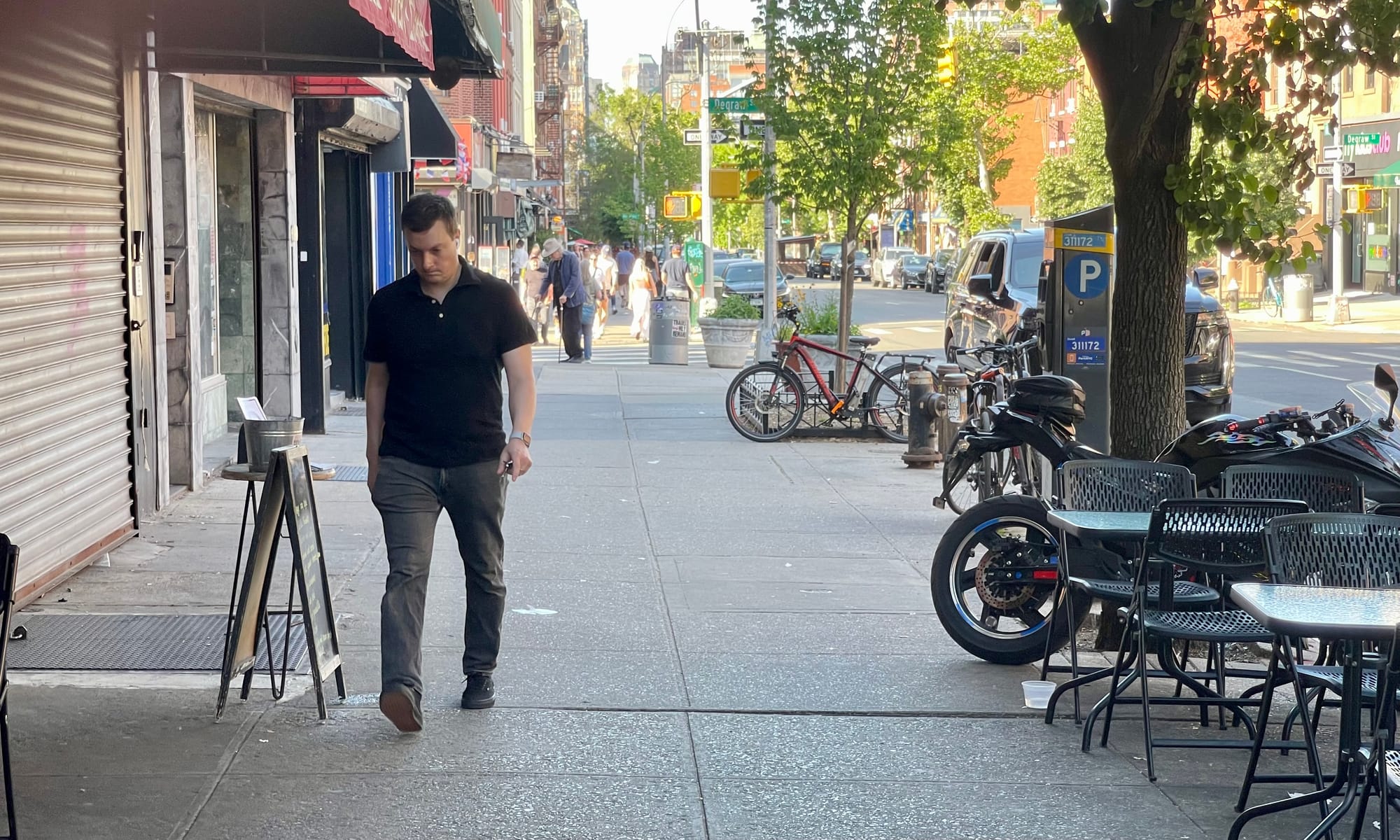
After the regulations were put into action, this thriving hub of activity became a dull and lifeless place full of empty storefronts and scooters/bikes on the sidewalks where once there was thriving social life.
More of what we have lost
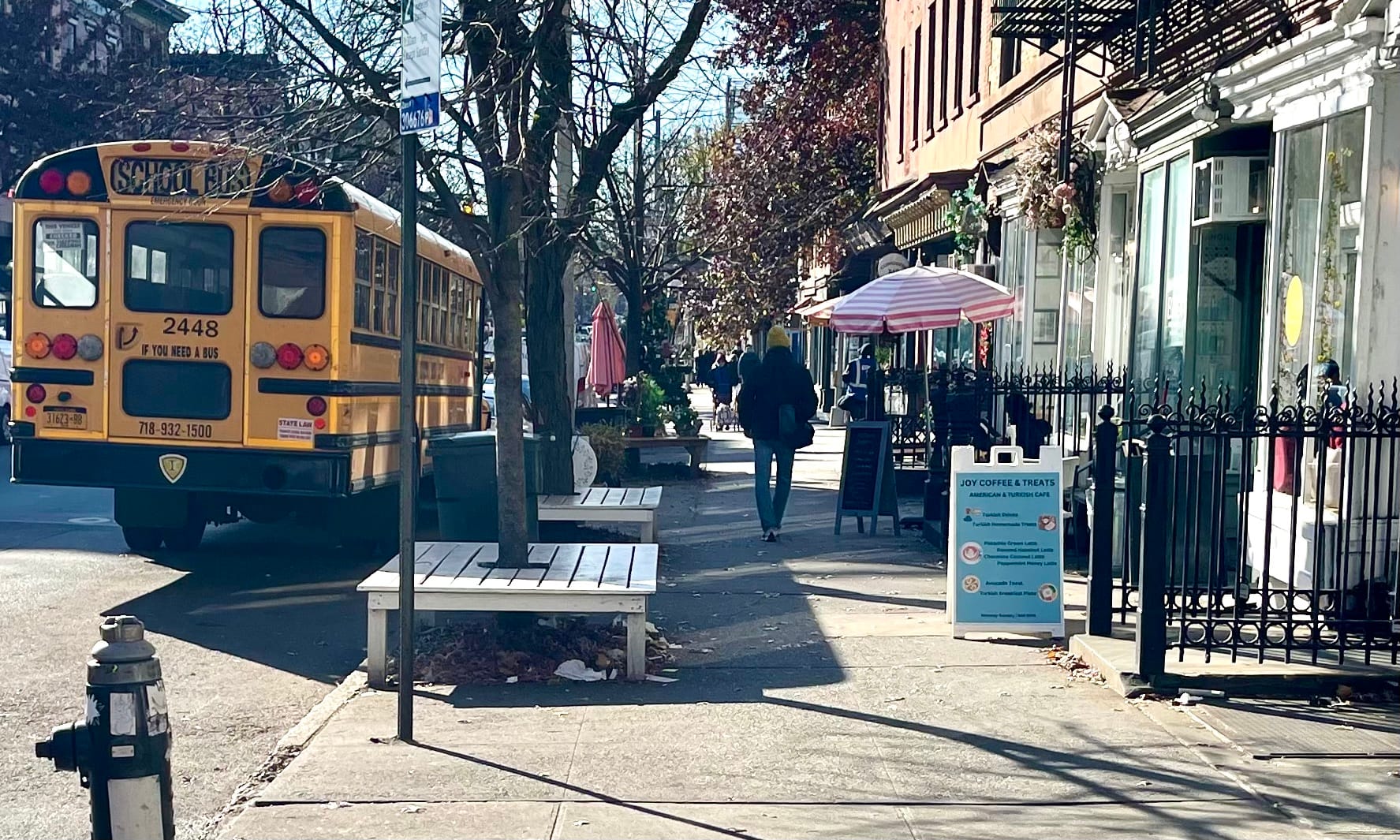
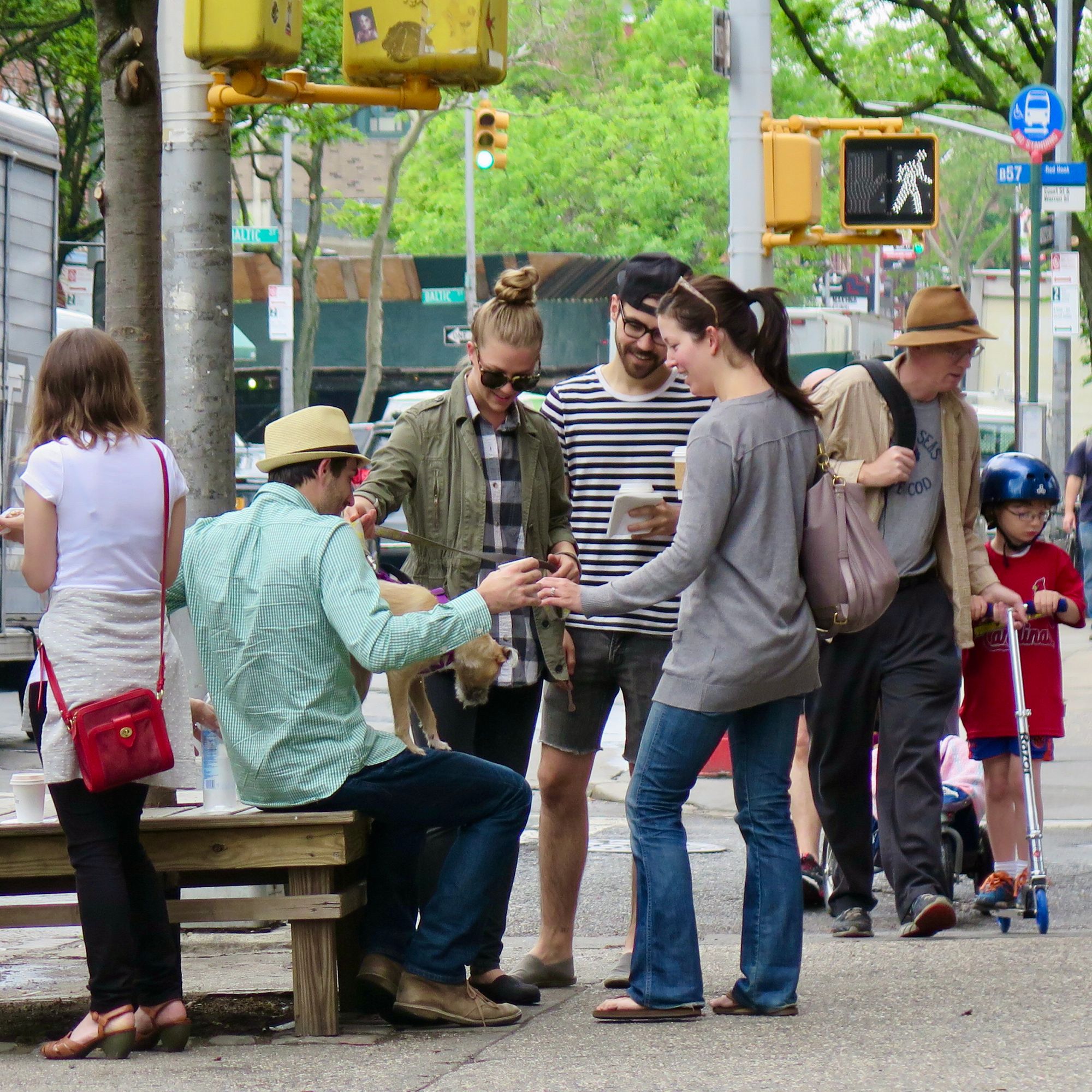
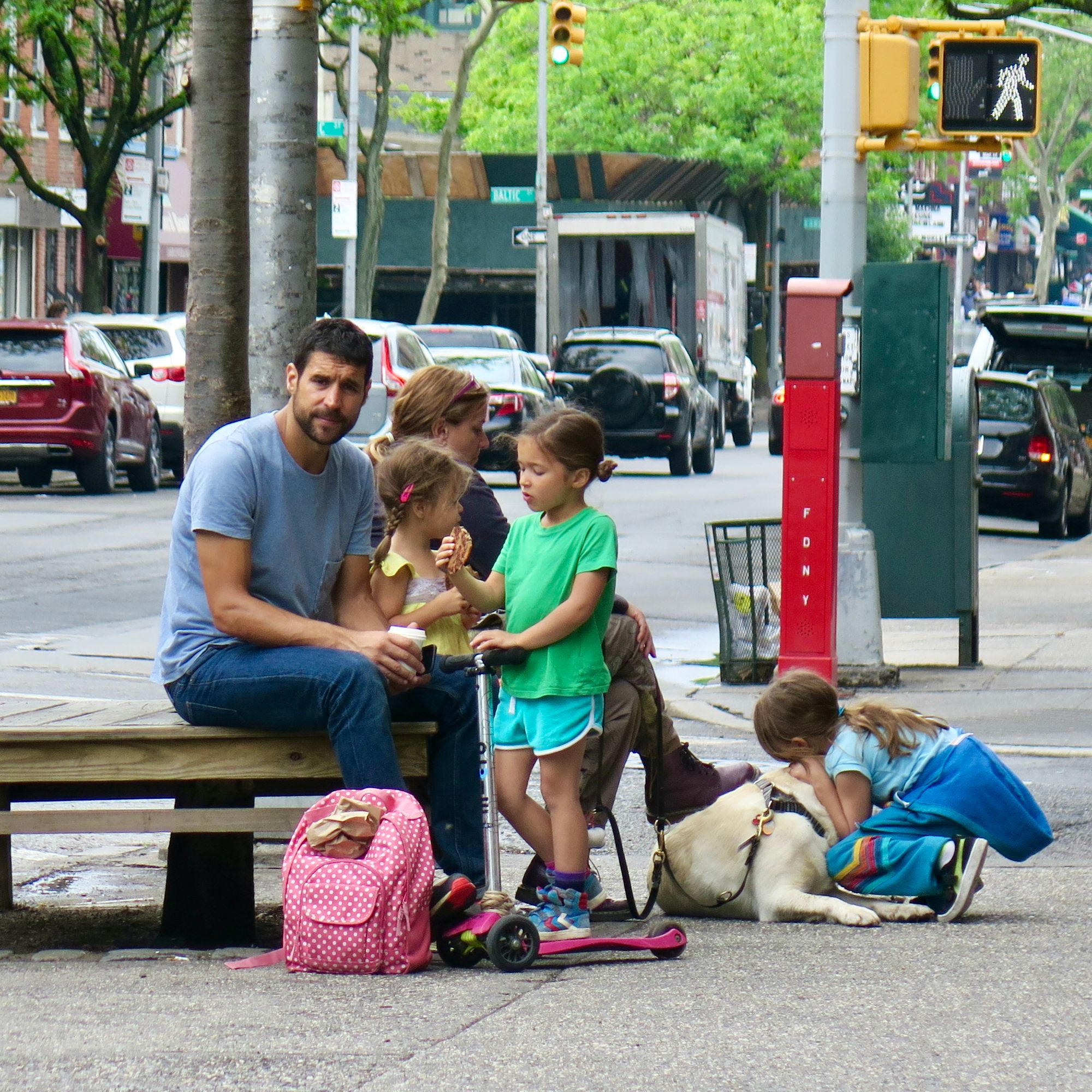
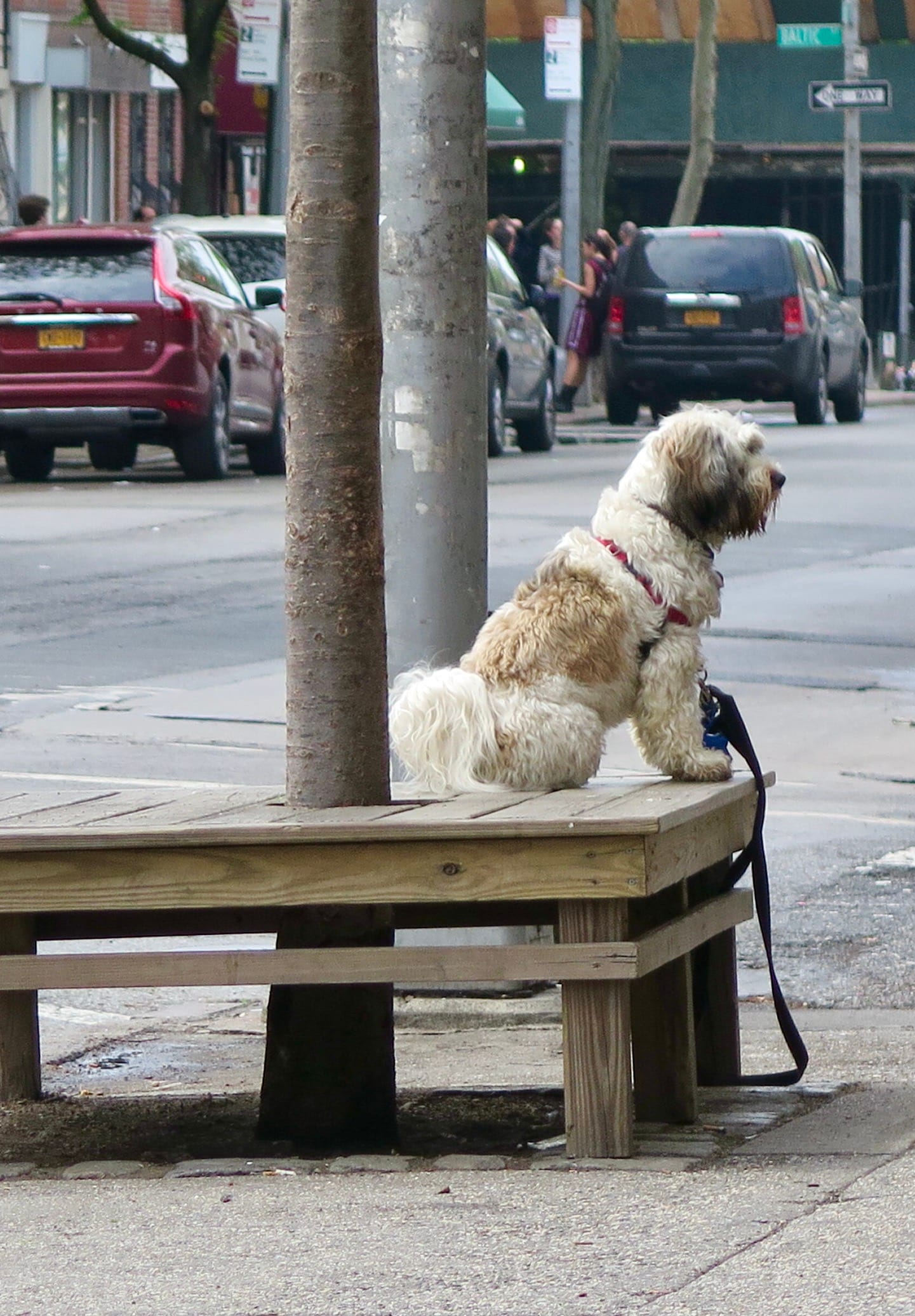
This intersection of Warren and Court used to have a bench on the corner. It was a major meeting place because this type of seating is a place to hang out, not just a place to sit and people watch. Being at the corner naturally became a place to spend time with friends, neighbors, and even dogs.
However, this beloved corner bench was taken out and the loss is still felt every time we go by the corner which is now much less lively. The good news is that this bench was so popular it has been replicated in other places throughout the neighborhood.
Book Court - everyone's favorite book store
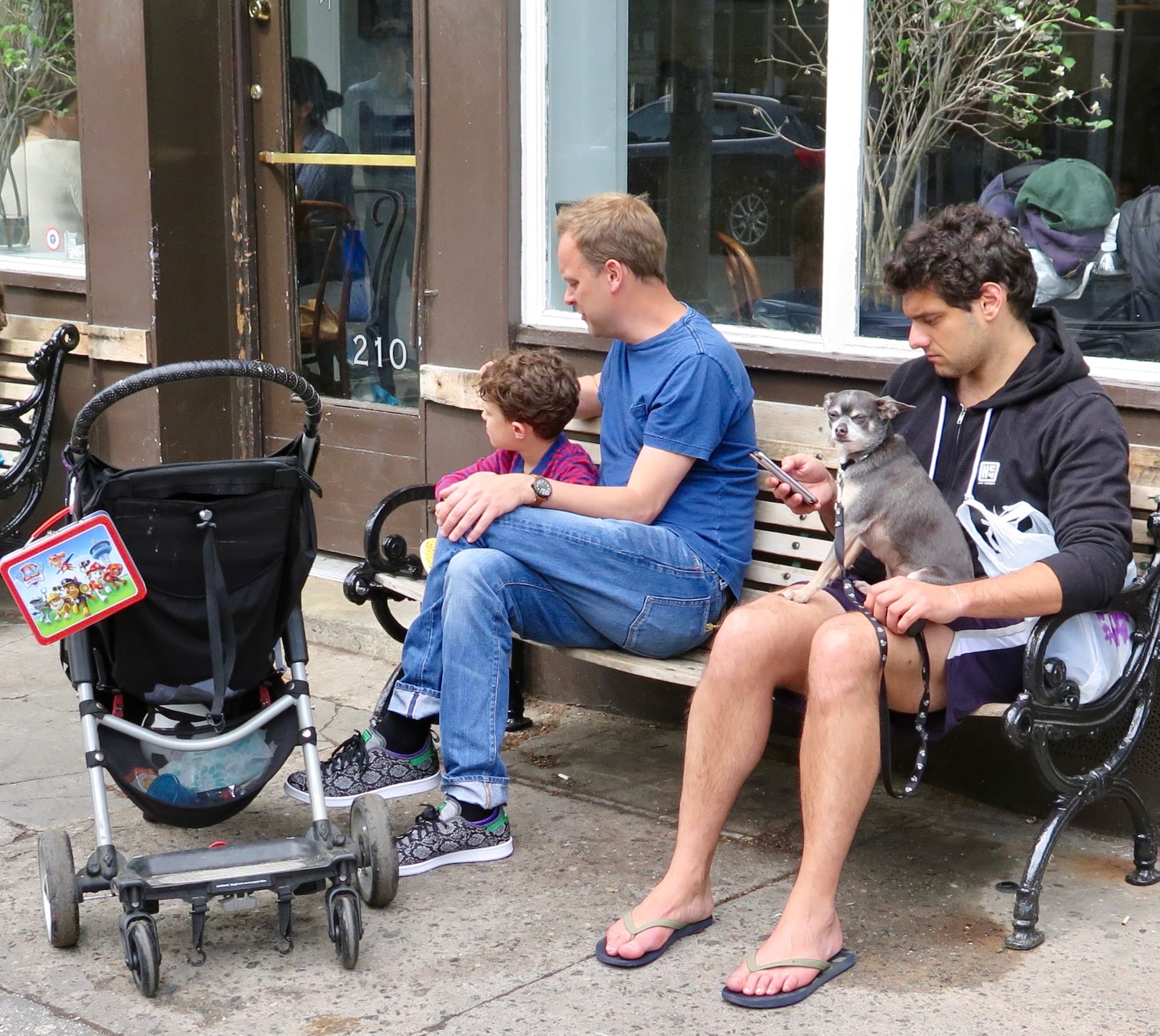
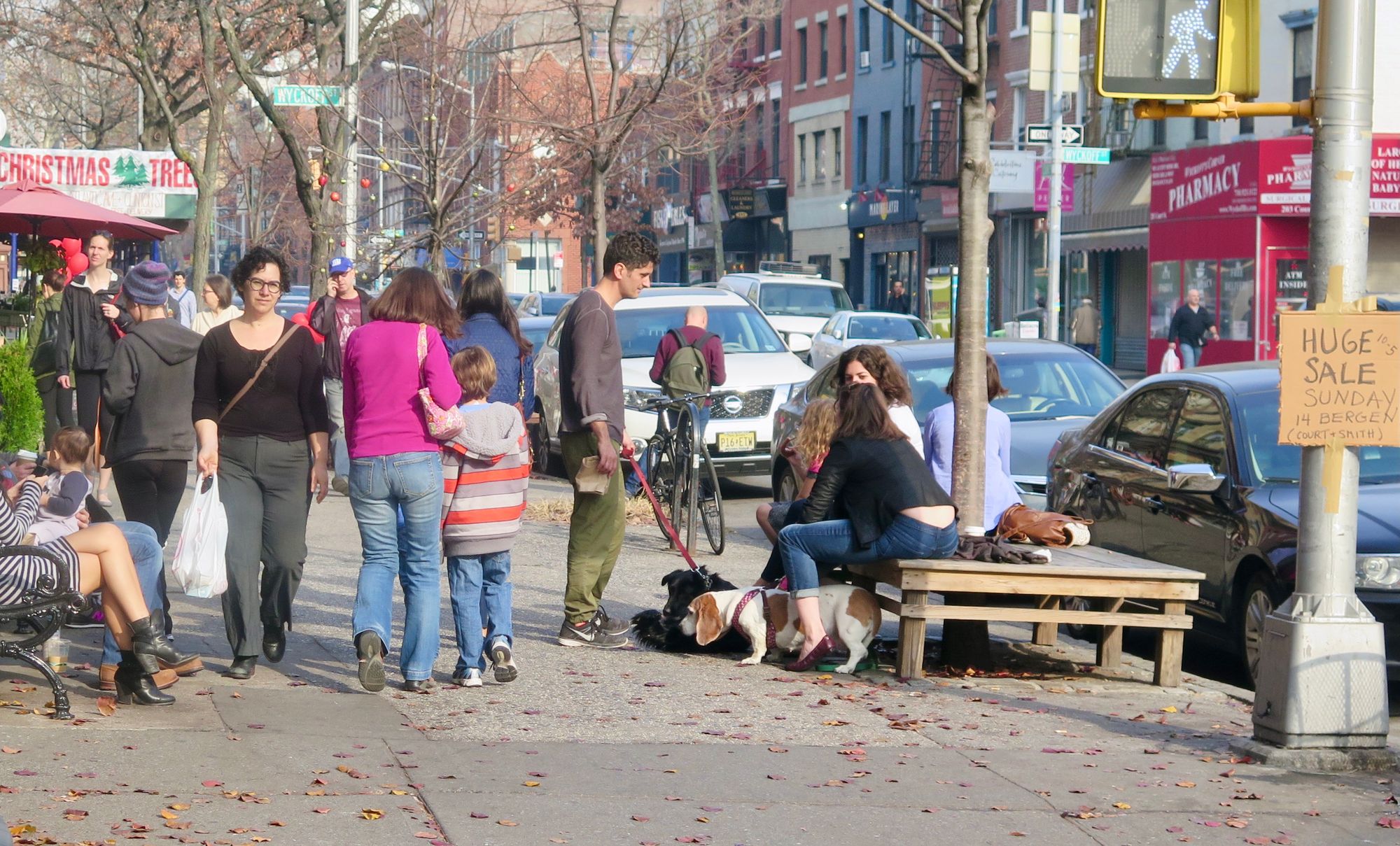
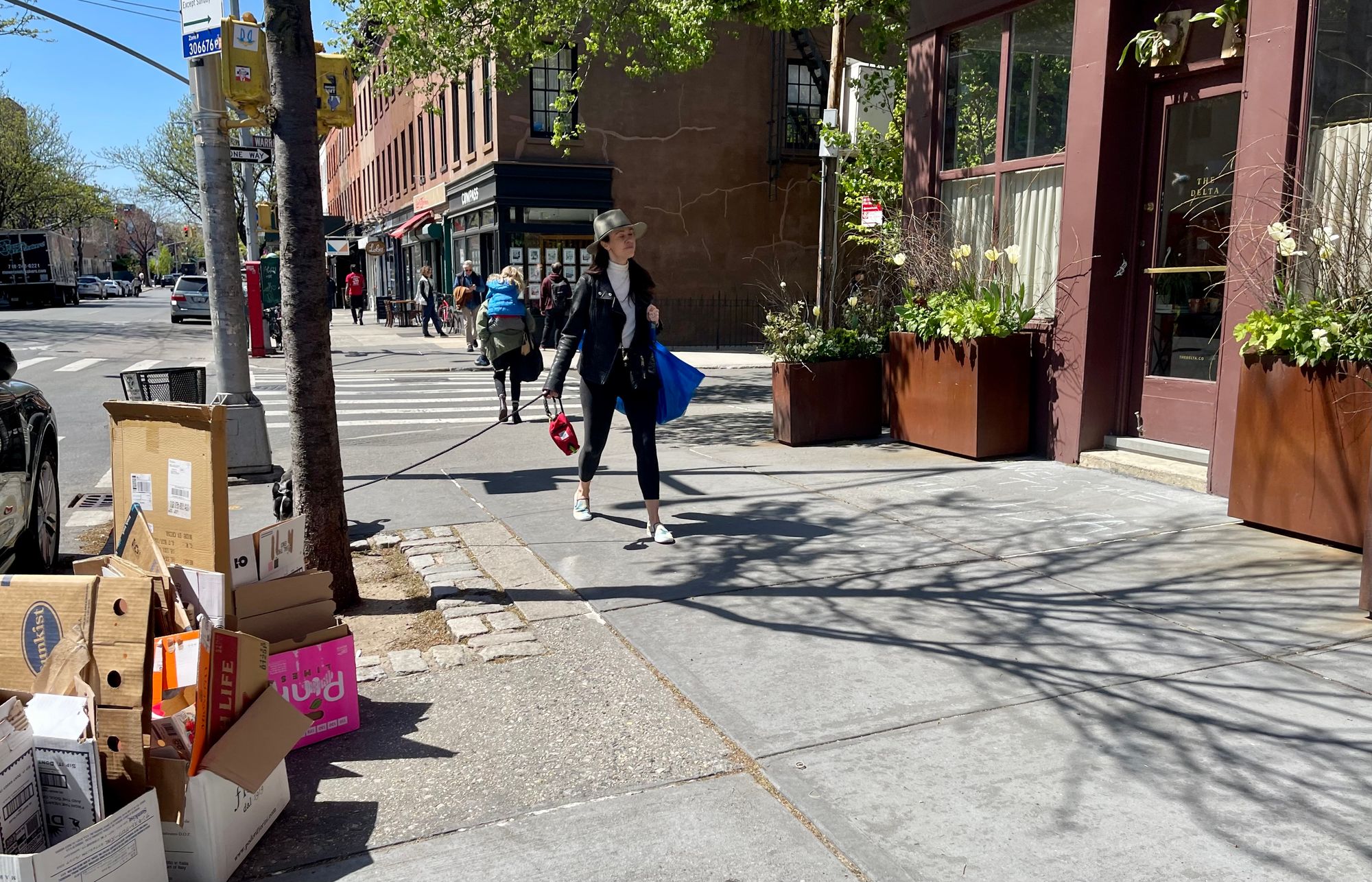
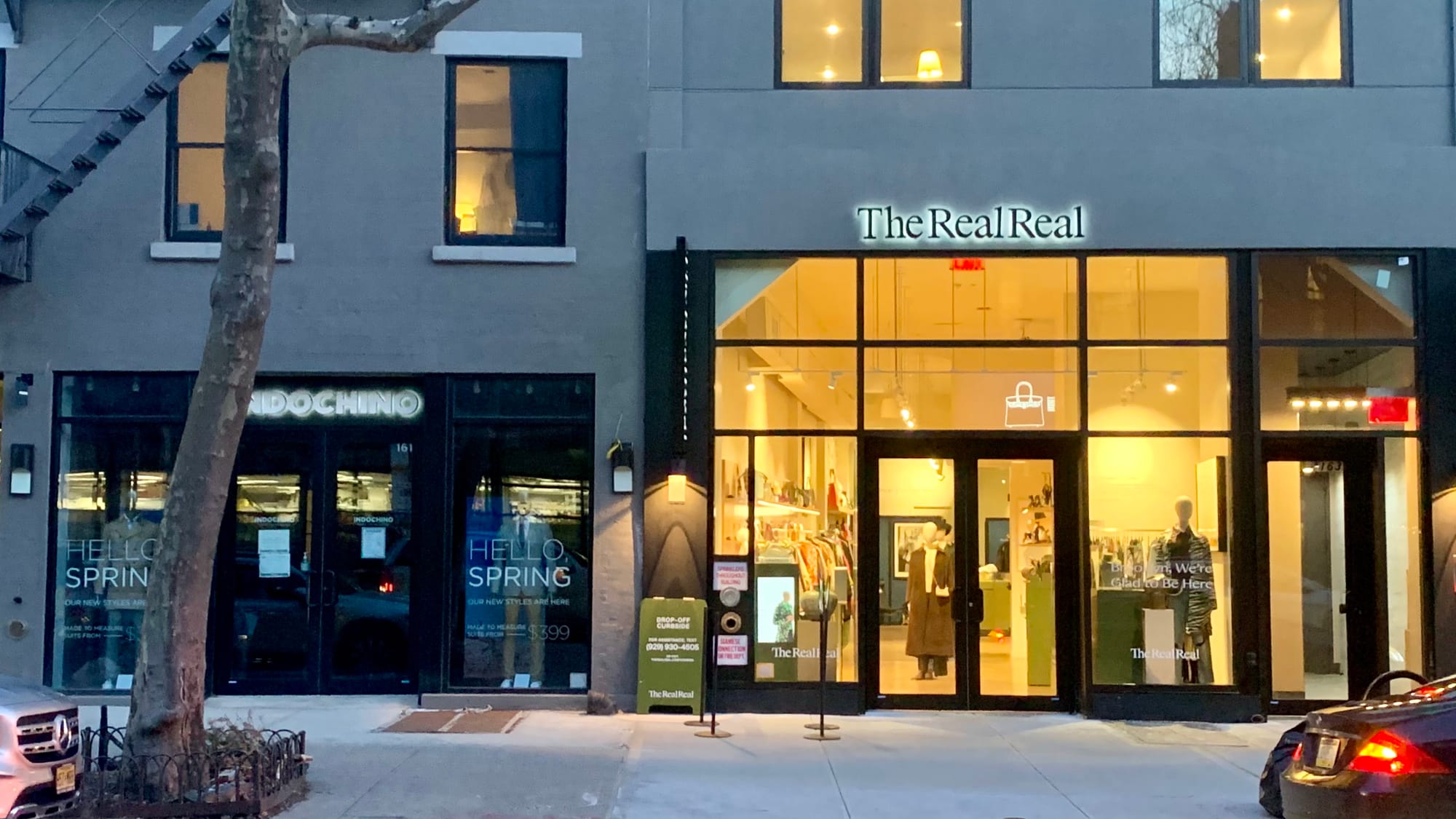
The Book Court was an amazing community hub centered around a book store where people loved to spend time, sitting on the benches in front. However, we lost this great place, and you can see on the lower right hand corner what became of it. The chain stores that have occupied the Atlantic Avenue end of Court Street do not understand the dynamics of the street life that older, more established businesses do.


The first images were taken in 2005...the photo of what replaced the Book Corner was taken in 2021
What we are getting instead - places where improvisation doesn't or can't work
When the organic process of a community shaping itself is stifled, the blocks or sections of blocks that are defined by modern buildings or contemporary storefronts of chain stores dominate the urban landscape. They are defined by design that feels generic, out-of-place, and doesn't fit with the community, and they don't integrate with neighboring establishments or sidewalk life. They replace traditional anchors like small local businesses, which are what give communities their unique character, vibrancy, and lovability. They create a sterile and unappealing public realm that discourages people from exploring it on foot.
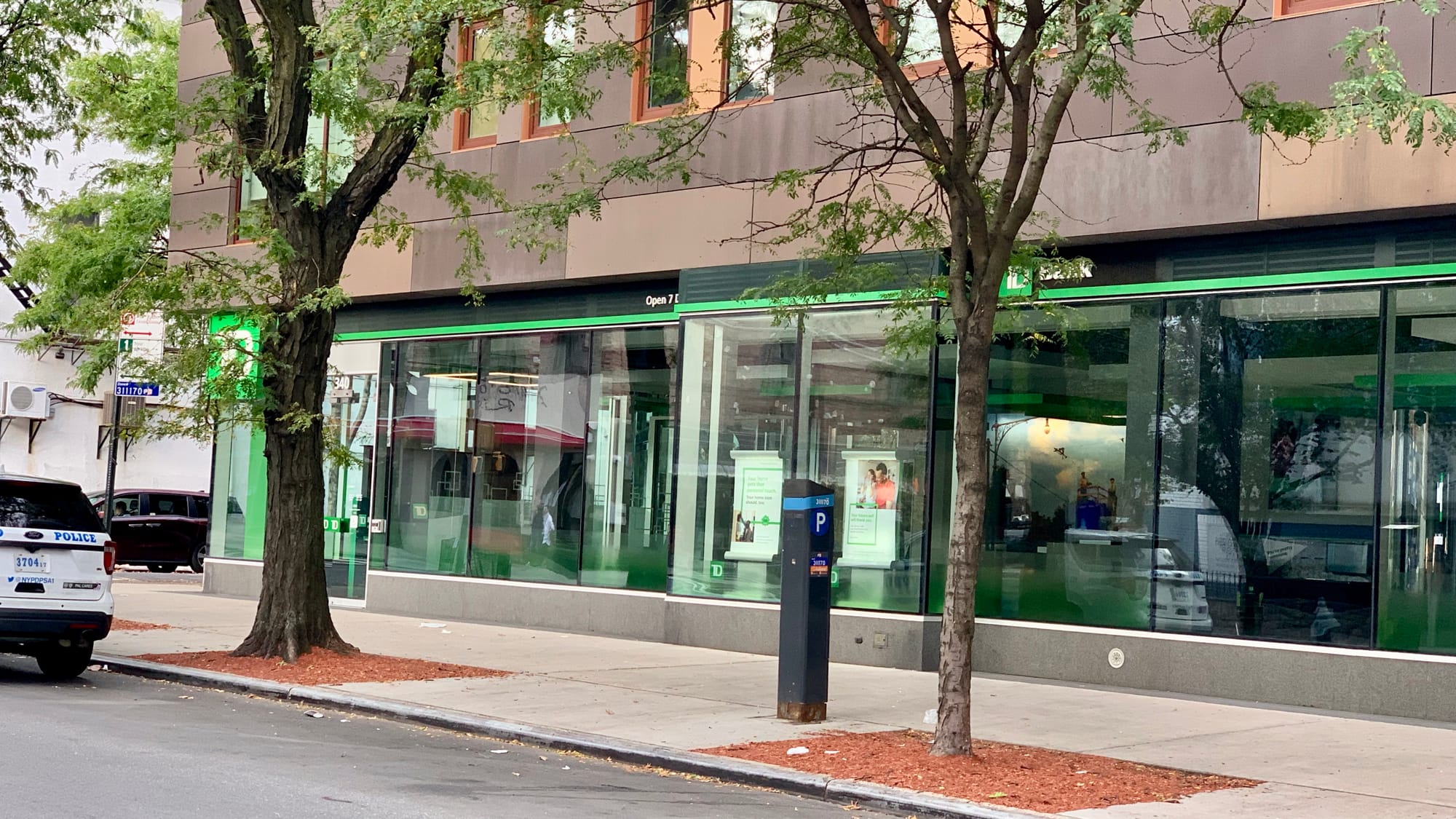
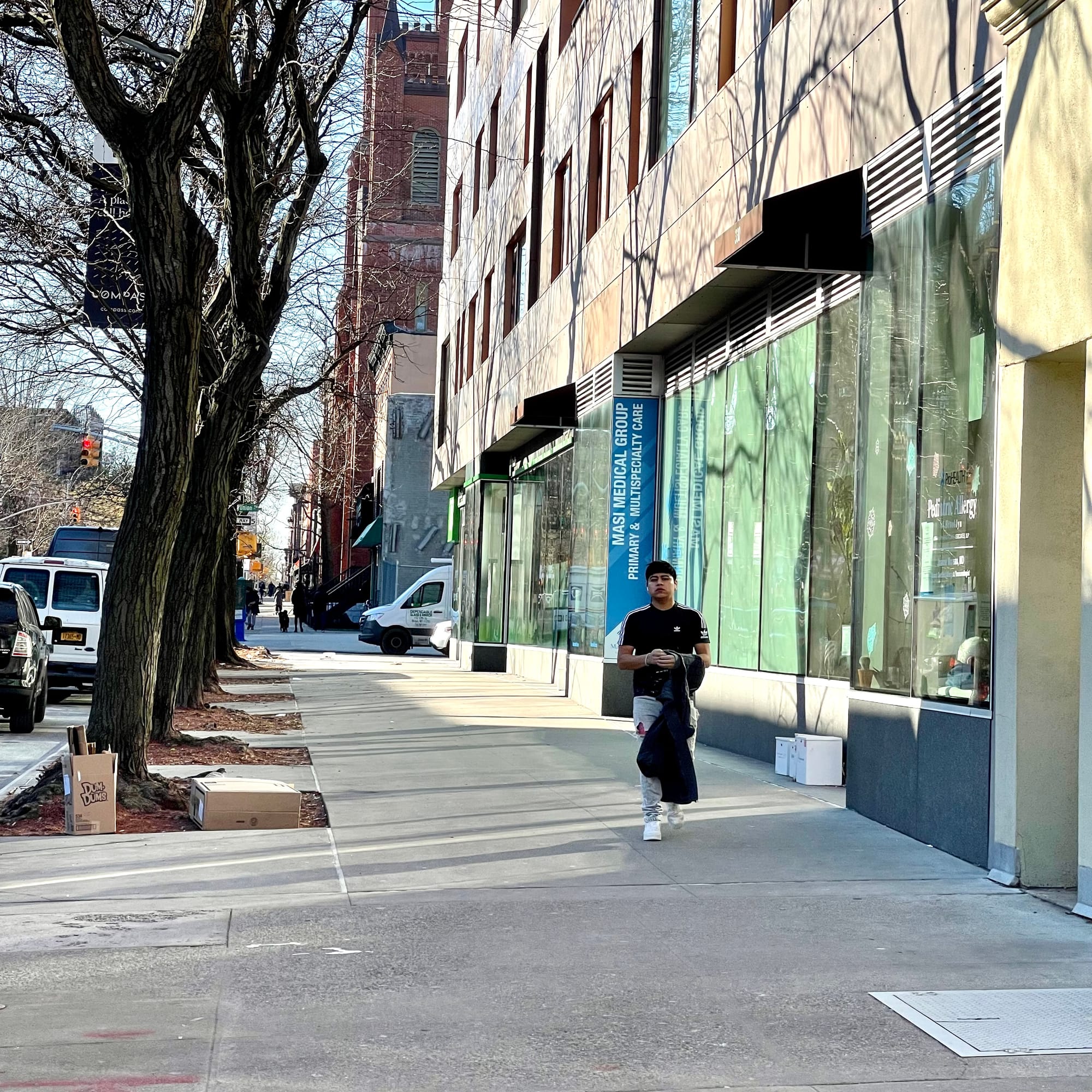
Court Street
There are also various examples of new developments, like the residential tower below, that feel so out of place that they are rejected by the community, true "eyesores" that people avoid and that destroy the lively energy of a once vibrant block.
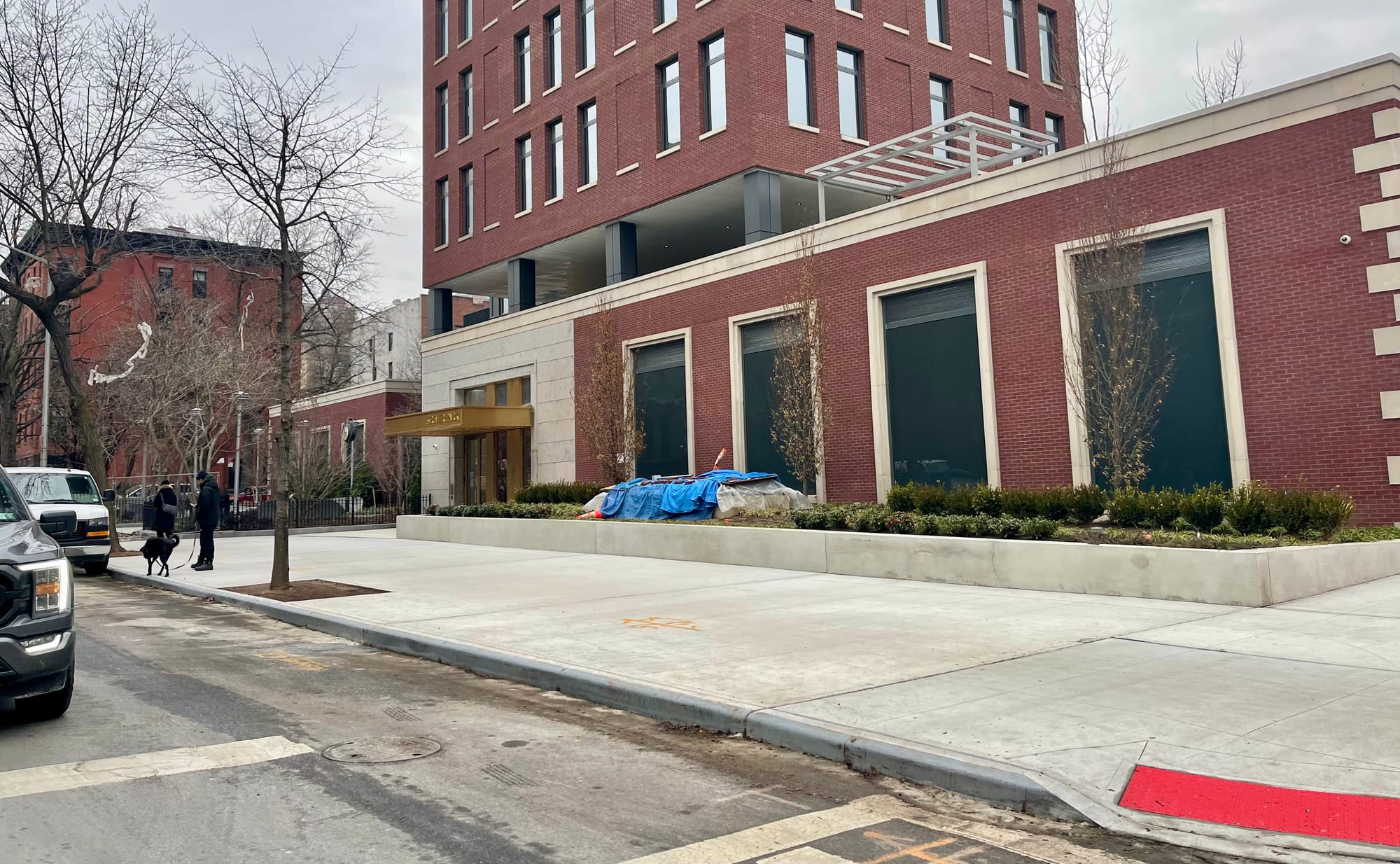
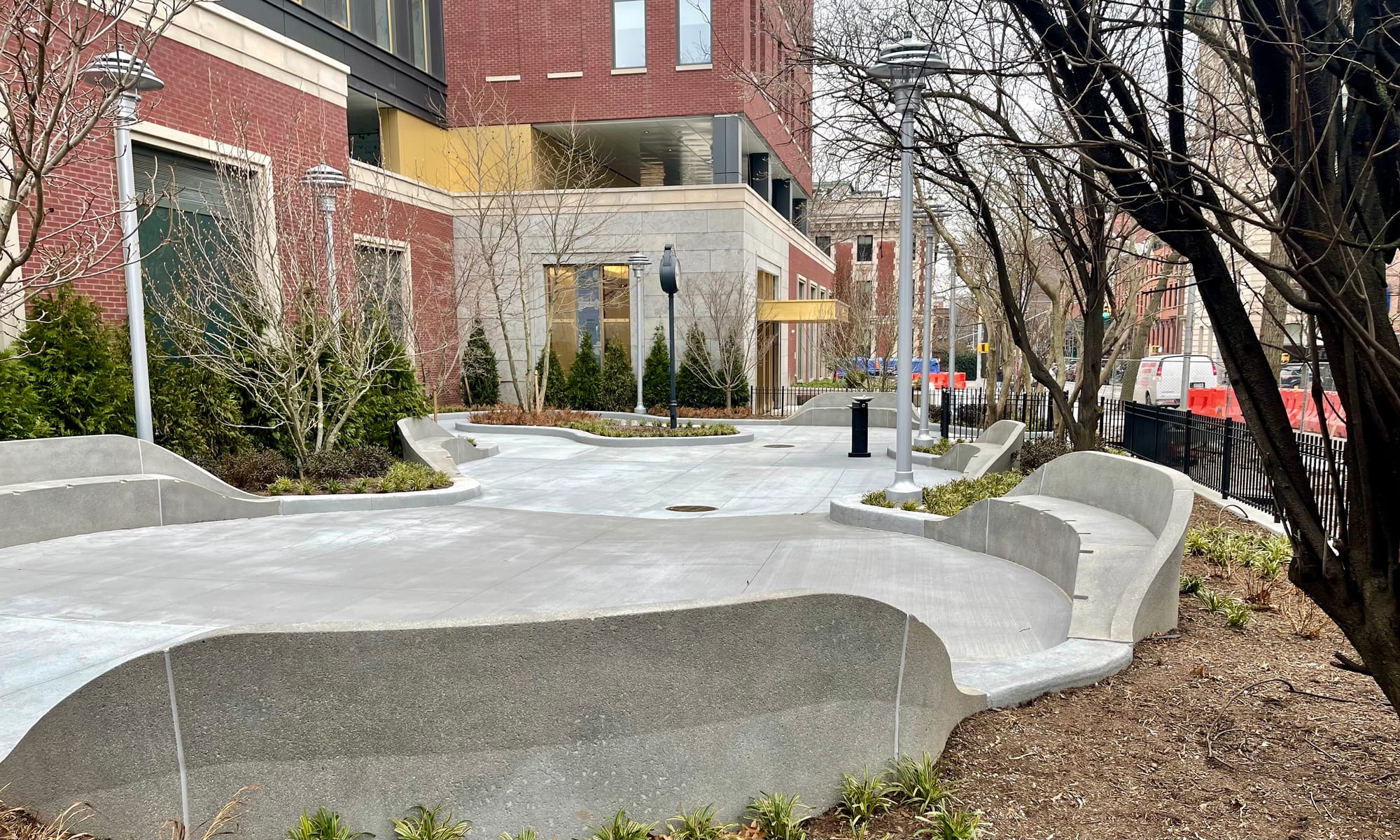
Henry Street
COVID gave us a sense of what it would be like if NYC was a place for people and active social life instead of for cars and traffic. Considering the fact that the vast majority of New Yorkers don't drive, as well as the fact that the city is actively taking measures to decrease the presence of cars in the city via the congestion tax, doesn't it make sense to pursue and support a less car-focused way of living as well?
What's more, it makes sense to empower communities and local businesses to shape their environments into unique and interesting destinations that they take care of and take pride in. This is a practical, hands-on approach to revitalization of both businesses and public spaces. As such, it should be encouraged, not stifled by limiting the freedom of those who want to engage in it. This is an iterative approach which can draw people in on multiple levels, from community members to business owners to local leaders, creating a powerful collaborative effort towards city betterment. It is a great way to get people engaged and invested, improving and maintaining their communities.
New York's dining sheds became institutions in our communities that fundamentally shaped our neighborhoods. Dining sheds made streets better, more interesting, more economically resilient and more enjoyable. They became woven into the fabric of our communities and gave them new life. What's more, they were like the building blocks of "Main Streets" where people and social life can take center stage instead of cars and traffic. Because of this, we need to fight to bring dining sheds back, before we lose forever all the wonderful benefits they brought us and the new way of life they let us briefly enjoy.
The benefits of dining sheds that we are now losing
The freedom to revitalize the sidewalks during and after Covid improved our public spaces and gave us numerous benefits. All of them have now been or are in the process of being taken away. They include:
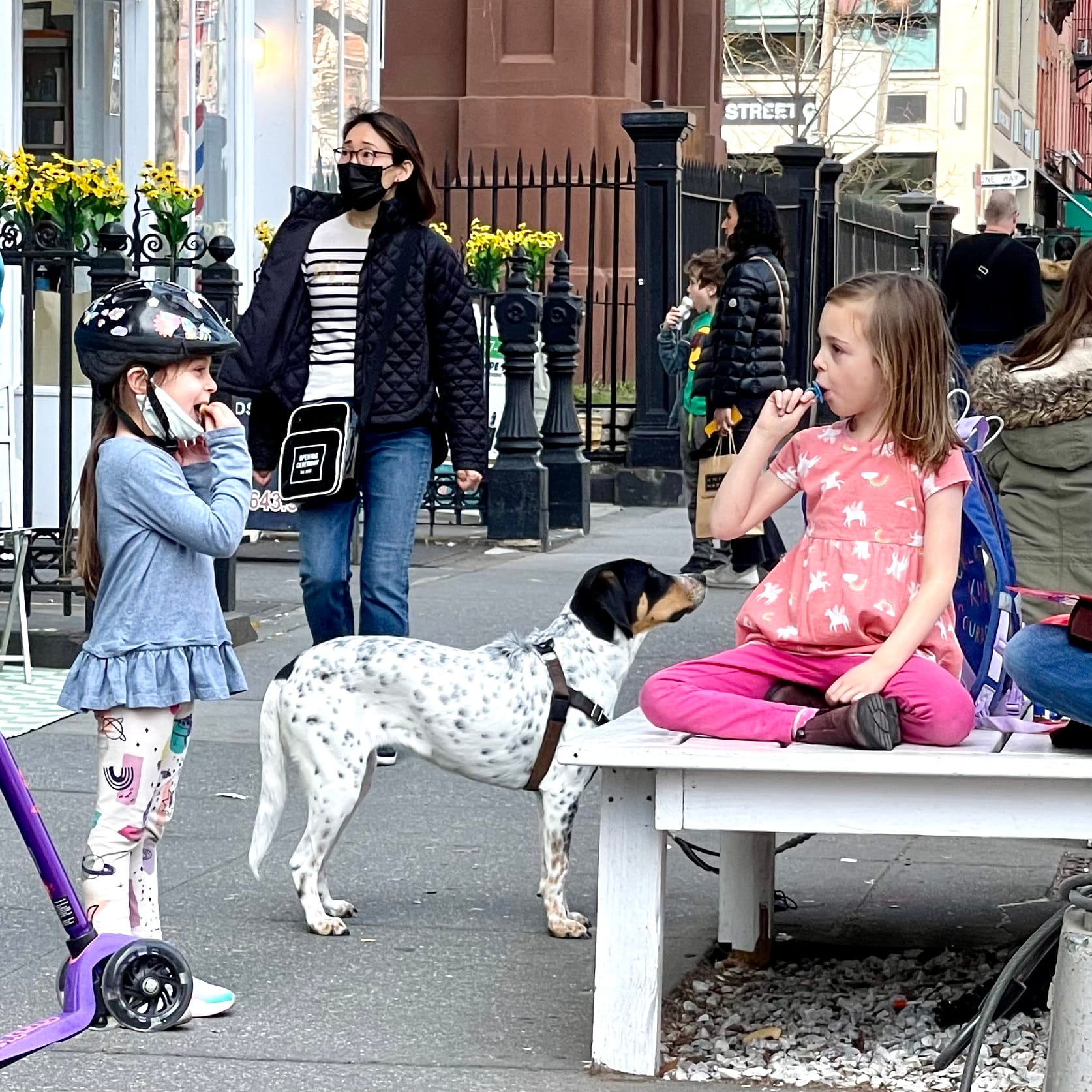
- A relaxed, safe urban environment where kids can explore and roam free and where baby carriages are ubiquitous because parents seek out such places where they feel comfortable to stroll and hang out
- Year-round community hubs offering places for people in the neighborhood to gather and connect with each other
- A pattern of reciprocal gestures that empower and embolden local business owners by giving them the freedom to improvise
- Open windows for food offerings which create opportunities for families who don't want to or can't do a sit-down meal
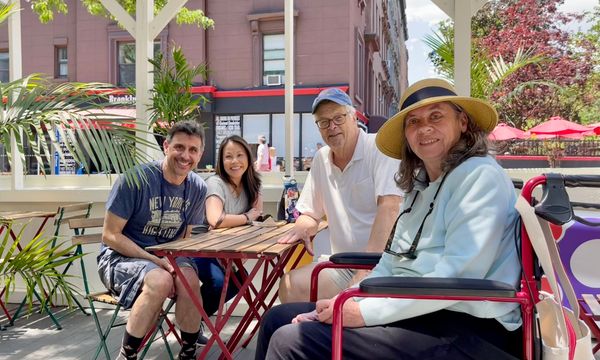
- More easily accessible dining areas for people with mobility aids who find it difficult to maneuver inside a restaurant
- More opportunities for connection because people like to gather with friends on the street, not inside a restaurant in a more formal way
- Calmer traffic and safer streets because dining sheds create visual friction and pedestrian activity, slowing down drivers who intuitively feel they must drive more carefully
- Much more engaging and interesting sidewalks since double-loading creates a "pedestrian aisle" down the middle of the sidewalk where there are things to see and do on both sides
- More contact with the proprietor who is often out on the street with patrons, creating a relationship between community members and local business owners
- A feeling of community ownership and investment in local business activity because it takes place on the shared territory of the sidewalk, not inside of a private building
- People behaving in a more natural, comfortable, and relaxed way and being more open to connection. The sidewalk becomes shared space that welcomes everyone of all ages and types
- Neighborhoods that have transformed from "bedroom communities" into 24/7 destinations where people enjoy spending their time because there is a greater variety of things to do at all hours and all seasons
 Fred Kent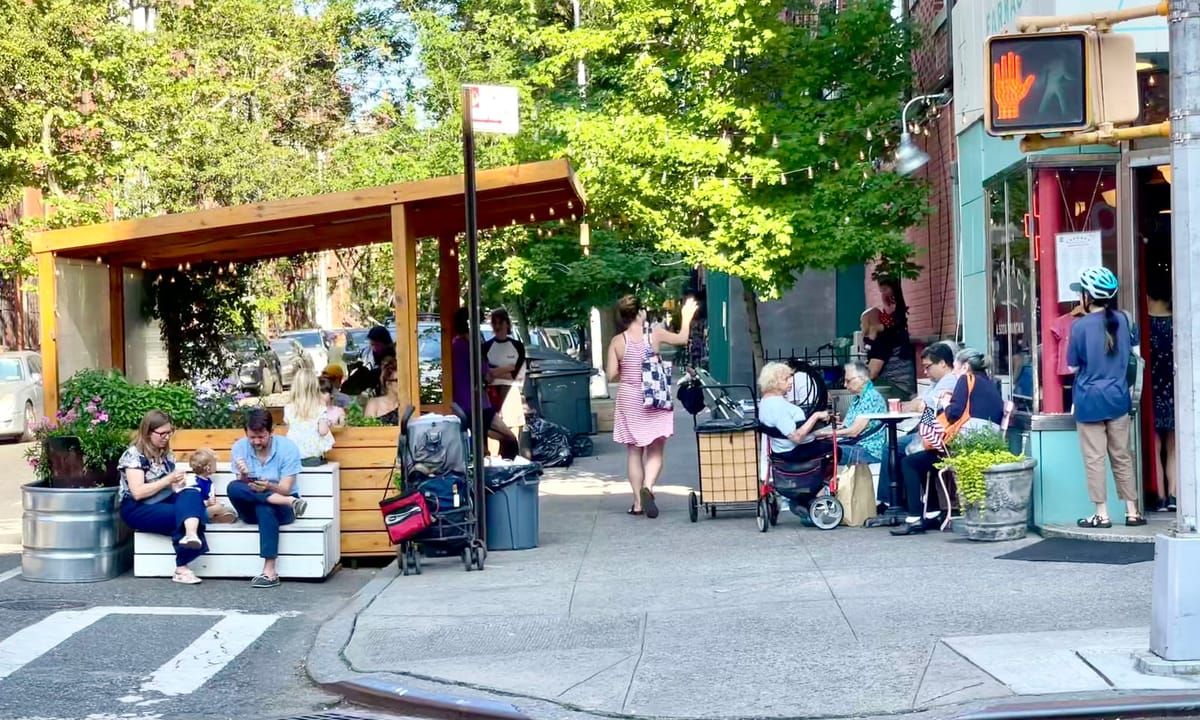
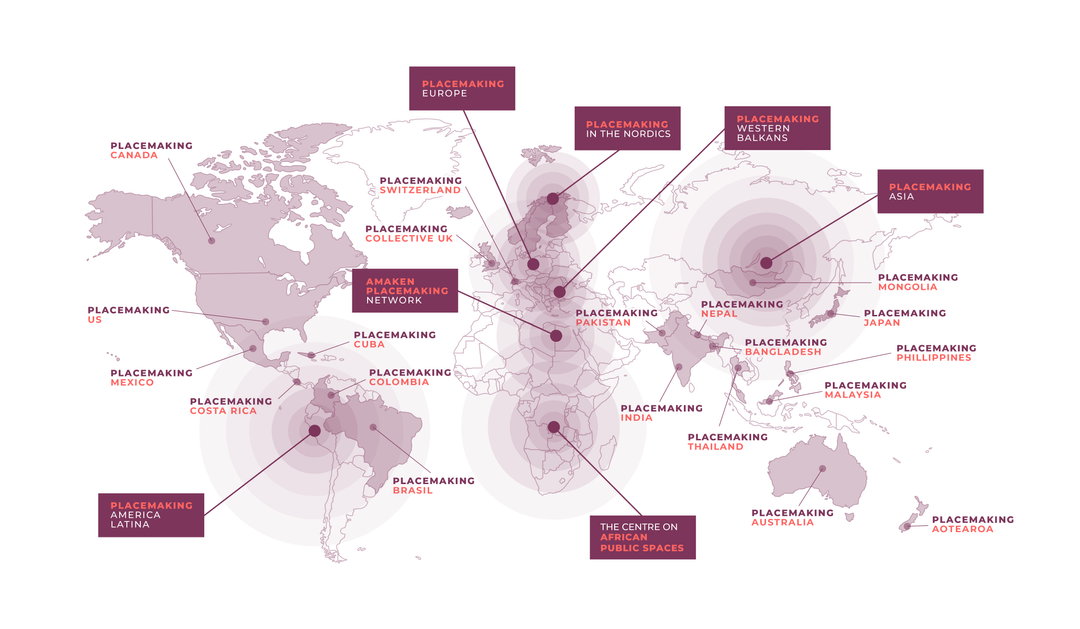
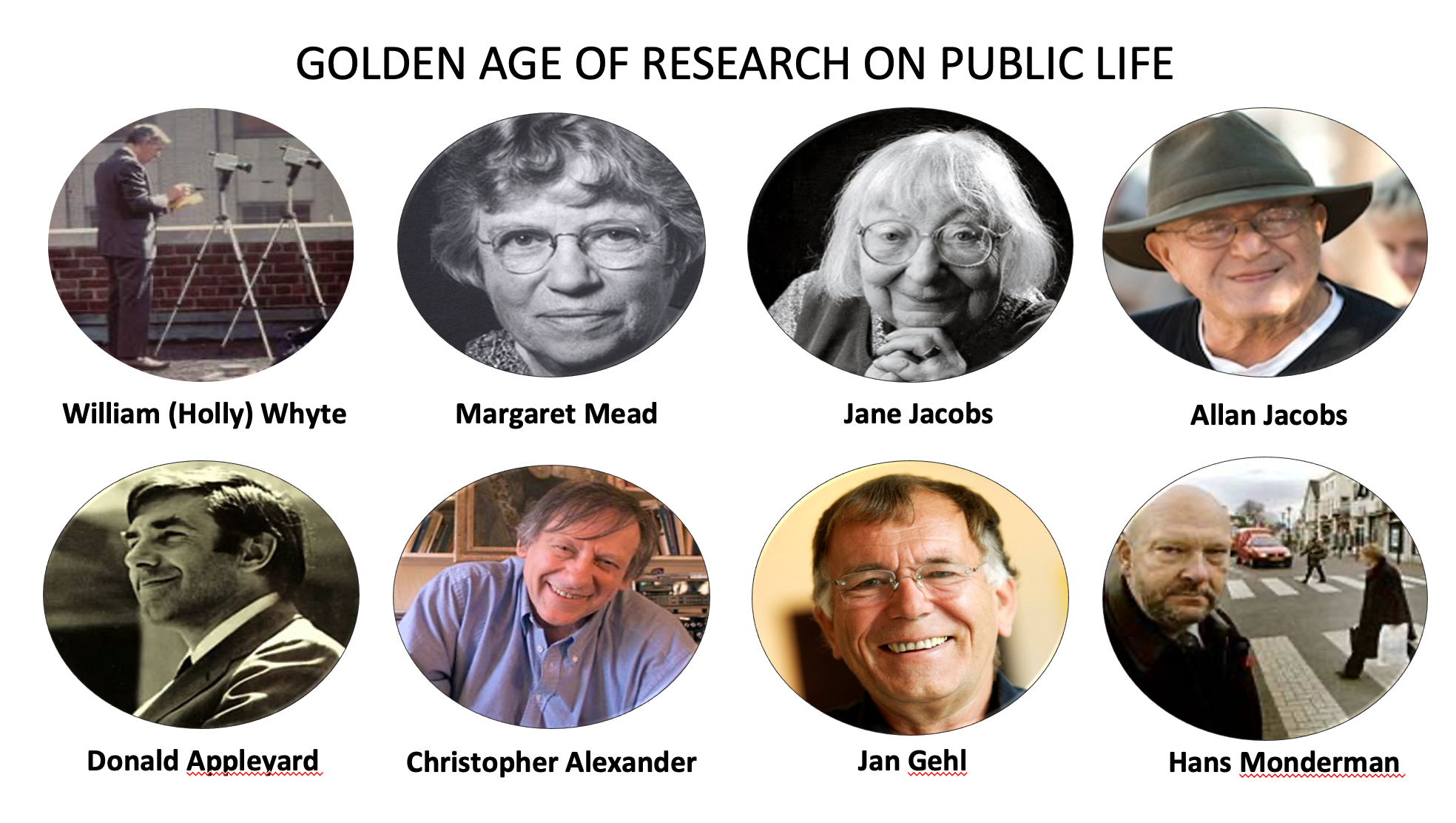
We have led the Placemaking Movement for 50 years. There are over 30 centers of Placemaking globally. Our mentors were part of what we call The Golden Age of Research on Public Life