Paris's Peerless Placemaking: How the City of Light Breaks the Rules to Get Things Right
"There are more and more of us fighting for a different vision of the world—a world that takes care of our most precious resources: the air we breathe, the water we drink and the places we share." — Anne Hidalgo, Mayor of Paris
In the 1960s and 70s, like many other cities, Paris experienced an automobile boom. Cars flooded the streets and began to dominate the city's best spaces. All around the world, designing for and around cars rapidly became the norm. Sidewalks were shaved down to give more space to car lanes, squares became intersections, parks became parking lots, and outdoor life was sacrificed left and right to make way for car infrastructure. The focus shifted from making places worth spending time in to making spaces easy to drive through.
In 2002, Parisians decided that enough was enough. Their beloved city was being gradually stripped away to make room for the insatiable demands of traffic and the sacrifice wasn't worth it. They were tired of cars taking up so much of their city, polluting their air and making their streets dangerous, unpleasant, and stressful. So under the leadership of Mayor Bertrand Delanoë and his First Deputy Mayor Anne Hidalgo (who later became mayor herself), Paris began a revolutionary transformation – taking back the city from cars. To do so, they had to break the unwritten rules of car culture that had infiltrated much of the world.
 Fred Kent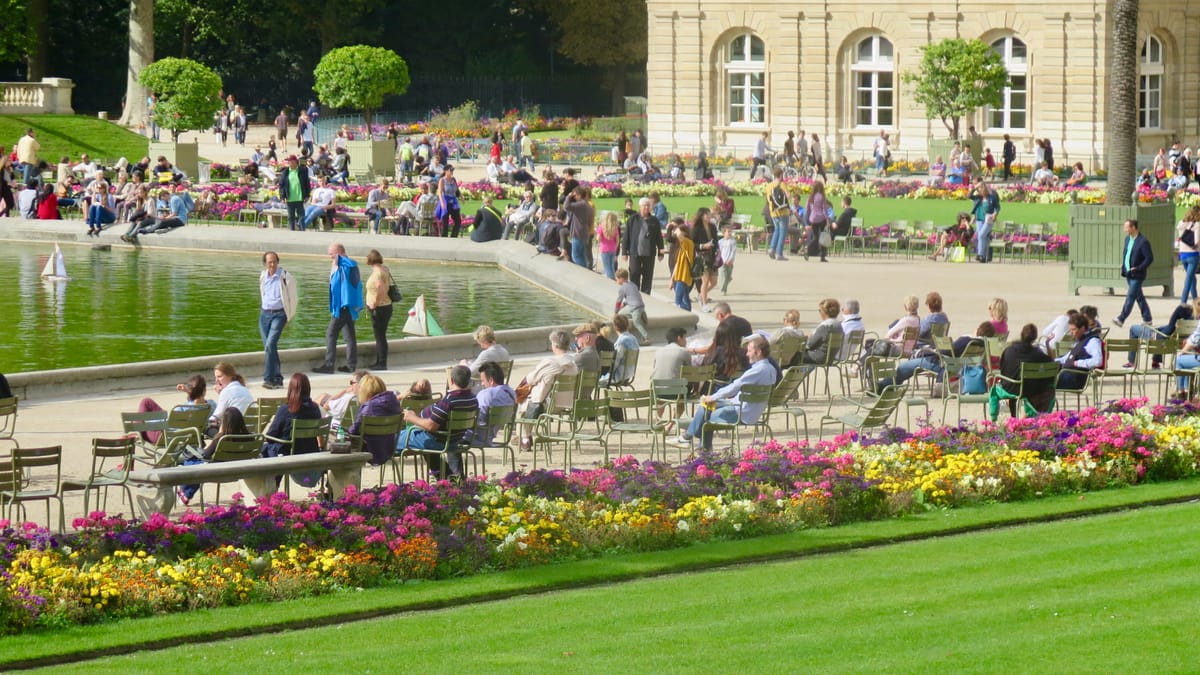
How Paris "Broke the Rules" While Most Other Cities Succumbed to Them
In the past few decades, our cities have been stifled and often ruined by unwritten rules regarding who the city should be built for – mainly cars and big business interests. Paris is an incredible example of a city “getting it right” because of how, in the last 20 years, it has broken many of these rules and shifted its focus to create the best city for people. The priority of city government has turned to creating neighborhoods where people can be healthy, connected, and happy, and to develop a city that is resilient in the face of climate change and the demands of the future.
What Paris does differently:
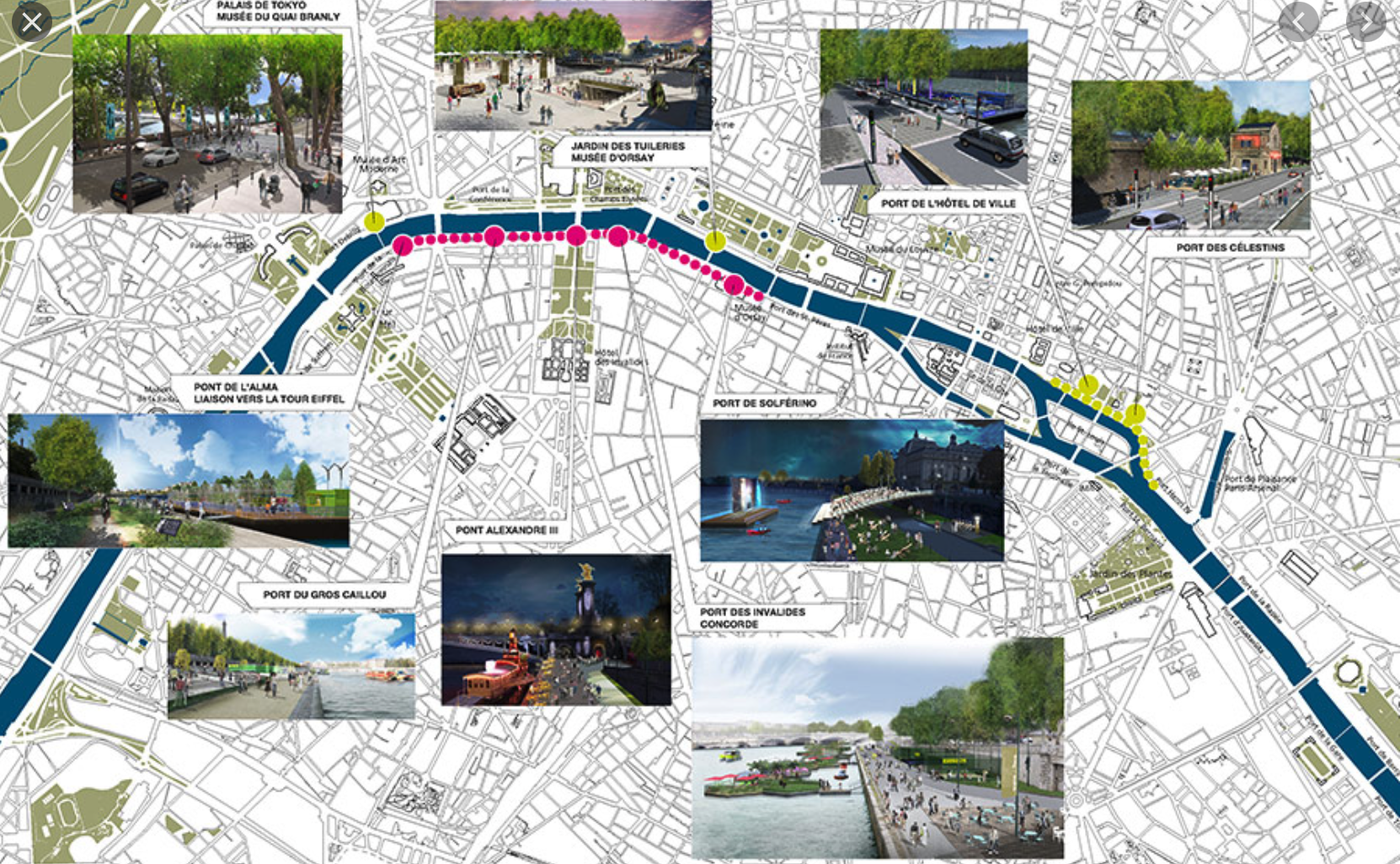
- Paris' waterfront is unlike any in the world. The pedestrian areas, upper level roads, and numerous connections into surrounding neighborhoods now form the "spine" of Paris, tying the Left Bank and Right Bank of the city together. The waterfront is made even better by newly possible swimming in the river, activated bridges, and the now famous Paris Plage.
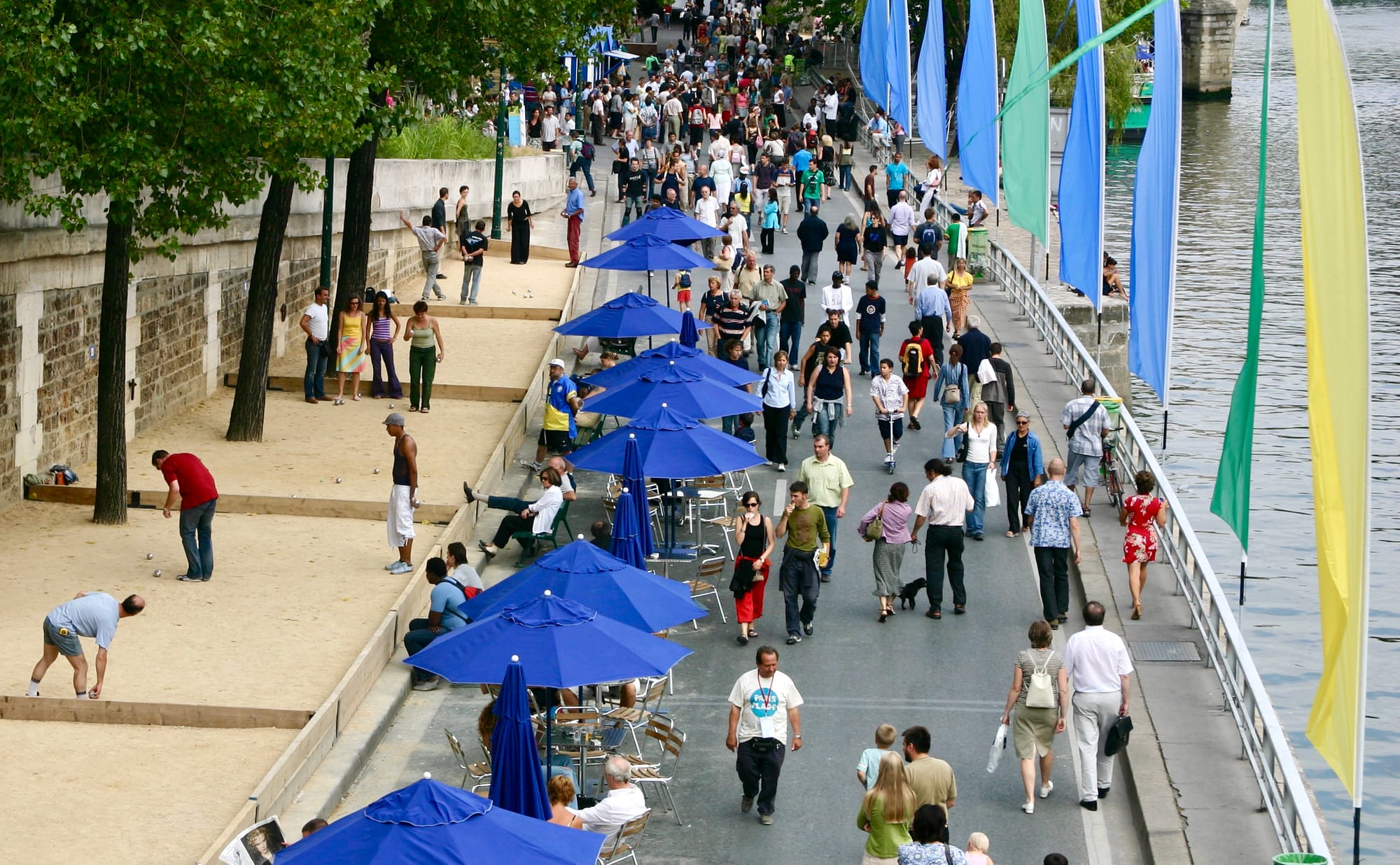
- The once busy highway along the Seine was transformed into a vibrant pedestrian boulevard, with numerous amenities and regular programming along the river banks.
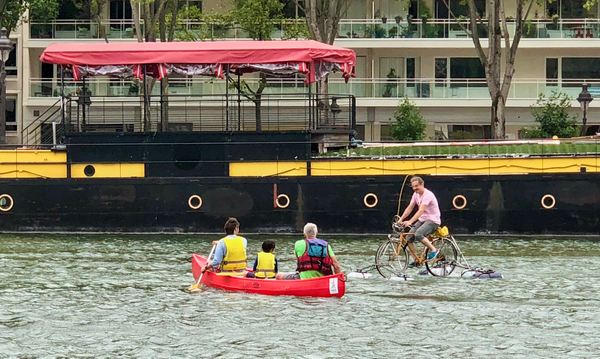
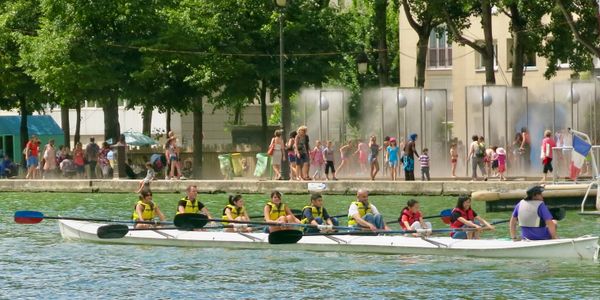
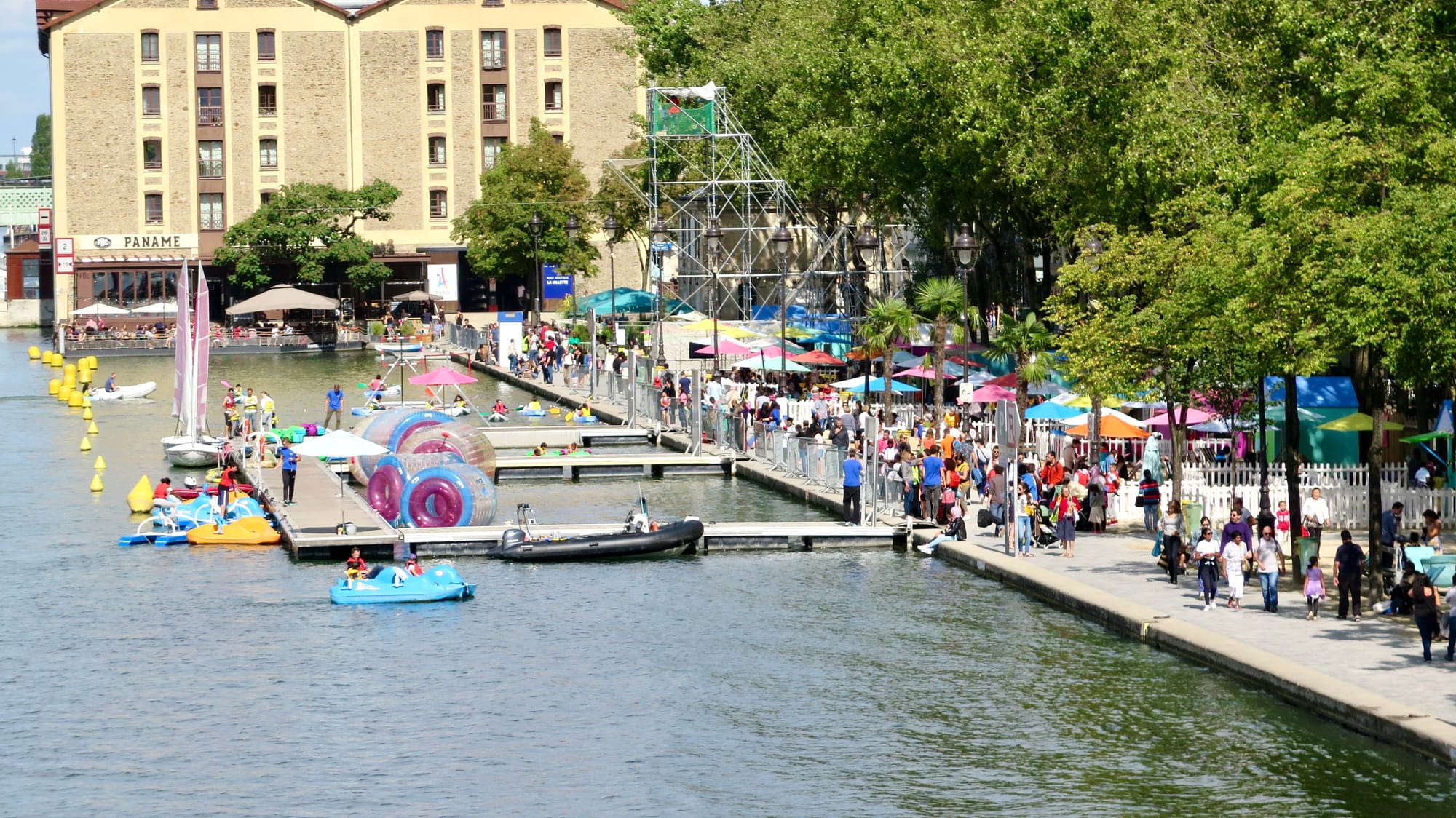
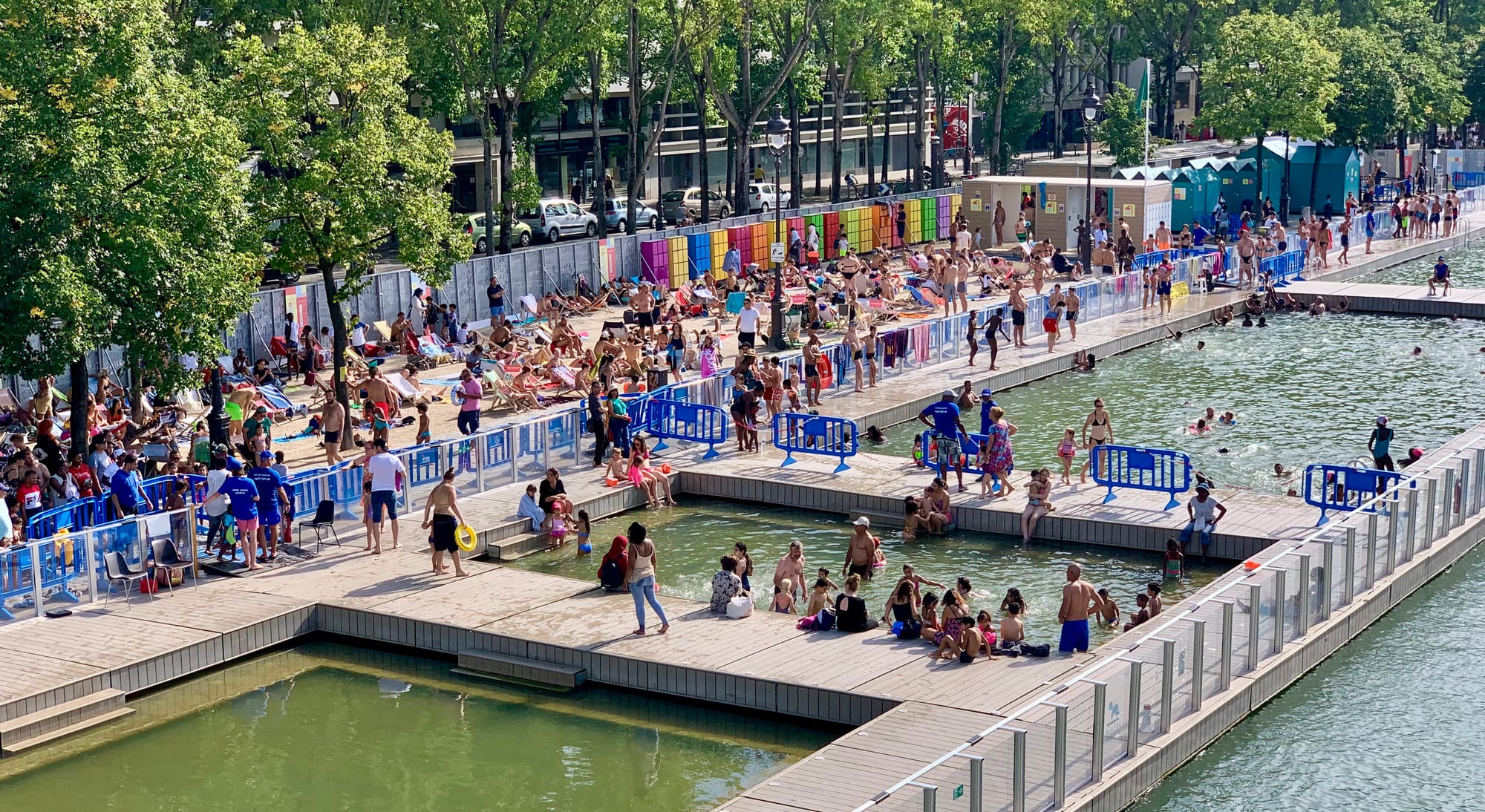
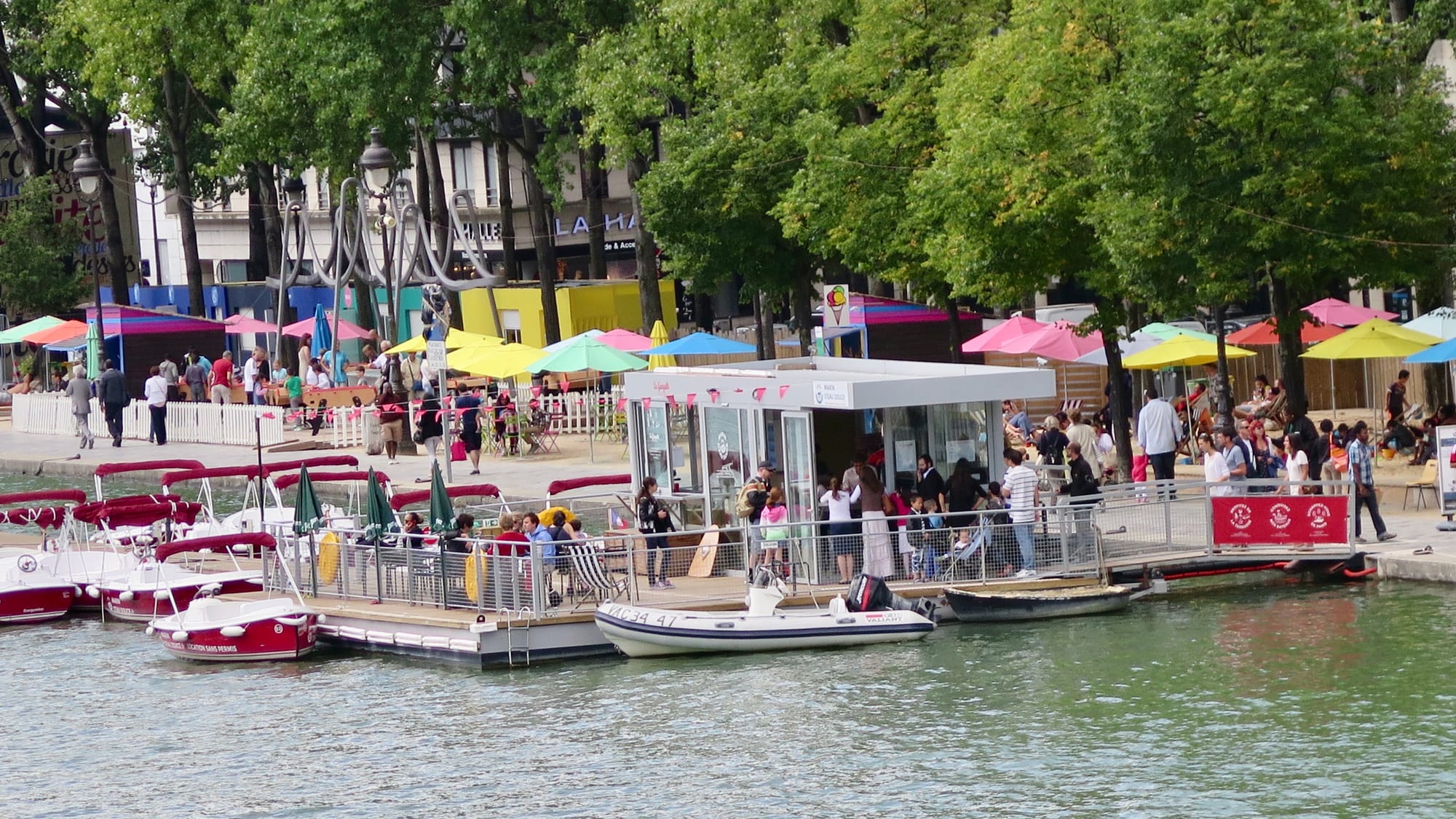
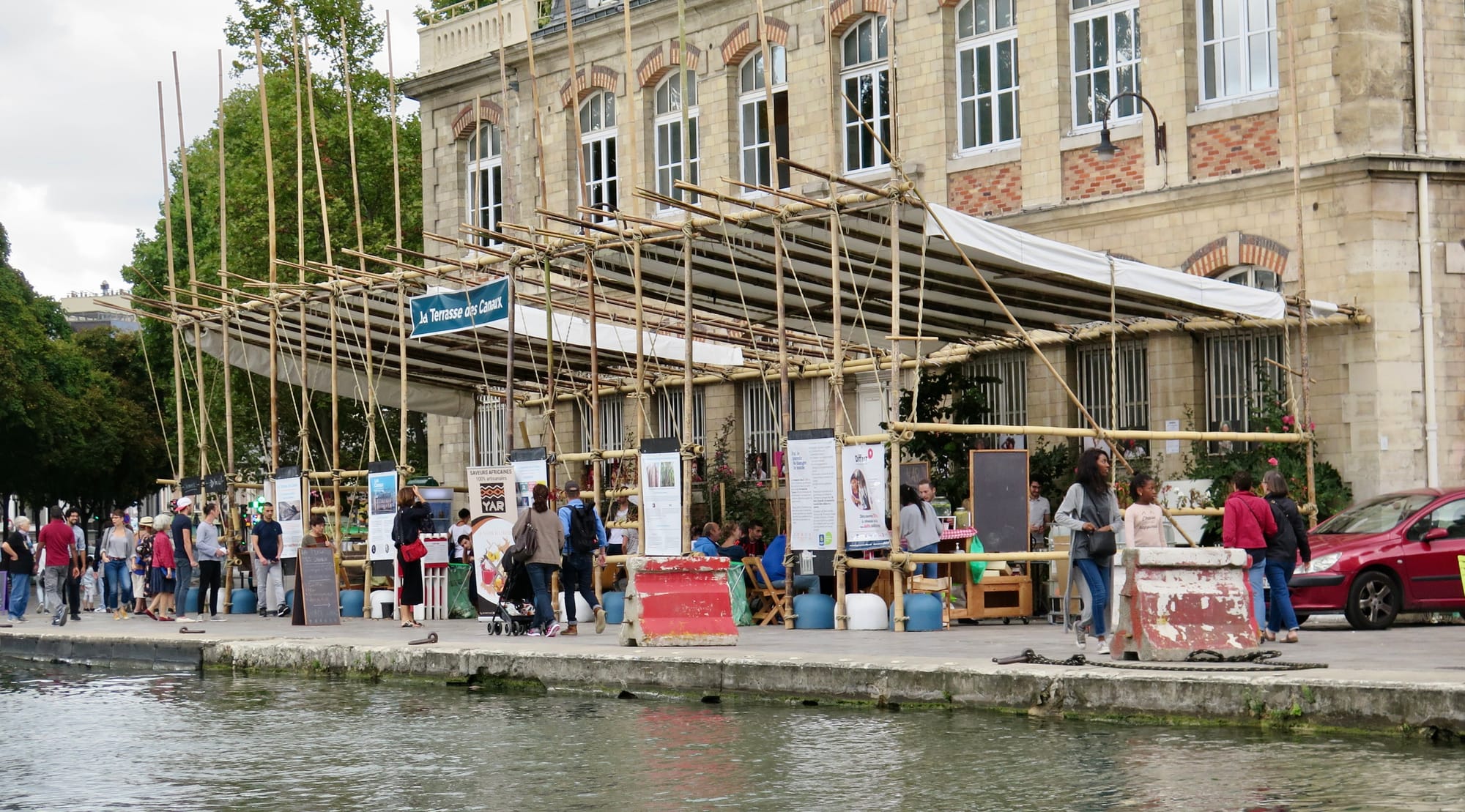
- The waterfront activation efforts have spread north to Bassin de la Villette – another fantastic example of transforming a channel into a series of public places, what urbanist David Engwicht calls "not just a corridor, but a series of rooms."
- Paris is de-centering the car. The city is gradually removing car lanes and parking spaces, adding bike lanes, and creating vibrant neighborhood market streets that welcome foot traffic over car traffic. Streets are not just for cars, but for everyone.
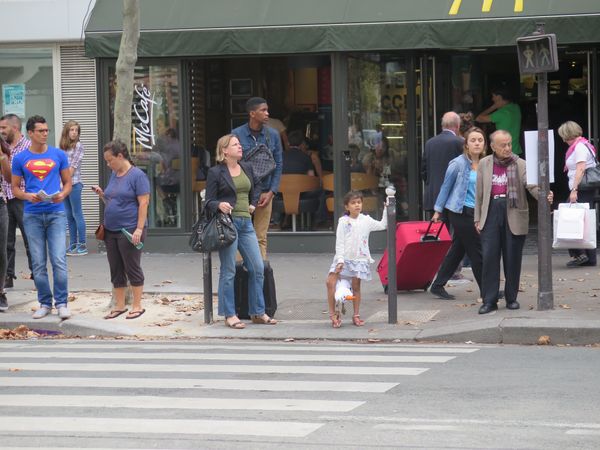
- Sidewalks are central to public life. While other cities have been forcing pedestrians to squeeze past each other on narrow strips of sidewalk, Paris offers ample sidewalk space along its widest streets with ongoing efforts to enhance pedestrian areas in multiple locations.
- Corners and intersections are "activated" with great cafes and restaurants, creating engaging connections between streets and neighborhoods, not just hostile knots of traffic.
- Community-centered, pedestrian friendly market streets, lined with shops and eateries and characterized by little car presence, are the main shopping and gathering places in many neighborhoods.
- Instead of pro-car planning, Paris is working on pre-car planning where the city is designed for convenience on foot, bike, and transit rather than by car, with the goal of creating a "15 minute city."
- Green mobility is a big priority for the city as it aims to become better prepared to address the demands of climate change and to reduce pollution. During Covid, Mayor Anne Hidalgo significantly expanded the cycling infrastructure in accordance with this goal.
- Paris is increasingly tuned into the well-being of its citizens and visitors, providing them with great public places where they can relax, connect, and thrive such as Luxembourg Gardens, Bassin de la Villette, and more.
- What makes Paris' public places so great is the extensive integration of all kinds of amenities aimed at making the experience of being there more enjoyable, comfortable, and interesting.
- Paris' museums and civic buildings act as centers of public life rather than just isolated landmarks. The grounds around them are often activated with amenities, entertainment options, and programming for the public.
- Paris' architecture prioritizes beauty over modernity. The city has forbidden developments that rise higher than 37 meters in the city center in order to maintain the city’s historic beauty, character, and visual harmony. Beloved historical buildings take precedence over new development interests.
- Much of Paris' governance happens at the arrondissement level which is local enough to be effective at getting changes implemented and robust enough to be a meaningful political force.
1) It All Started with the Waterfront in 2002
Paris began changing in such significant ways that, in a few short years, it turned into the most notable transformation of a car-centric city into a people-centric city in the world. The ball started rolling with the Seine waterfront which was the site of one of the boldest urban revitalizations imaginable.
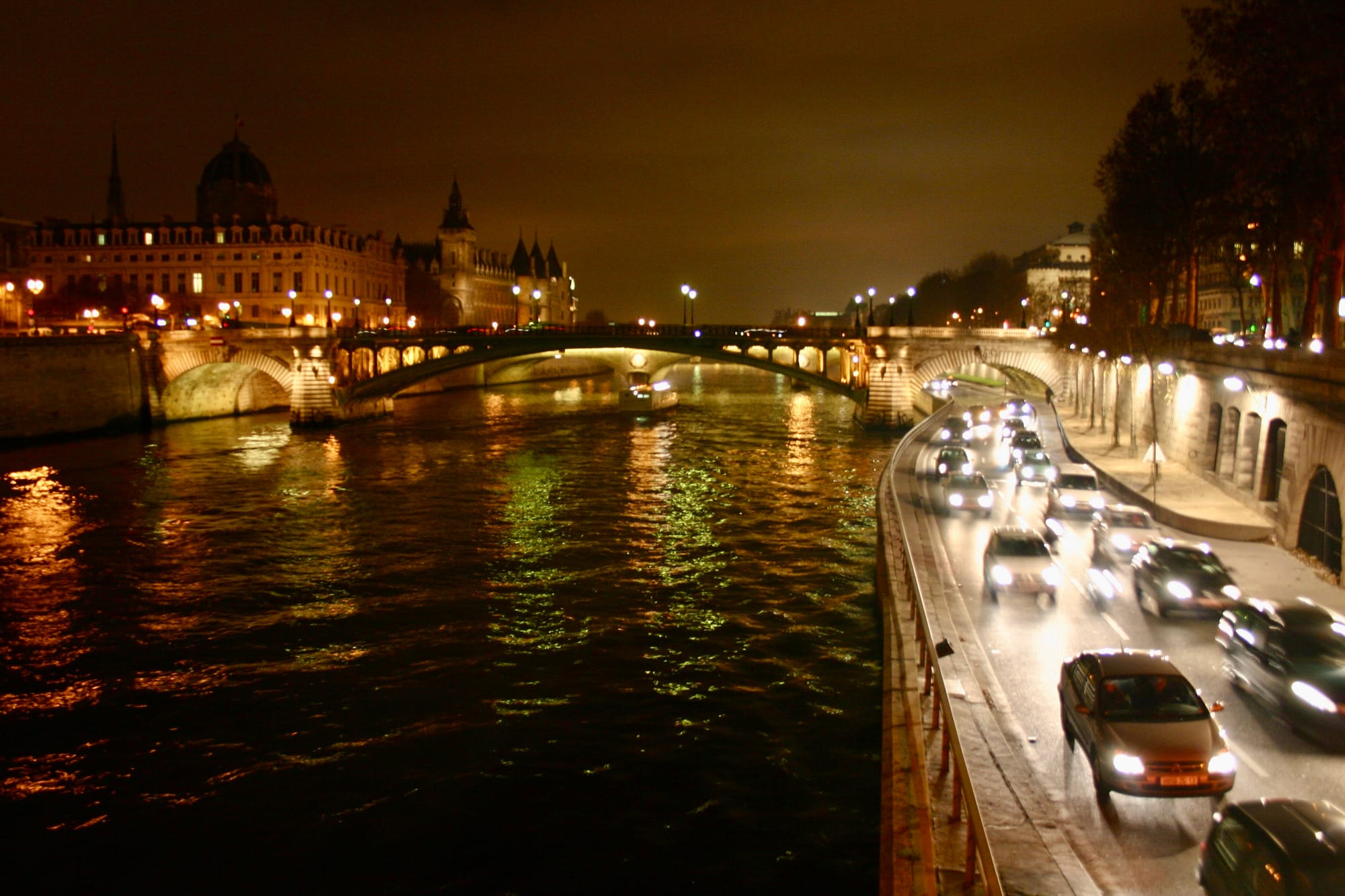
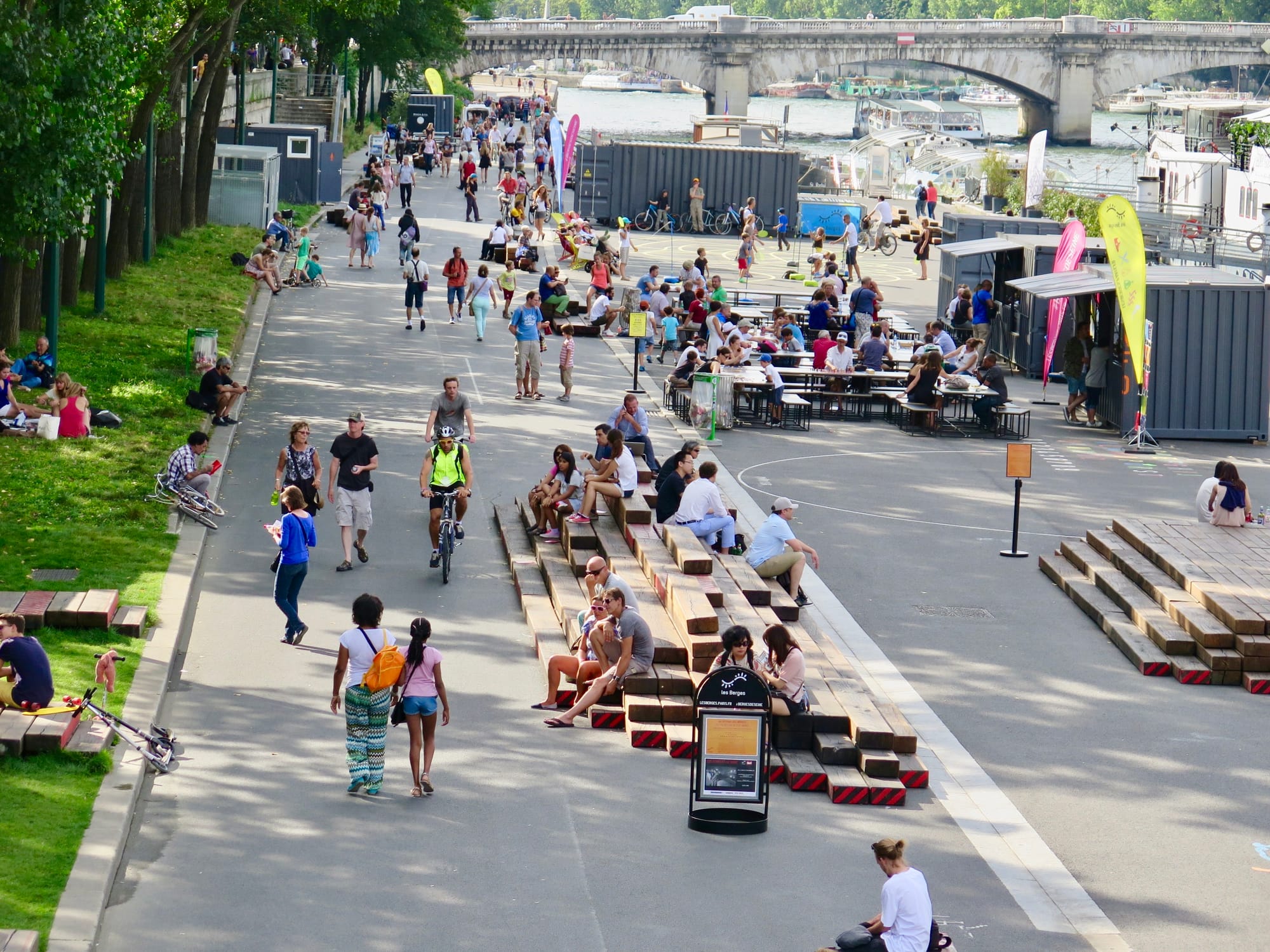
What had become a multi-lane highway by the water with 40,000 cars passing through it per day was transformed into a magnificent car-free public space full of activities, amenities, and events. Now, it is a world-renowned destination when not long ago it was just a place to drive through. In other words, it has become what urban planner David Engwicht calls "a series of rooms instead of a corridor."
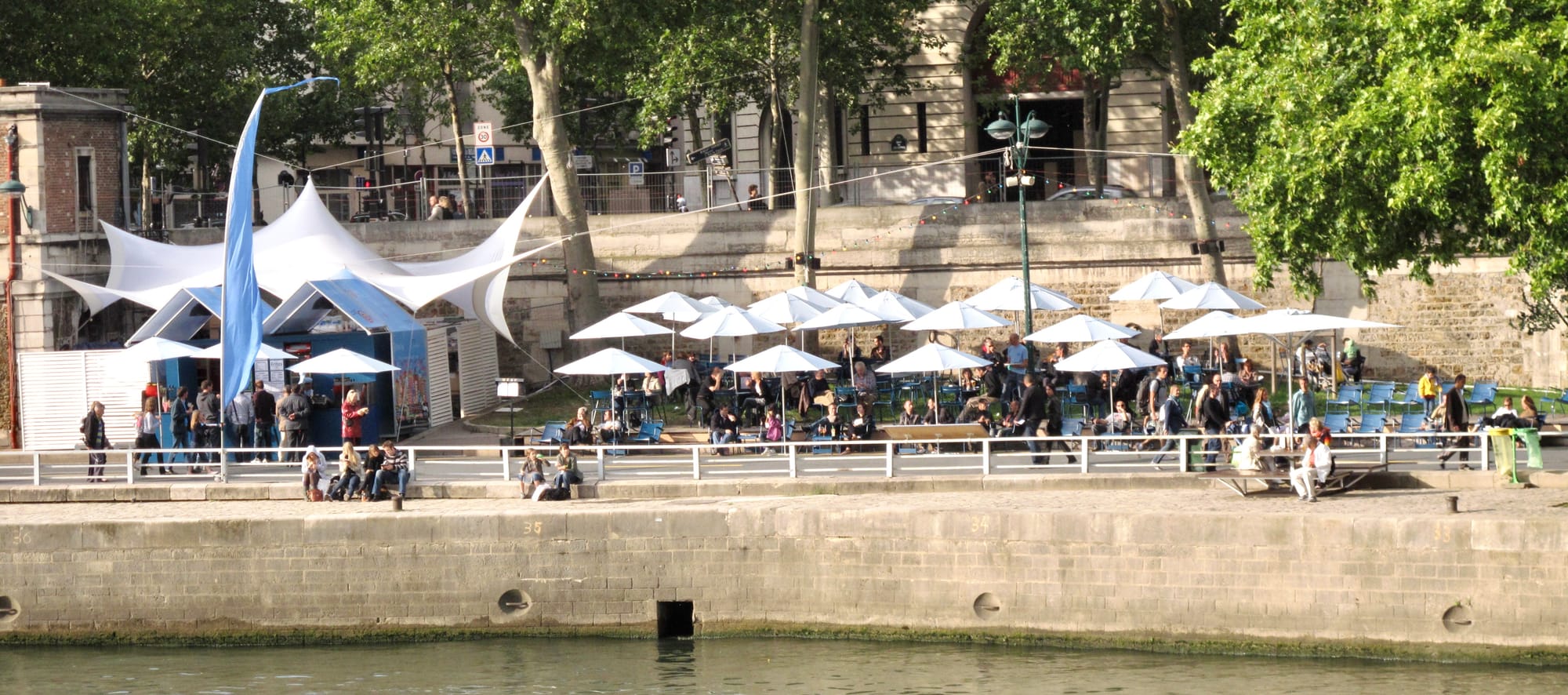
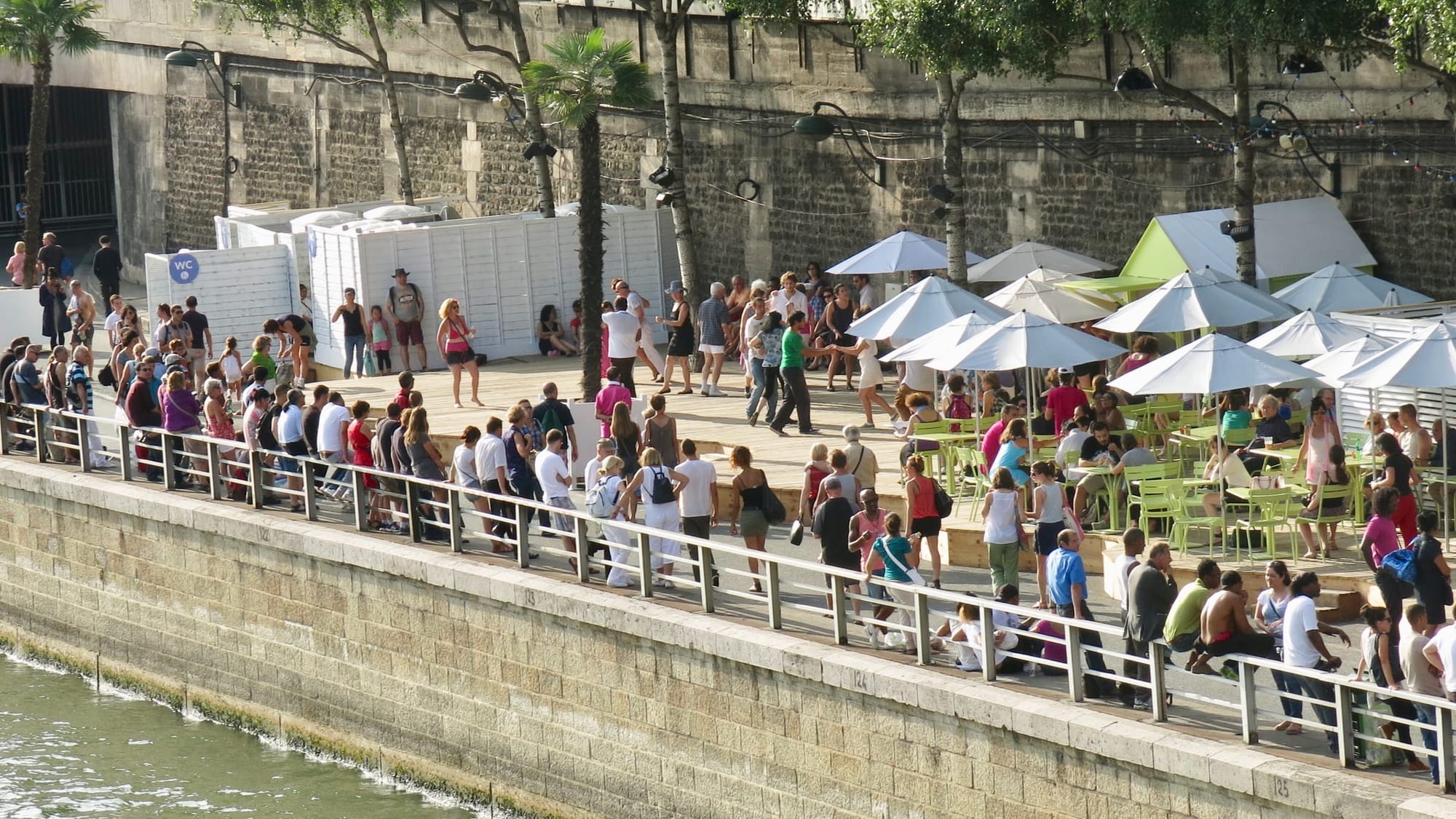
Paris Plage and Les Berge (The Right and Left Banks) – not just a corridor, but a series of "rooms"
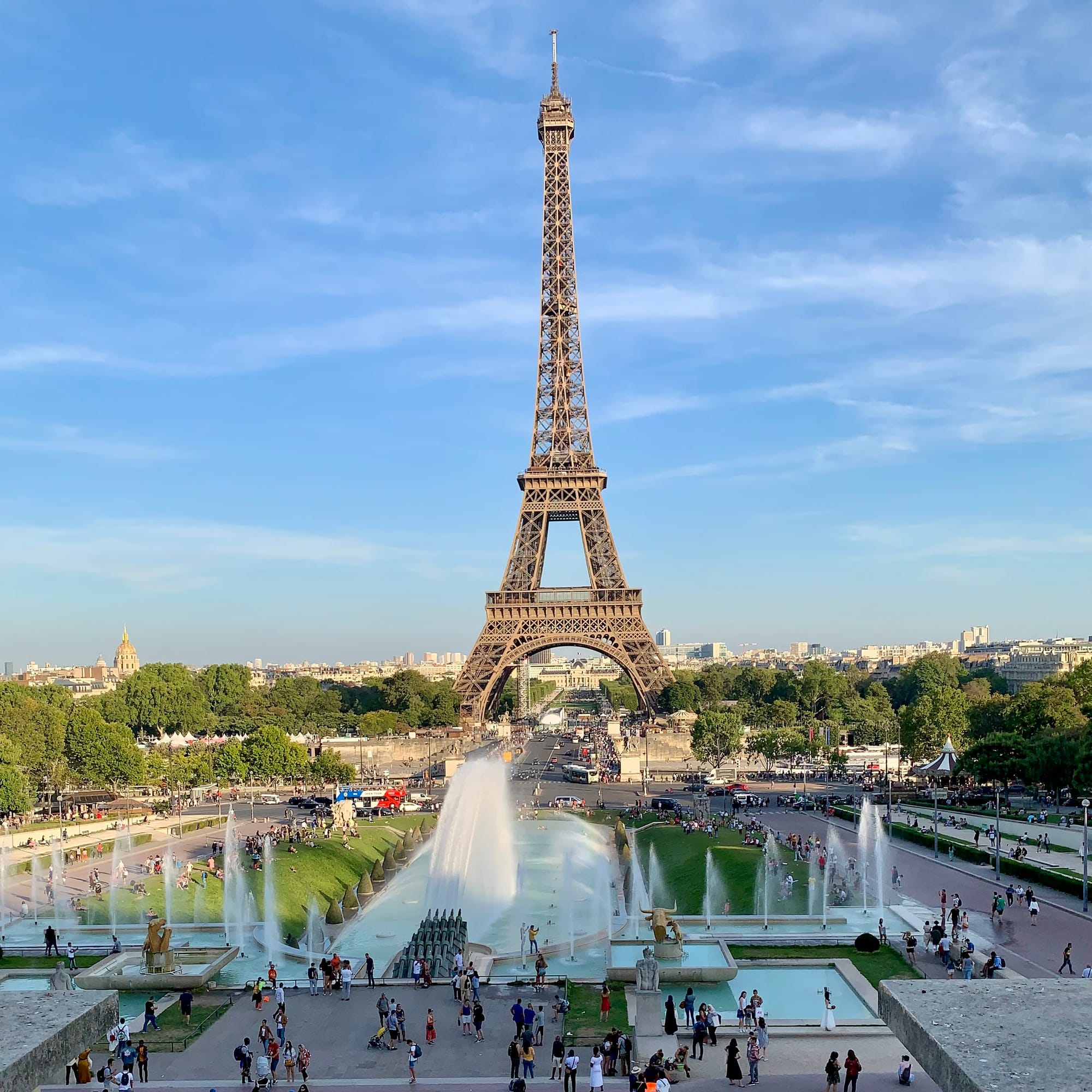
Today, the Seine is a grand boulevard that includes the river, its banks, and the side access roads and bridges connecting both the Right and Left Bank. Both banks are thriving with social and community activity throughout the year.
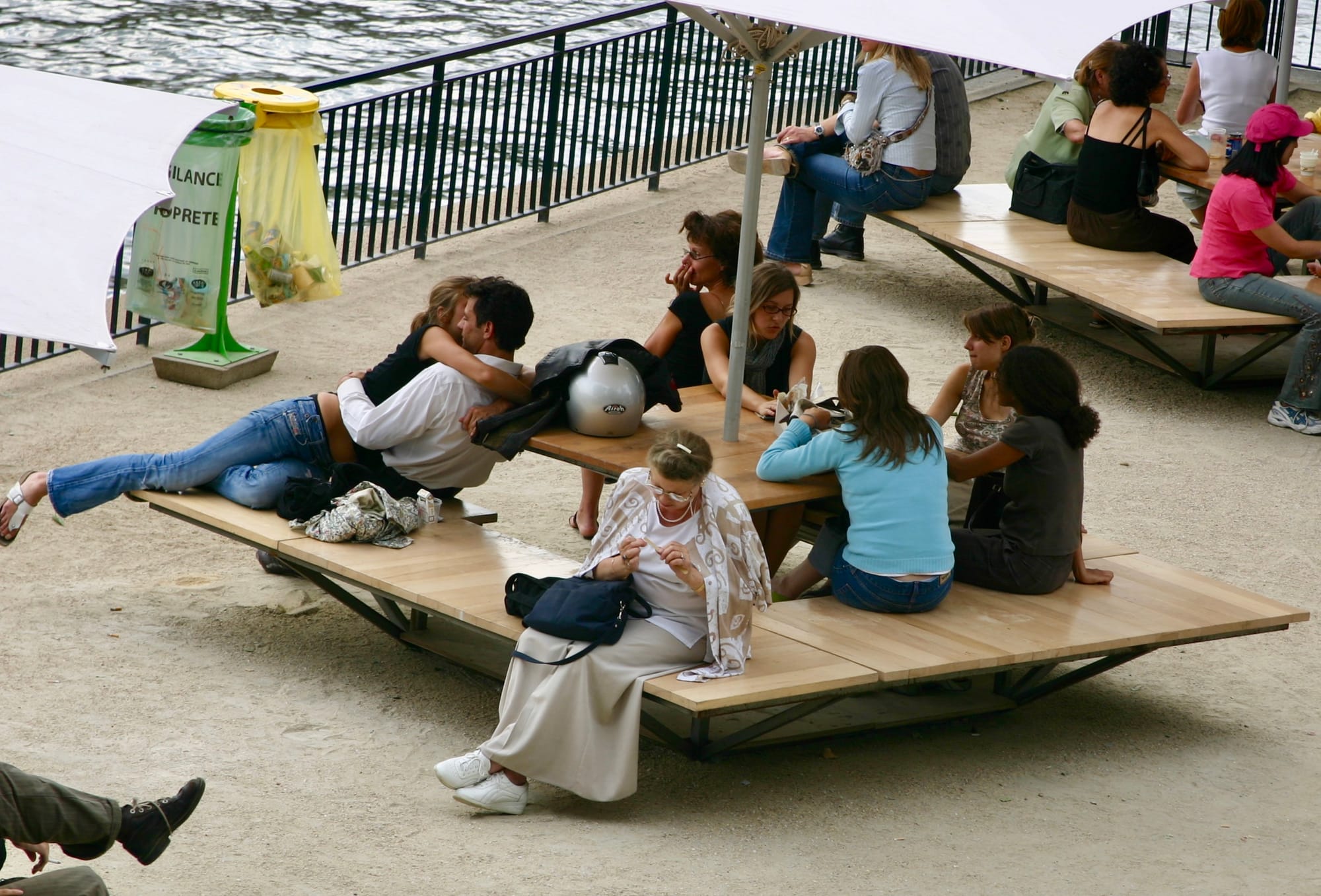
With the addition of numerous seating areas, cafés, restaurants, performances, and play areas, what was once a highway is now an incredible linear park. It is a place where people of all ages, cultures, and backgrounds can feel welcome and find experiences that appeal to them, bringing them together to weave public life.
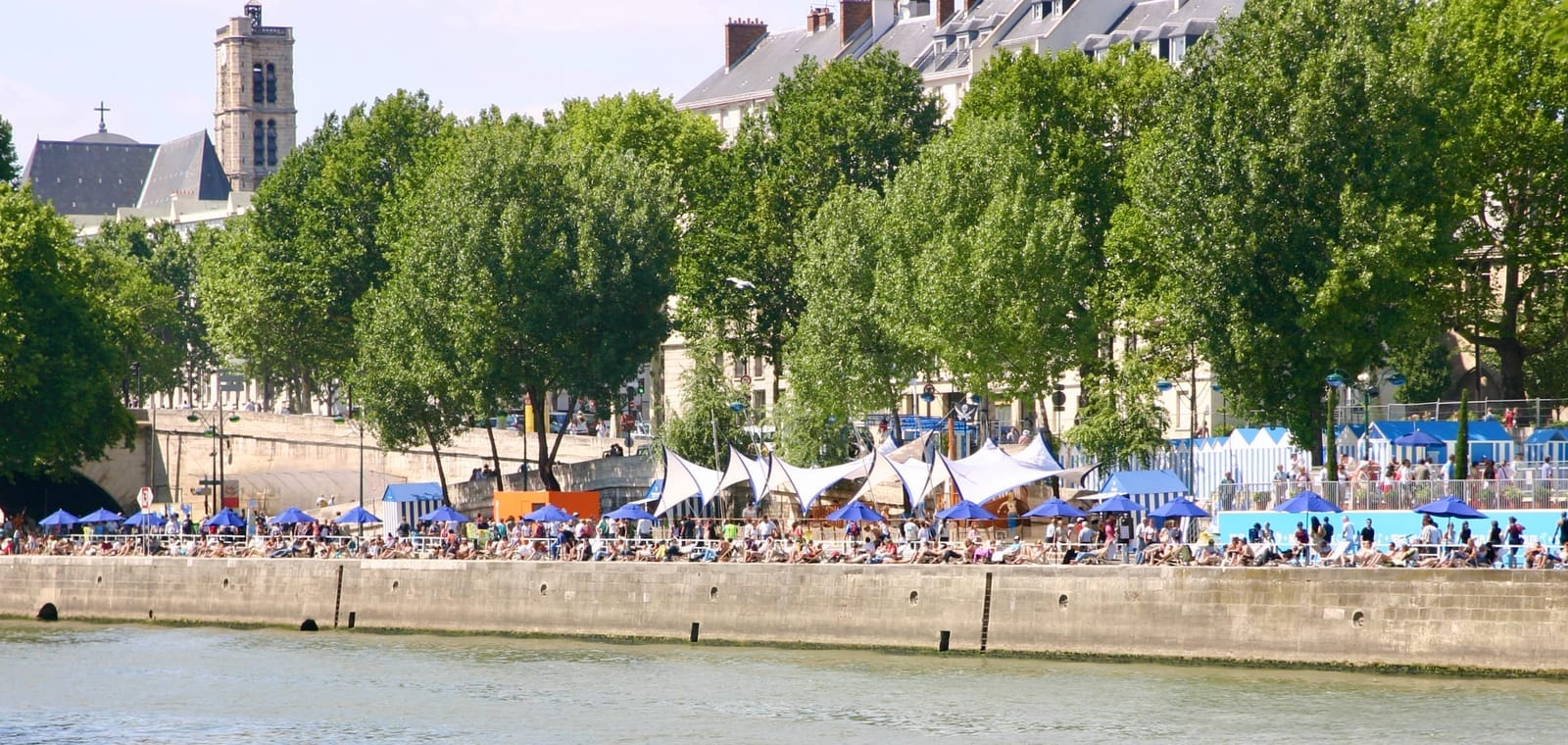
Les Berge (Left Bank)
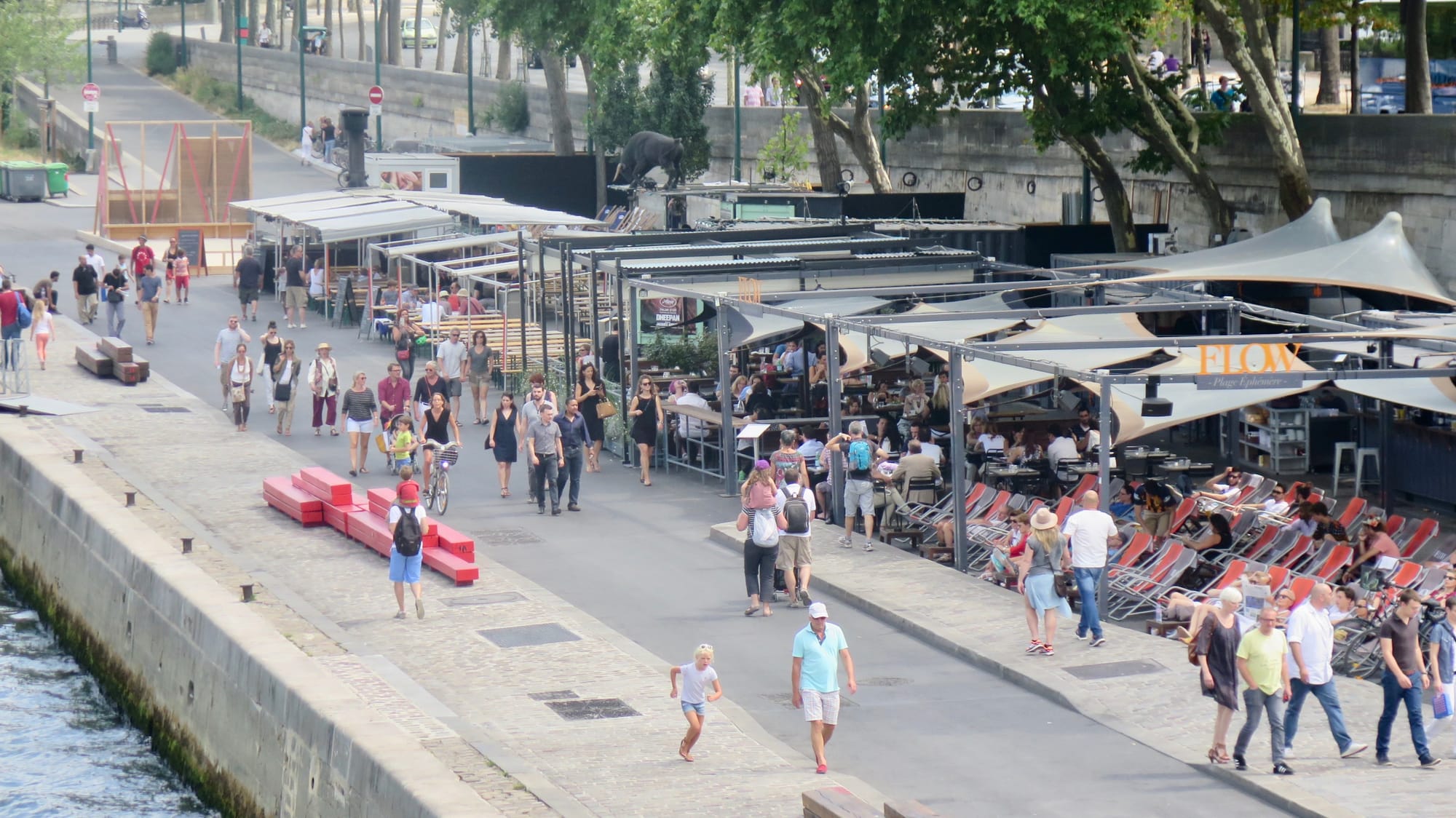
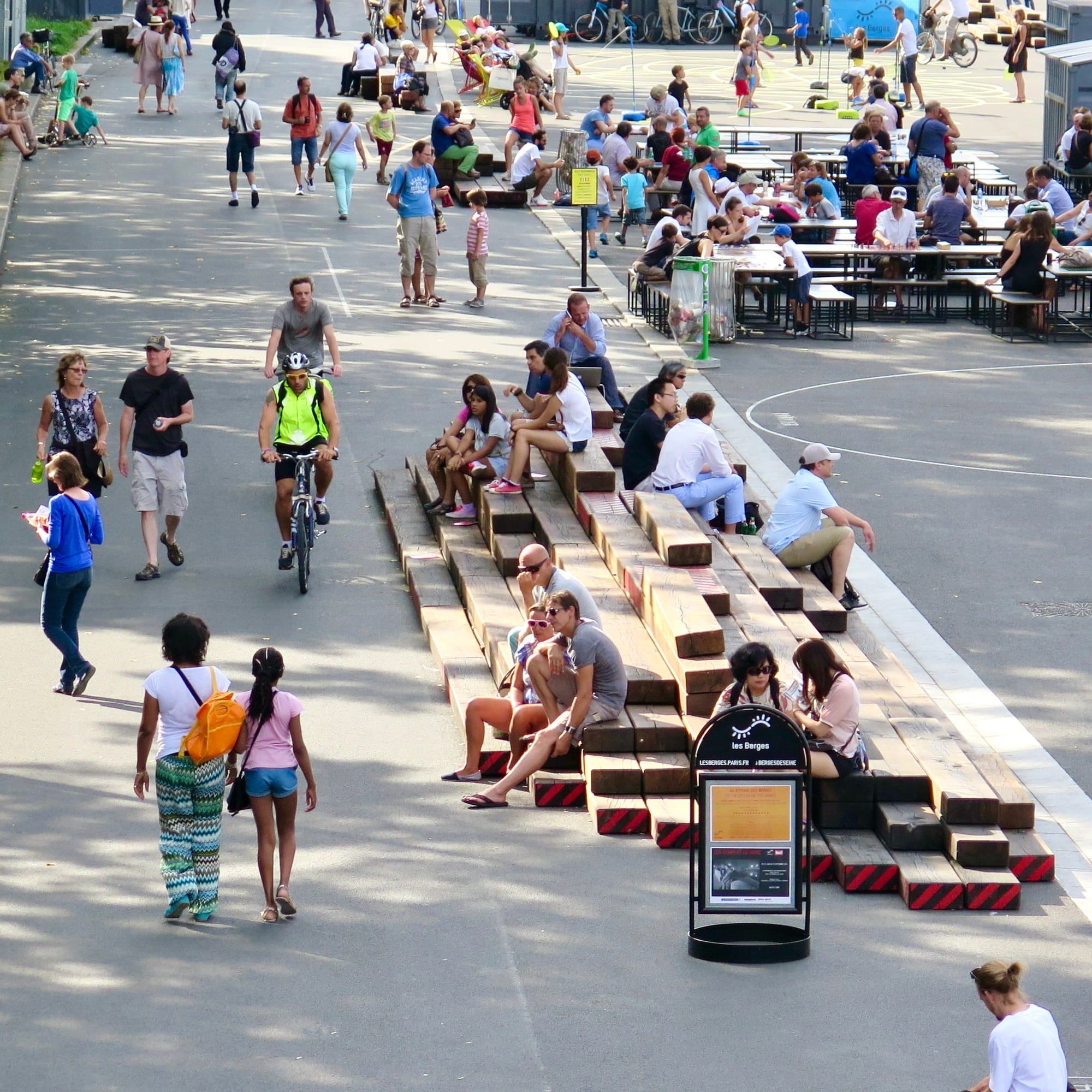
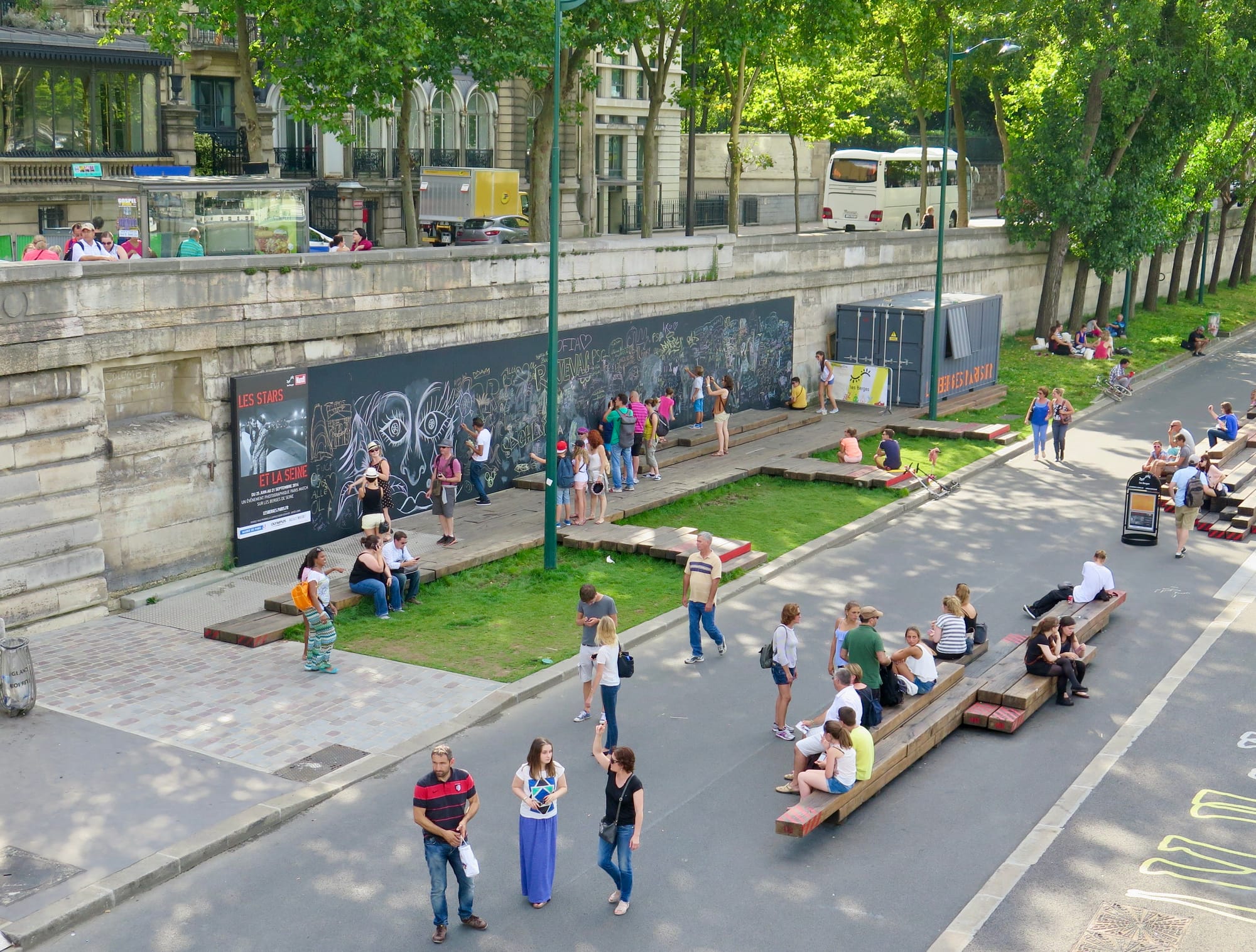
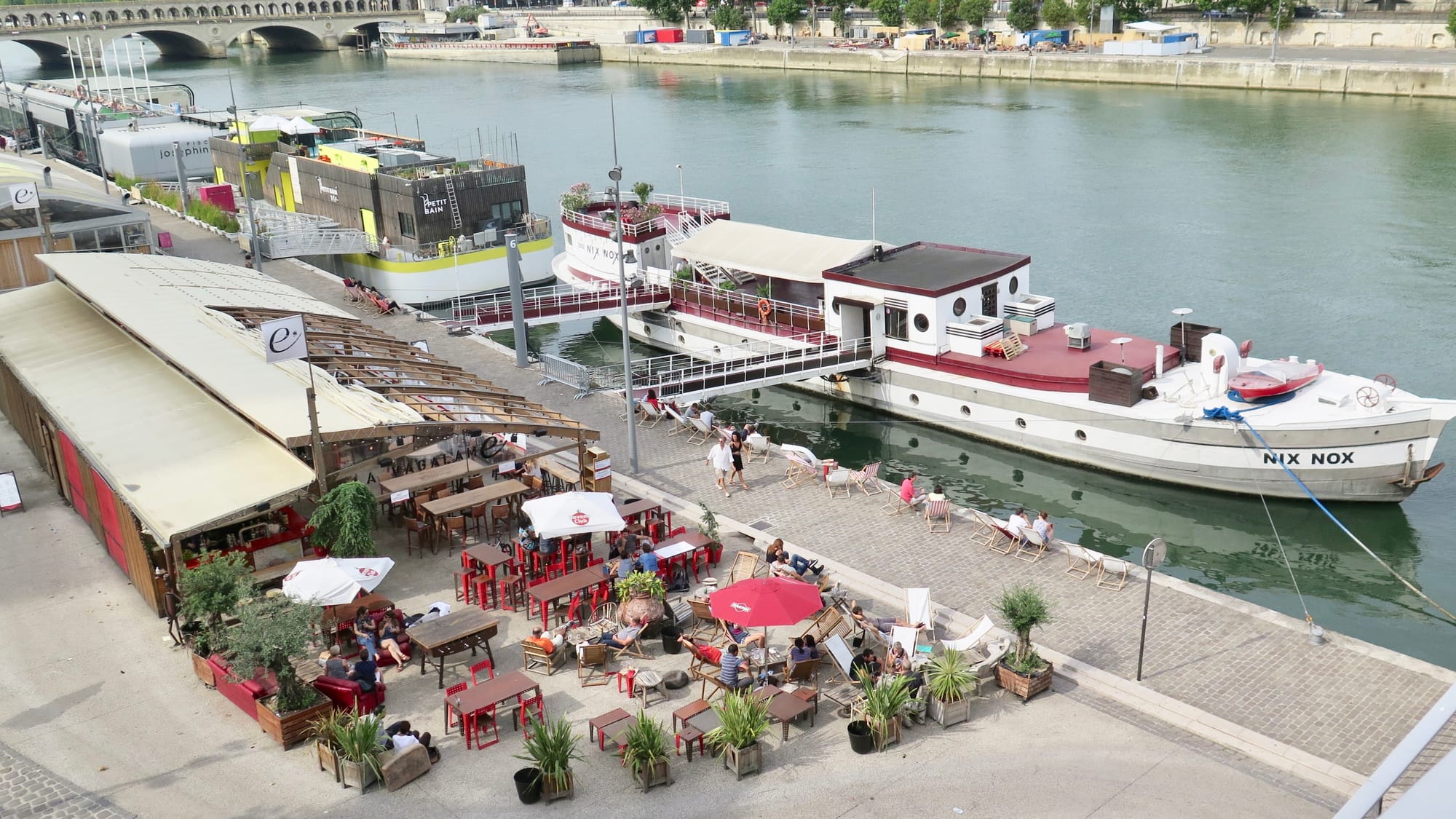
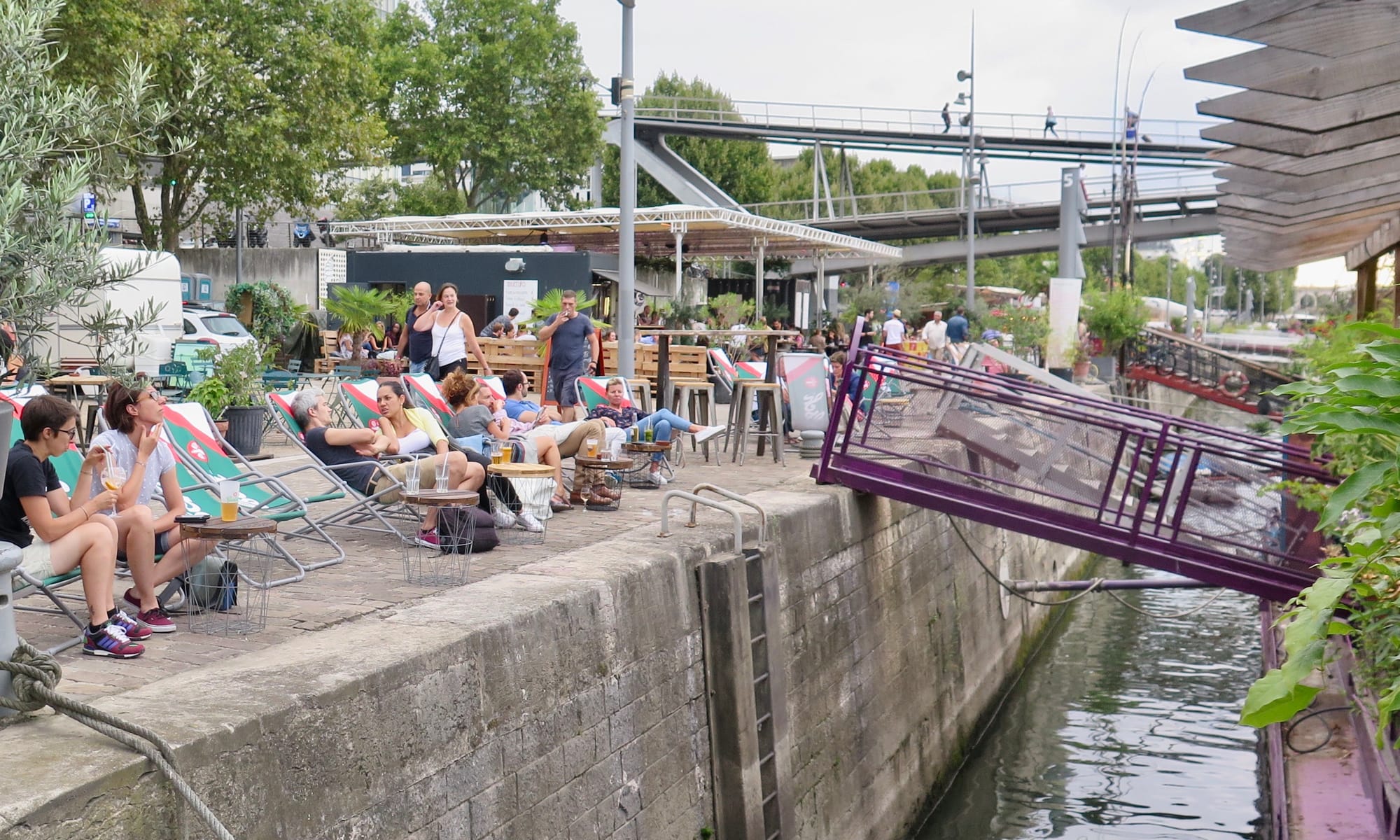
The beloved Paris Plage and how it came to be
The most famous of the Seine activations is the Paris Plage – a riverside "beach" set up during the summer months. The Office of the Mayor of Paris (Mairie de Paris) is responsible for the Paris-Plages initiative which was implemented in 2002 by former Mayor Bertrand Delanoë. Its goal was to provide a "getaway" during the hottest season for residents who were unable to leave the city. This popular program is currently overseen by the administration of Mayor Anne Hidalgo, who has expanded the project to include more permanent features and ecological goals.
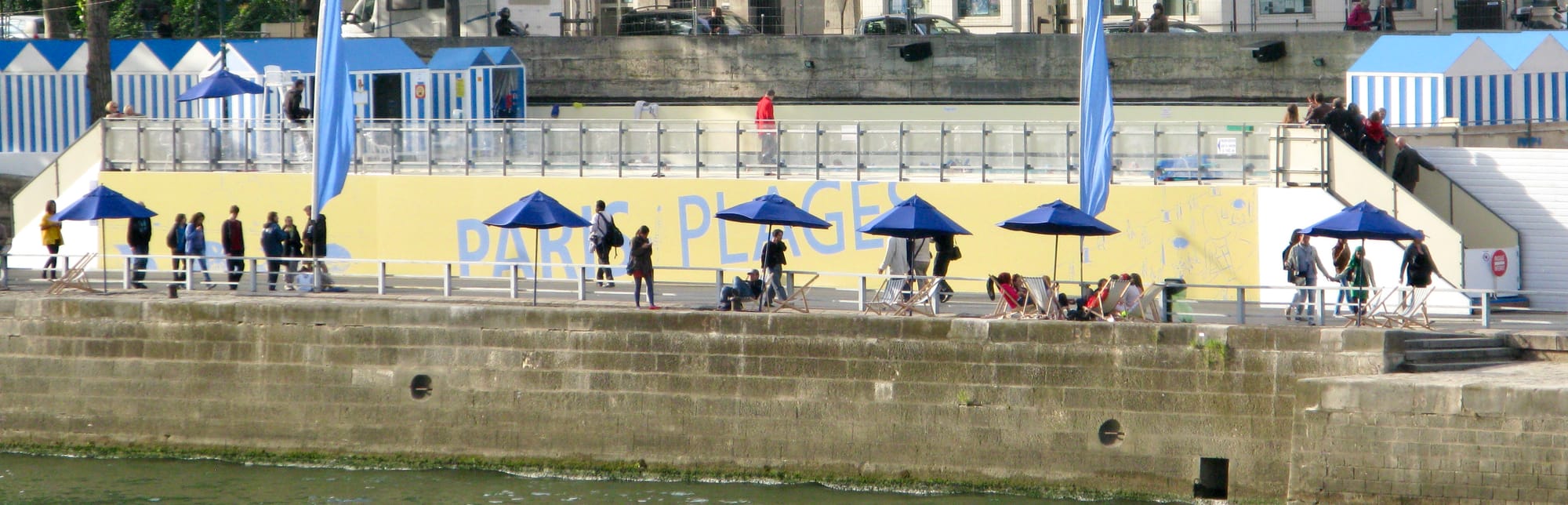
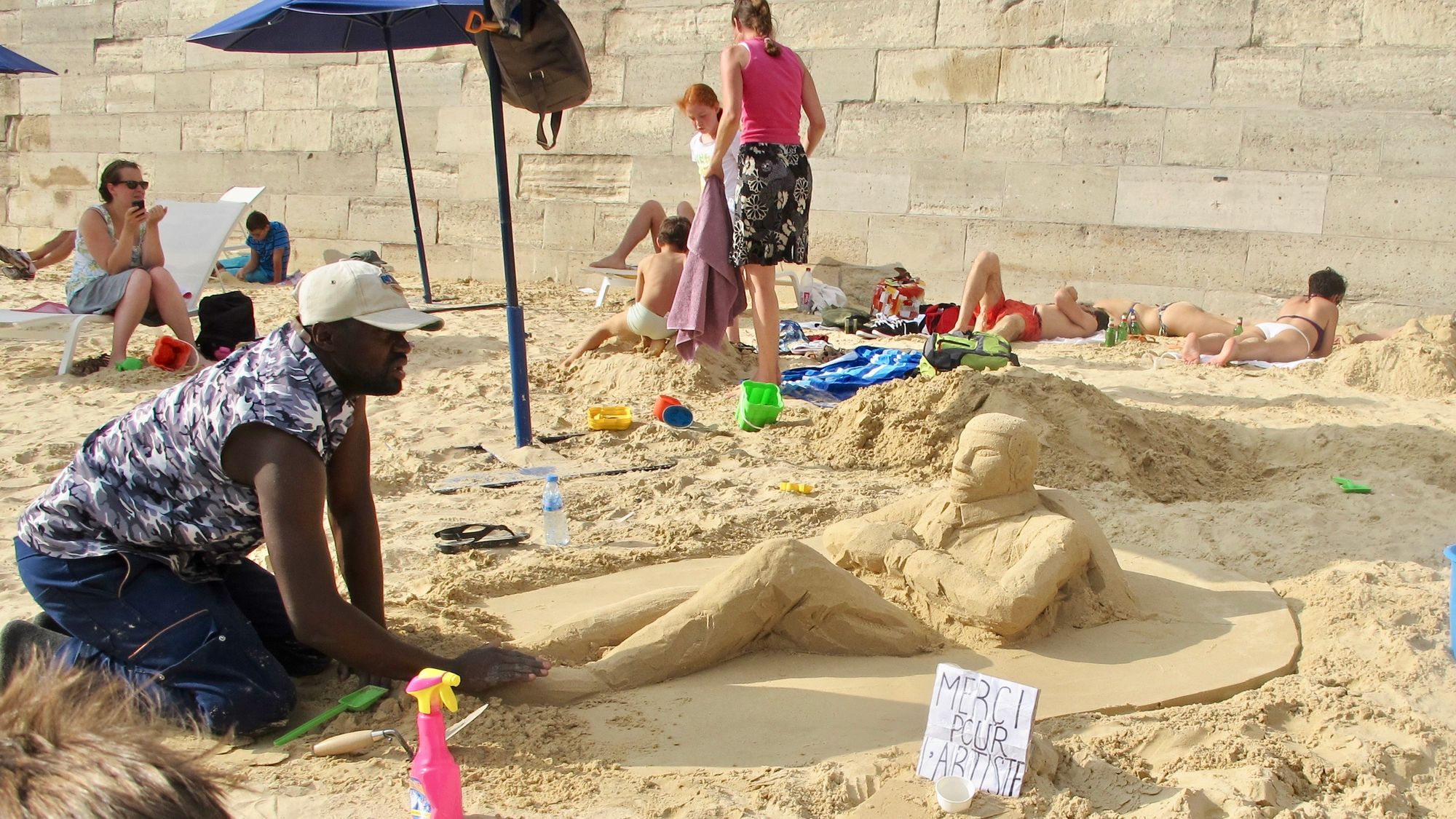
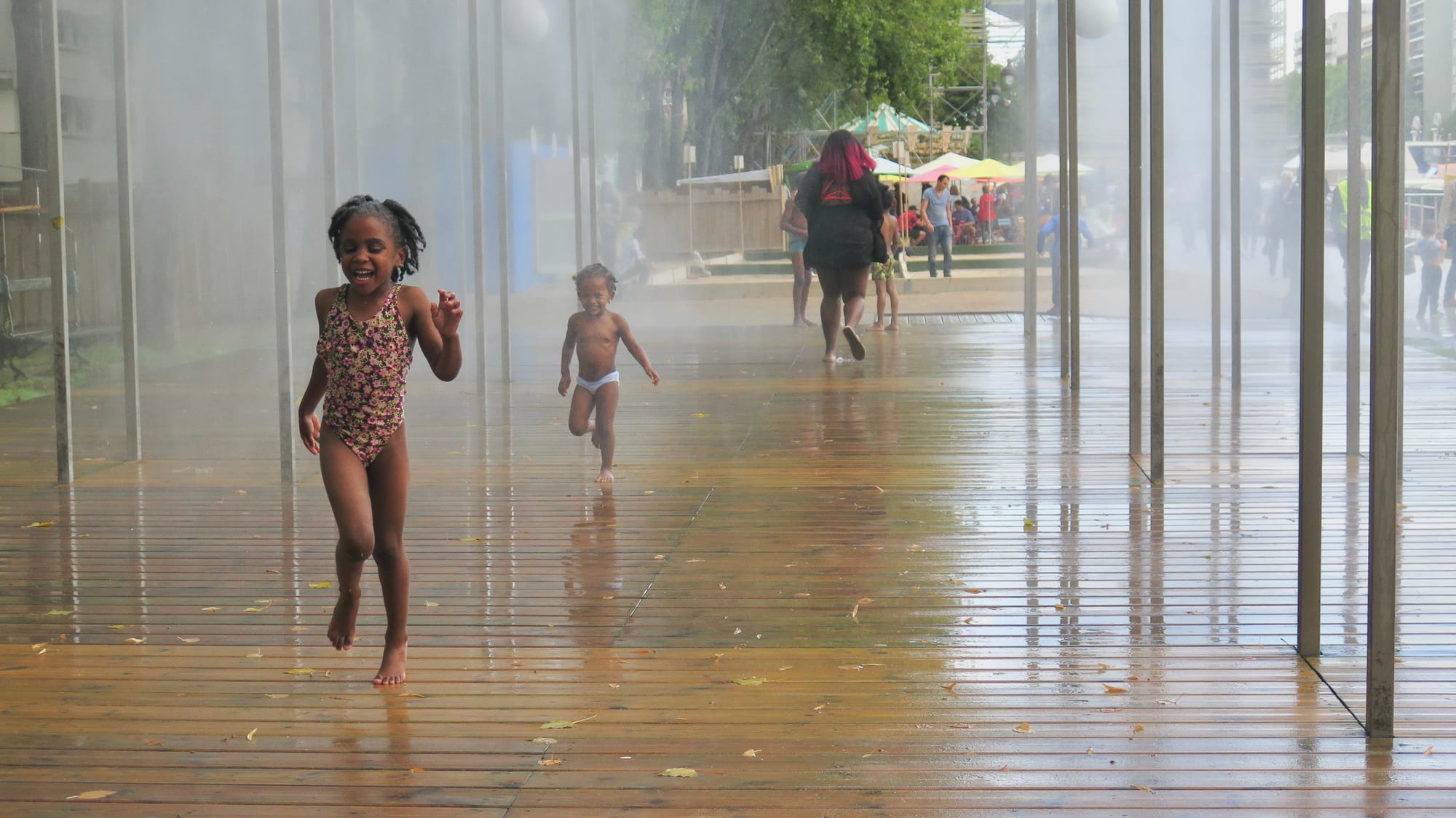
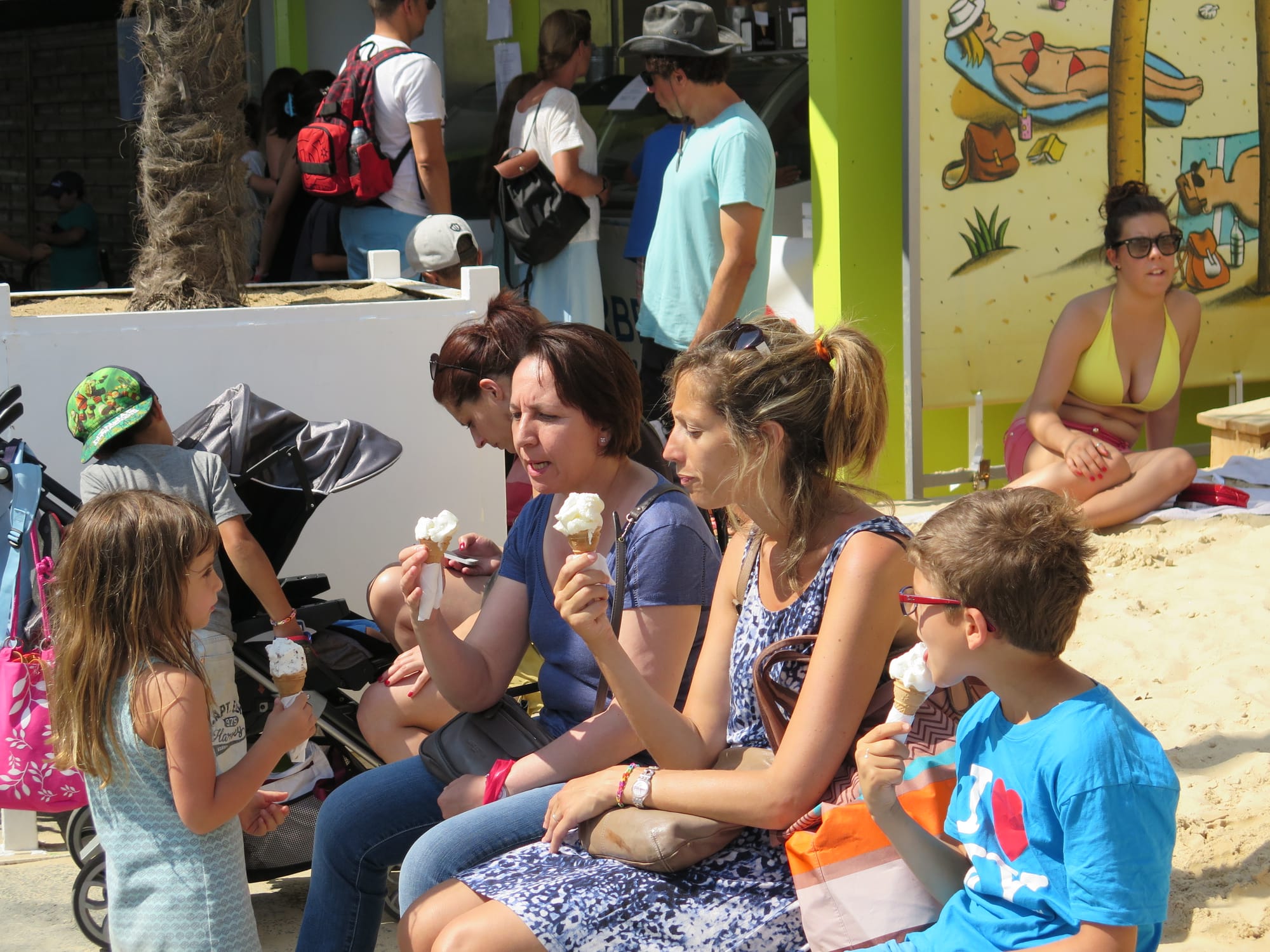
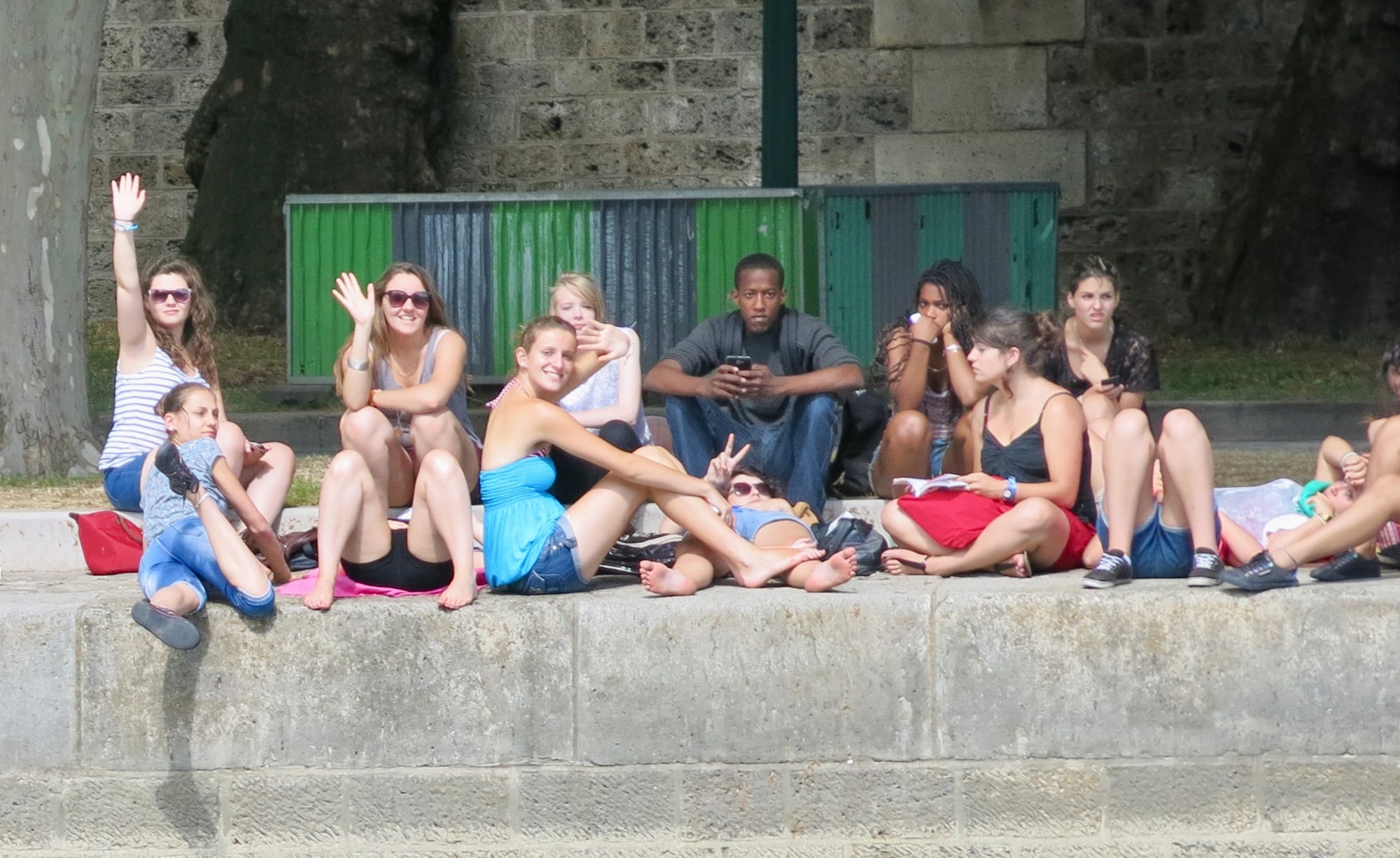
- Operations: The city council manages the transformation of the banks of the Seine and the Bassin de la Villette into temporary beach resorts each July and August. City agencies have different responsibilities:
- Direction de la Voirie et des Déplacements (DVD - Department of Roads and Mobility): Responsible for the physical transformation of the riverbanks, including closing off major roadways (like the Georges Pompidou Expressway) to traffic, installing sand, deckchairs, and other infrastructure.
- Safety & Maintenance: The City of Paris is responsible for water quality testing, security, and daily operations of the site activities.
- Eau de Paris: The public agency responsible for water management and supply in the city. They cooperate closely on water quality monitoring, especially with the recent reintroduction of swimming in the Seine.
- Partnerships: Louvre Museum & Flammarion Publishing: Specific institutions that partner with the city to provide cultural activities, such as pop-up art galleries and libraries, within the Paris Plages sites.
 Fred Kent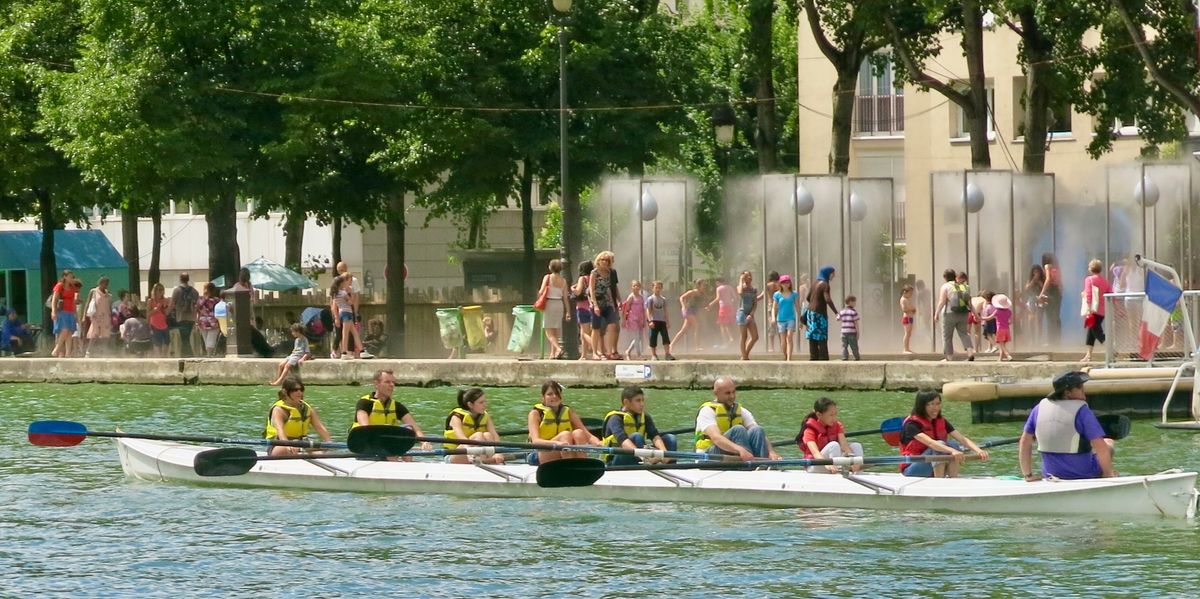
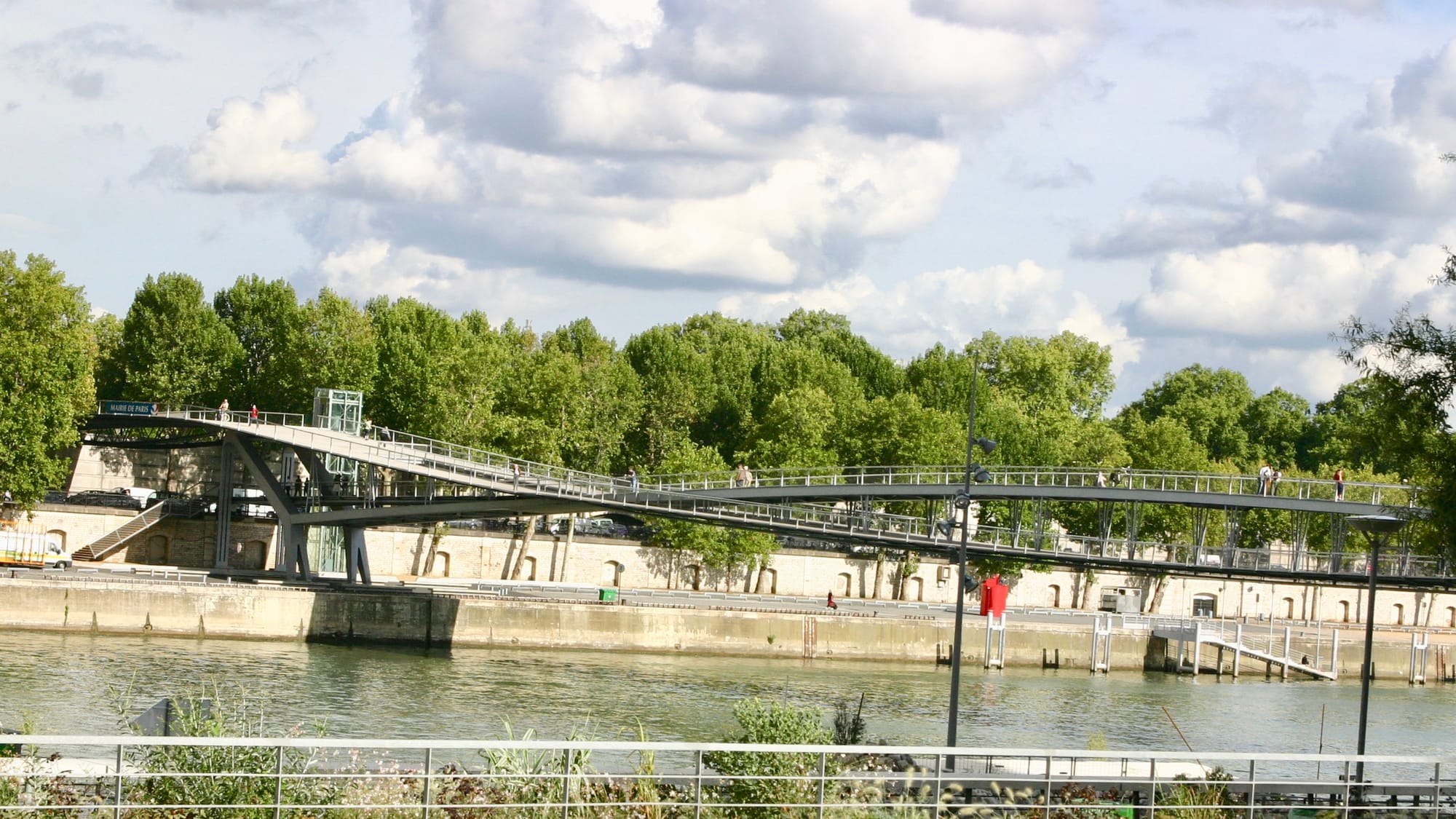
Iconic Bridges connect the Right and Left Banks
The waterfront is made richer by Seine's numerous bridges that connect the two sides of the city, making it easy to cross from one to the other and stitching them into a cohesive whole. These iconic bridges offer amenities like seating, performances, and vendors along their length, acting as more than just connections but as multi-faceted public spaces in their own right.
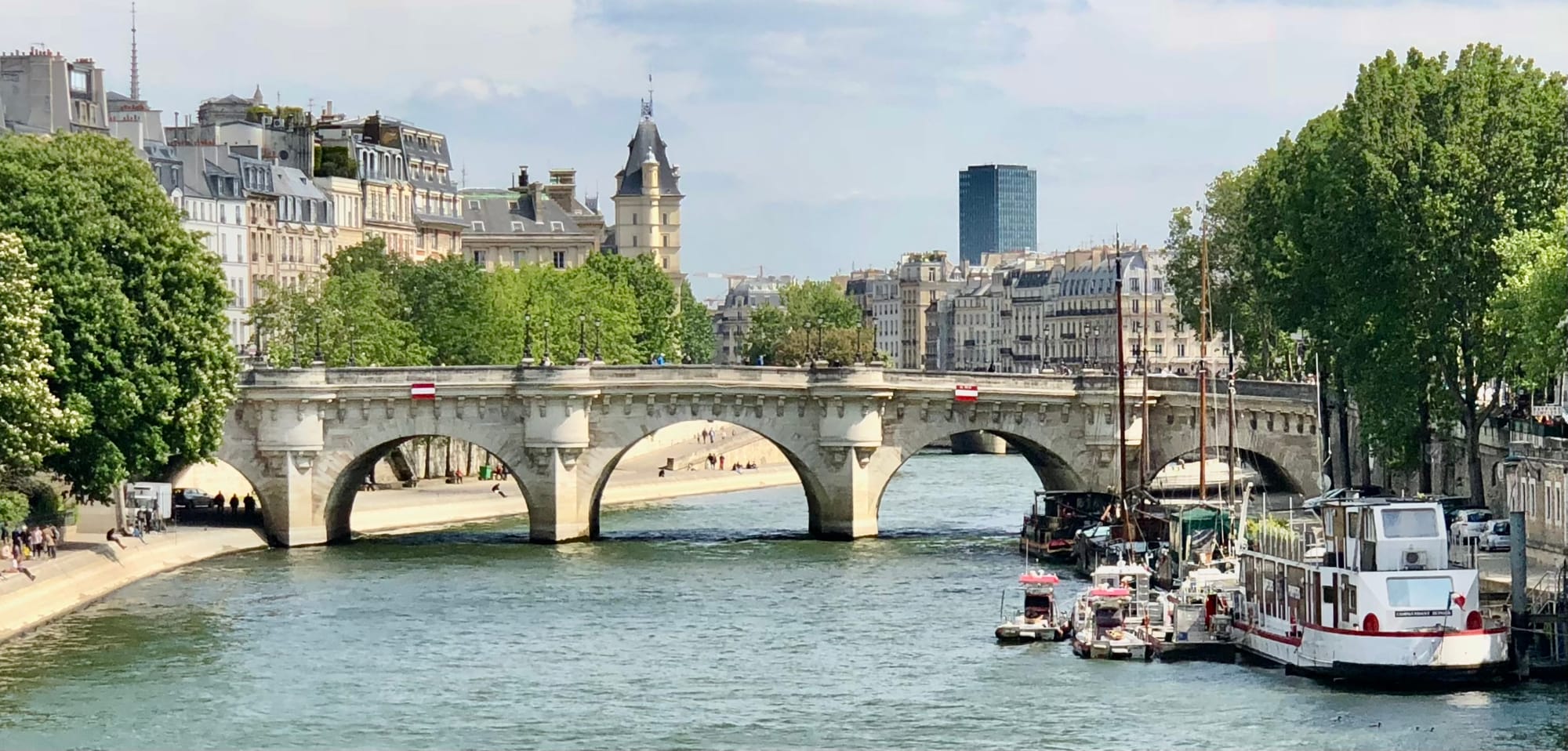
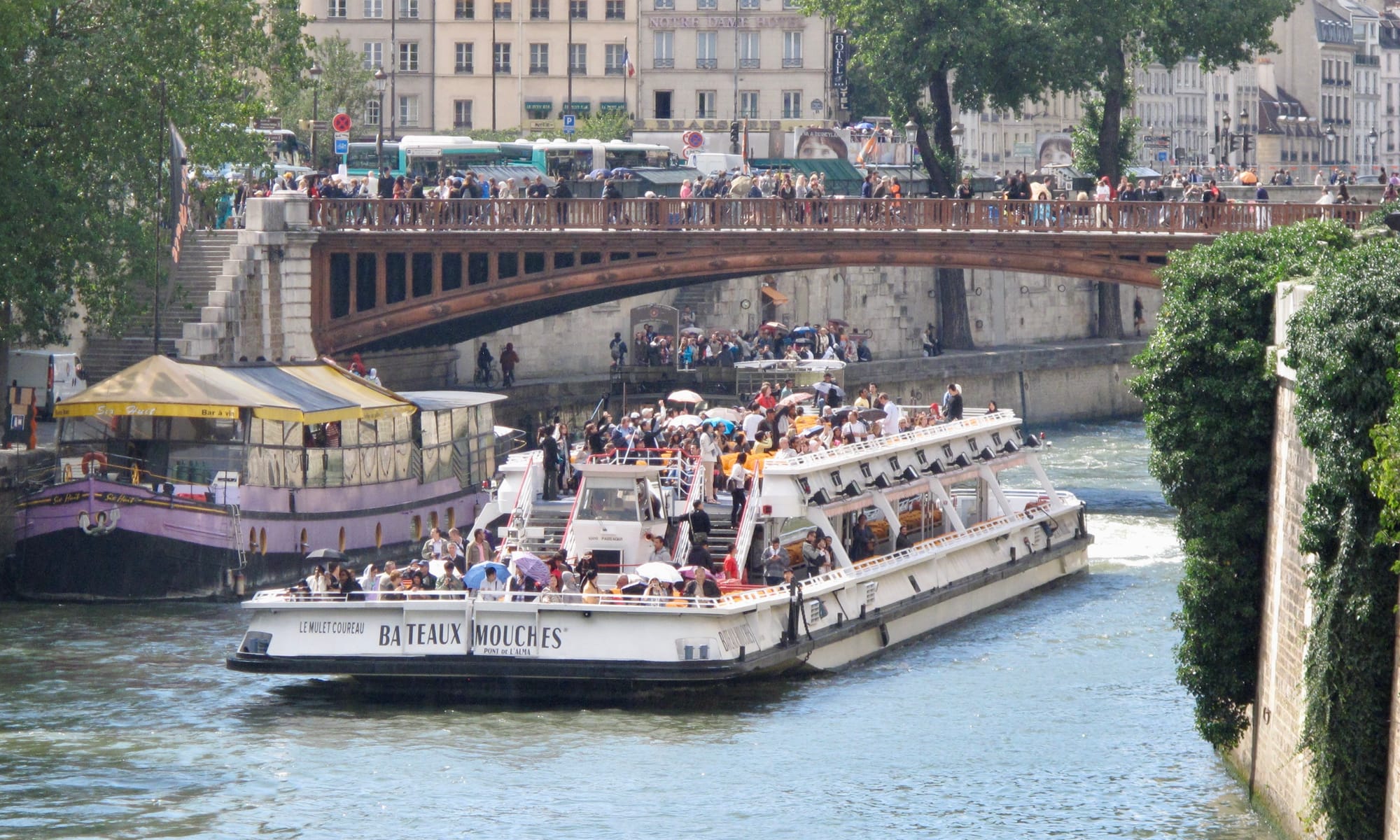
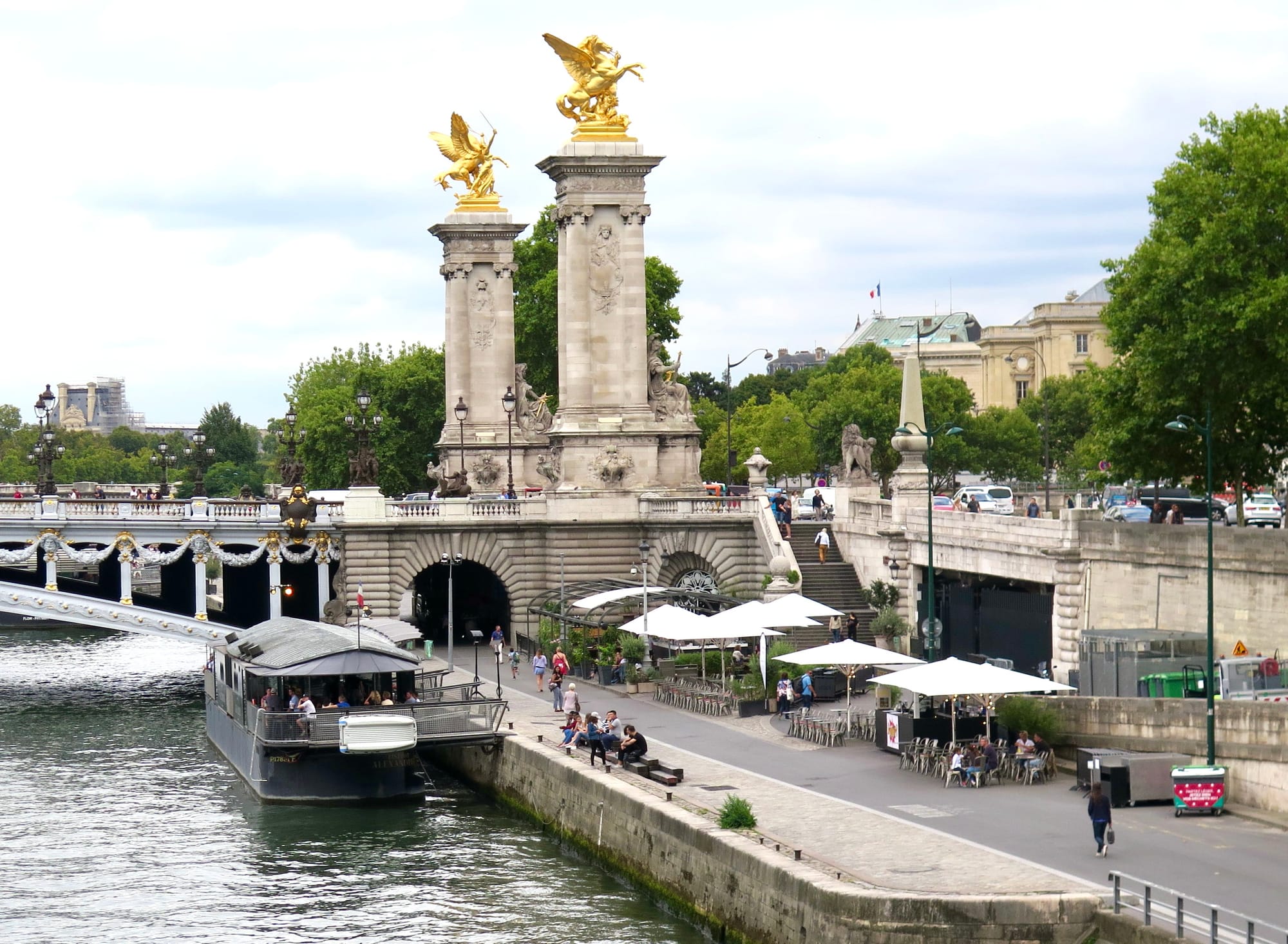
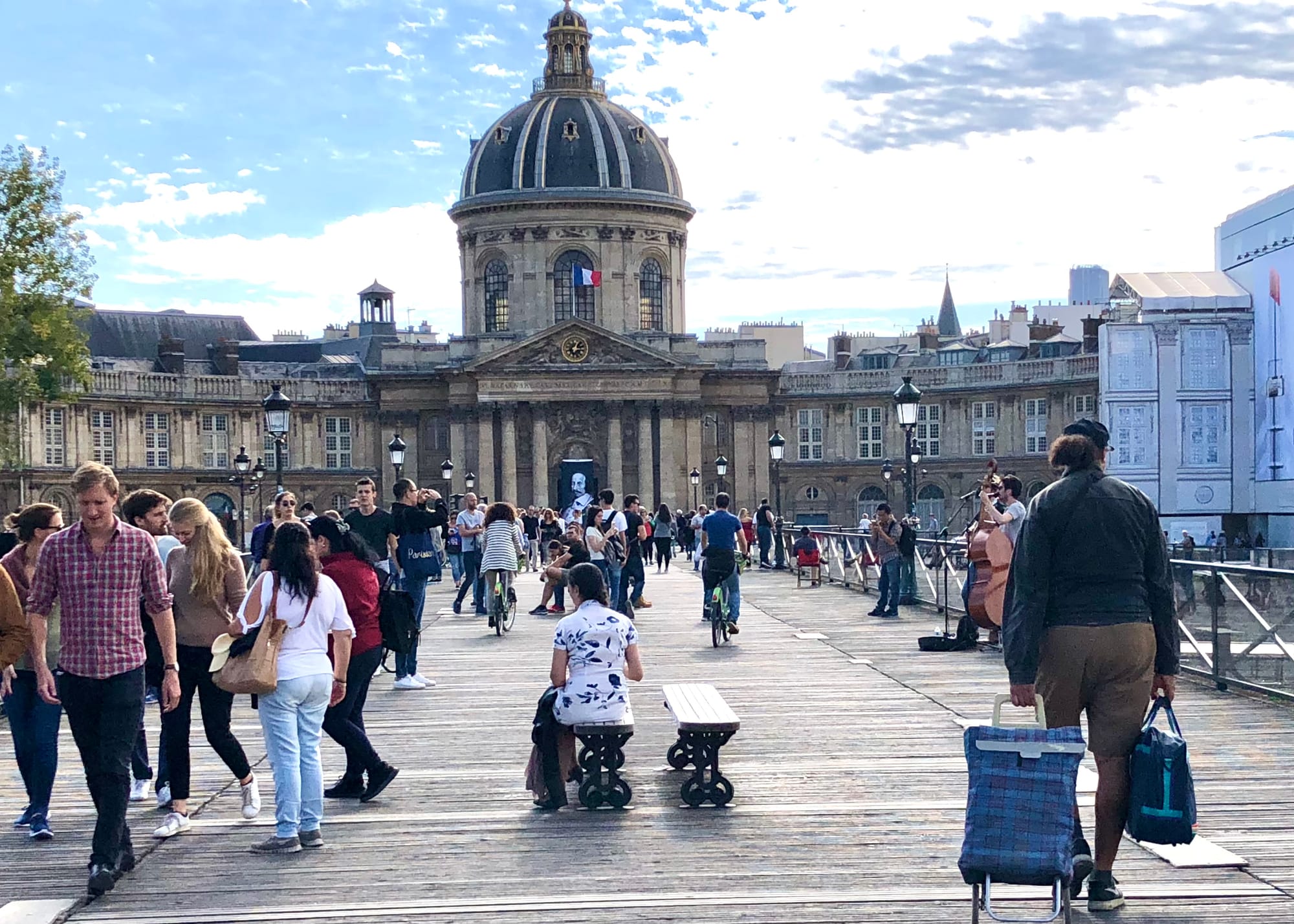
Pont Neuf, which opened in 1607 was the first bridge to cross the Seine, and is one of the most social of Paris’s many bridges, primarily because of multiple places to pause, enjoy the views, or just pass the time. In a way, it acts as a market and performance space as well as a promenade.
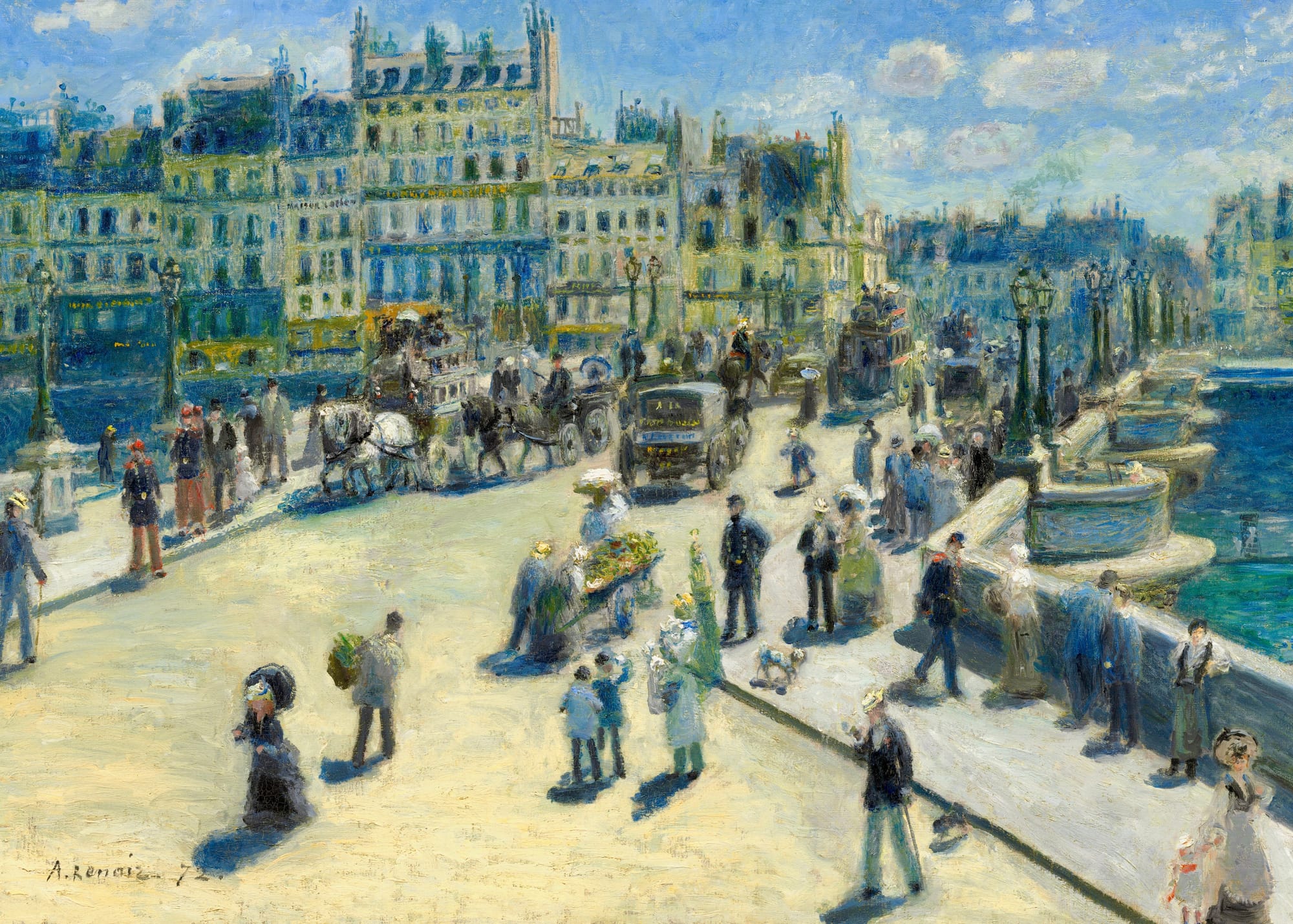
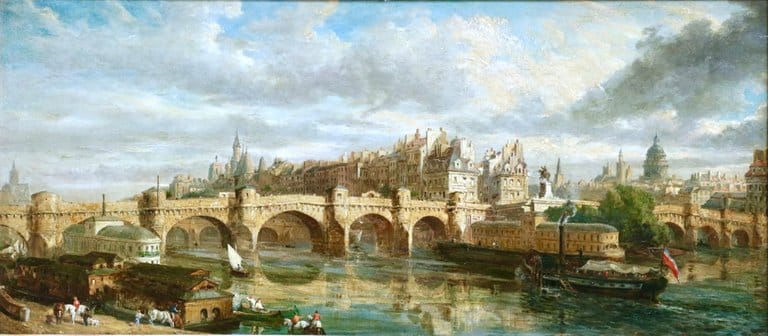
Pont Neuf and a promenade by Pierre-Auguste Renoir (1872)
Another great waterfront to the north – Bassein de La Villette
The revival of the Parisian riverfront has spread to Canal St-Martin, a 3-mile waterway in the north of the city that connects to the Seine and is a beloved destination for the residents in the diverse surrounding neighborhoods.
The magic of the Bassein is the broad variety of activations and amenities it offers. Since it has something for everyone, from water sports to food stalls and game areas, everyone can find ways to enjoy the space. Attracting robust visitation is achieved by designing spaces that cater to the needs and interests of a broad variety of people which Bassein de la Villette does beautifully.
 Fred Kent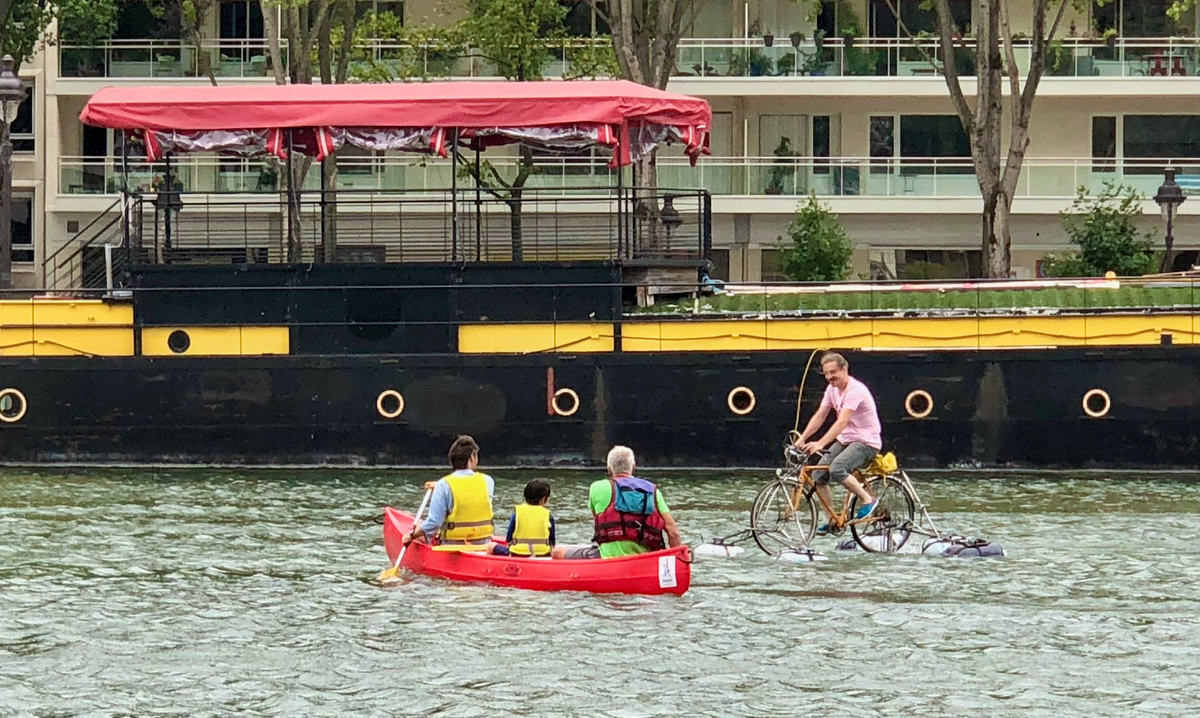
Promenades, not car lanes, dominate the waterfront
Pedestrian streets and promenades have become a major focus in Paris' transformation and are a standout addition to the waterfronts. The areas around the Seine work so well as promenades for several reasons:
- There is plentiful shade here, making walking and lounging pleasant even on sunny days.
- It is wide and car-free (now), allowing pedestrians plenty of space to stretch out and stroll leisurely with friends.
- Beautiful views of the water and famous landmarks like the Eiffel Tower make promenading here a pleasant and memorable experience.
- There are a number of cafés, restaurants, and bars set up which give people destinations to walk towards and places to hang out at.
- There is great public seating set out including benches and moveable chairs, inviting people to rest and socialize.
- Events are regularly programmed, offering people entertainment and interesting experiences.
2) Paris' Streets are Designed for Everyone
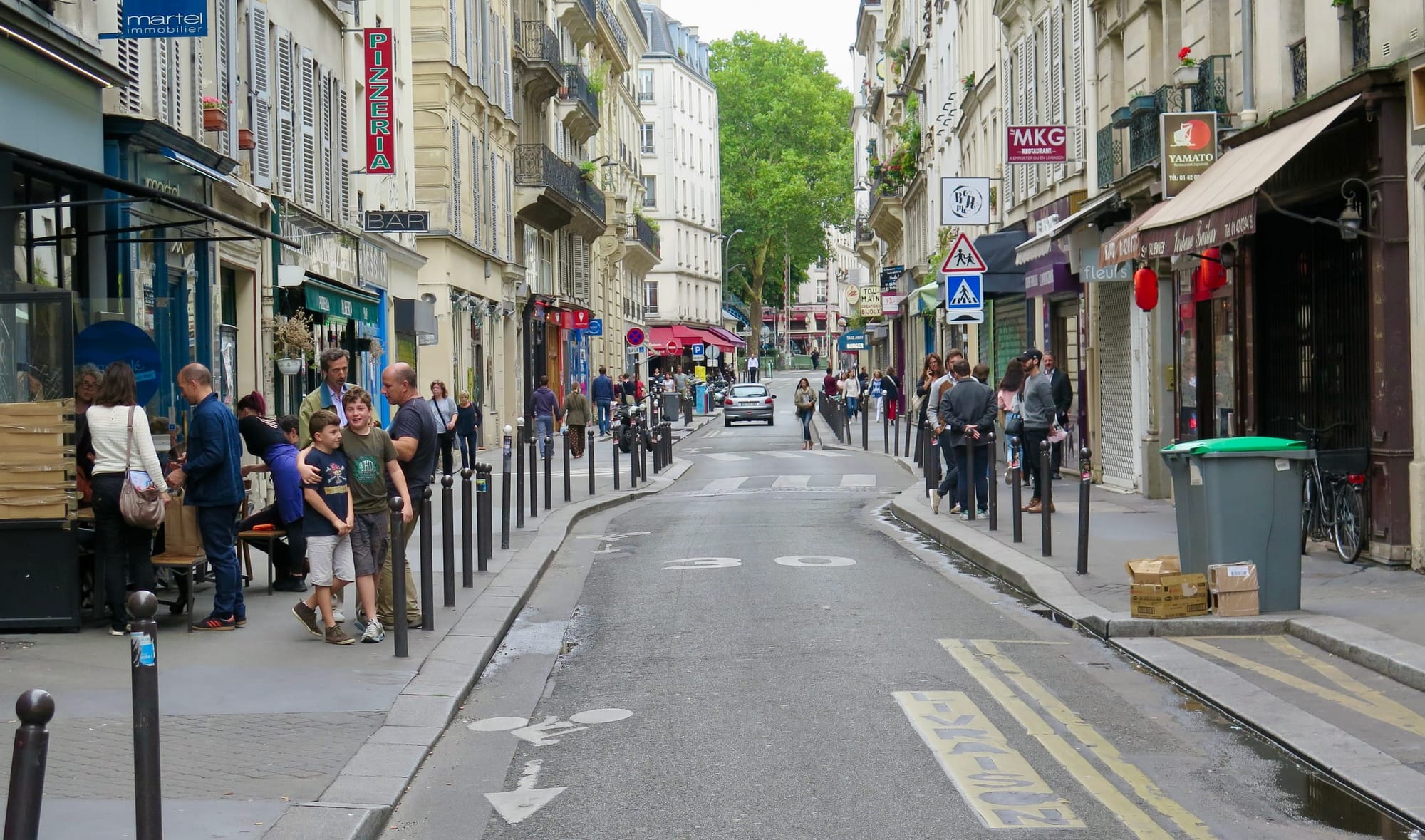
Whereas many cities seem to believe streets are only for cars, Paris understands that this is far from the case. Streets in cities should be for social and commercial activity. The street is, after all, the stage for urban life. That is why Paris is full of great pedestrian streets where cars are not welcome or low traffic streets where pedestrians are prioritized.
In these areas, people can stroll and connect with each other in a relaxed way because they don't have to be constantly mindful of traffic and its associated fumes, noise, and dangers. Instead, community life and business activity can thrive in peace.
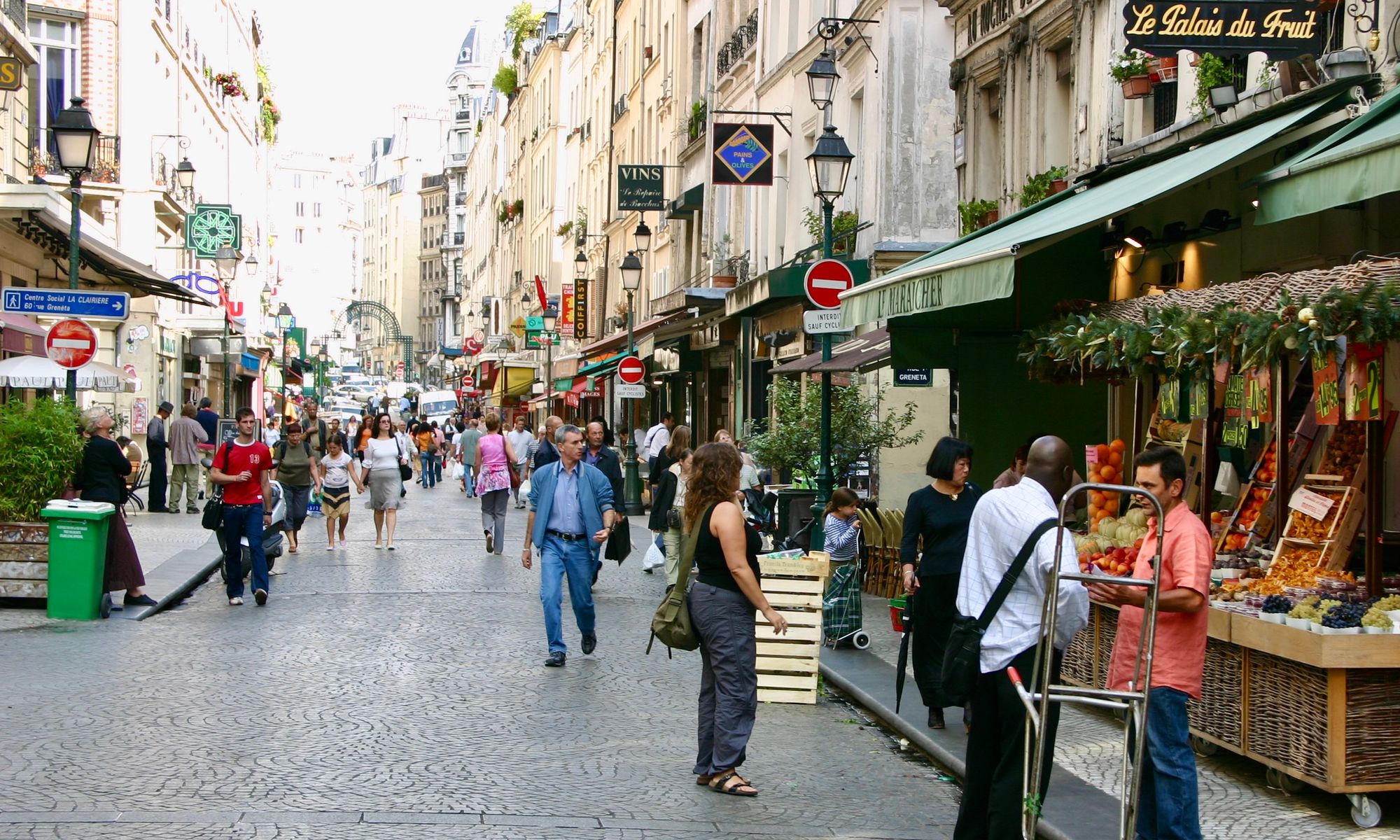
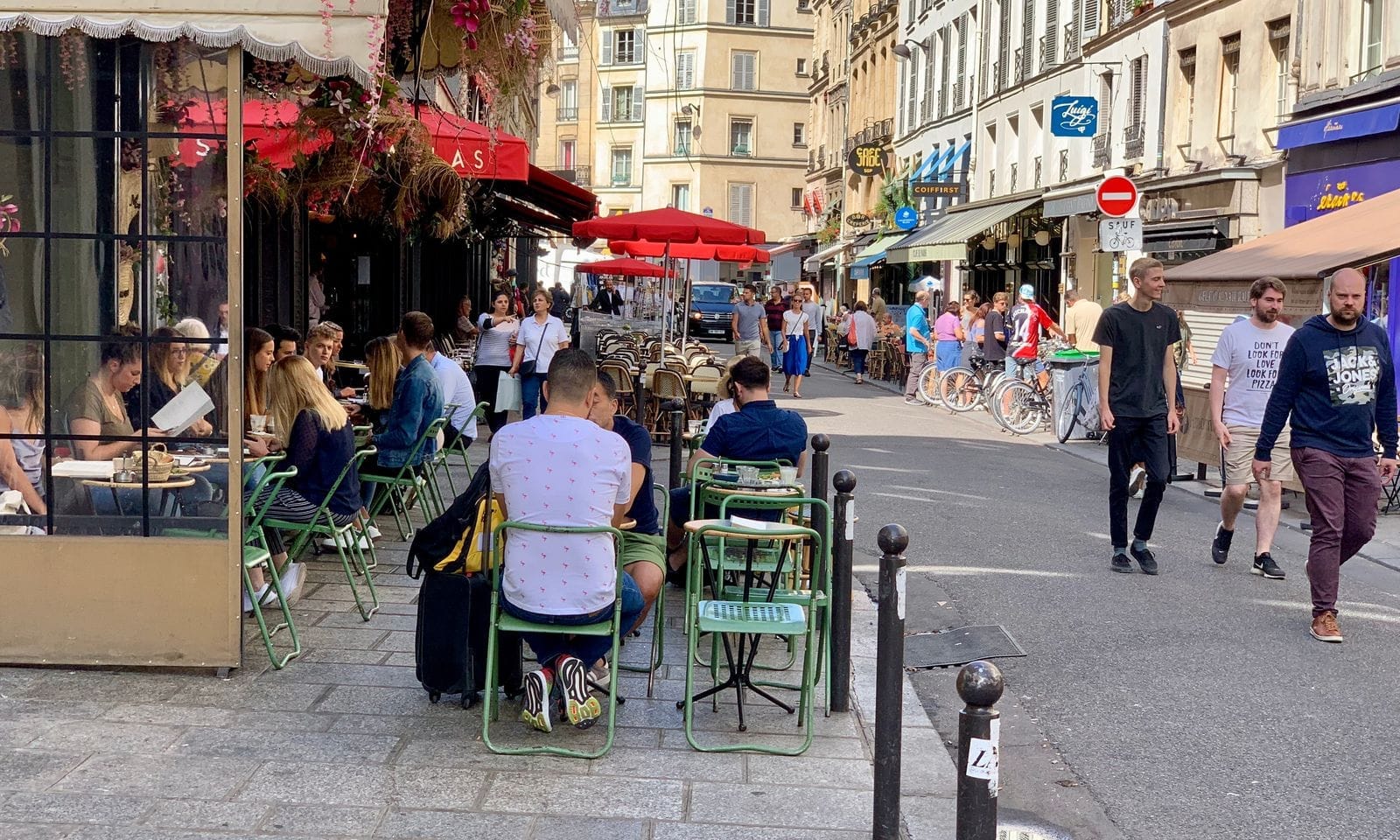
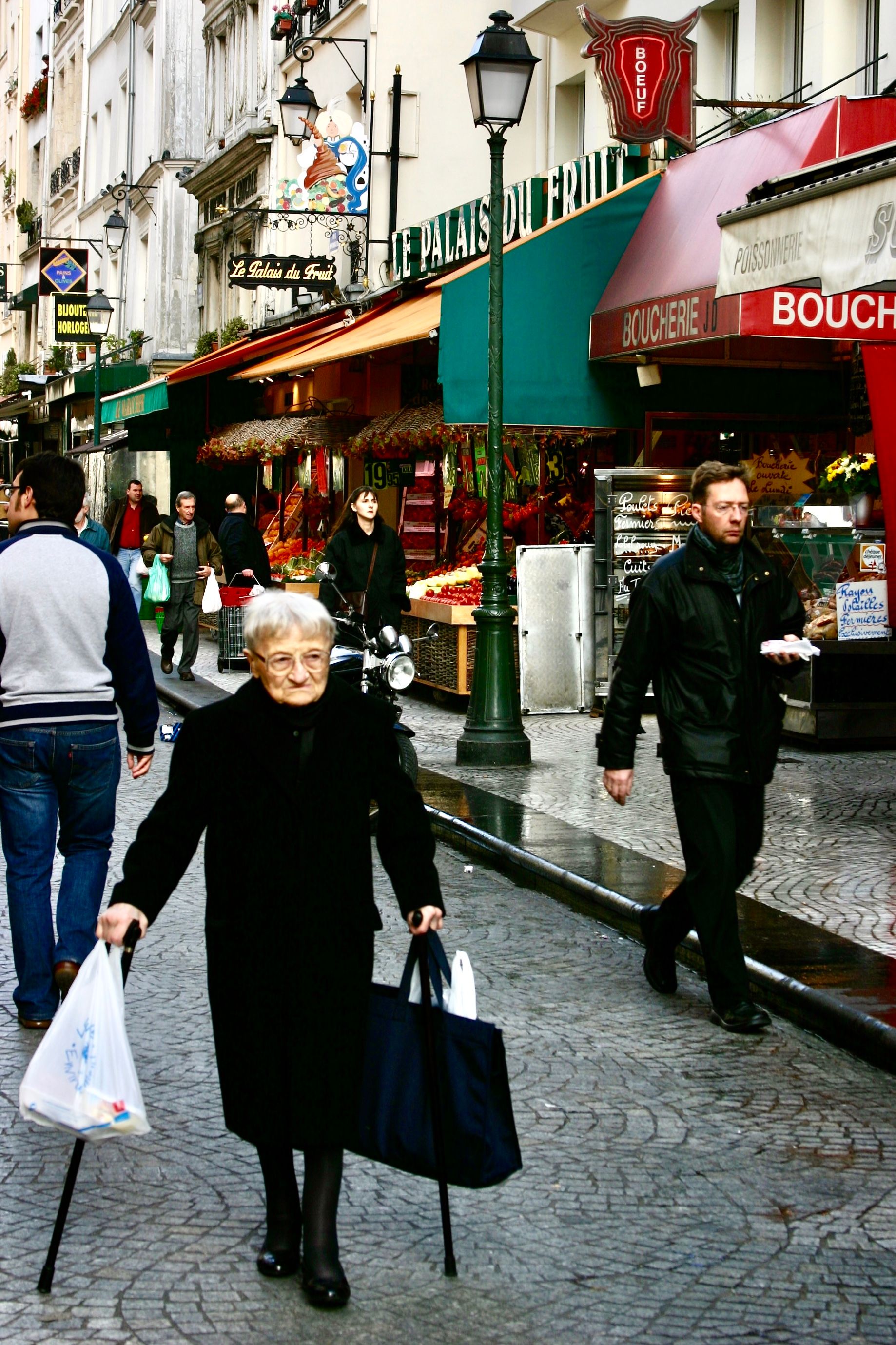
Corners and intersections are treated as destinations
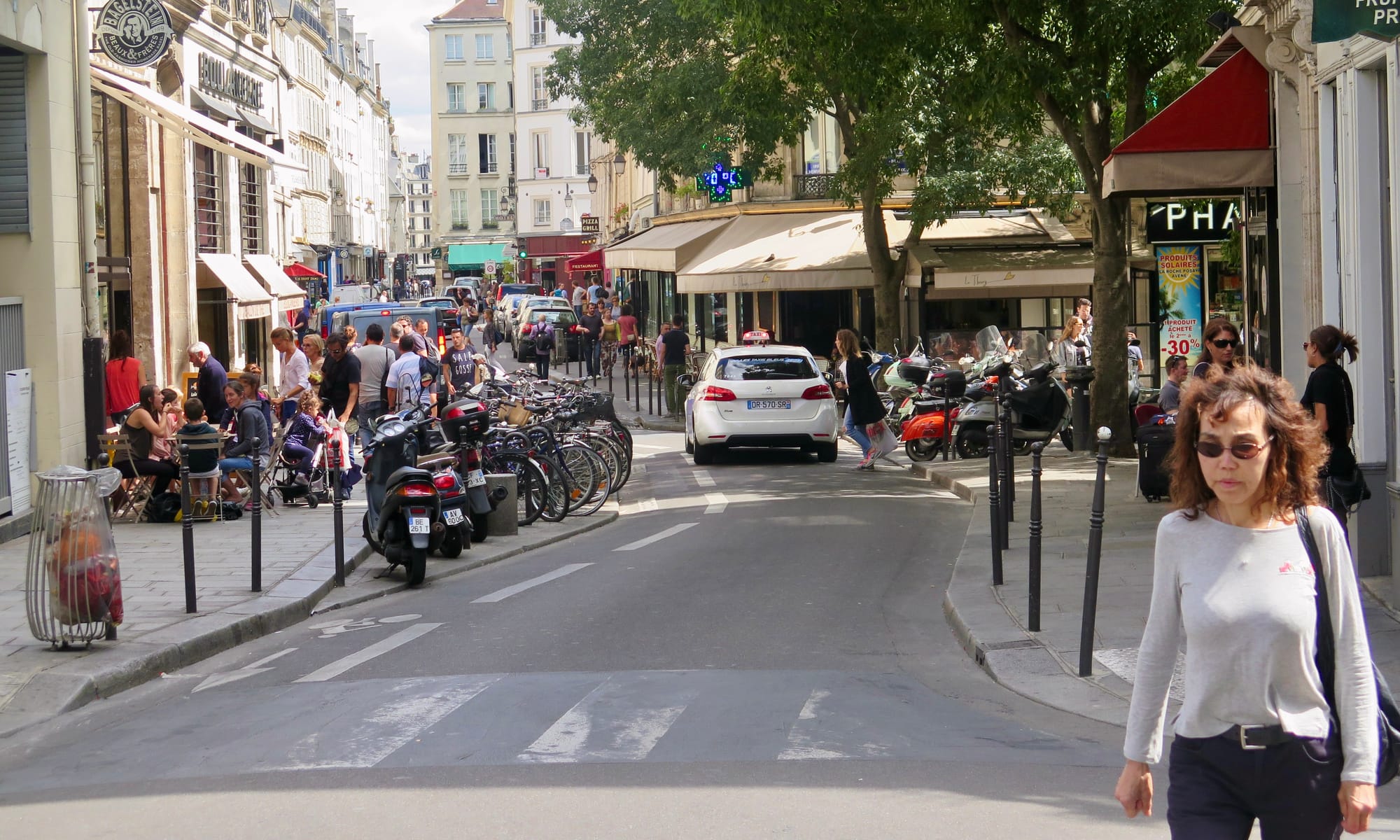
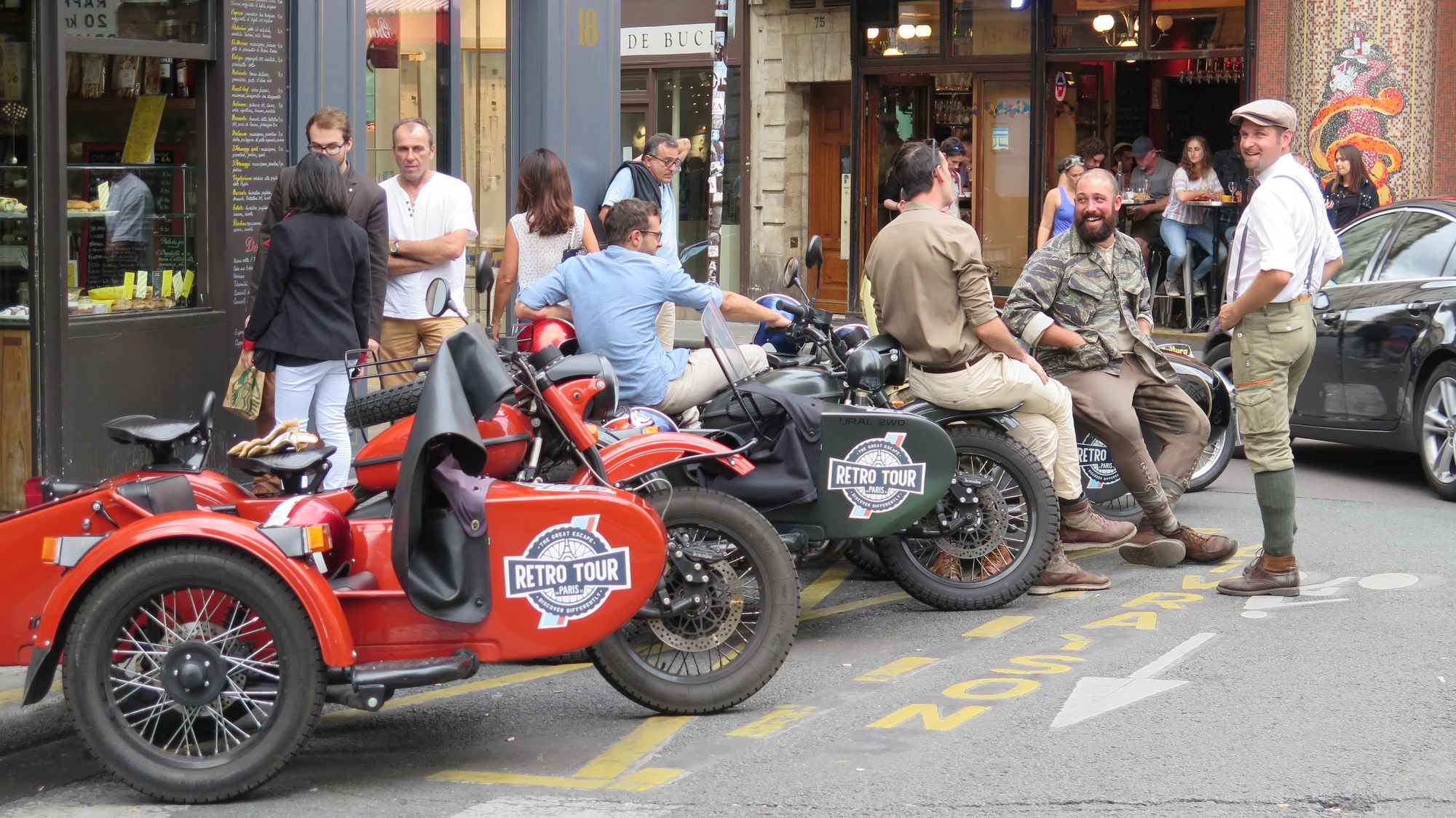
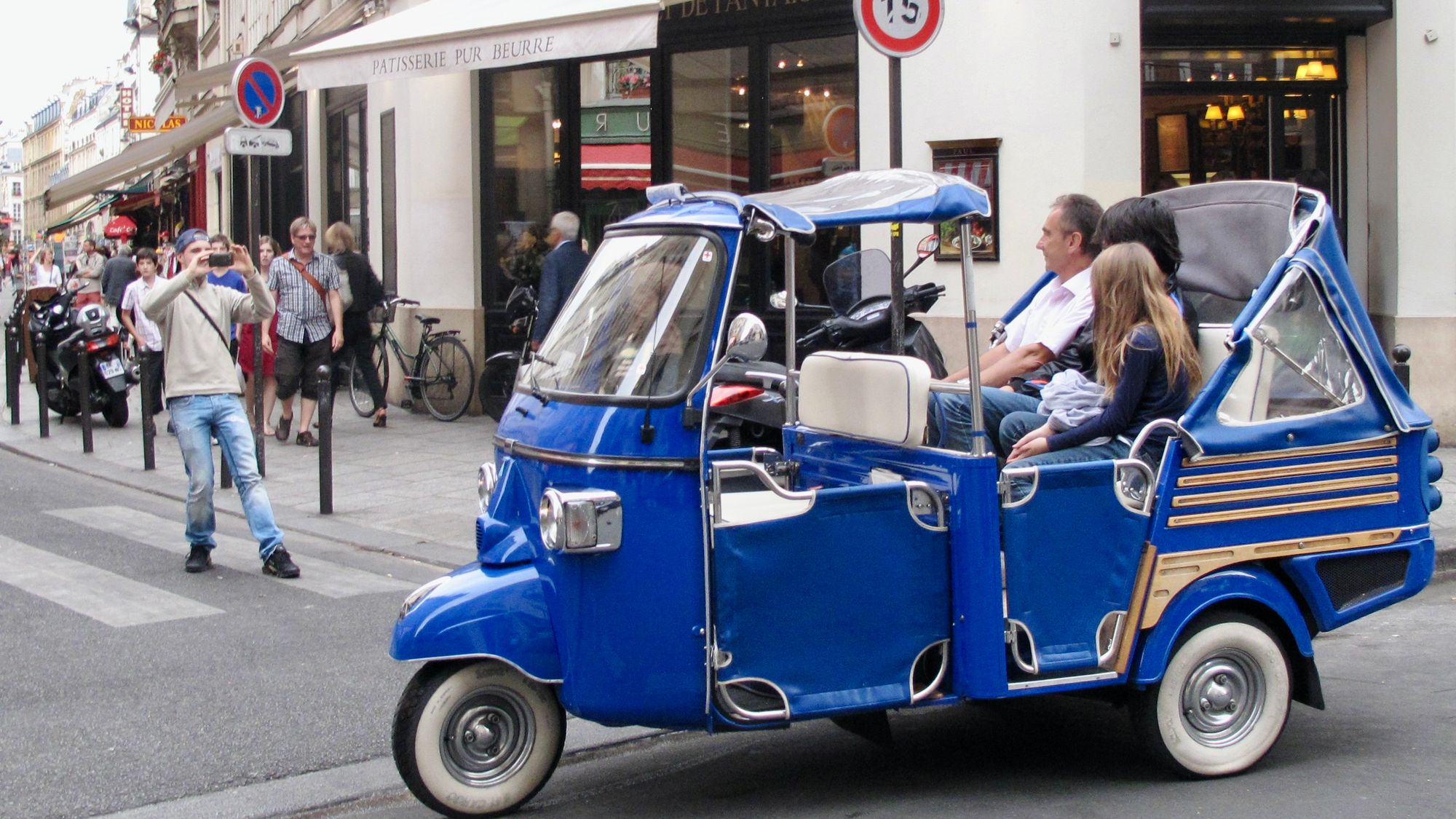
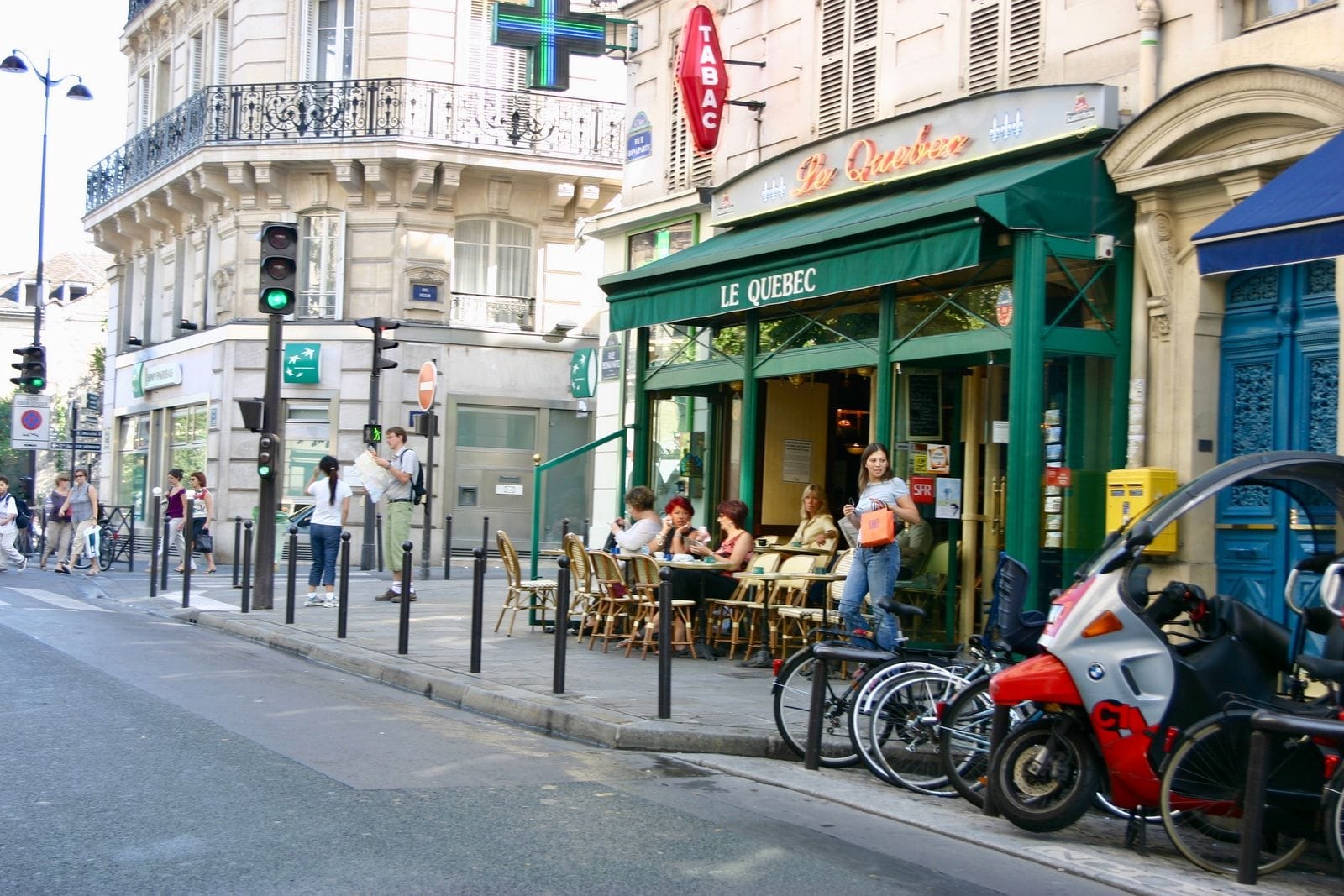
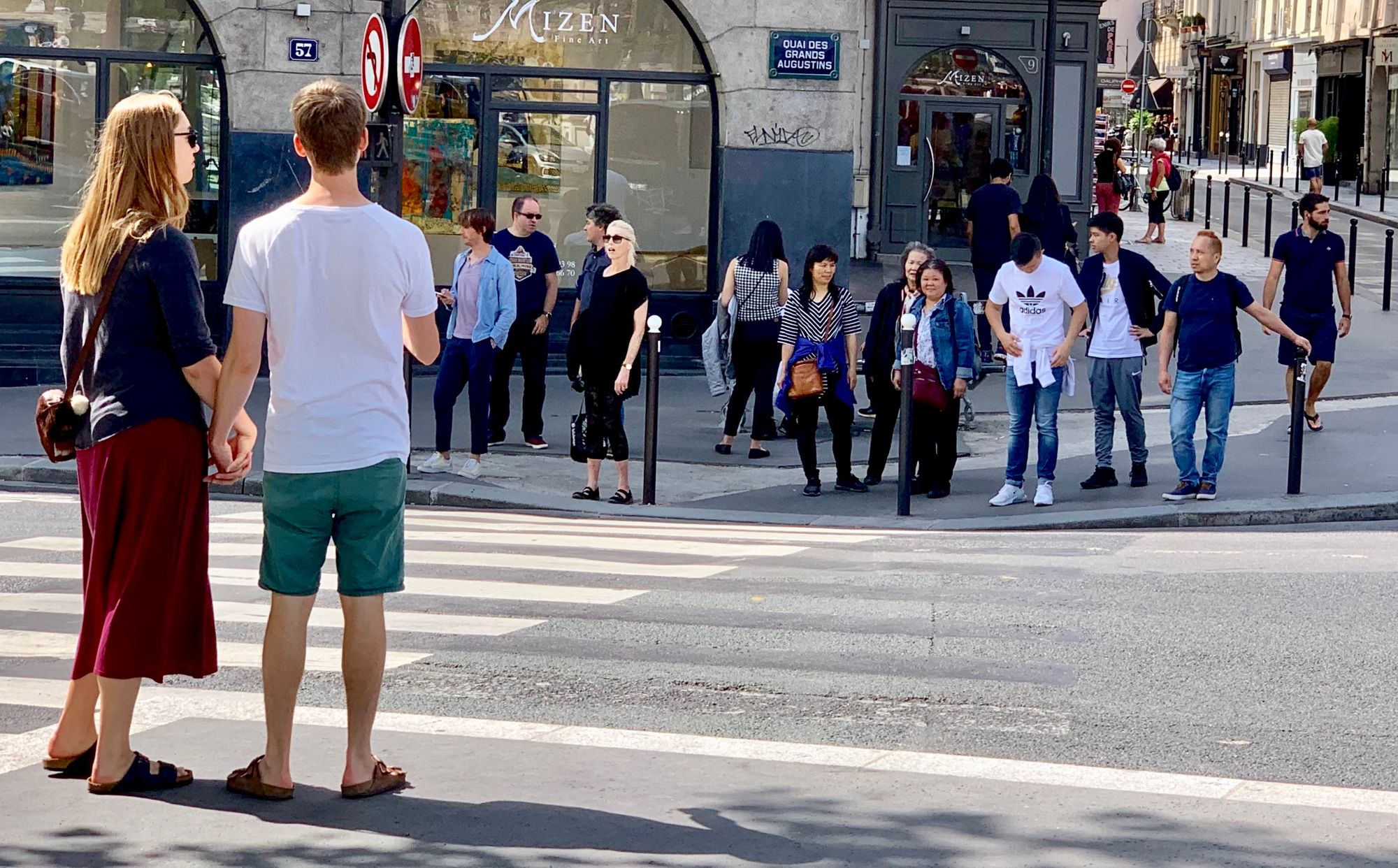
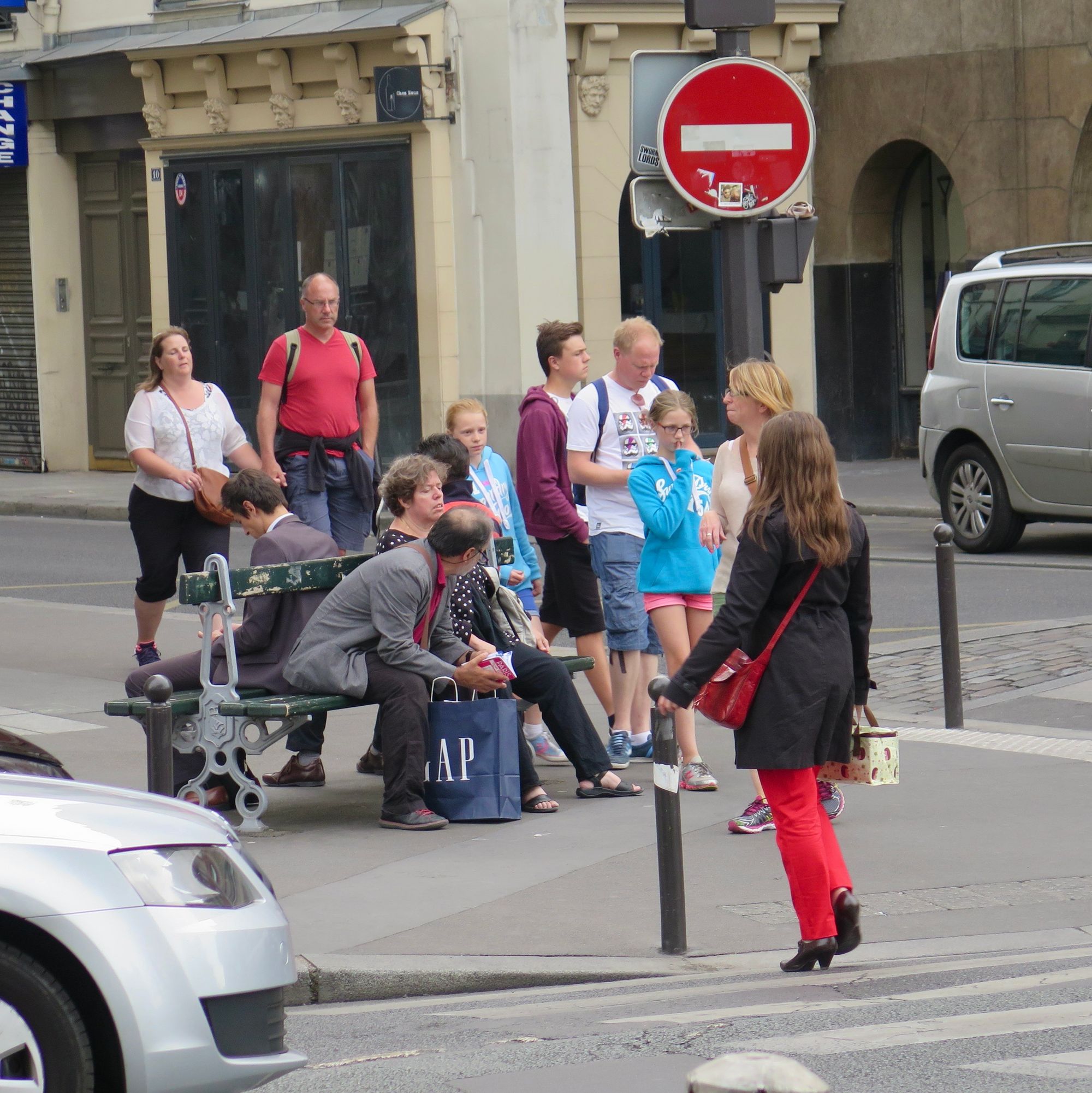
In most cities, corners are swallowed up in the car-dominated realm of the intersection – unpleasant places to linger because there's nothing happening there except for cars zooming in all directions. But in Paris, corners are treated as top real estate. Paris' corners are the sites of some of the best restaurants, shops, and cafés. Because of these vibrant nodes, the street network is much more lively and well-connected and its intersections are less hostile and unpleasant.
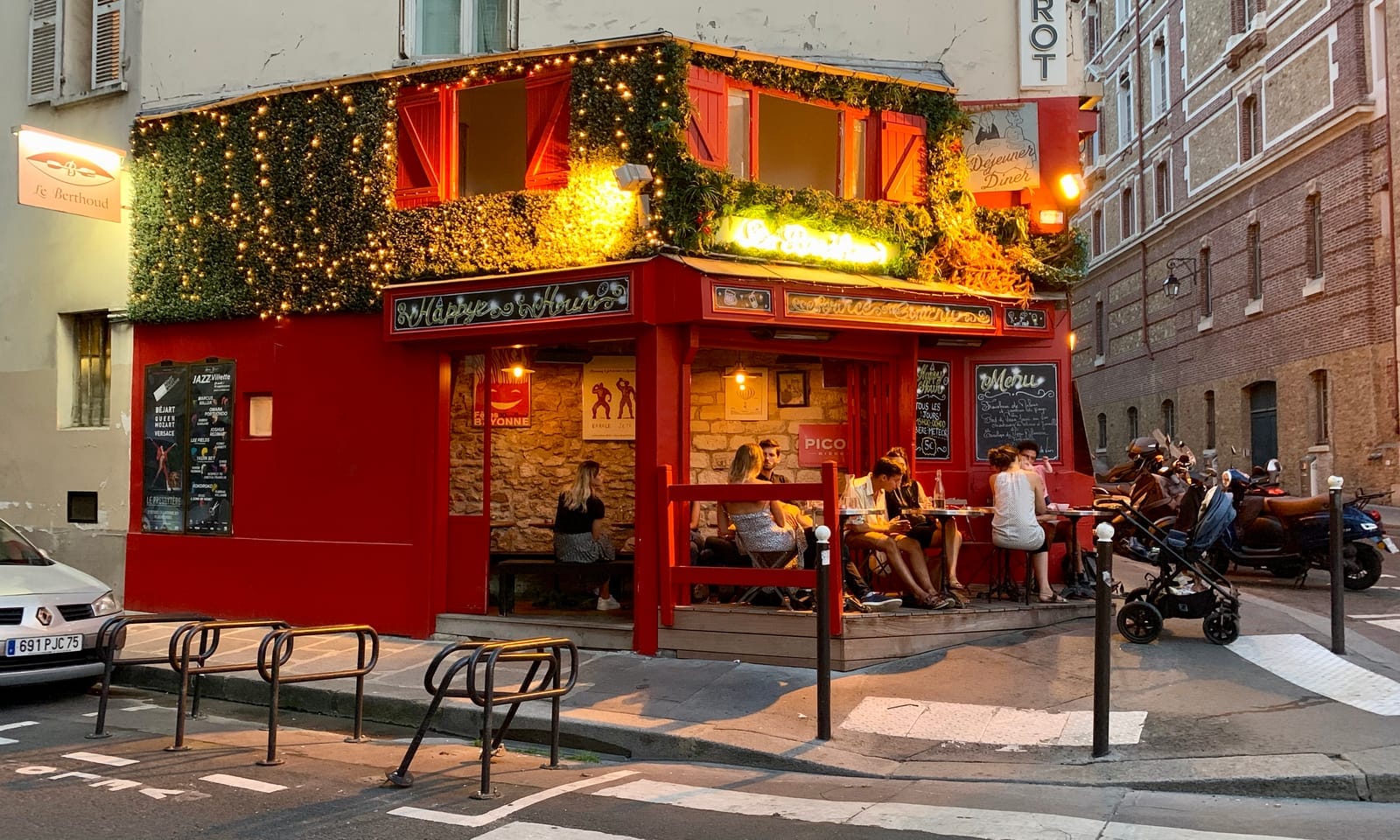
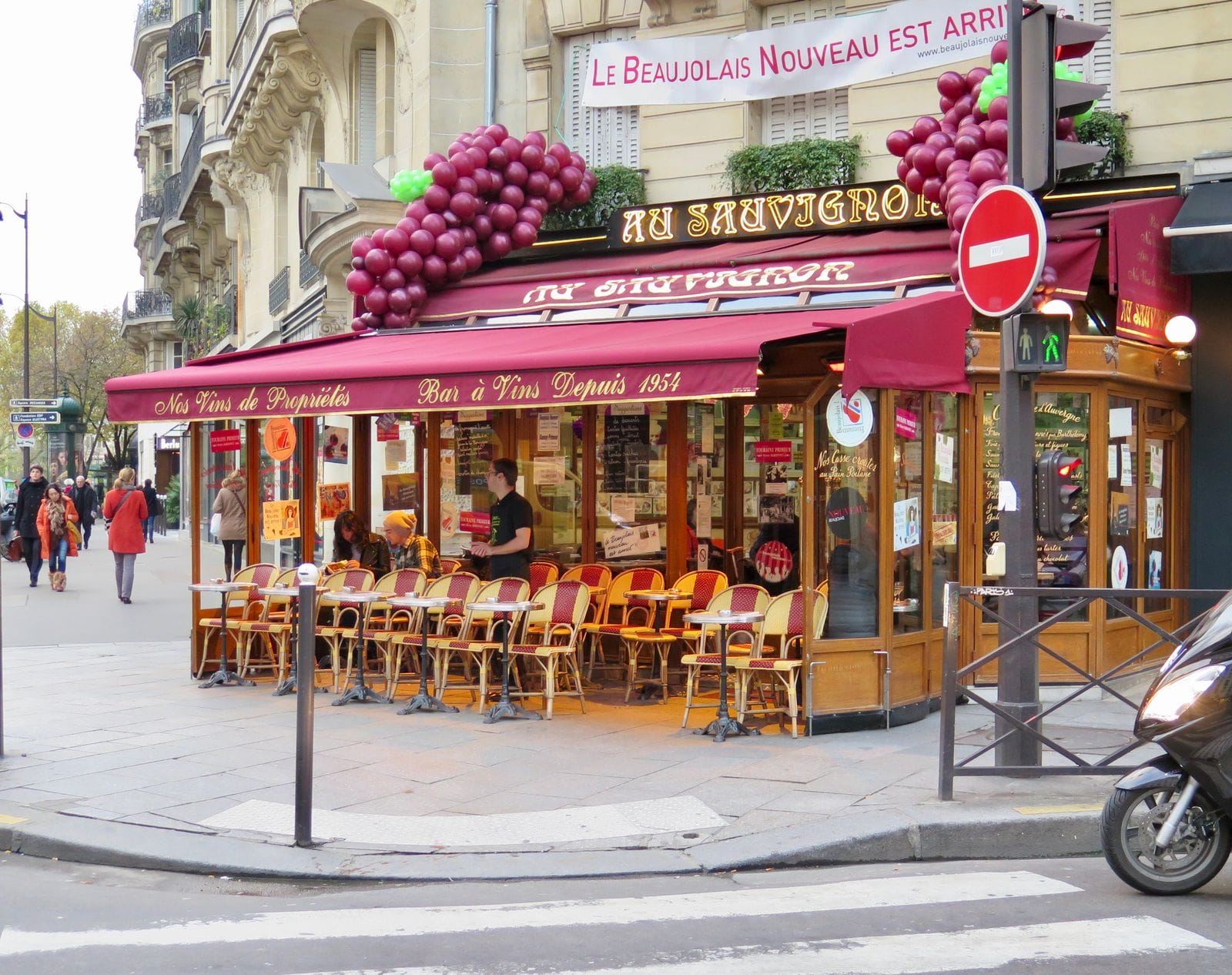
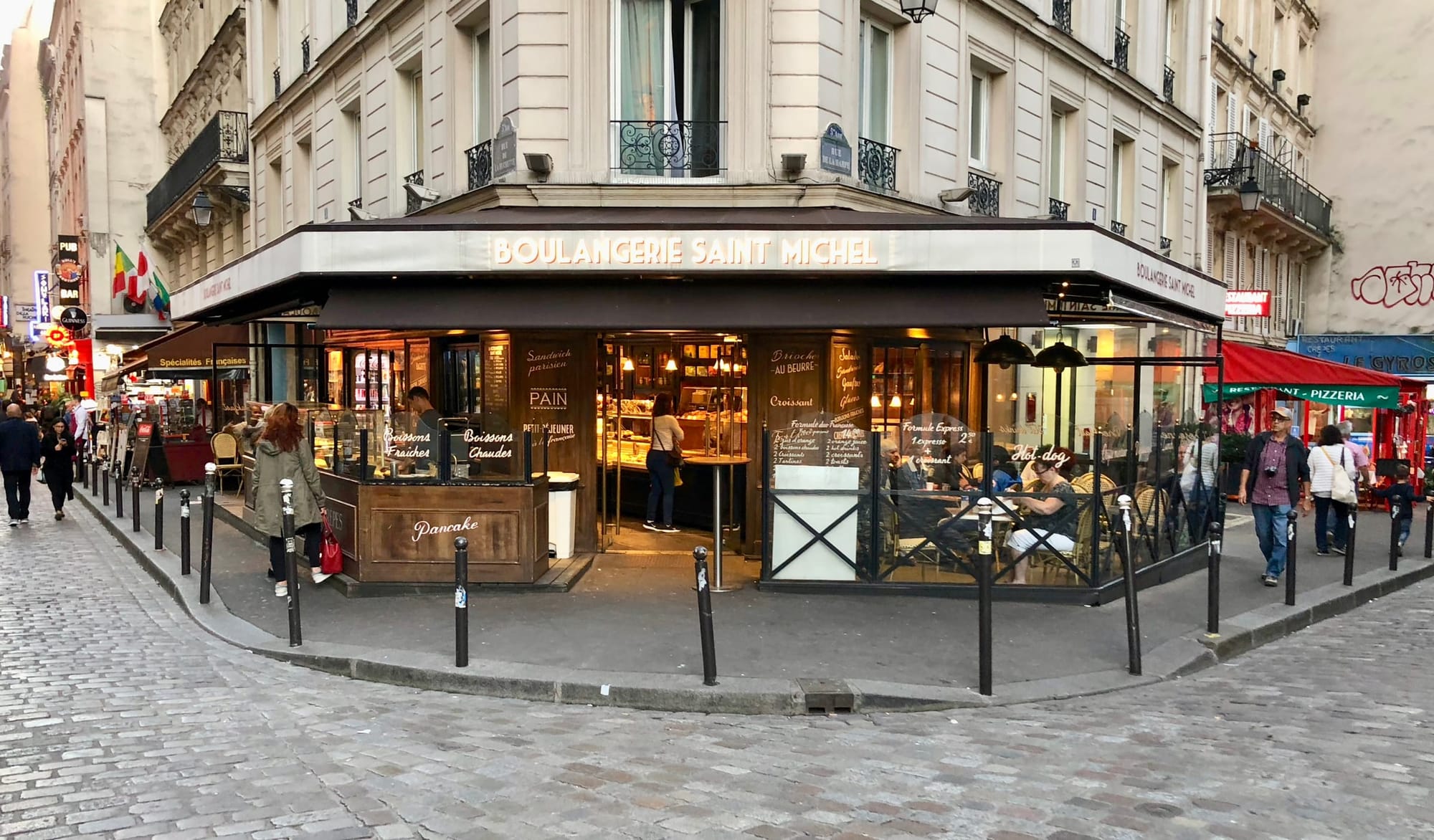
Rue de Buci – a people-friendly street with top-notch corners
Rue de Buci is one of many examples of Paris's excellence in street and corner design. One could stand at the octopus-like intersection at Rue de Buci's northeast end looking in each of its 5 directions and not know which way to go because every direction looks promising. This dynamic area with all its fantastic corners is the heart of the neighborhood and as such, it is the place which draws residents in naturally to hang out, converse, show off, have chance encounters, people watch, window shop, and more.
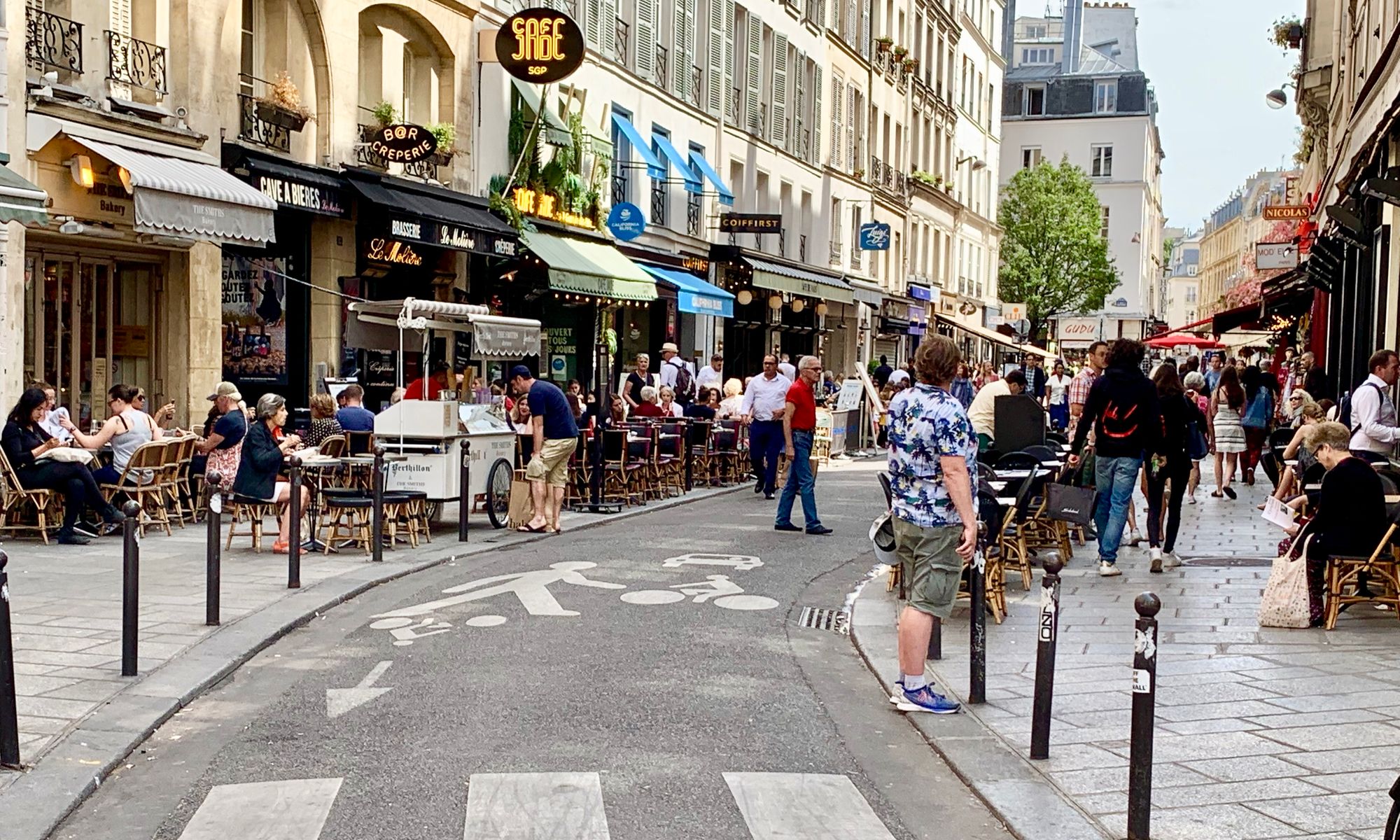
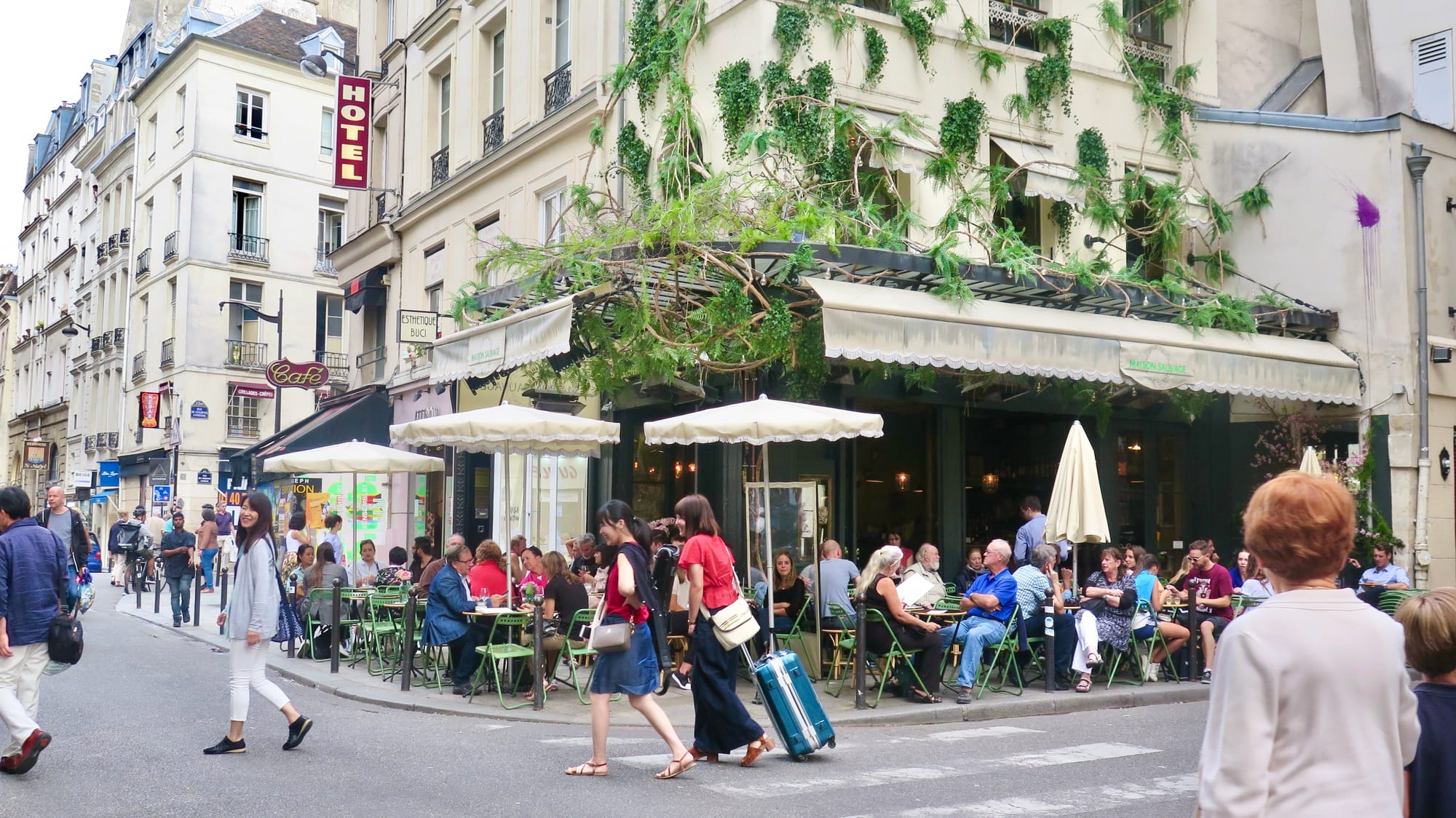
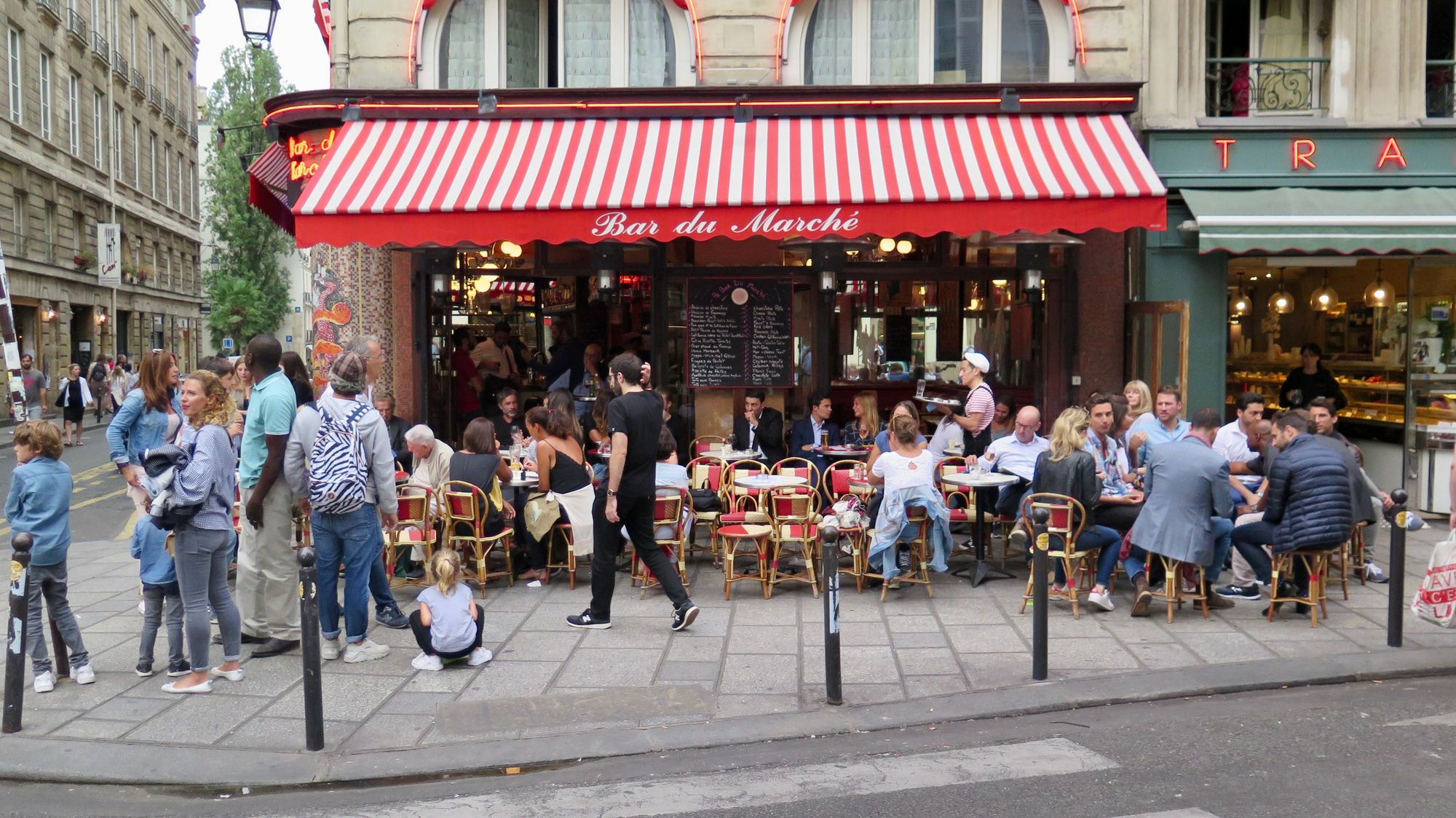
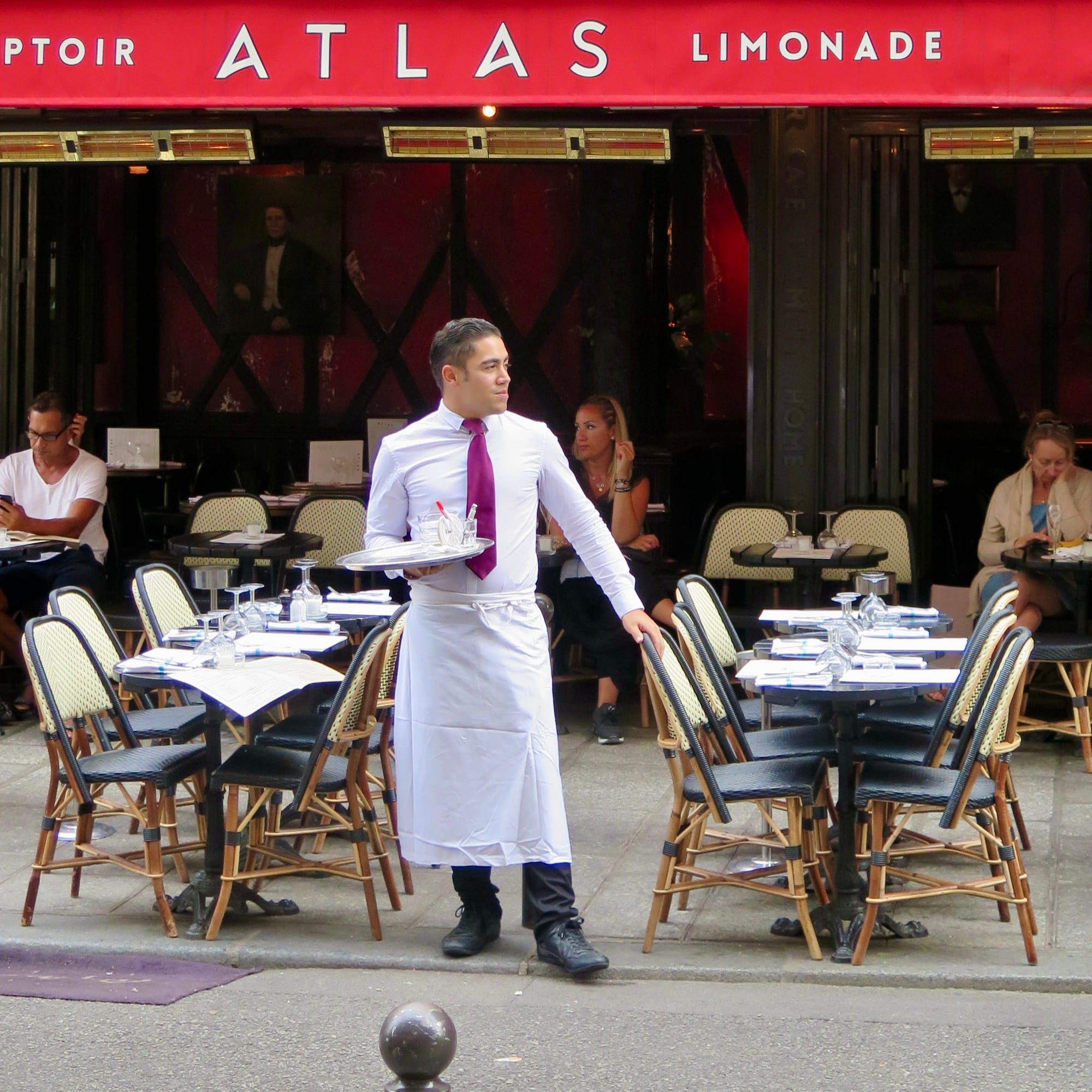
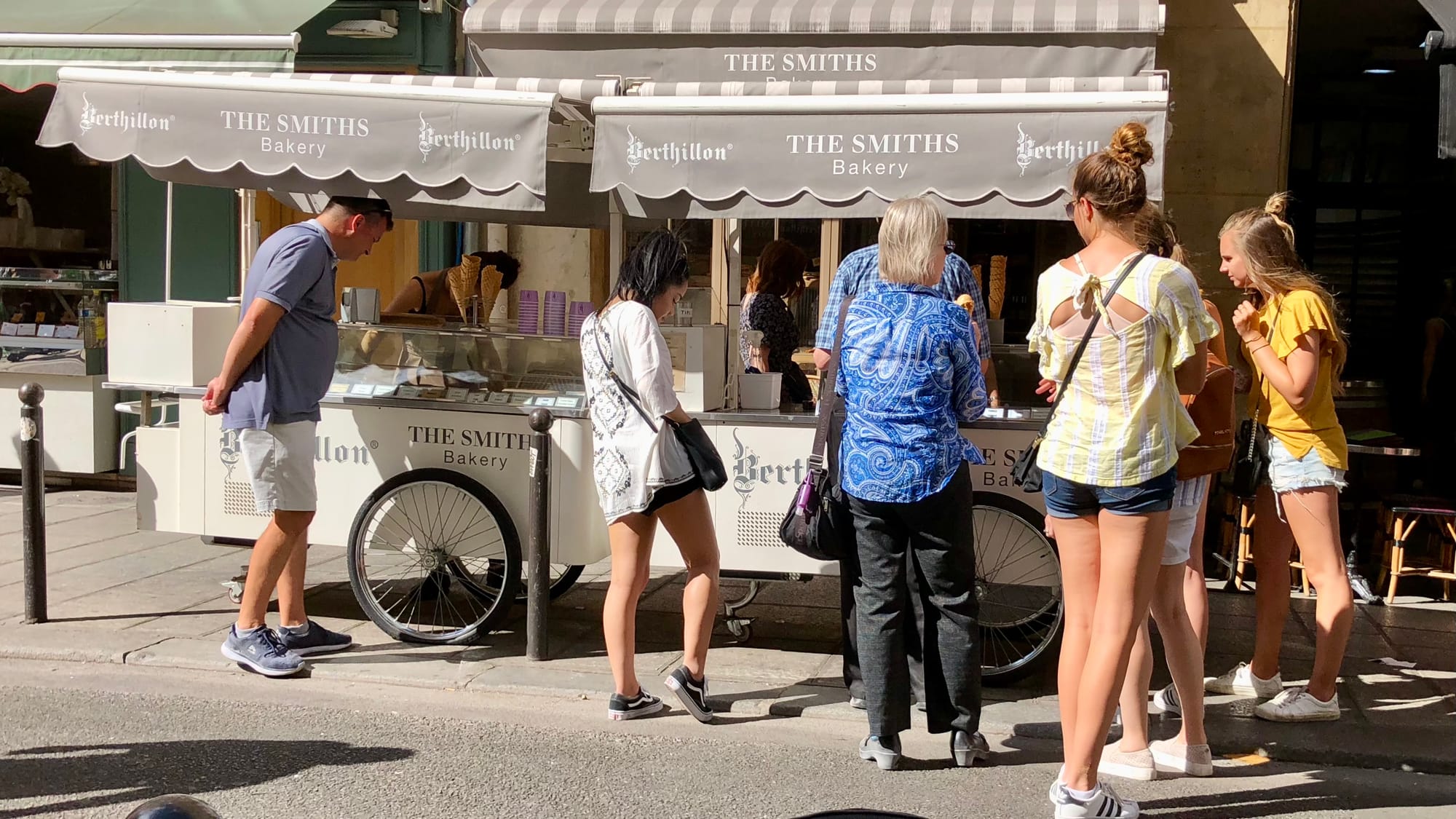
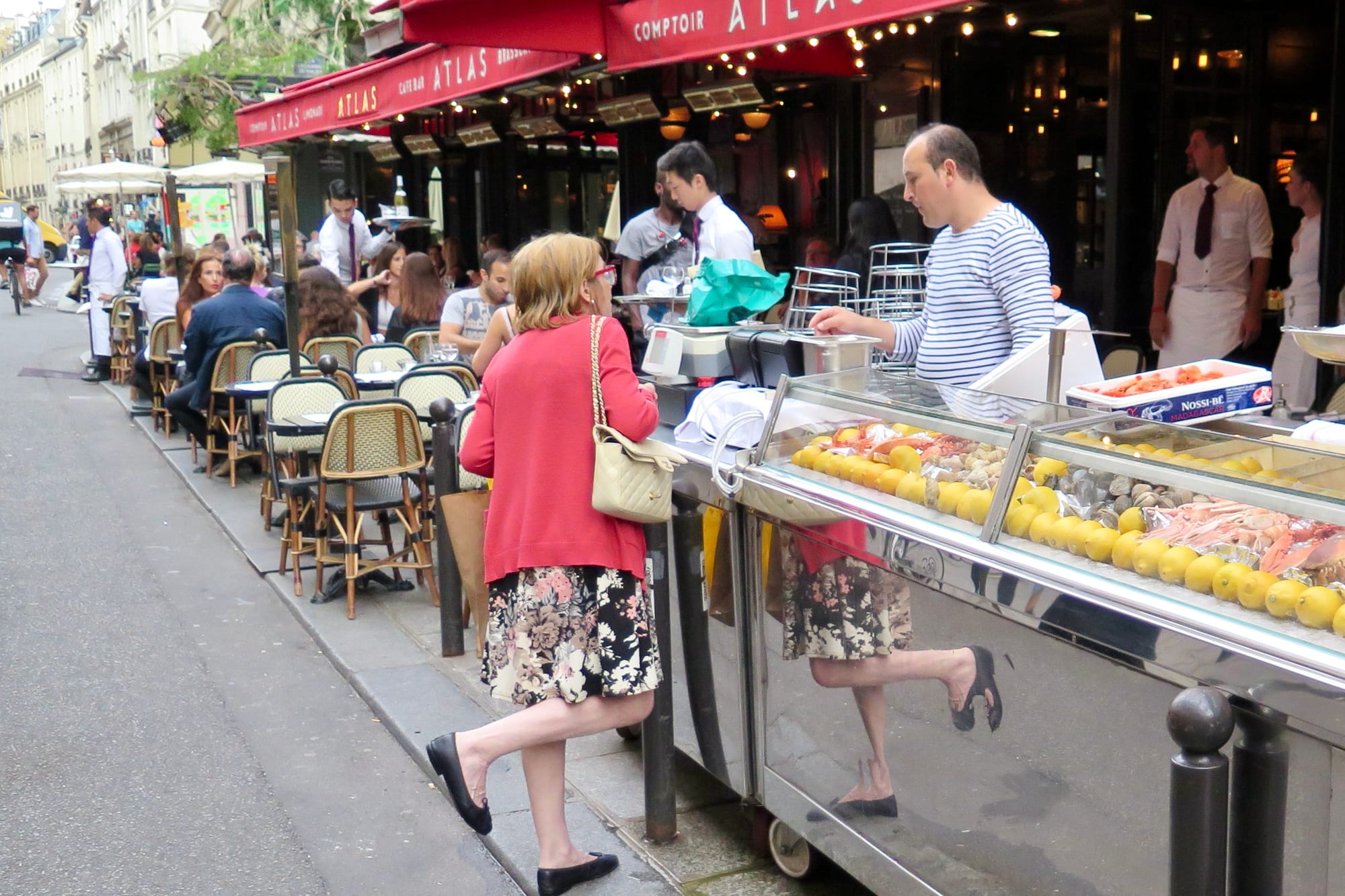
Curiosity and chance encounters occur at this key intersection which prioritizes connection over traffic flow.
 Fred Kent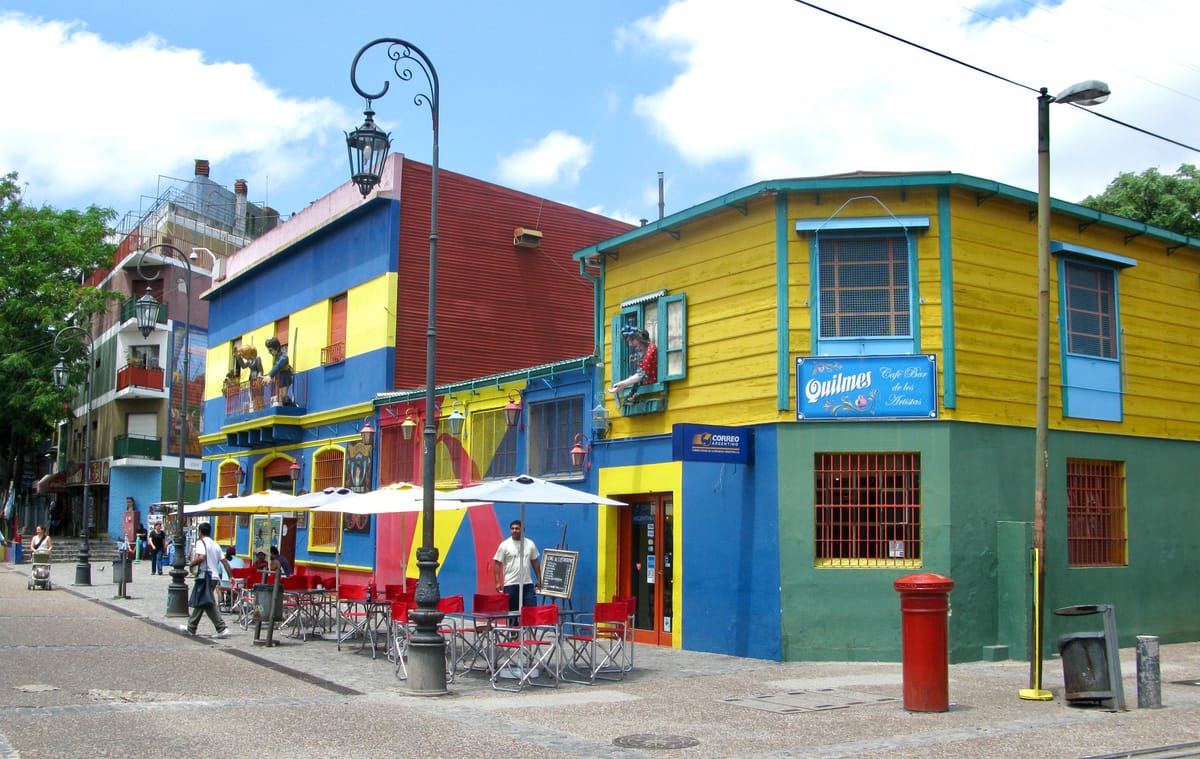
Inside-out design turns sidewalks into "porches"
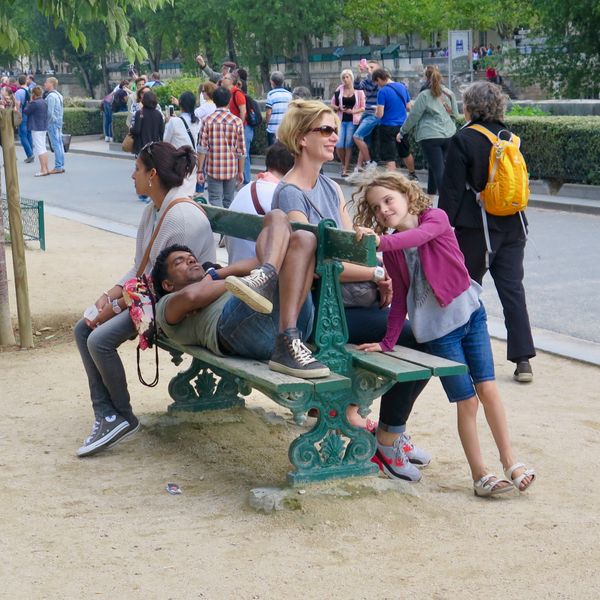
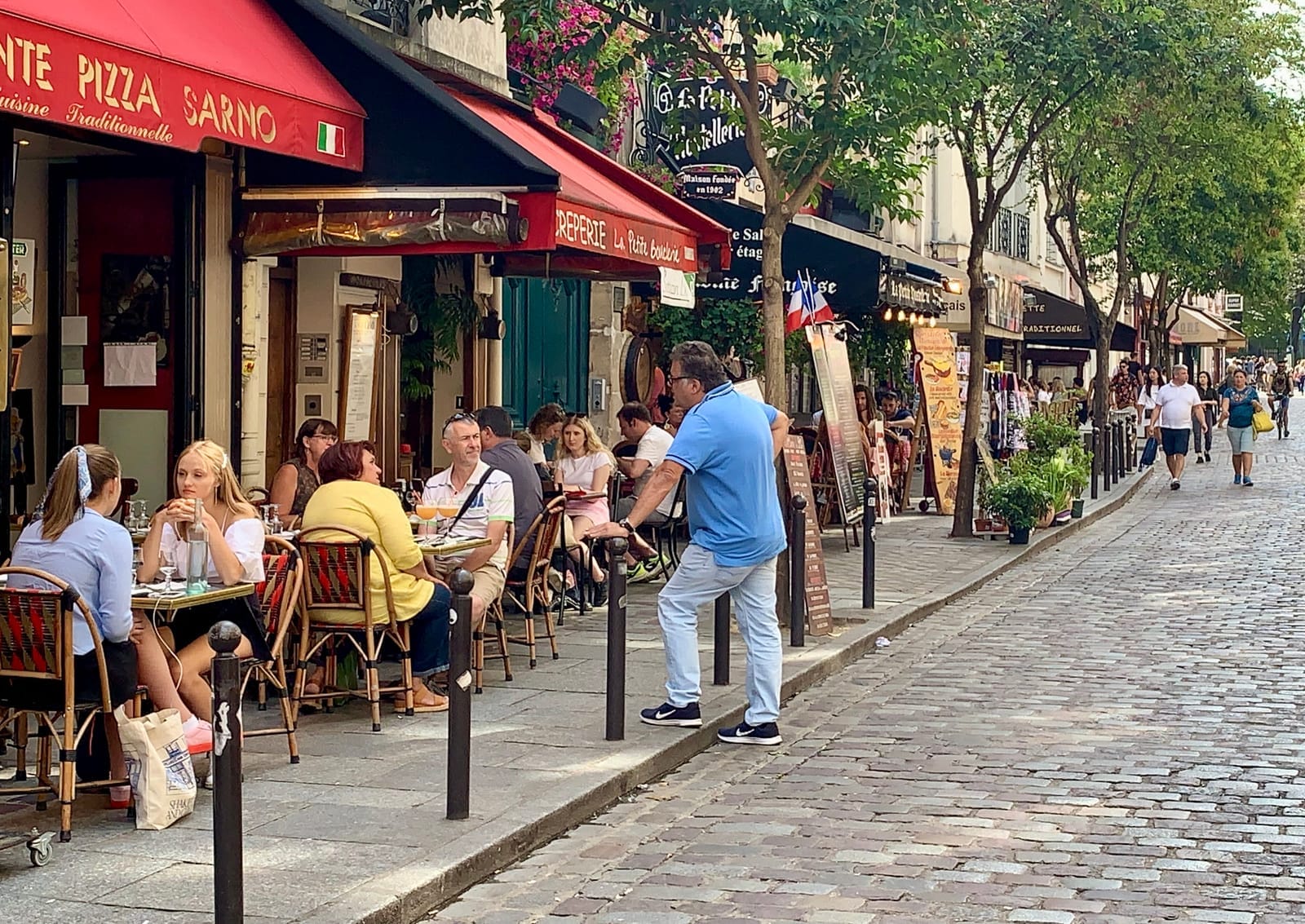
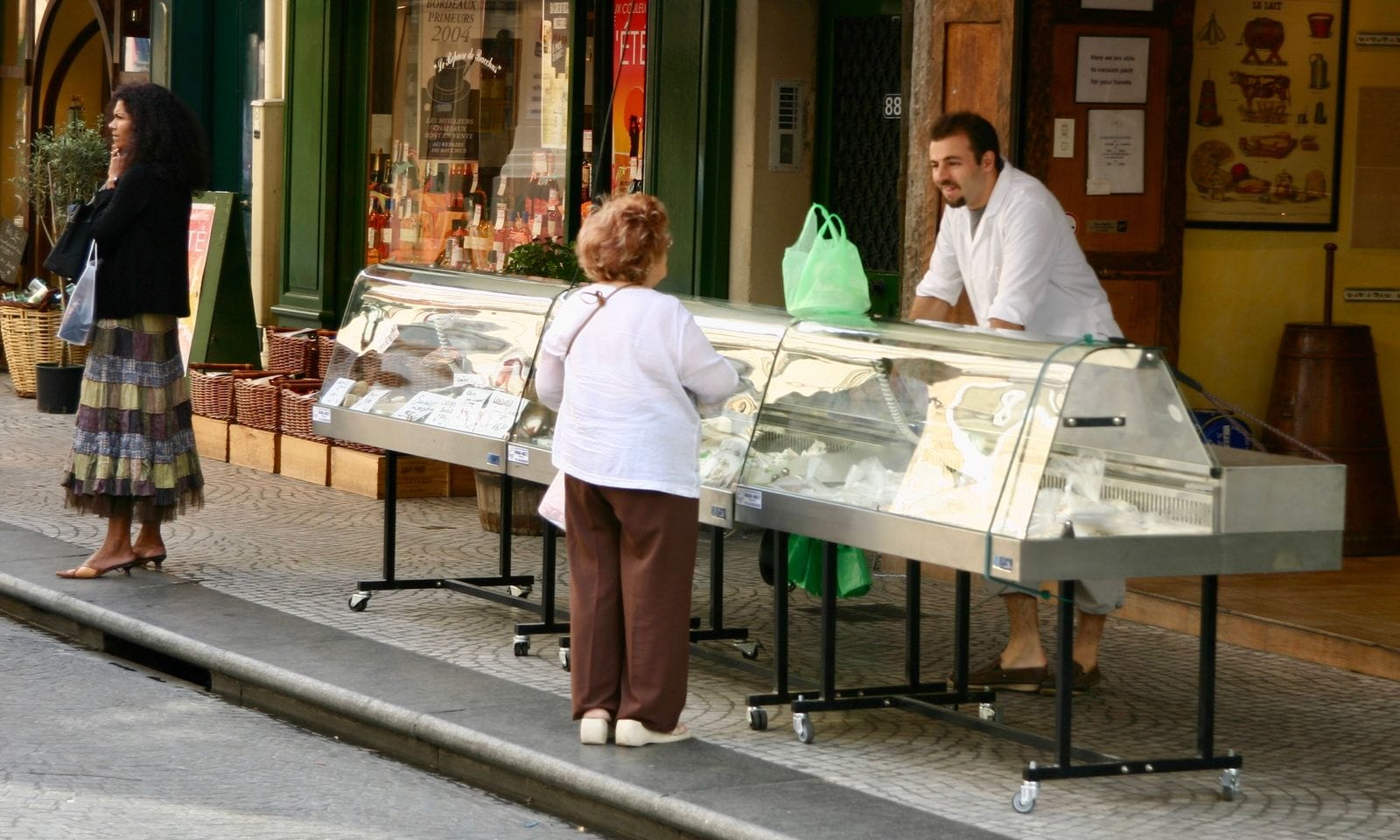
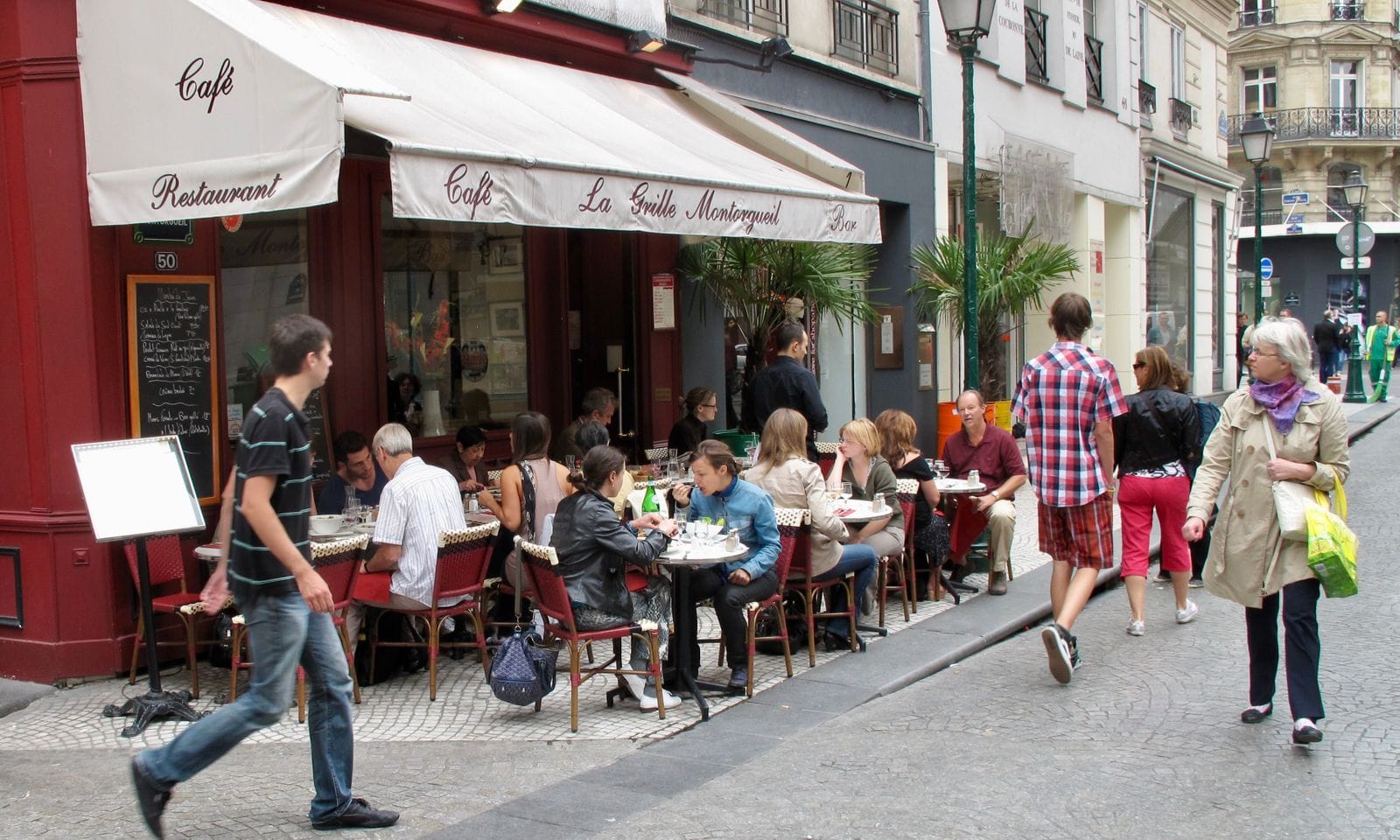
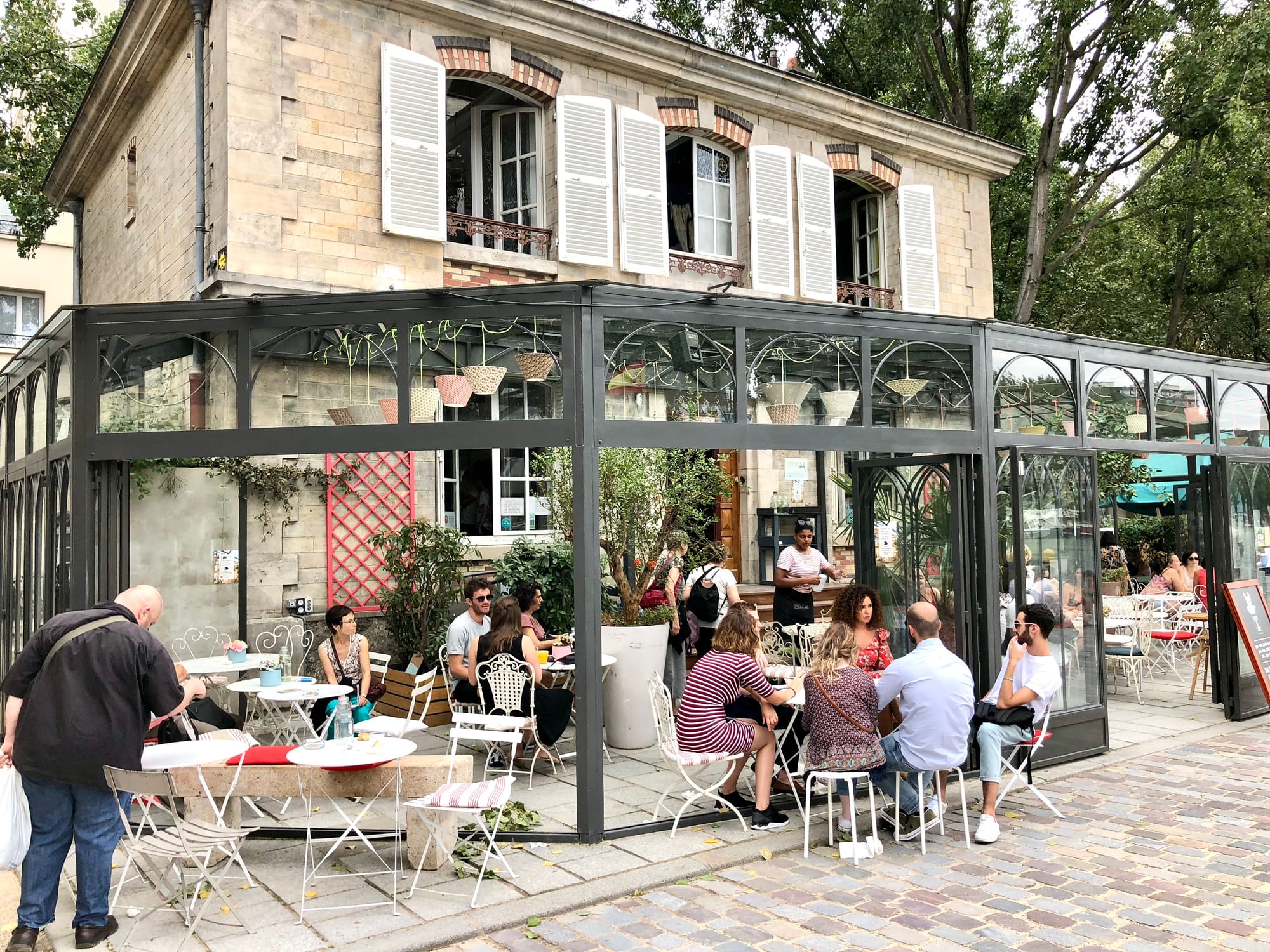
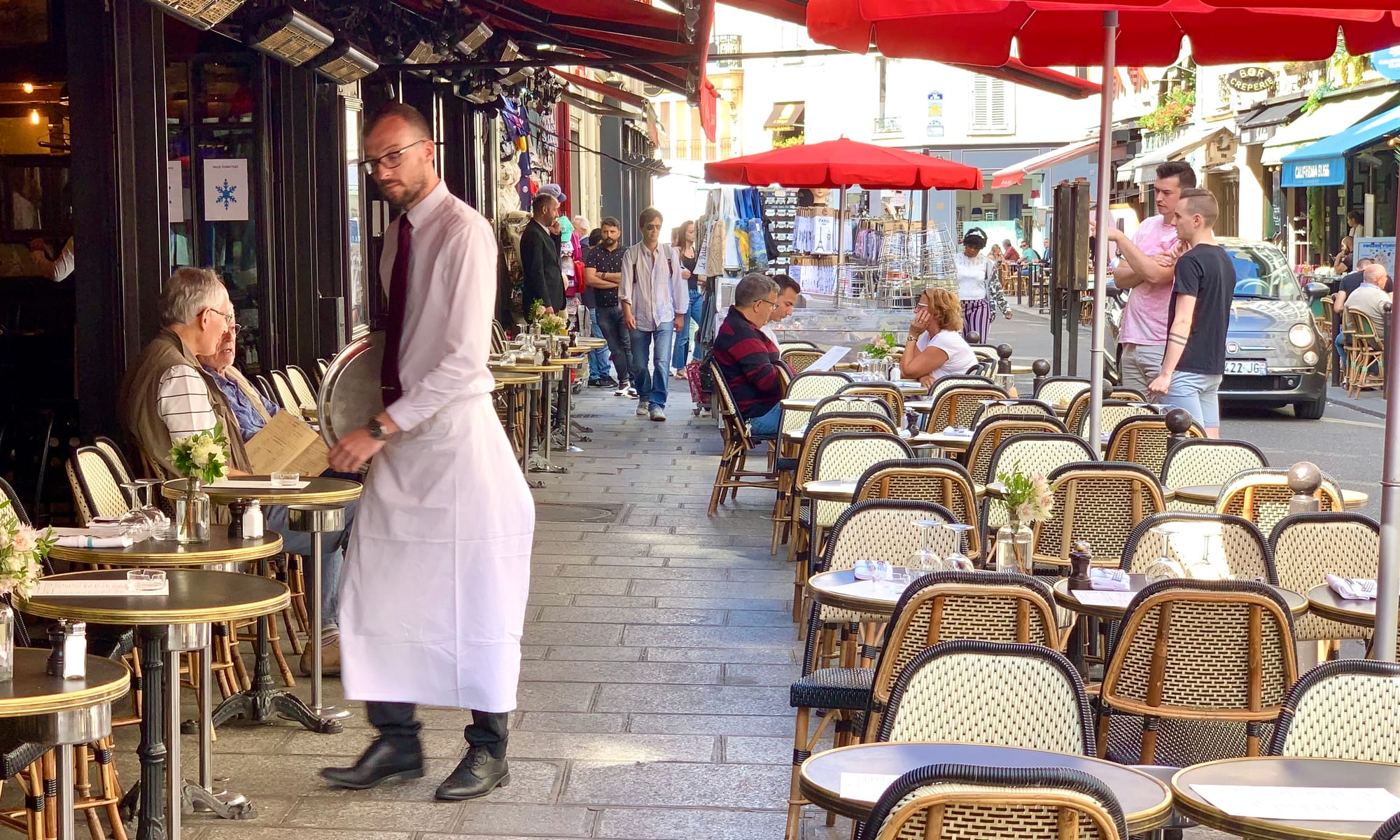
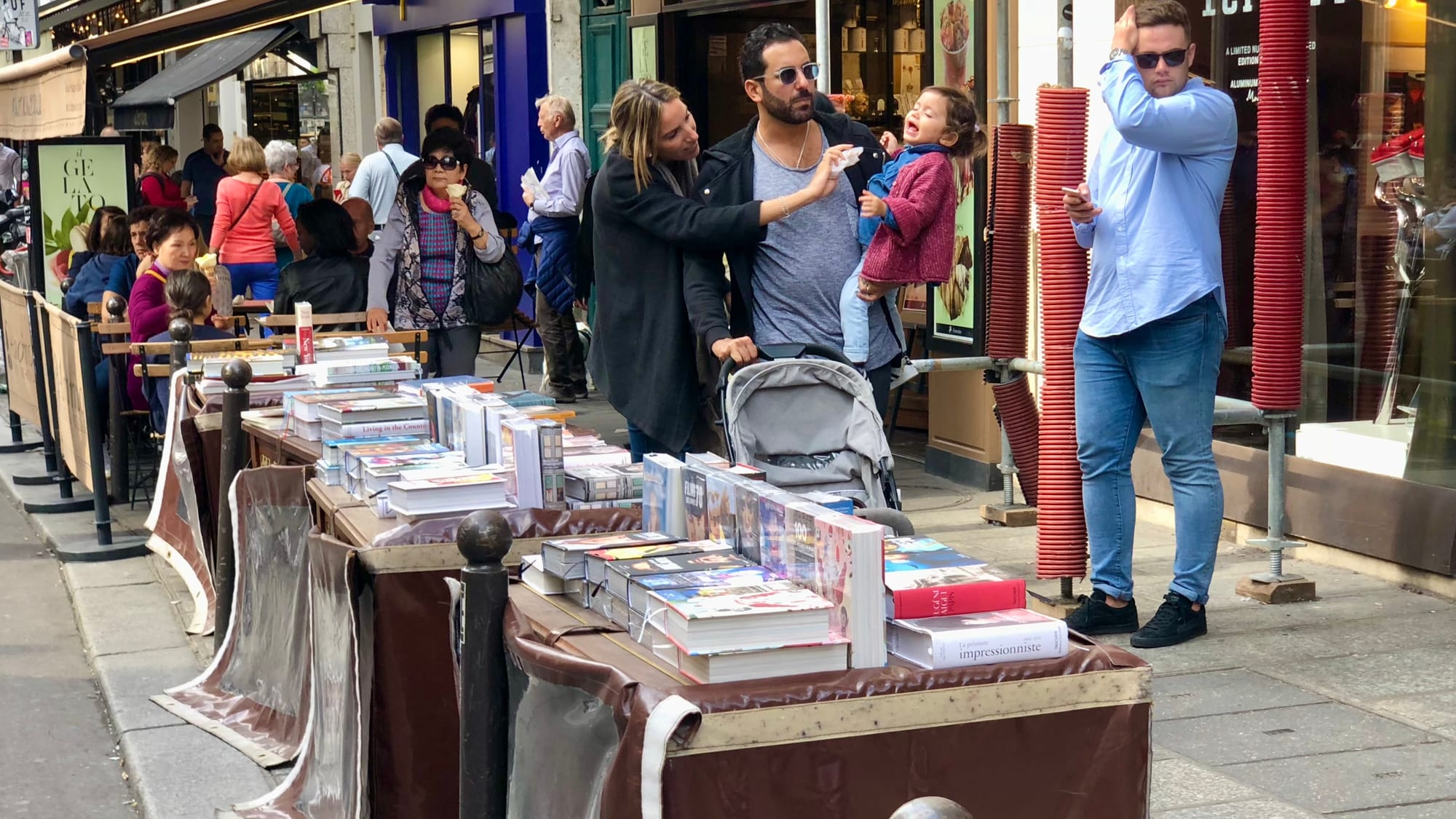
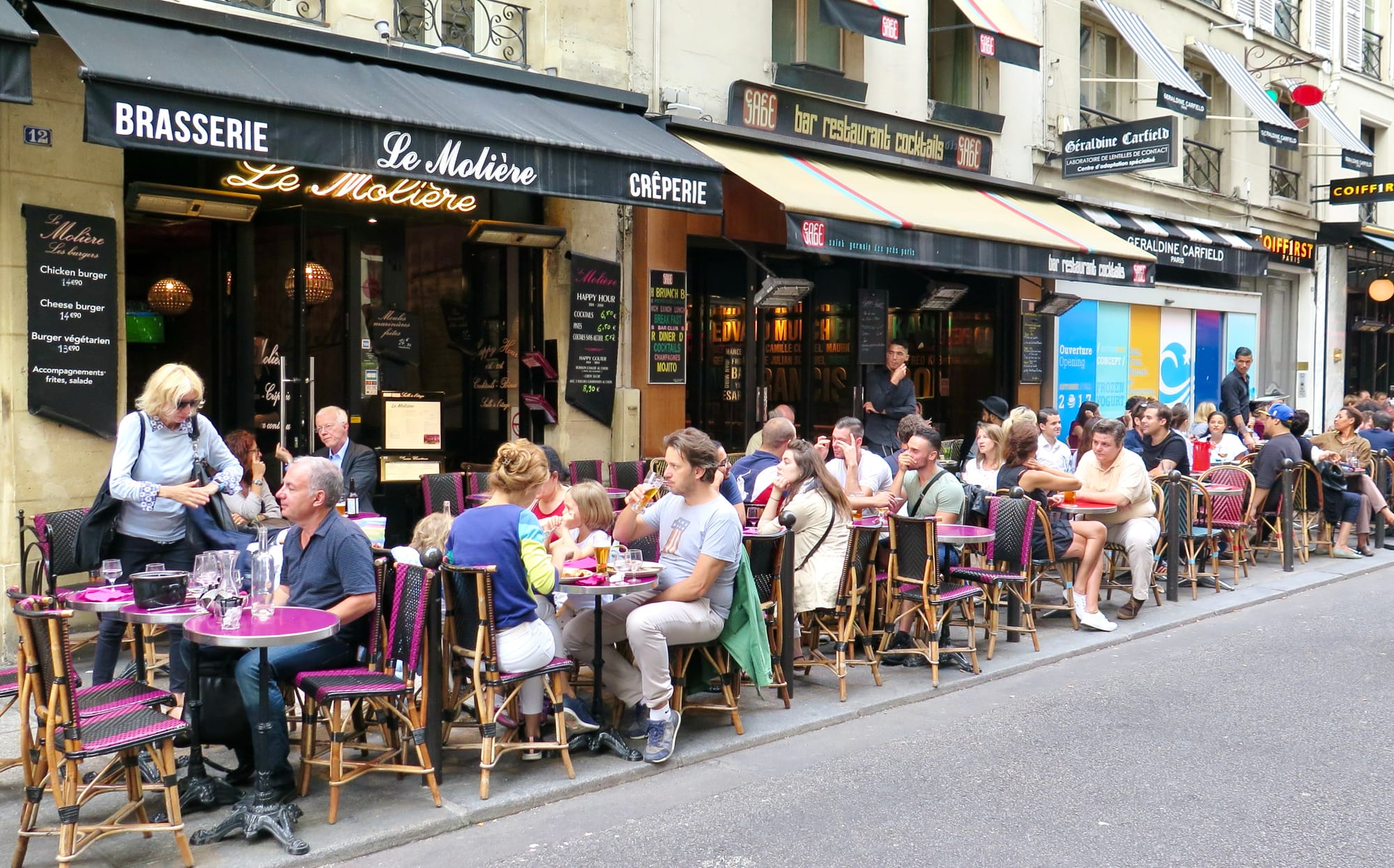
While many other cities around the world have forgotten about the eye-level experience of pedestrians as they design mainly for cars and drivers, Paris offers pedestrians a richly engaging environment at every turn. It employs "inside-out" design on its commercial streets – bringing things that are normally inside businesses like displays of goods, food stalls, and seating, into the outdoors – so as to engage the interest and senses of passersby. It treats the public space outside its doors like the "porch" of a house – where the private realm and the public realm of foot traffic can interact.
 Fred Kent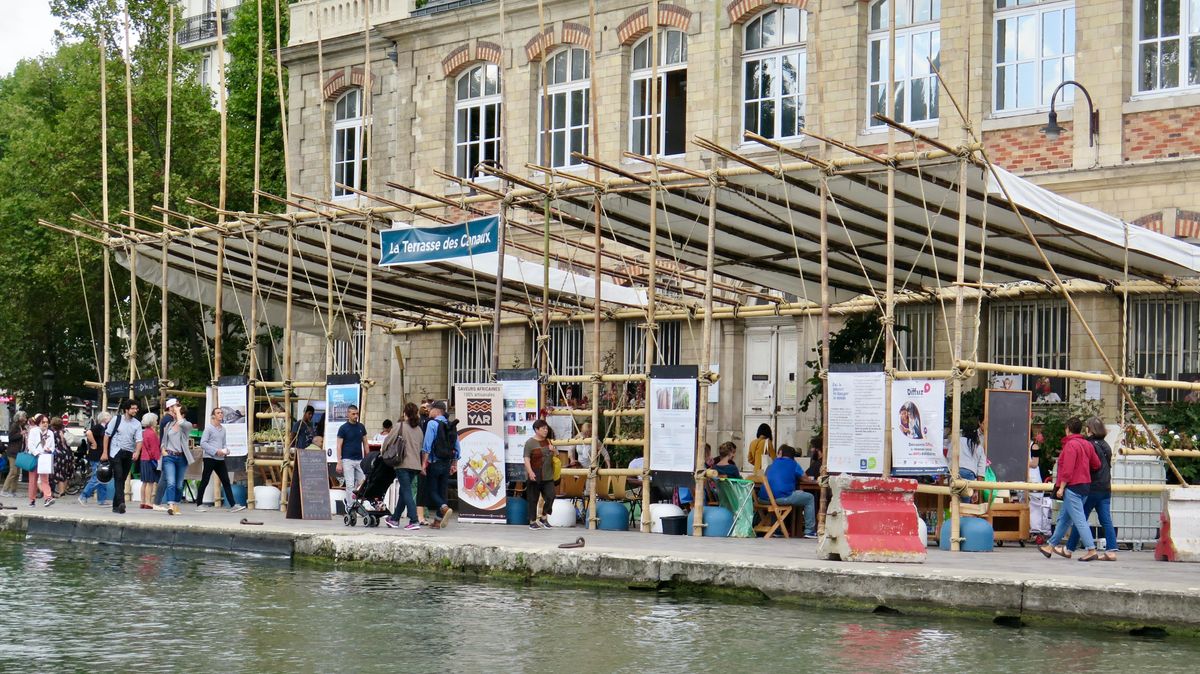
Double-loading sidewalks keeps people engaged with their surroundings
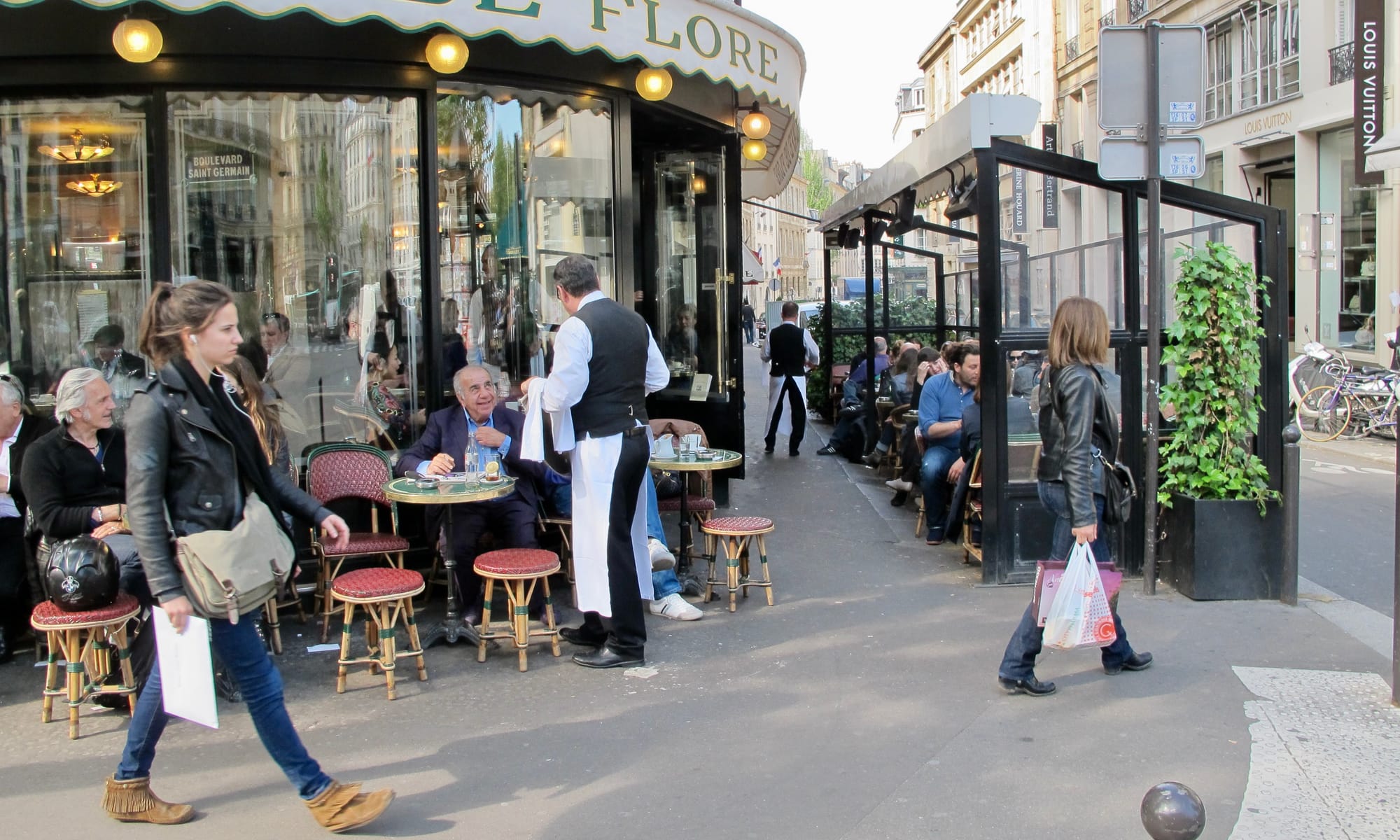
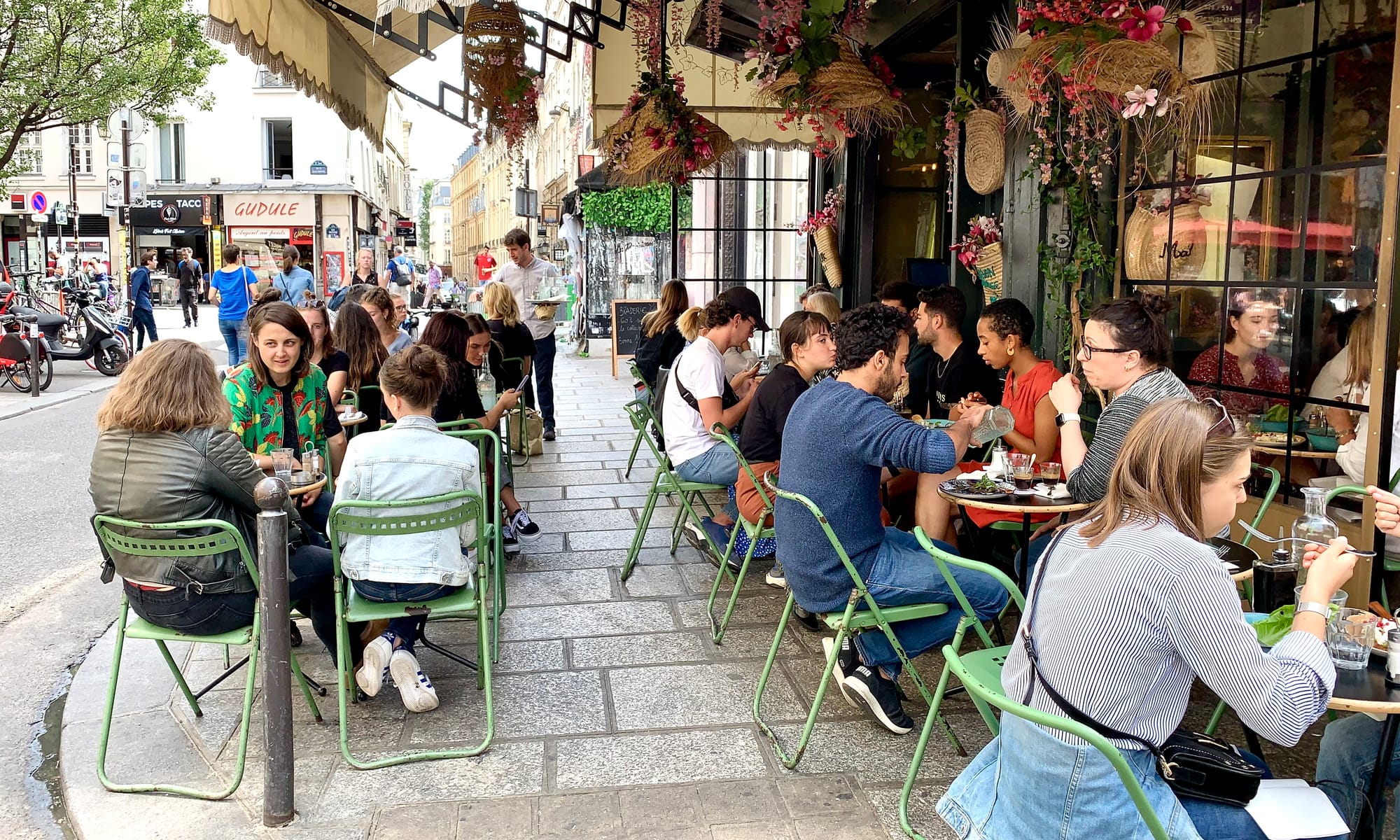
Double-loading is when there are things happening on either side of the pedestrian walkway. This means there is something to engage with everywhere you look. Additionally, double-loading creates a cozy sense of enclosure as you walk along the street, because it feels as though you are strolling through a tunnel lined with experiences and eye-catching details on both sides. What's more, curb-side activations like outdoor dining structures create a barrier between pedestrians and traffic which makes for a calmer and less stressful walking experience.
 Fred Kent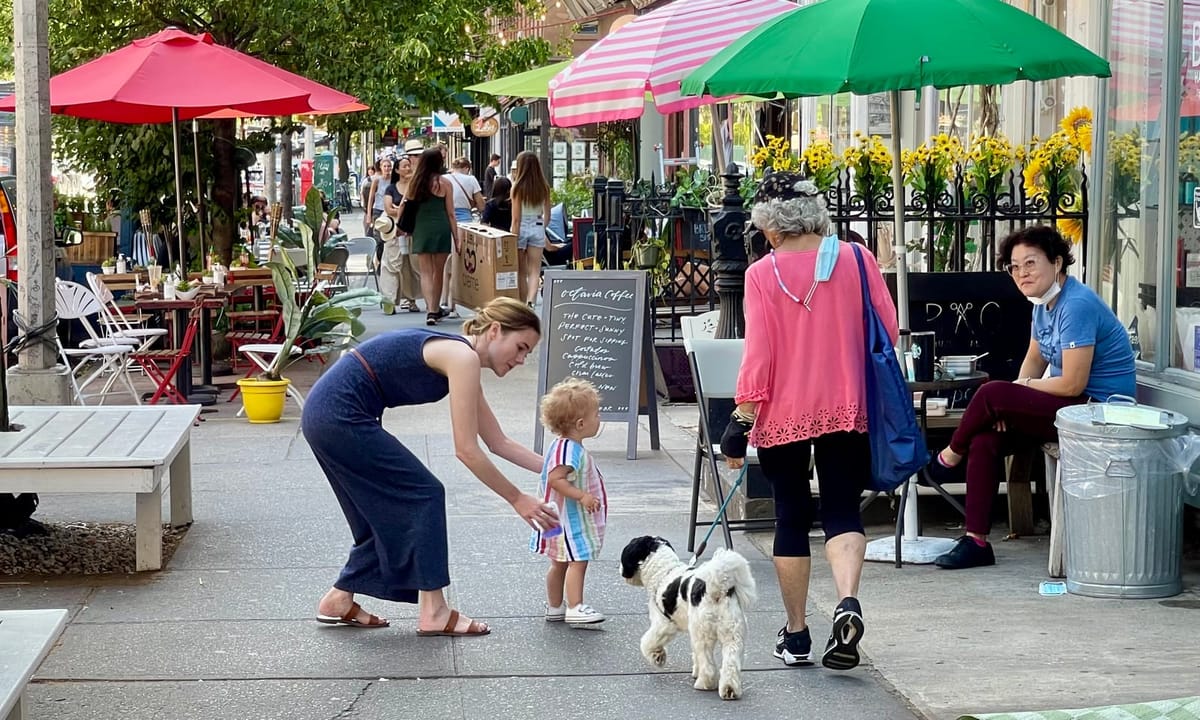
Market streets create the heart of neighborhoods
When you spread the concept of inside-out design all down the street, you often get "market streets" – streets that feel like linear markets because of how their goods are displayed outdoors in the public eye, attracting shoppers and activity. In many parts of Paris, these market streets constitute a social and commercial backbone for the neighborhood and the sites with some of the highest energy and vibrancy.
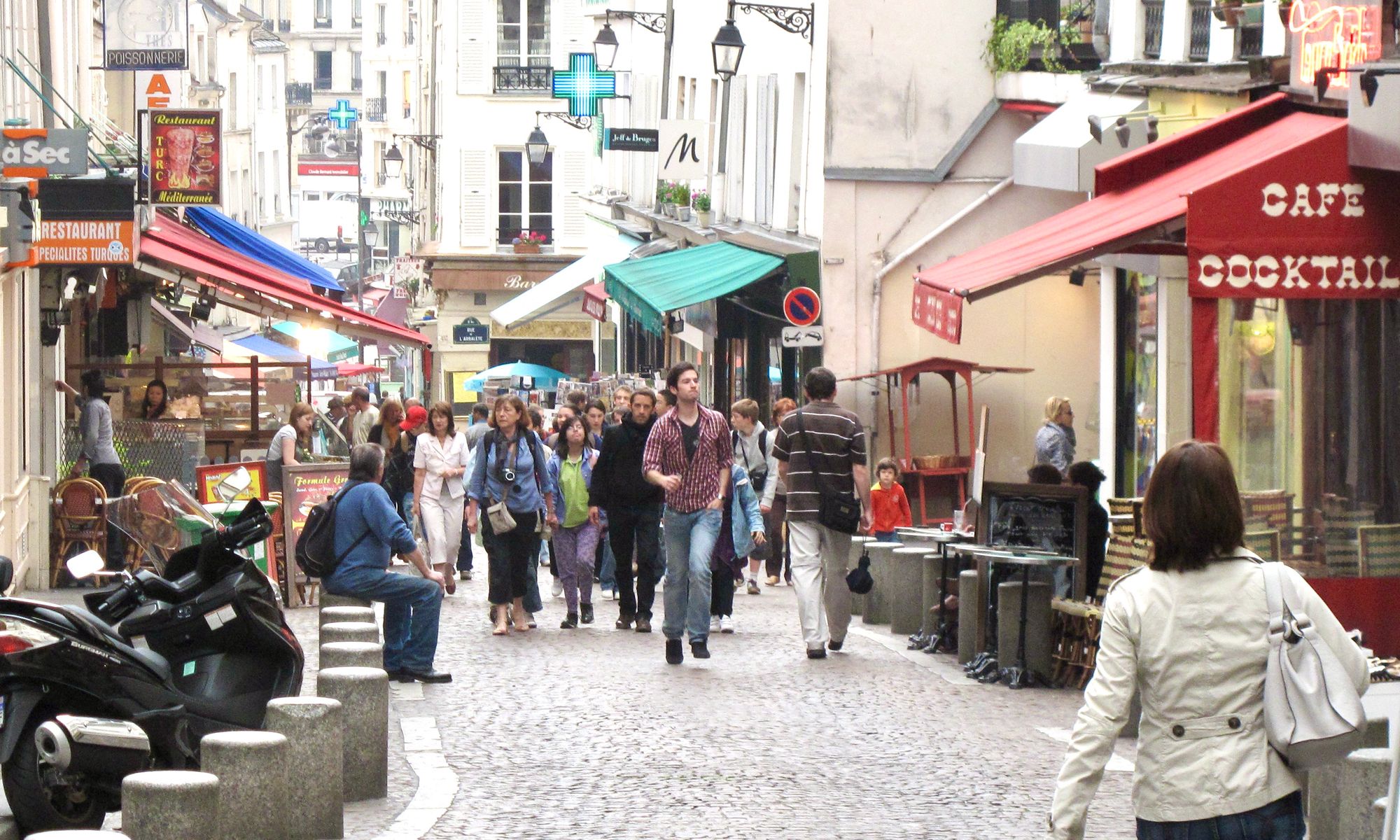
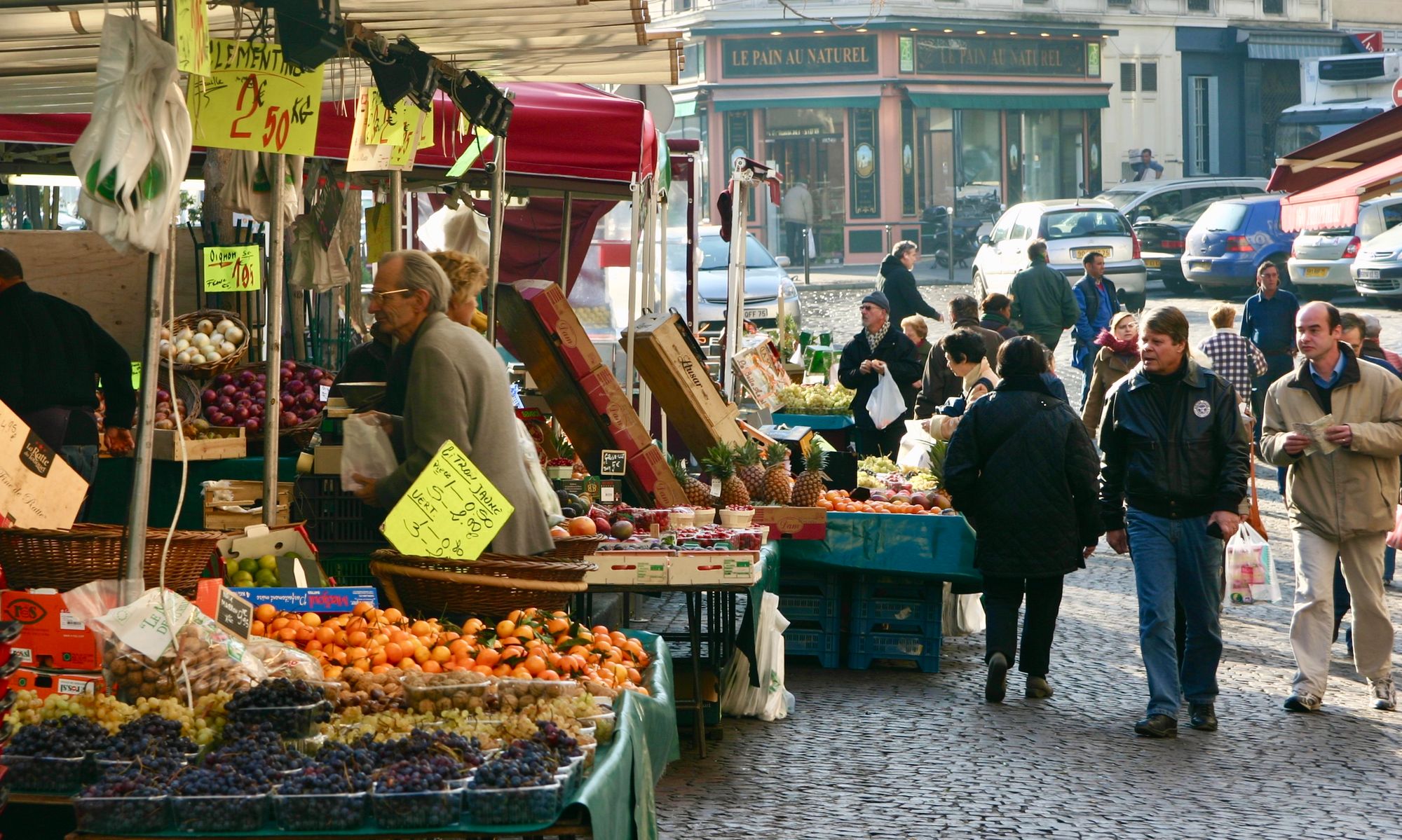
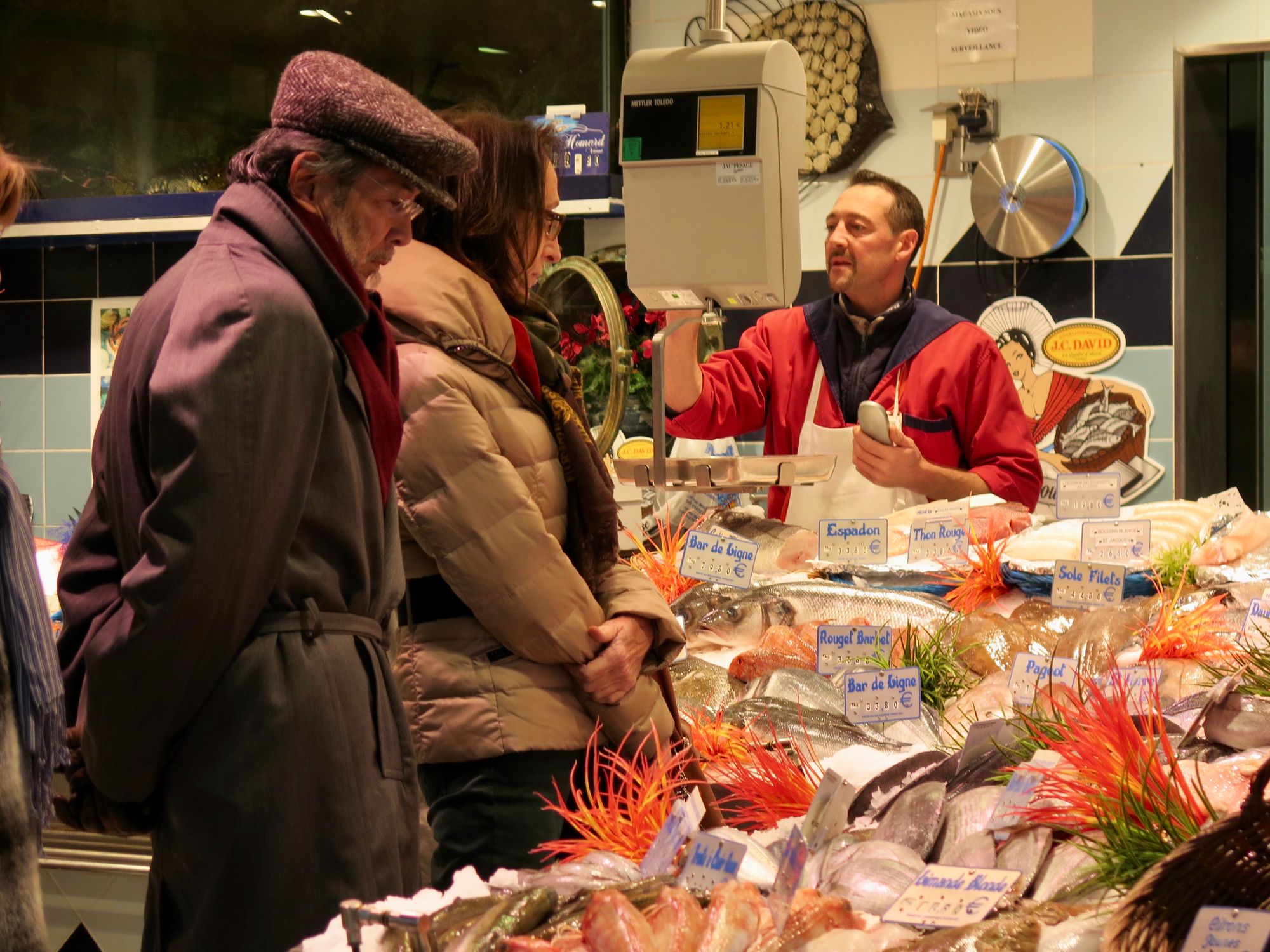
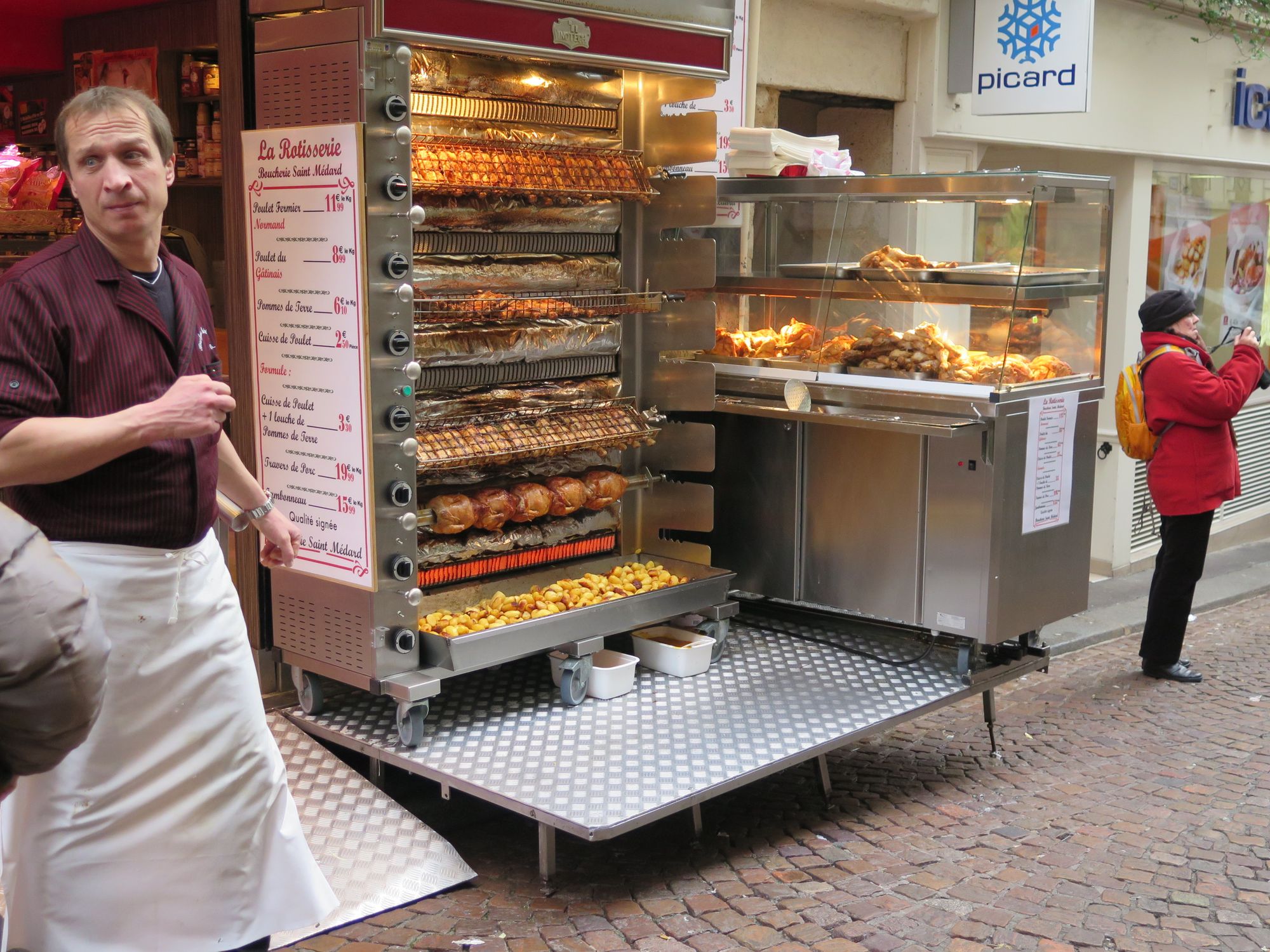
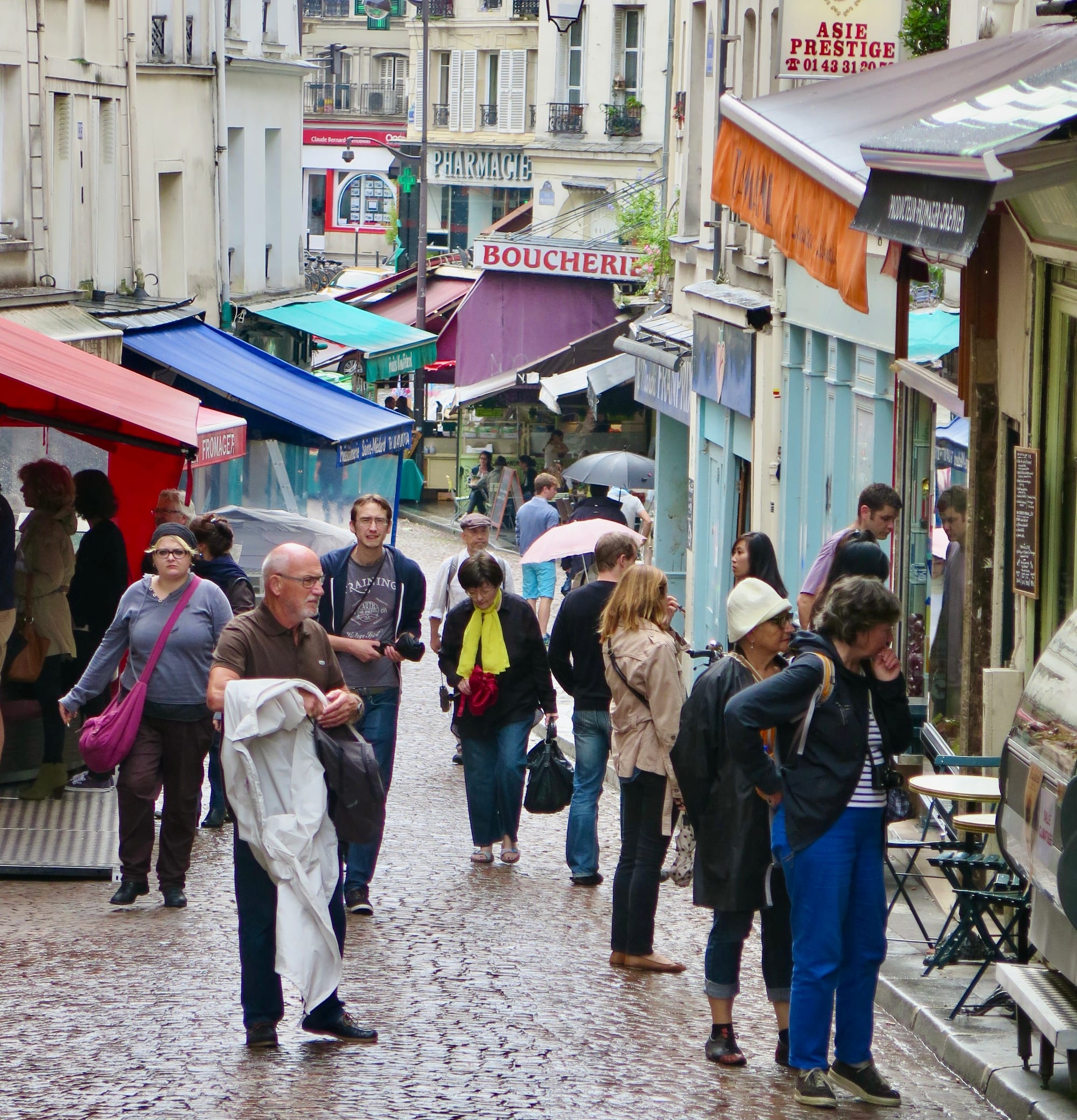
Rue Mouffetard
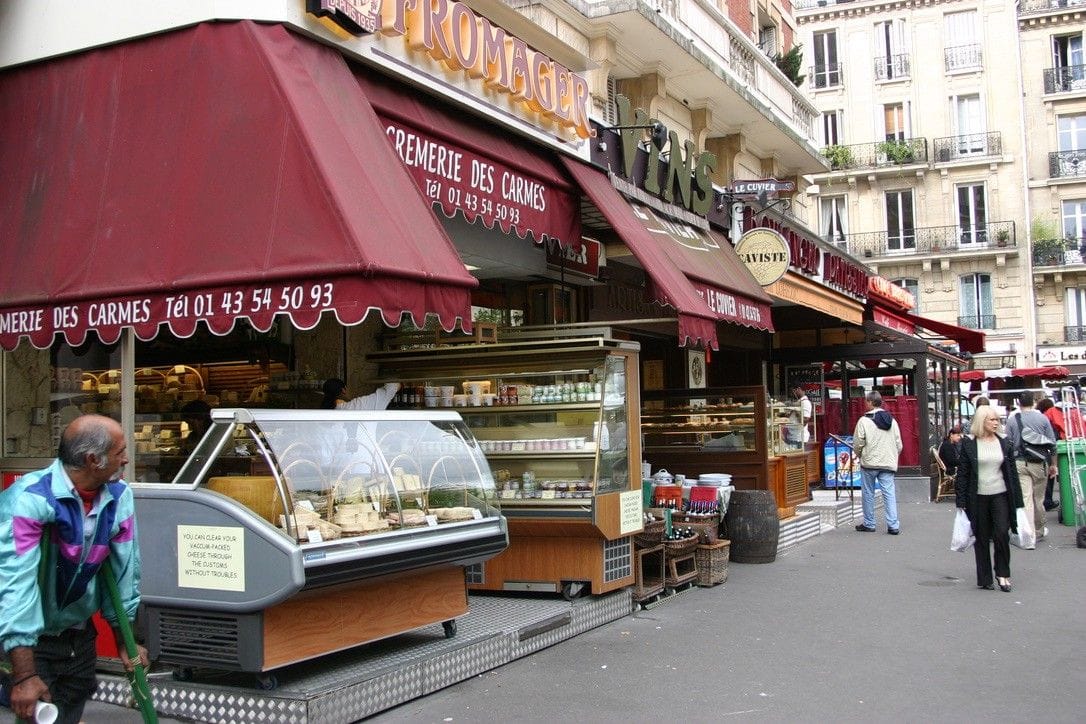
Place Maubert
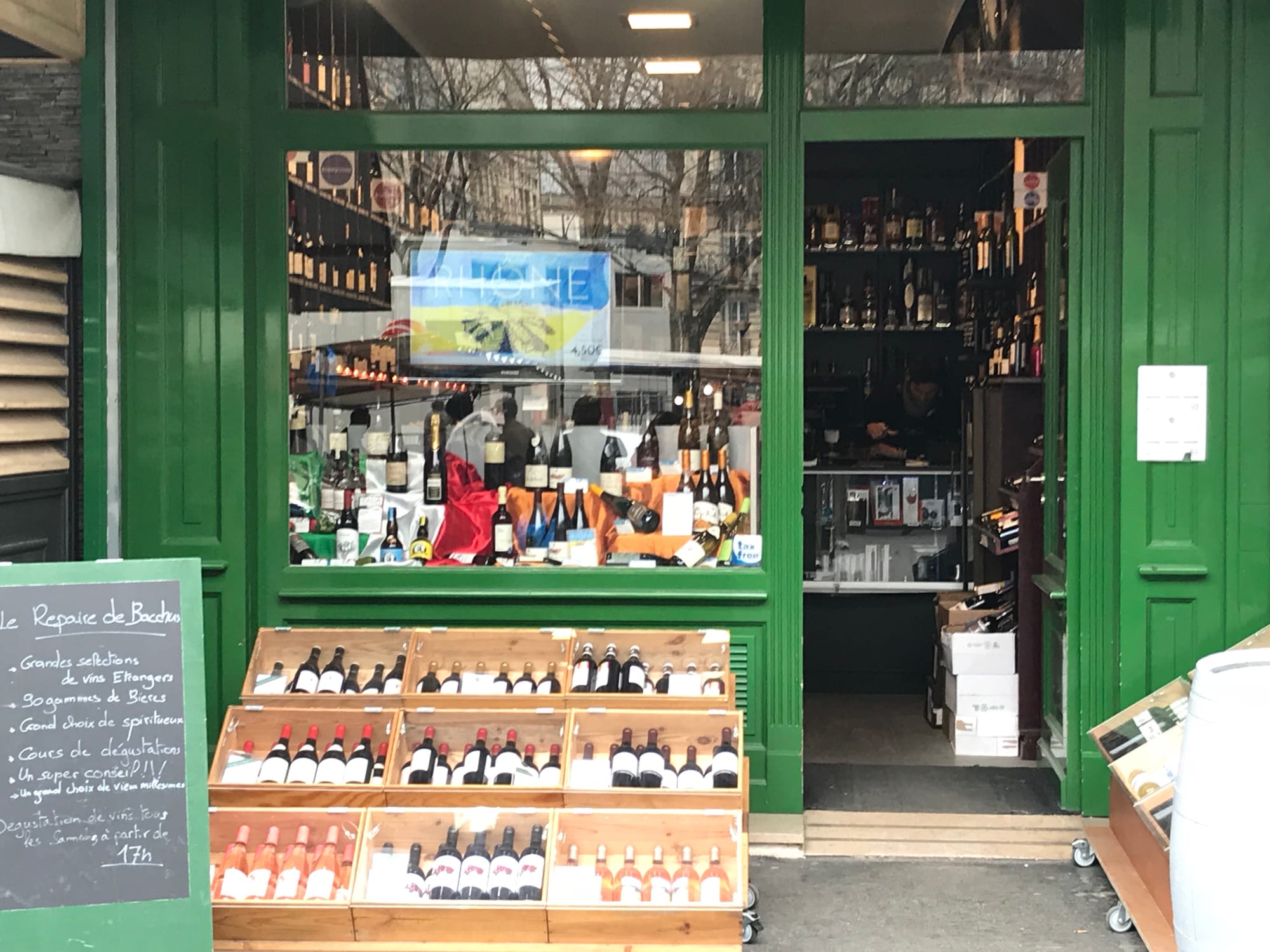

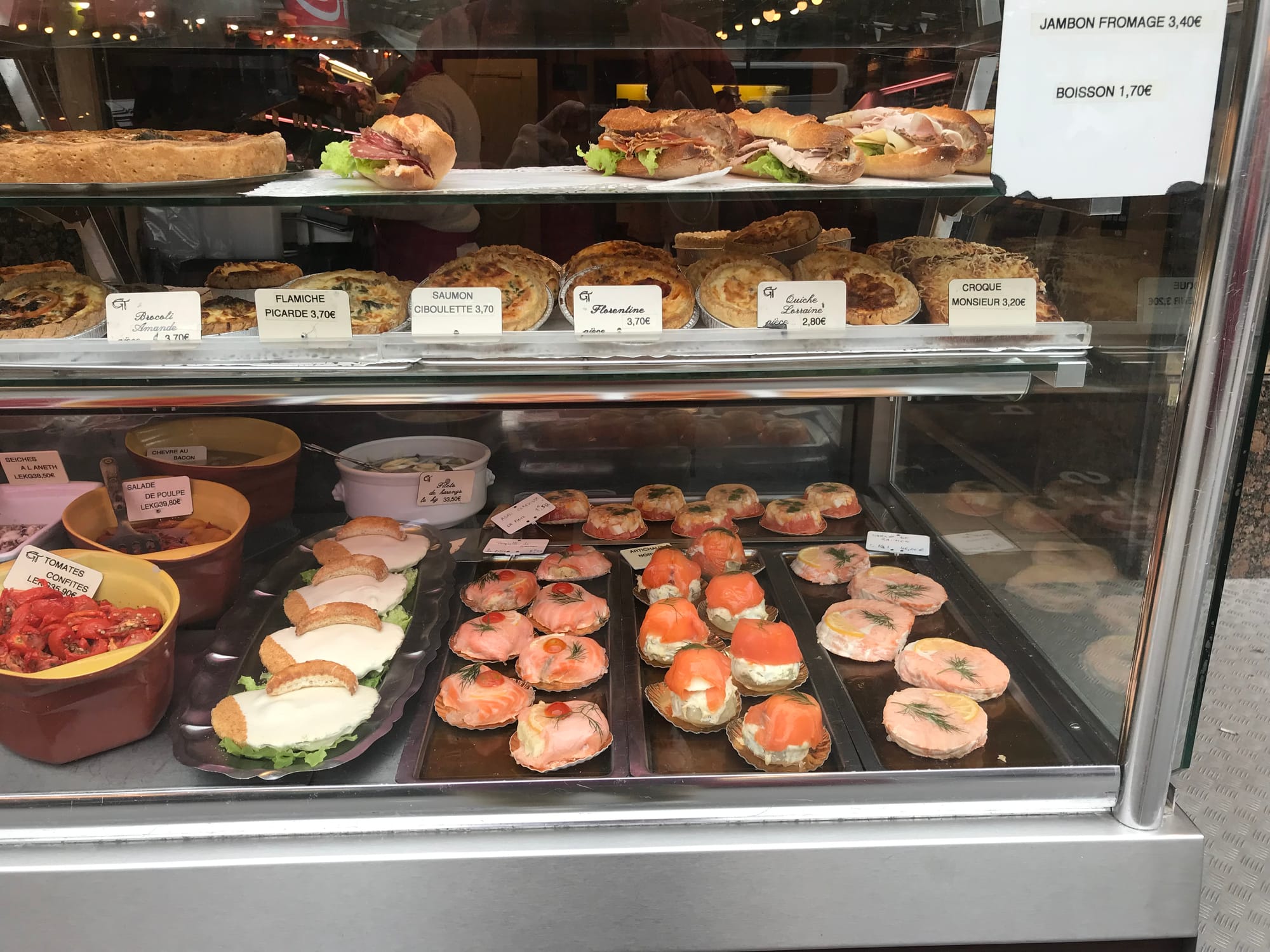
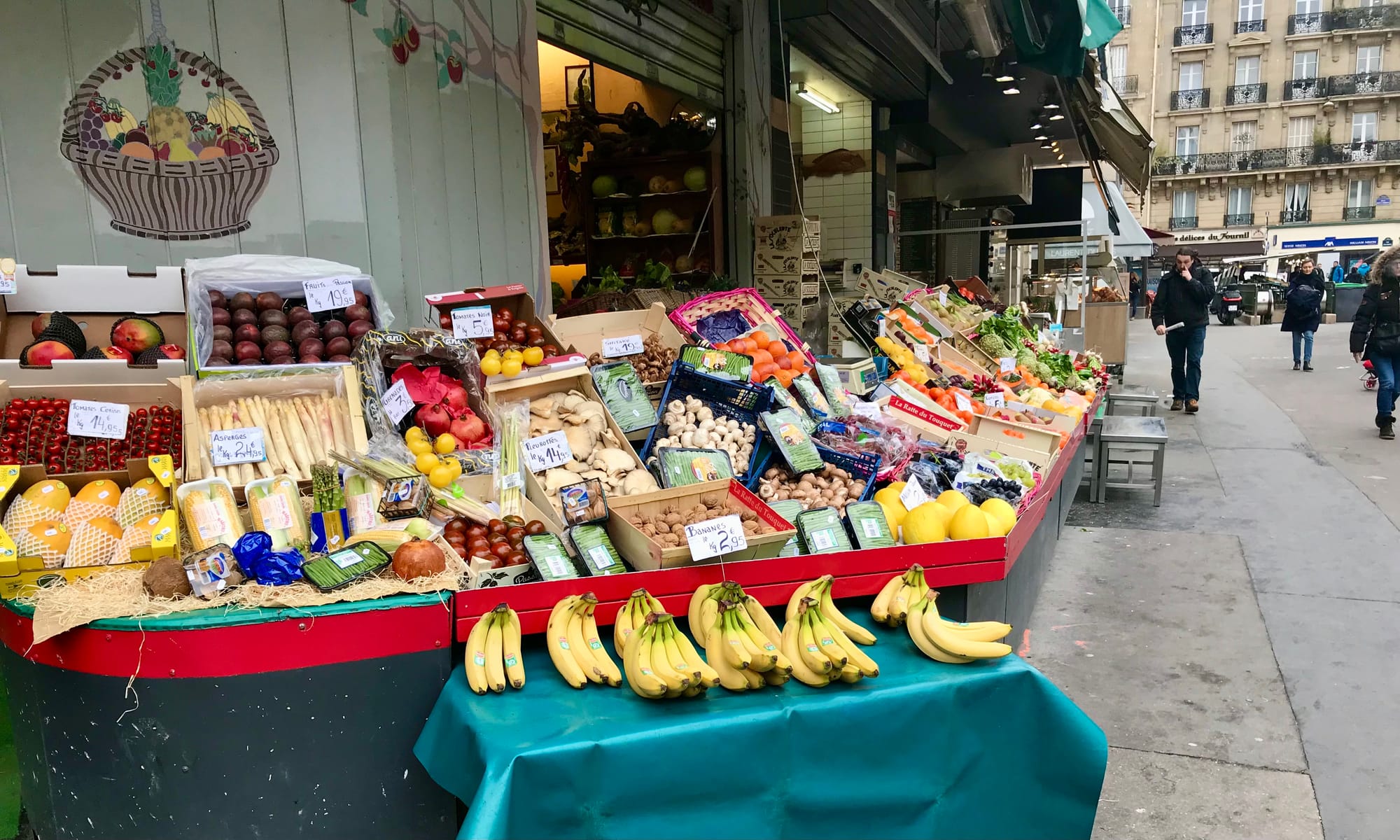
Place Maubert
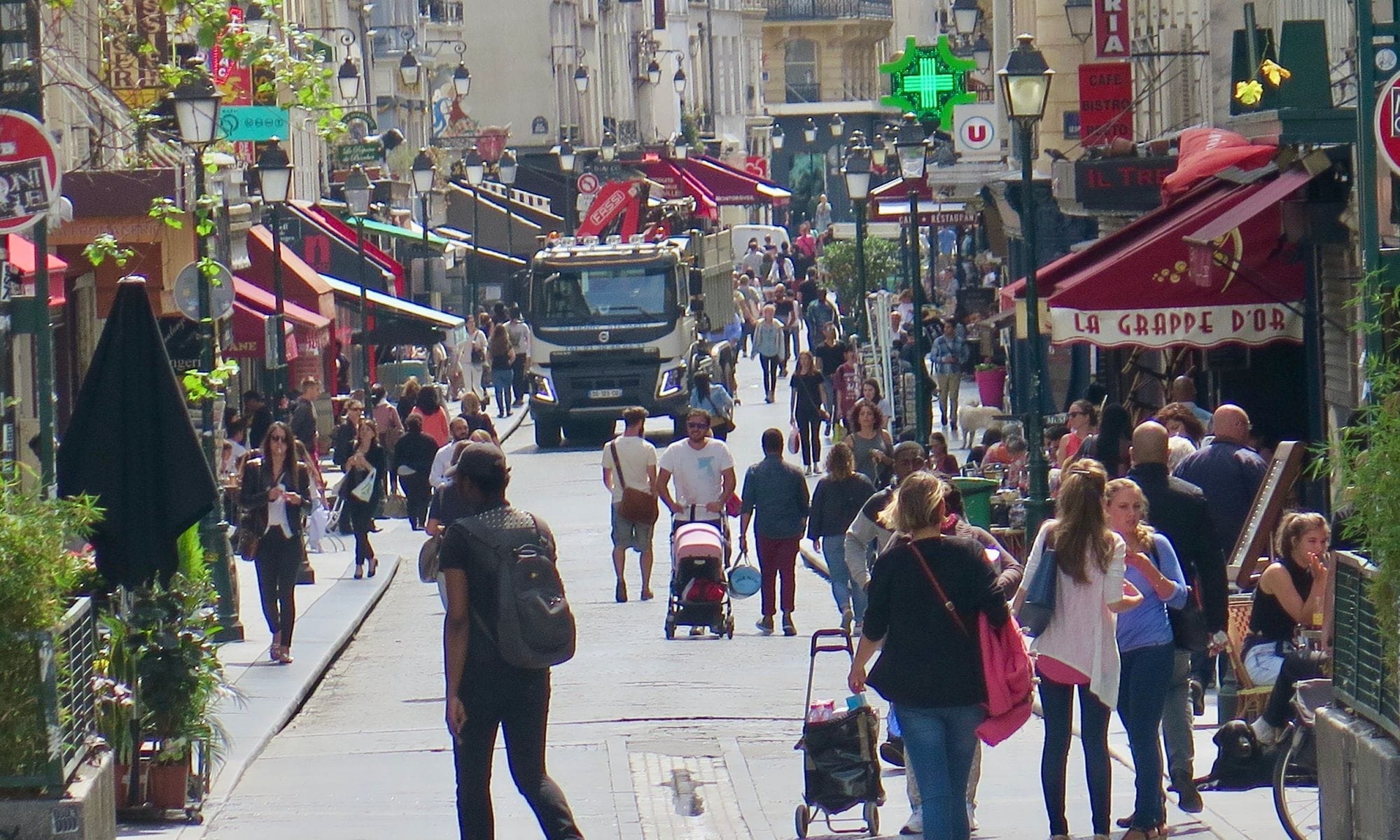
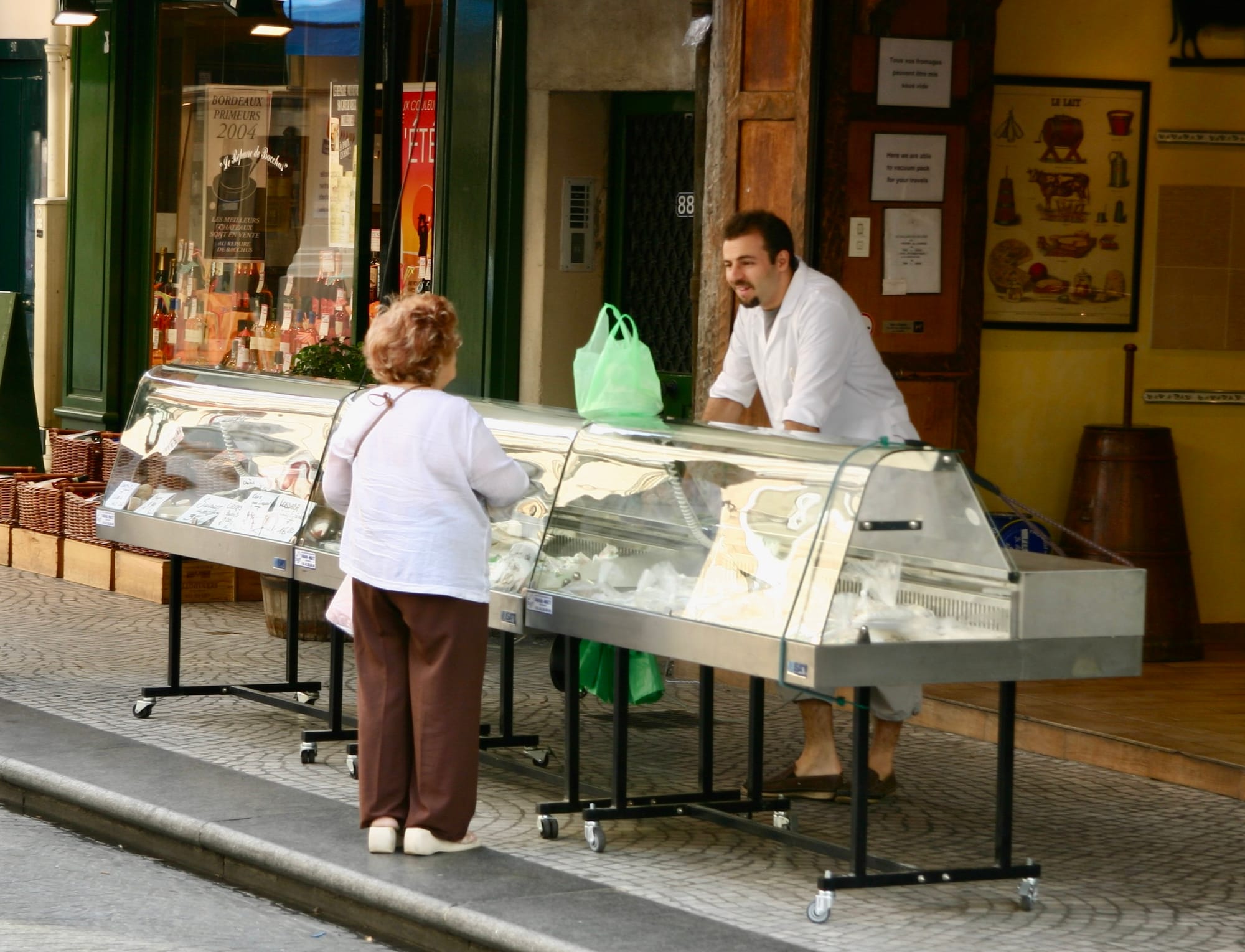
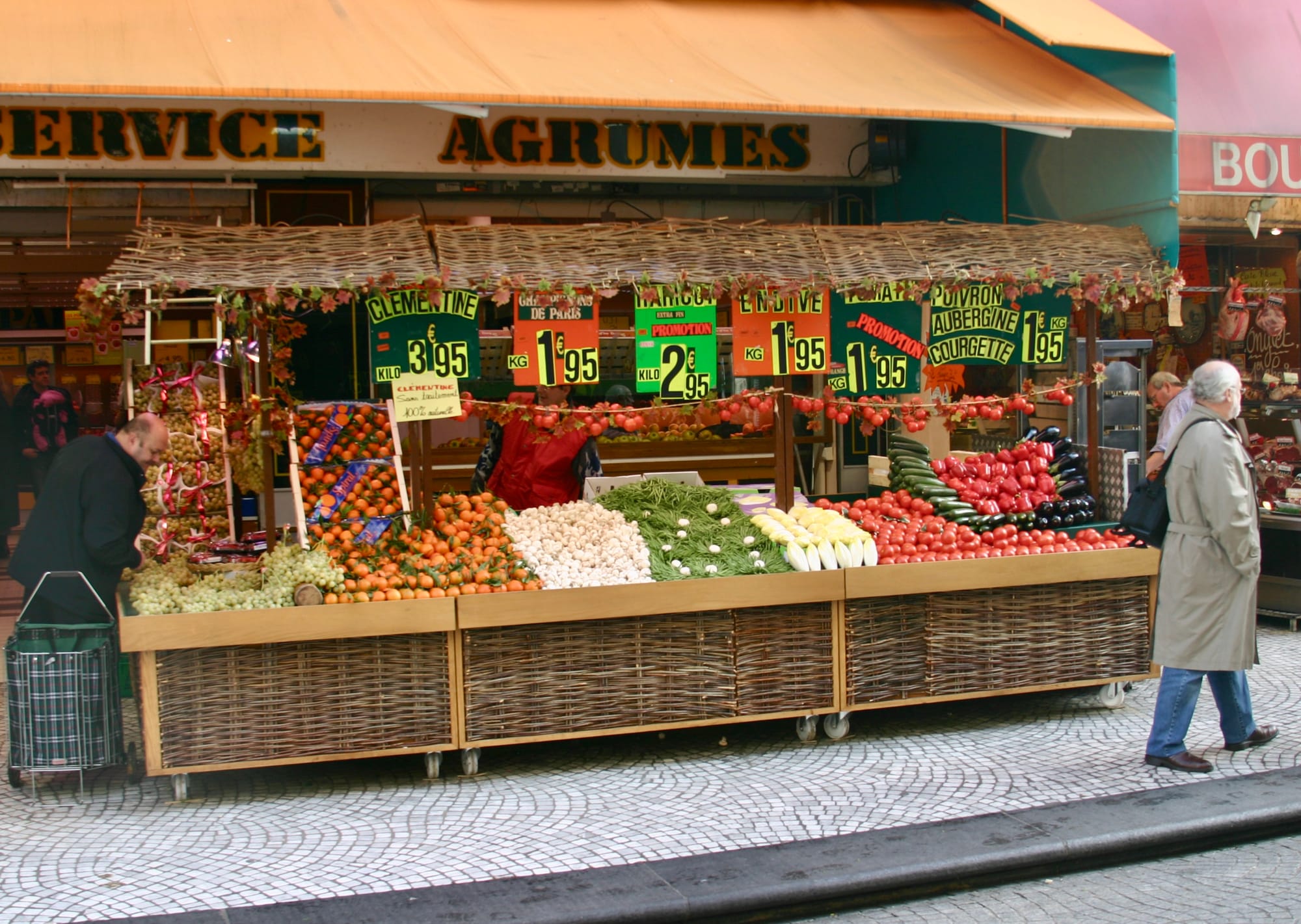
Rue Montorgueil
Wide sidewalks line wide streets so cars and pedestrian life can co-exist
While Paris is full of charming narrow streets like Rue de Buci and car-free market streets like Rue Mouffetard, it is also home to wide multi-lane traffic-heavy boulevards. It may be a very pedestrian-friendly city, but cars still circulate all throughout. The city makes up for the amount of car traffic it hosts by making sure wide streets are paired with wide sidewalks. This communicates that pedestrians are not overlooked or of less importance than vehicles when street space must be shared. City streets are not highways where only cars are welcome – they should work for everybody.
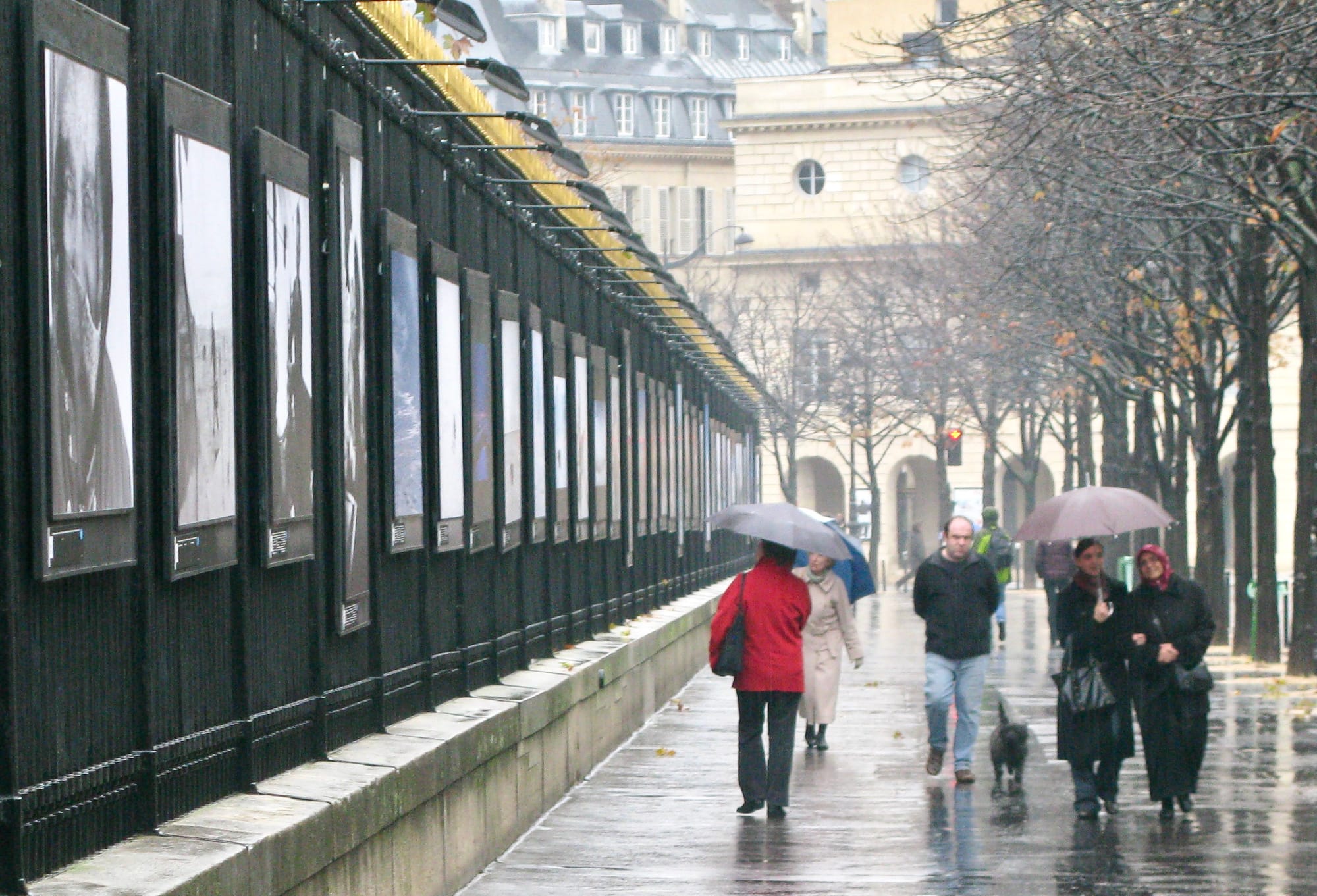
For example, the famous Champs-Élysées leading up to the Arc de Triomphe may have 8 lanes of traffic, but the sidewalks on either side of it are nearly as wide as the street. What's more, they are full of trees, kiosks, benches, shops, and street performers, making it pleasant to walk there even though they run alongside Paris's heaviest traffic. Now, there's even a plan to reduce the number of lanes on the Champs-Élysées from 8 to 4 by 2030 in order to increase the space dedicated to greenery and commercial and social activity.
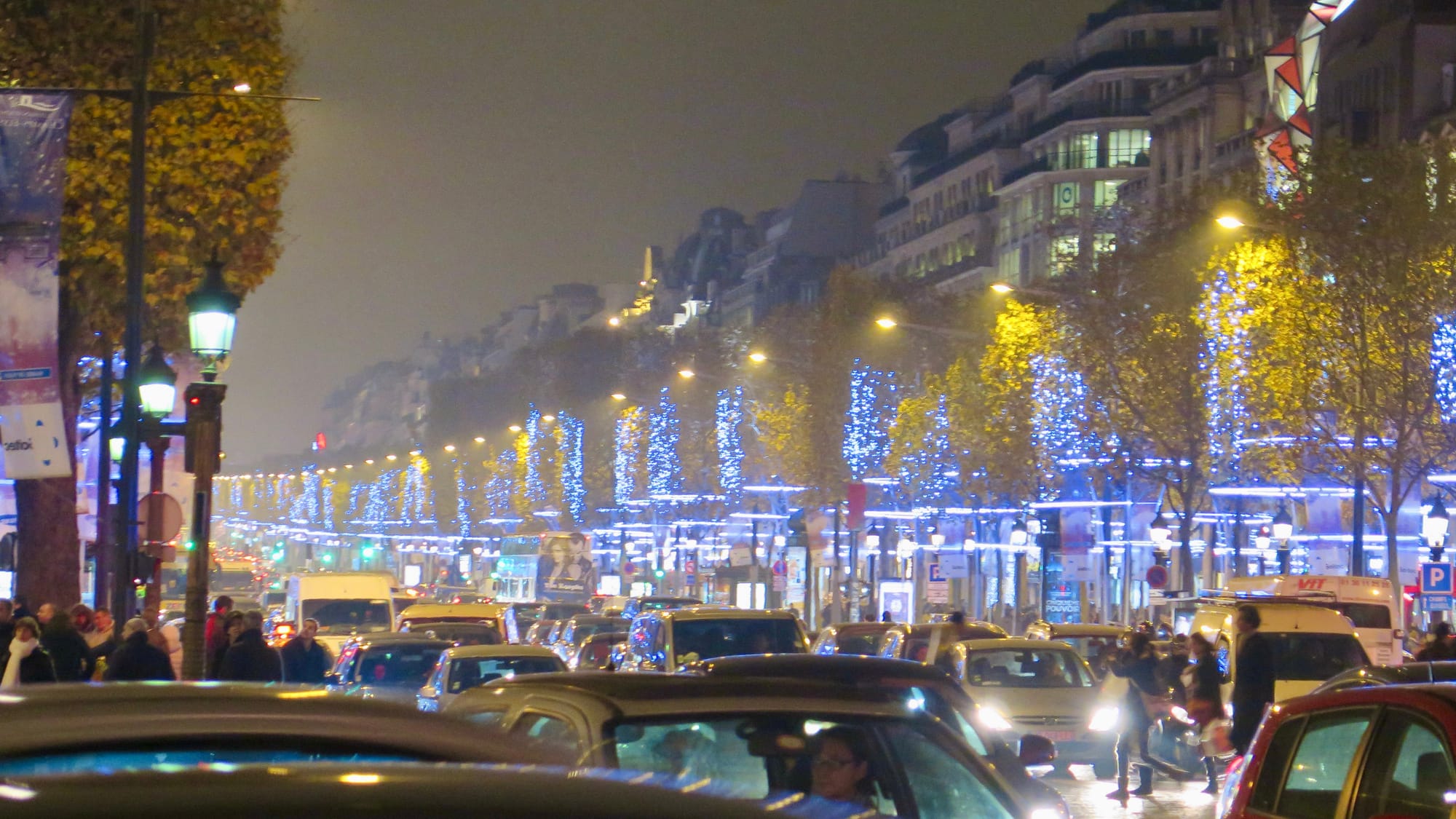
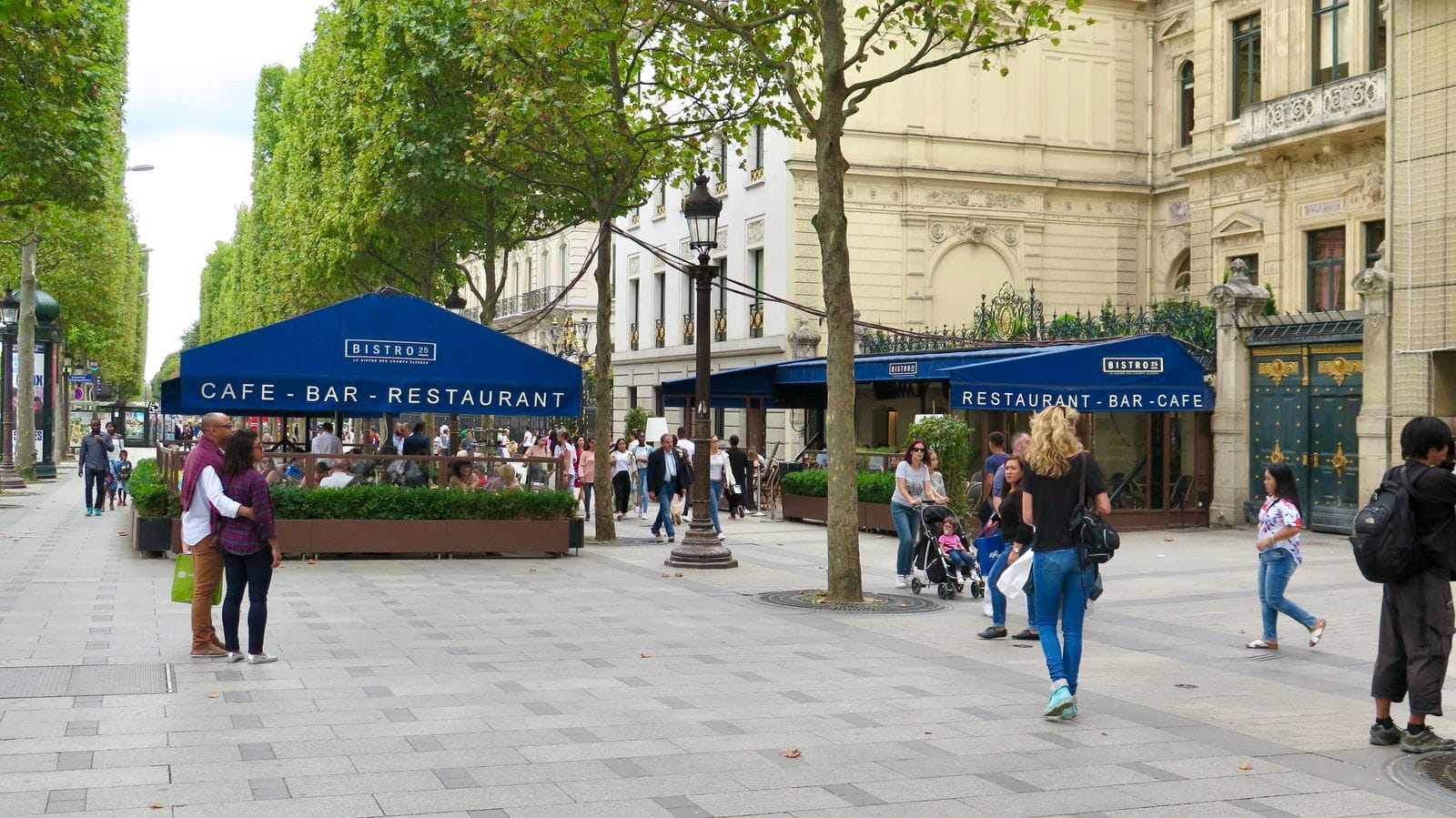
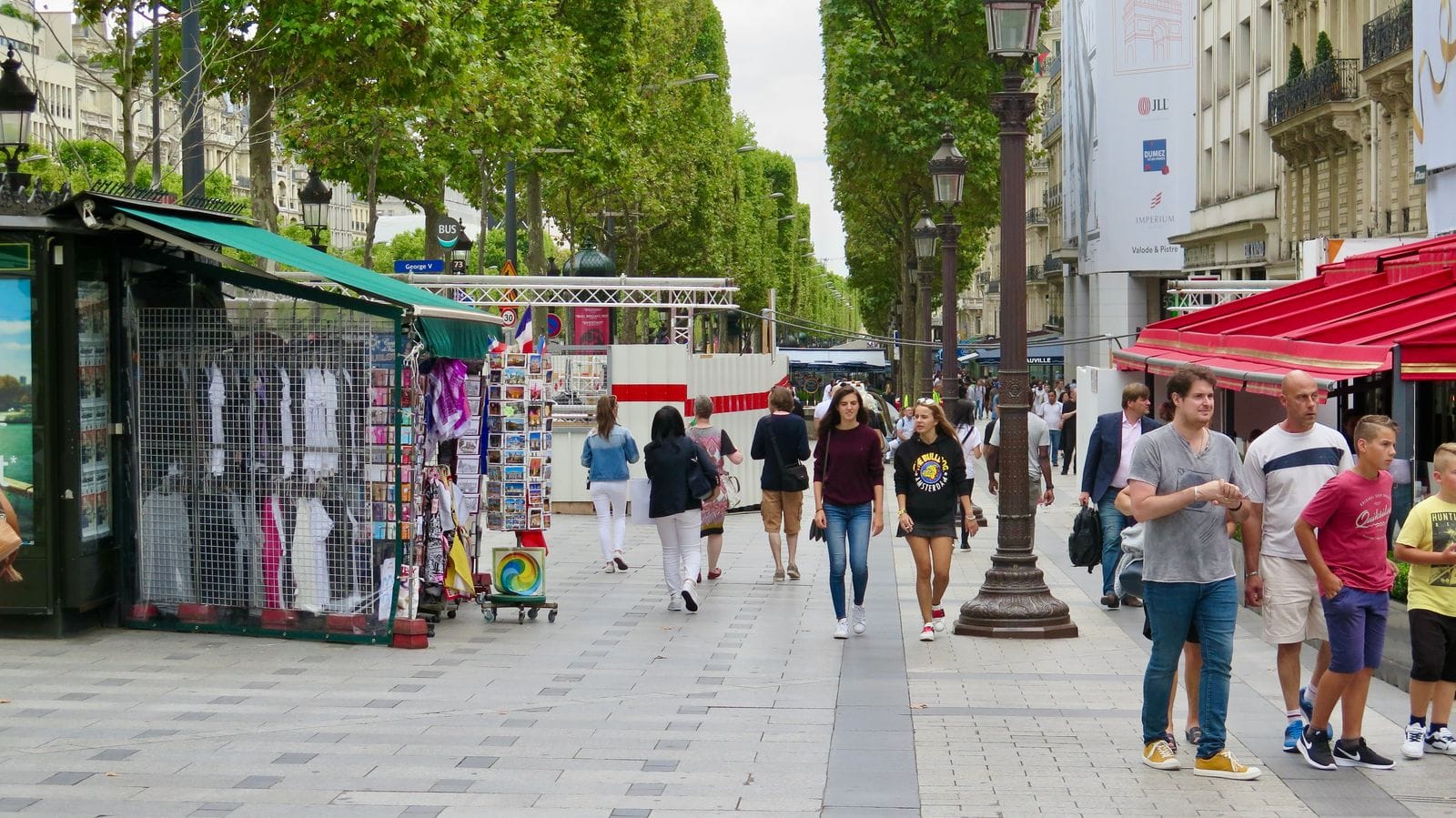
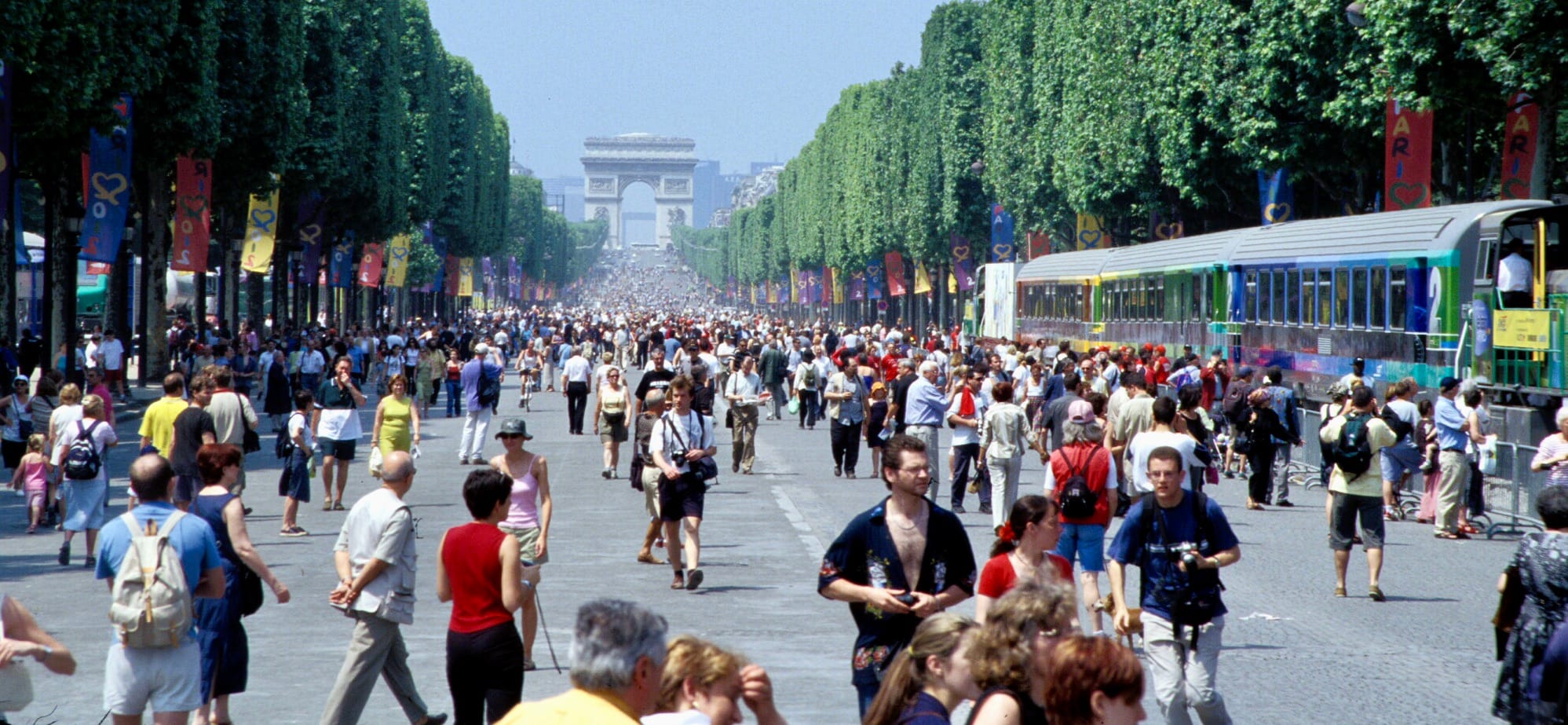
For certain holidays or events, the Champs-Élysées goes car-free
From seating areas to ample walkways and vibrant storefronts, Paris's streets are dynamic and interesting because there is always something to look at and interact with there. This means more people walk and linger on sidewalks, creating opportunities for serendipitous encounters and connections with neighbors and friends. Parisian streets create an environment where social life can thrive.
3) Building for Green Mobility – Bikes, Transit, and Walkability
Preparing for the impacts of climate change has been a significant motivator in Paris' transformation. In 2007, they laid out an ambitious Climate Action Plan (and several more in the following years) to decrease air pollution and create opportunities for more sustainable transportation and development. The Climate Action Plan has outlined a lot of the strategies they have been gradually implementing to move the city away from car dependence.
Expanding the bike infrastructure
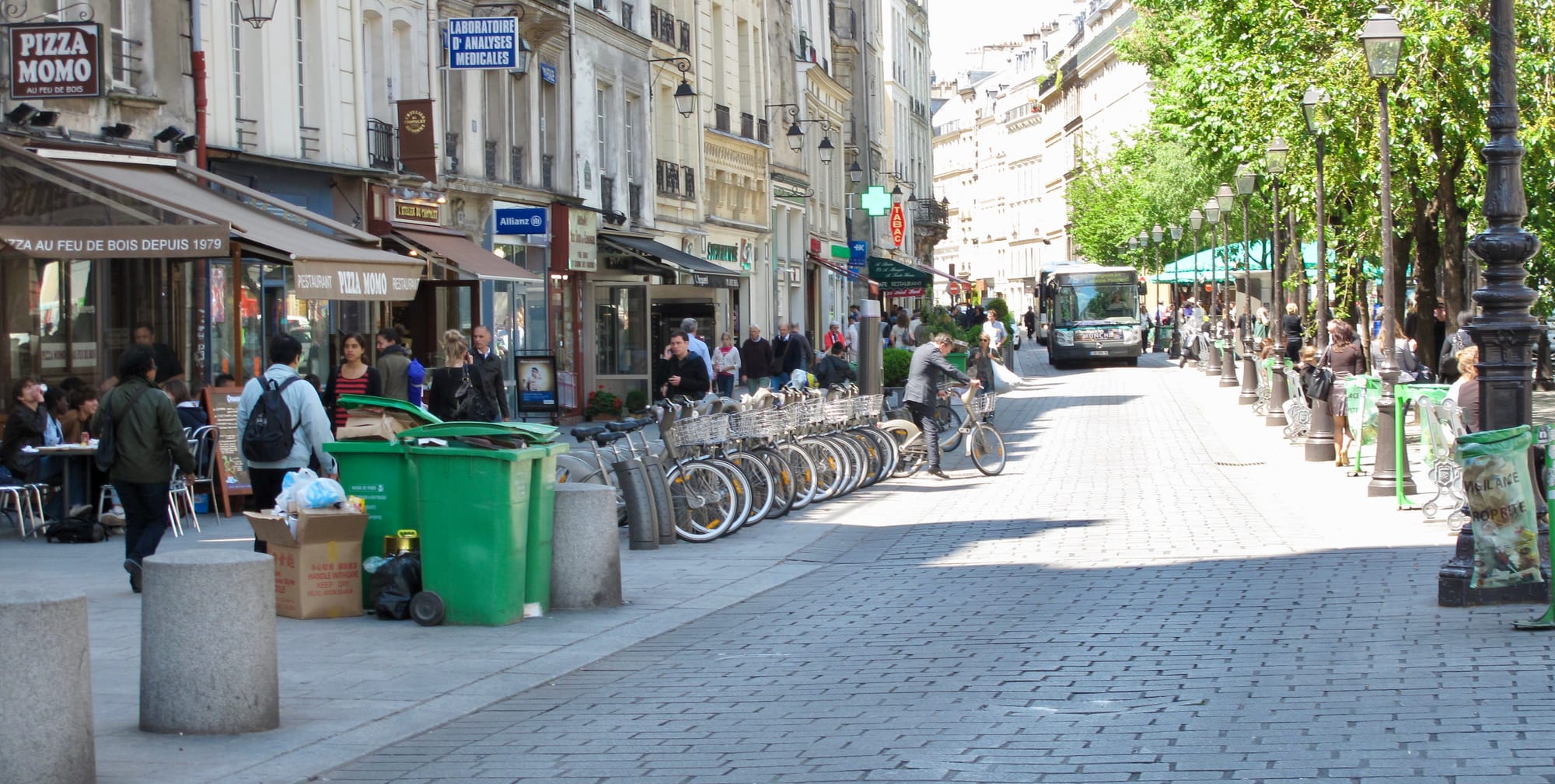
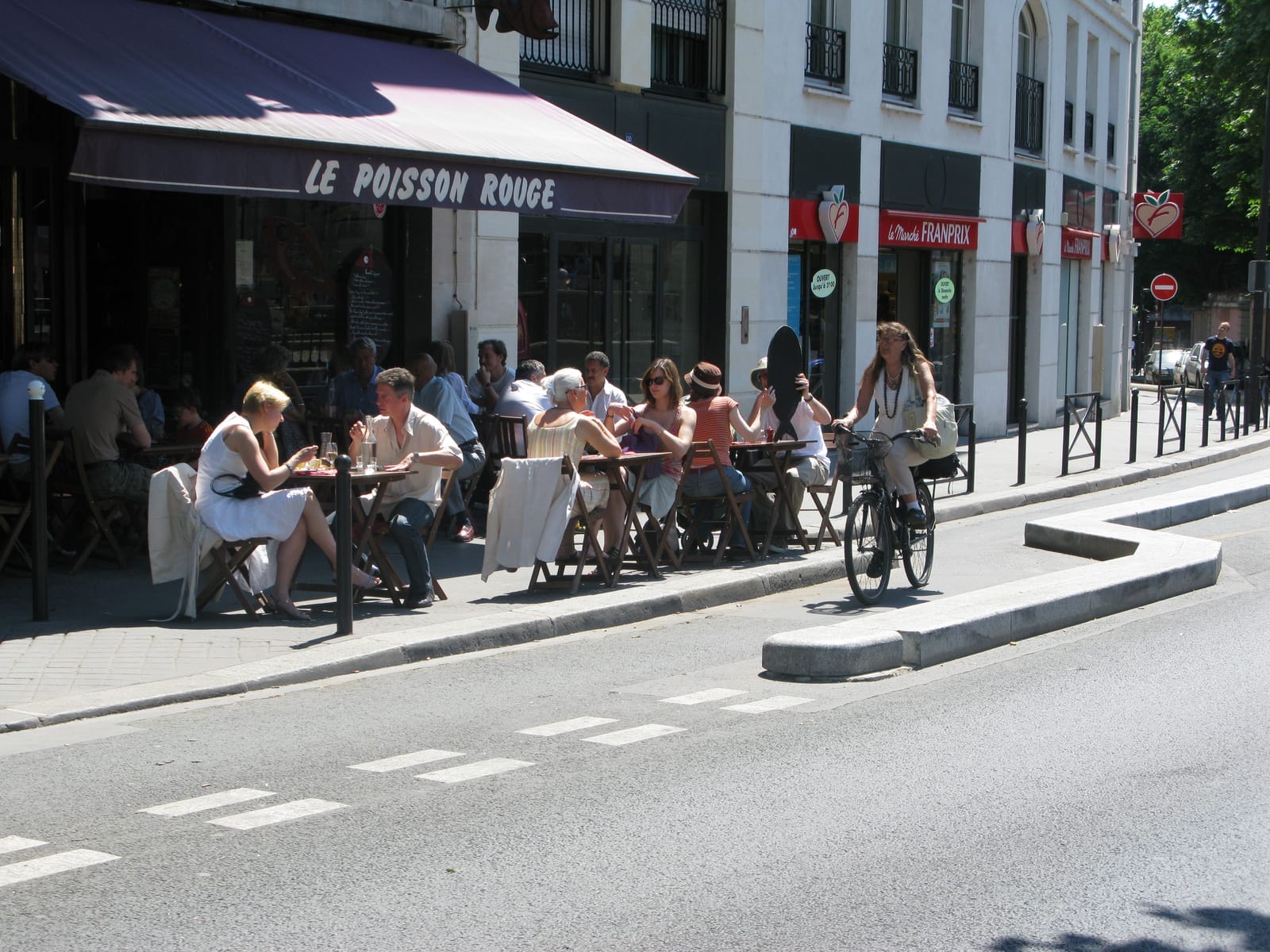
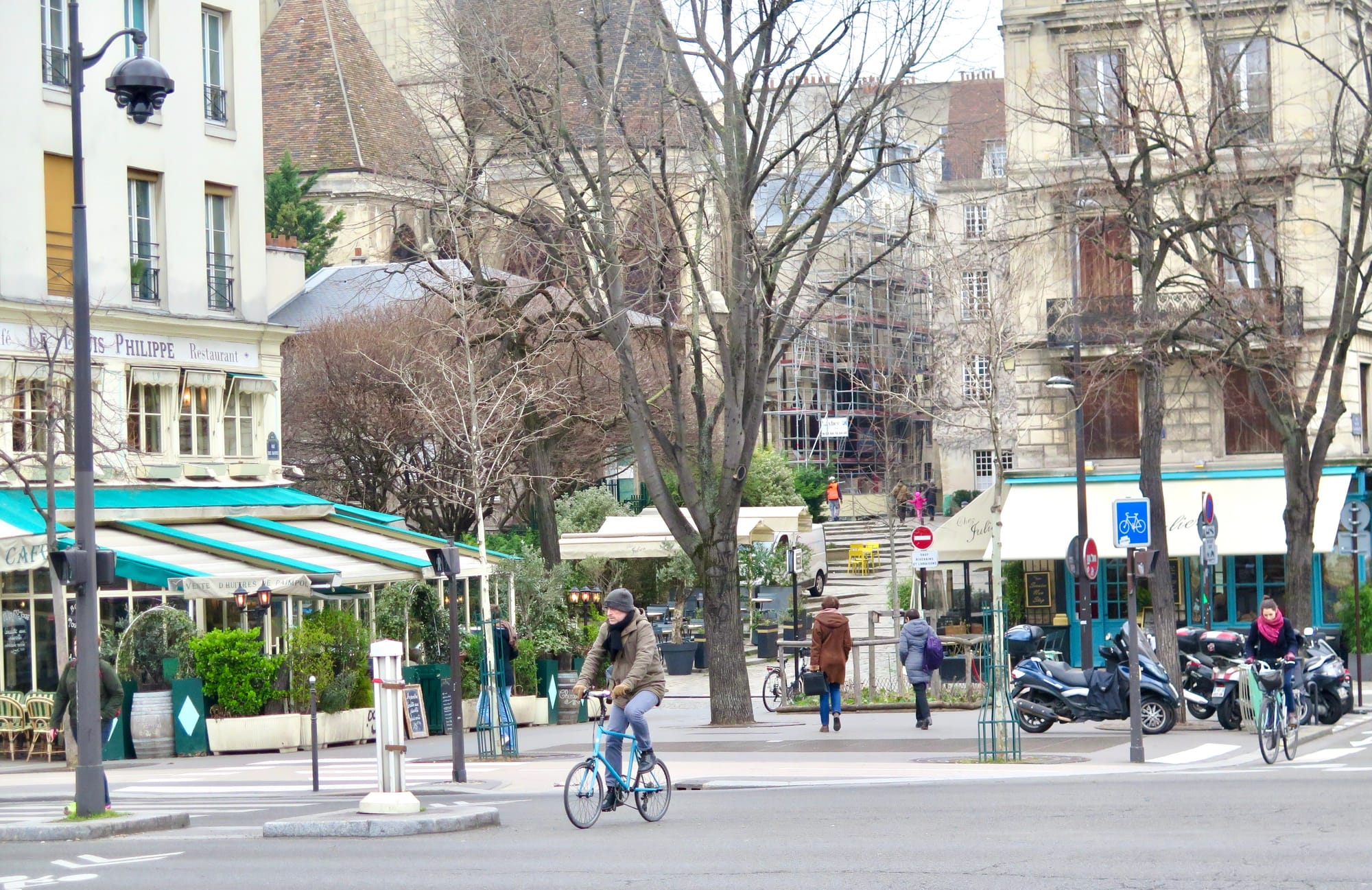
Bike infrastructure plays an important role in this plan. During Covid, to help with social distancing, Mayor Anne Hidalgo expanded the network of bike lanes and street closures, making them first temporary and then permanent. The city now has over 1,000 kilometers of bike lanes. This robust bike infrastructure means many more people cycle and fewer people drive as they go about their day.
Other car infrastructure has also been reduced, such as parking spaces which are gradually getting replaced by non-car uses. There is a plan to replace 60,000 parking spaces with trees and other kinds of green space by 2030.
Public transit improvements keep people out of cars
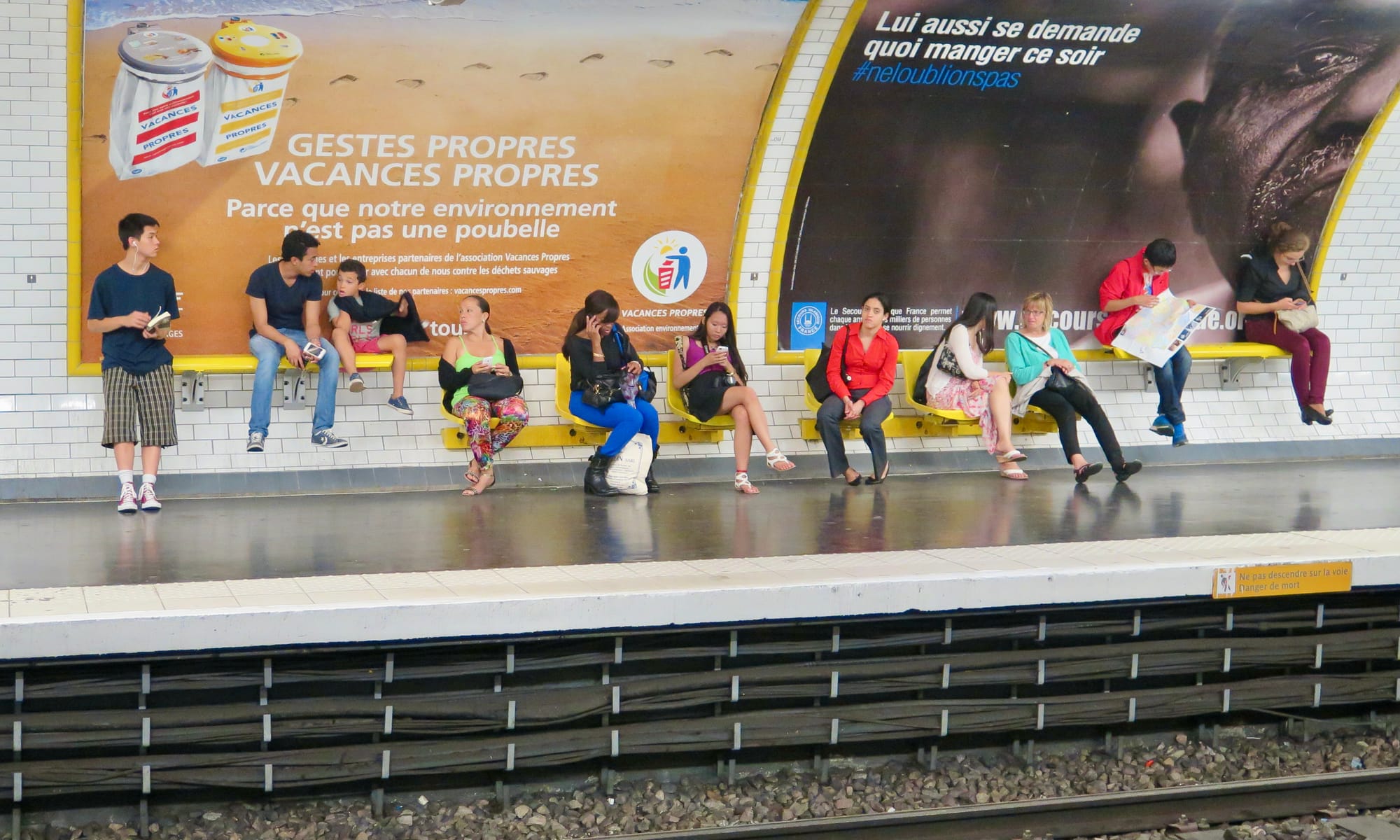
Public transit has been continuously improved upon to give people an alternative option to getting around. Subway trains are frequent, regular, and connect the city from end to end. Inside the stations, there is seating, good signage, and even places to shop. The subway network is designed to be comfortable and convenient so as to attract usage. Otherwise people will be driven away and return to their cars like in many other cities where transit leaves much to be desired.
One notable detail is the beauty of the subway entrances. They have become iconic elements of the Parisian aesthetic, thus elevating public transit into something special, unique and attractive.
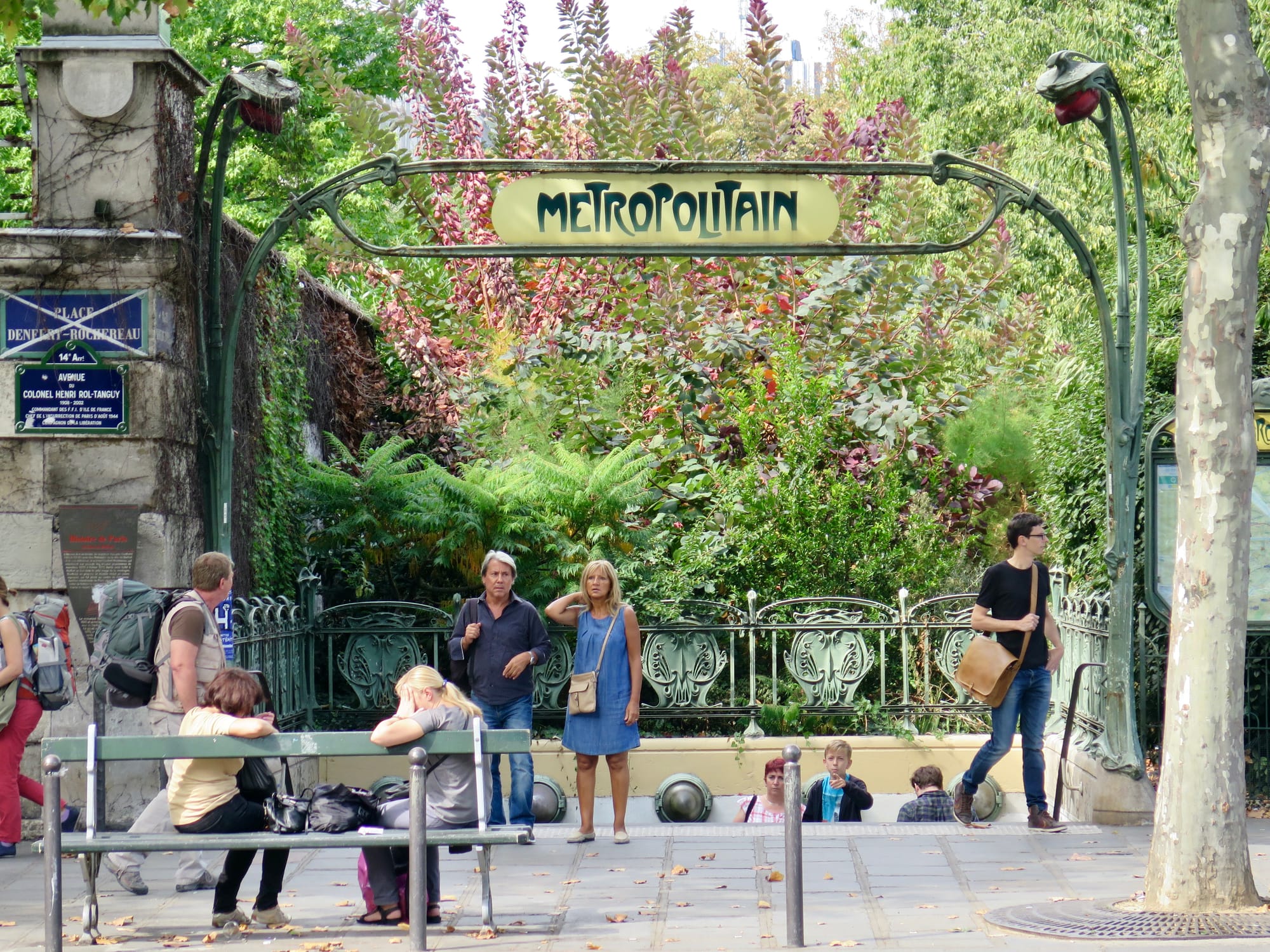
To further stimulate transit use, Paris aims to not increase fares and is working on reducing them. It also provides free or significantly discounted ticket fares for certain groups like children, young people, and the elderly.
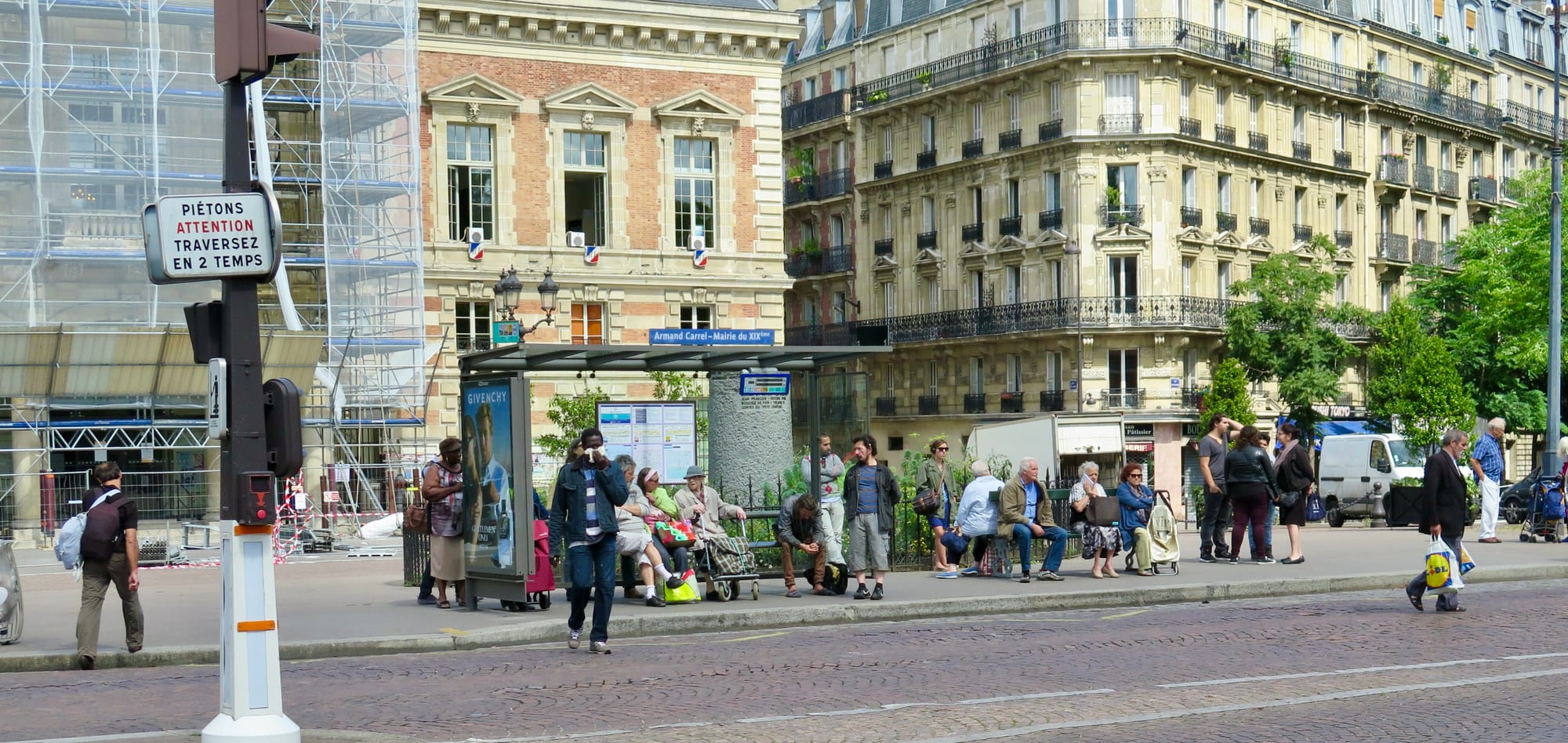
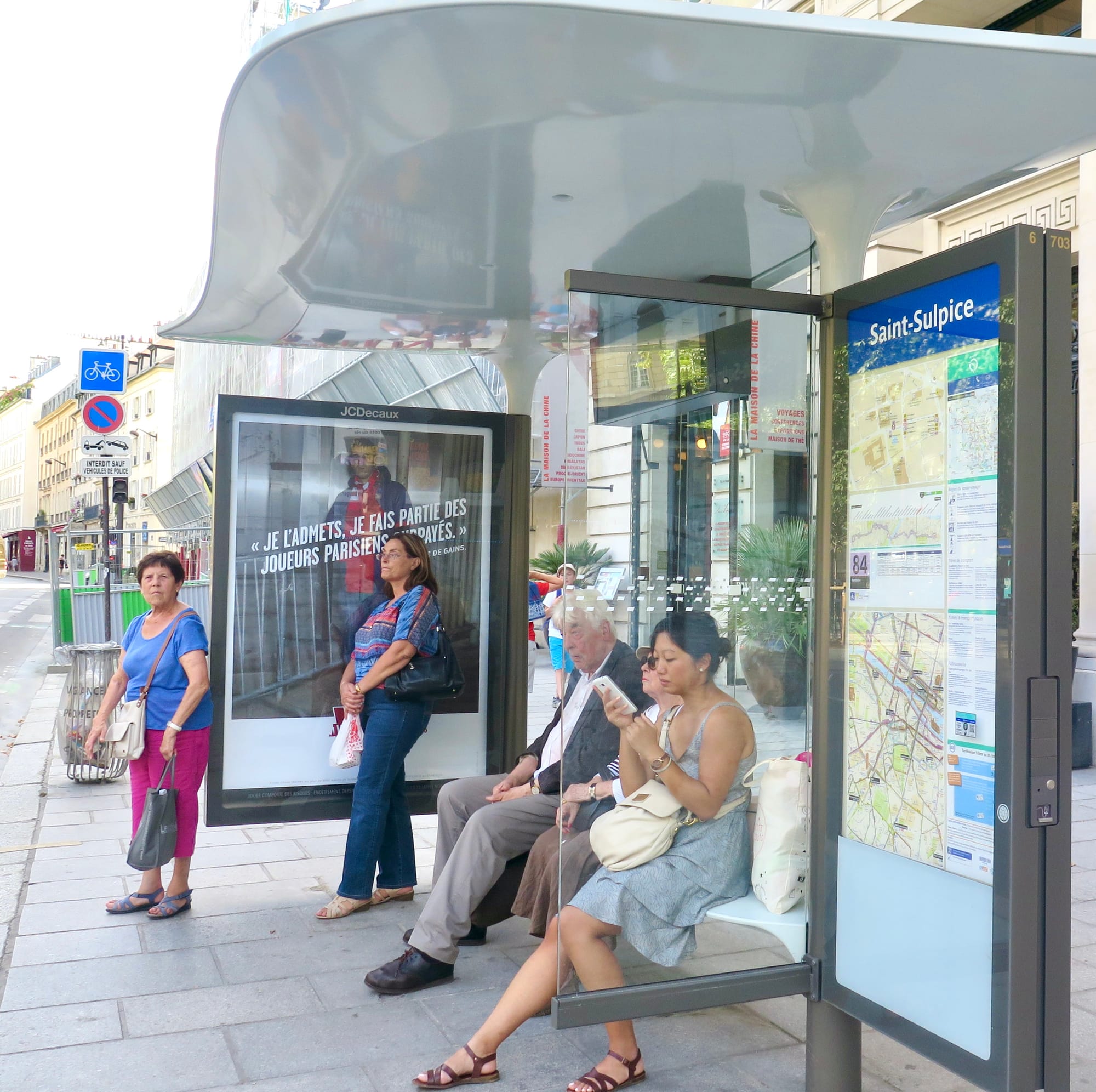
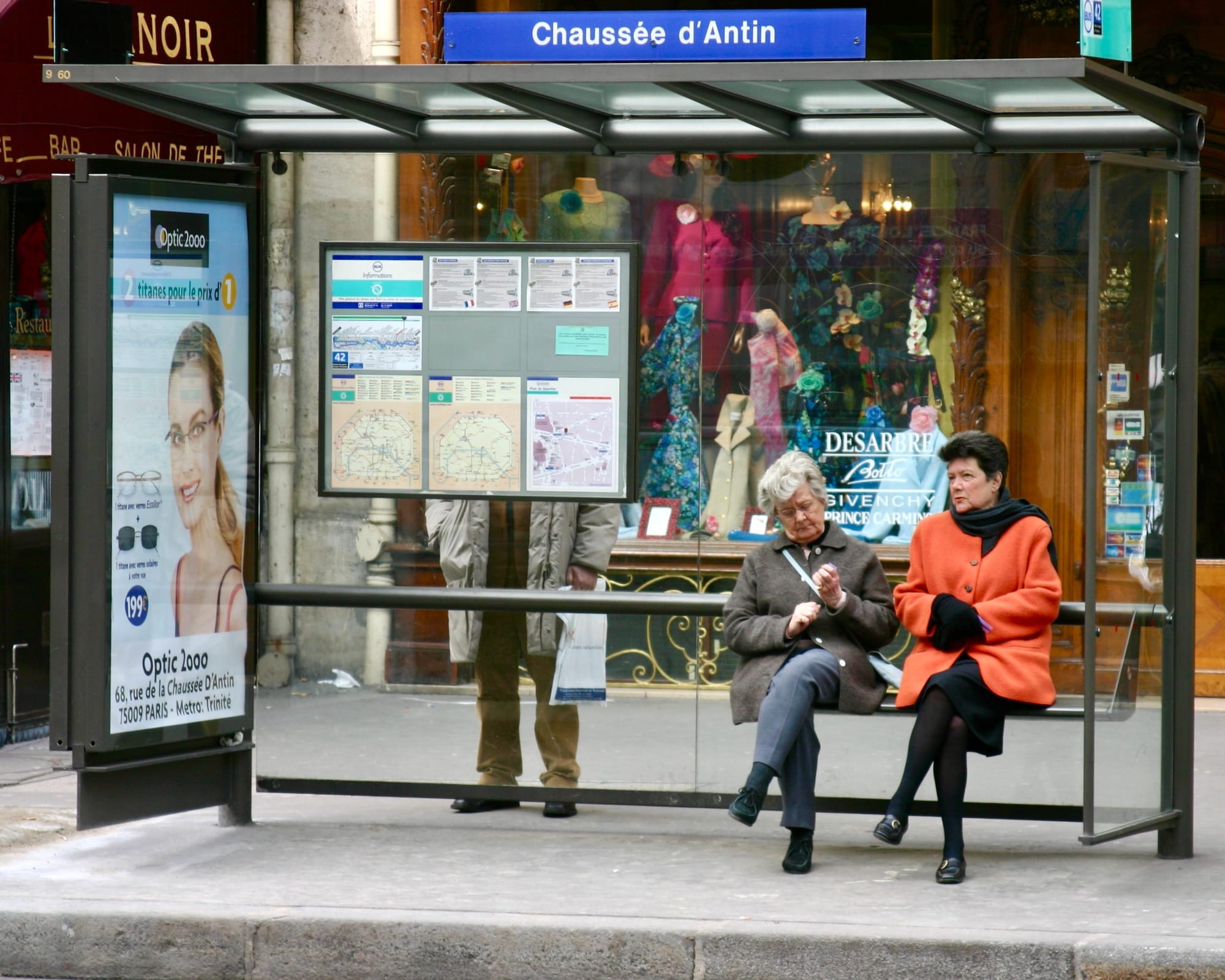
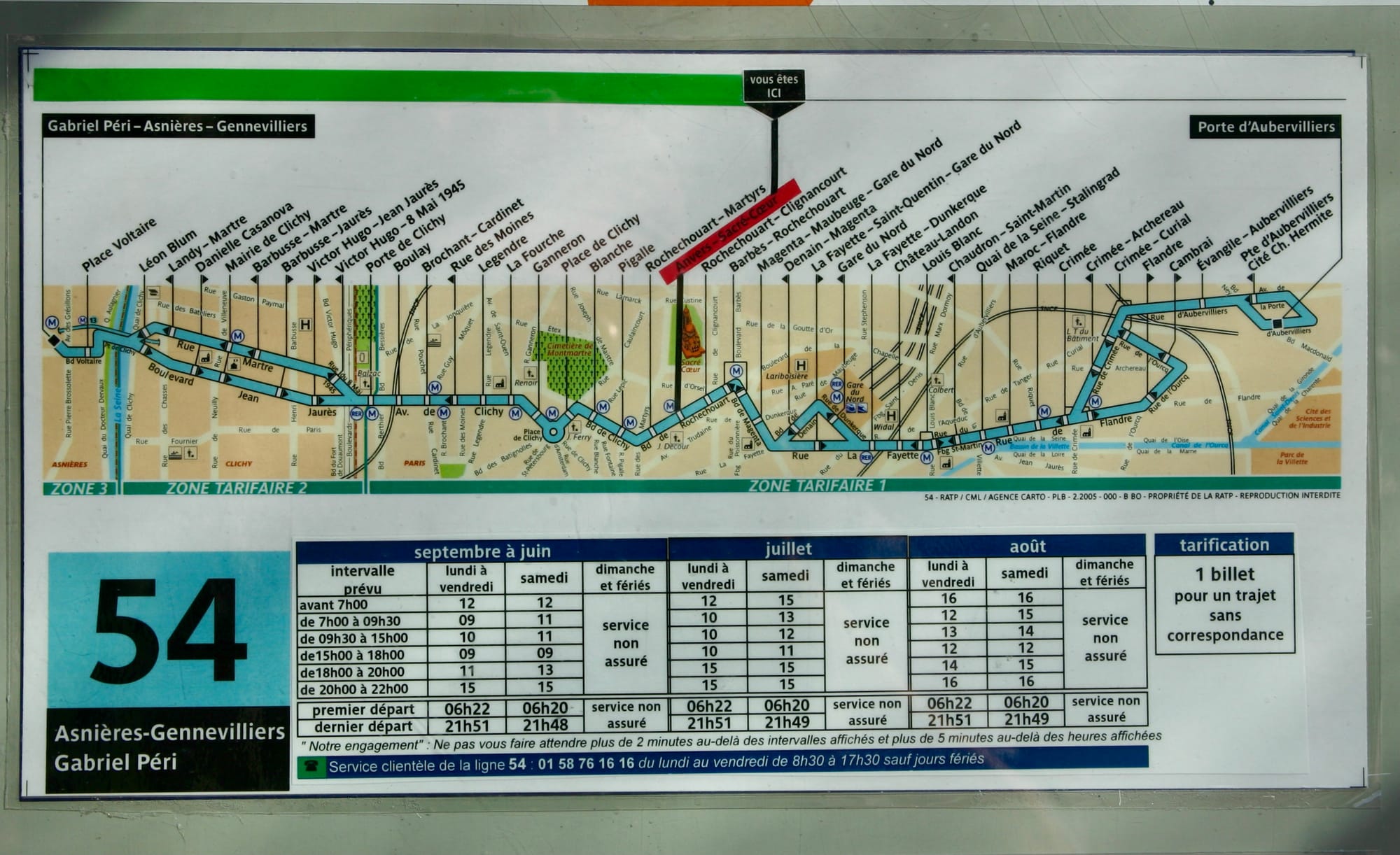
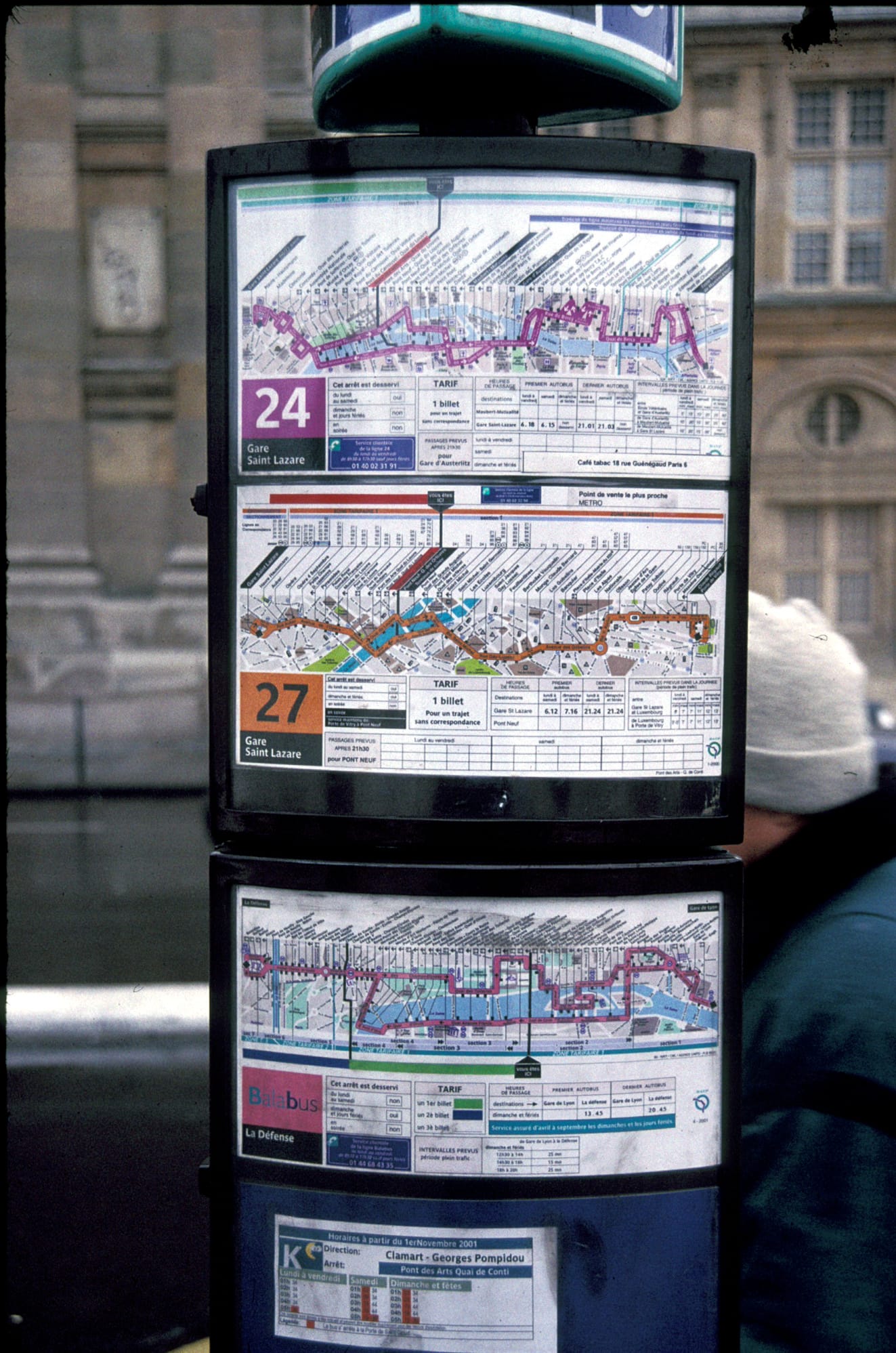
Bus stops are also designed with comfortable use in mind. They are covered to protect from the elements, include clear signage, and offer benches to rest on.
Designing for walkability means making everything reachable in under 15 minutes
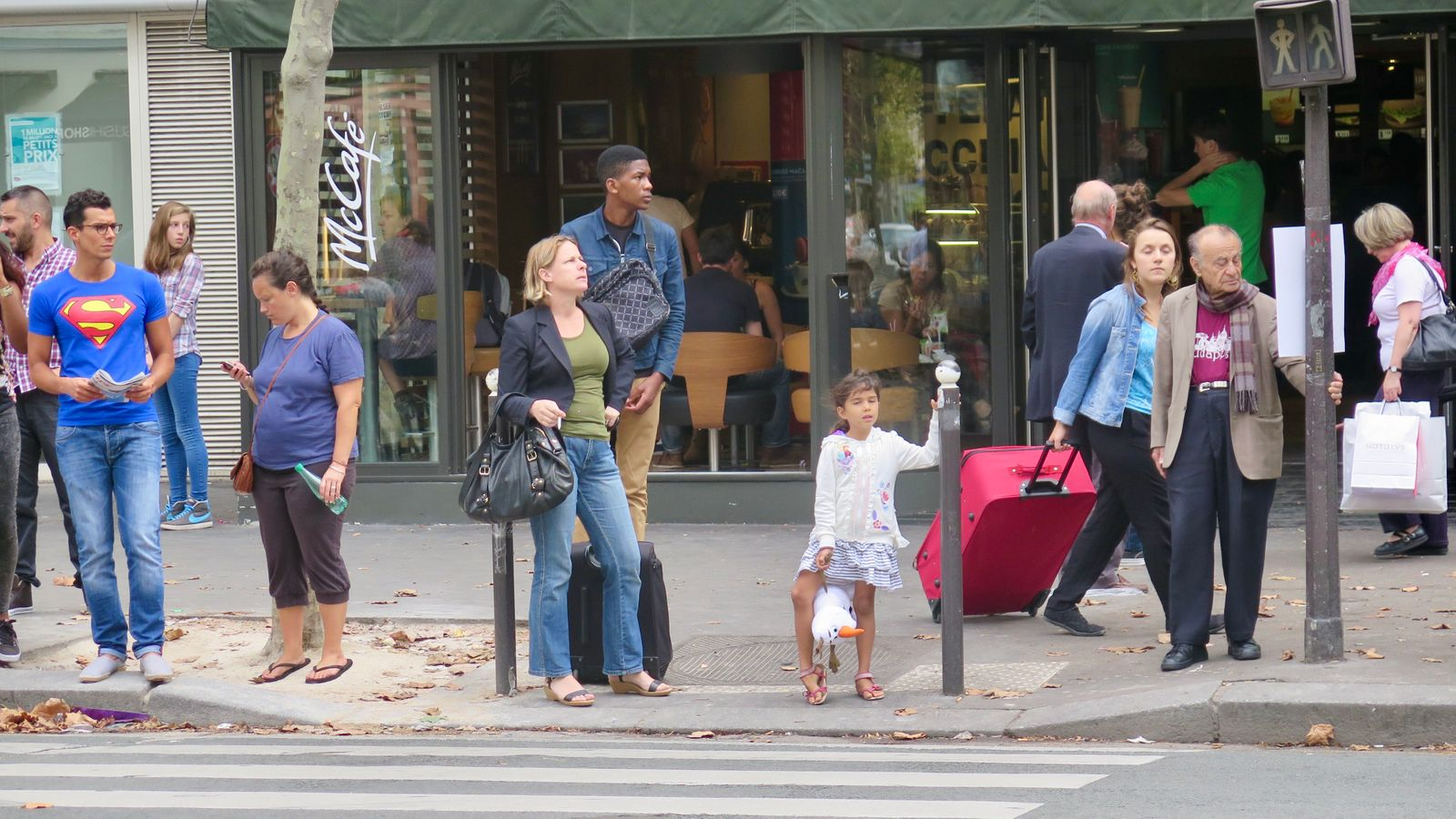
Paris recognizes that a city that is easy and quick to navigate is a city that is easy to love. That is why the essence of the 15-minute city goal popularized by mayor Anne Hidalgo and urbanist Carlos Moreno is that all of a person's daily needs should be reachable in under 15 minutes without a car. This is a great guideline to build towards because what people crave is convenience. Car culture has misled them to think that driving everywhere for every task is convenience, when in reality, that is the opposite of the truth.
True convenience is having everything you may want or need a short walk away from home. Paris recently made headlines after an analysis showed that 94% of residents live just a 5 minute walk away from a bakery. In the same spirit, they are making efforts to expand people's proximity to other key amenities such as green spaces, grocery stores, public places, and cafes. They are weaving true convenience into the city and in the process, they are making it more pleasant, interesting, beautiful, and environmentally friendly.
4) Public Spaces That Invite Lingering and Connecting
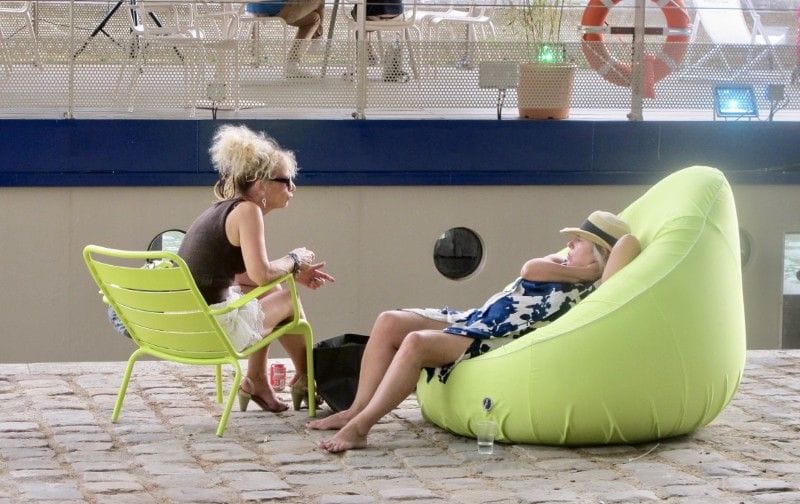
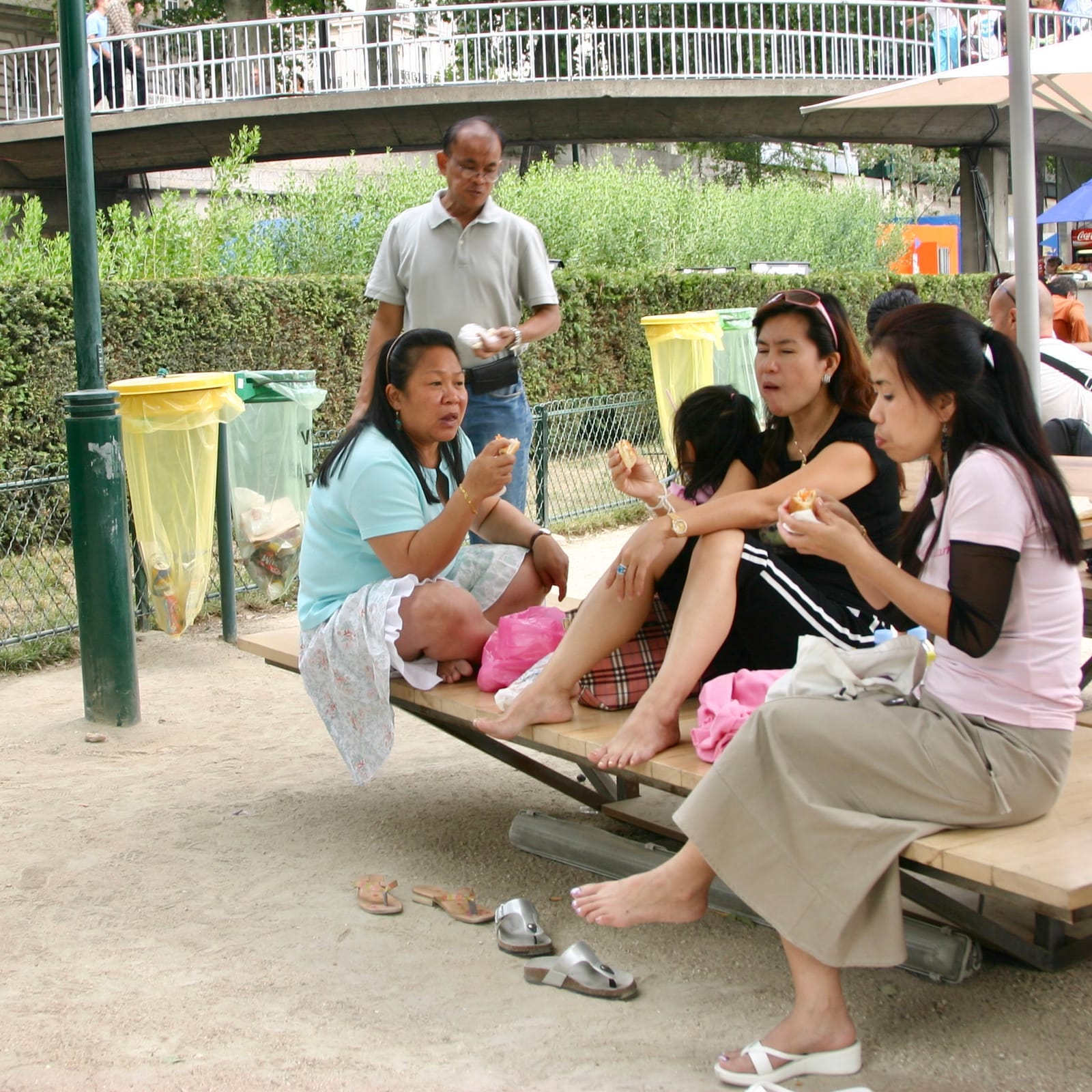
Paris offers fantastic ways to get around without a car because of its beautiful pedestrian streets, convenient bike infrastructure, and public transit, but the destinations one ends up in at the end of those trips also deserve the spotlight. The public places in Paris are always full of visitors because they are designed to make spending time there enjoyable, fun, and comfortable. Full of every kind of amenity, from seating to shade to cafes and eateries, Paris' public places are fantastic nodes in the urban network and the main hubs of social, cultural, and community life.
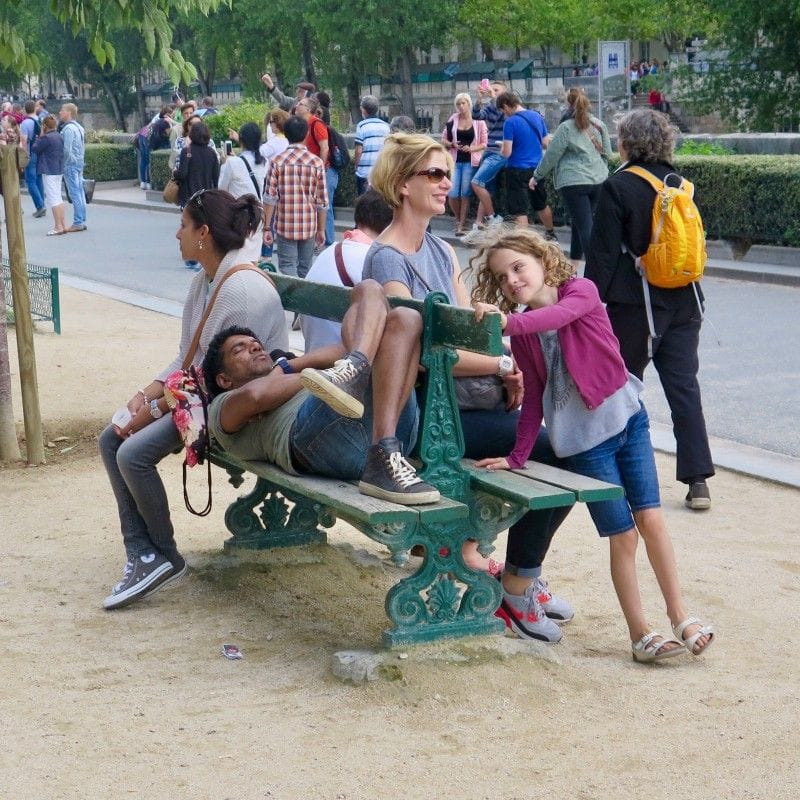
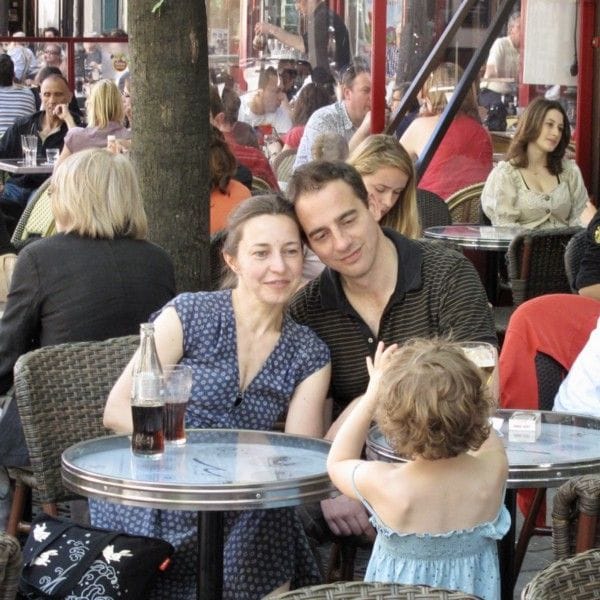
Amenities and focal points are the foundation of a city where people and social life are top priority
 Kathy Madden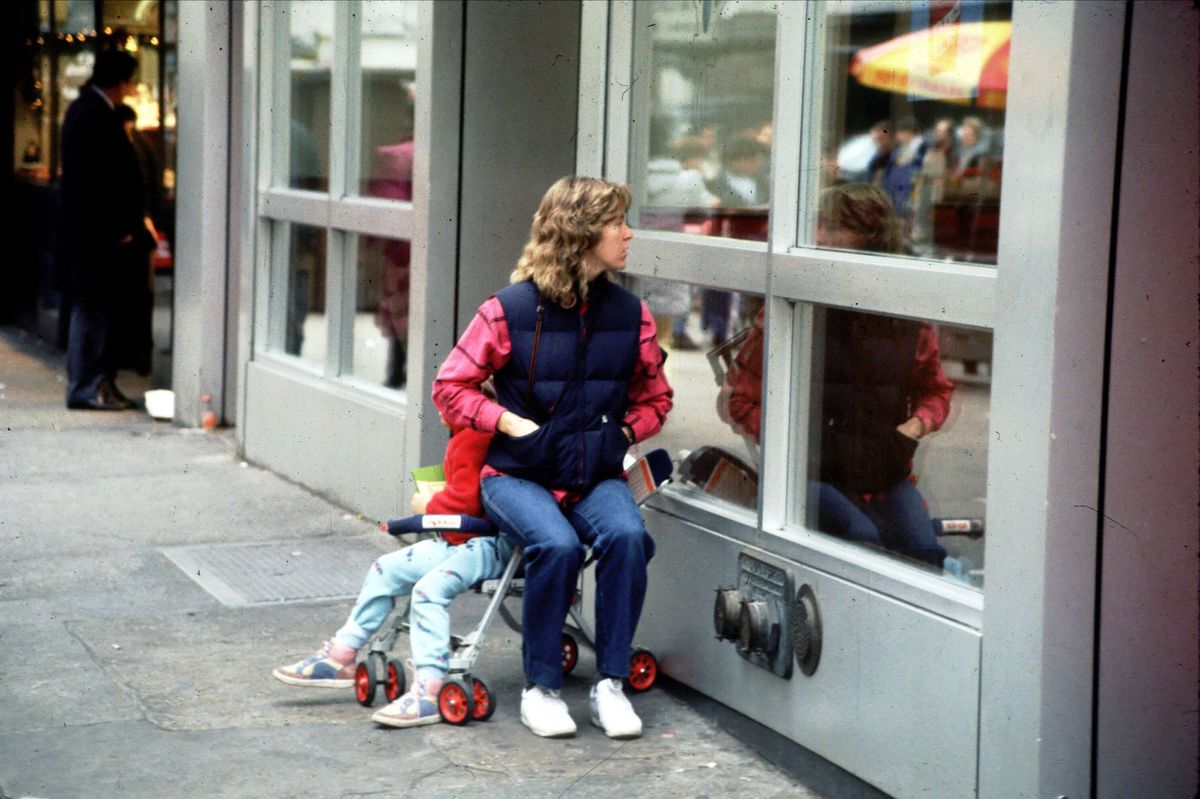
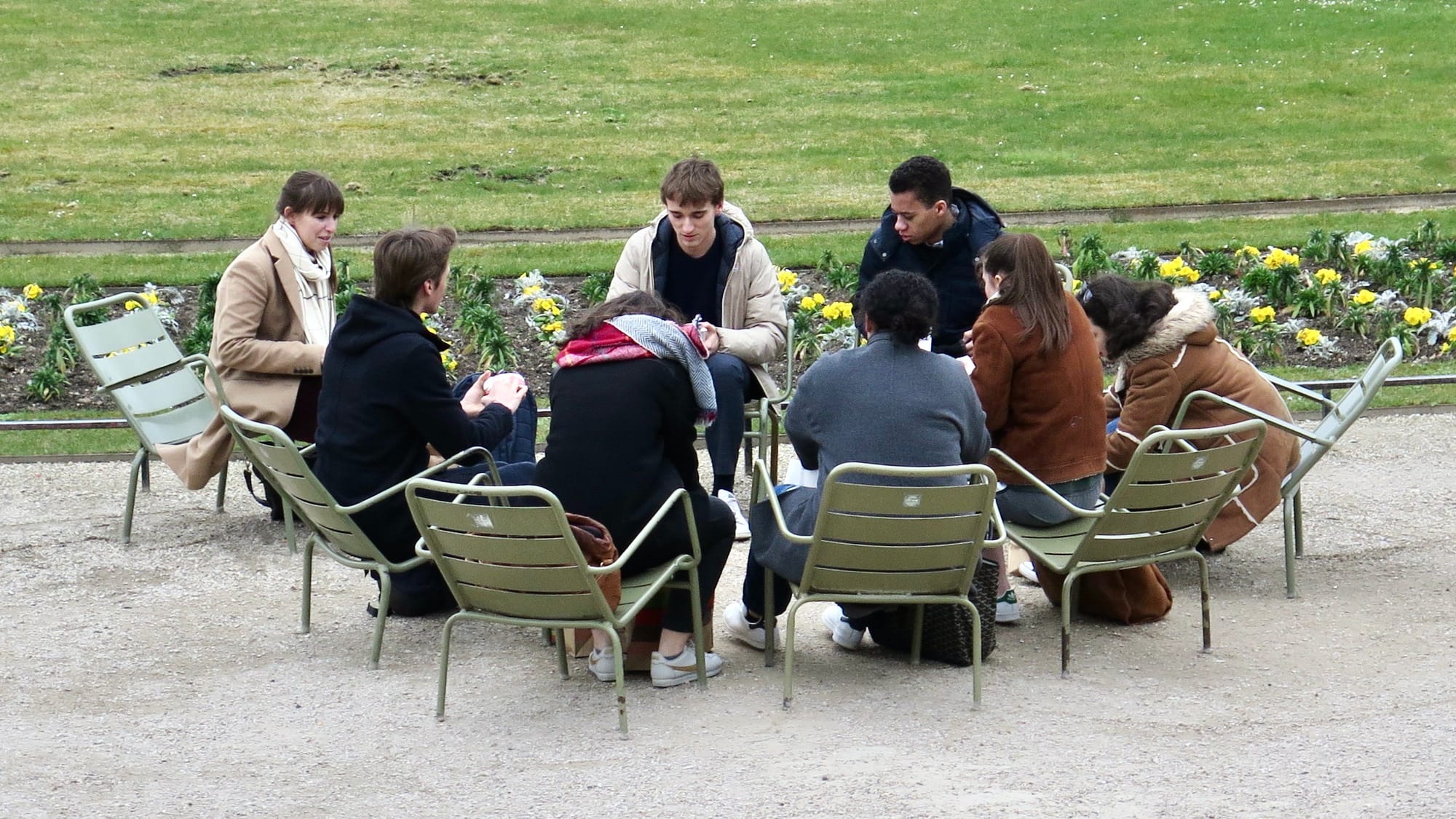
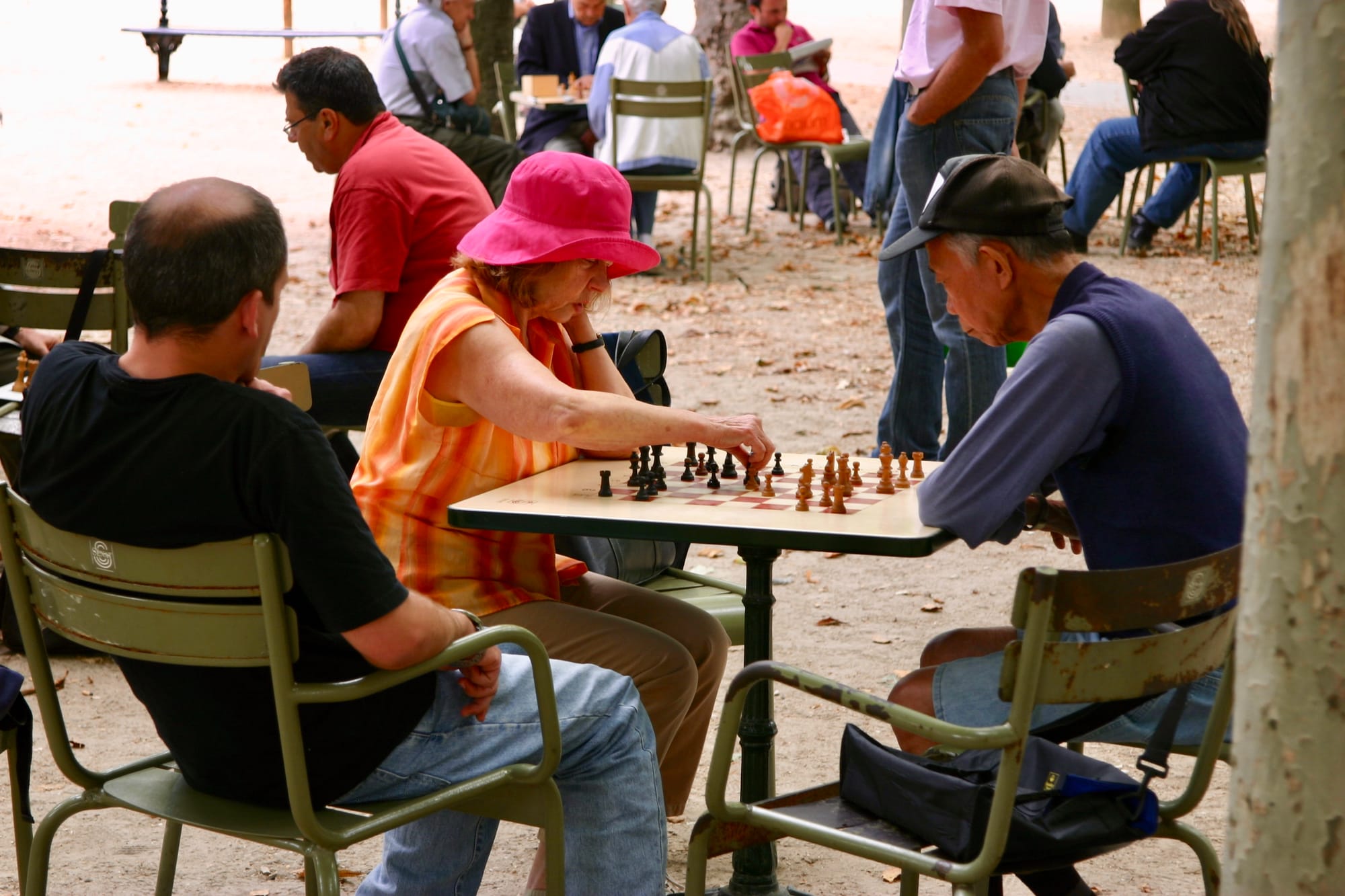
Seating is the "backbone" of social life
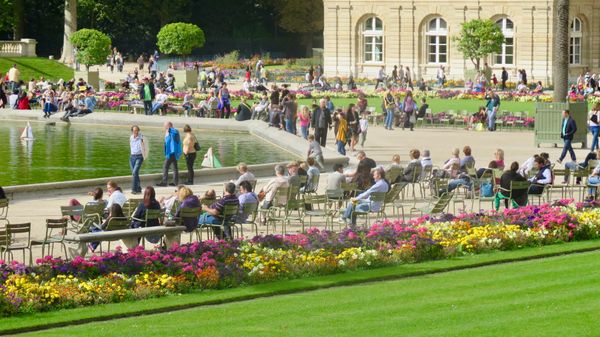
Luxembourg Gardens is more than just a park
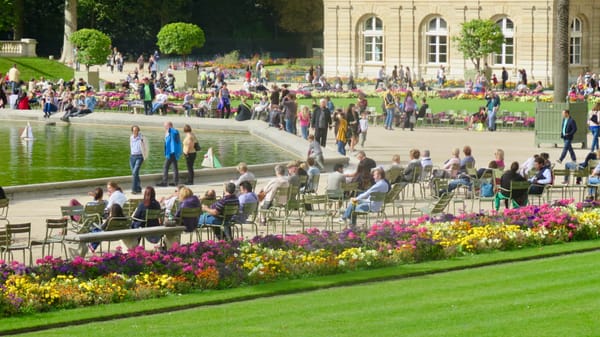
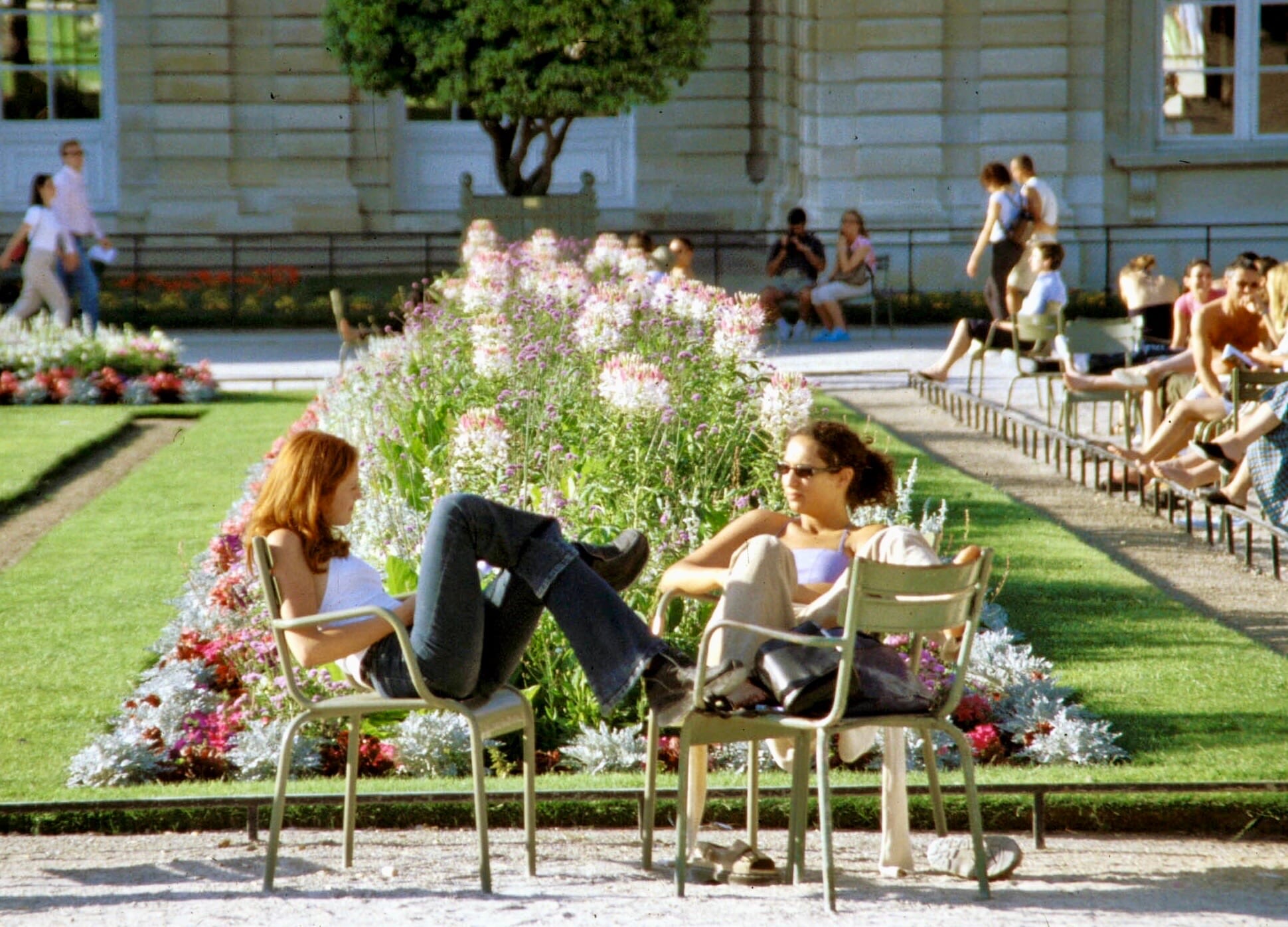
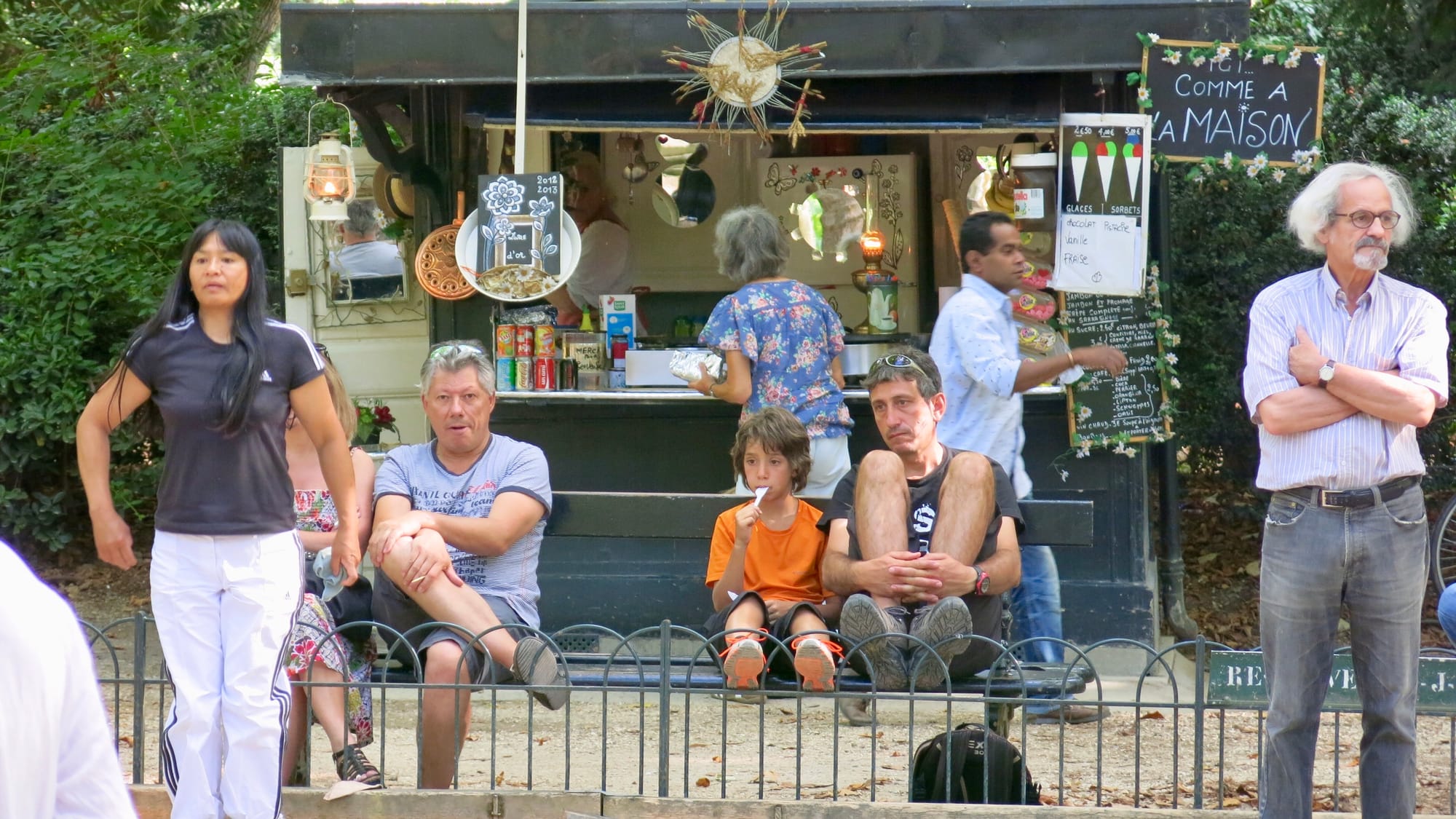
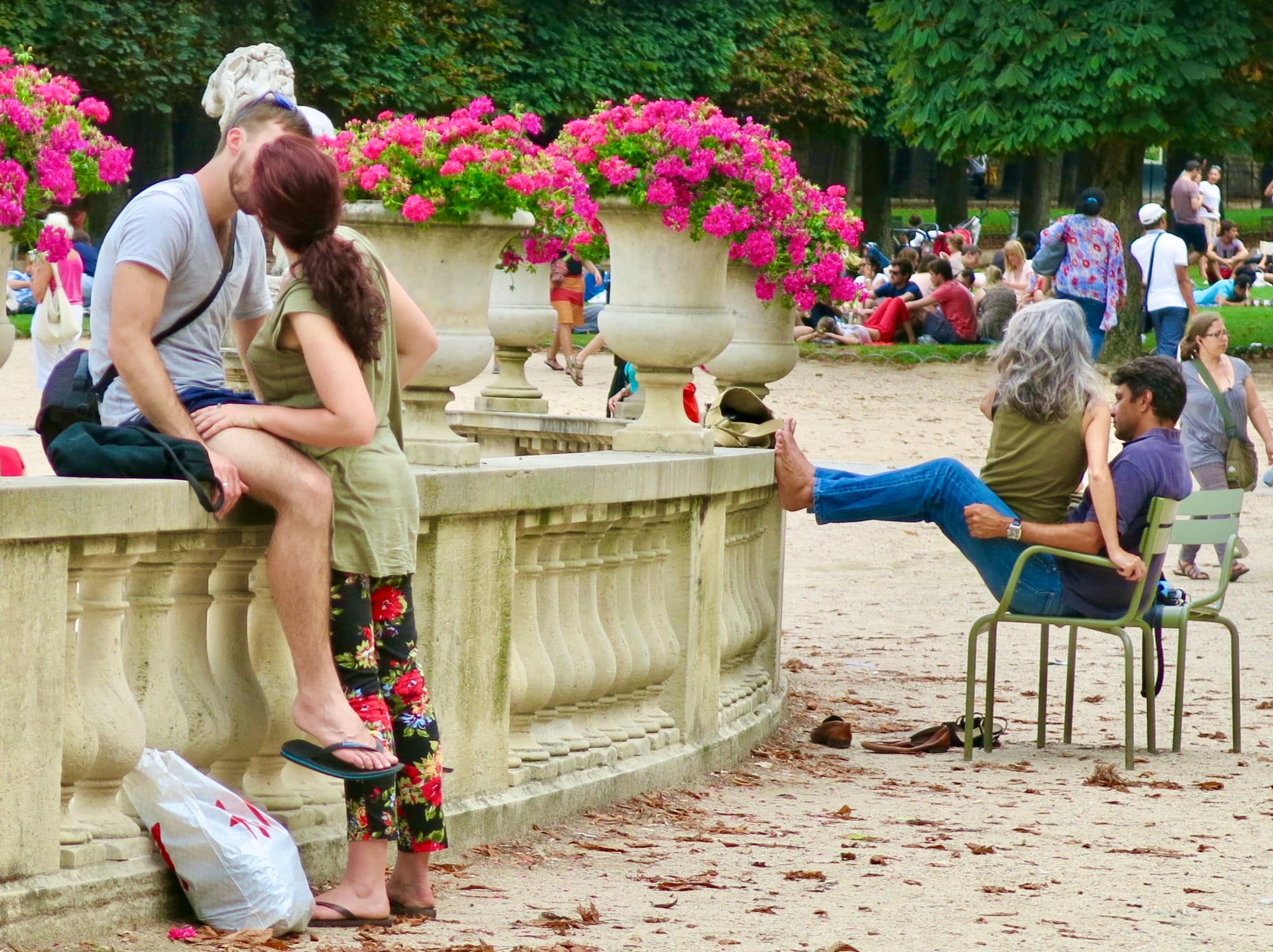
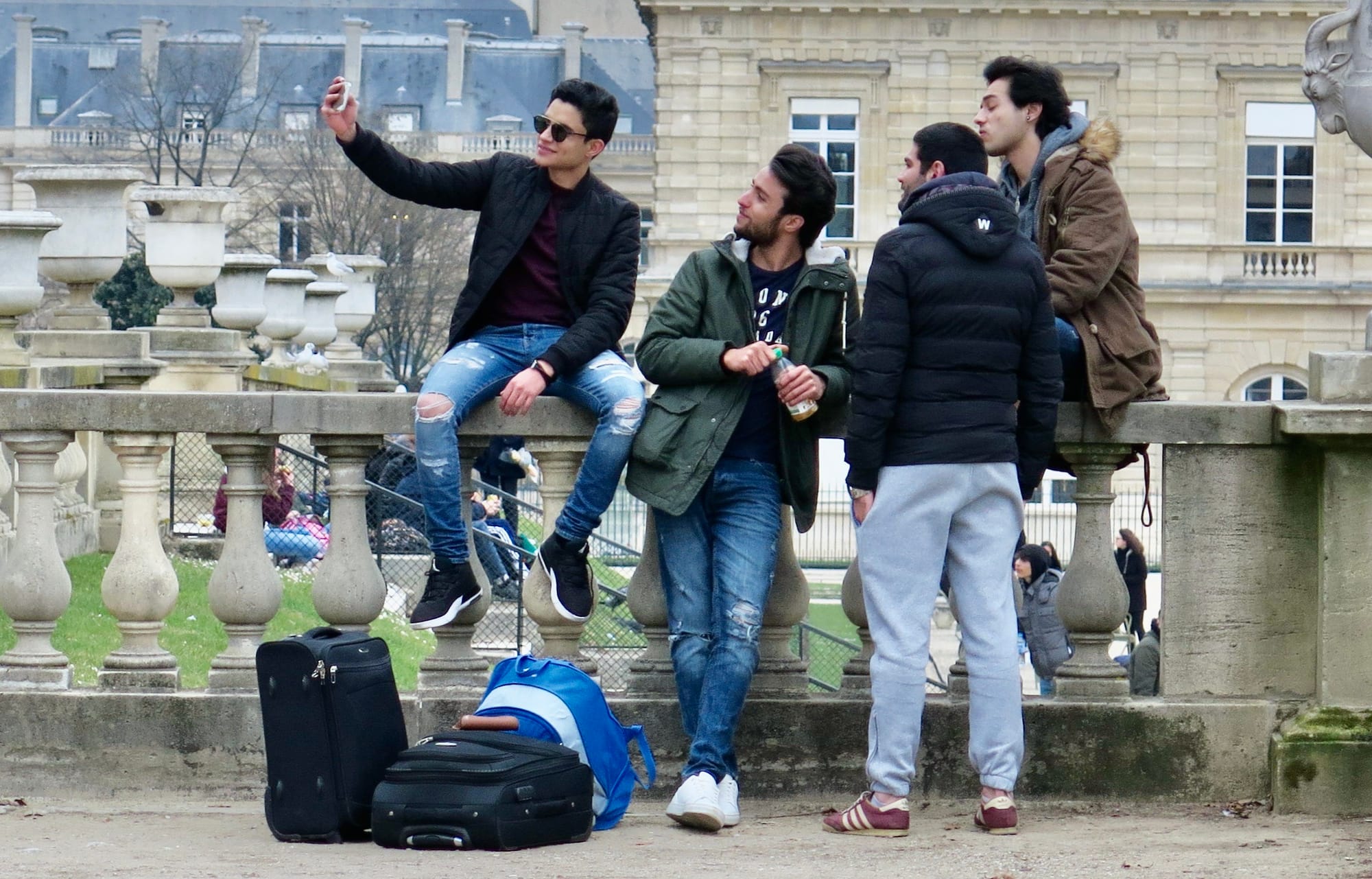
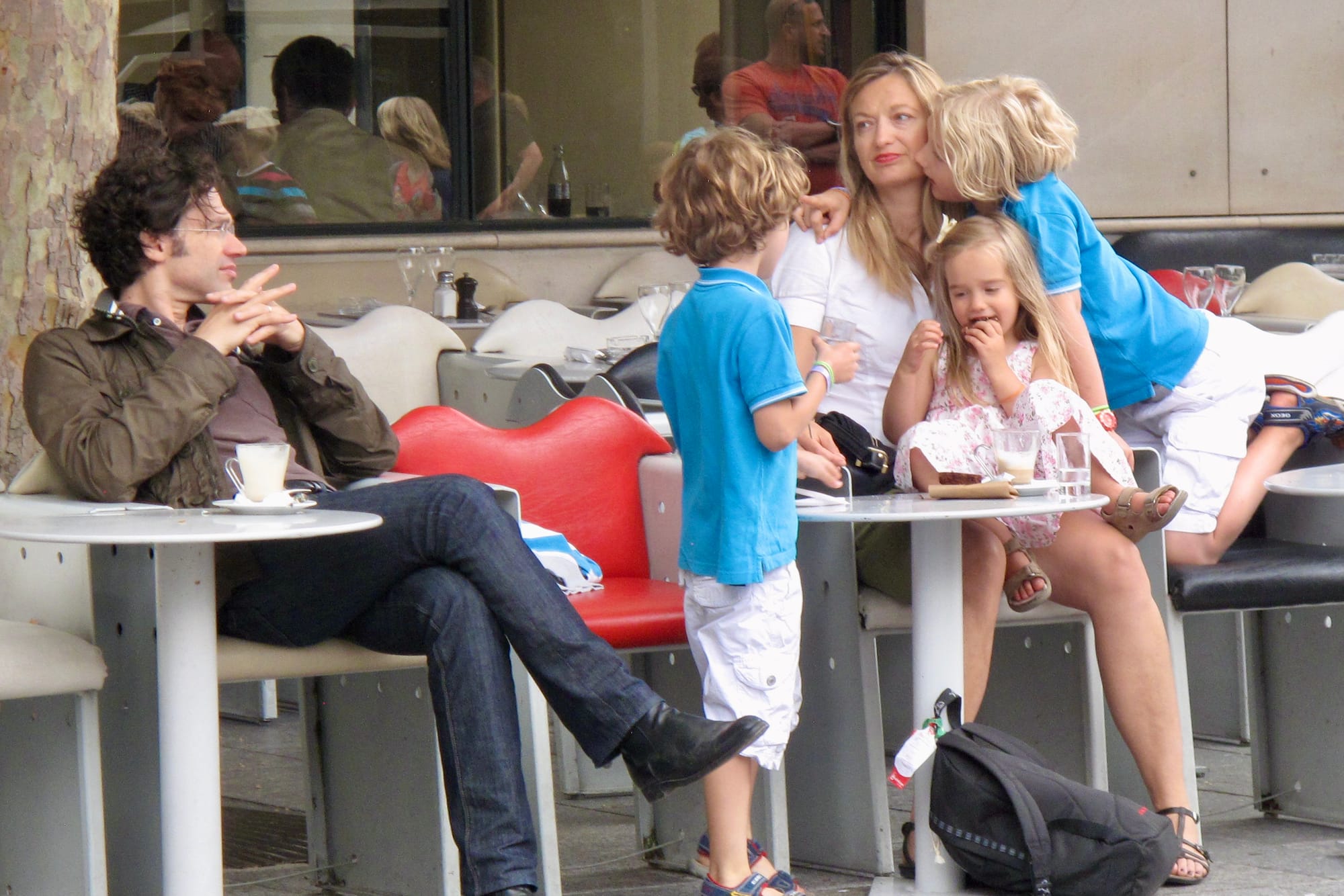
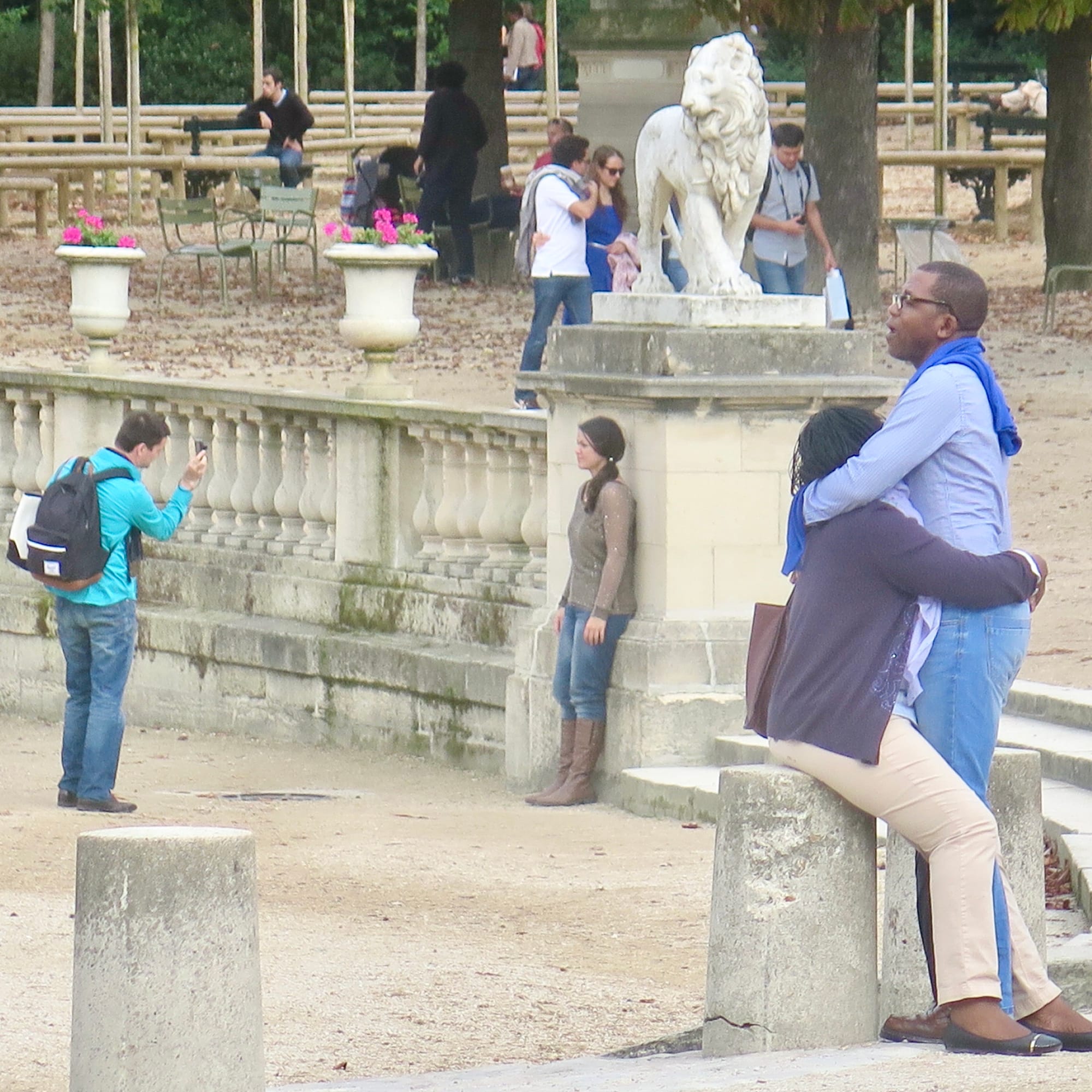
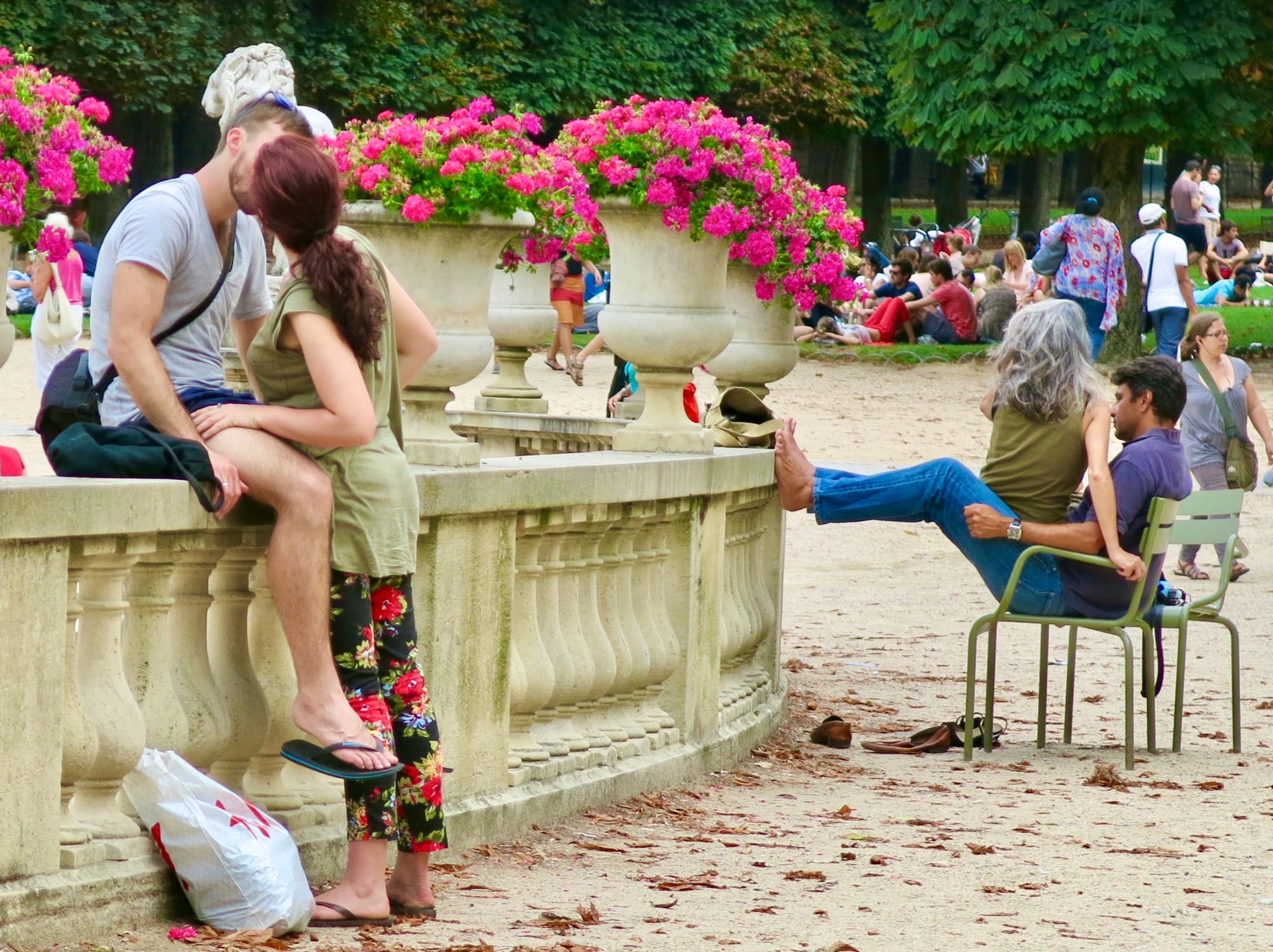
Luxembourg Gardens is a beloved place in the center of the city where everyone feels welcome to gather and relax, surrounded by small ponds, beautiful gardens, plenty of shade and an abundance of places to sit. People dip their toes in the water, sunbathe, chat, and pause their busy day to just enjoy life for a little while, alone or with loved ones.
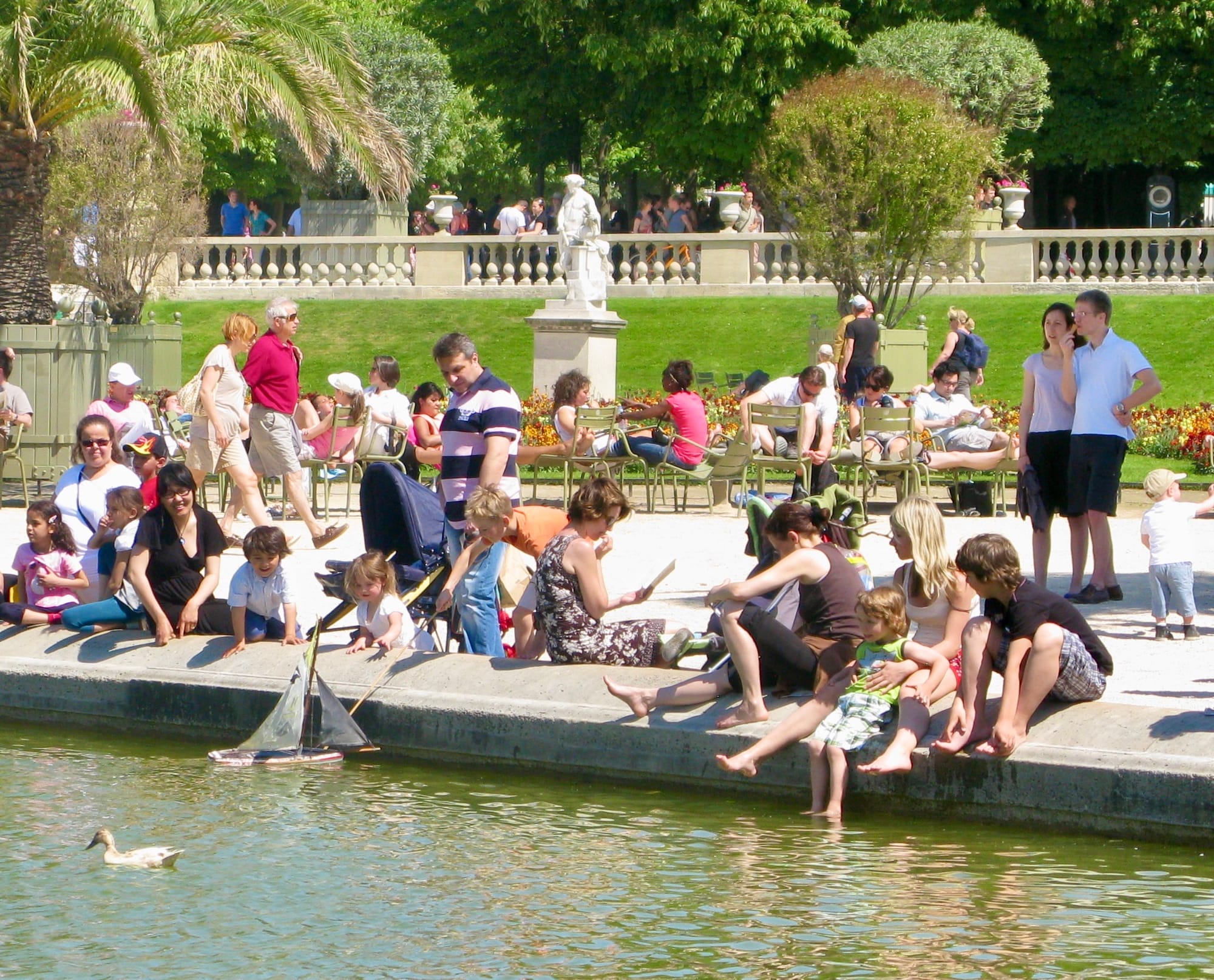
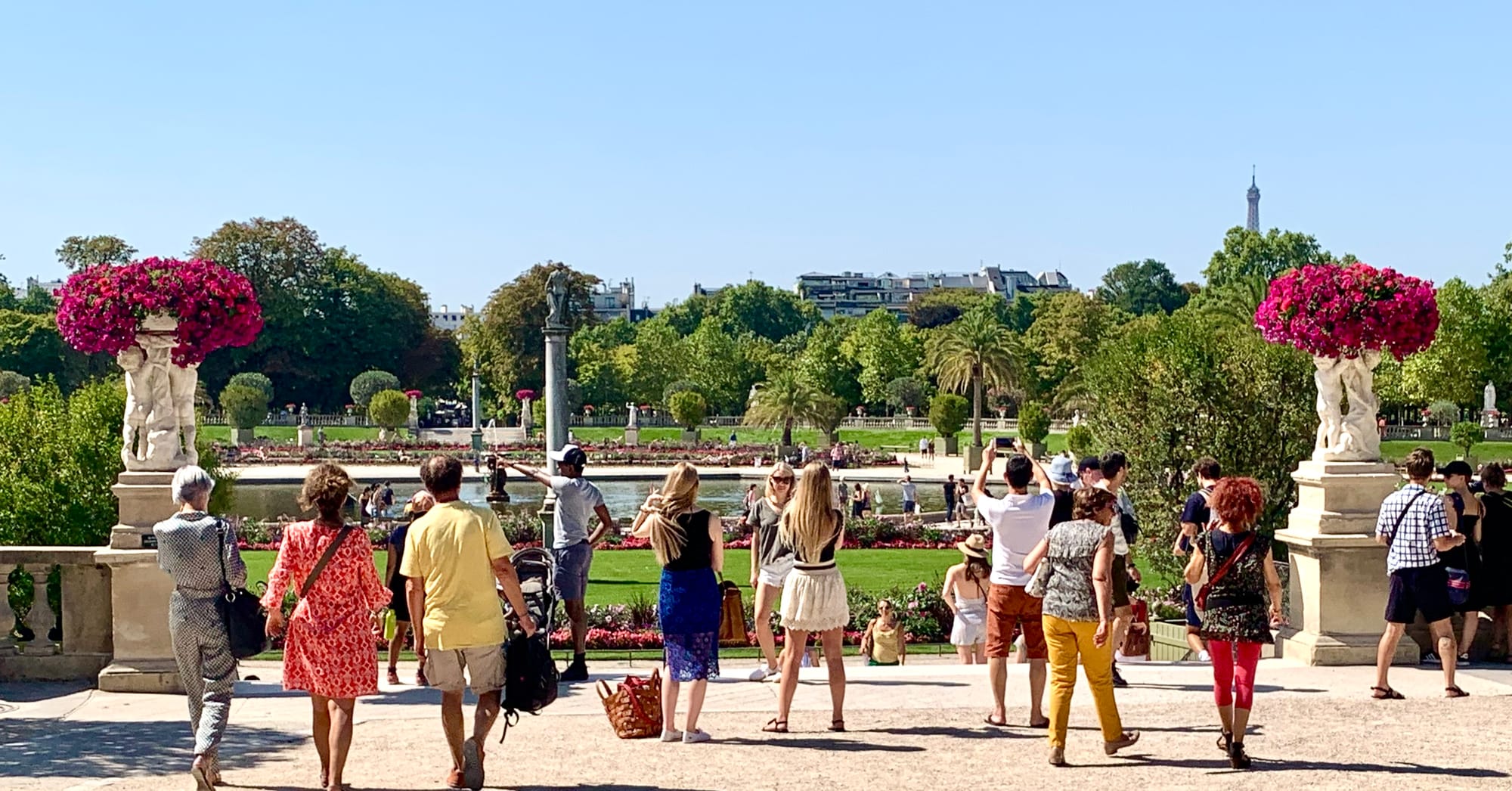
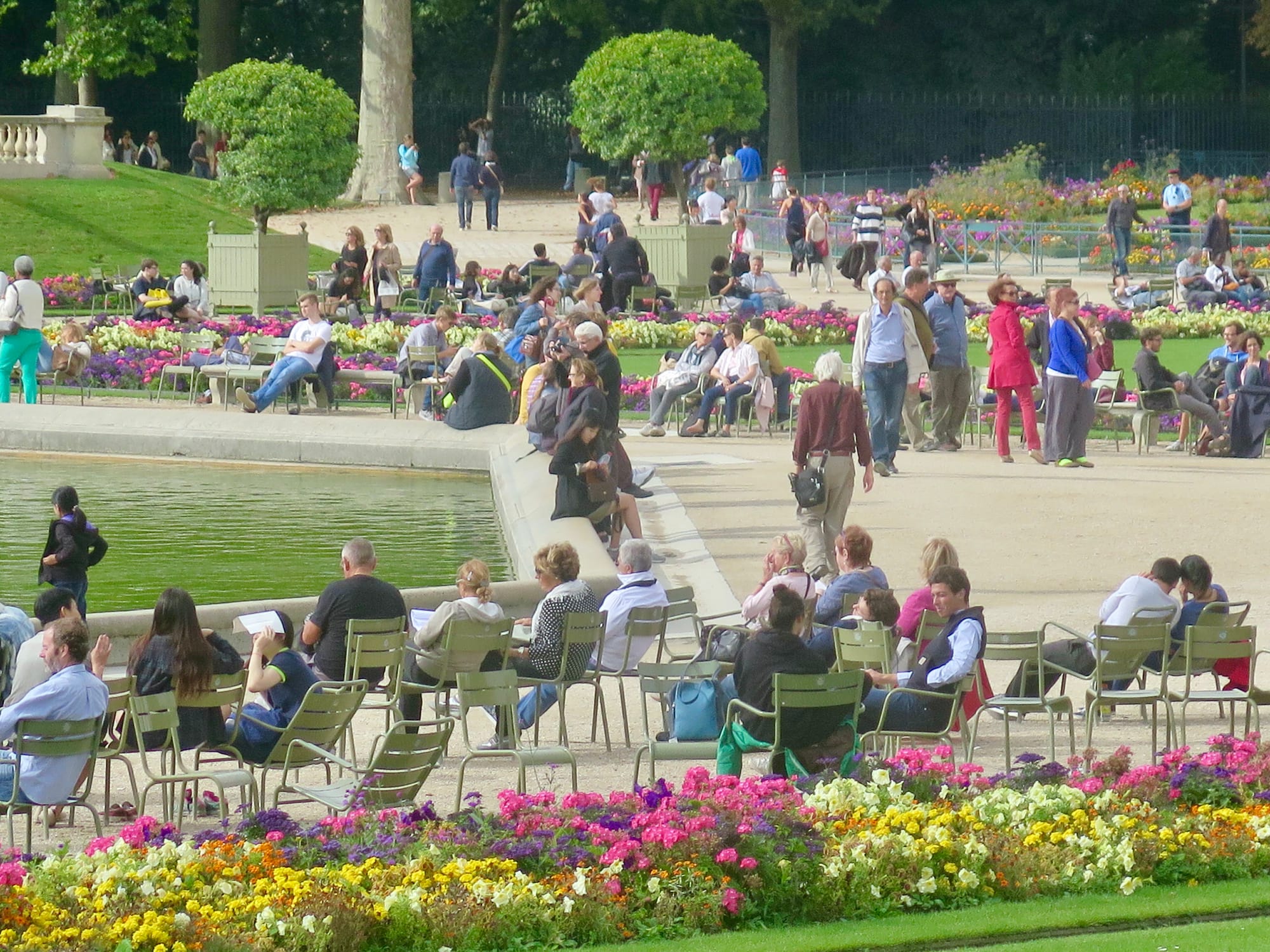
The popularity of these gardens is a testament to how a great place to gather is more than just a park – it is a combination square, botanical garden, activity center, sports hub, and more. Luxembourg Gardens is "the" place when it comes to amenities which facilitate connection with others.
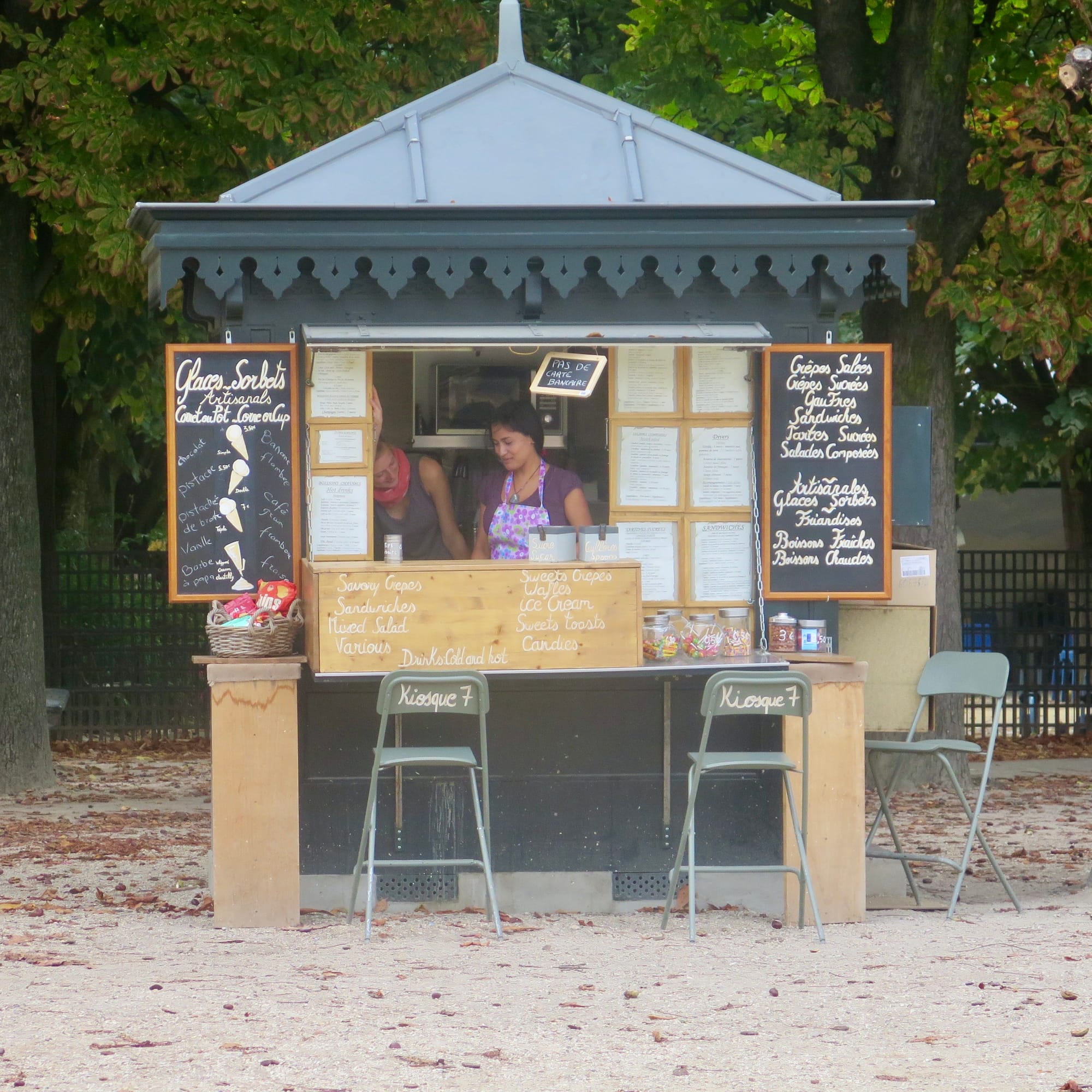
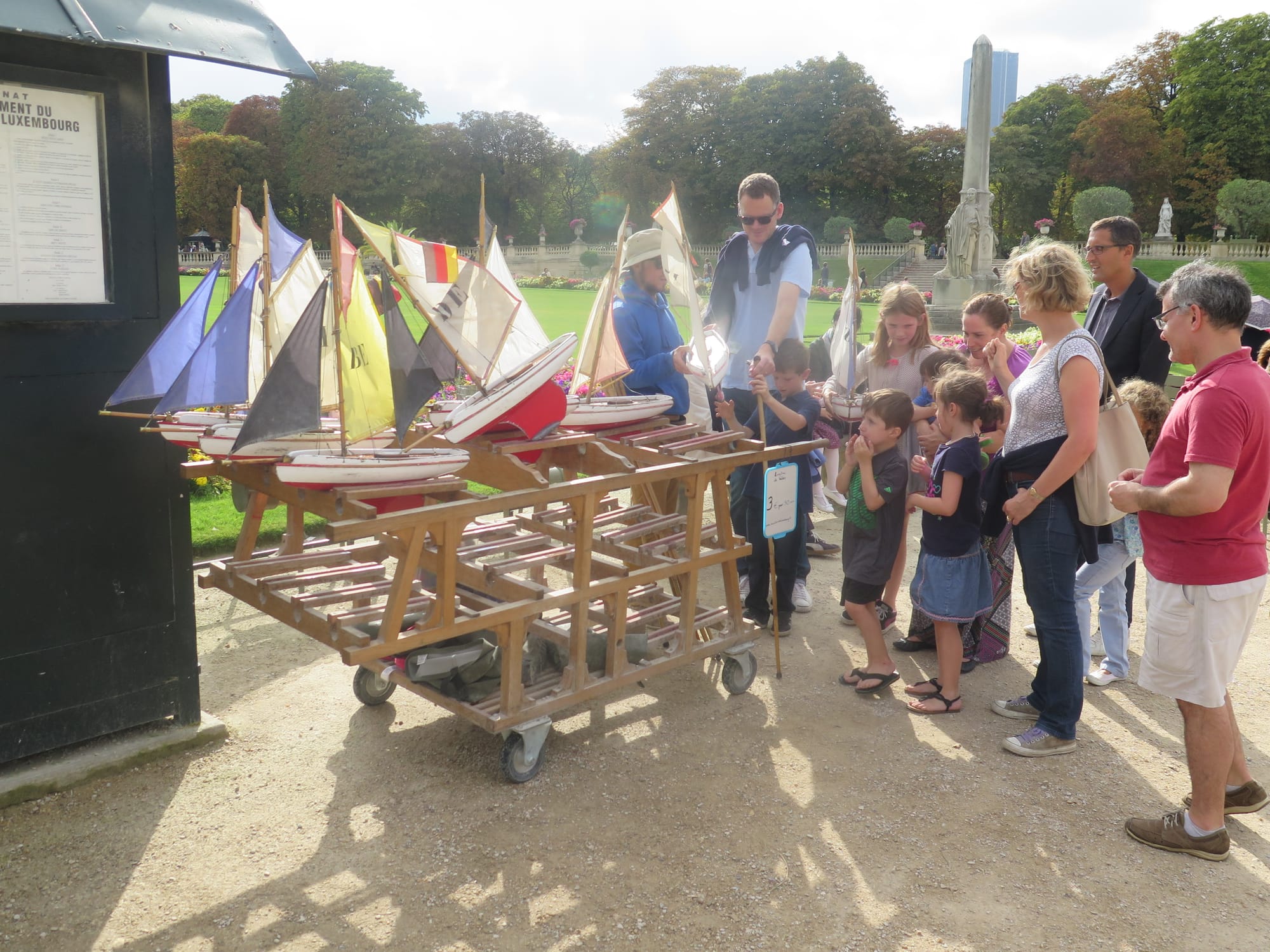
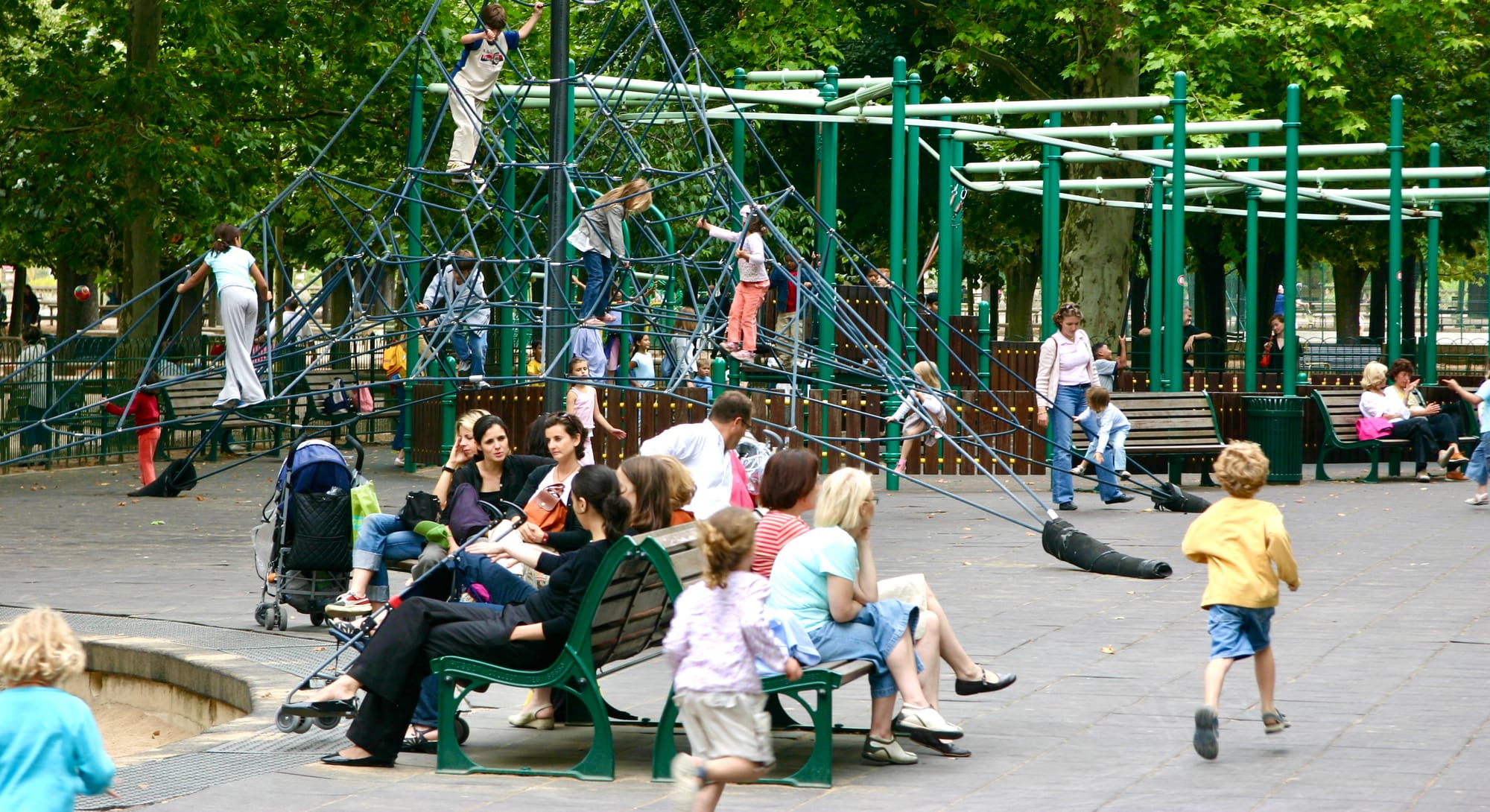
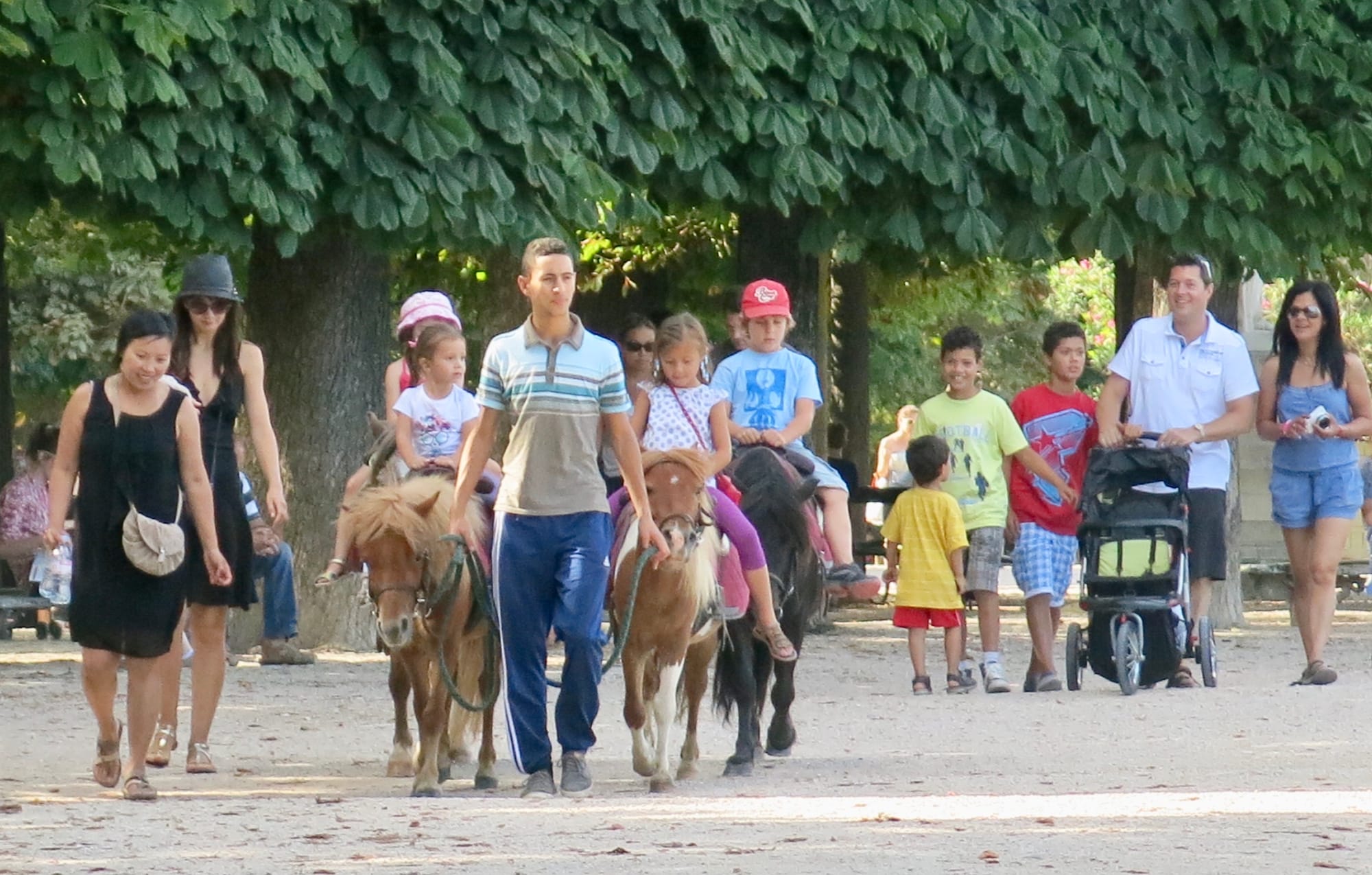
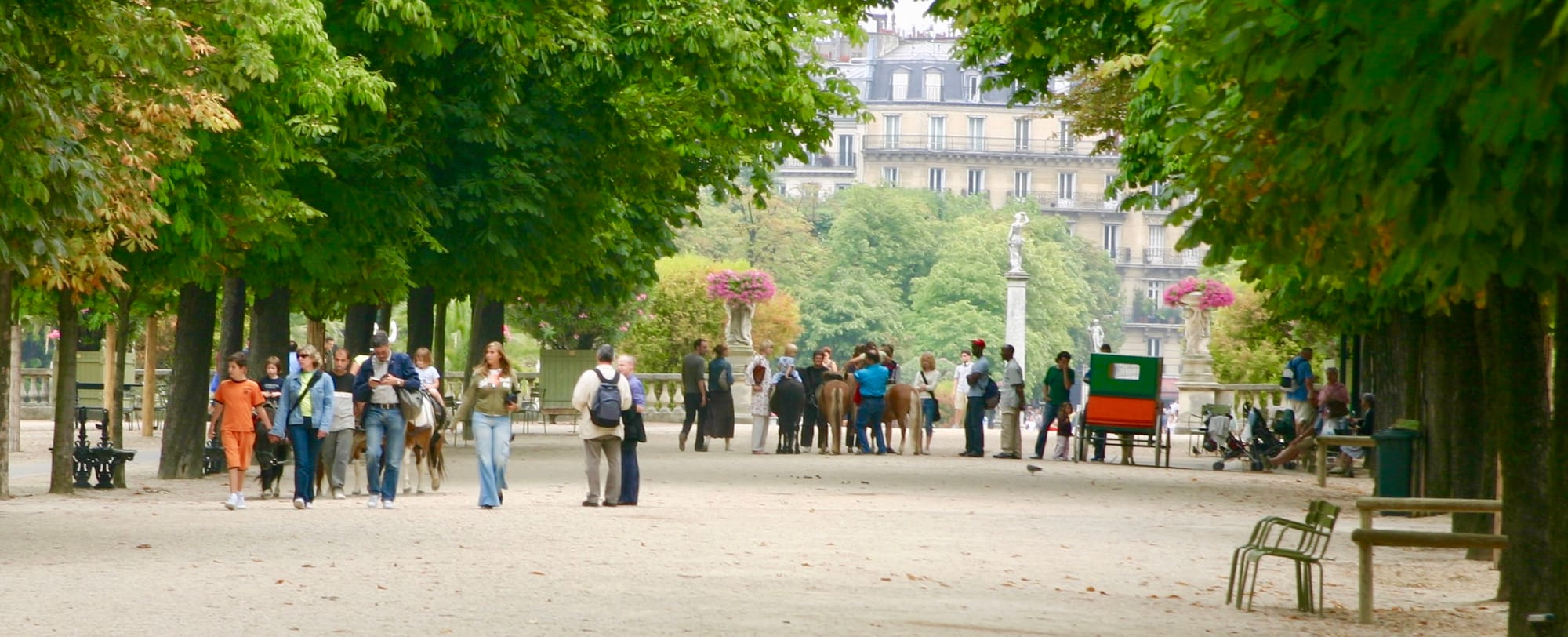
If we want to create places where people feel comfortable and inspired to stop and connect, we need to offer a variety of opportunities where they can do so. Luxembourg Gardens' iconic moveable chairs fill its grounds and serve this purpose, as well as a variety of benches that suit every need.
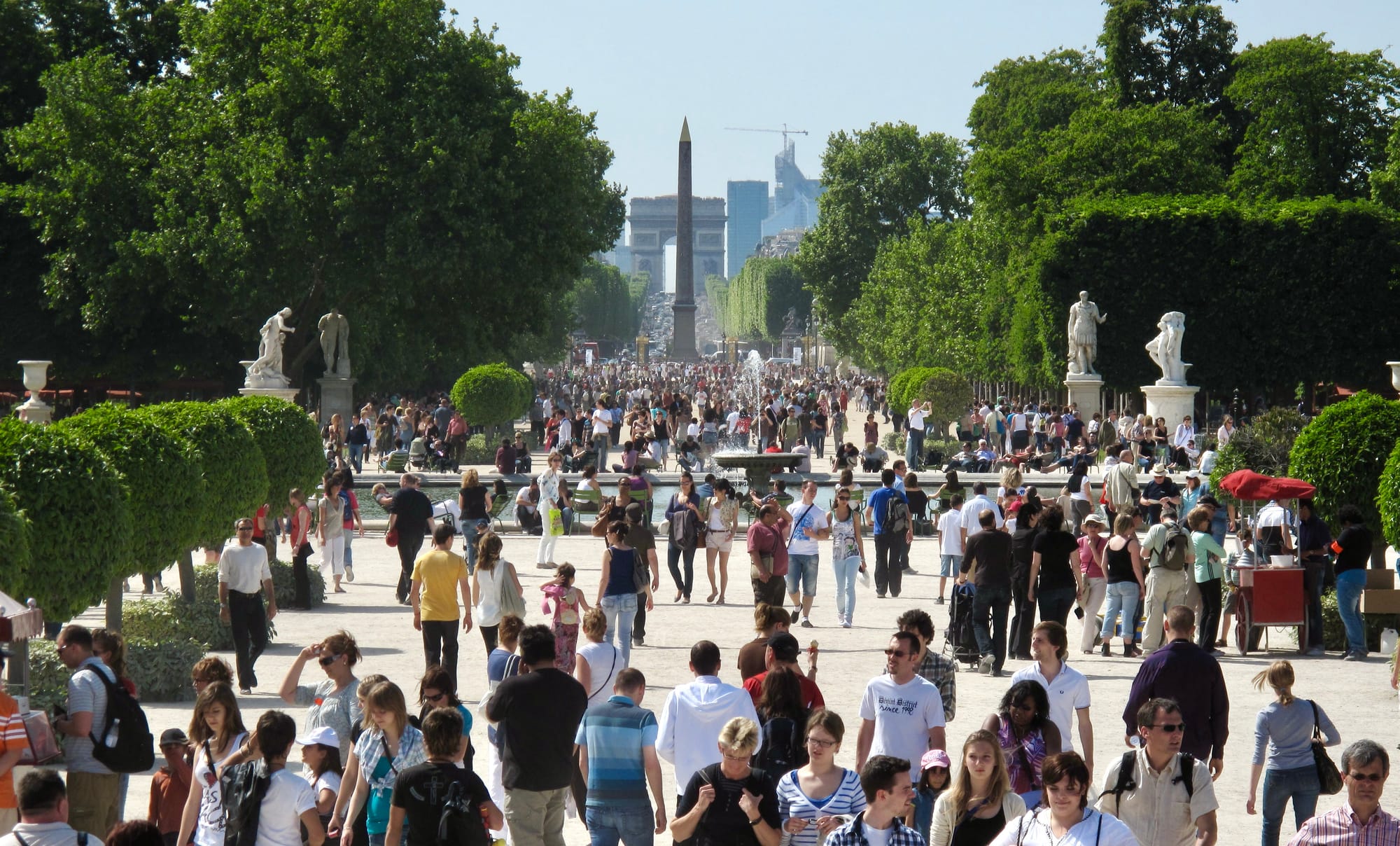
The Tuileries Gardens guide visitors to Paris' biggest landmarks
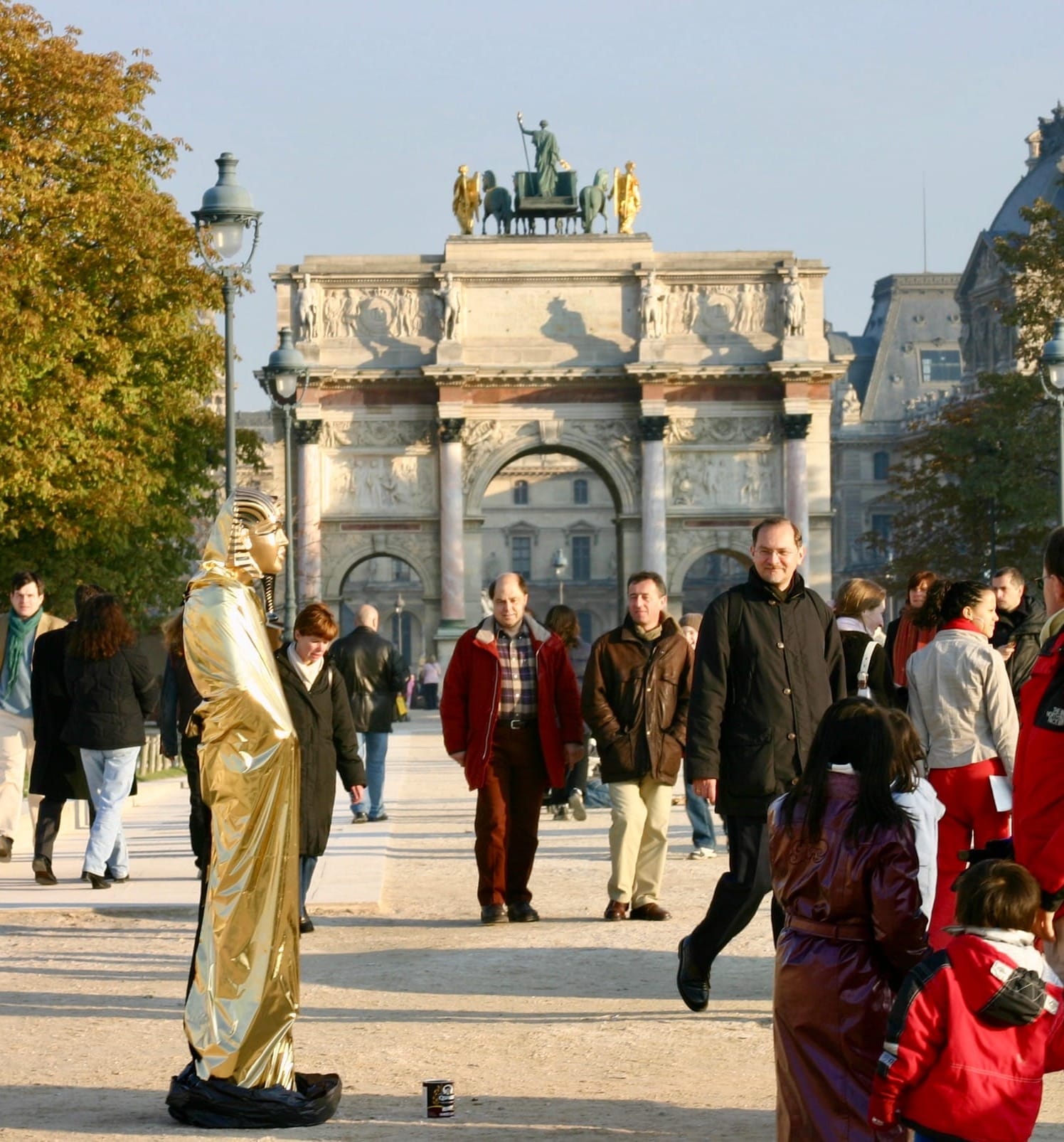
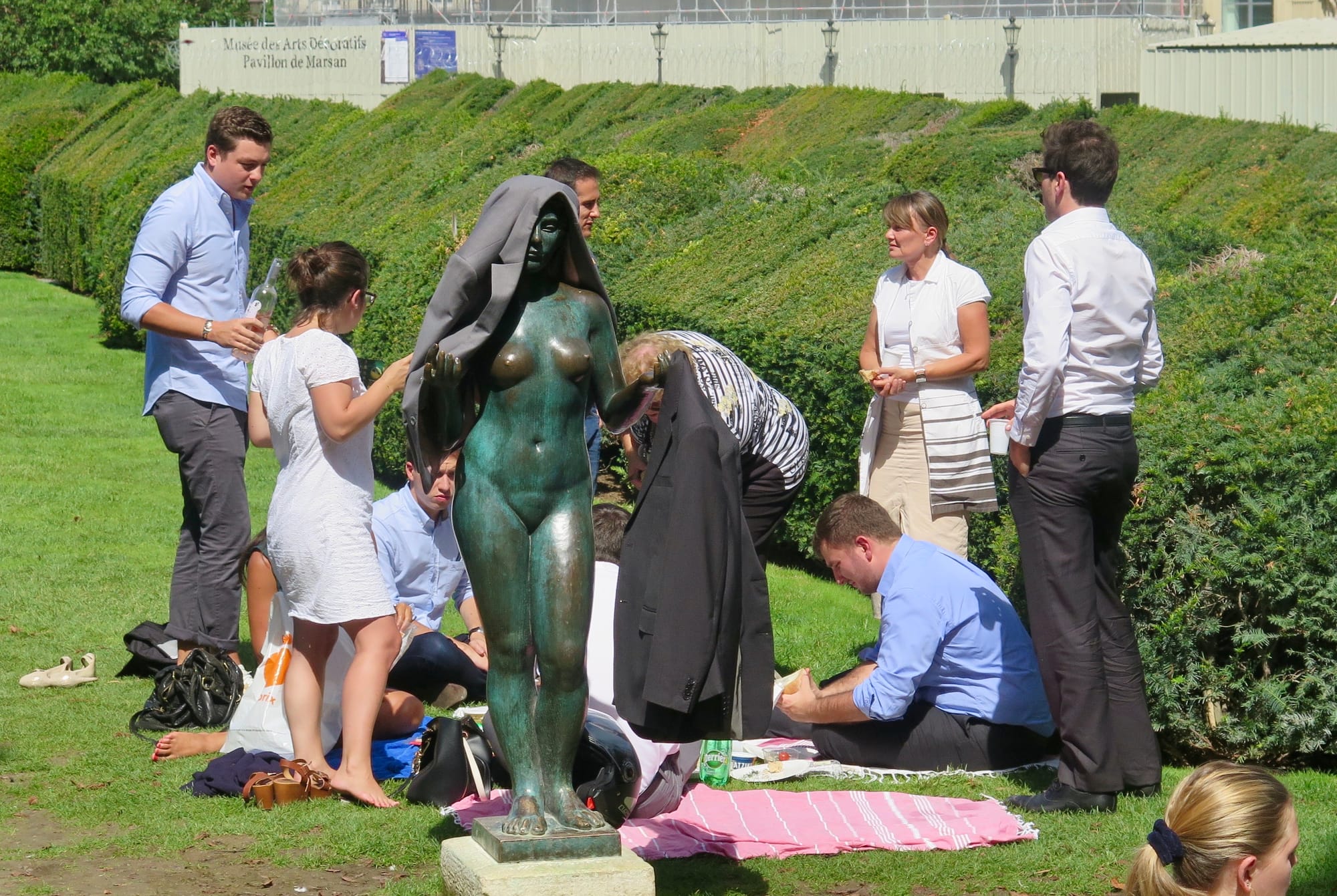
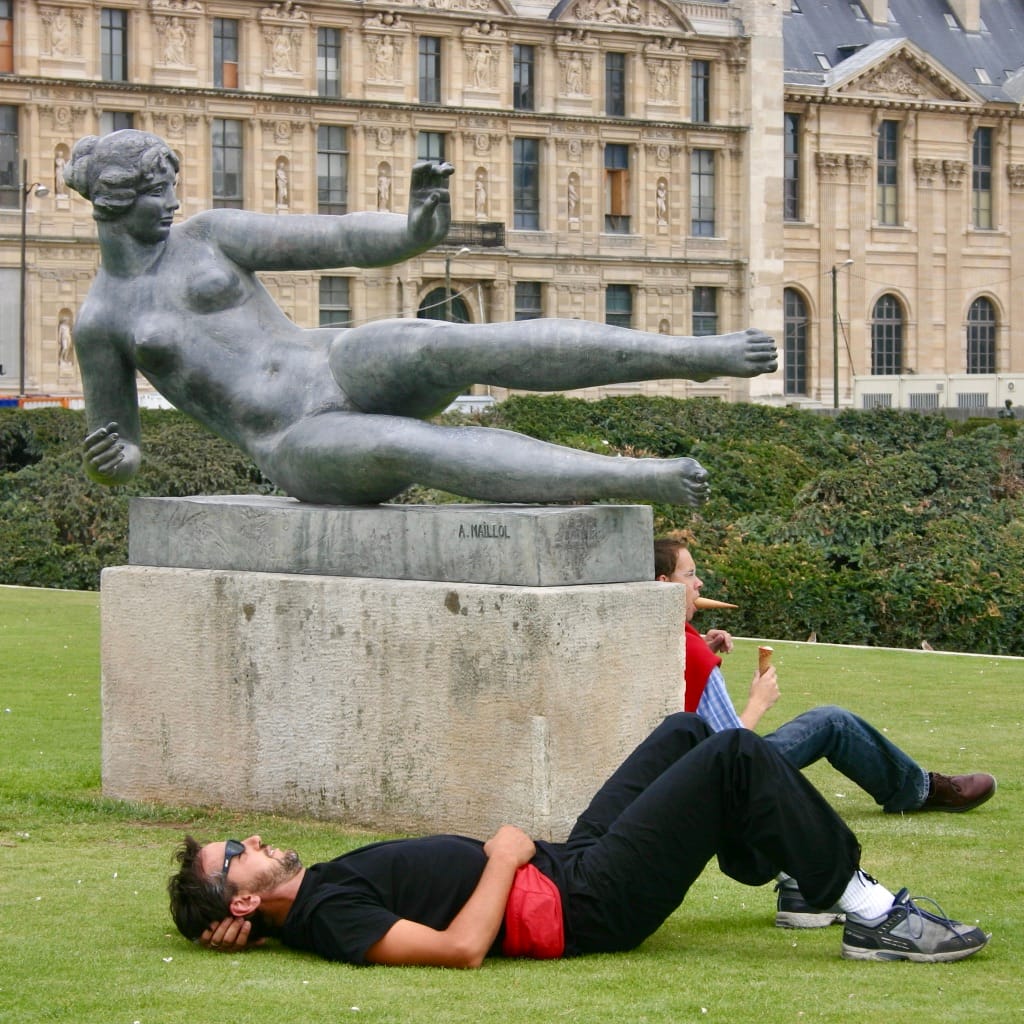
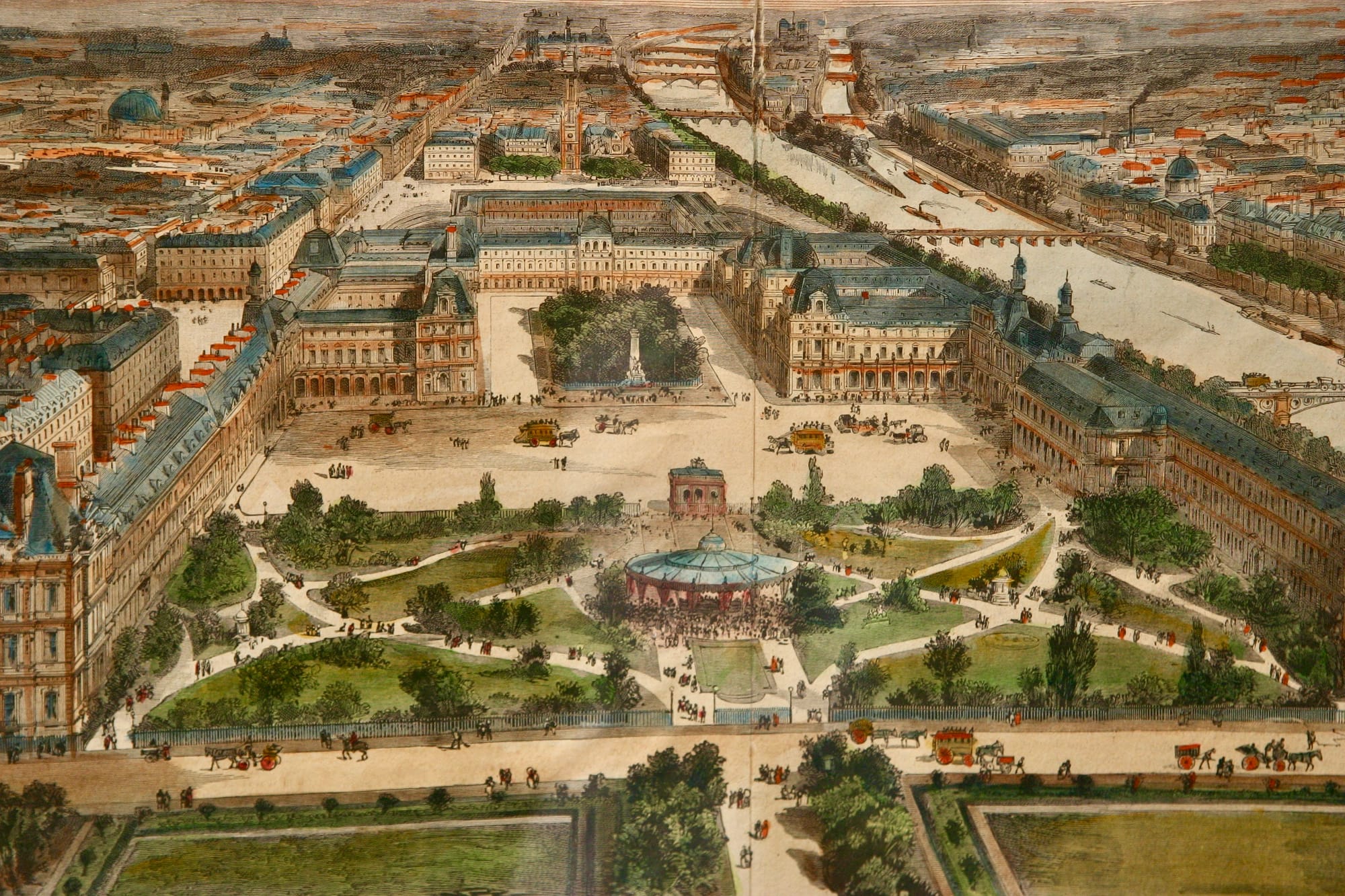
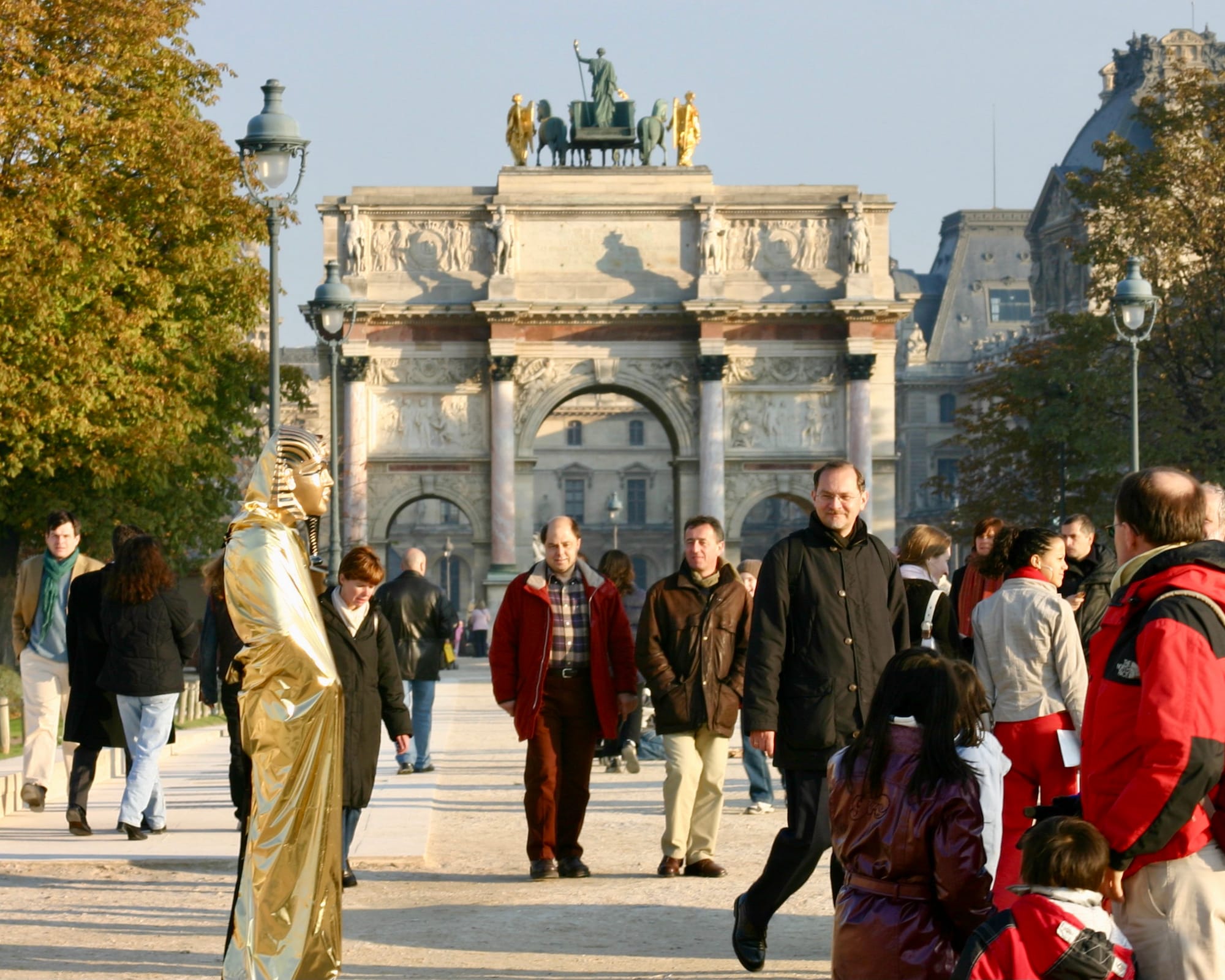
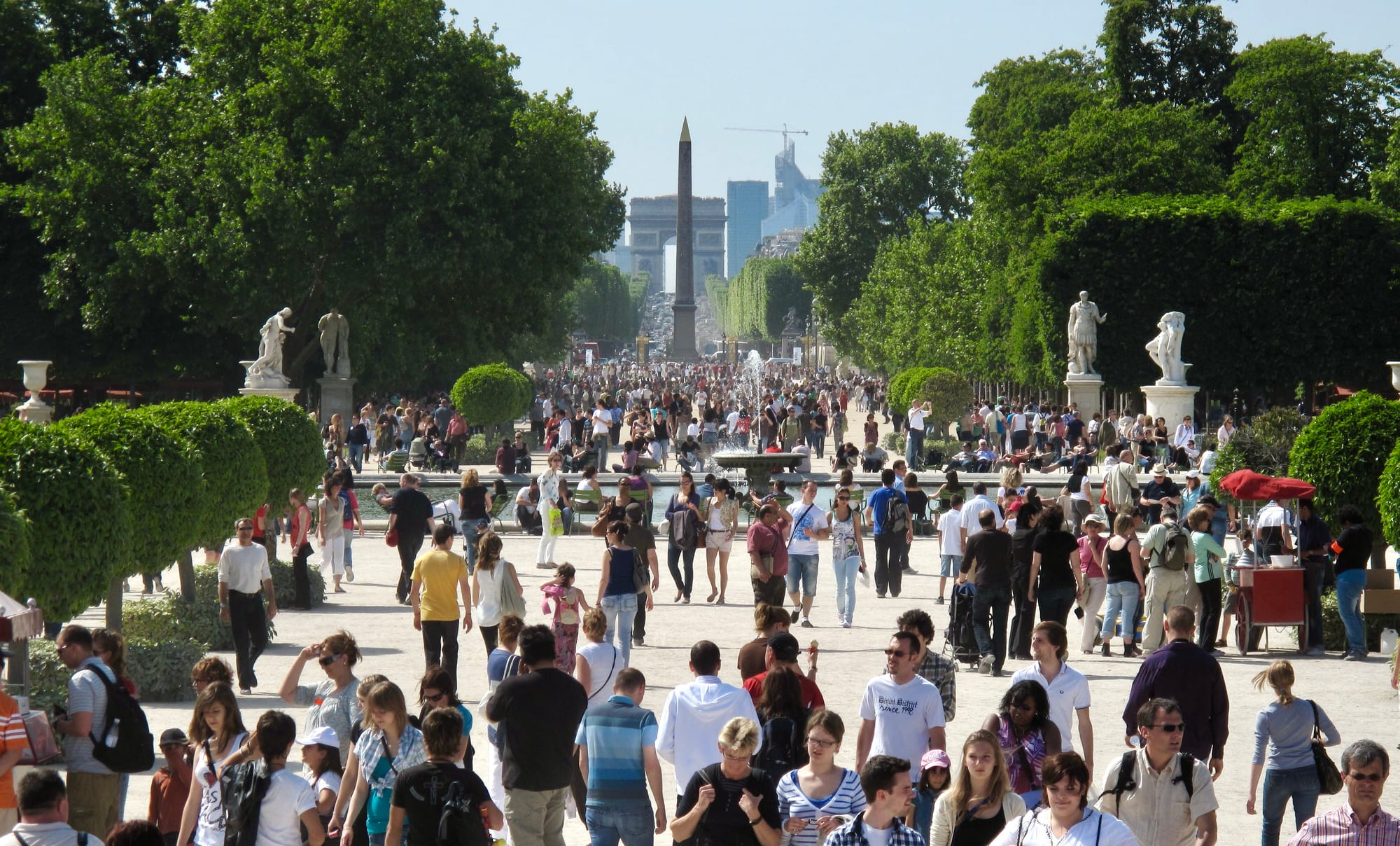
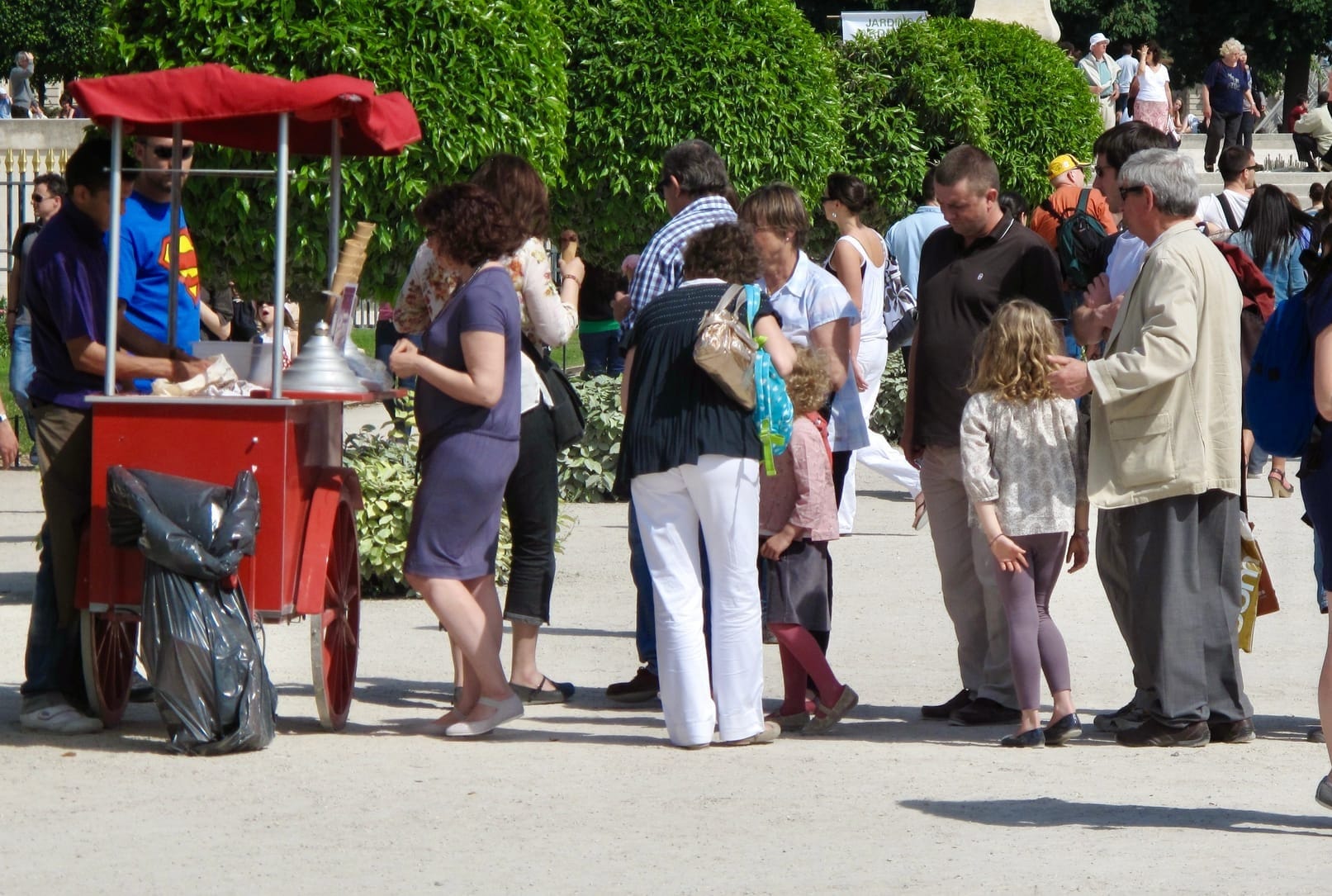
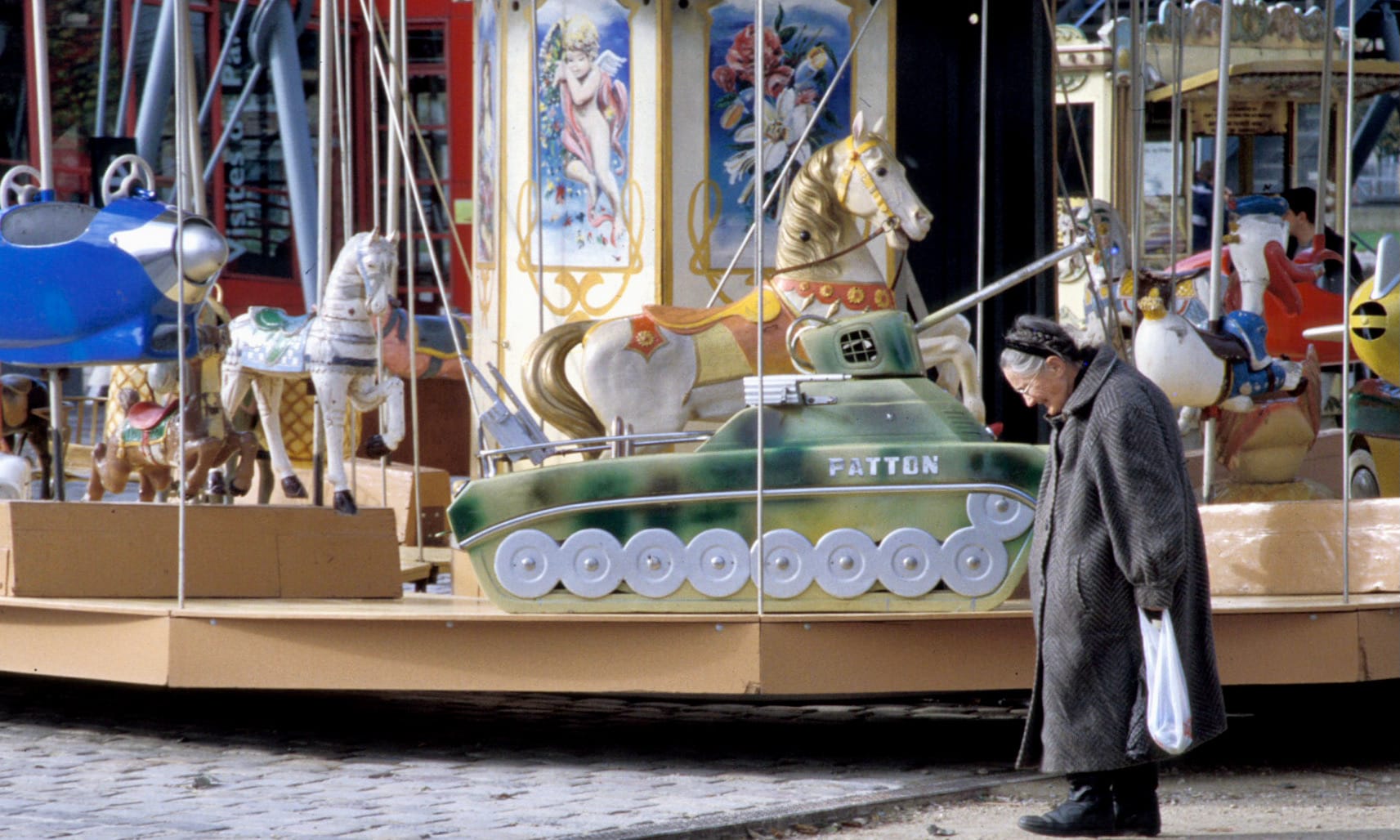
The Tuileries Gardens stretching from the Louvre toward the Arc de Triomf make up a wonderful linear park that leads foot traffic to Place de la Concorde and Champs-Élysées. With numerous fountains, seating areas, shade, and attractive features like carousels, sculptures, and cafes, these gardens draw people in not only to enjoy a leisurely stroll but they also guide visitors to some of Paris' greatest landmarks and cultural treasures.
5) Cultural and Civic Buildings Foster Community Life
In Paris, the cultural and civic buildings are not just isolated landmarks surrounded by streets and traffic. They are integrated into the neighborhoods they're embedded in and stimulate public life in their vicinity. The area around these buildings is often activated with programming and features that enhance the function of each institution and invite more people to engage with it.
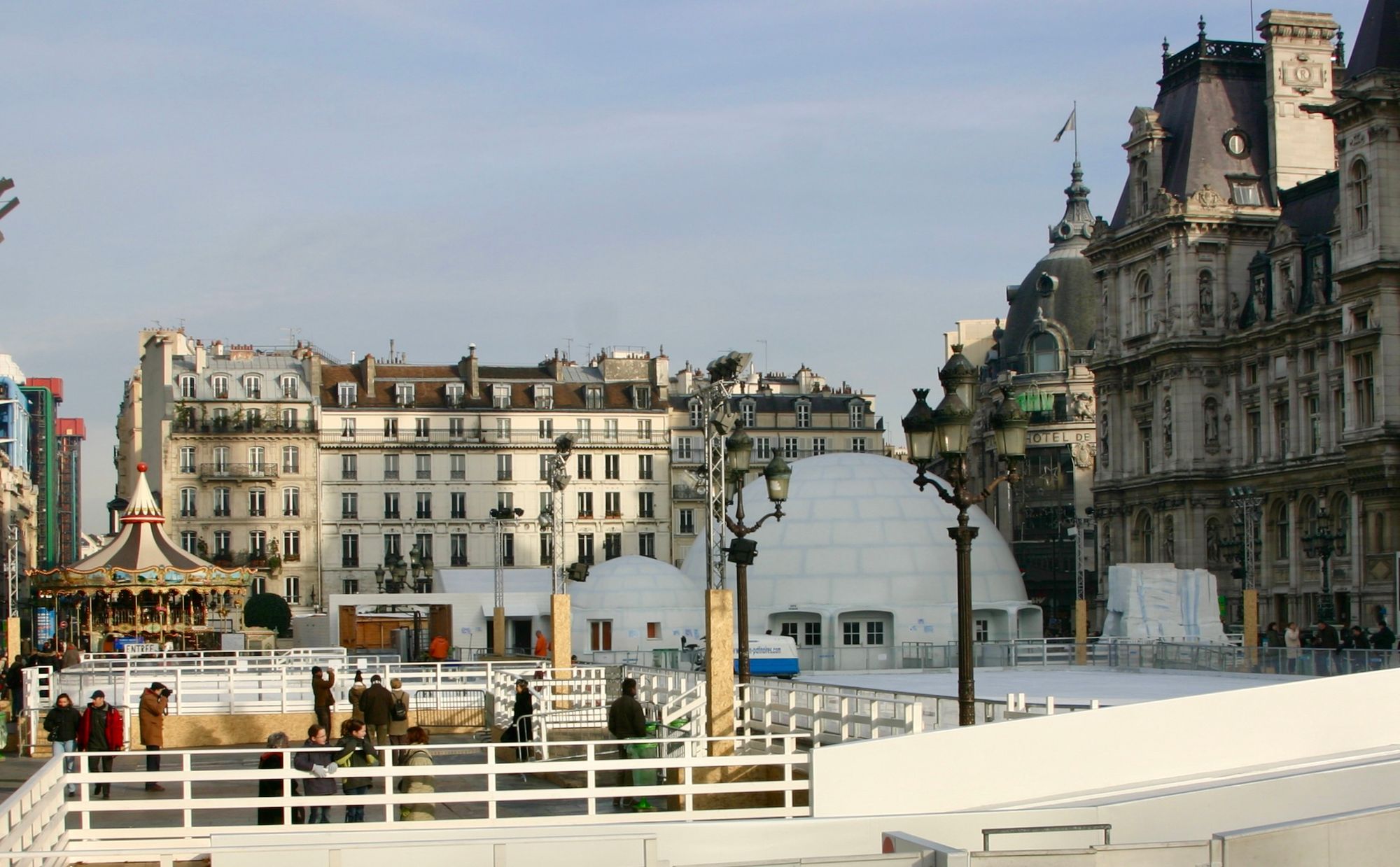
City Hall
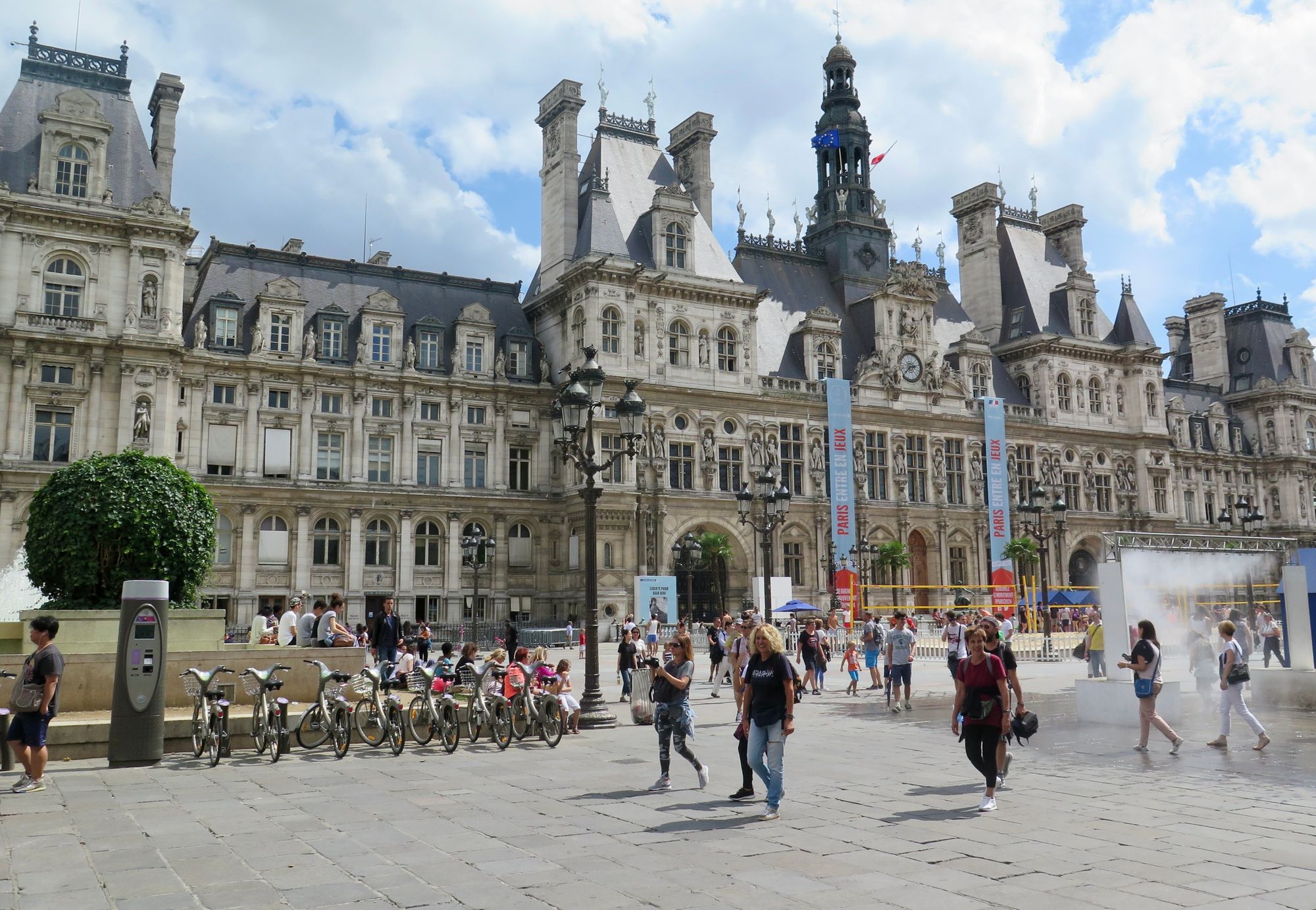
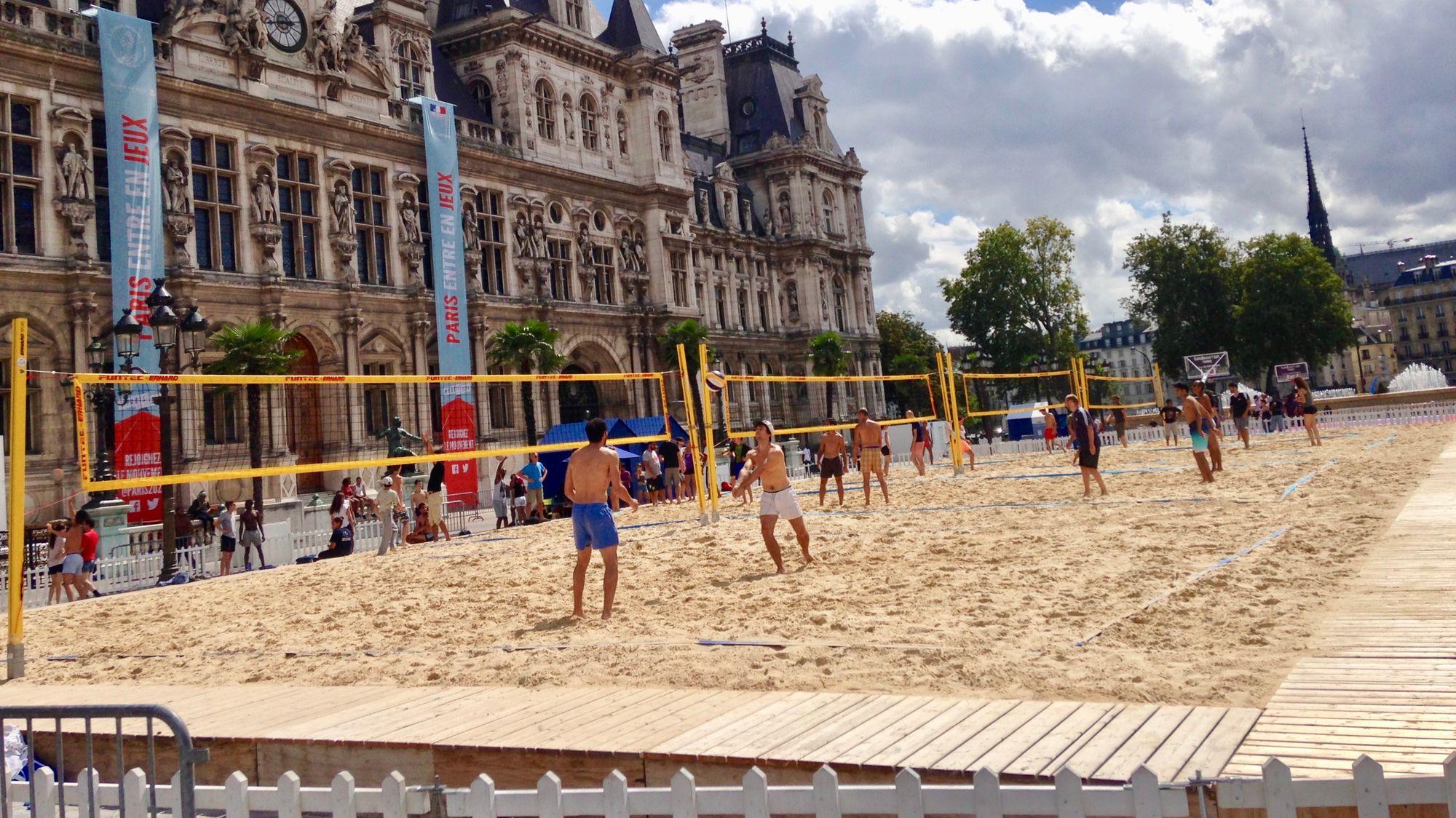
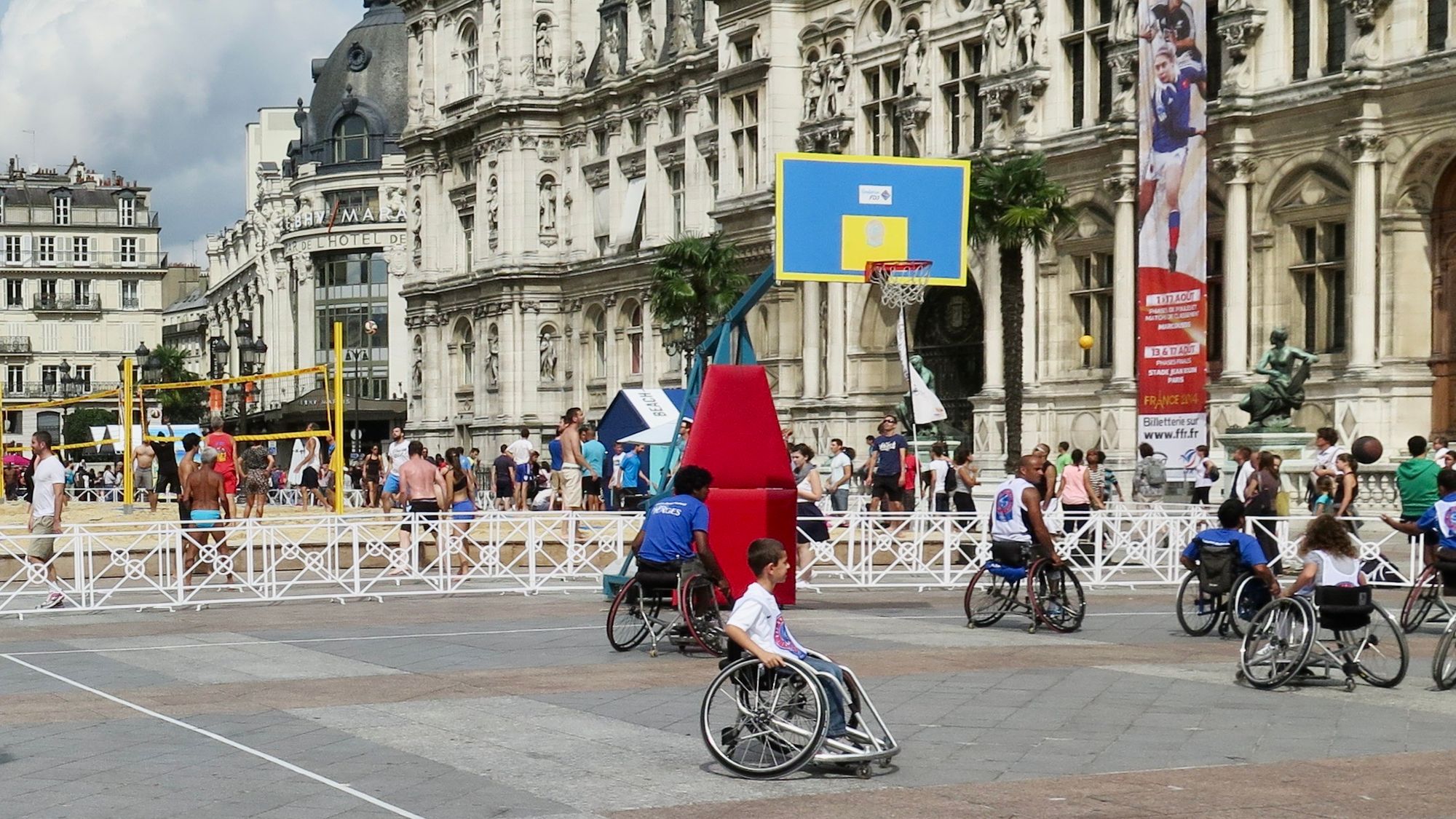
Paris' City Hall uses its plaza as a way to attract public life. In the past, it has been turned into a volleyball court, an ice skating rink, a wheelchair basketball court, and has hosted various interactive installations. Today, a large section of it is being transformed into an "urban forest," in line with the city's sustainability and greening goals.
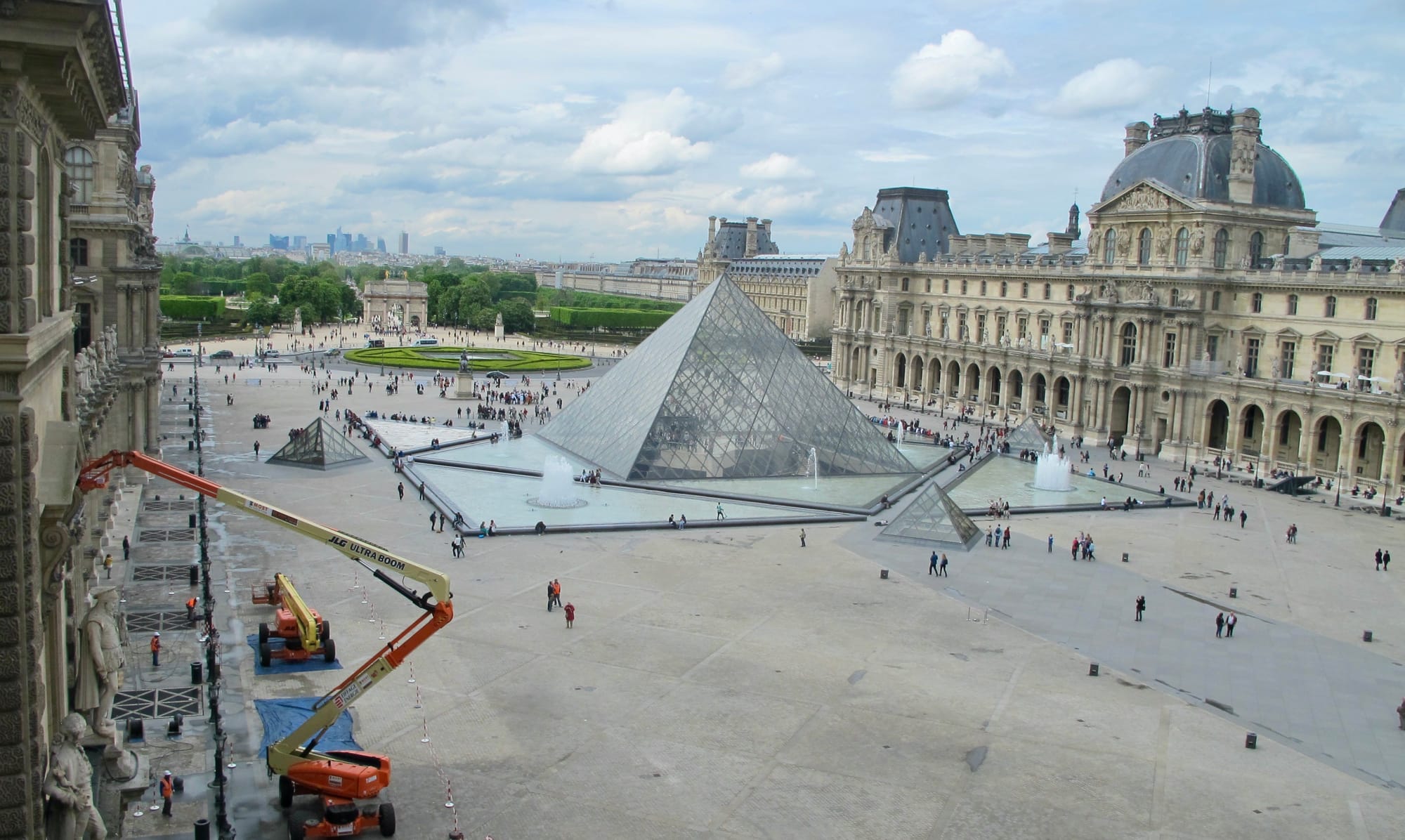
The Louvre and Tuileries
The grounds of the Louvre act like a vibrant square that invites visitation in its own right, especially as it is anchored by the central landmark of the pyramid and its fountains. What's more, it seamlessly blends into the adjacent Tuileries gardens which are a vibrant park and public place.
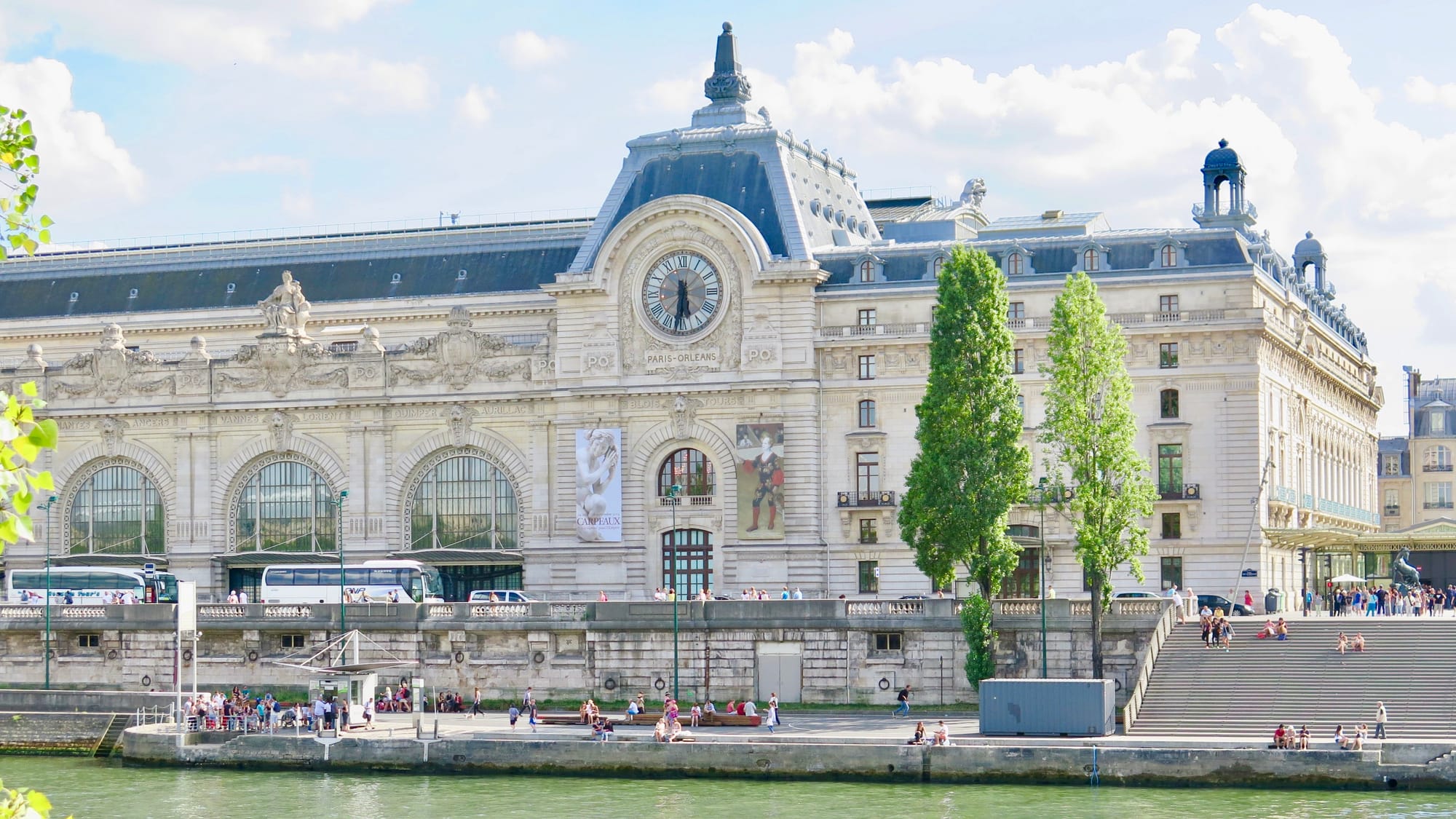
Musee D'Orsay
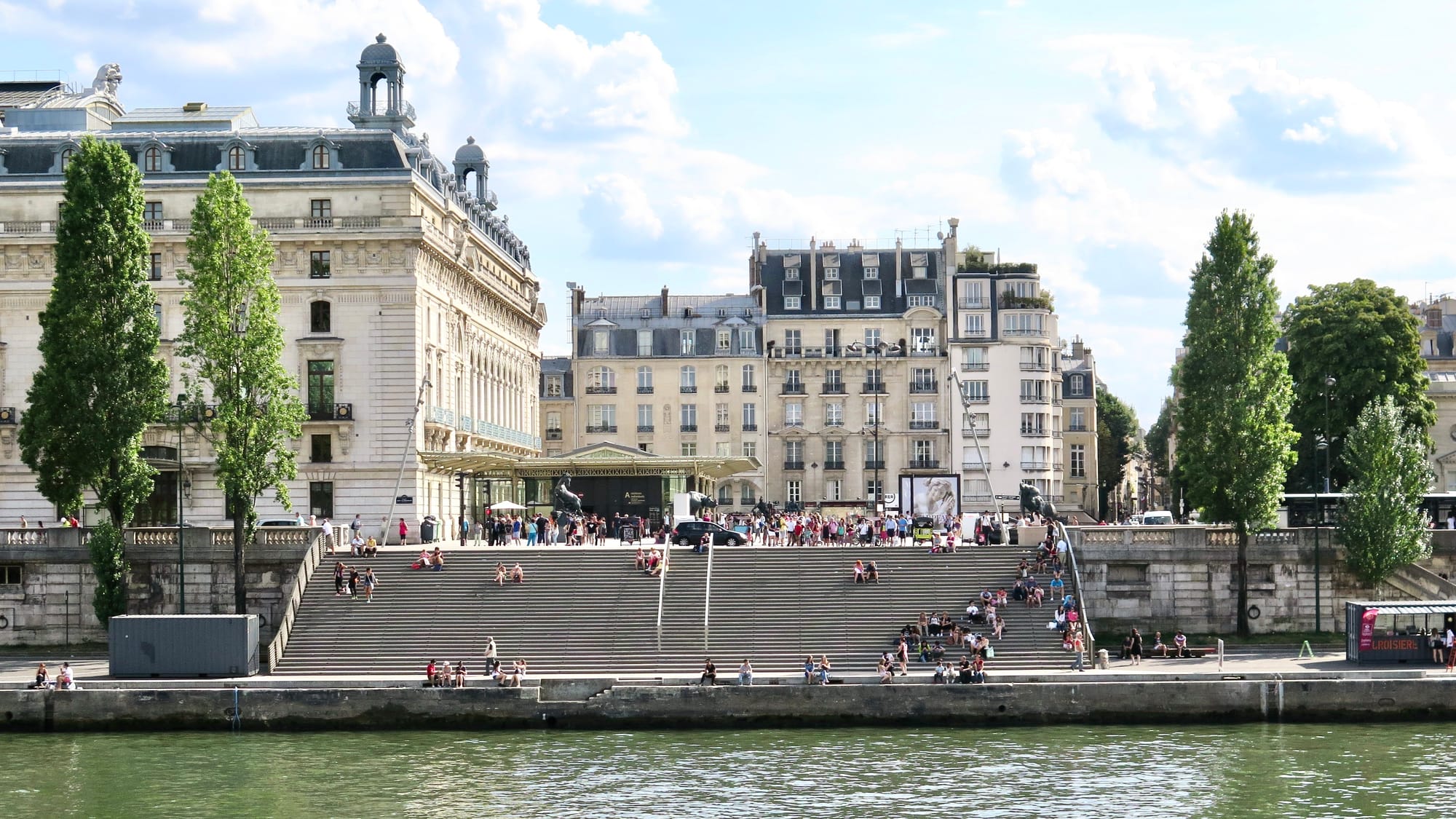
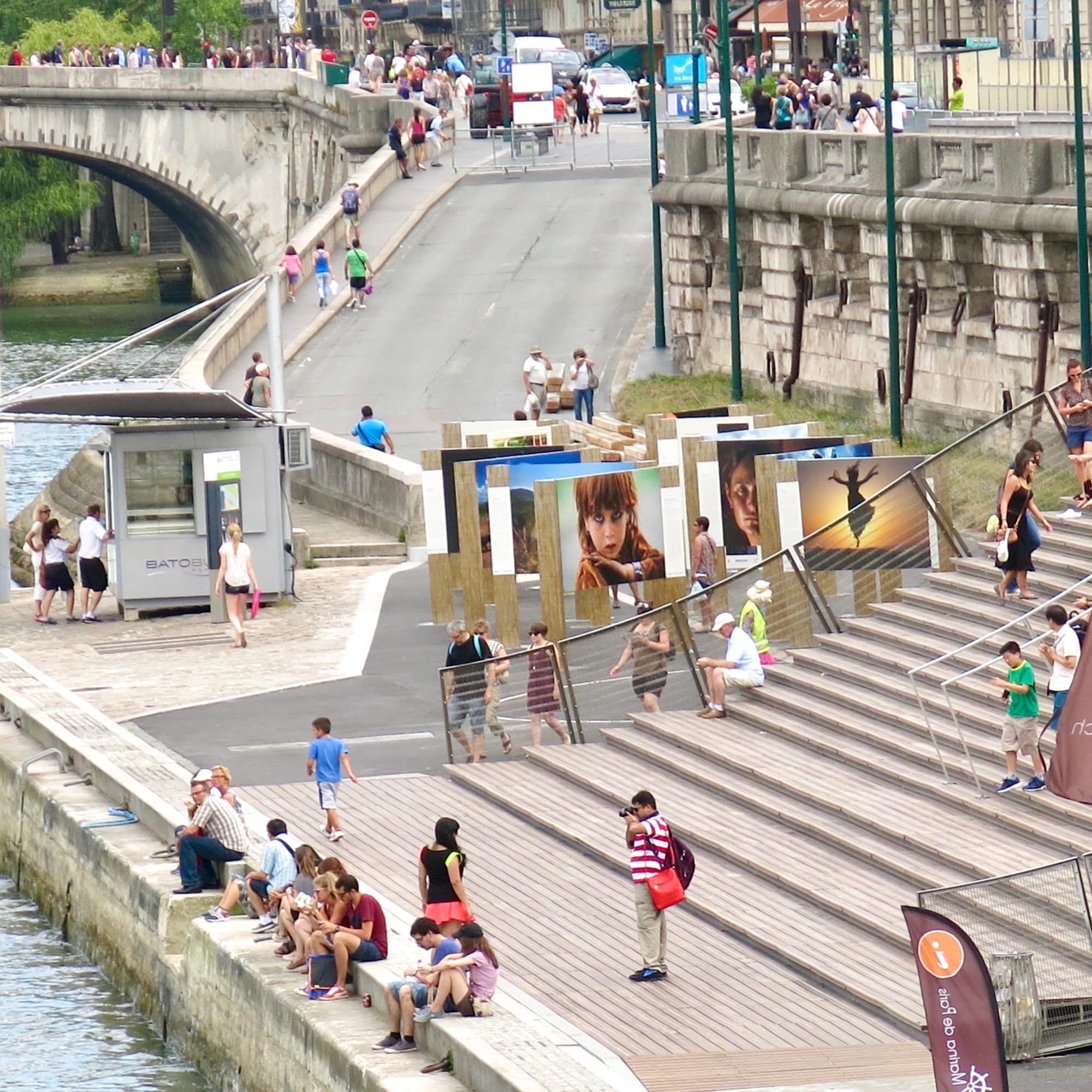
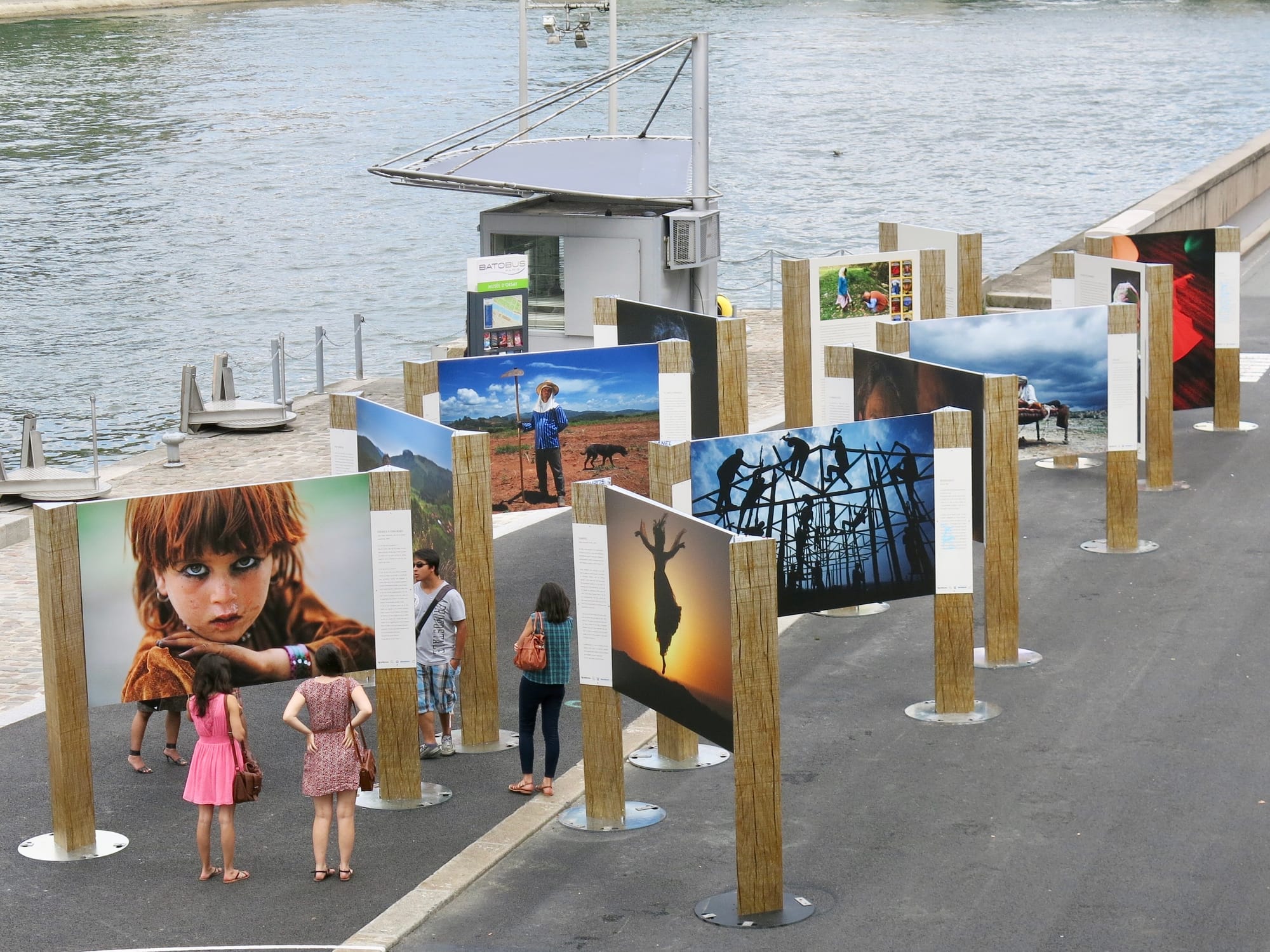
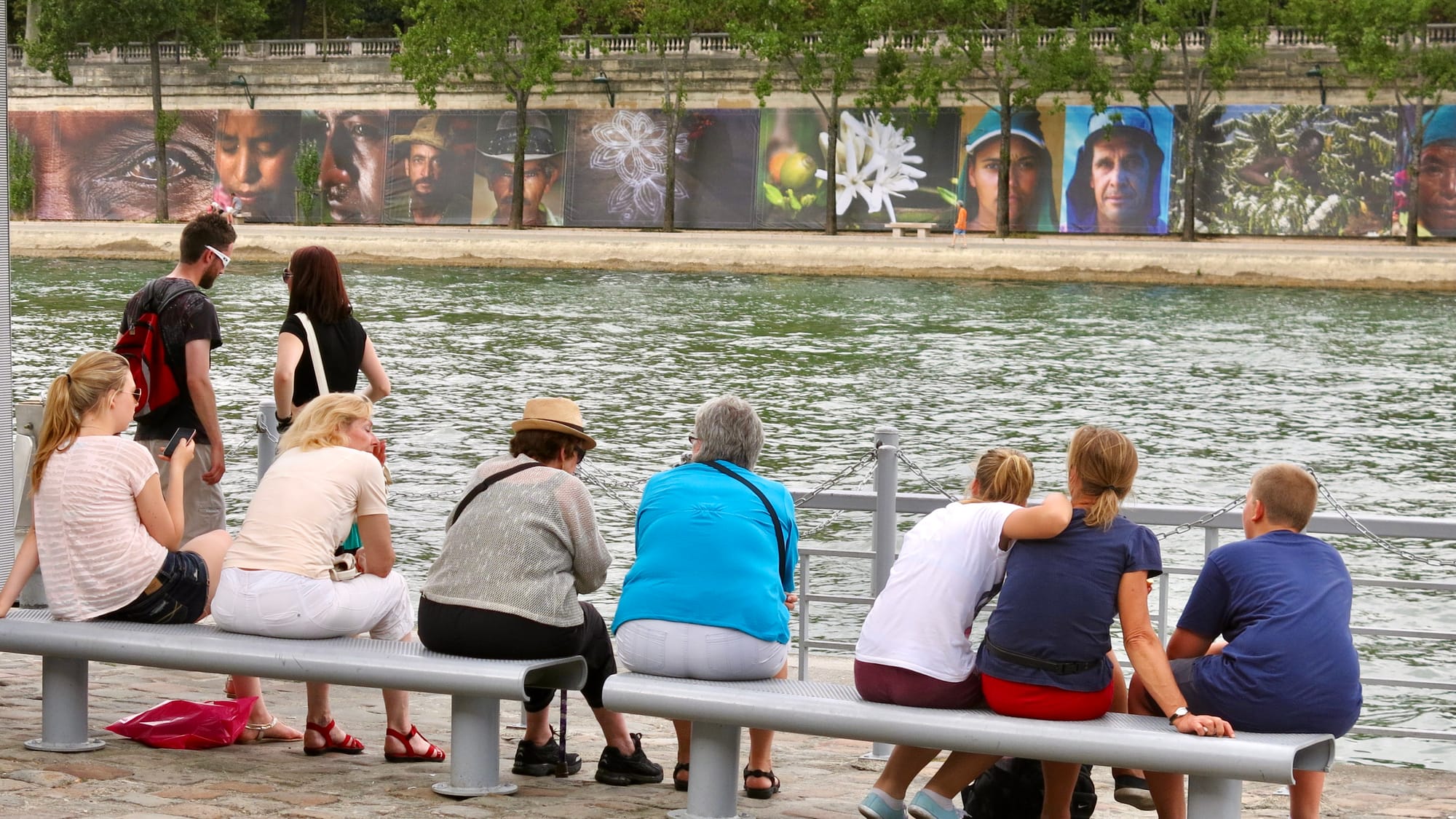
The Musee d'Orsay is unique because of its location along the water. It makes the most of this positioning by interacting with the heavy foot traffic in the area through outdoor art installations and programming. Doing so shares the arts with the public beyond the walls of the museum.
6) Architecture That Focuses on Beauty and Culture, Not Height and Modernity
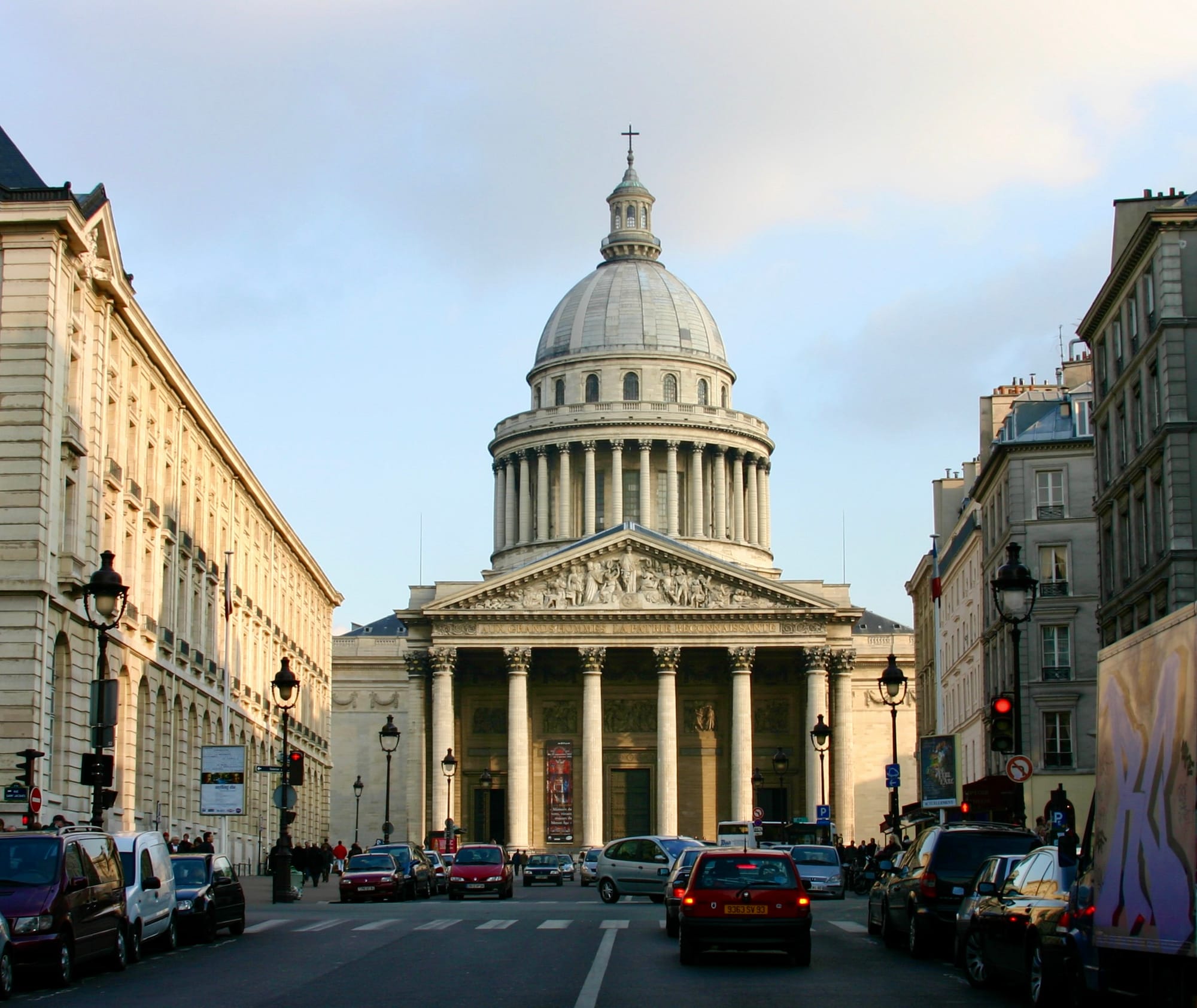
Central Paris experimented with skyscrapers about 50 years ago with its Montparnasse tower. The dull building was so universally hated by Parisians that they stopped with the skyscraper experiment then and there.
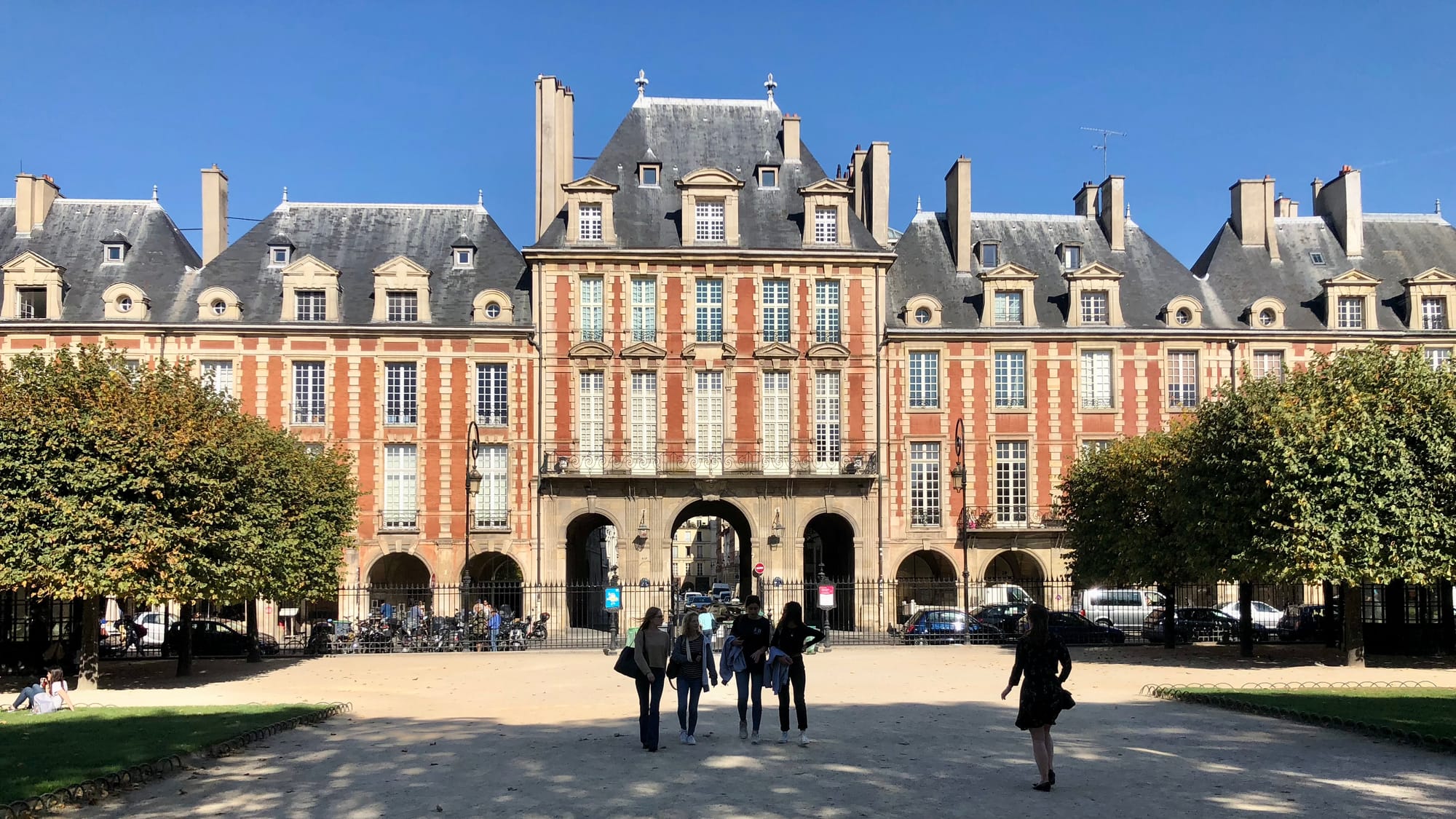
Rather than fill the skyline with eyesores for the sake of growth and change, Parisians decided to preserve the aesthetic value of the mid-rise blue-roofed urban landscape that people love and treasure, limiting development height in the center to 37 meters. This has given the city a wonderful visual harmony and has also allowed its streets to remain full of sunlight and airflow, unobstructed by massive towers as in many other places.
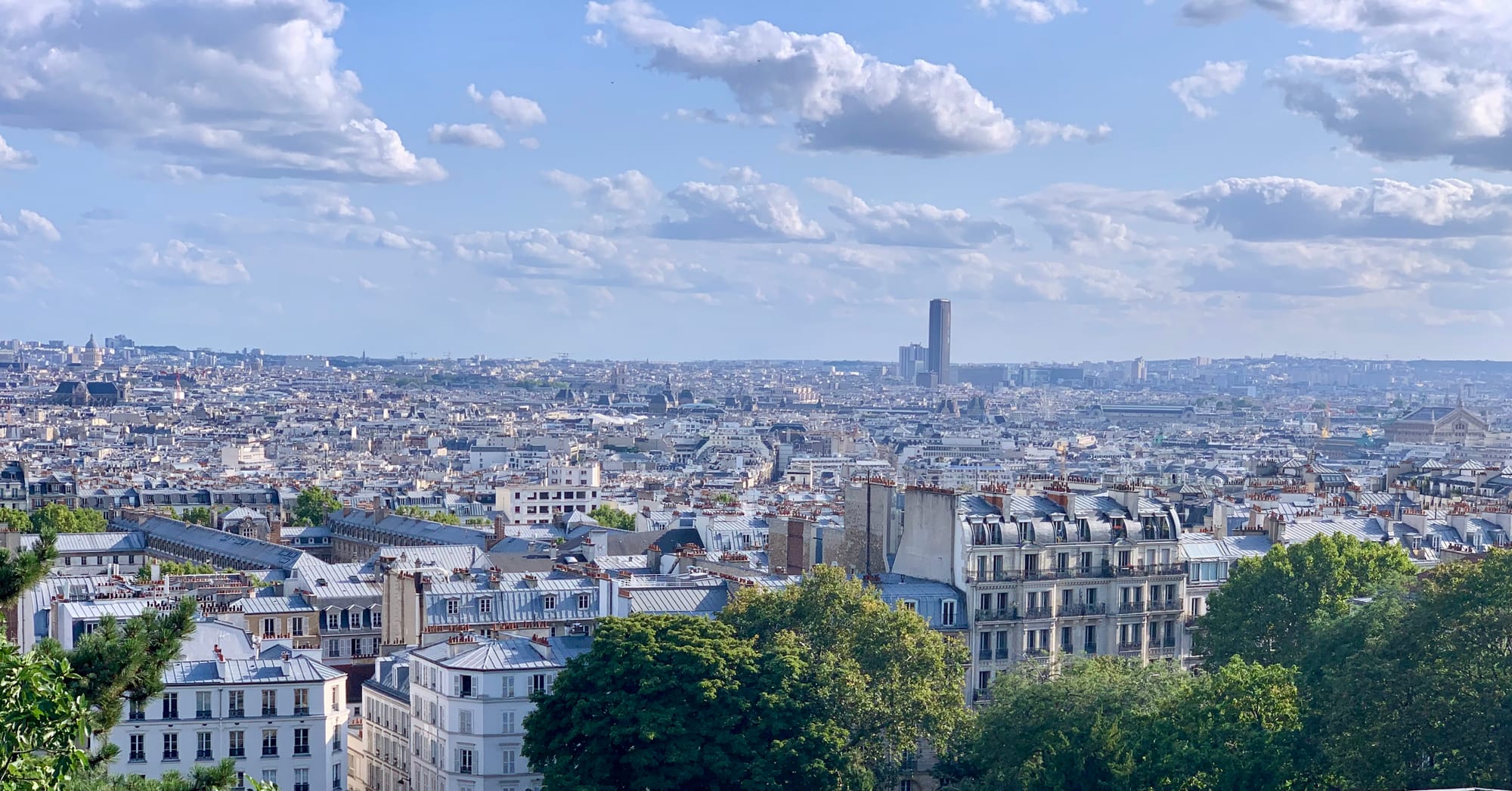
This isn't to say that Paris did away with skyscrapers completely. In the modern part of the city, La Défense, skyscrapers abound and offer a very different kind of aesthetic for those who value sleek, modern architecture. However, it is the central, classic neighborhoods of Paris that are the most popular, not the kingdom of office towers to the west. Because while there are glass and metal towers everywhere in the world, Haussmann buildings abound only in Paris.
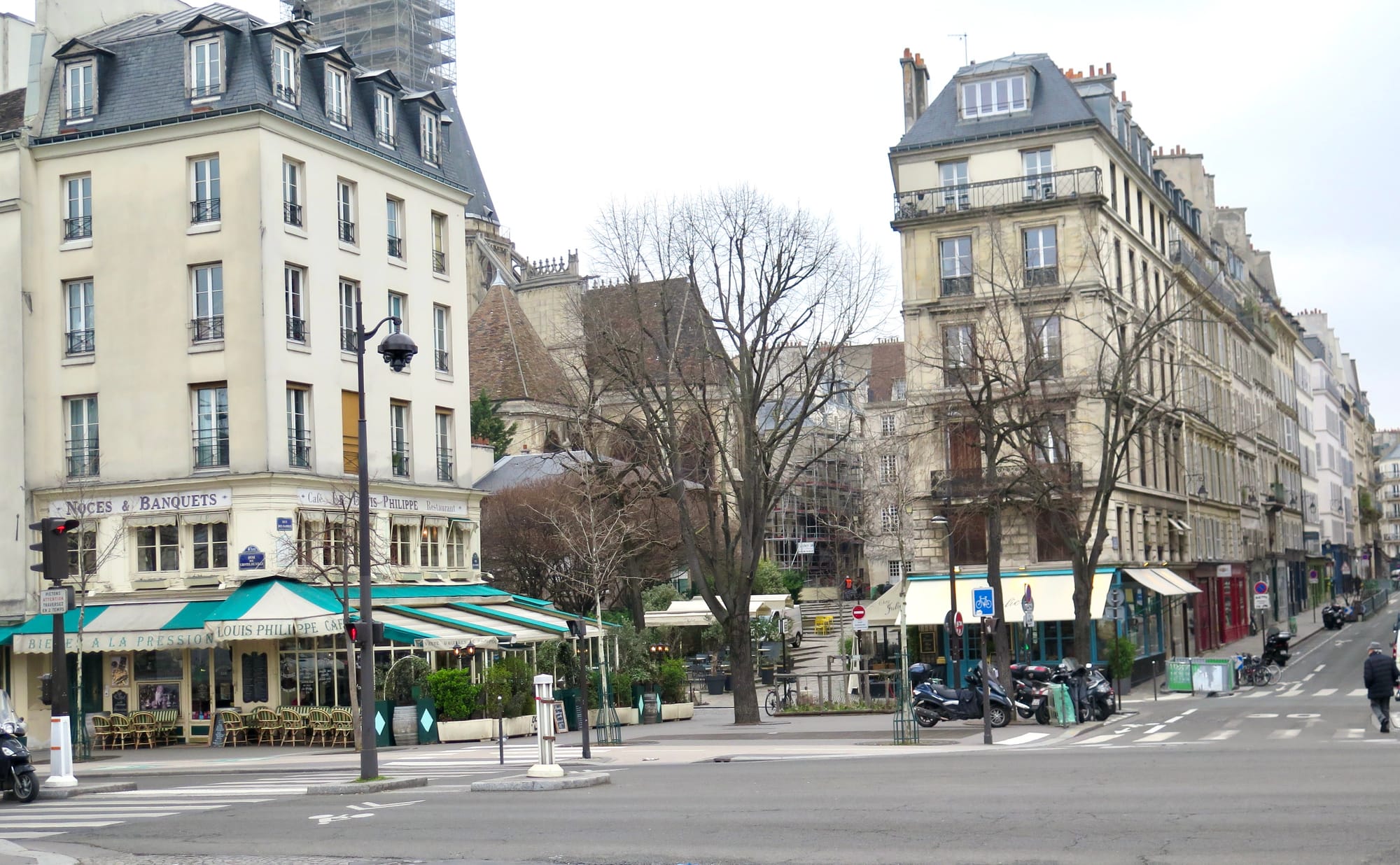
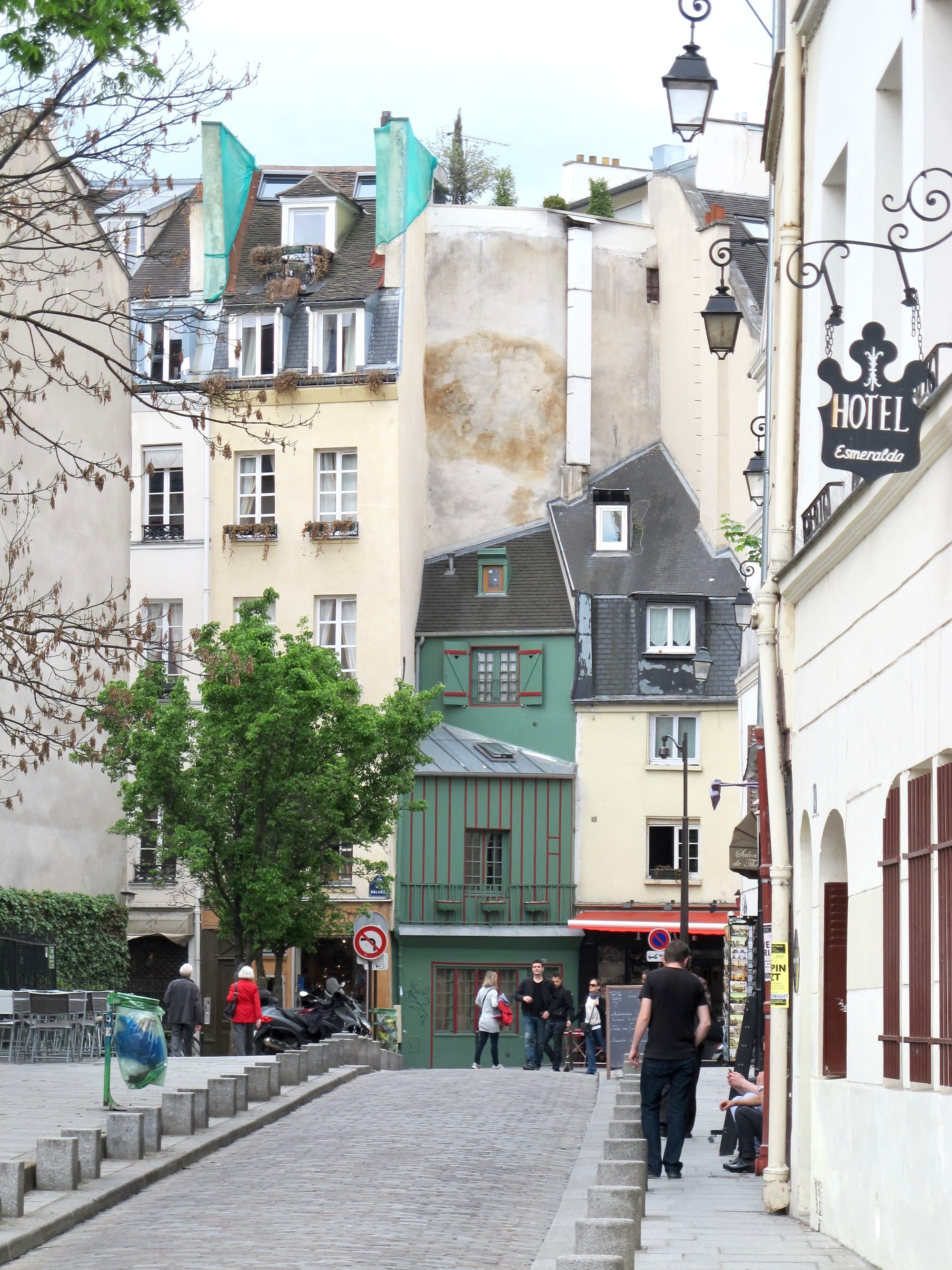
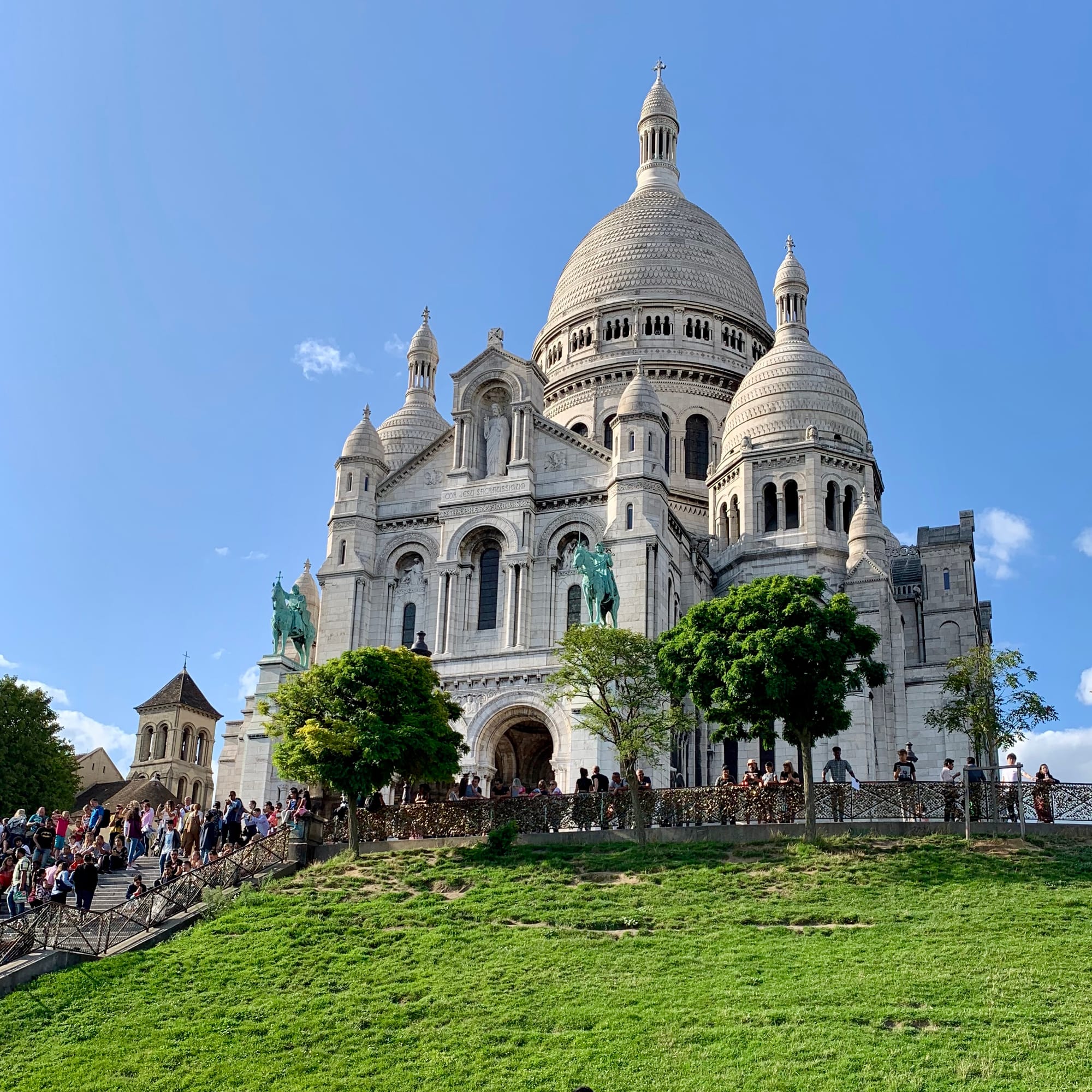
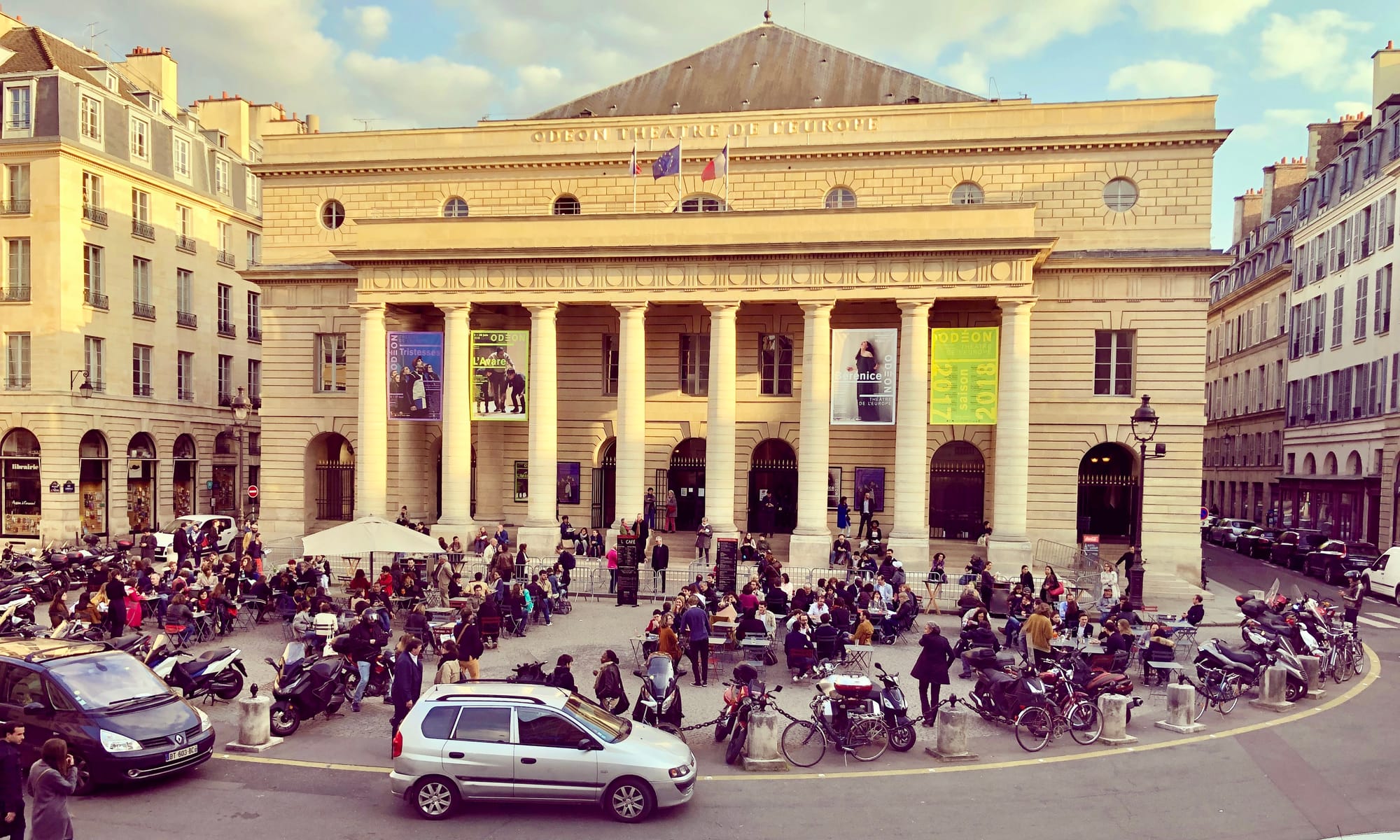
All throughout the city, spectacular feats of architecture create moments of awe and inspiration, beautifully punctuating the streetscape. What's more, the main boulevards are often designed to guide people to these iconic constructions, making it so that each stroll culminates in an exceptional cultural landmark.
7) Governance at the Local, or Arrondissment, Level
While the governance of public spaces is often top-down in big cities and feels distanced and impersonal, Paris is giving more and more power to its residents to decide what their neighborhoods look and feel like. Residents are treated as active participants in local initiatives. They are involved in the planning for local greening, beautification, street furniture and micro-mobility projects. They also have access to a “participatory budget” of 75 million euros to vote on and use for crowdsourced efforts in their neighborhoods.
Paris is taking strides to create more community spaces for its residents. For example, a fantastic initiative in neighborhoods has been making schoolyards open to the public outside school hours. This is part of Paris's mission to prepare for the impacts of climate change and rising temperatures. Having identified heat waves as a key threat to public health and urban greenery as too scarce to fight against them, Paris has implemented Project Oasis to turn schoolyards into green oases where communities can find respite in the heat.
Policy Initiatives that are Transforming Paris
There are many policy initiatives behind Paris' transformation over the last 20 years. With the goal of creating a sustainable, safer, cleaner, and more enjoyable city where people can thrive, be healthy, and feel joyful, some of the programs Paris leadership has implemented include the following:
- Major Square Transformations: Several iconic Parisian squares, including the Place de la République and Place de la Bastille, were reconfigured to reduce car traffic, transforming former large roundabouts into bustling, large pedestrian areas.
- Recovery of Public Space: more than 100 hectares of public space will be returned to pedestrians by 2030 in order to calm the city. Greenery will be gradually introduced into these reclaimed areas. By 2026, the city plans to have at least one major pedestrian hub in each arrondissement.
- "Paris Respire" (Paris Breathes) Zones: The implementation of car-free zones on Sundays and public holidays in certain areas of the capital to improve air quality.
- Expansion of Cycling Infrastructure: Over 400 kilometers of new and protected bicycle lanes have been created across the city, with over 1000 kilometers of total bike lanes, aiming for a "revolution for cyclists" and significantly increasing bike use. There is also a goal to create 130,000 new parking spaces for bicycles by 2026.
- Massive Parking Removal: The city is currently executing a plan to remove roughly half of its 140,000 on-street parking spaces (approximately 60,000–70,000 spots) to make room for trees, playgrounds, and bike lanes.
- Temporary Terraces: During the COVID-19 pandemic, cafes and bars were allowed to use on-street parking spaces for temporary terraces; many of these have been made permanent, further reclaiming public space from cars.
- Champs-Élysées Makeover: Plans are underway to transform the famous avenue into an "extraordinary garden" by halving car traffic, adding green spaces, and widening pedestrian areas.
- Ring Road Transformation: Paris plans to transform the ring road that surrounds it into a green, traffic-calmed urban boulevard by 2030.
Outcome - A Fantastic City for People
Paris is becoming a standout example of a human-centered city because it is intentionally putting people – their wellbeing, happiness, health, safety, and connection – at the forefront of decision-making processes as they build toward the future. When thinking about how to improve the city, Paris leadership prioritizes changes that will benefit residents and improve their quality of life. This is a far cry from many other cities' decision-making processes over the last few decades which seem to have focused more on how to make the city easier and more comfortable to drive through and park in.
When cars become the main priority instead of humans, that is no longer a city where people can thrive. To turn things around and nurture a healthy and happy populace, you have to do what we in the Placemaking Movement have been preaching for decades: "turn everything upside down to get it right side up again, to go from inadequate to extraordinary."
People want beauty, comfort, convenience, joy, and connection. They want to feel happy, healthy, relaxed, and safe. These are logical, obvious concepts and yet hardly any city today is getting it right. Paris is!
"The Paris of tomorrow is the stuff of dreams. We'll be able to breathe even on the edge of the ring road, live and eat well regardless of our means, attend schools protected from extreme temperatures and free from all chemical pollutants. Everyone will be able to refresh themselves in the Seine and in new green spaces, escape to urban forests, laugh and play in children's streets. This is also our responsibility toward future generations. For we are building a greener, more united, more sustainable and more livable capital to pass on to them. More than ever, Paris will be a city where we take care for one another and for all living ecosystems. Let's build tomorrow's Paris together." – Anne Hidalgo, Paris Mayor, in the introduction of the 2024-2030 Paris Climate Action Plan
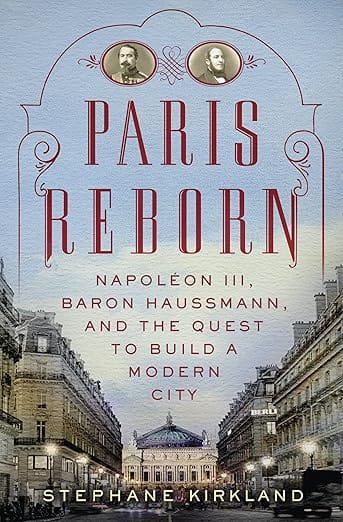
Response by the author of Paris Reborn, urbanist and architect Stephane Kirkland, who actively works on making places that work for living beings of all sorts in Paris:
"This is absolutely accurate. Your central point is the key insight: Paris changed the rules in ways people assumed was impossible, by questioning the idea that getting cars around quickly by following the rules of traffic management is the main purpose of public space. They did that in a deliberate and systematic way. The result is that today it is clear to "drivers" that they are not the cornerstone of the attention of public authorities. Sometimes they have to slow down. They have to be careful of pedestrians and bikes coming from multiple directions, sometimes there are places that are inaccessible to them, parking is very limited.
All of this is a change of paradigm that comes from breaking the rule that comfort and practicality of the motorist is the number one public policy concern. I think that was embodied by something the city talked about a lot for a while, which is the mismatch between the number of trips made by car, which is not all that high, and the outsized proportion of public space that is dedicated to cars. That was a big underpinning of this idea of changing the rules. If you want to talk about things from the last few years, the city has been focused a lot on the pedestrianization of streets around schools. Here is their page on the program. I think you cover all the other main aspects. And your photos are endlessly a delight to look at!"
Get Paris Reborn by Stephen Kirkland here.
Who We Are - A Global Movement Based in Brooklyn, New York
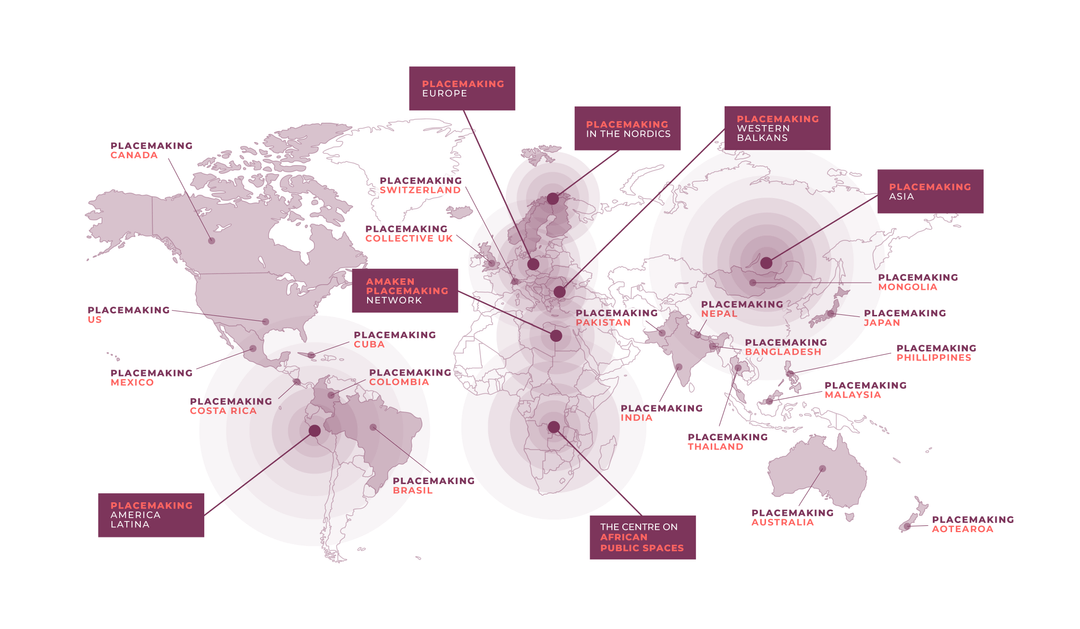
We are part of a growing group of community activists who have spent over 50 years building a "Placemaking Movement" globally that is now in 30+ countries around the world.
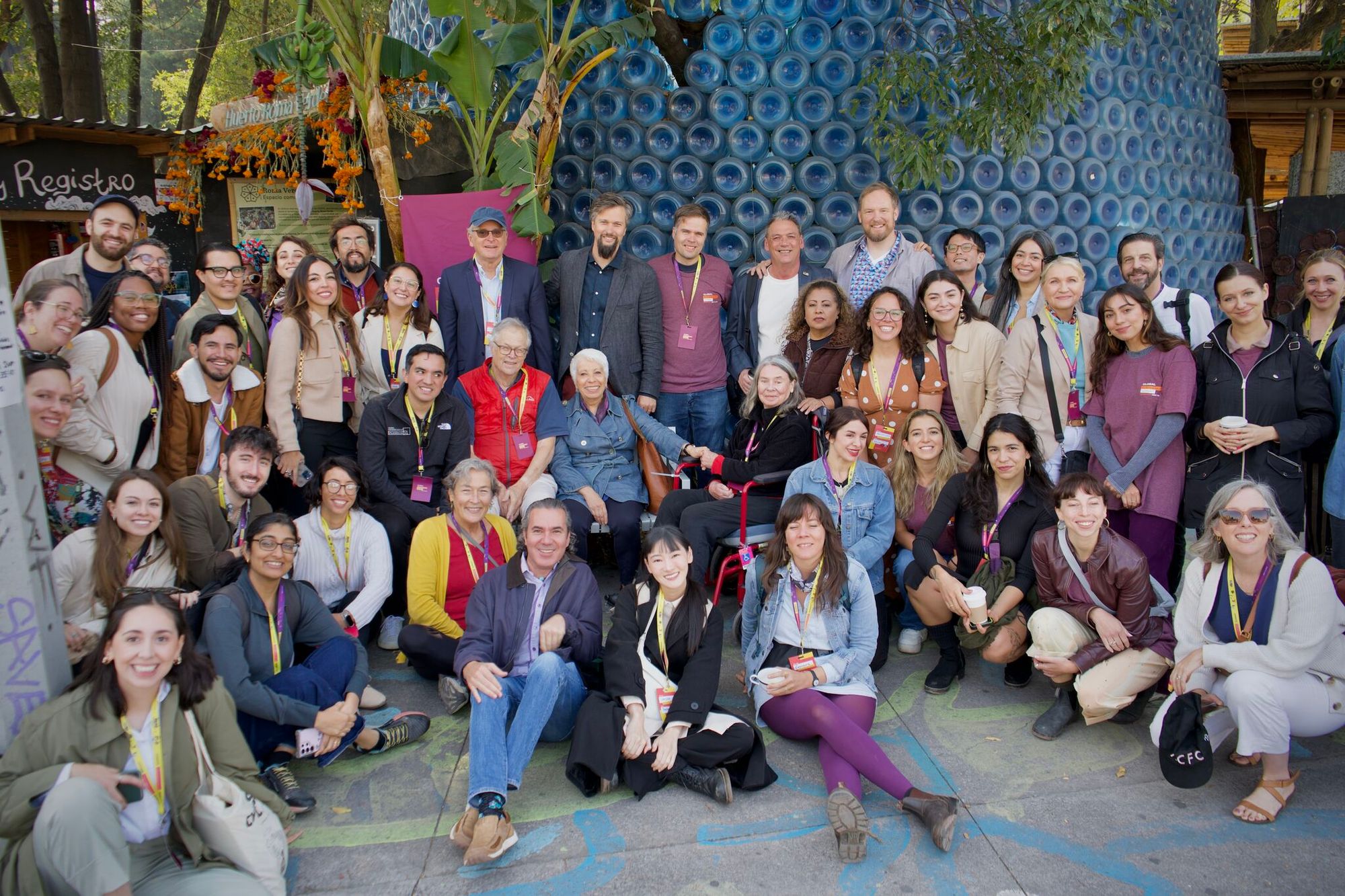
Meeting in Mexico City 2023 - Huerto Roma Verde
PlacemakingX/Social Life Project Team
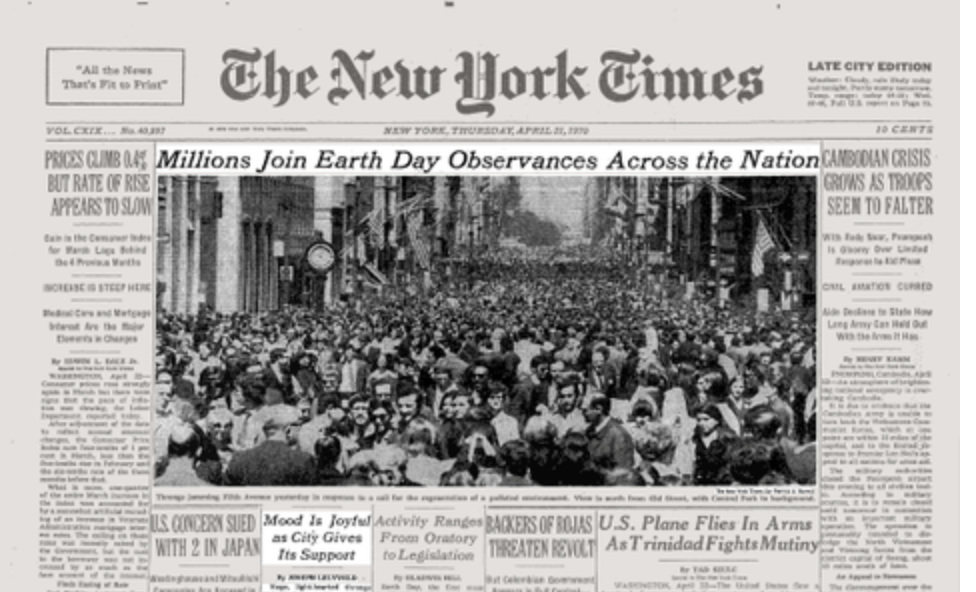
The Birth of the Environmental Movement - Earth Day in April 1970
"The radical energy of placemaking is that the authority to catalyze change comes not from credentials, but rather from proximity, lived experience, and a deep commitment to place. Placemaking knows no party, but most importantly, placemaking comes from a place of love—a combination of affection and respect that we believe precedes other aspects of expertise or power." – Tracy Hadden Loh and Hanna Love
Brookings Metro's Anne T. and Robert M. Bass Center for Transformative Placemaking