
Introduction
For the nearly 50 years we have lived in Brooklyn, the waterfront has not changed in meaningful ways. But Brooklyn is a very different city today than what it was 50 years ago. It has become the center of global creativity – a culture-laden hub with a multitude of influences from around the world. The key public places that define it, such as the waterfront, should reflect that. Unfortunately, Brooklyn has not successfully created a network of public spaces that reflect its essence, its strengths, and what it hopes to become.
Integrating and showcasing the unique perspectives that define Brooklyn by developing great public spaces which can draw them out – such as a standout waterfront and thriving main streets – will allow Brooklyn to truly shine and become a world class city. It can become a "city of the future" – an ode to multiculturalism, vibrant public life, and diverse communities. Everyone from residents to businesses to leadership stands to benefit. But to get there, we need to make some significant changes.
Over the past half century, we have built and led the global Placemaking Movement with the goal of creating amazing public places where communities can thrive. In doing so, we have observed, and in many cases helped shape, public spaces such as waterfronts that have redefined or dramatically influenced the character and experience of cities. We have worked on well over 100 waterfronts, on nearly every continent, leading discussions, drawing up revitalization plans, and serving on juries for some of the biggest developments. The knowledge we have acquired is a deep well of insight on what makes public spaces great.
By observing how the best public places work and helping to improve underperforming ones through place-based strategies, we have developed a set of perspectives, skills, and resources that can help public places become centers of life and activity, reflecting their cities' core values. Our goal has always been to do so in a way where local improvisation and experimentation are at the forefront so that these places can reflect their people and nurture community life.
The NYC waterfront
Many of the best waterfronts are grounded in a rich history, and are therefore naturally popular landmarks and sites of interest. They are also very dynamic places that change over the course of the year, requiring seasonal changes, which makes them great settings for temporary experimental activities with improvisation at their foundation. By embracing the waterfront's key role to the character of the city and its versatile nature that lends itself to programming, it can (and often does) become the principal public place and heart of public life in the city.
Unfortunately, this is not the case in NYC, not only due to recent developments, but because of a long-standing lack of attention to its waterfronts as a whole. It makes no sense that one of the world's greatest coastal cities would have waterfronts that are so utterly lackluster, and yet here we are. Nobody commends the NYC waterfronts for being great destinations. We believe it's time for that to change.
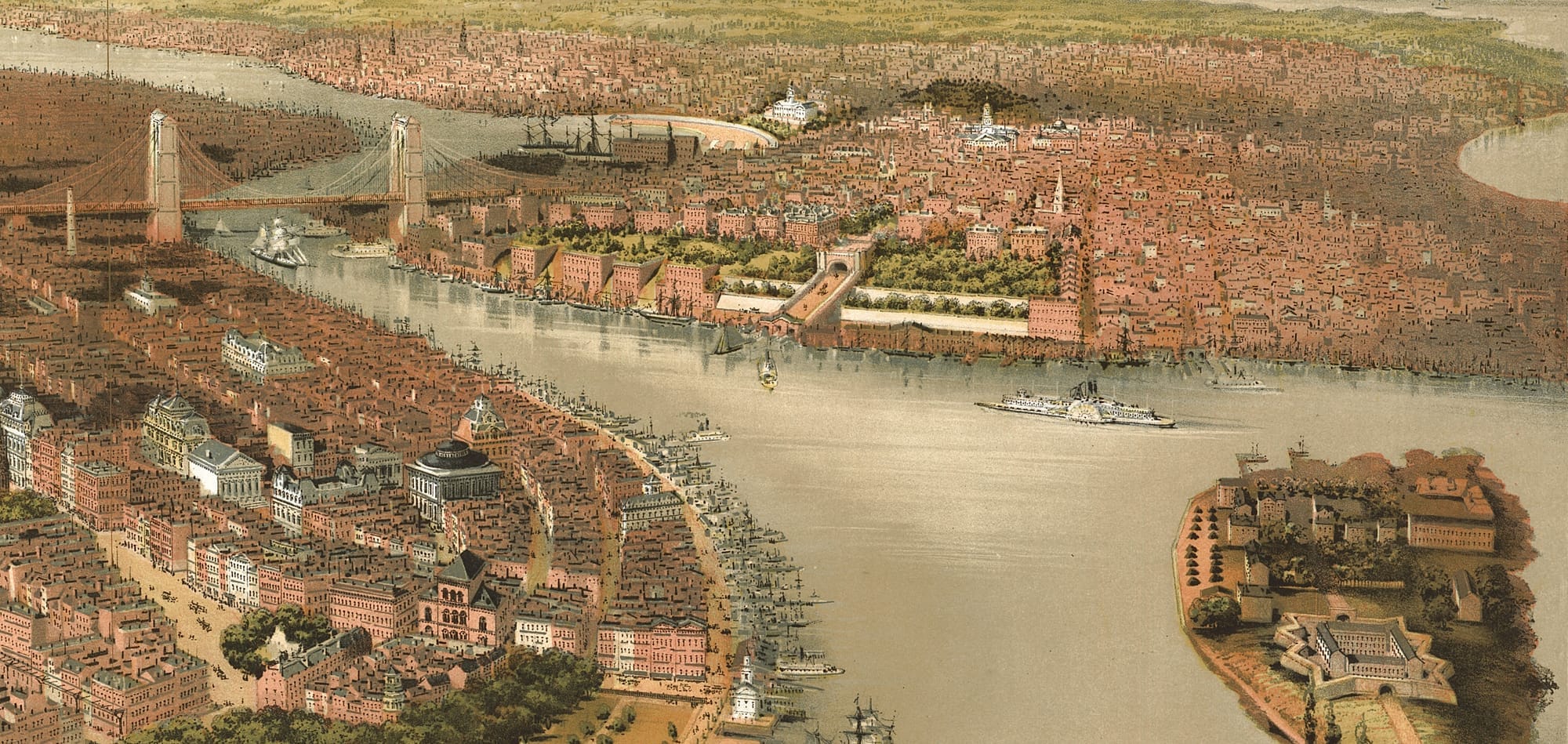
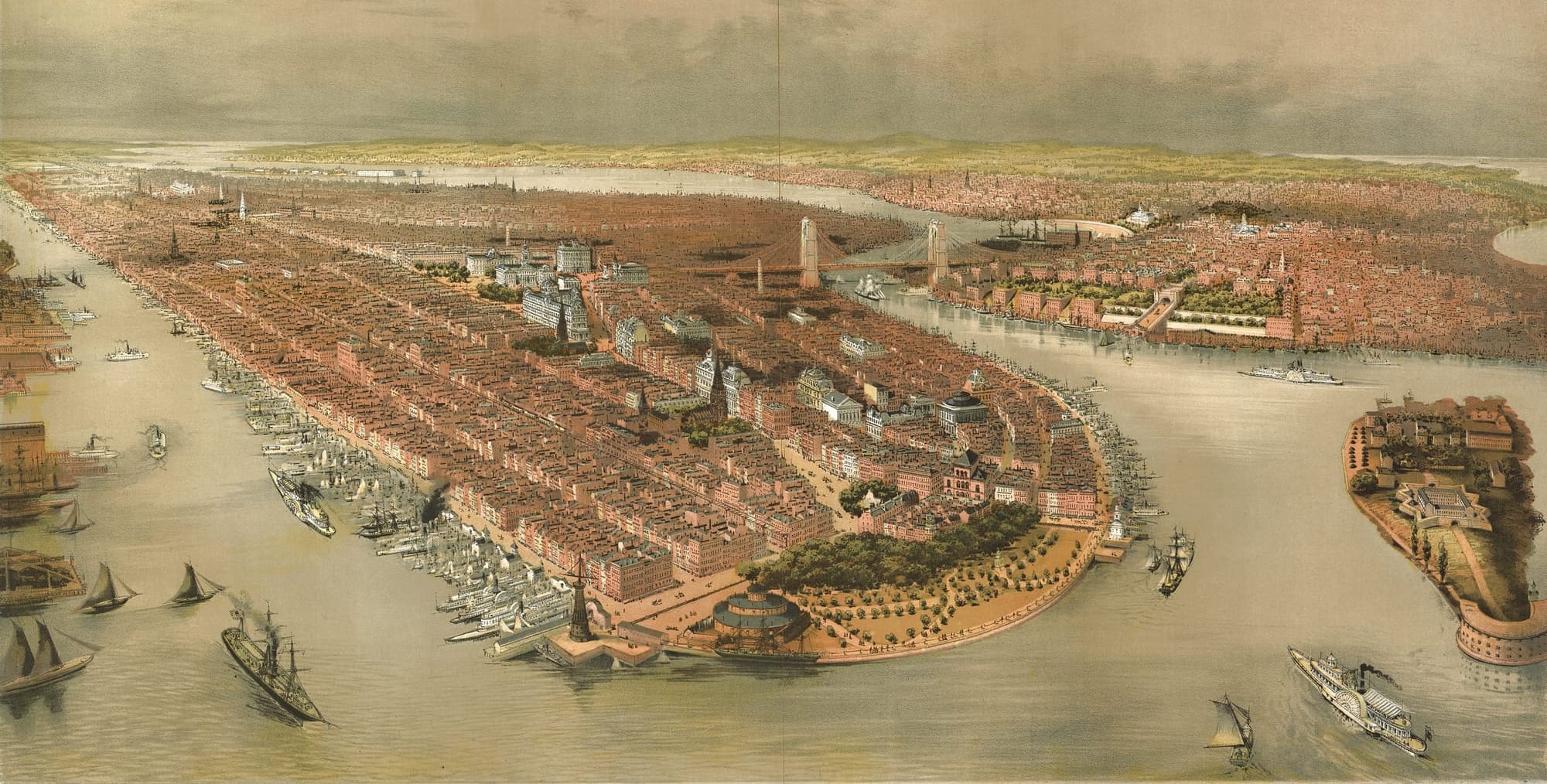
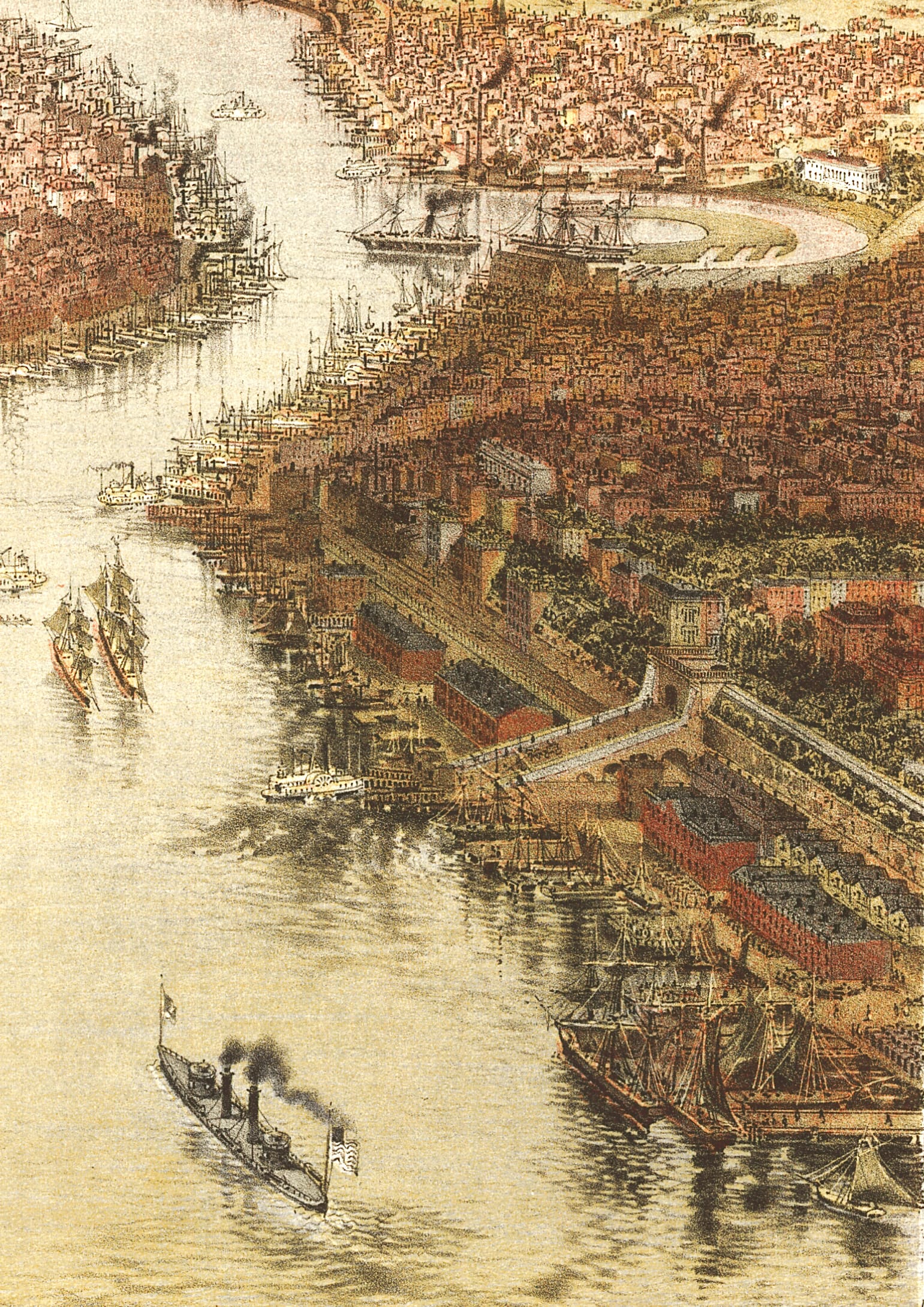
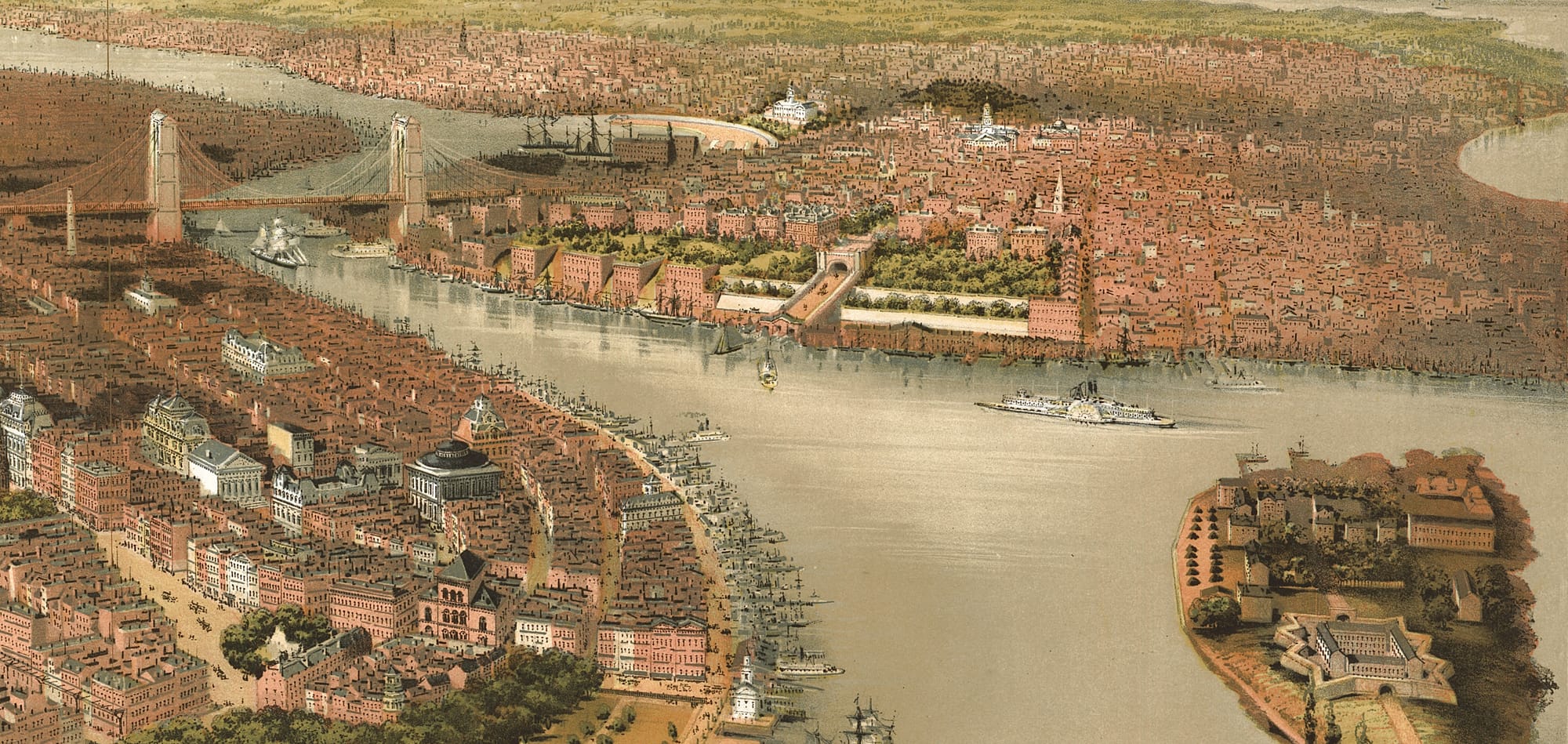
New York City had a historically grand and dynamic waterfront, starting in 1878 when the Brooklyn Bridge was built. As the automobile became a focus of modern life, it fundamentally reshaped the waterfront into a highway system circling Manhattan and much of Brooklyn. The waterfront's role in the experience of the surrounding communities was reduced as the highway disconnected the water from the people. To this day, you can sense the absence of vibrancy at the waterfront while other great cities like Paris have nurtured it to the benefit of all.
In the process of rebuilding the waterfront, the idea of a major greenway along the water became the underlying foundation of the plan. For larger public developments, greening and landscaping, sometime called landscape urbanism, became a focus to balance out the industrial look and feel that had grown to dominate the city. However, this approach often falls flat, creating places that look serene but that offer nothing fun or interesting to experience, thus limiting visitation.
We take a different approach to improving public places. With our former organization Project for Public Spaces (PPS), we developed a place-led strategy in the late 1990s which put social life, programming, and human-centric design at the forefront of creating dynamic and sustainable developments. This approach successfully revitalized numerous public places and has thus been embraced worldwide and led to a global placemaking network. It is an approach that can work beautifully on the NYC waterfront as well.
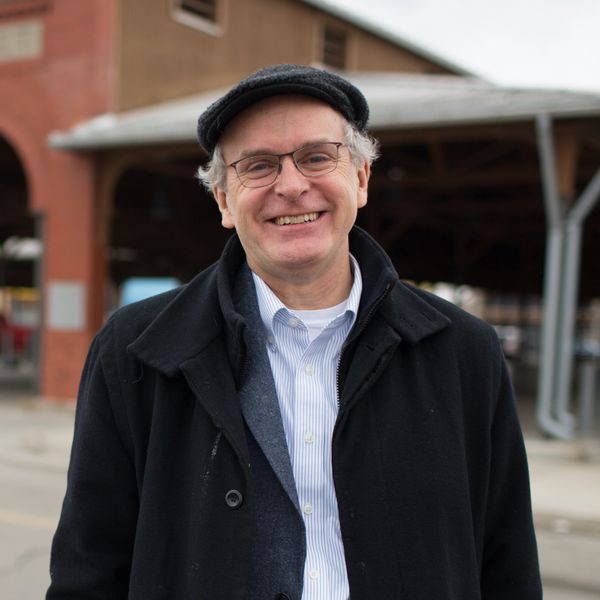
 Steve Davies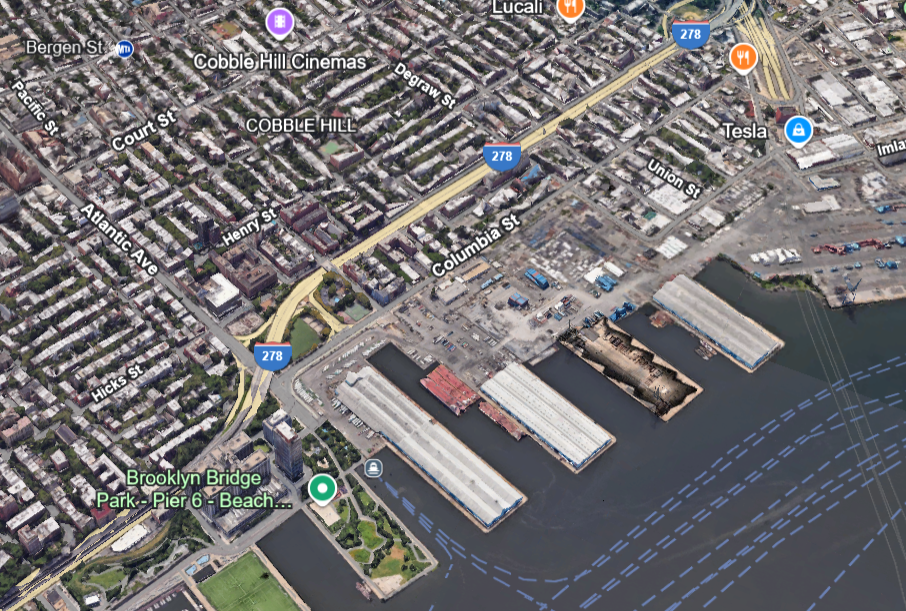
How the Brooklyn waterfront fails
With its position on the East Coast, New York City had a strong relationship to the water that was largely neglected with the rise of car culture when it began to be dedicated to traffic. Regardless, water is a fundamental component of what NYC is, and even as new technologies take over we should continue to honor that. To enter a thriving new era, we need to reconnect the city with the water via a public space that recognizes that New York's waterfront was a key part of its past and – in order for the city to stay true to itself – it should be a meaningful part of its future. Brooklyn's waterfront in particular could become one of the most incredible public places in the world. However, it is currently performing far below its potential for the following reasons:
1) Lack of amenities
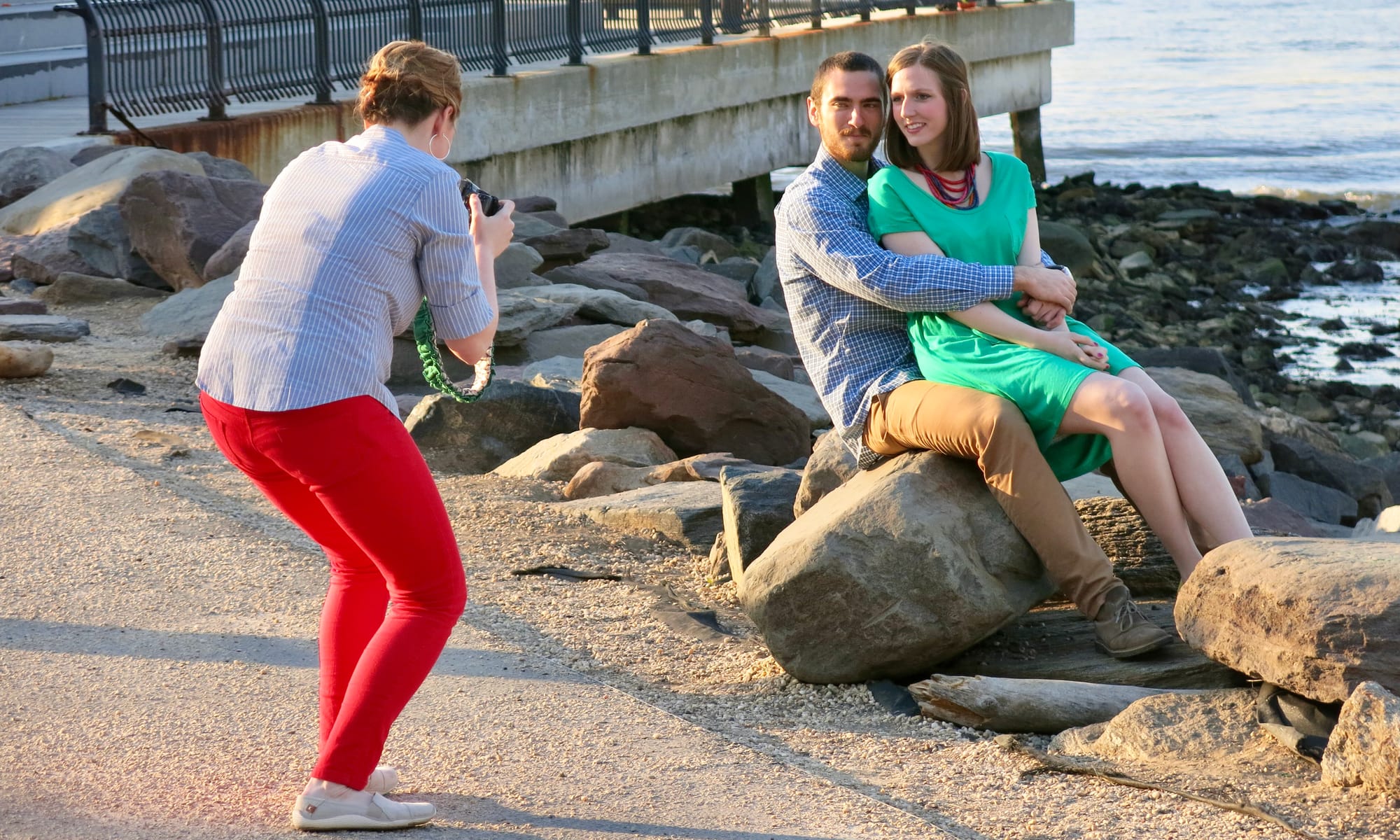
A waterfront designed to be used and enjoyed by people includes a variety of amenities that make being there comfortable and pleasant. It has benches at regular intervals, tables to sit at with friends to chat and share a meal together, shade-throwing trees for a sense of enclosure and protection from the sun, water fountains for refreshment, recreation areas for children, food and drink offerings like ice cream trucks, coffee kiosks, cafés and food vendors.
These are the kinds of things that make walking along the water pleasant and draw us back to it again and again. If they are too few or far between, the place loses its ability to attract visitation.
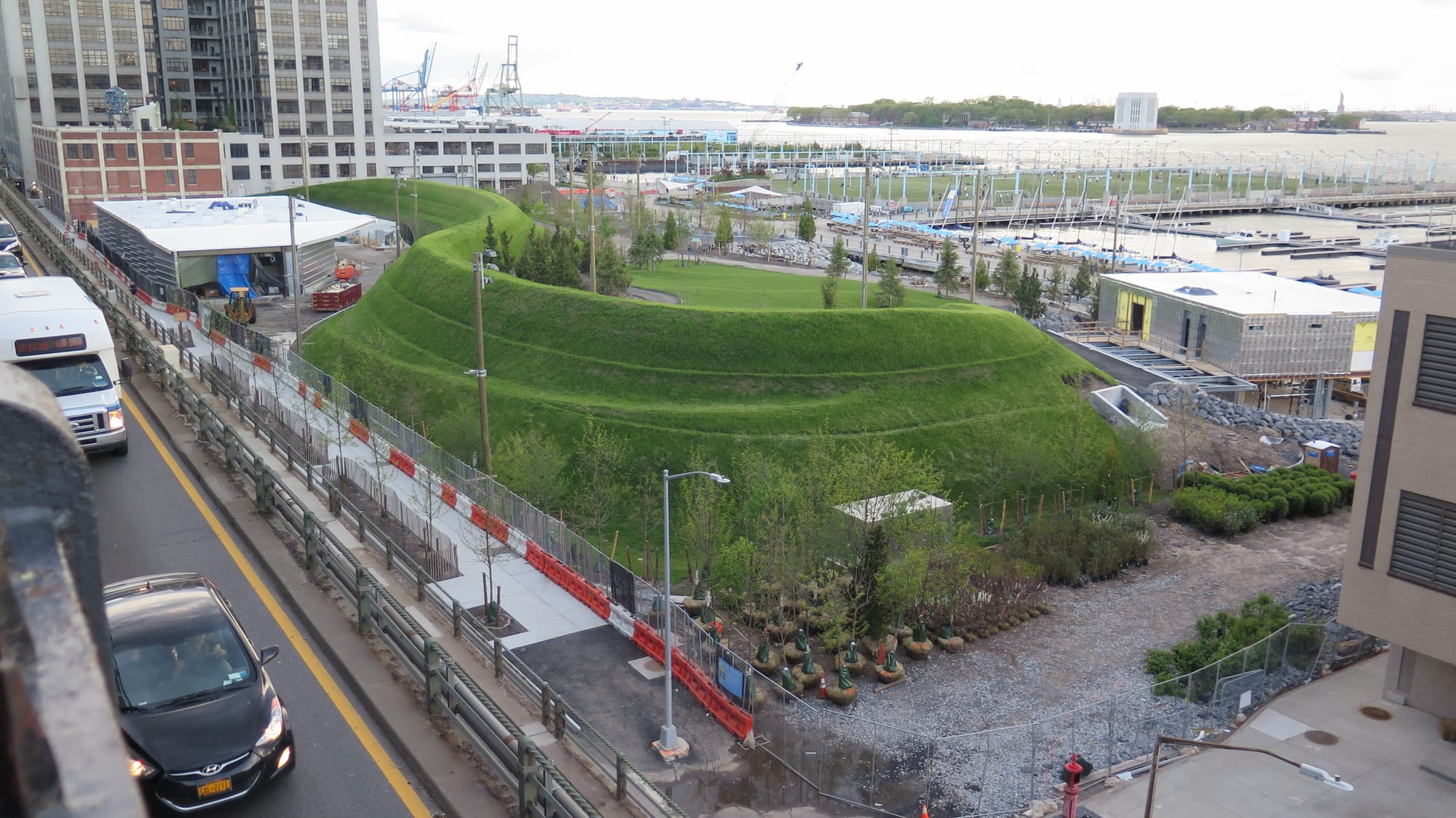
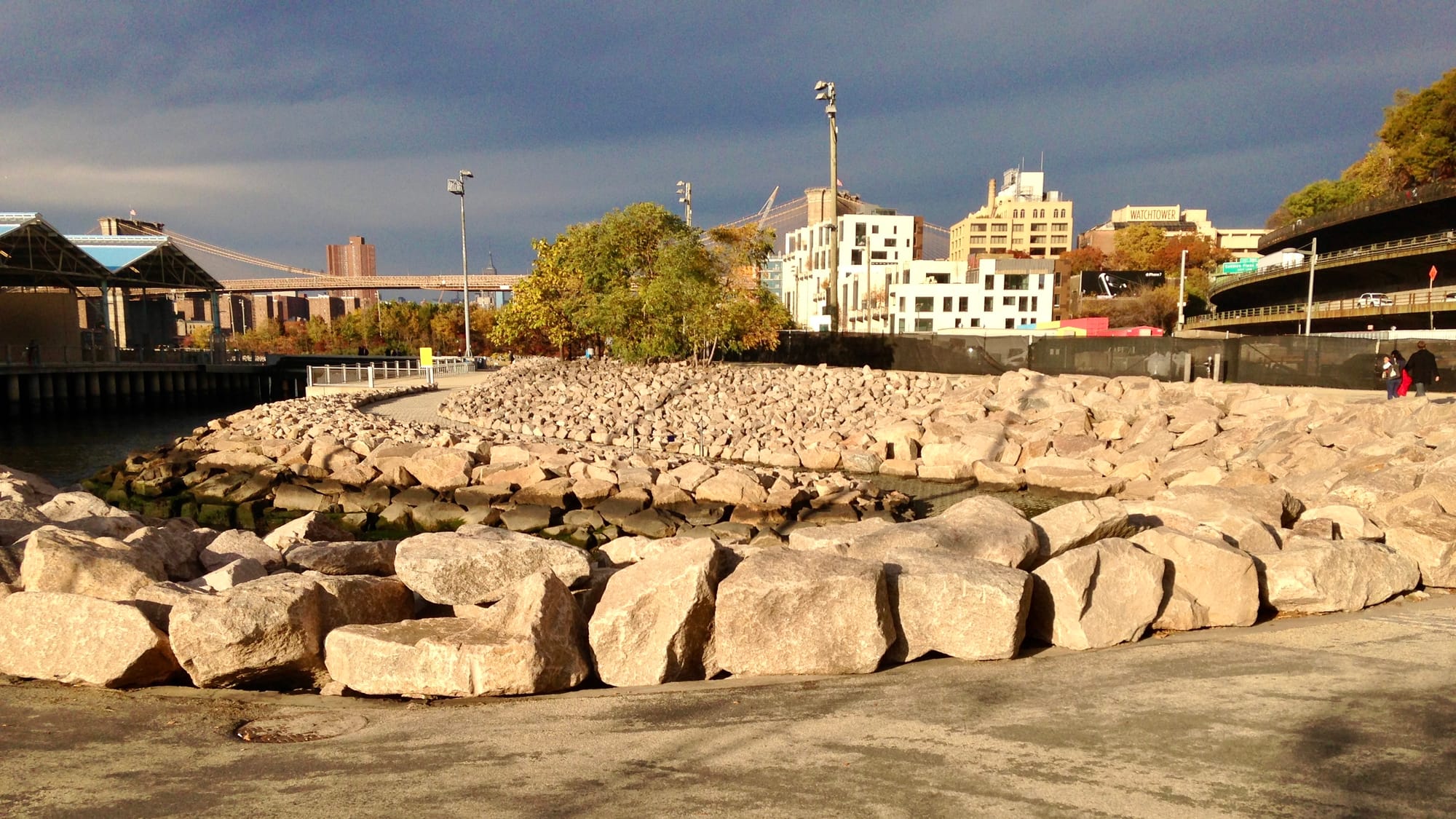
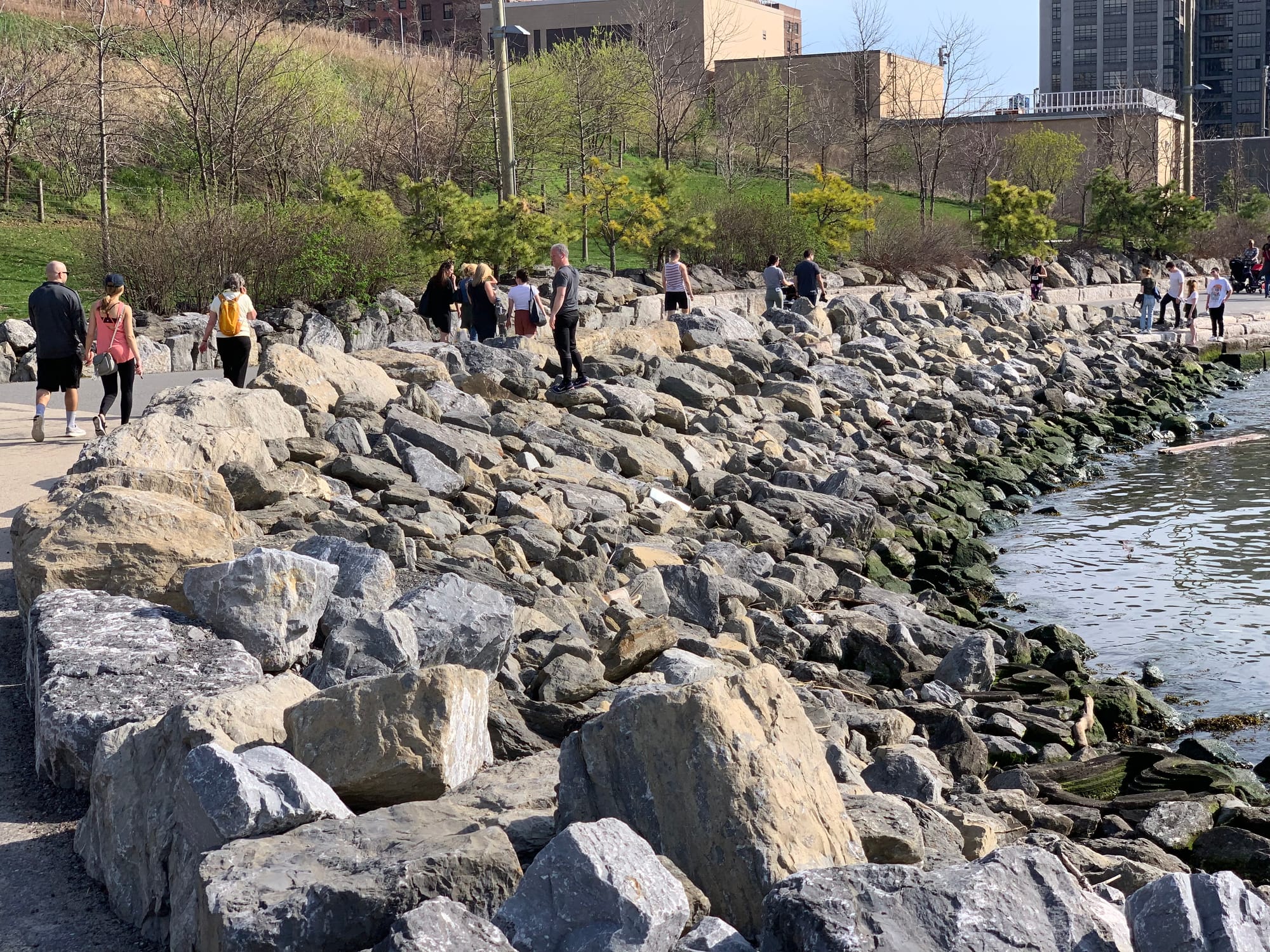
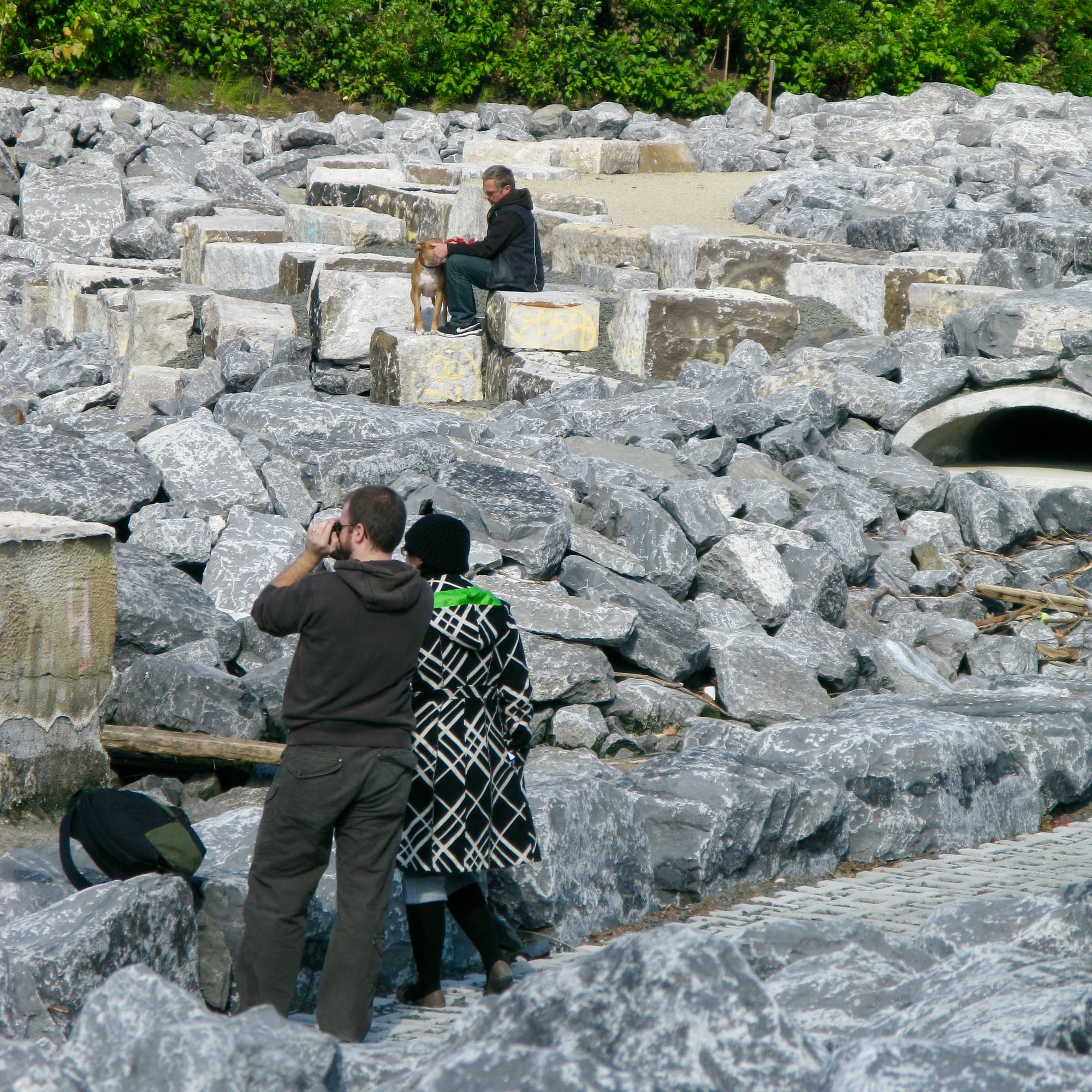
The dominant design motif at the Brooklyn waterfront is berms and rip rap. While people occasionally make an effort to interact with these uninviting features, it doesn't leave the impression that this is a place designed for people to enjoy.
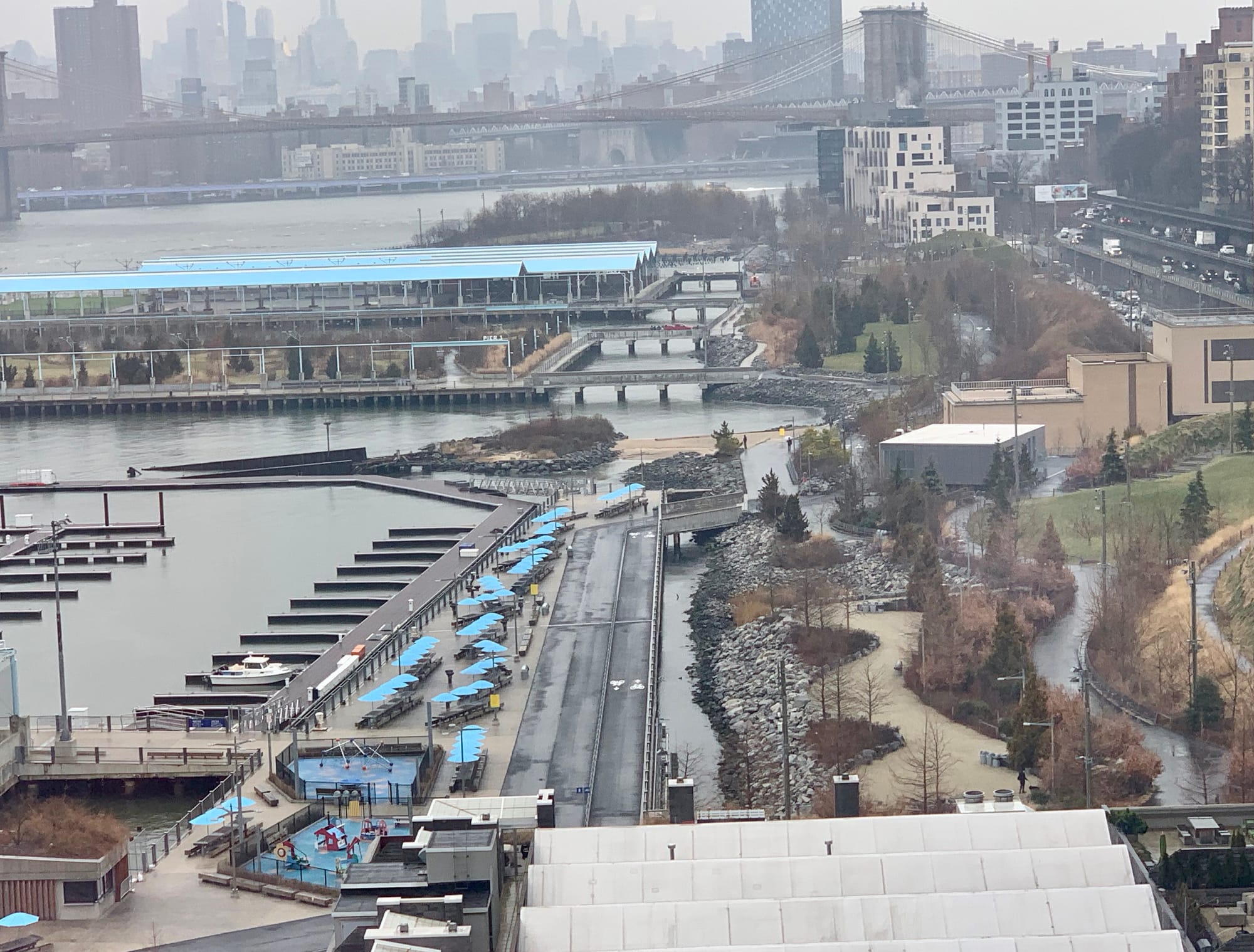
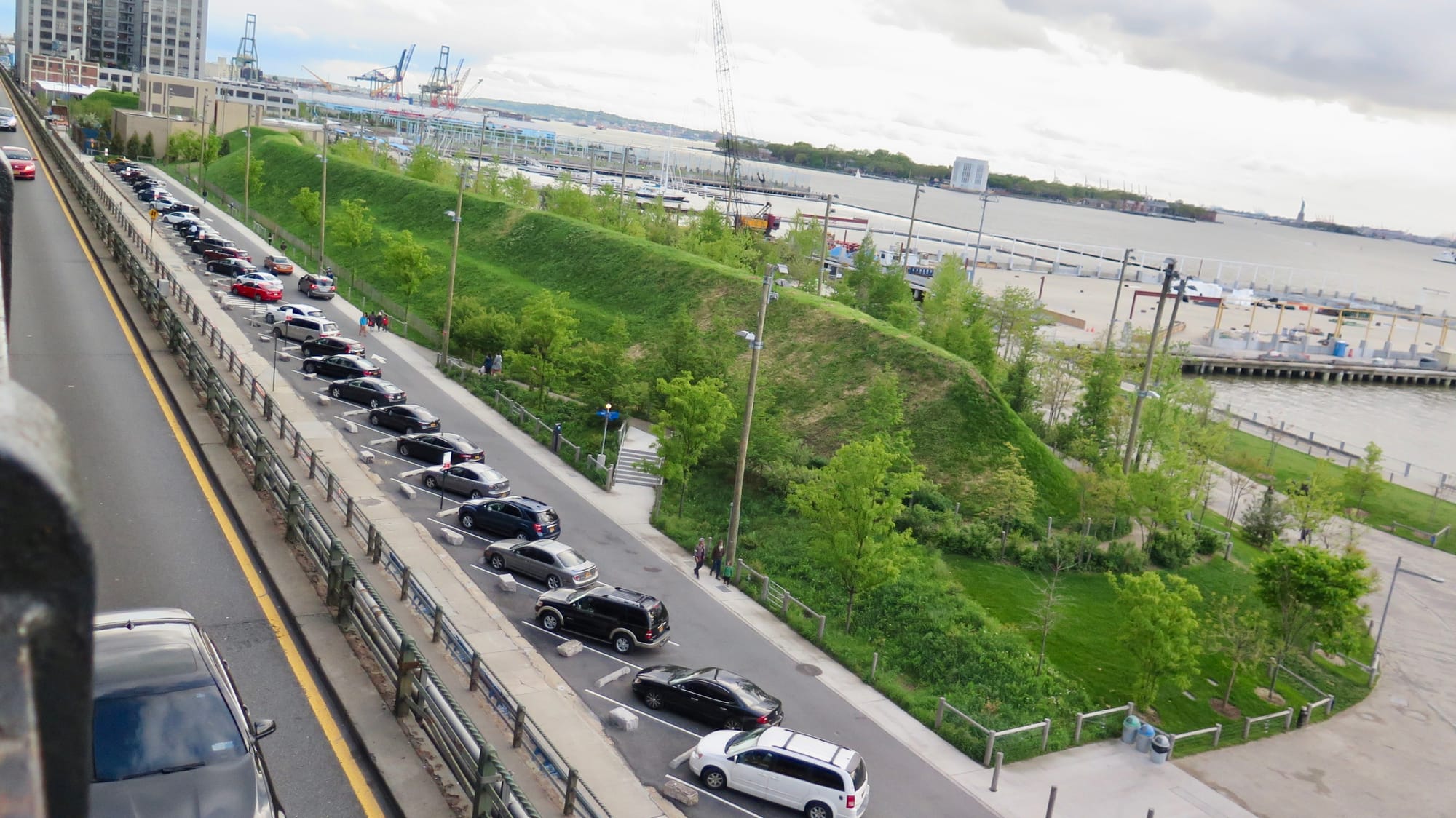
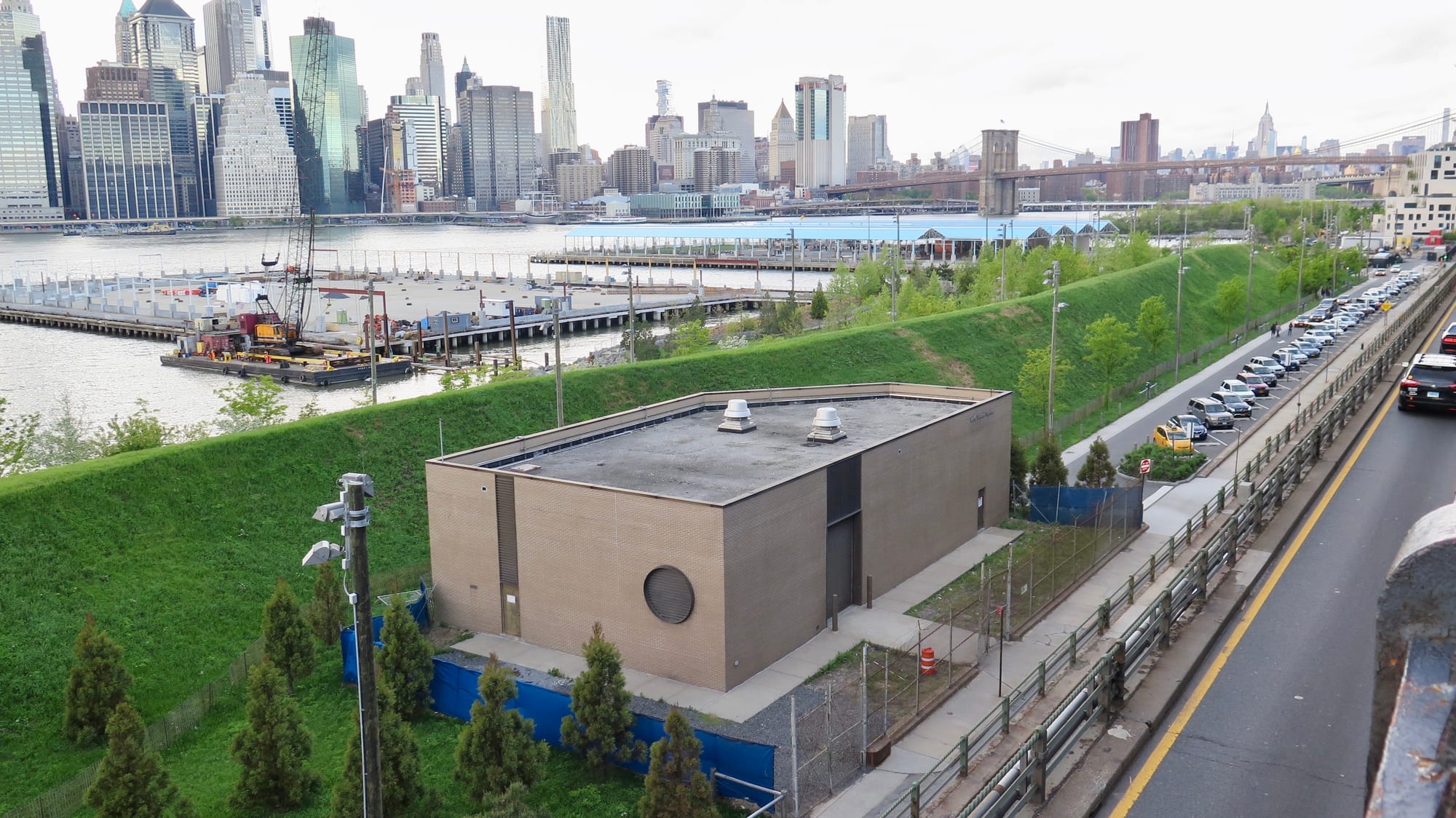
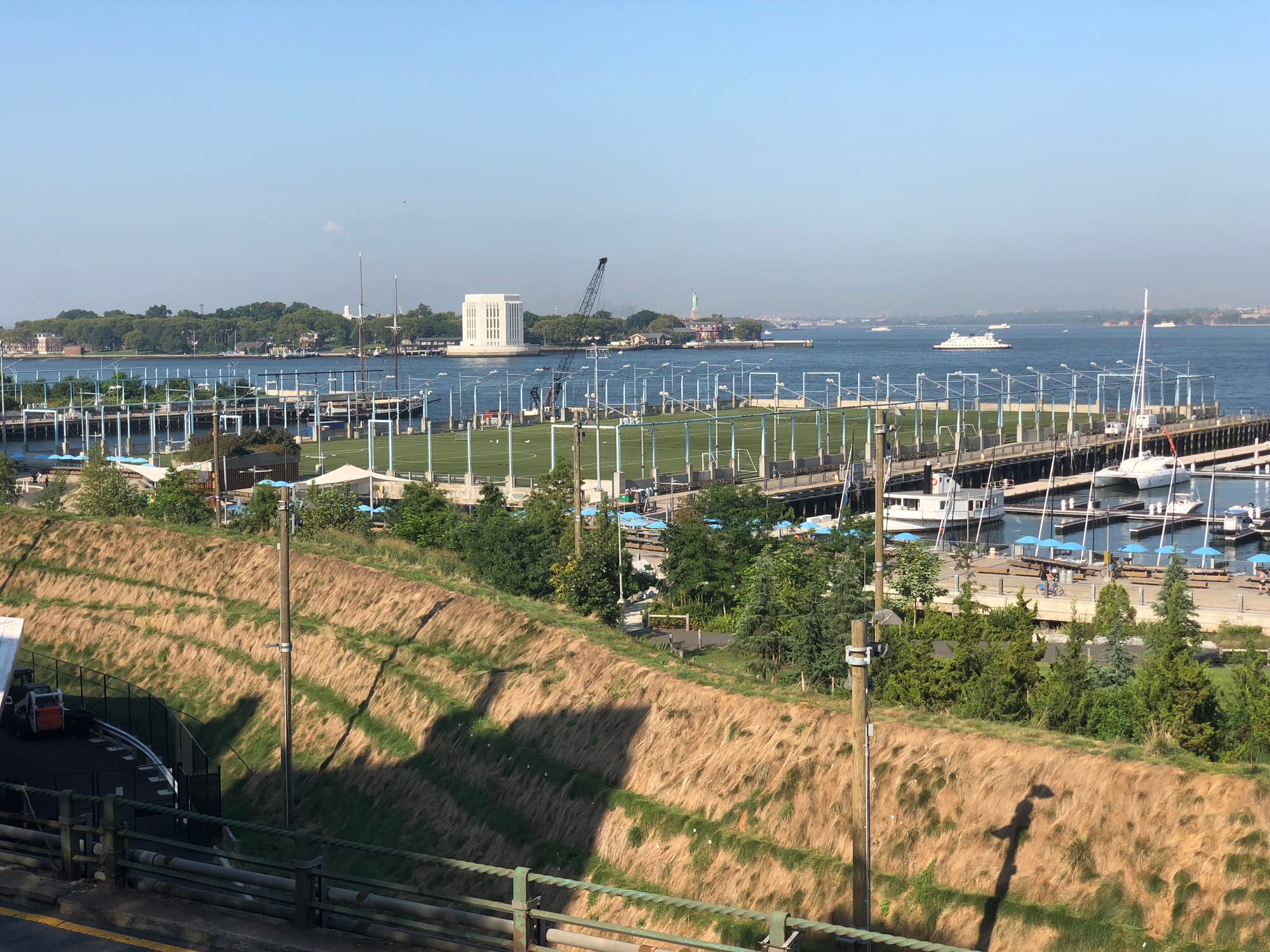
2) Lack of destinations
For people to be motivated to take long walks – along a waterfront for example – it's important for there to be destinations worth walking to. These can include attractive landmarks, interesting businesses, or dynamic activity areas, among others. Destinations move foot traffic along and give a satisfying sense of culmination to a stroll. Additionally, businesses benefit from the prime location of the waterfront because it attracts foot traffic, and thus customers, to their doors. Combining destinations with promenades creates a win-win situation.
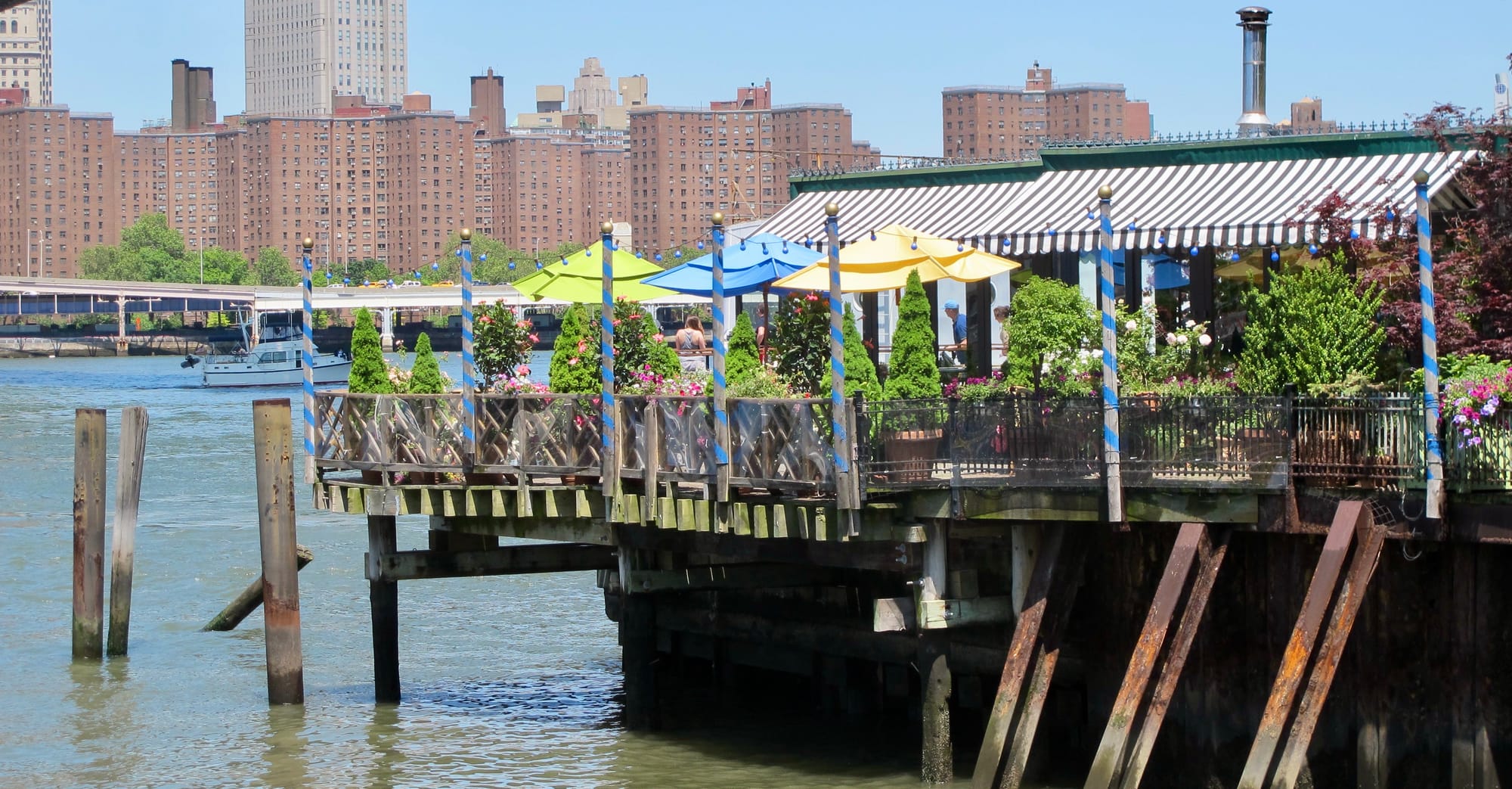
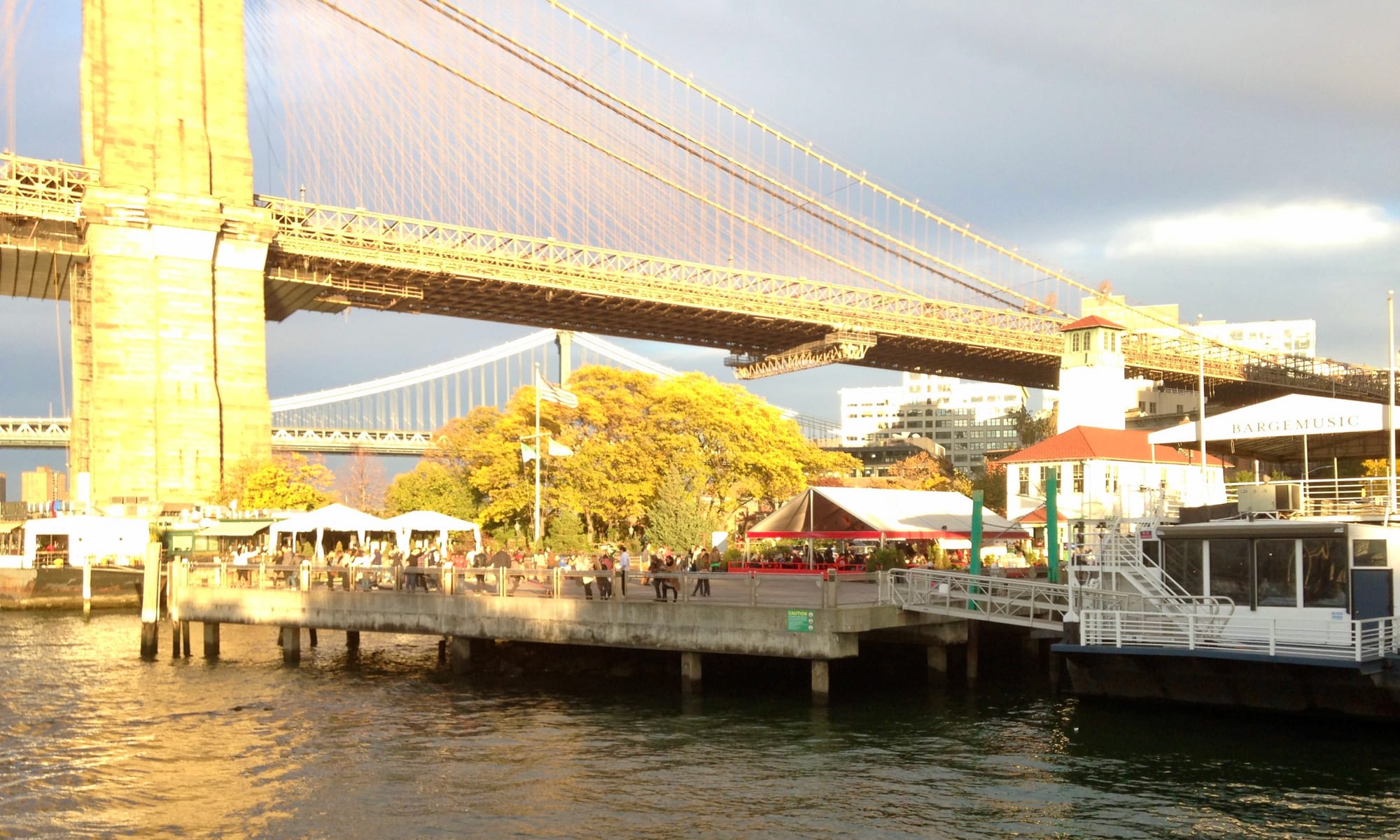
At the moment, The River Café is the only real restaurant on the water in this key part of the Brooklyn waterfront. What's more, it's a higher end spot, meaning that it isn't inviting to a large part of the public. The carousel is also a memorable destination, but it doesn't integrate well with its surroundings and mainly targets a narrow segment of the population, i.e., children. What's more, both of these are closely located, right around the Brooklyn bridge, but the waterfront stretches long past that. There need to be a broader variety of destinations all along it, from eateries to landmarks to play areas, to encourage walking and spending time on the full length of the waterfront for people of all ages, means, and interests.
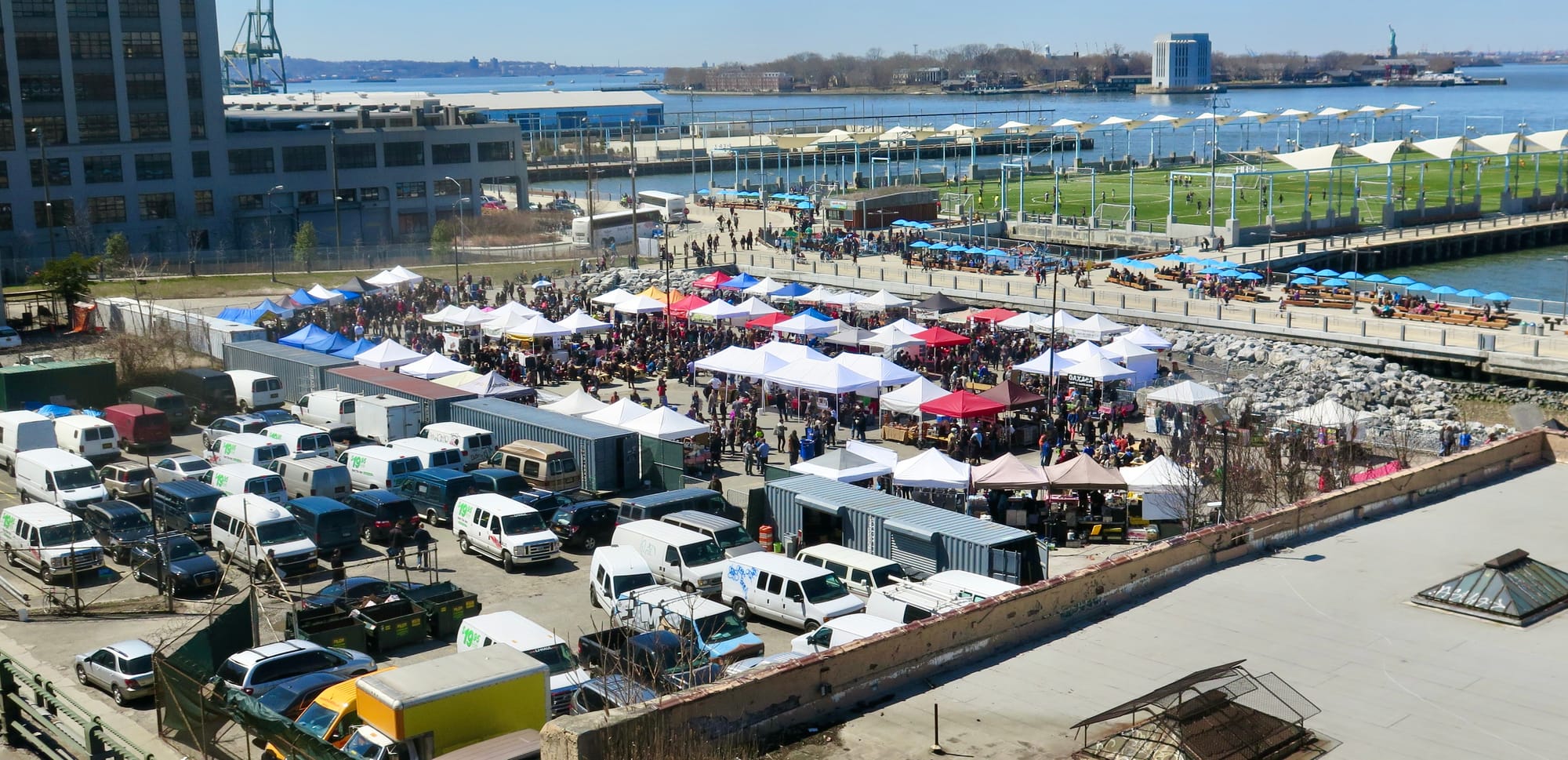
Below is a photo of a former market. While a temporary market is a step in the right direction, this area could use a permanent market to draw people to the waterfront on a regular basis. It could even be positioned right along the water, closer to the foot path, so that it's easier for passersby to engage with. Markets are fantastic ways to activate public spaces and attract vibrant energy to them.
3) Soulless architecture
Soulless architecture kills the character of an area. The architecture of new buildings should reflect the communities, values, history, and culture there. The buildings around Brooklyn Bridge Park are designed like isolated sculptural objects rather than like buildings that are woven into their place context which draw people in to interact with them. They are often large, blocky, and minimalist in design without aesthetic value to add charm. More importantly, they do not mesh well with the context they're set in.
Additionally, the buildings here rarely incorporate "inside-out" design well where the goods and activities inside the building spill into the outside area and the borders/walls are permeable with open doors and external displays. This means the area outside their doors is not particularly active or engaging. Because of all this, they detract value from the waterfront instead of adding it. The buildings along a public place must interact with it through what we call their "porches" – the intermediate space between the private building and the public realm, such as outdoor seating areas, terraces, etc.
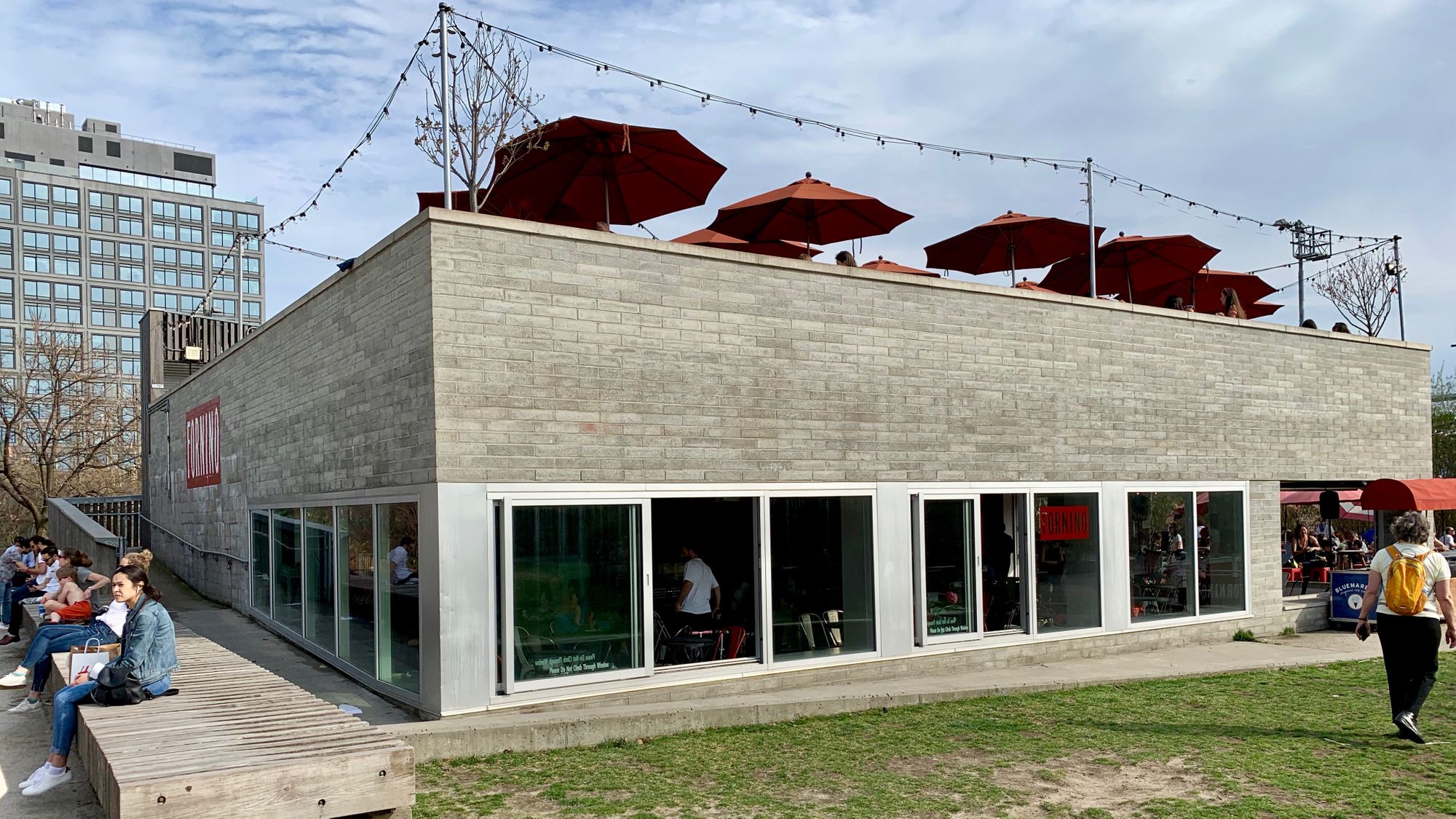
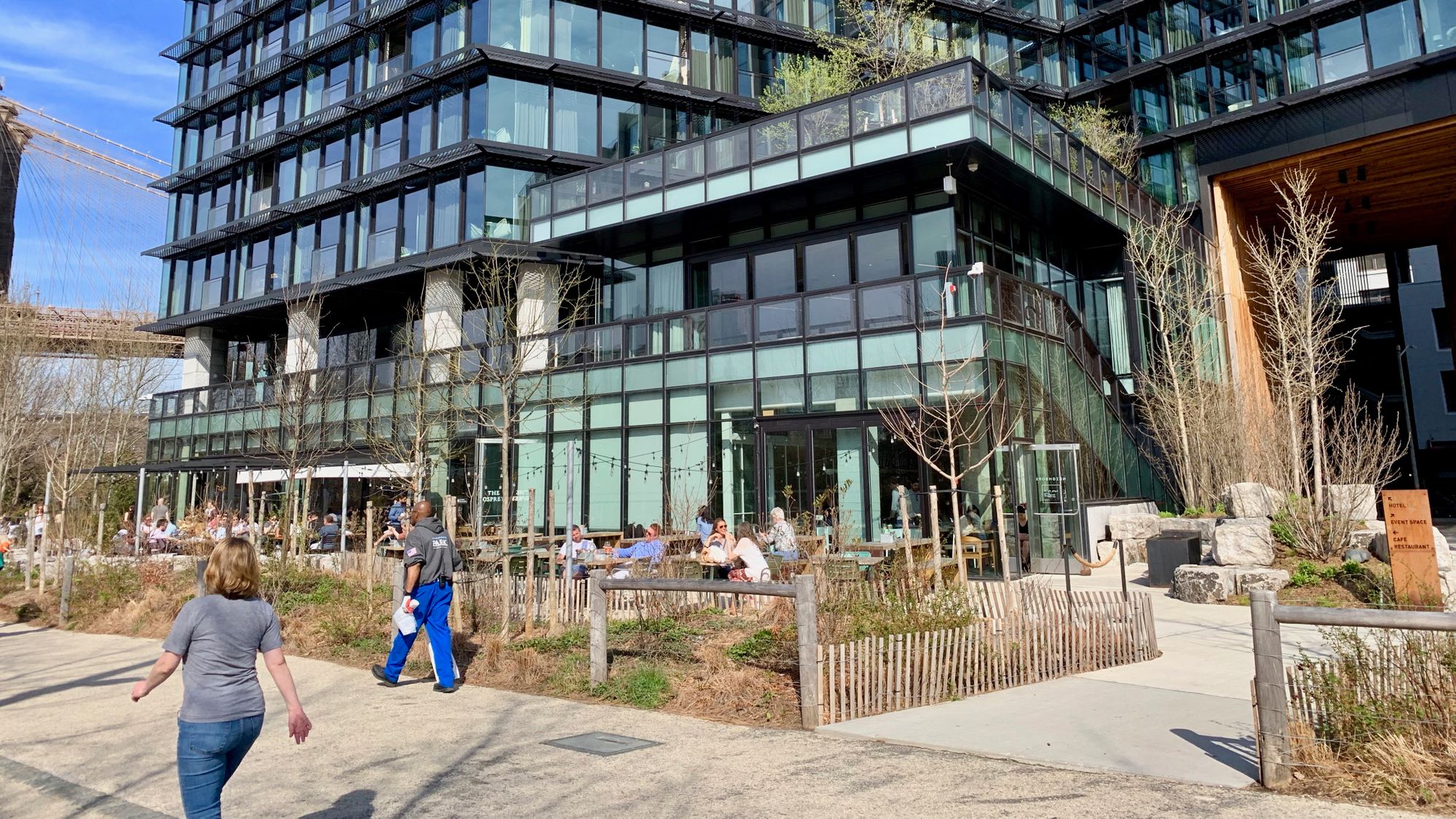
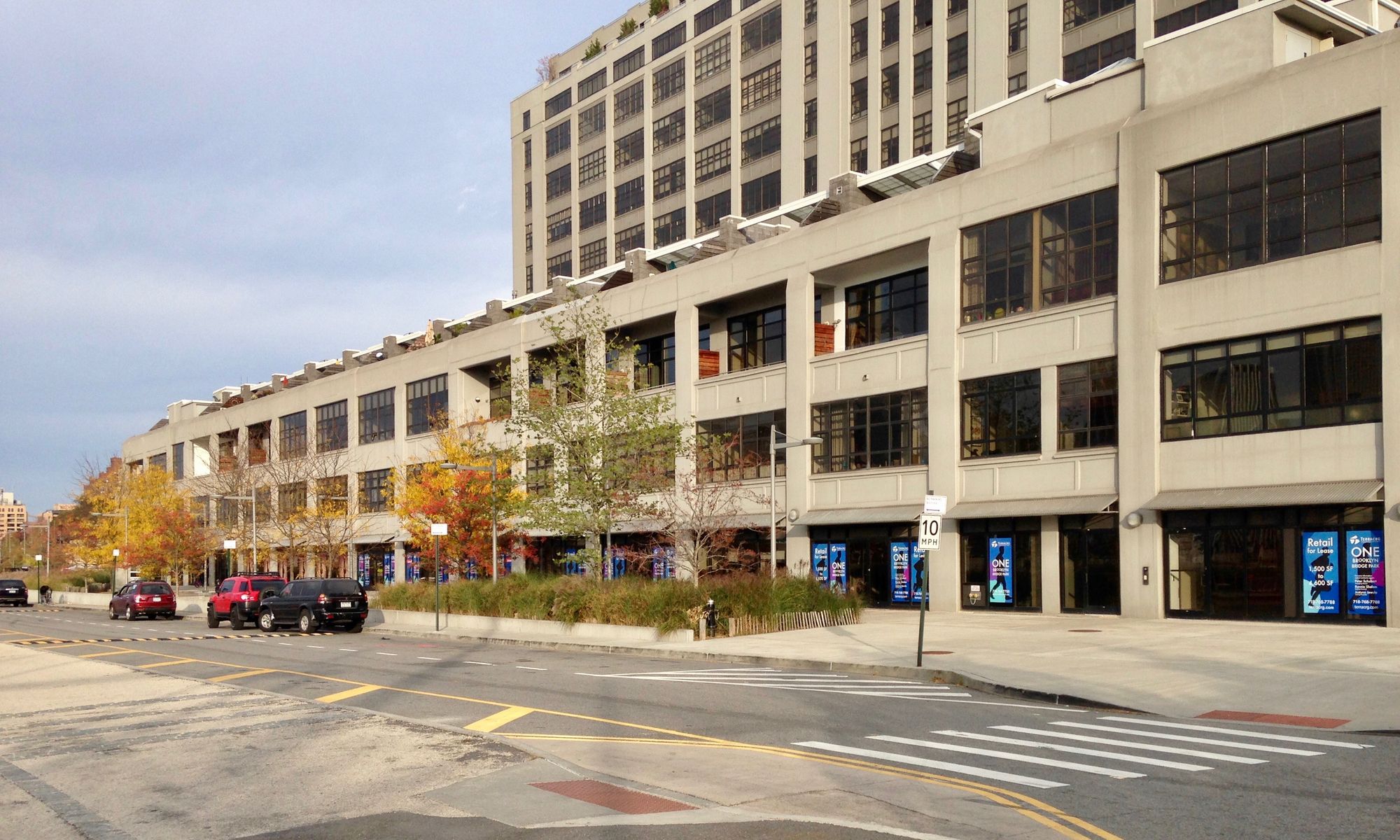
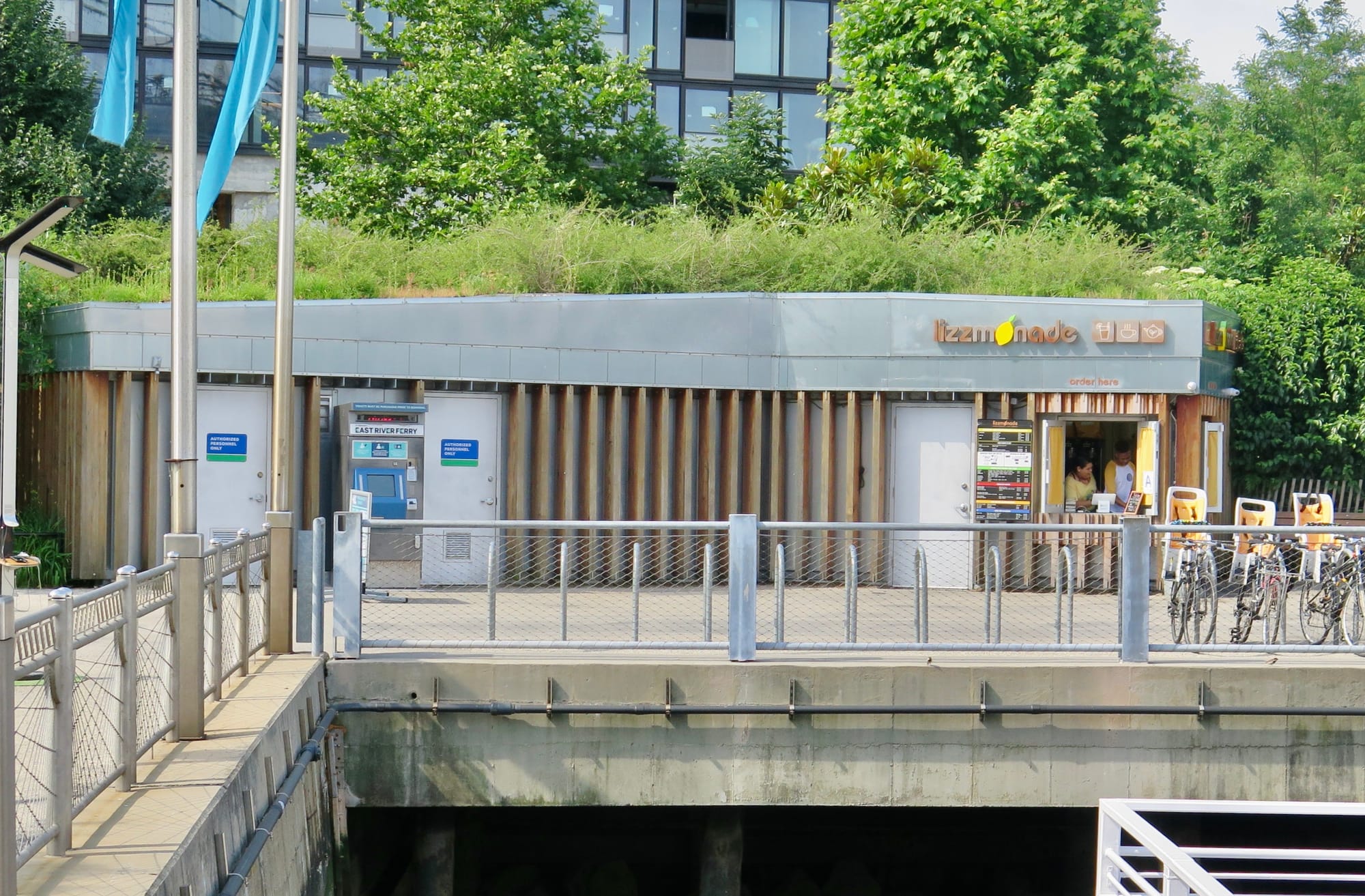
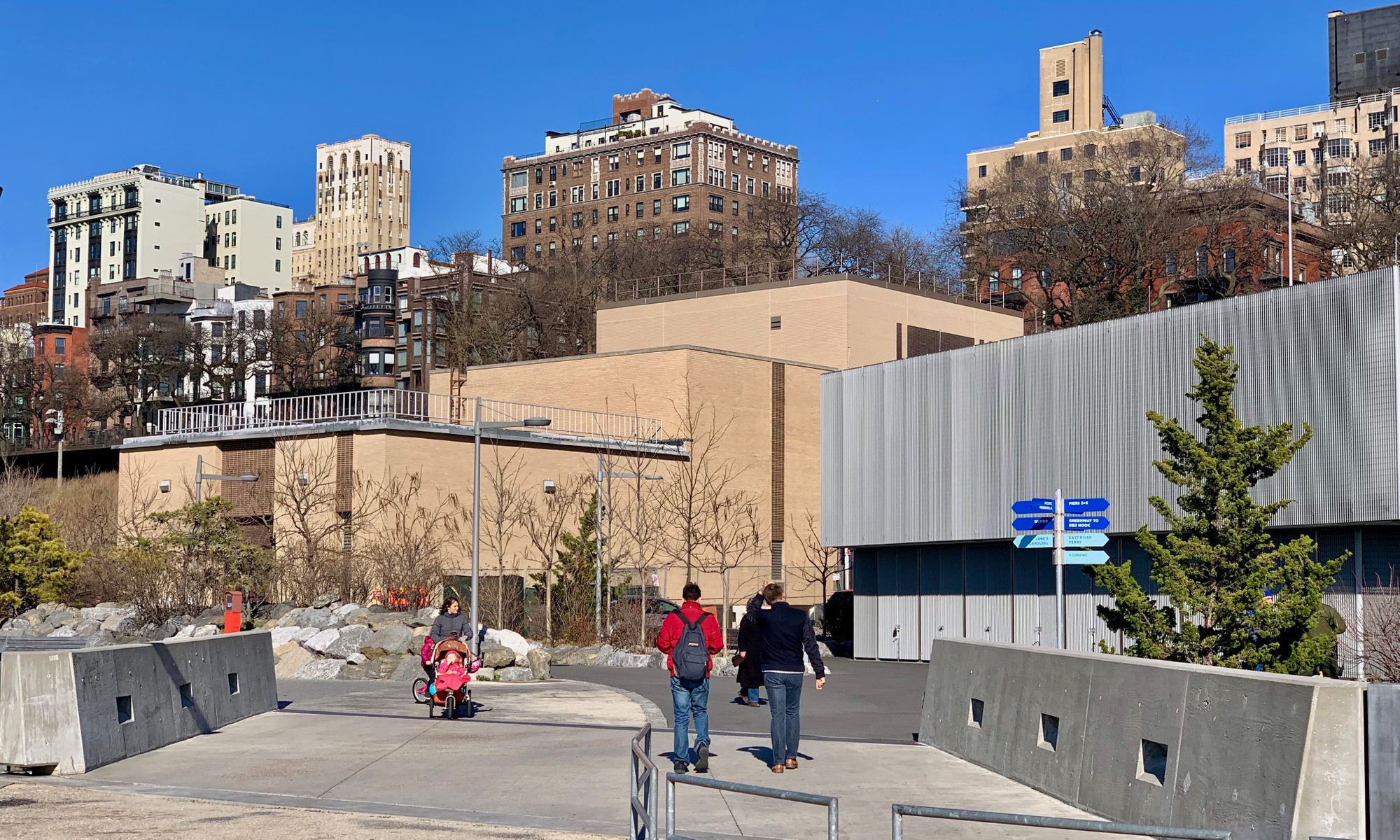
Unimpressive Brooklyn Bridge Park architecture
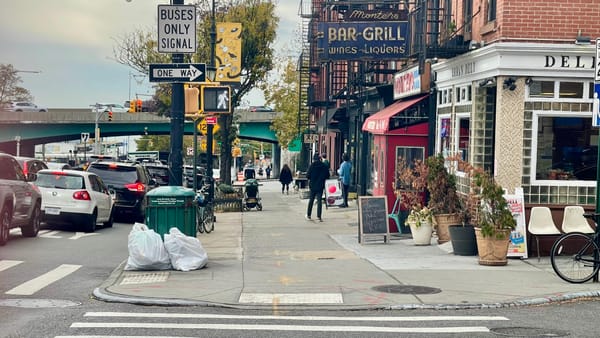
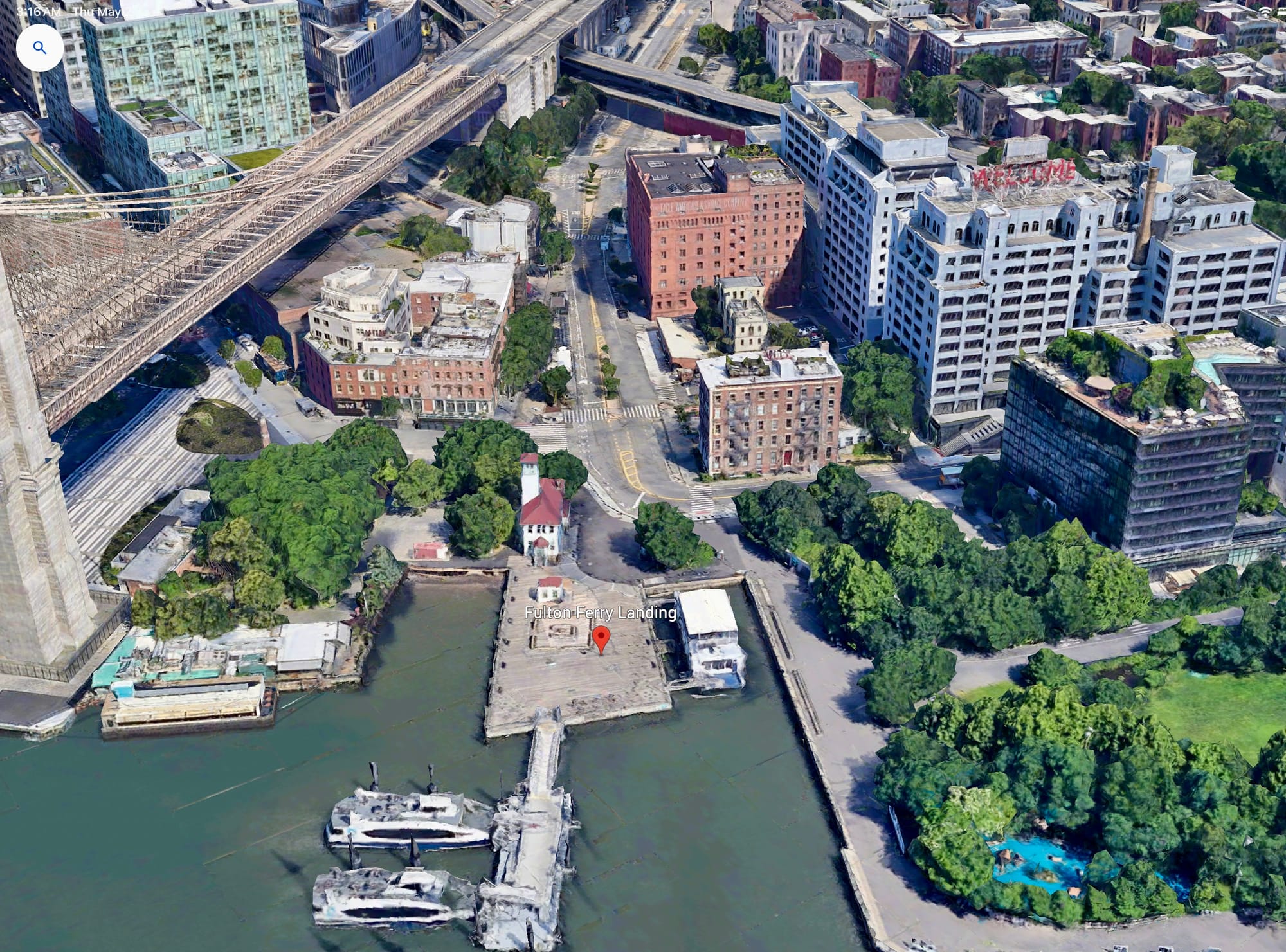
4) "Killer intersections" at Atlantic Avenue, Fulton Landing and Hamilton Avenue
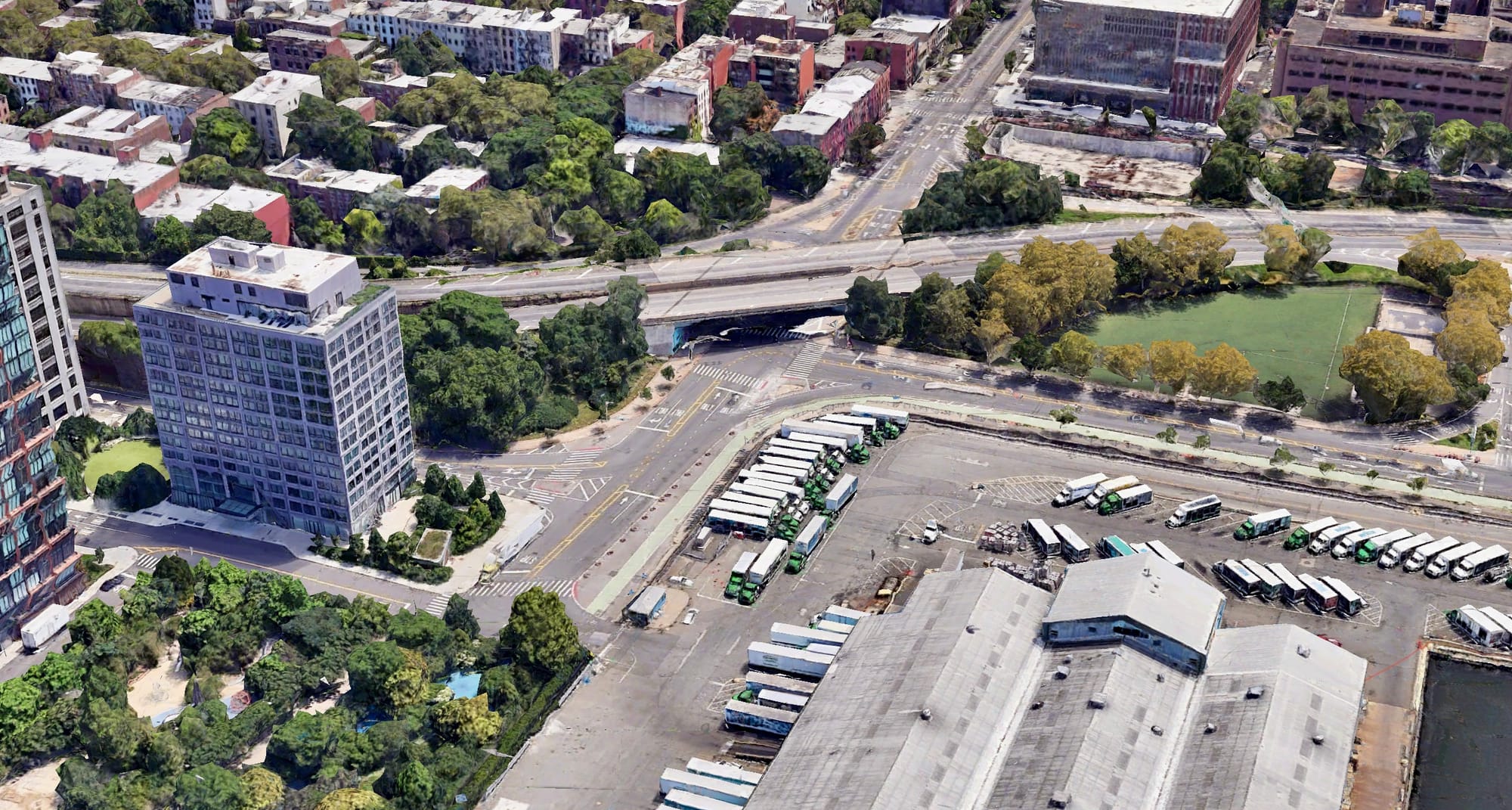
This part of Brooklyn is plagued by what we call "killer intersections" – oversized intersections that create a hostile environment for community and social life in their vicinity. Because of all the cars moving through the space and their associated smells, sounds, and risks, people don't feel comfortable spending time in places where killer intersections reign. It drives away foot traffic and makes the part of the city that hosts them unfriendly to public life.
To make streets inviting to people, business activity, and social life, the people space must be increased and the car space decreased – sidewalks need to be expanded and car lanes narrowed. As we always say, "If you plan cities for cars and traffic, you get cars and traffic. If you plan for people and places, you get people and places."
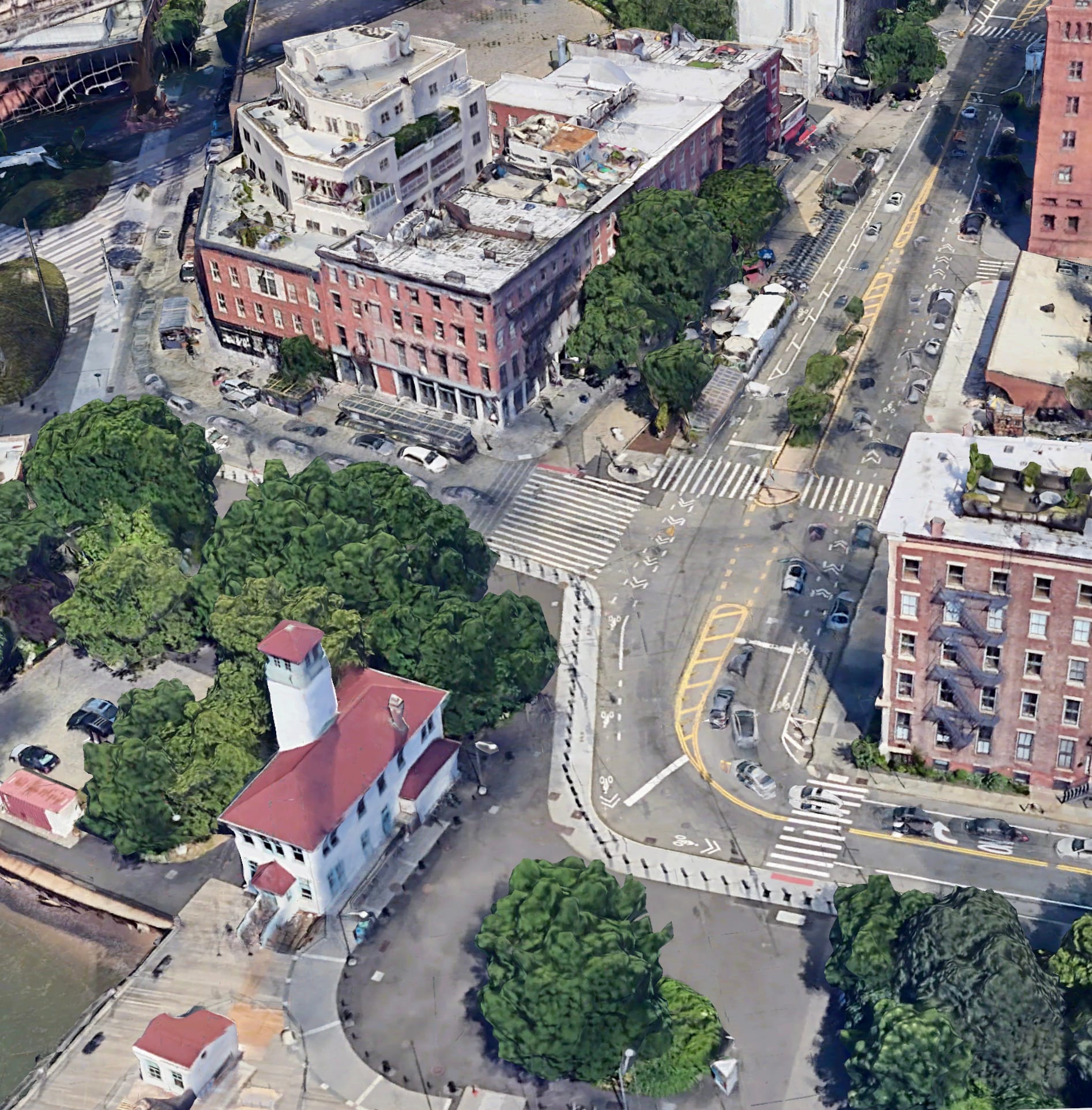
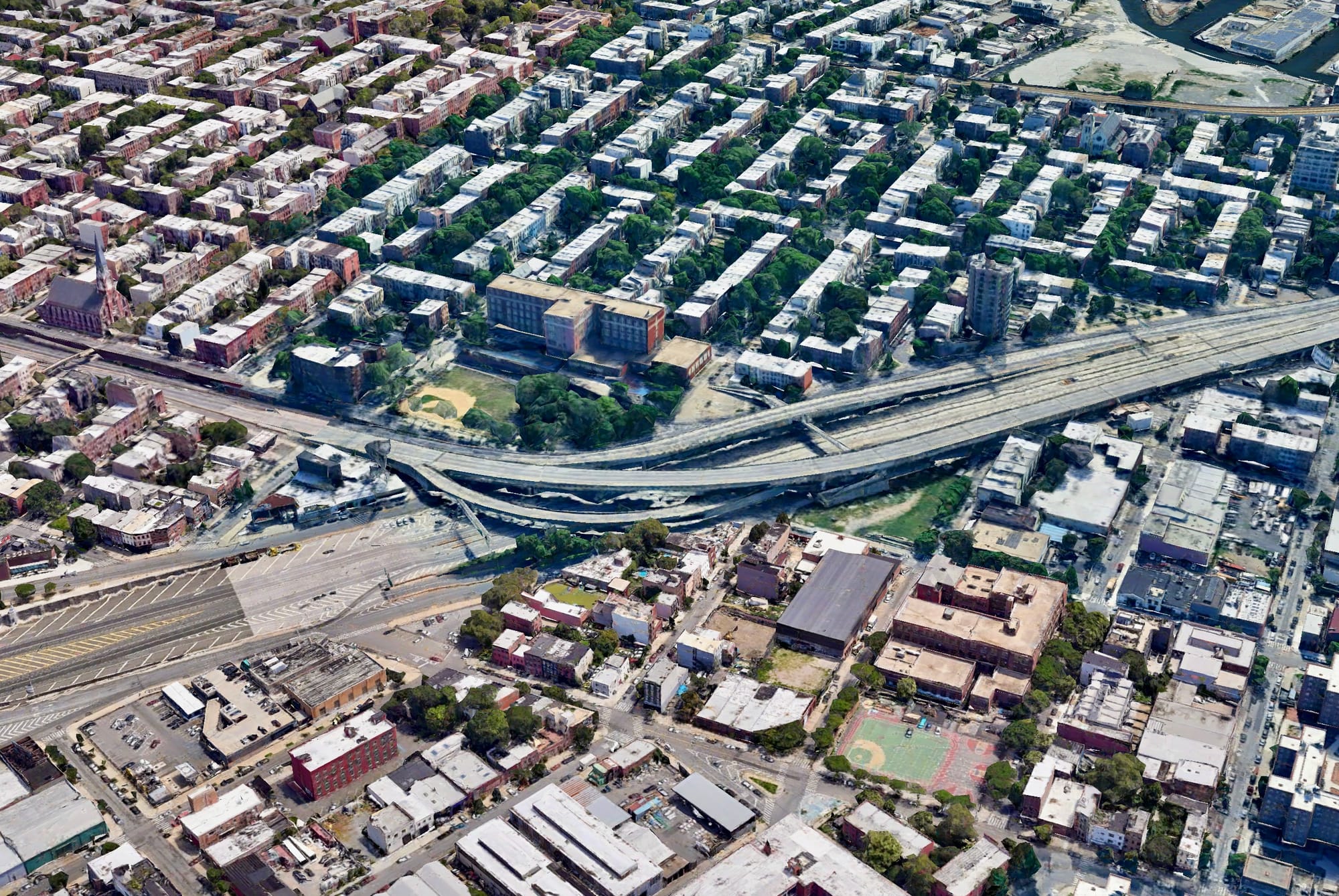
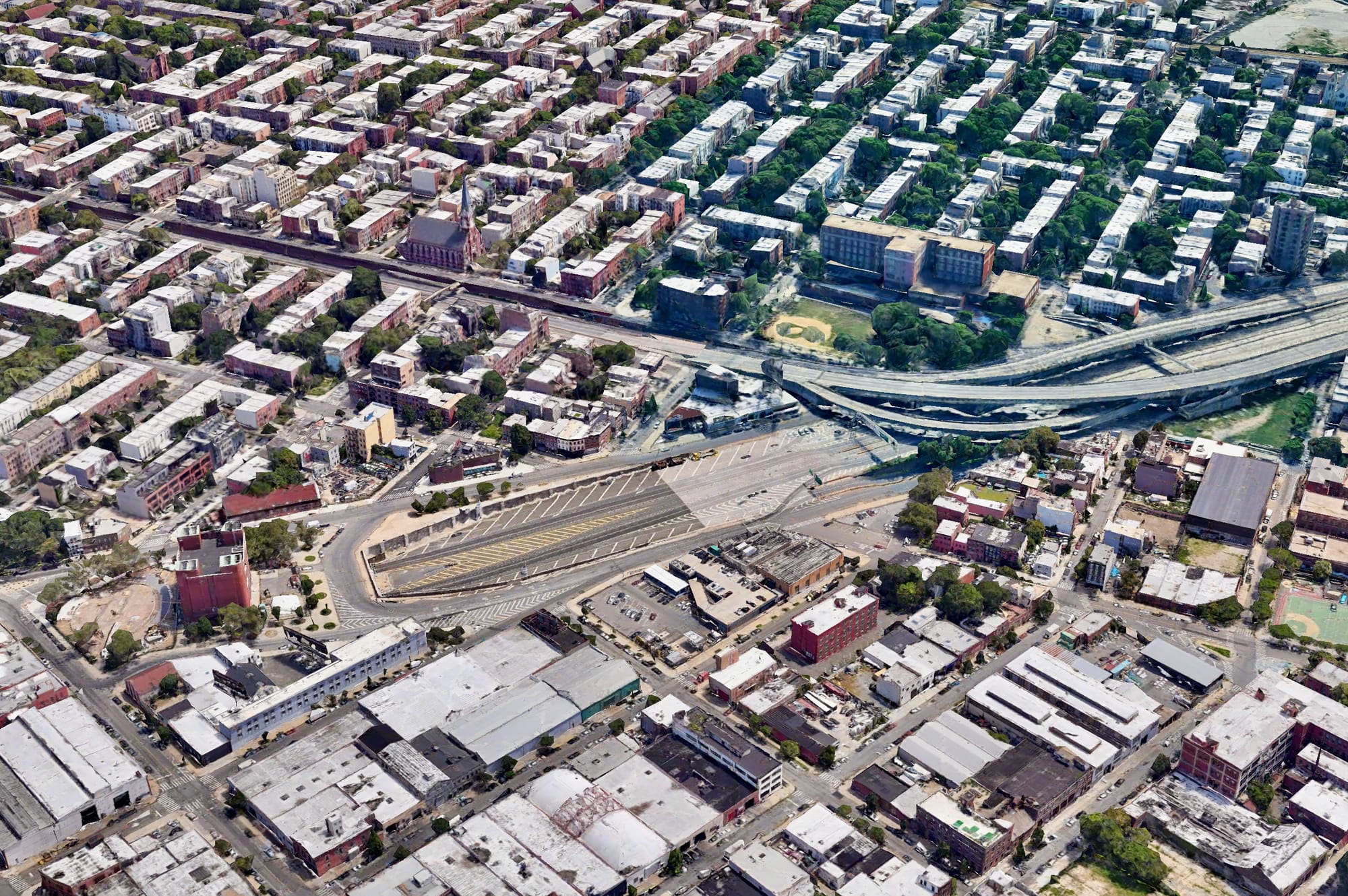
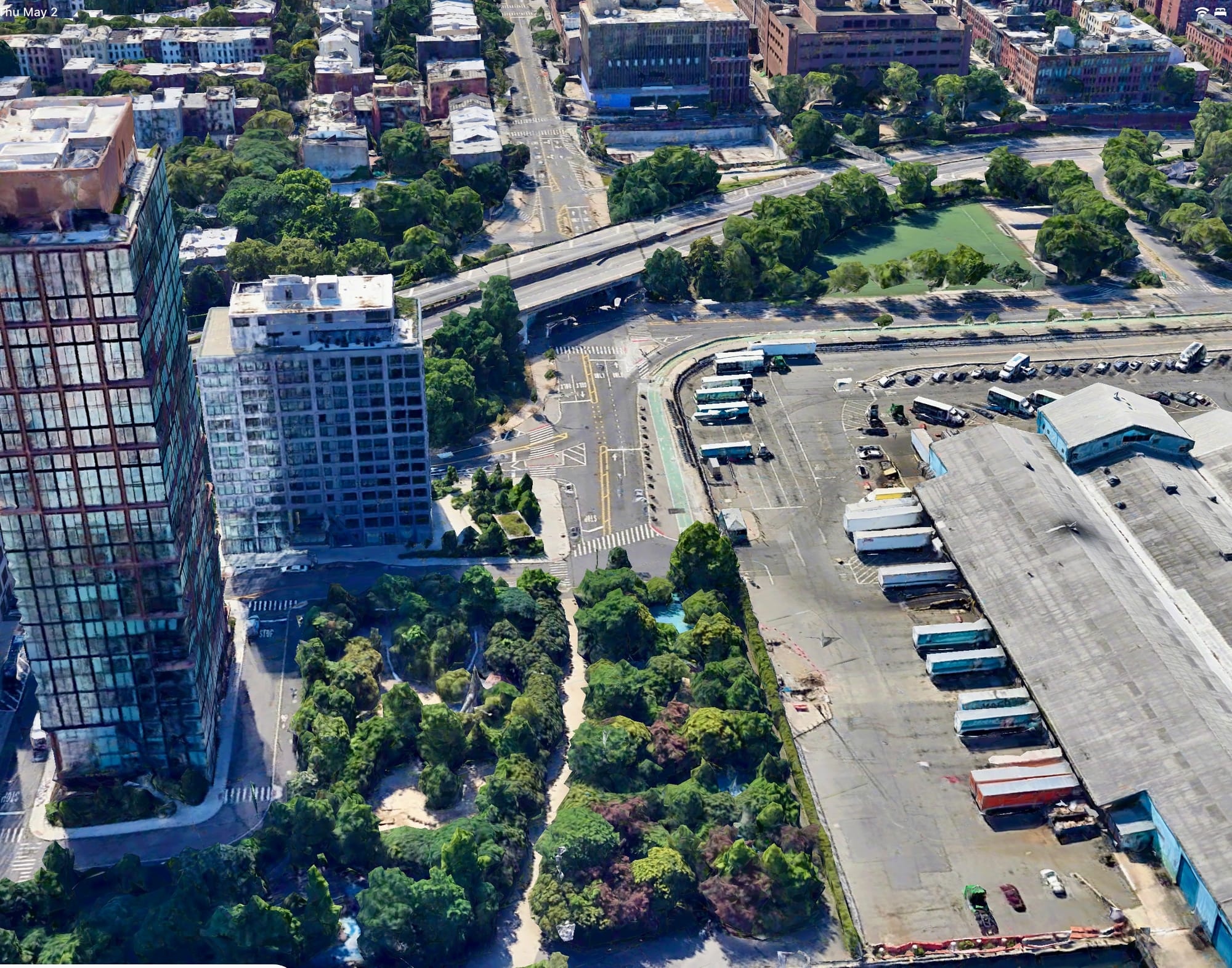
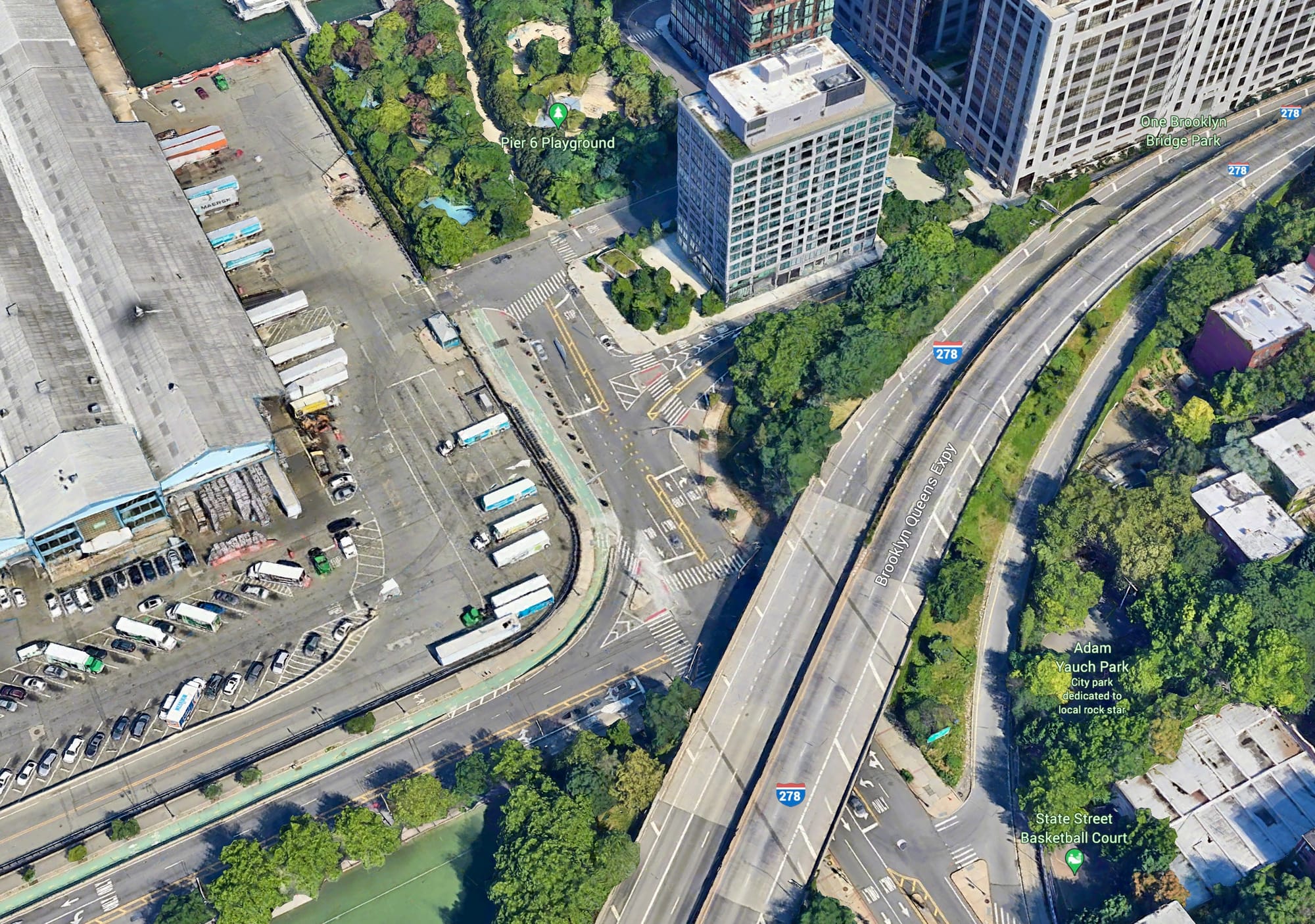
Carroll Gardens BQE intersections
Additionally, there are "killer intersections" at important access points to the waterfront. The one shown below leads in to Brooklyn Park, but the whole area feels hostile, including within the park around the entrance where there is a notable lack of enjoyable amenities and visitor-friendly uses. It's like the hostility of the intersection has infected the surrounding area. It makes you feel like this place isn't worth visiting at all which does Brooklyn a great disservice.
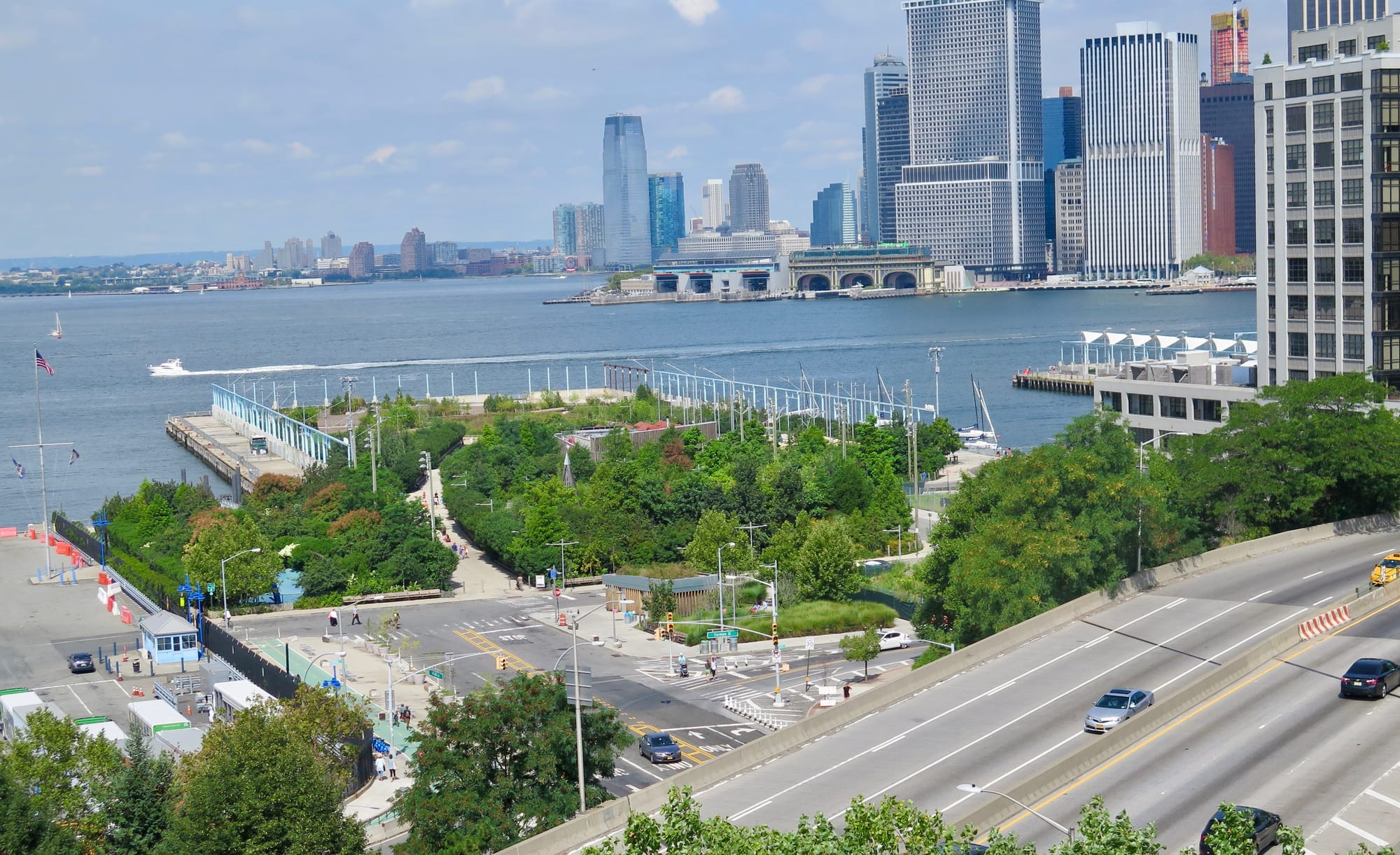
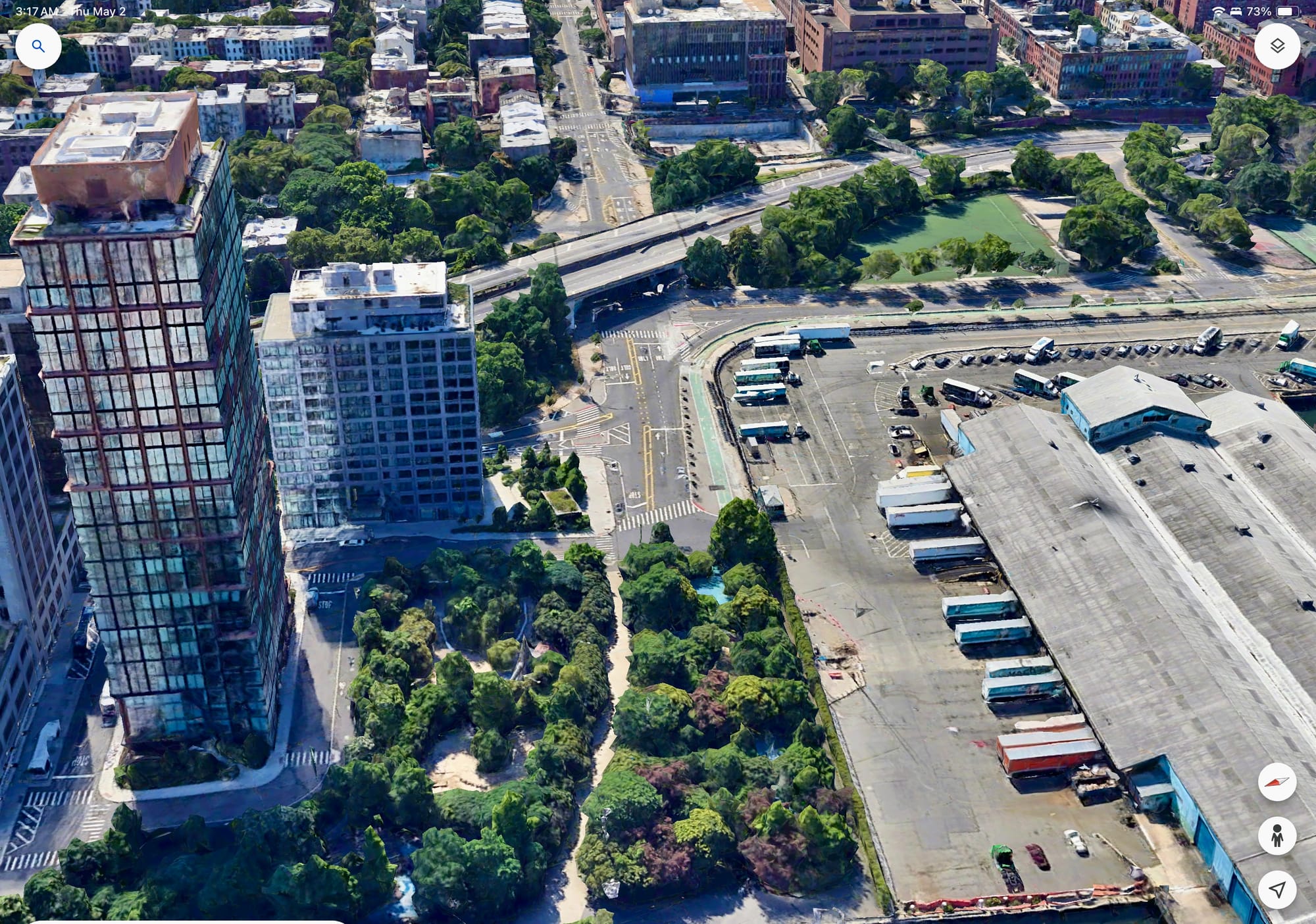
Brooklyn deserves a better BMT
1) NYCEDC: Brooklyn Marine Terminal Vision Plan
In our 50 years of global placemaking, working on over 100 waterfronts around the world, we have not seen a waterfront so devoid of value for the city's citizens as the Brooklyn waterfront.
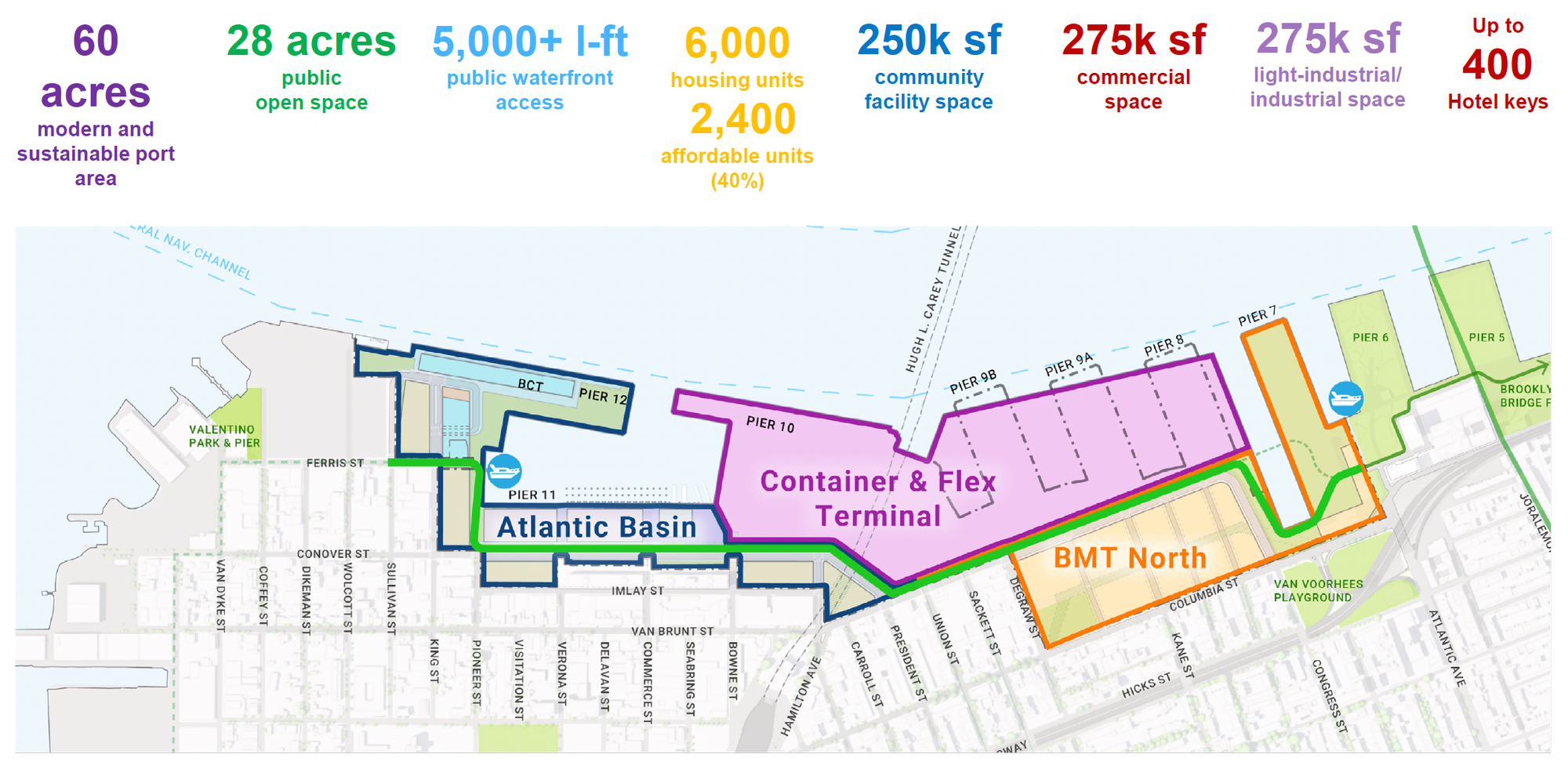
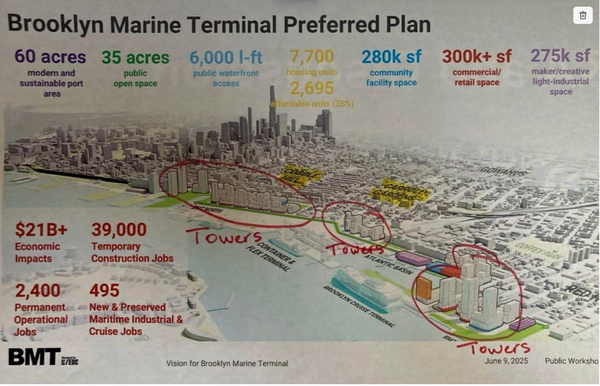
Instead of focusing on how to bring vitality to public waterfront spaces throughout the borough, the EDC embarked on a development strategy that doesn't give meaningful attention to how people will engage with Brooklyn's greatest asset. This waterfront proposal does not fully develop the potential that could make the area a major asset for all of New York.
Only in a few places like Hong Kong and parts of China do we see the types of developments like the one being currently proposed here – developments dominated by impersonal high-rises and limited public uses. They feel cold, disconnected from their surroundings, and unwelcoming. The best, most beloved, waterfronts in the world look and feel nothing like this.
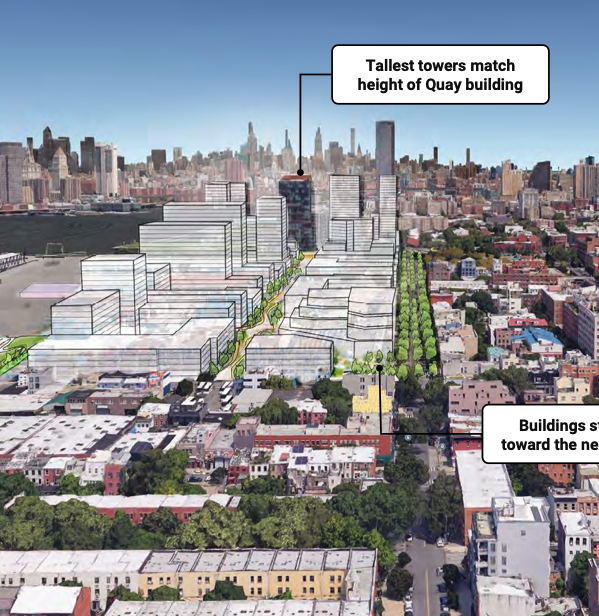
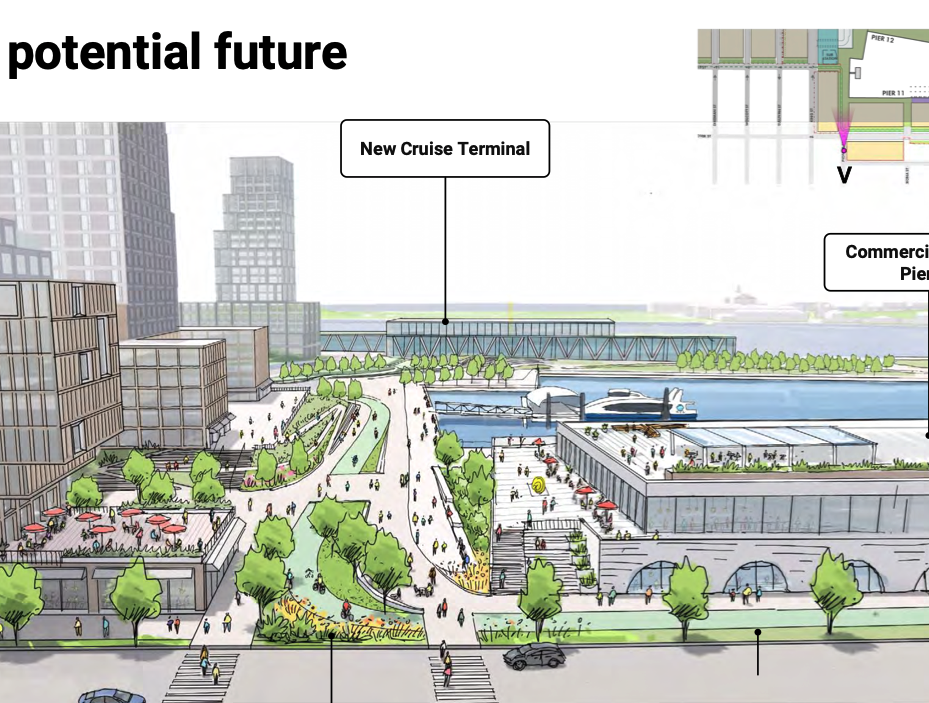
The images from the report show a wall of towers along the waterfront, filler green space with limited uses, and a lack of engaging public destinations that support gathering.
We've provided additional commentary on EDC's Vision Plan and process for BMT in these two posts:
 Fred Kent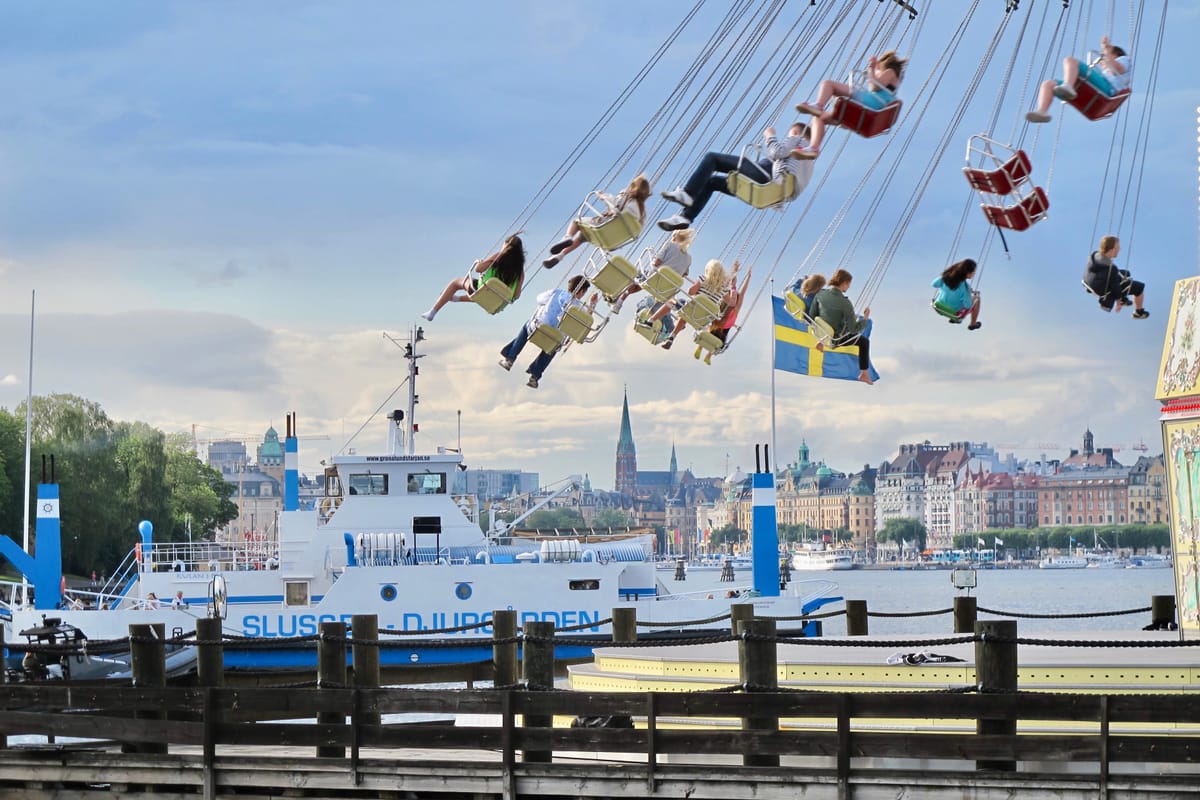
 Fred Kent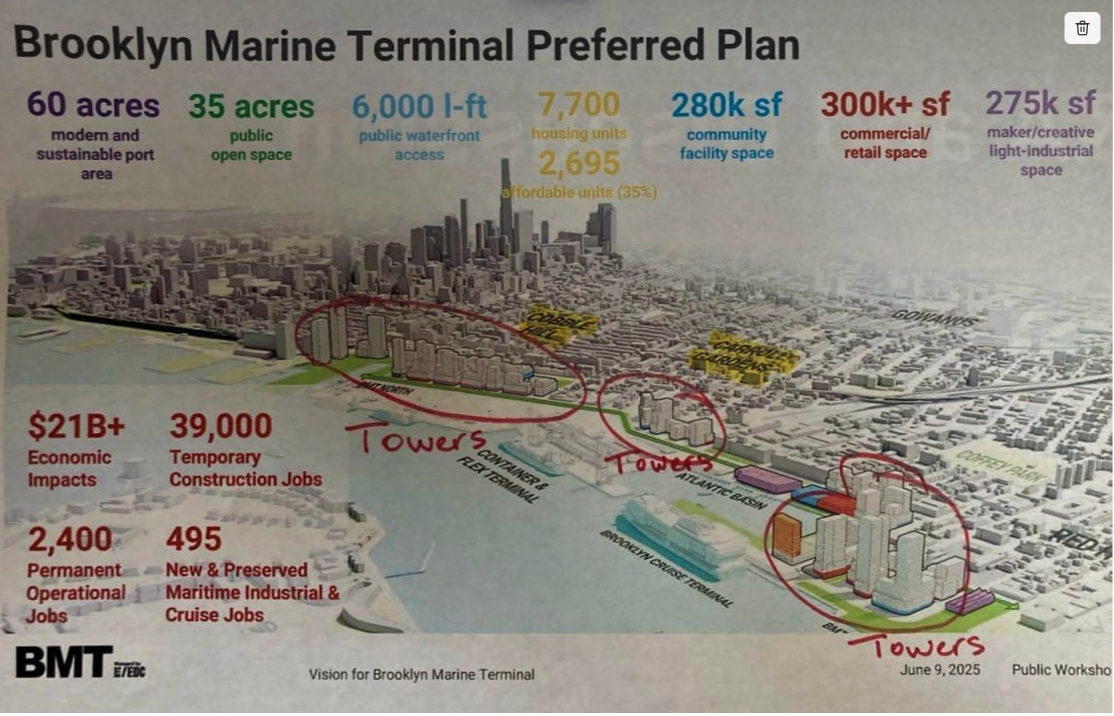
More information about New York City Economic Development Corporation's Brooklyn Marine Terminal Vision Plan can be found on NYCEDC's website.
2) City Club of New York: Blue Highway Hub at BMT
We welcome the effort by The City Club to take a port-first approach to the site, engaging the maritime sector to hear and understand the needs of the industry.
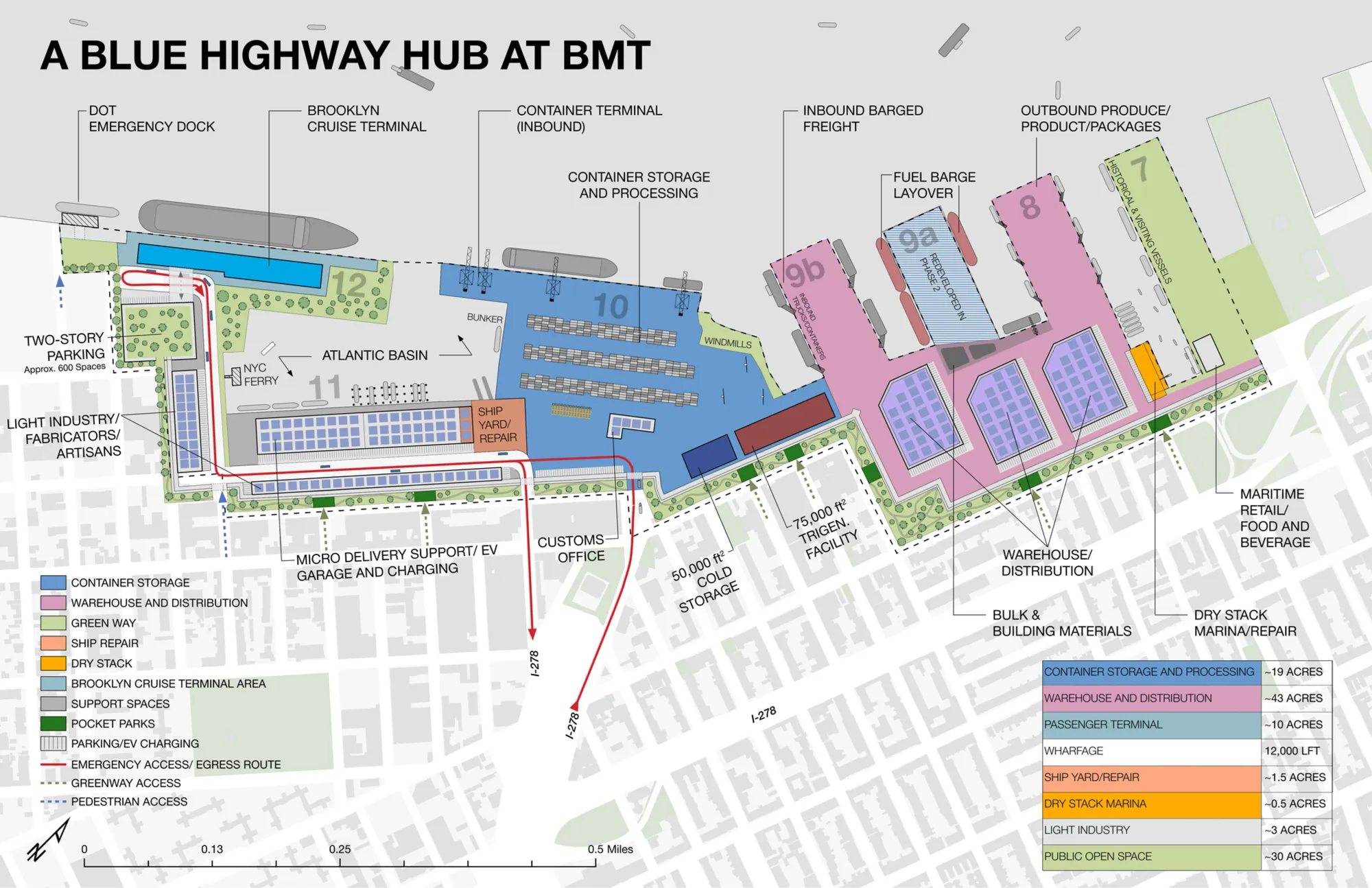
The needs of the port are an important part of this conversation, however, we believe that a thriving green port with uses presented in this plan can work without the site being dominated by it.
Thinking about public space shouldn’t be an afterthought, if we want to create the rich social fabric and place-based programming that the Brooklyn waterfront deserves.
More information about the Brooklyn Marine Terminal: All Maritime Plan Report can be found on City Club's website.
How to create a world-class waterfront in NYC
What we propose for Brooklyn's waterfront is something notably different than the above ideas – a plan informed by our 50 years of experience working on great waterfronts and inspired by the best public places around the world.
Instead of centering private development and impersonal landscaping, soulless architecture and joyless features, we propose a plan that focuses on social life, community, culture, connection, and enjoyment.
There is much that can be done to improve the NYC waterfront which has been struggling to live up to its potential for decades. In particular, we need to create a public waterfront on the East River for all of Brooklyn to enjoy, or we will lose it forever. This area needs to flourish as a treasured heart of community life so that it may be saved from the death knell of privatization.
Based on our extensive experience working on waterfronts around the world, we propose the following:
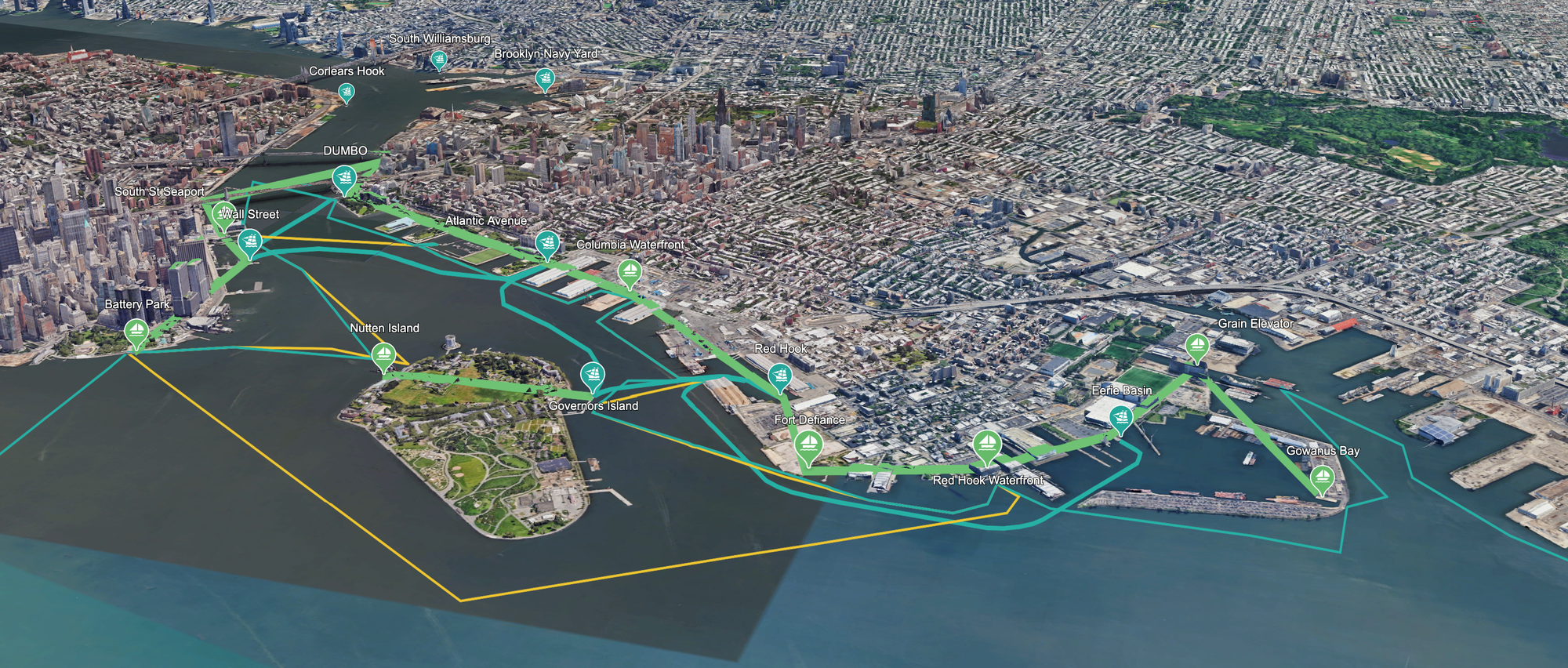
1) Connect segments of the waterfront – lower Manhattan, Brooklyn, Governor's island – into a cohesive whole through improved ferry traffic. Currently, the ferry activity does not encourage exploring what the different parts of the waterfront have to offer and obstructs the public's access to them, thus limiting visitation.
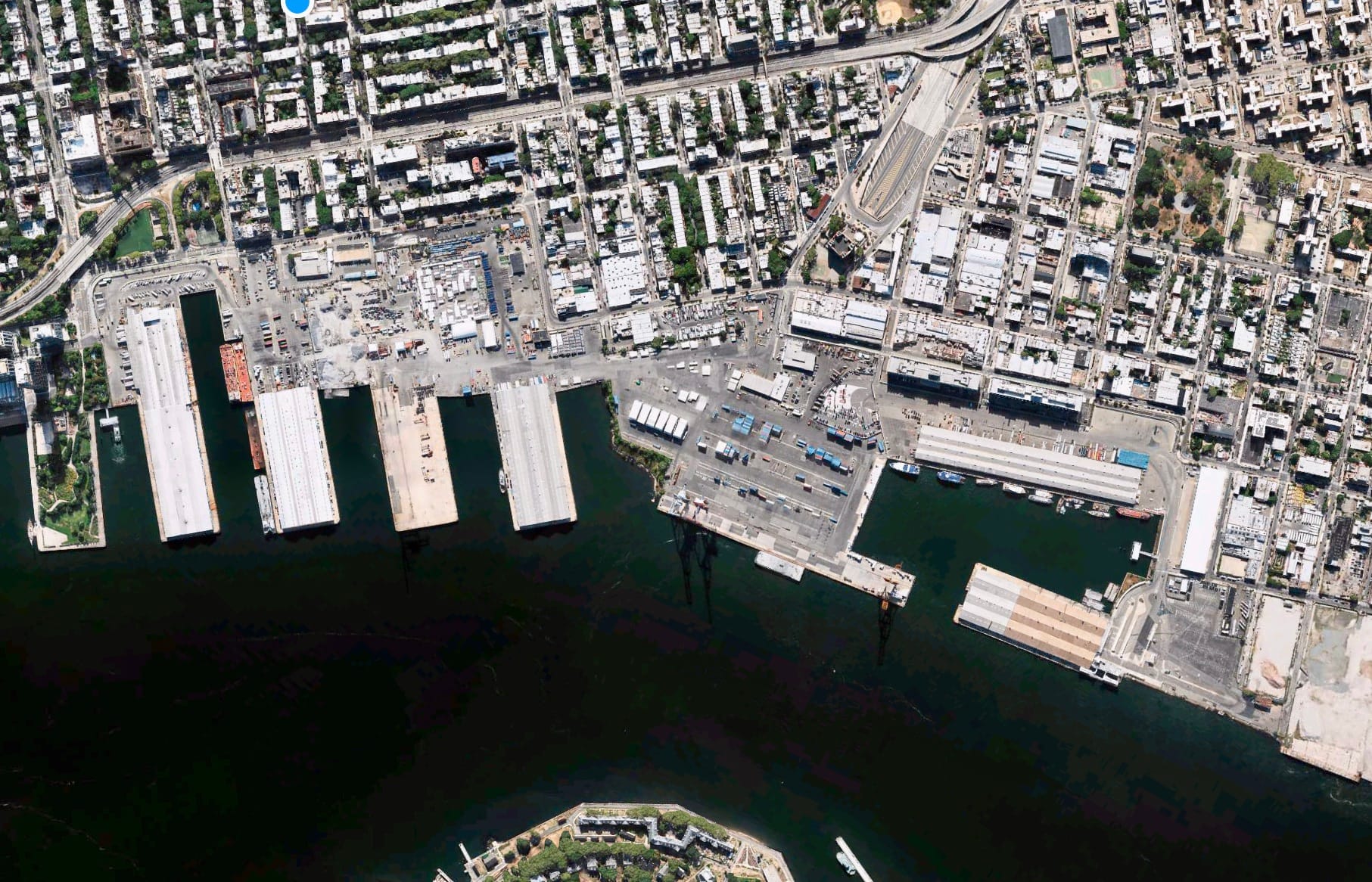
2) Create a promenade connecting the entire waterfront from Dumbo to the Gowanus, well connected to surrounding neighborhoods. It should include the Manhattan and Brooklyn Bridges, and even key places like Borough Hall through internal connections. Such a promenade should eventually continue up the East River to Queens and the Bronx. Continuous connection is key to getting regular foot traffic circulating.
3) Create a vibrant public place on the East River through activations, amenities, and programming – transforming the area into "a series of rooms instead of a corridor." Currently, the area is a dull place to walk along that offers little of interest to engage with, thus discouraging visitation. Adding seating, places to eat, play areas, entertainment options, cultural events and more will turn it into a fantastic destination that people flock to.
Let's take a closer look at these ideas.
1) Connecting the Brooklyn Waterfront to Governor's Island and Lower Manhattan to become the "Heart of the New York Waterfront"
New York City's waterfront once was and currently has the potential to be among the best in the world. But in order to get there, it needs to stop being disjointed segments with no relationship to each other, and be reunited as one cohesive whole. The way to do that is to create robust links between Lower Manhattan, the Brooklyn waterfront, and Governor's Island via convenient and frequent ferry trips.
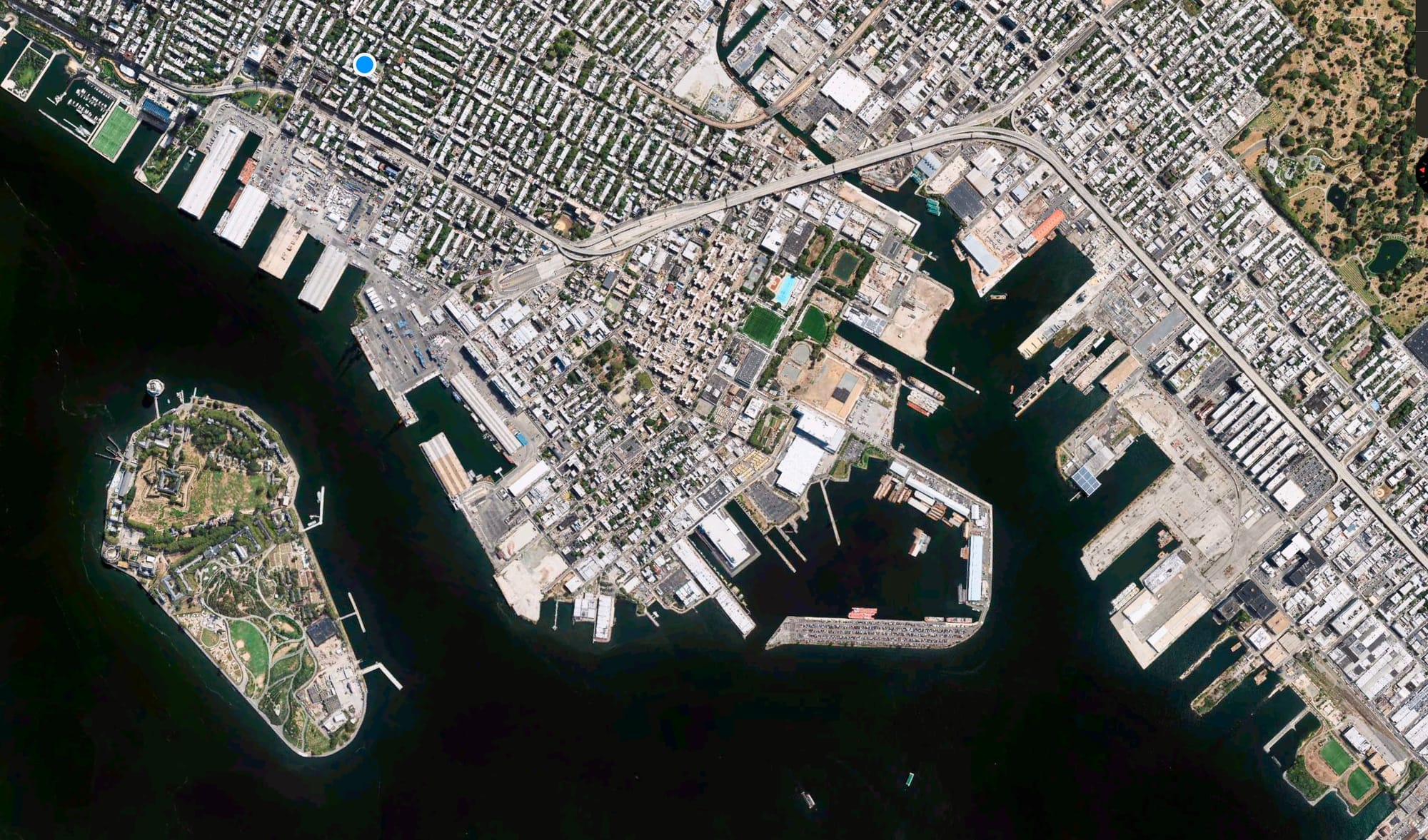
Imagine if we could enhance and connect all of the public destinations on the East River waterfront, taking them to a new level and creating one of the great waterfront destinations in the world. The components are mostly there – we just need to make each place the best it can be and connect them through a waterfront network (the blue and green lines shown above).
An example to follow – Granville Island and False Creek in Vancouver, Canada
Granville Island's relationship to Vancouver is similar to what we see between the southern waterfront areas in NYC. Because Granville Island is such a popular destination, frequent and convenient ferry traffic has been established between it and Vancouver, across False Creek, to facilitate visitation. We need the same between Manhattan, Brooklyn, and Governor's Island. At the moment, moving between those destinations is a hassle and discourages exploration.
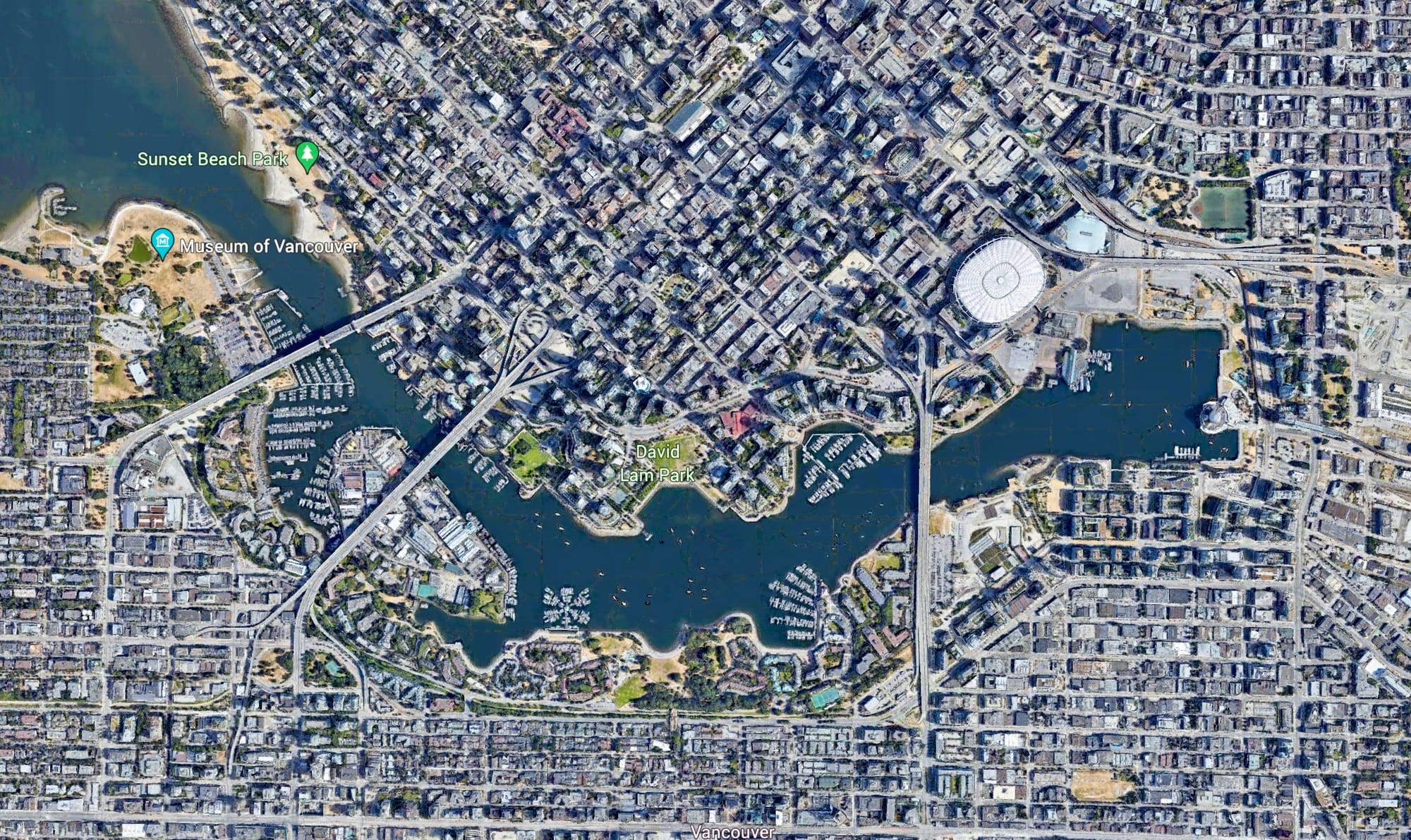
False Creek and Granville Island in Vancouver, Canada
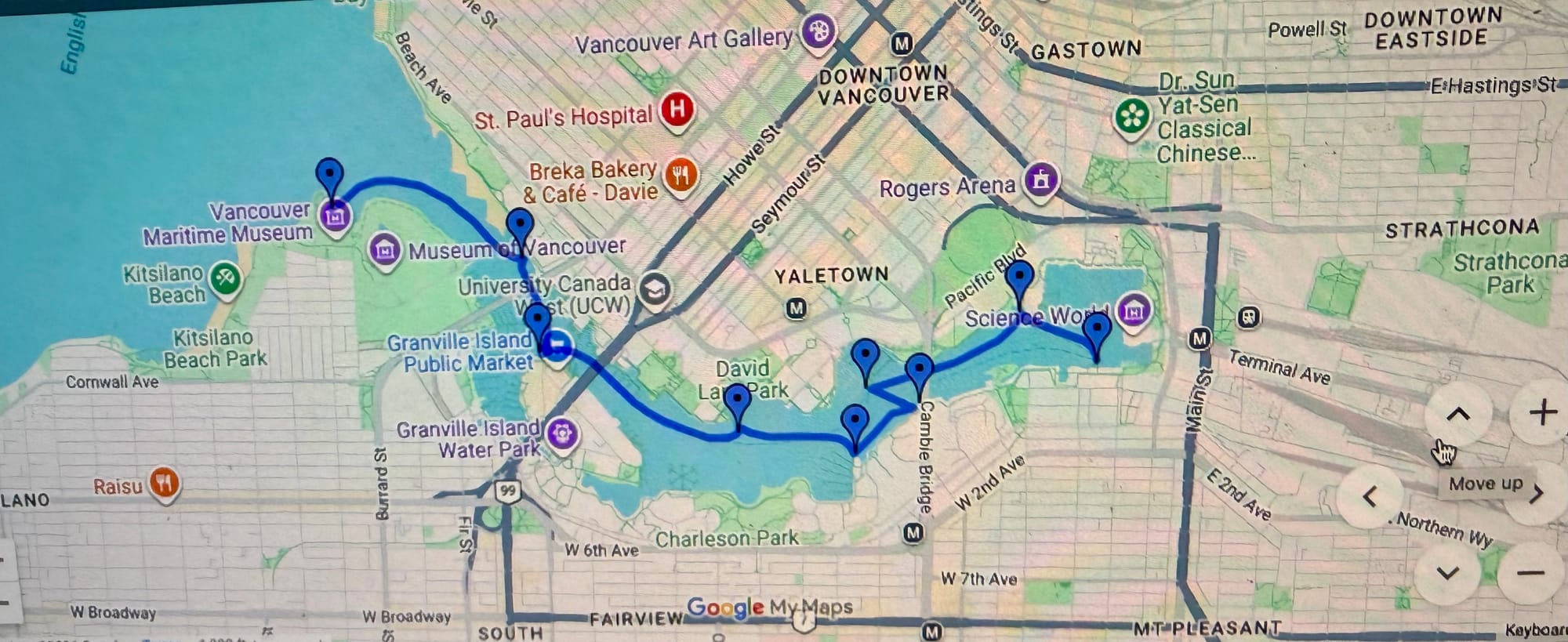
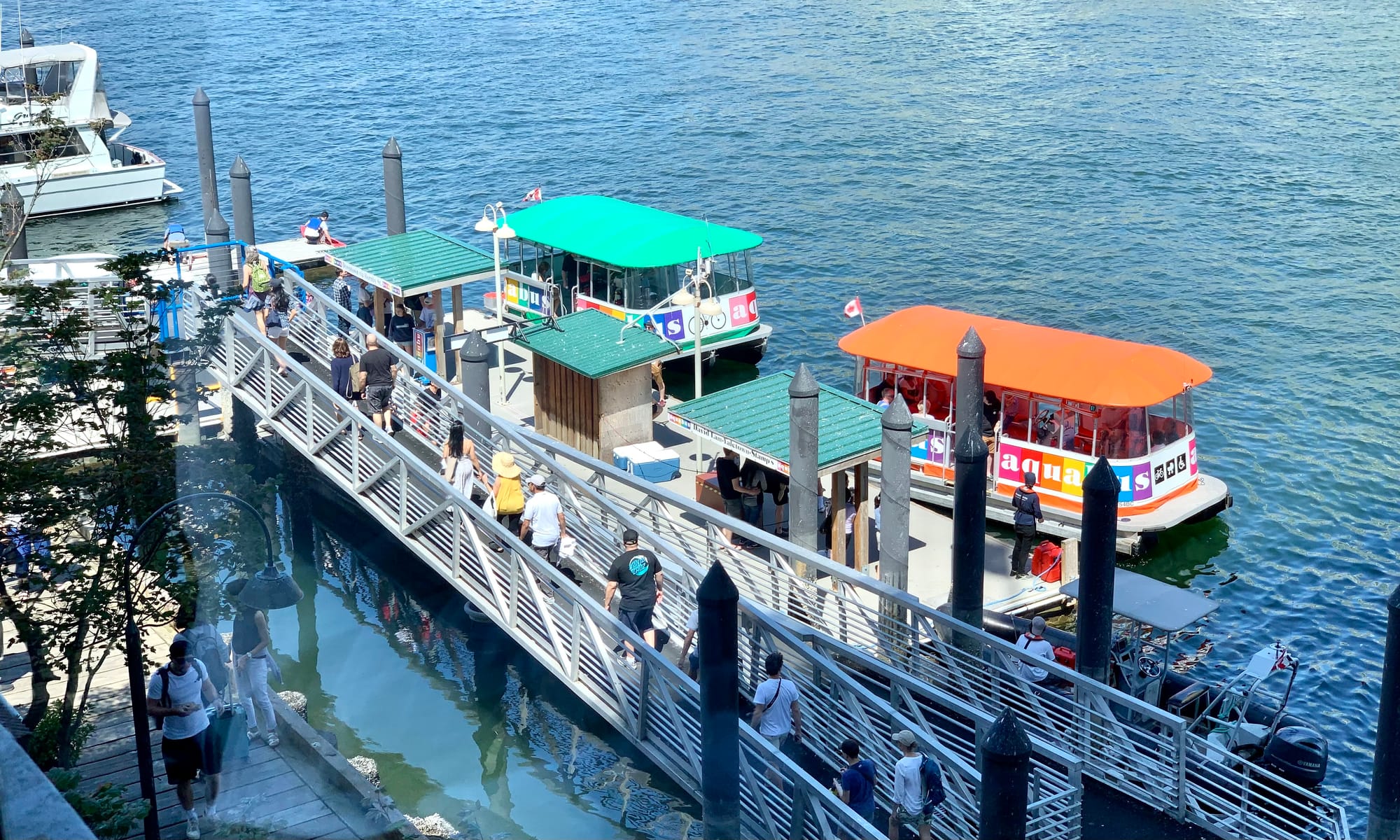
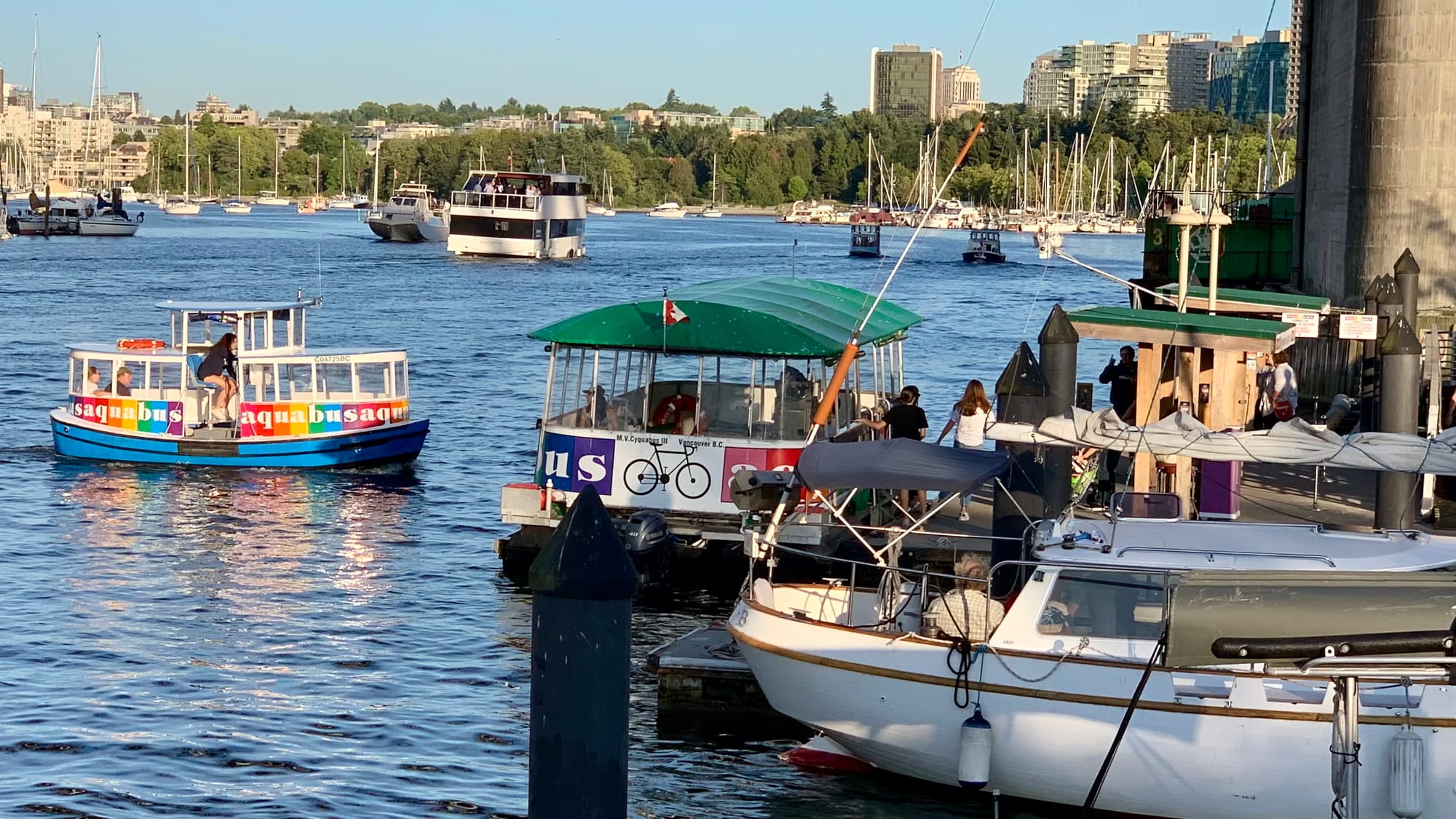
By improving ferry connections between the southern waterfront areas in NYC, we would create a vibrant "waterfront district" which weaves together the waterfront segments in lower Manhattan around Brooklyn Bridge and those in Brooklyn and Governor's Island.
A lot of what works in Granville Island today was proposed by the Red Hook community for its future in the 197a plan, 30 years ago.
2) Create a waterfront promenade
While Brooklyn Bridge Park has a waterfront promenade along some neighborhoods, it is too short and limited. It ends at Pier 6, where it transitions to the Brooklyn Queens Greenway. This promenade needs to be extended all along the waterfront to make the most of the amazing natural asset that we have there. It is a shame to have a view as incredible as that of Manhattan across the river and not create a waterfront that allows people to fully enjoy it.
A great promenade is one where you can walk continuously without having to cross paths with cars, flanked by sources of shade, amenities, beautiful sights, and interesting assets. It should invite strolling, lingering, and connecting and even string together key landmarks and destinations like cultural or civic institutions. It should host events and activities that reflect the city's residents and that celebrate what makes the city unique and special.
 Fred Kent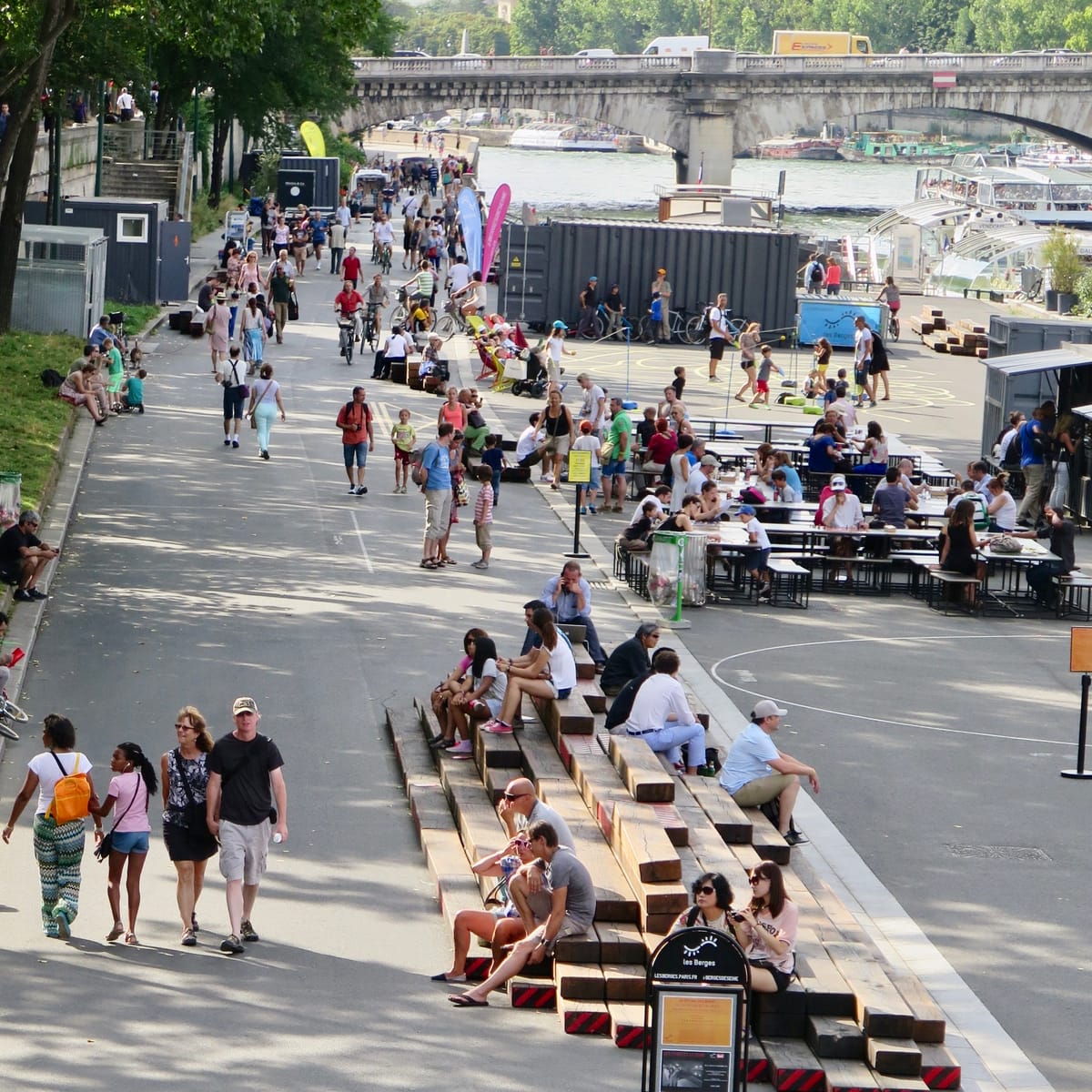
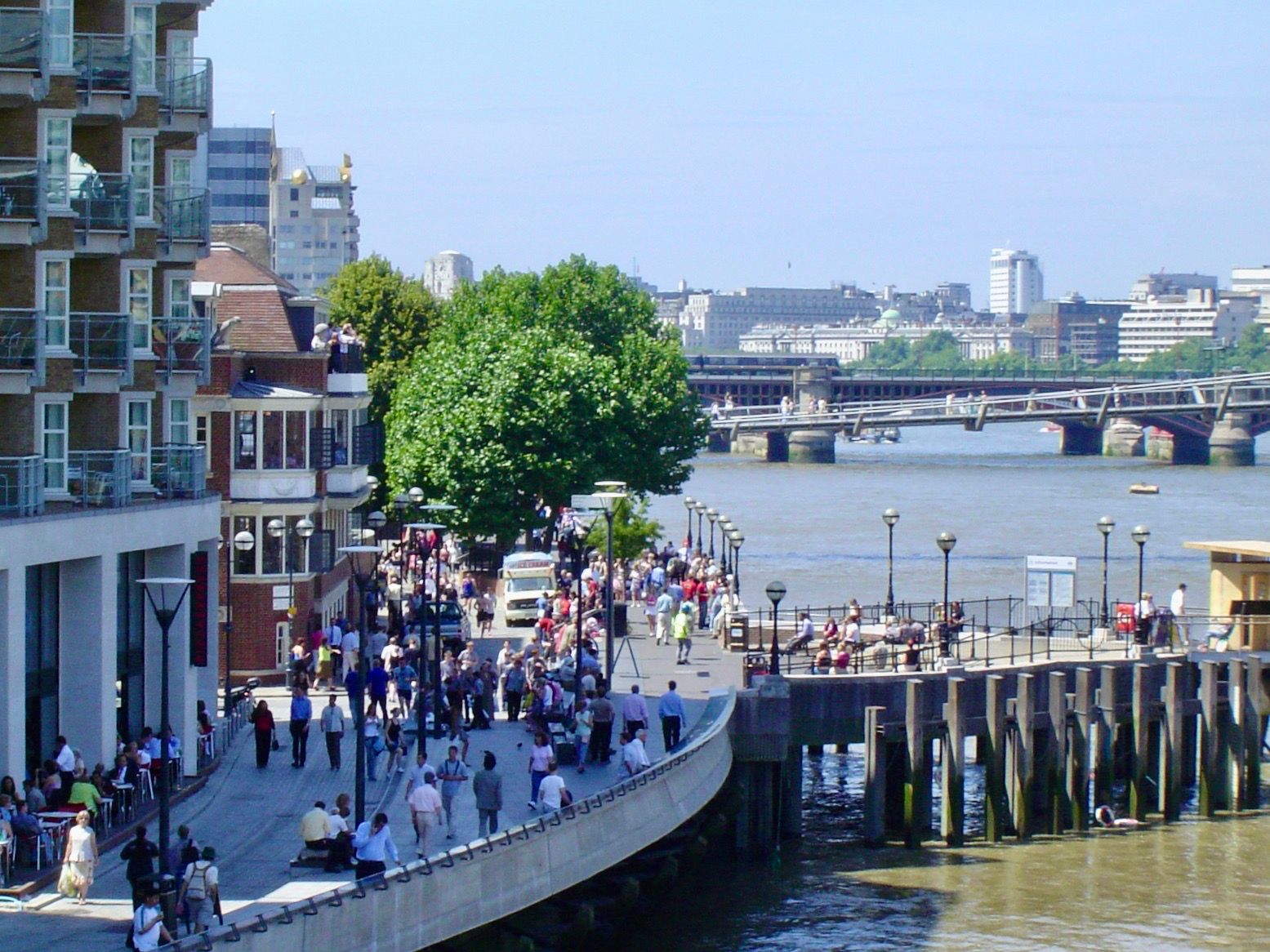
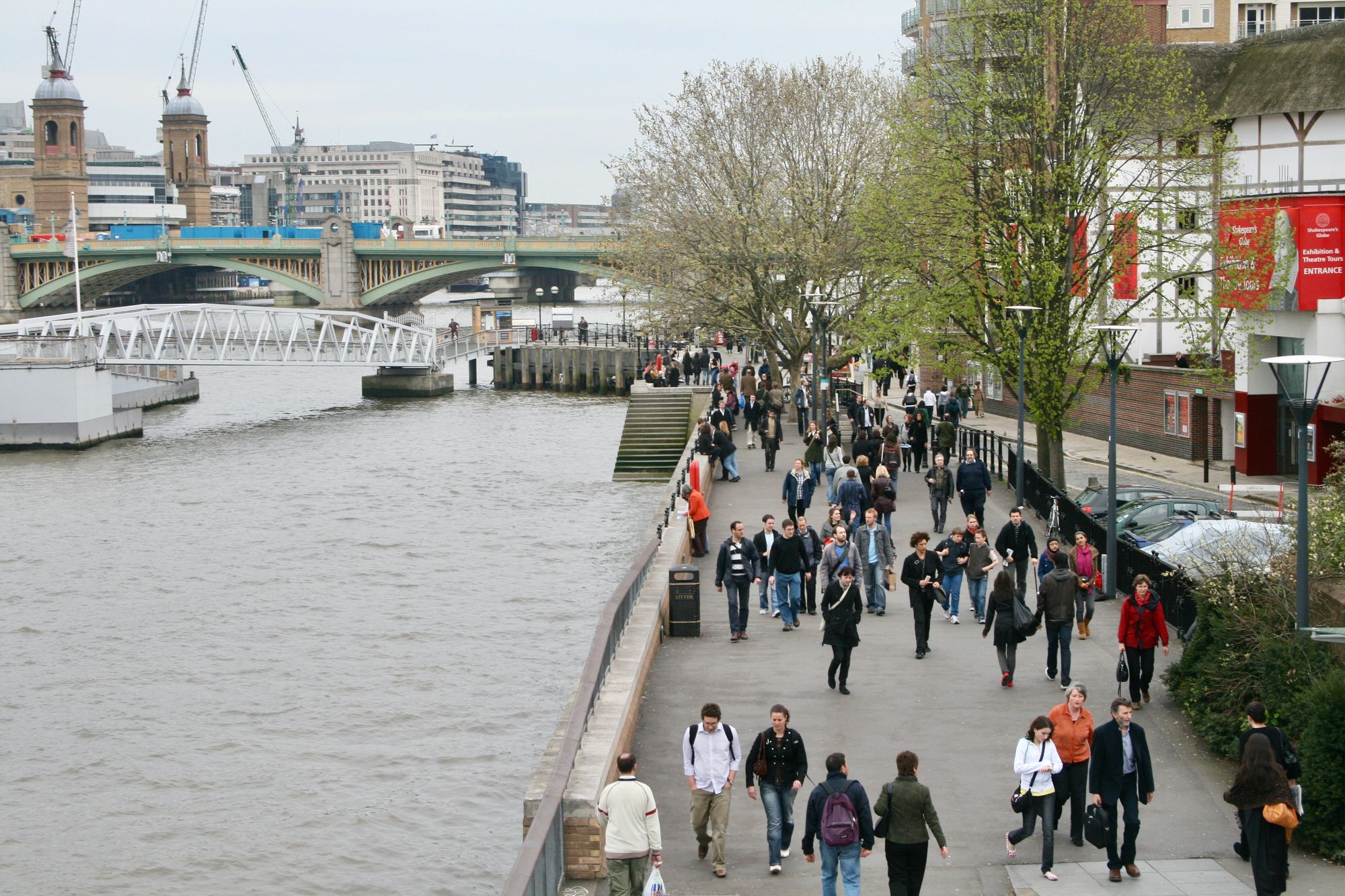
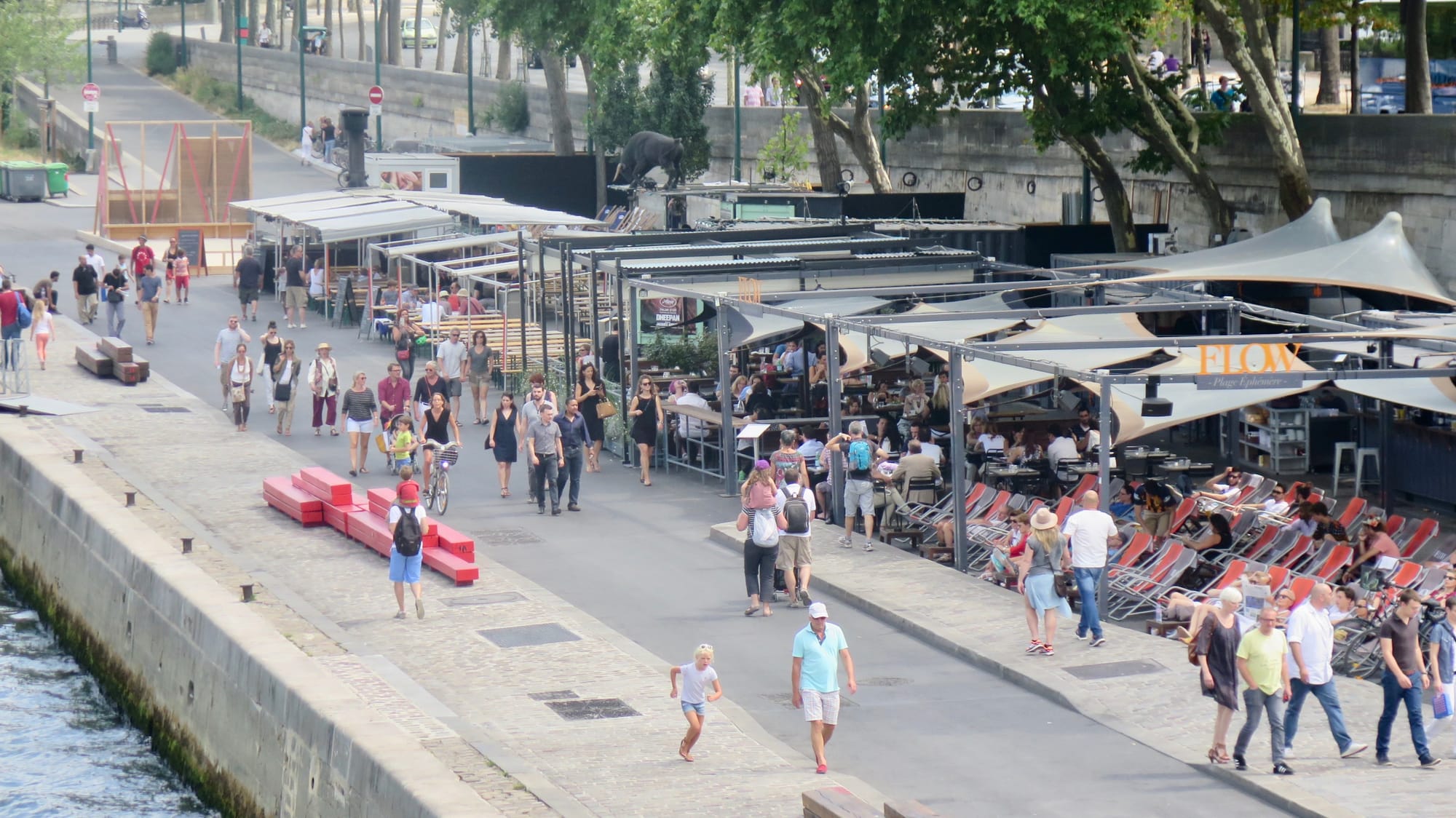
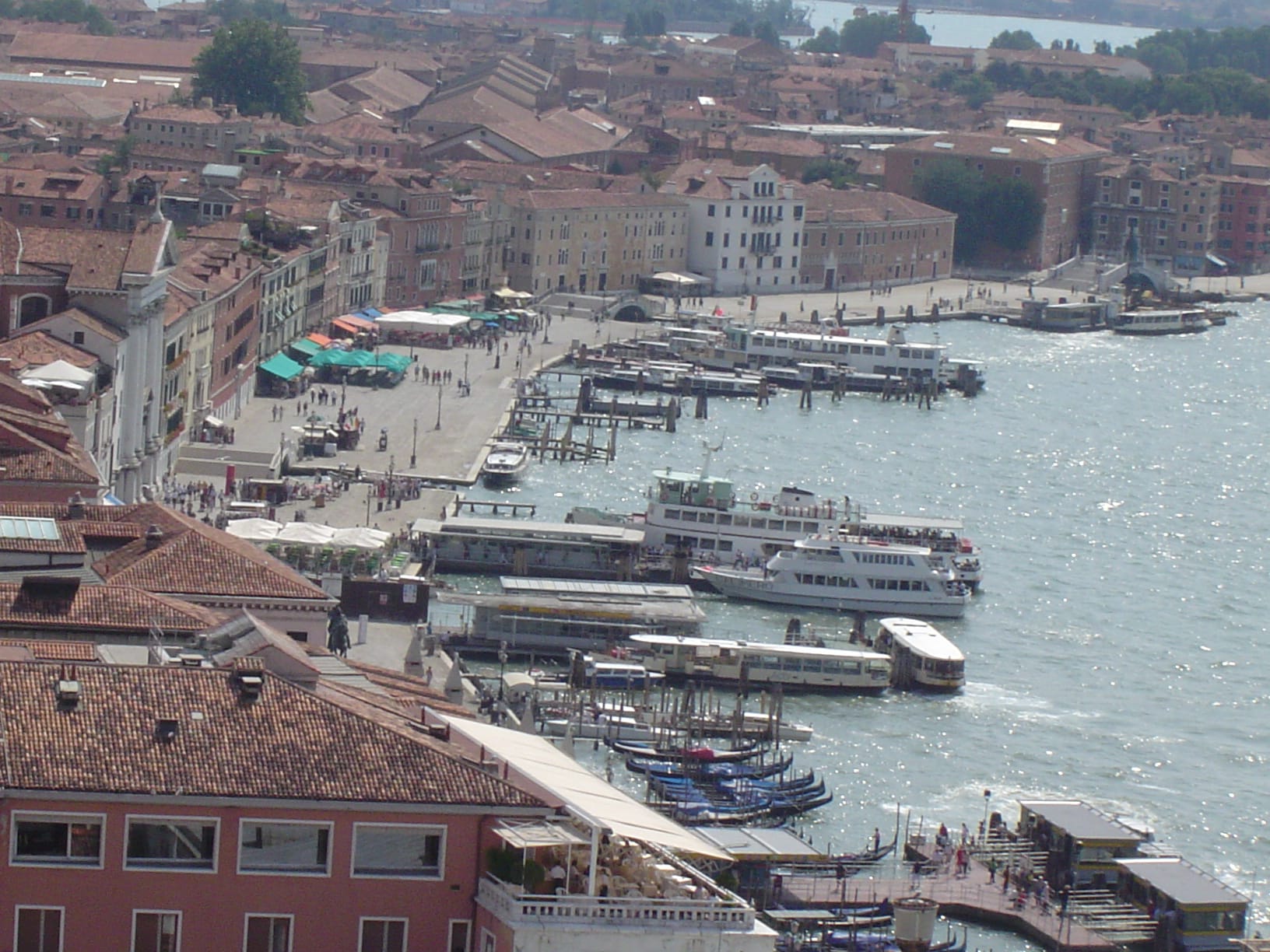
Waterfront promenades
If a promenade is too short, it doesn't encourage sufficient use because it doesn't allow for people to relax into the flow of an extended stroll. The Brooklyn waterfront promenade should therefore wind through and connect all the key places along the water and even key institutions and public places further in through internal connections.
Borough Hall and Cadman Plaza to Fulton Landing
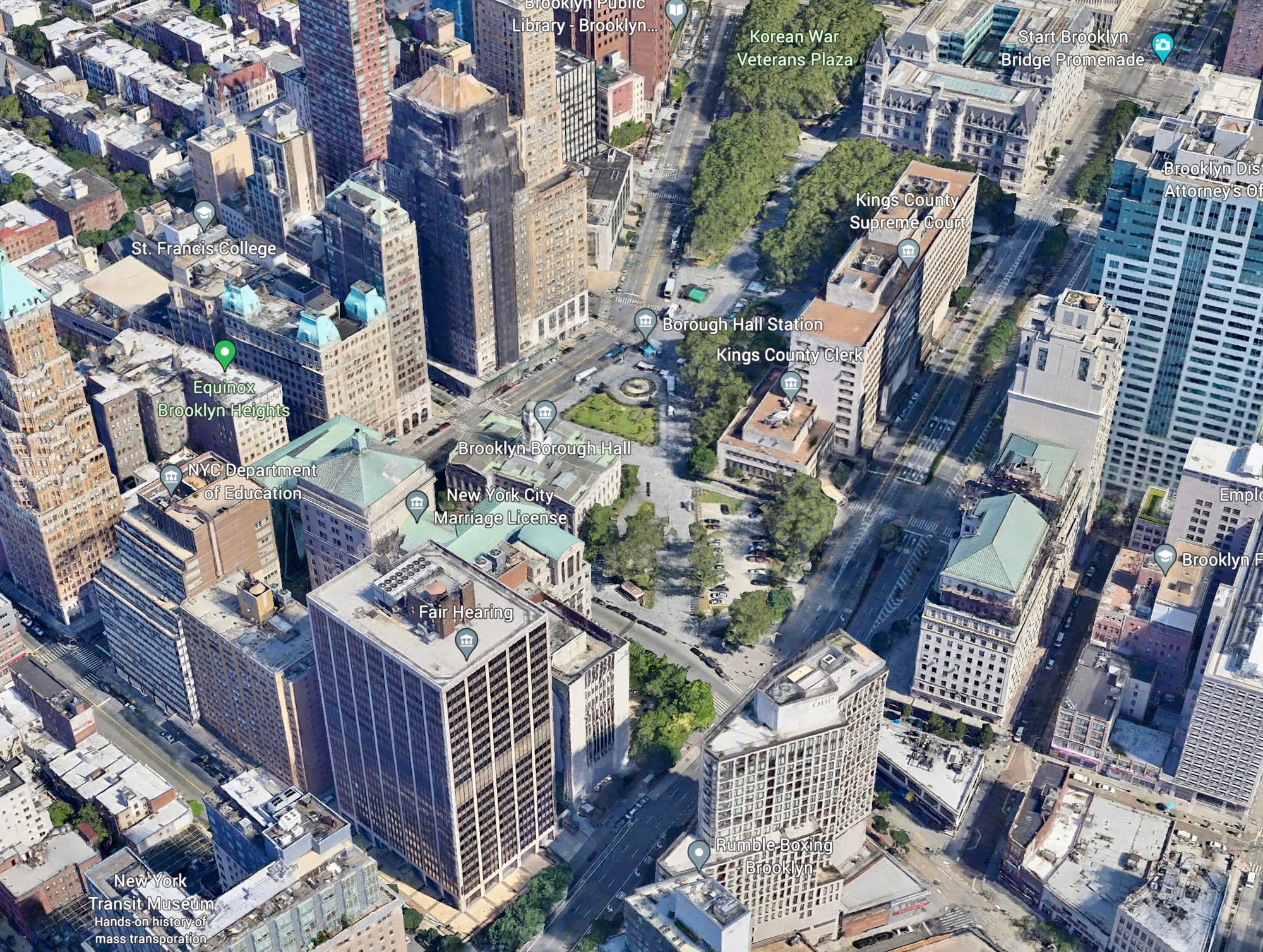
Atlantic Avenue and Brooklyn Waterfront
Red Hook to Gowanus
3) Create a vibrant public space on the East River through activations, amenities, and programming
A waterfront must be more than just a channel to walk, bike, or drive along to reach a place; it needs to be an attractive place in its own right. Having features there that make it so is what creates thriving public life. By lining the promenade with shops, amenities, and places to eat, drink, sit, and play, it becomes a place that people want to spend time in, not just move through. Urbanist David Engwicht describes this as "a series of rooms, instead of just a corridor." A great waterfront is a series of "rooms" – places/destinations – to stop and spend time in, connected by the "corridor" of the pedestrian promenade that allows them to travel comfortably along its length.
Valuable additions along the water:
Pop-up restaurants and cafes to support social life
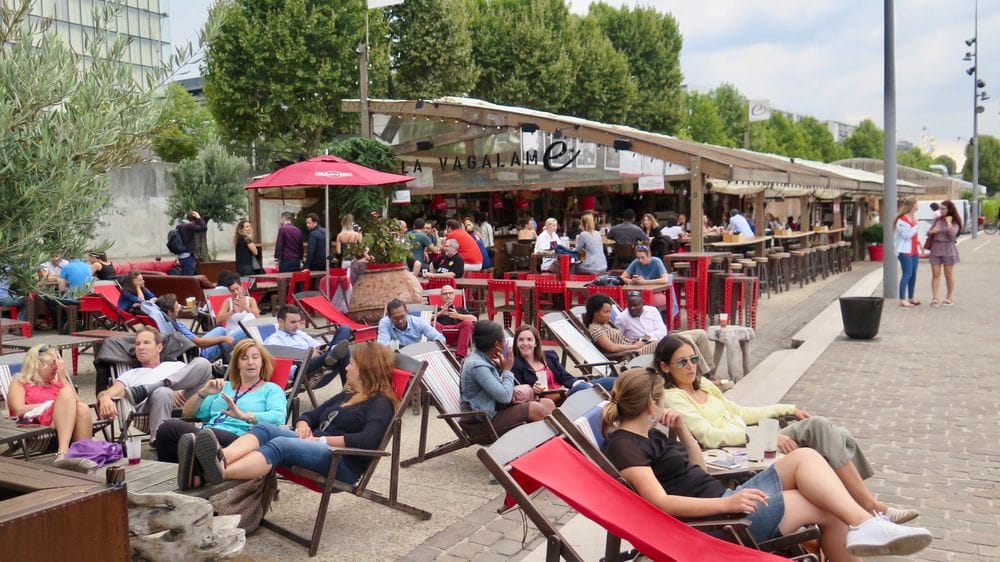
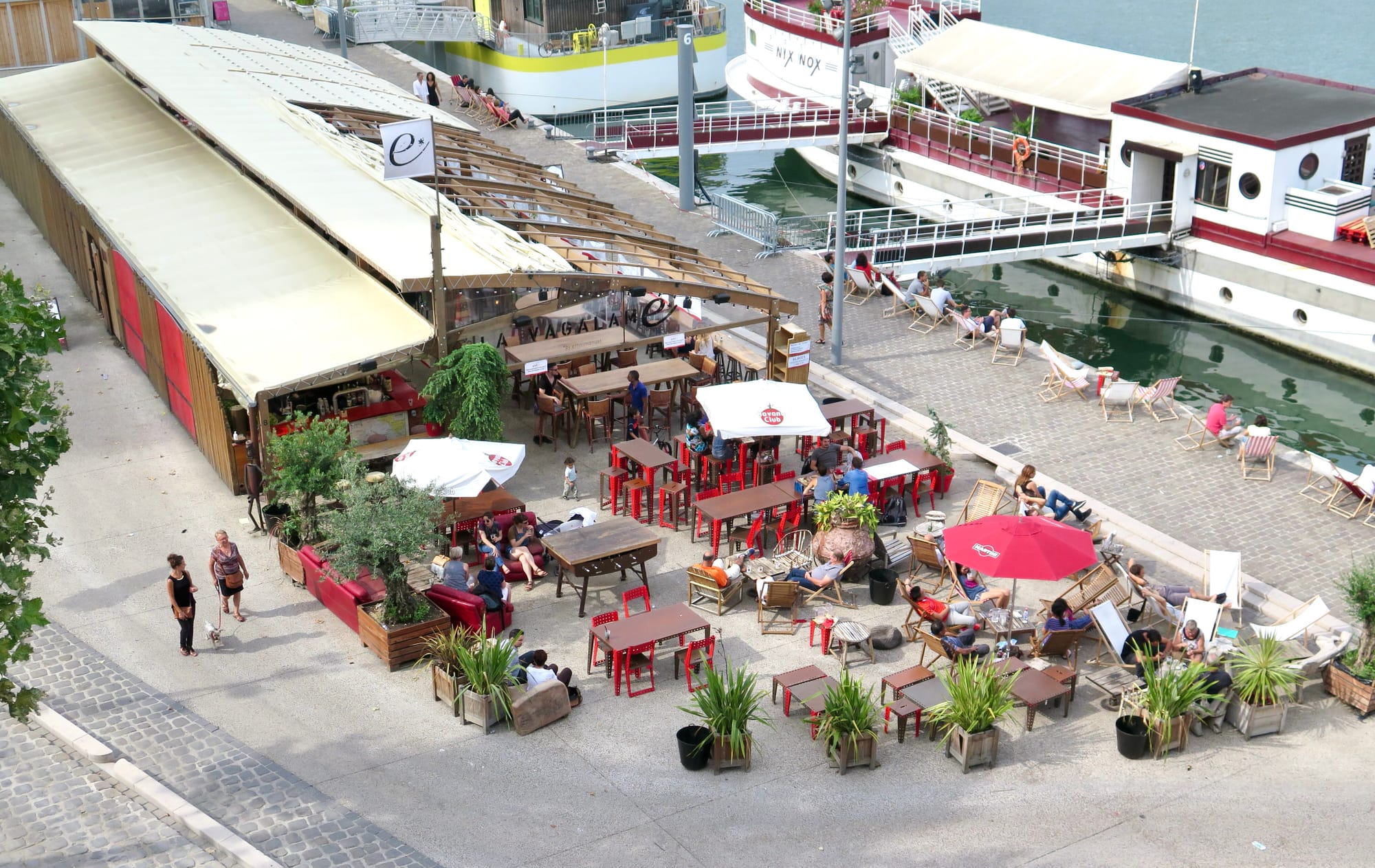
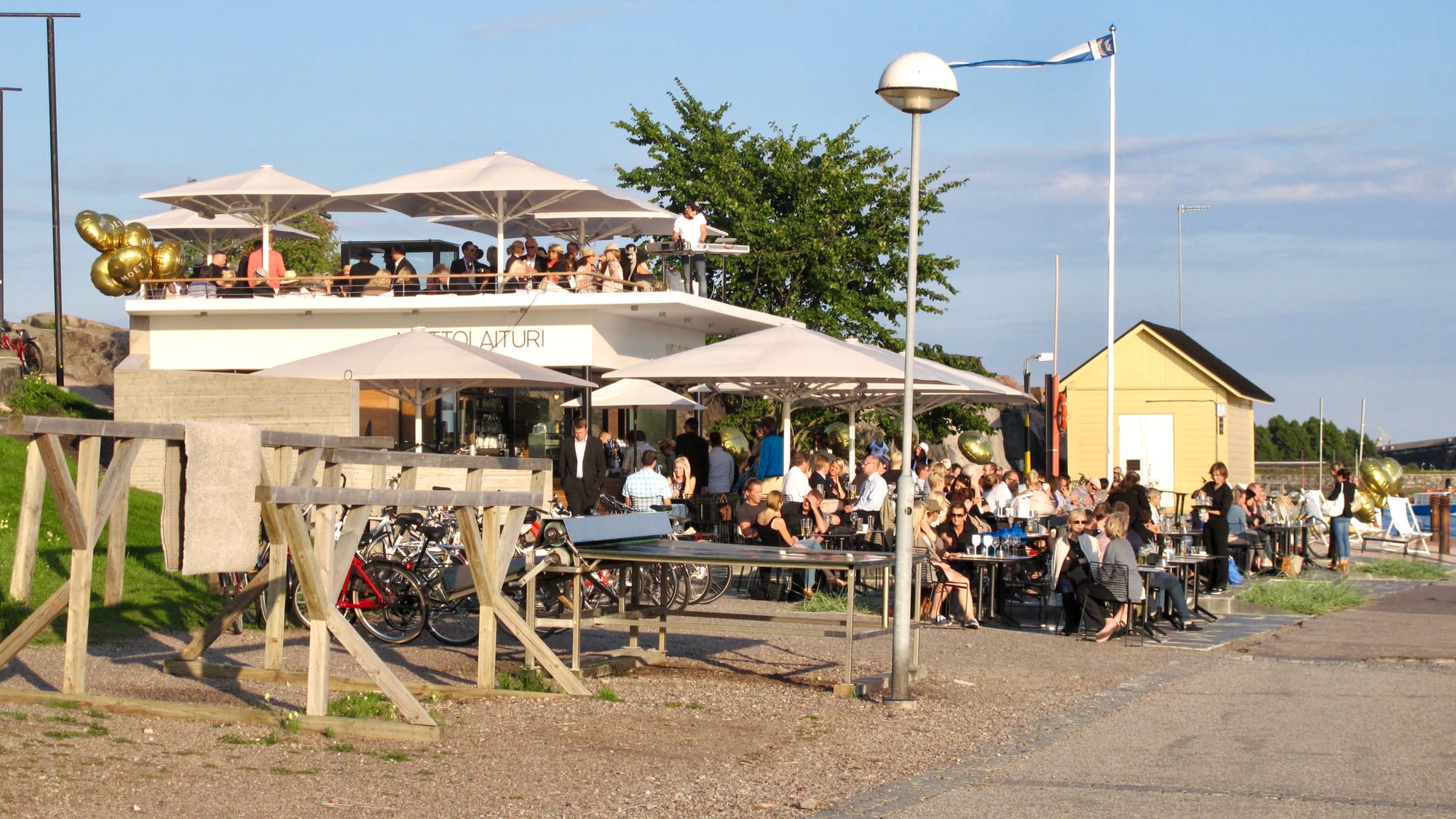
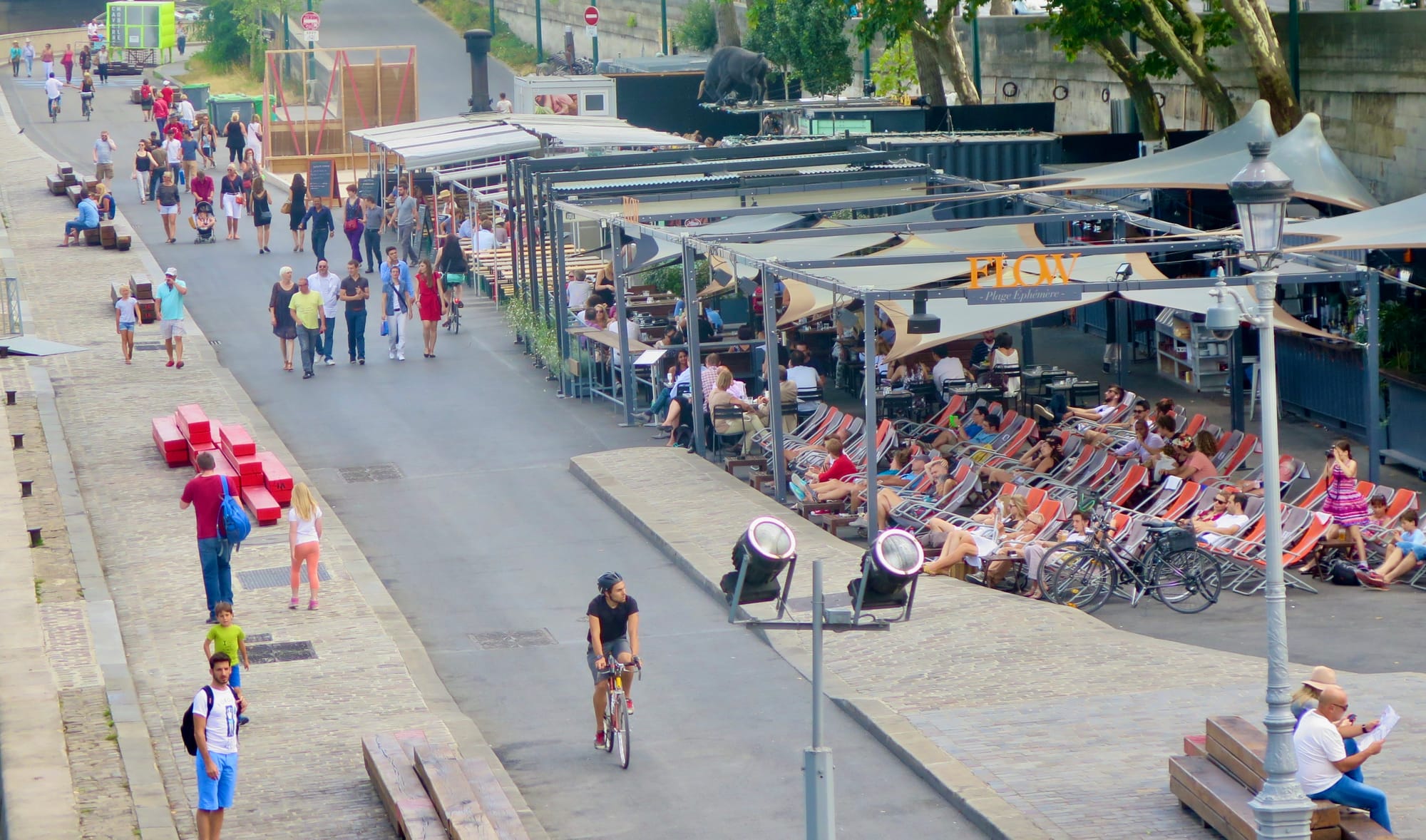
Great waterfront restaurants in Paris, Stockholm, and Helsinki
Food and drink kiosks/trucks/stands as more casual refreshment options
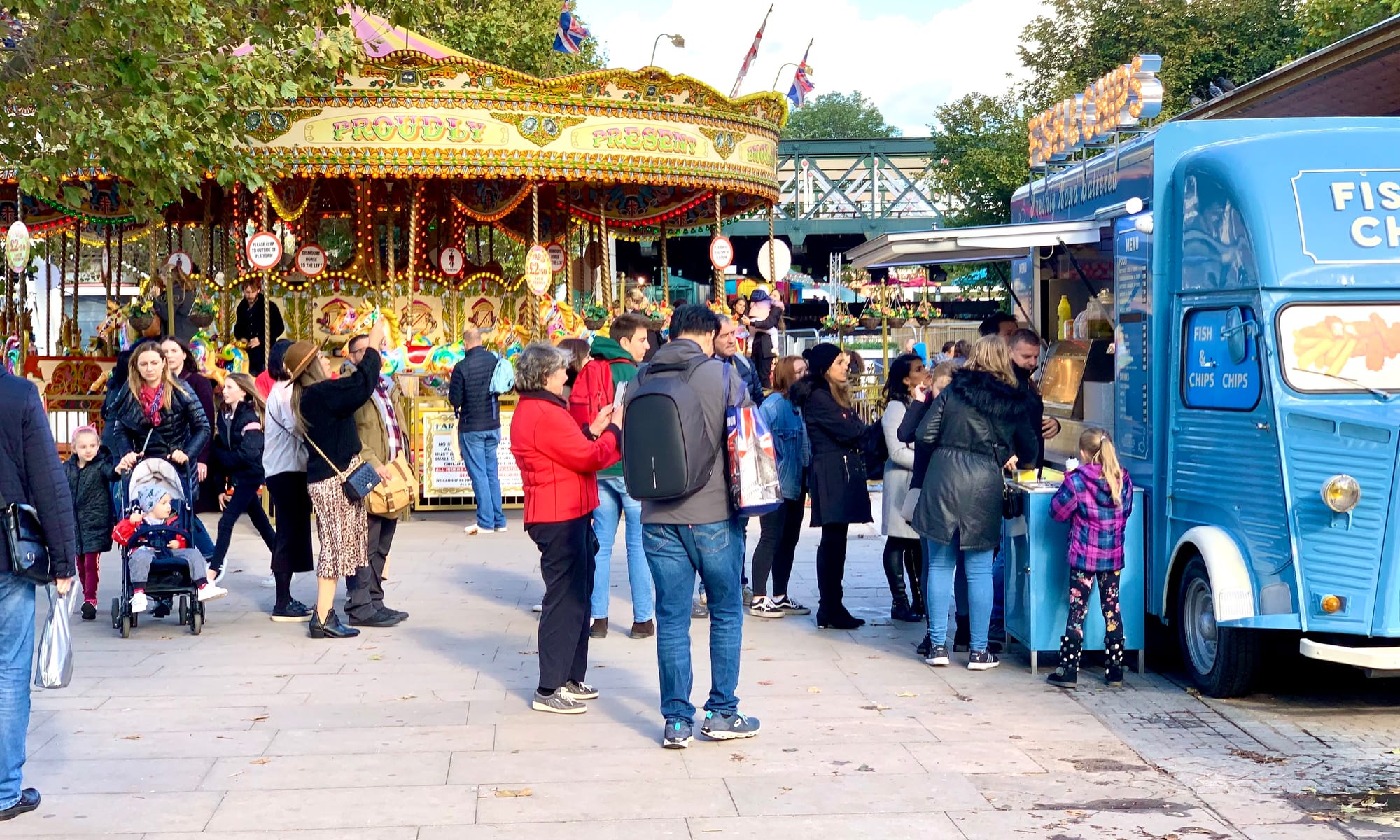
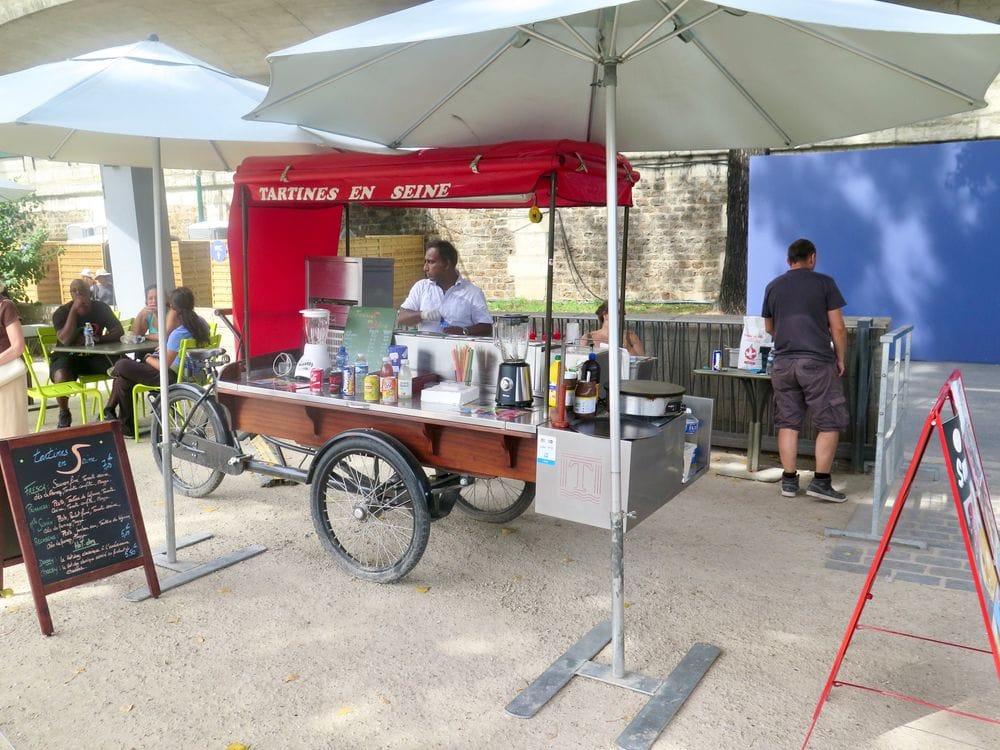
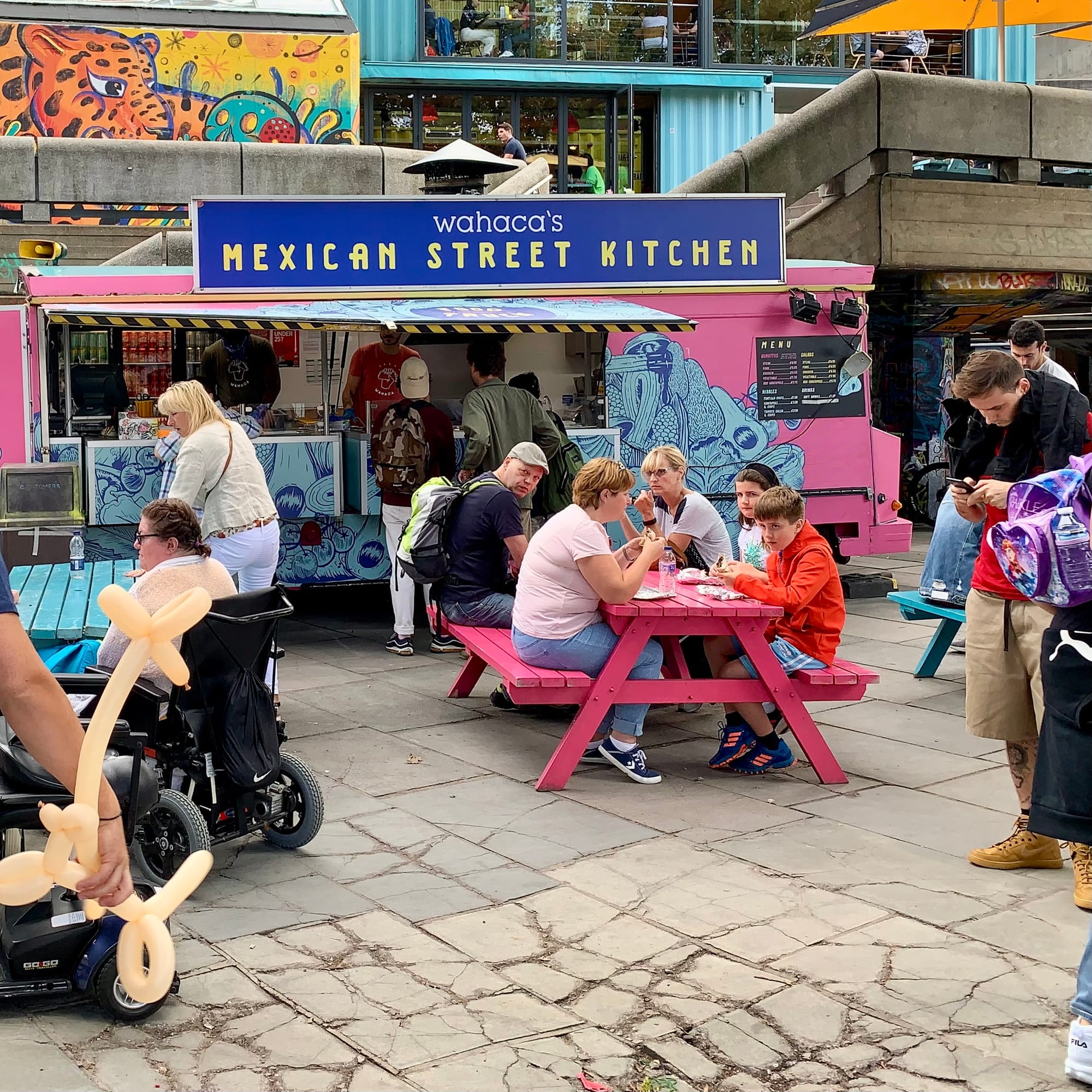
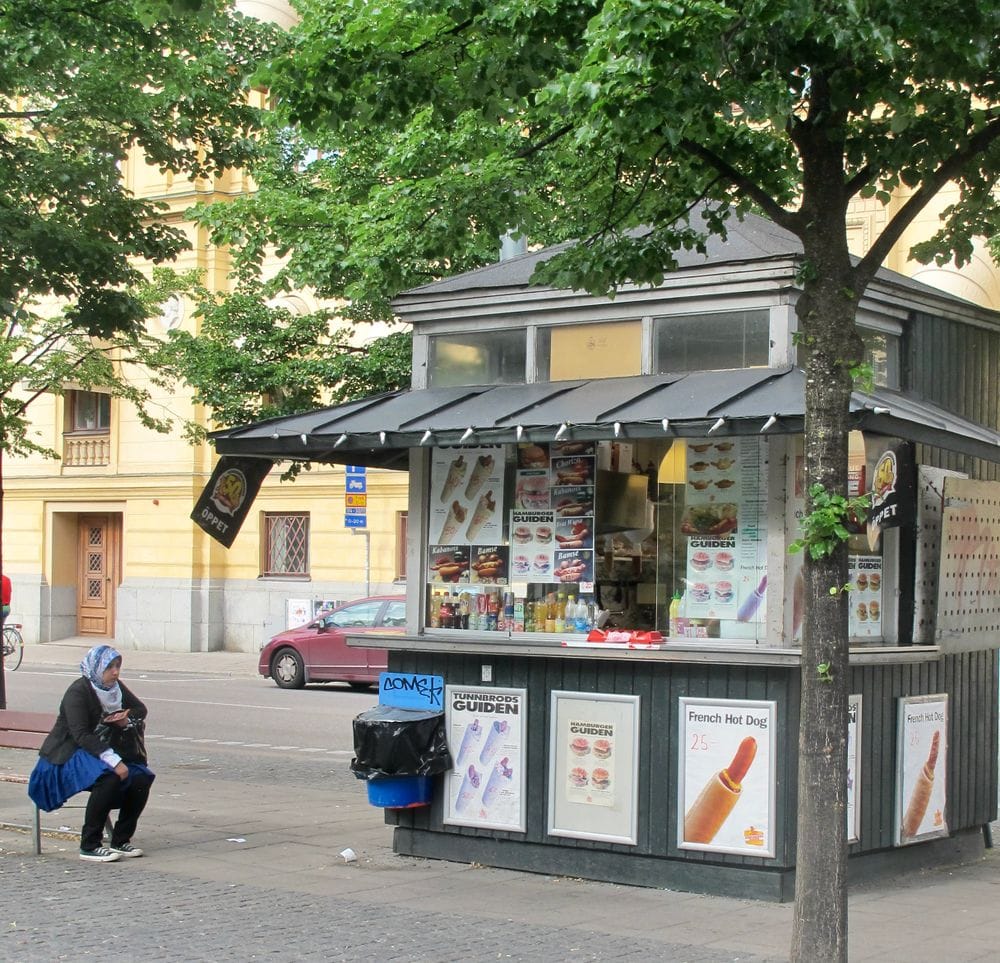
Casual refreshment stations from trucks to kiosks
Creative public seating to invite relaxation and lingering
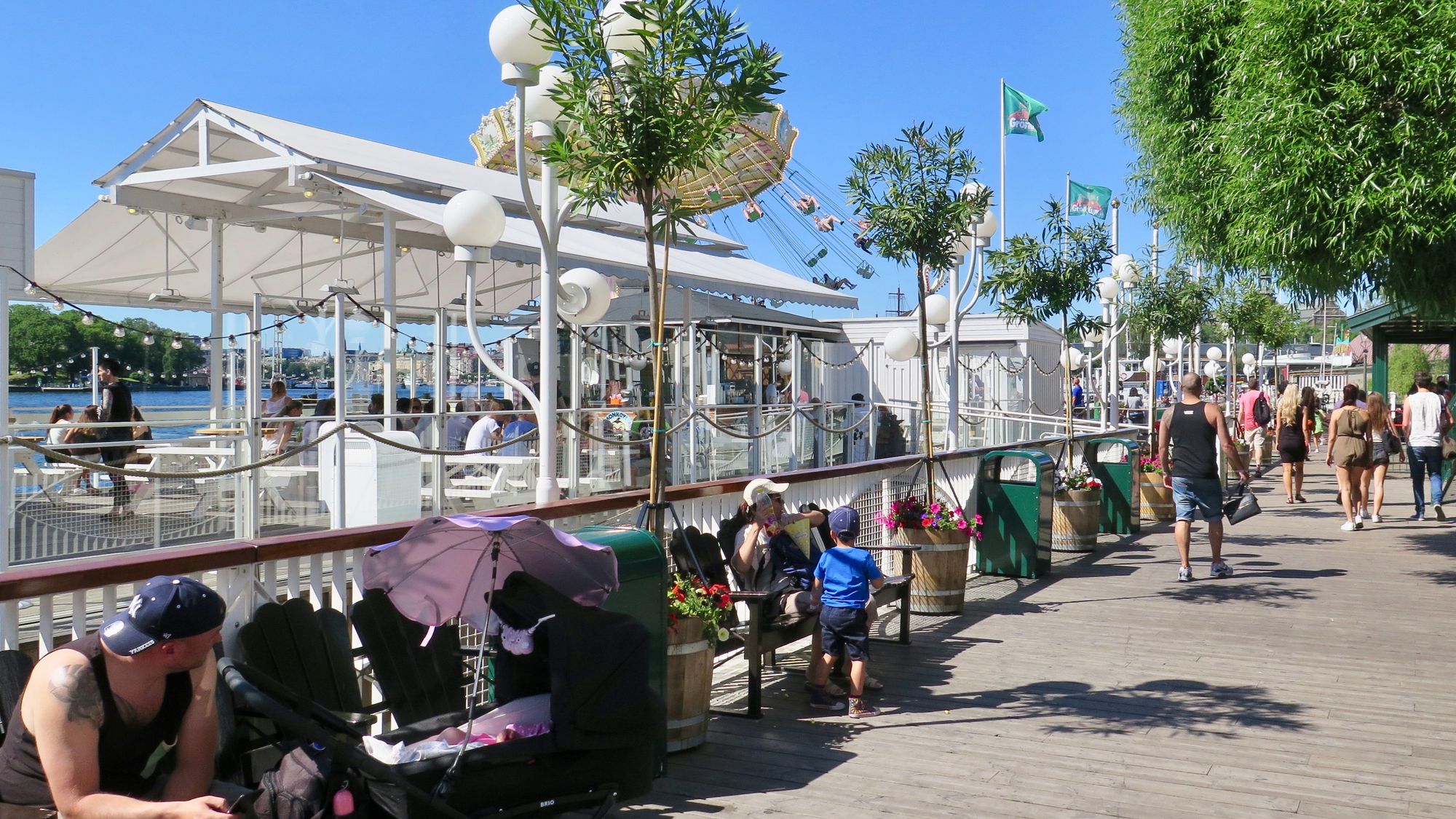
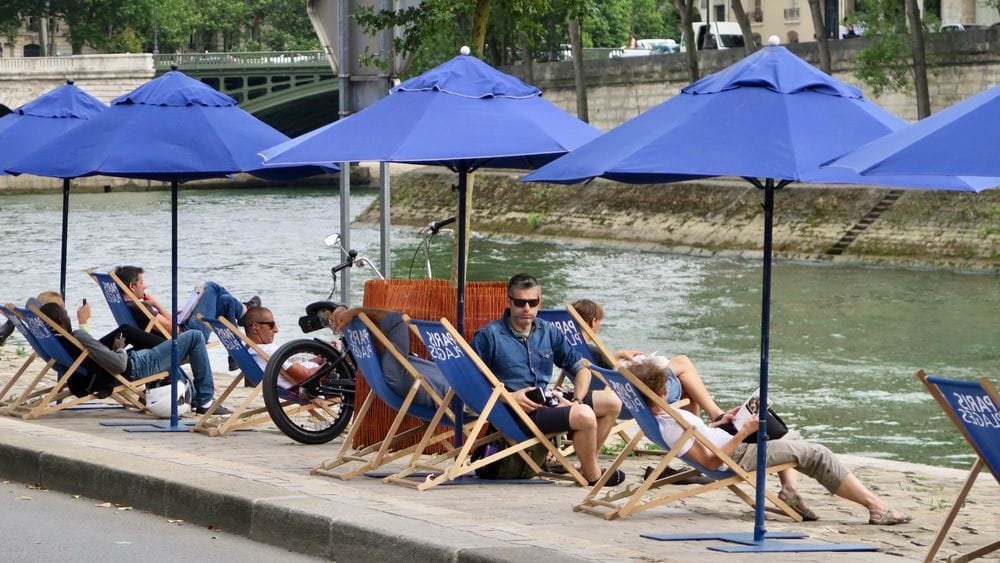
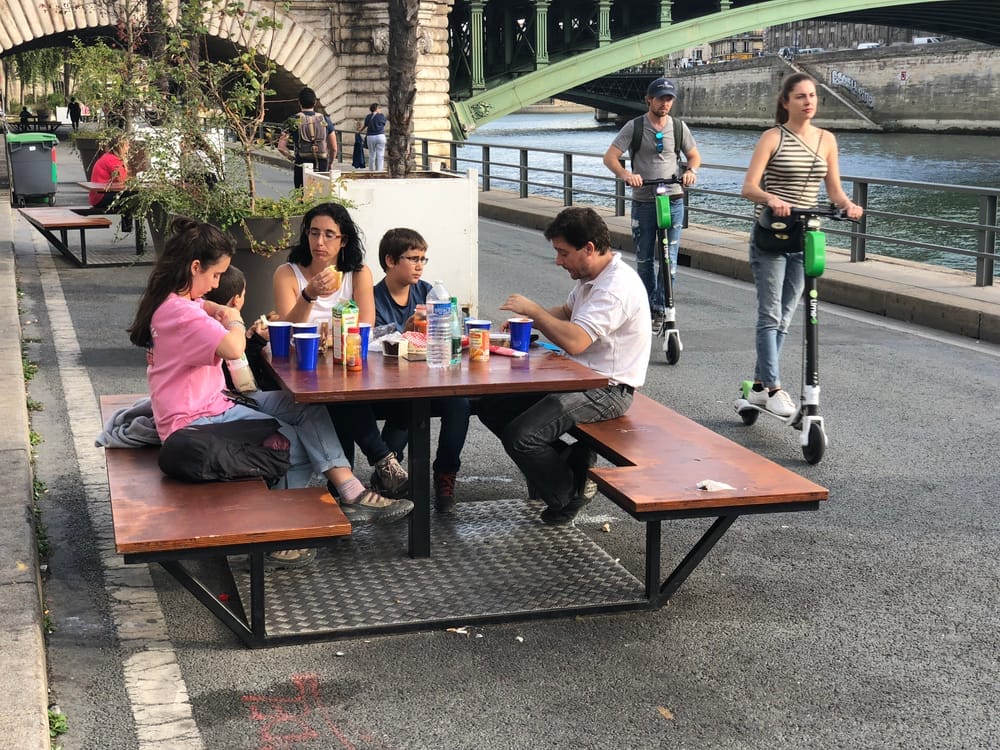
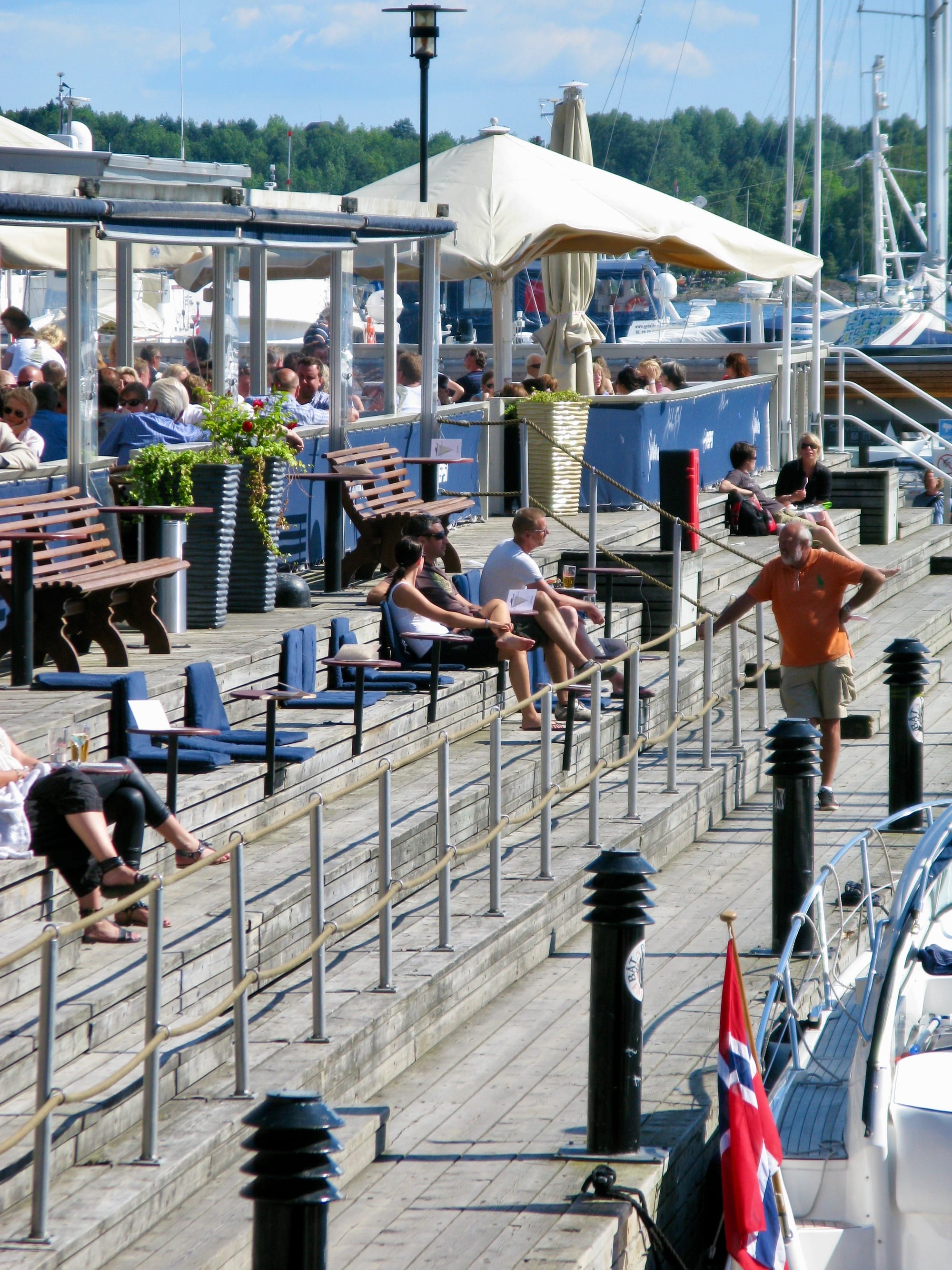
Creative seating options for individuals and groups
Features that support fun and joy for people of all ages
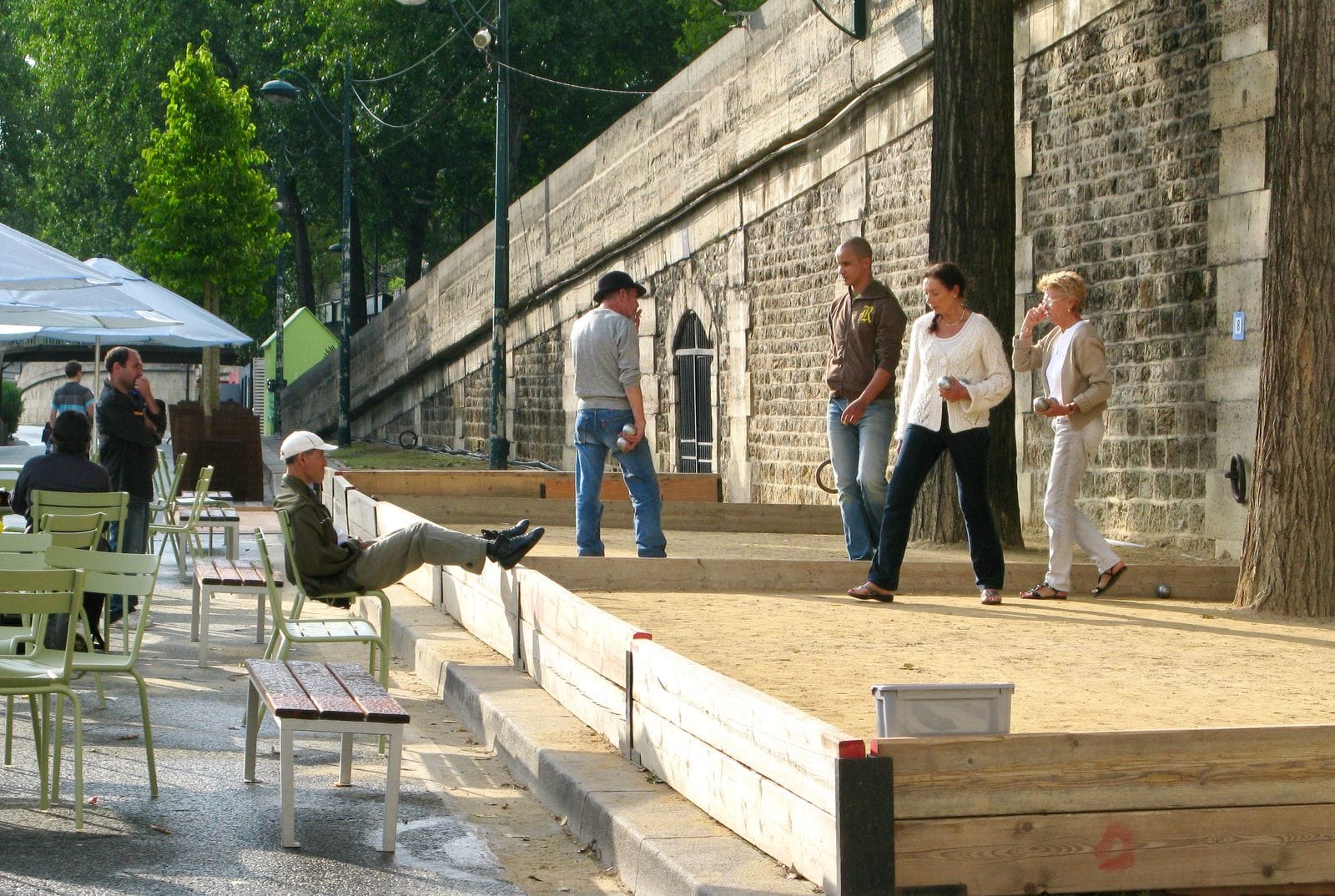
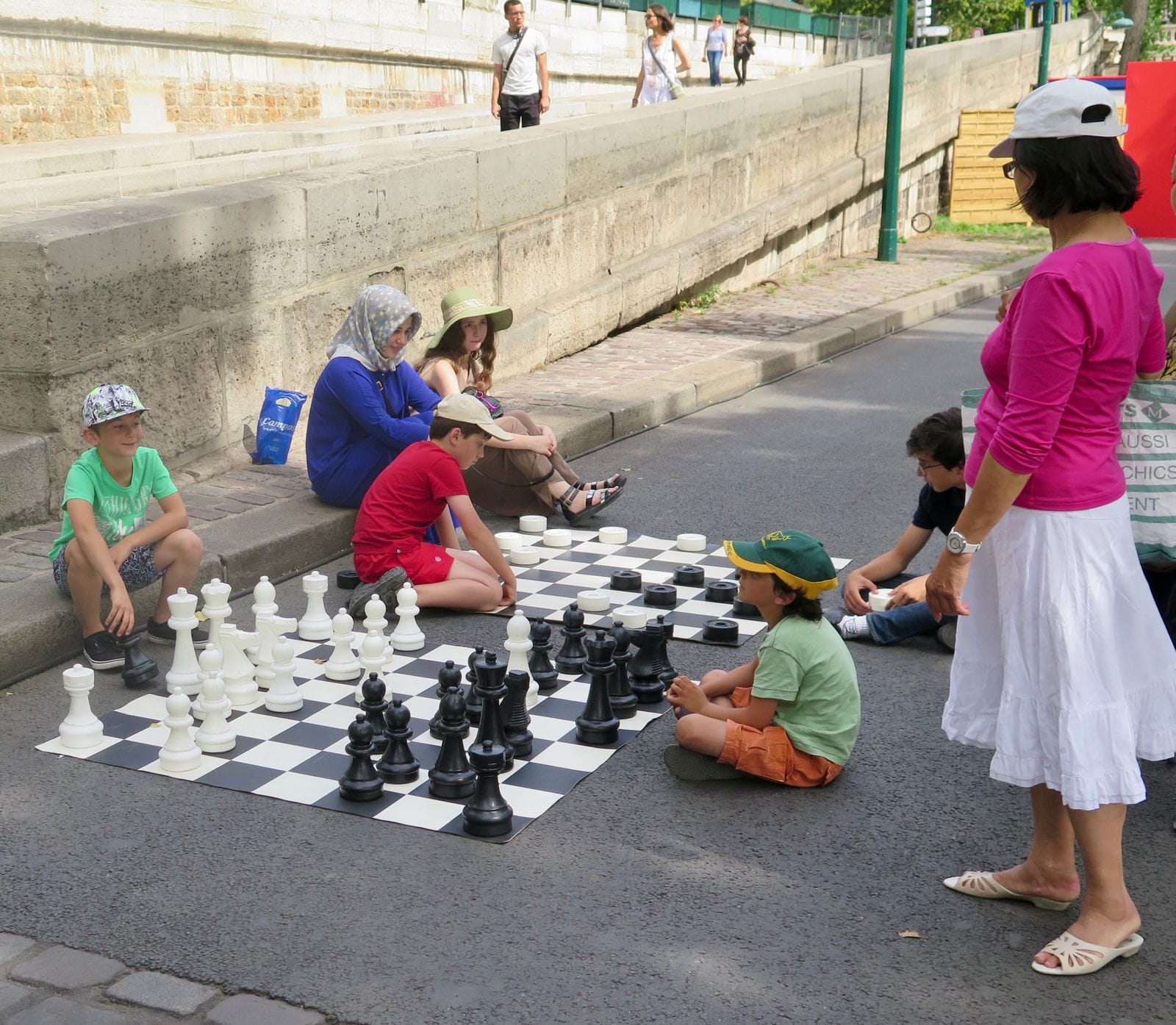
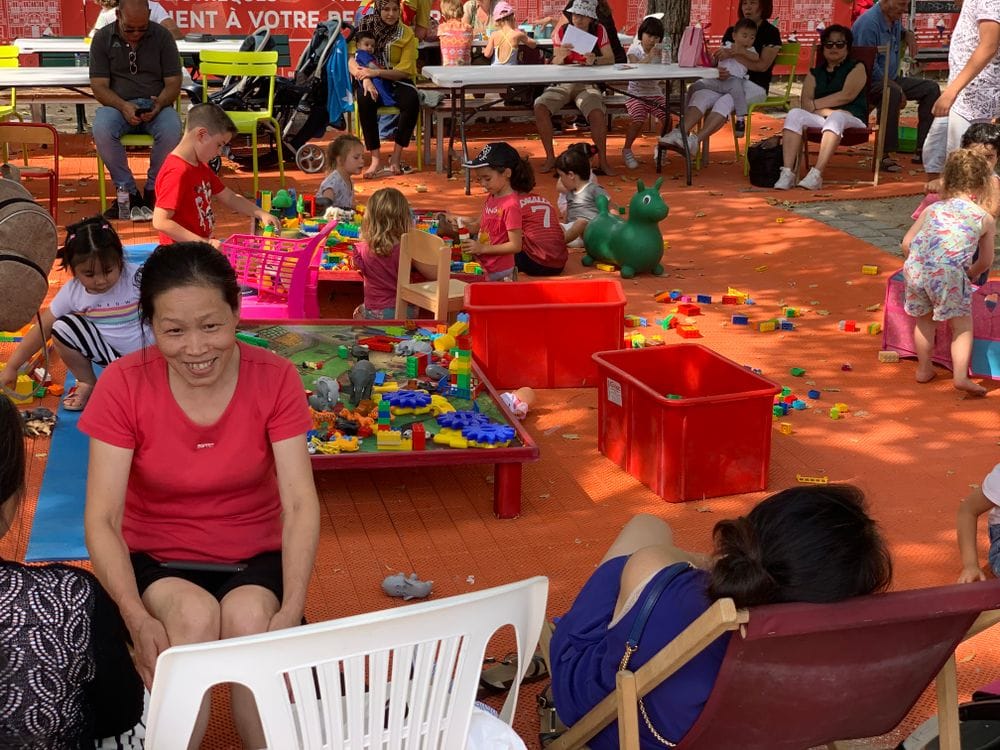
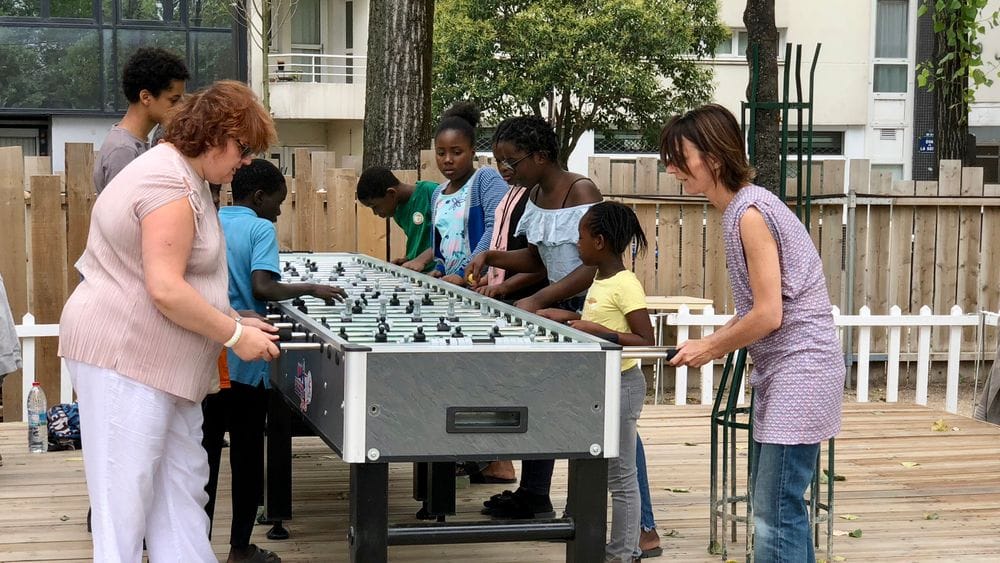
Paris Plage
Programming that inspires community and connection
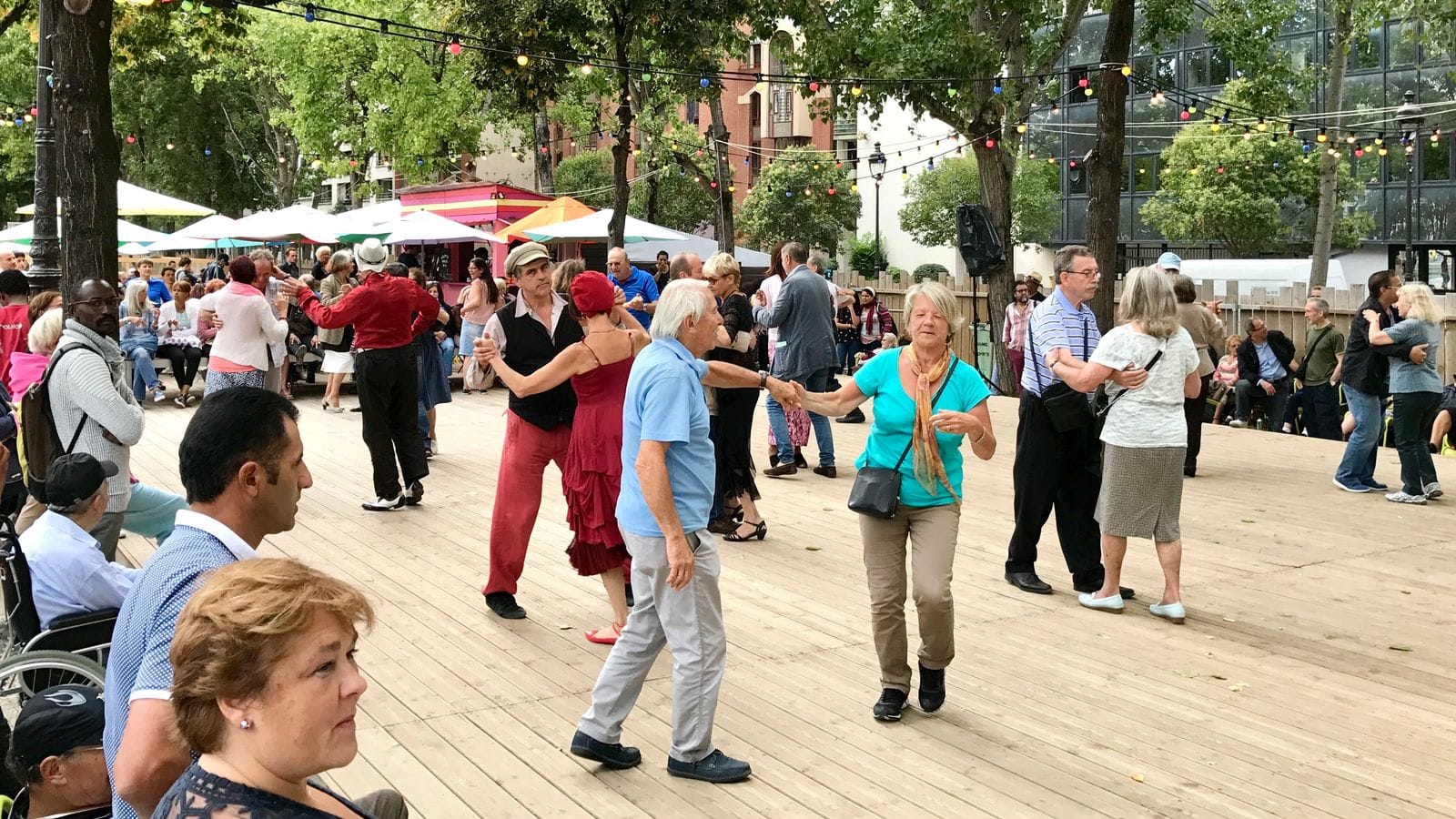
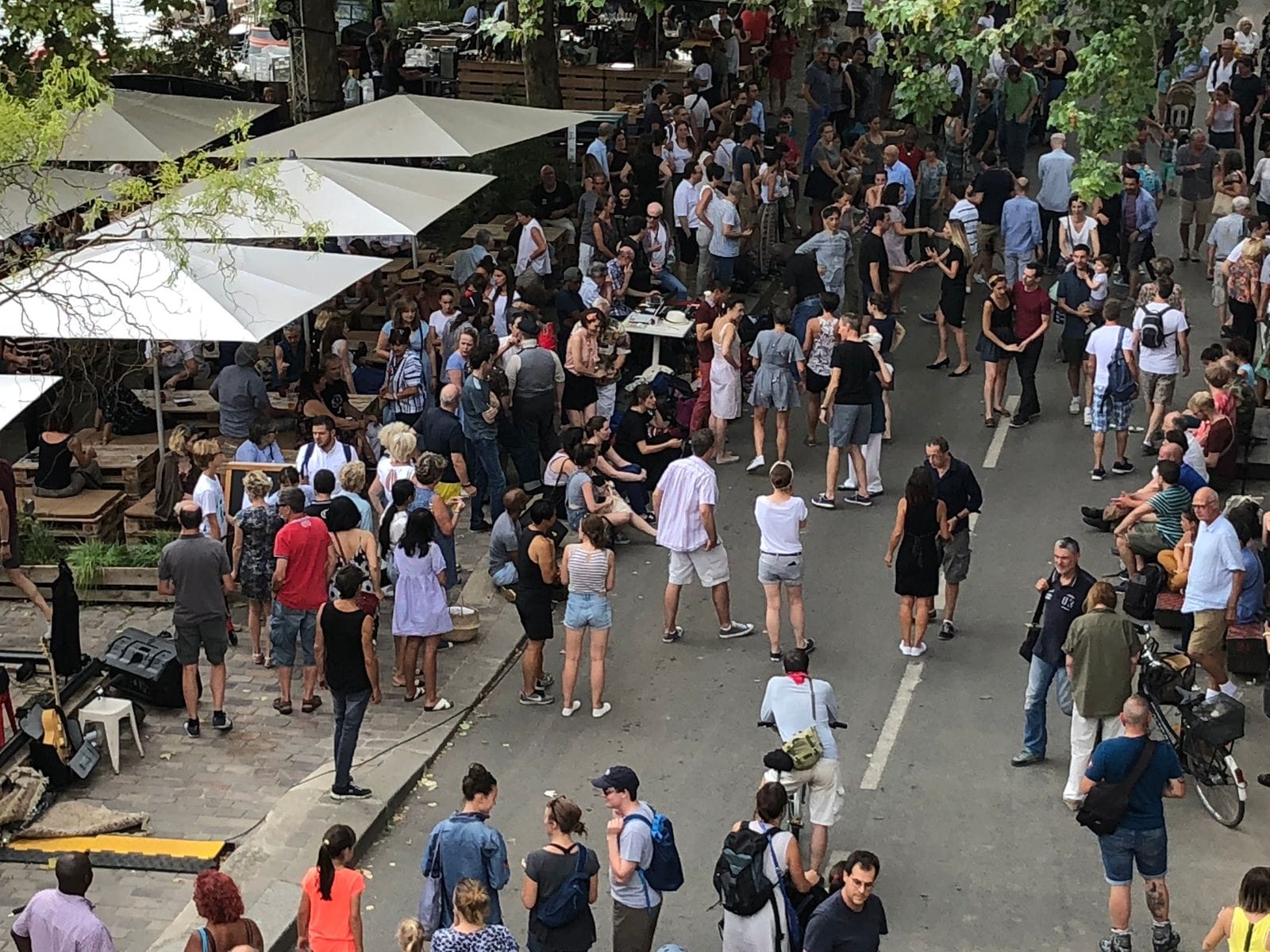
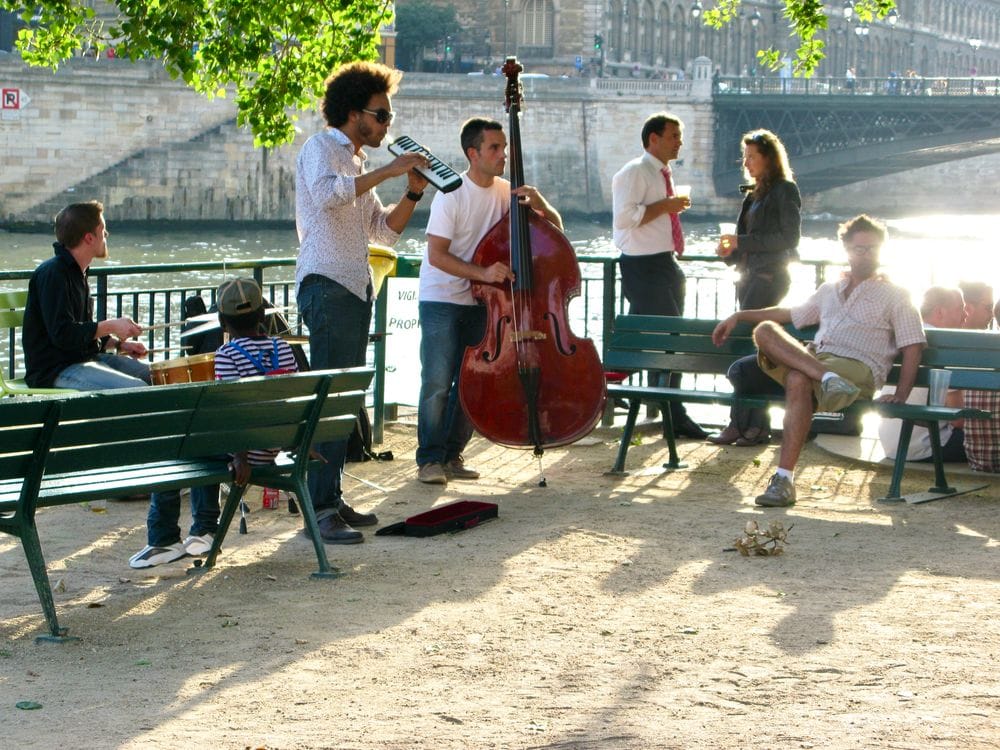
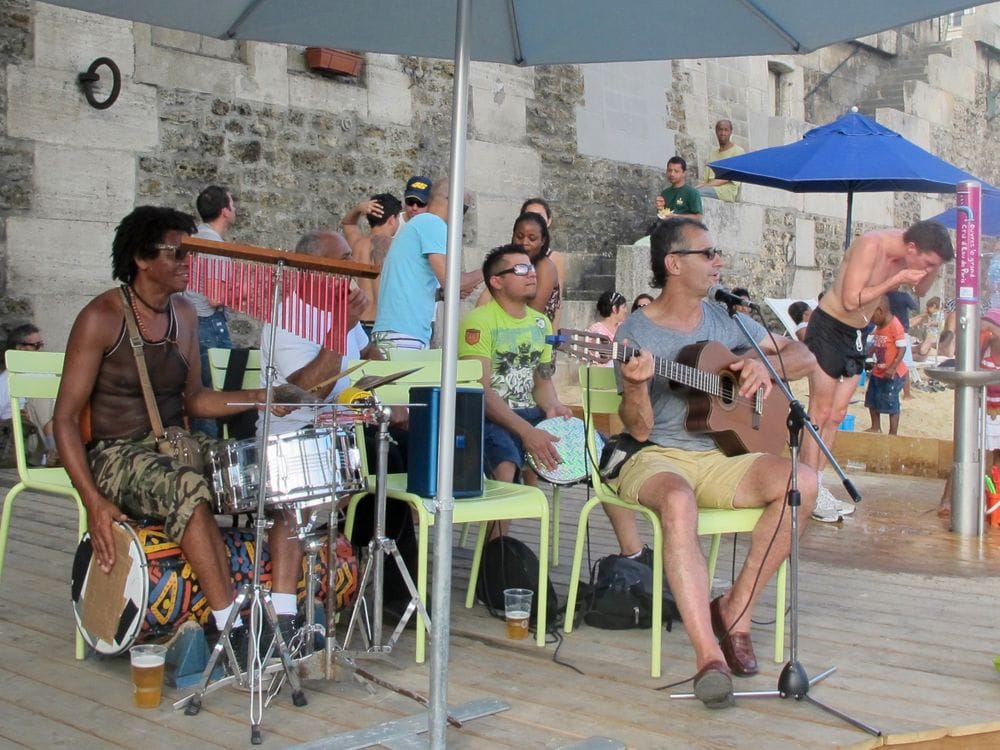
Music performances, dance classes, and more
Standout waterfronts around the world
1) Paris – A 20 year transformation
If we were asked to rank all of the waterfronts in the world that we're familiar with, easily over 100, we would say that Paris has two of the best. The first one is along the Seine and the other one is along the Basin de la Villette.
As we describe on the post "How Paris Breaks All The Rules To Be the Best City for People" both of these waterfronts are extraordinary. But the reason they’re so impressive is not their design, rather how they are programmed. With a variety of different activations along the water, they create the experience of a series of unique outdoor "rooms" to gather at.
Twenty years ago, Paris started to completely transform itself by focusing on improving the places that Parisians spend time in. The key to its incredible 180 degree transformation has been shifting focus from traffic throughput and car infrastructure to the development of vibrant public places to support social and community life.
As the changes Paris implemented started to revitalize whole neighborhoods and have positive impacts on the environment, the city saw firsthand the powerful impact that this new focus can have on the its future by improving the wellbeing of the population. Brooklyn can experience a similar revitalization if it embarks on such a priority shift.
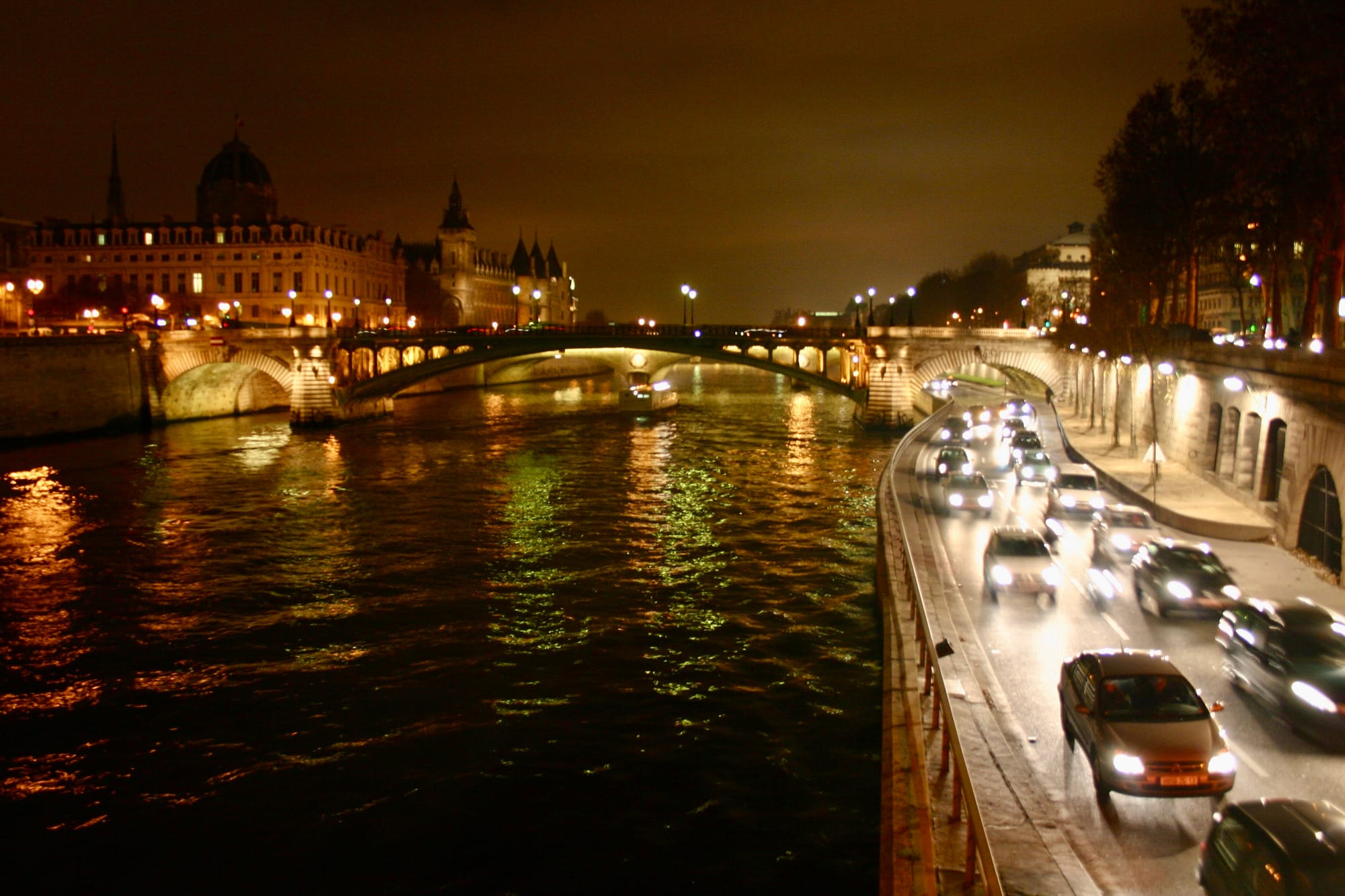
After the transformation of its waterfront began in 2002, Paris started changing in such significant ways that, in a few short years, it turned into the most notable transformation of a car-centric city into a people-centric city in the world. The process was set into motion with the Seine waterfront, which was the site of one of the boldest urban revitalizations imaginable.
What had become a multi-lane highway by the water with 40,000 cars passing through it per day was transformed into a magnificent car-free public space full of activities, amenities, and events. Now, it is a world-renowned destination when not long ago it was just a place to drive through.
Today, the Seine has become a grand boulevard that includes the river, its banks, and the side access roads and bridges connecting the Right Bank and Left Bank.
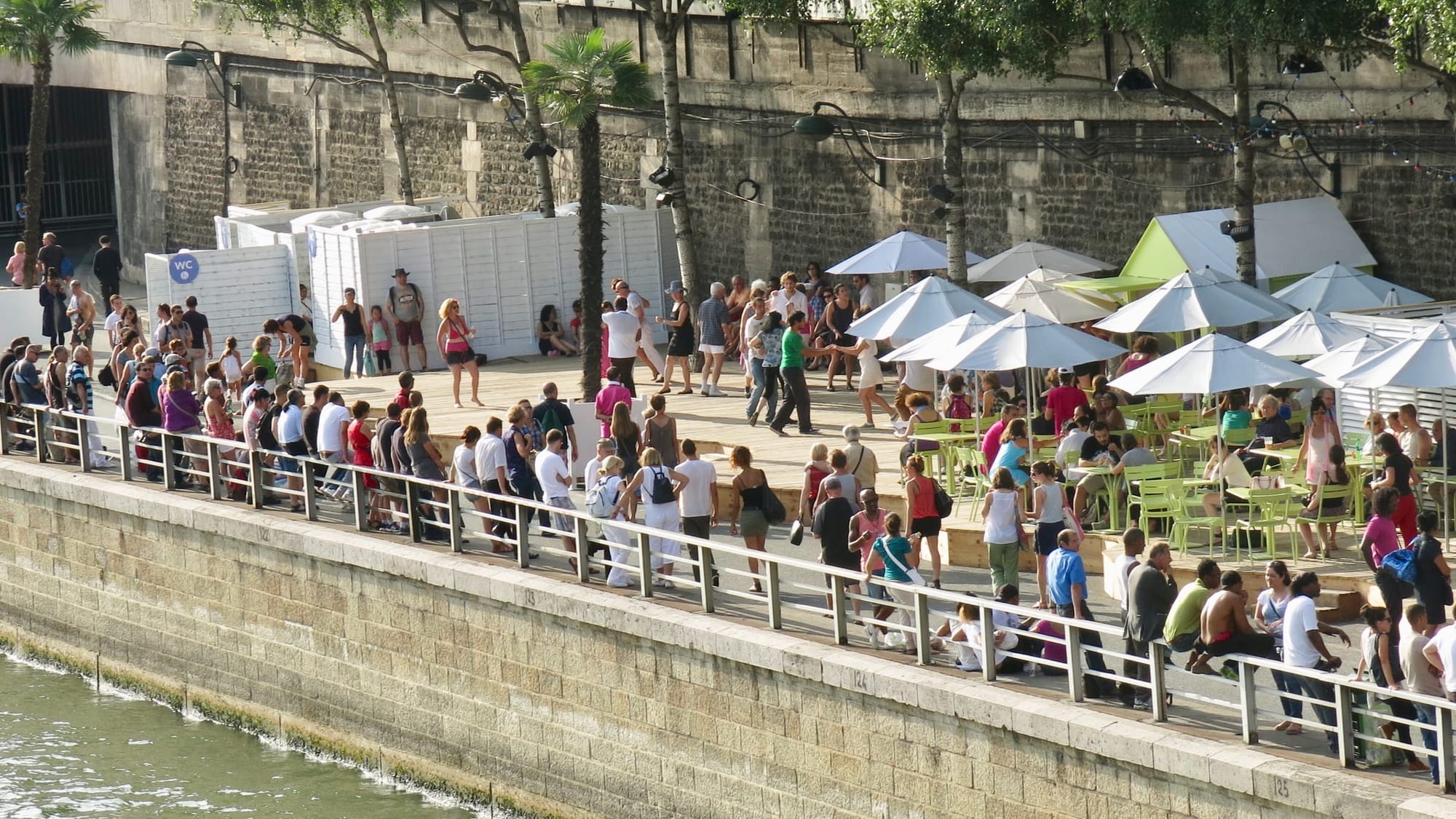
The Paris waterfront today
The beloved Paris Plages and how it came to be
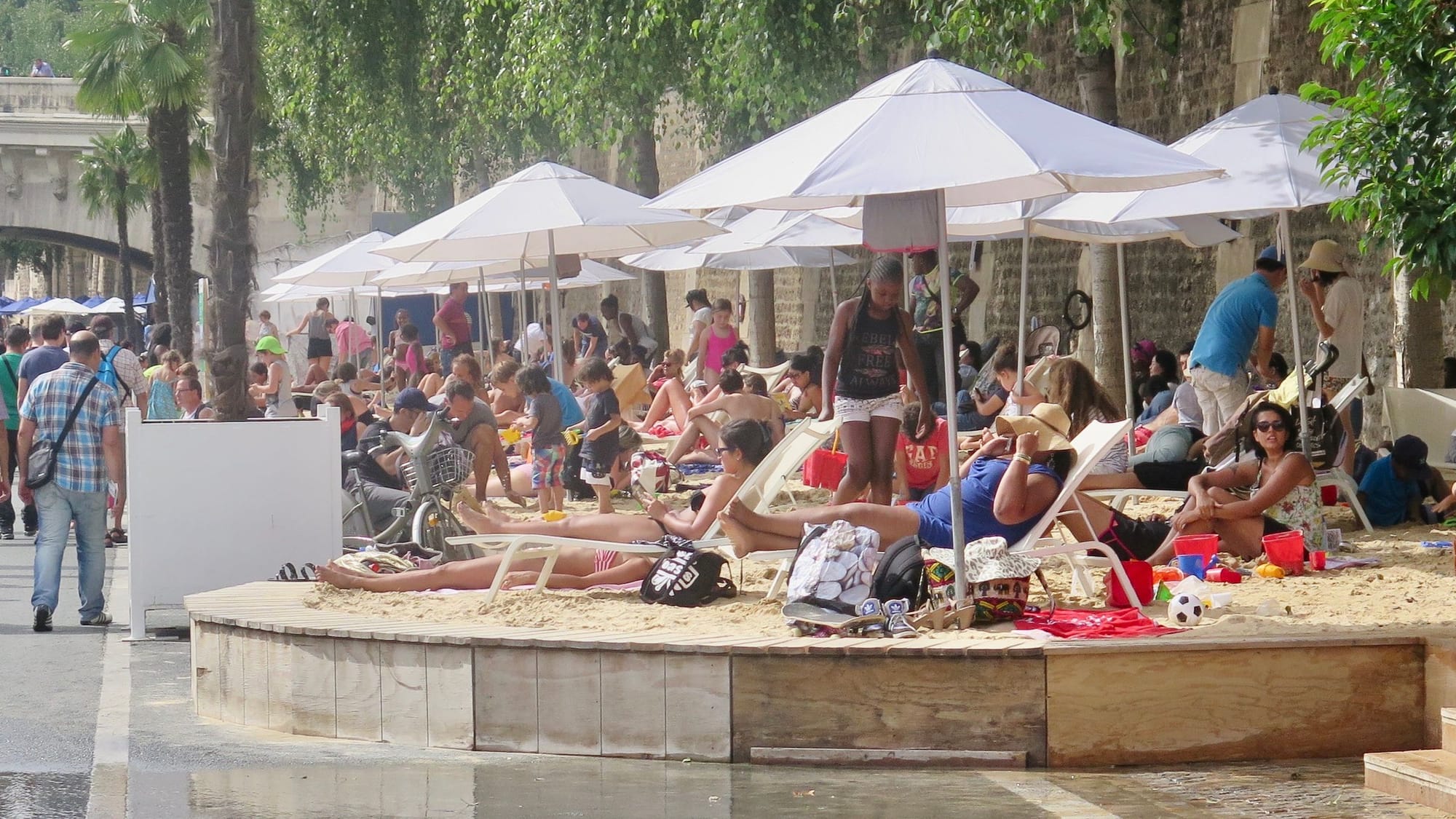
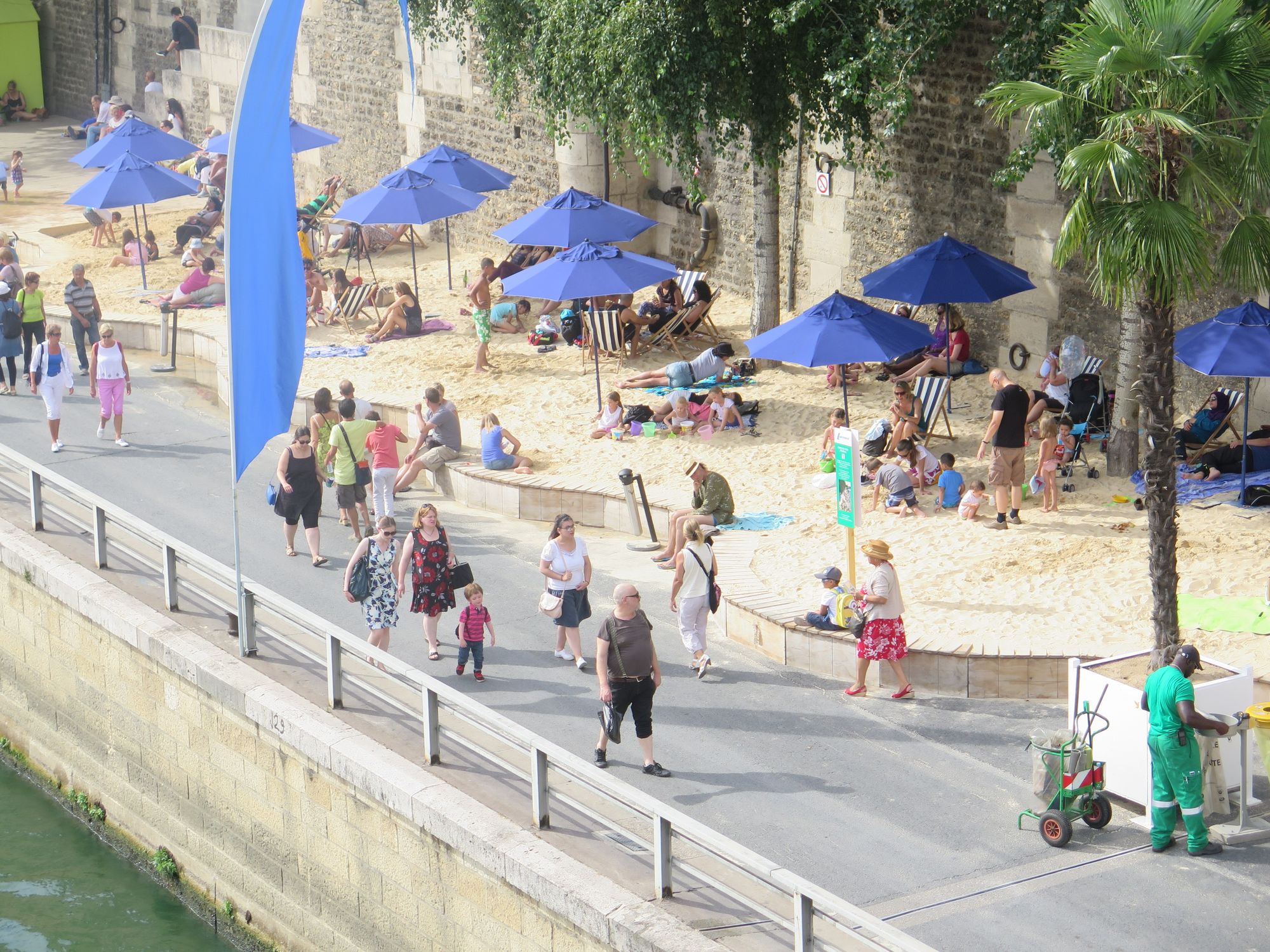
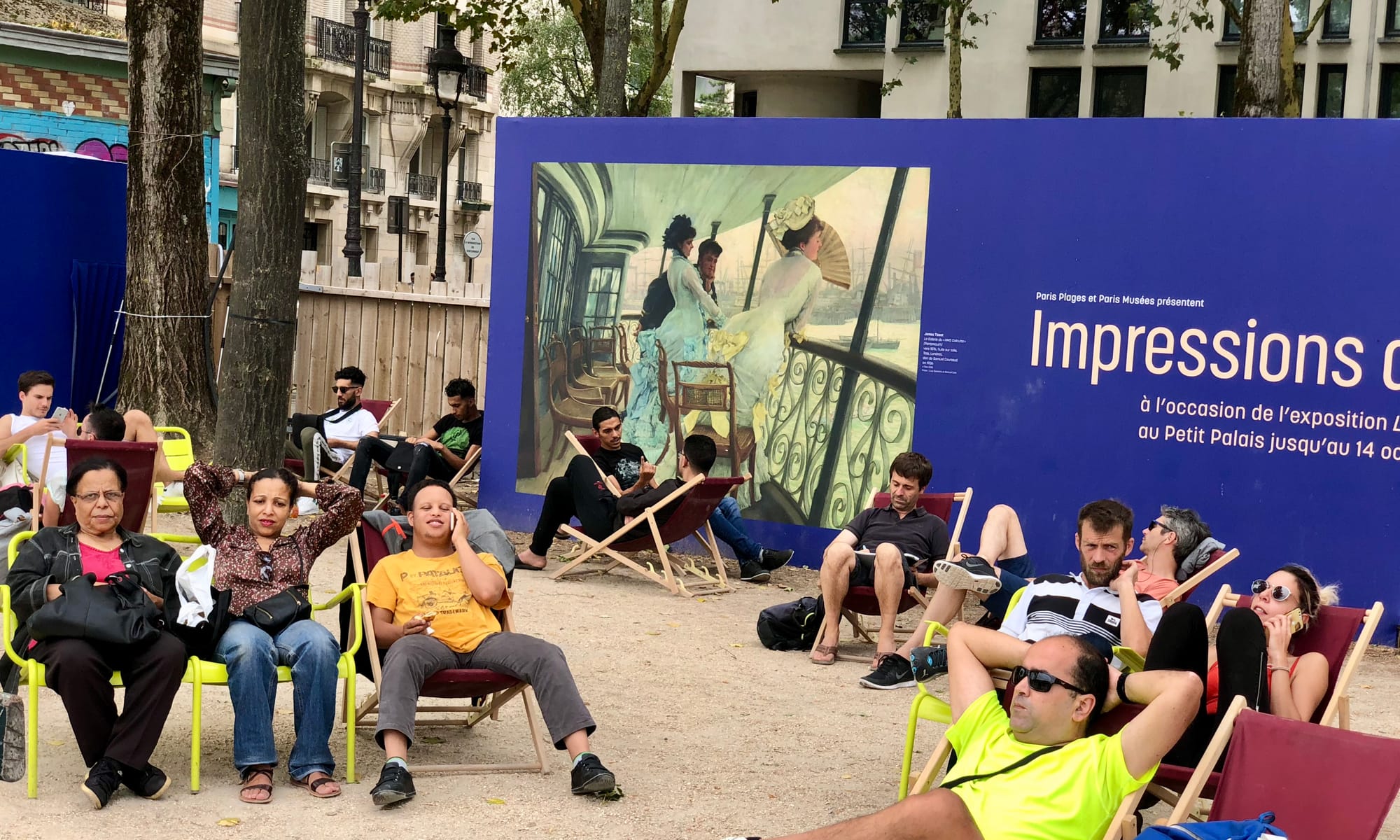
The most famous of the Seine activations is the Paris Plages – a riverside "beach" set up during the summer months. The Office of the Mayor of Paris (Mairie de Paris) is responsible for the Paris-Plages initiative which was implemented in 2002 by former Mayor Bertrand Delanoë. Its goal was to provide a "getaway" during the hottest season for residents who were unable to leave the city. This popular program was overseen by the administration of Mayor Anne Hidalgo, who expanded the project to include more permanent features and ecological goals.
Beach life on the Right Bank - Paris Plages
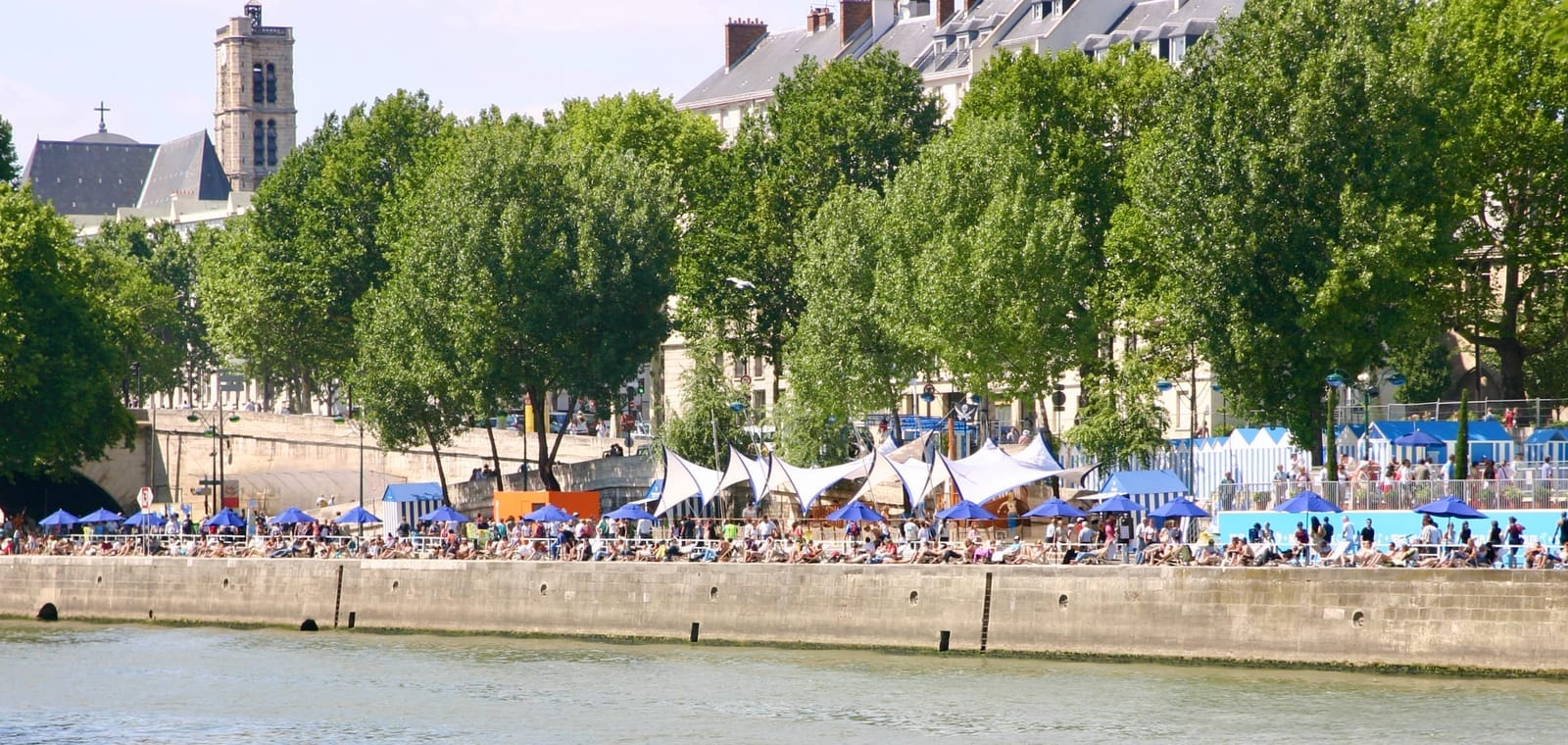
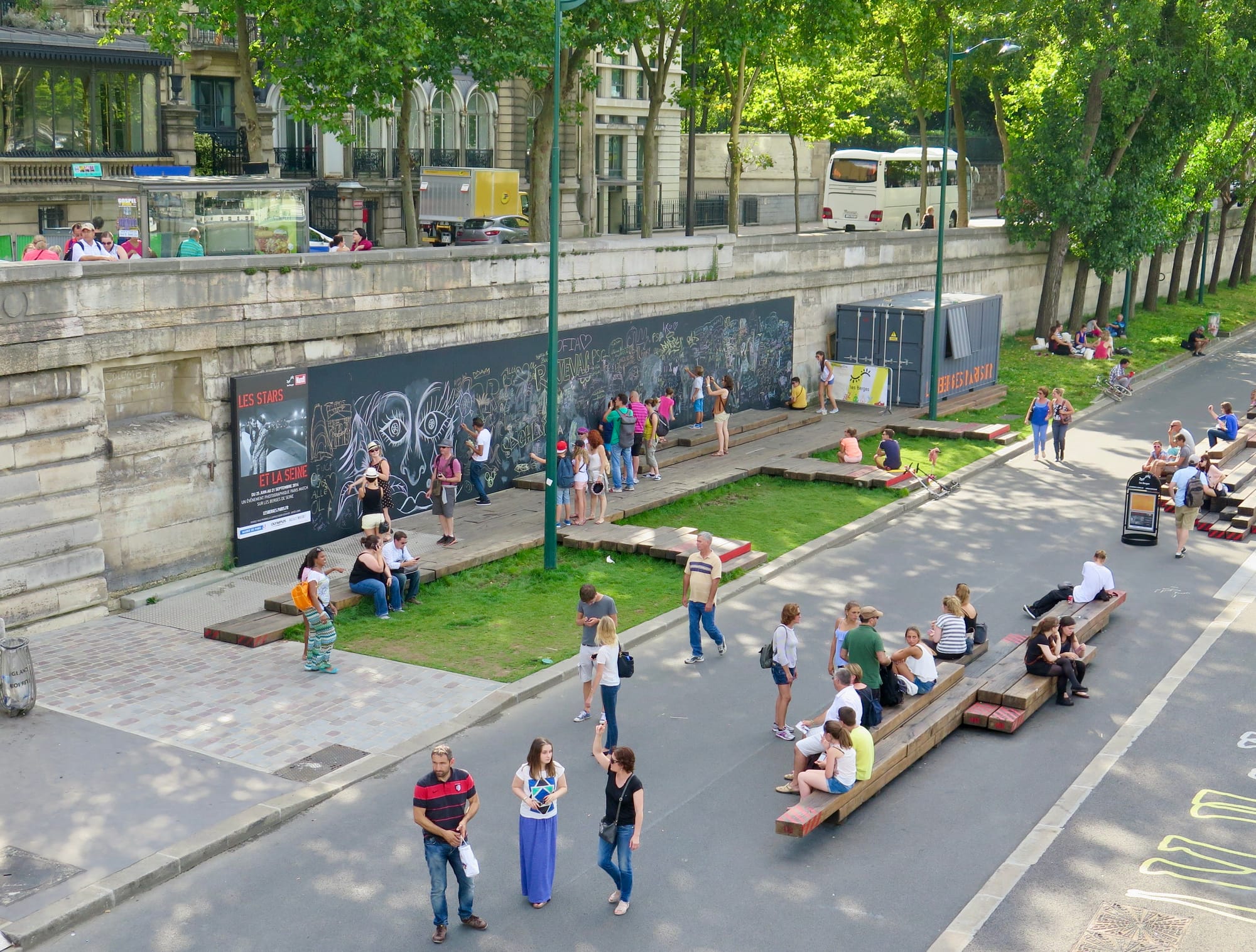
Les Berge (Left Bank)
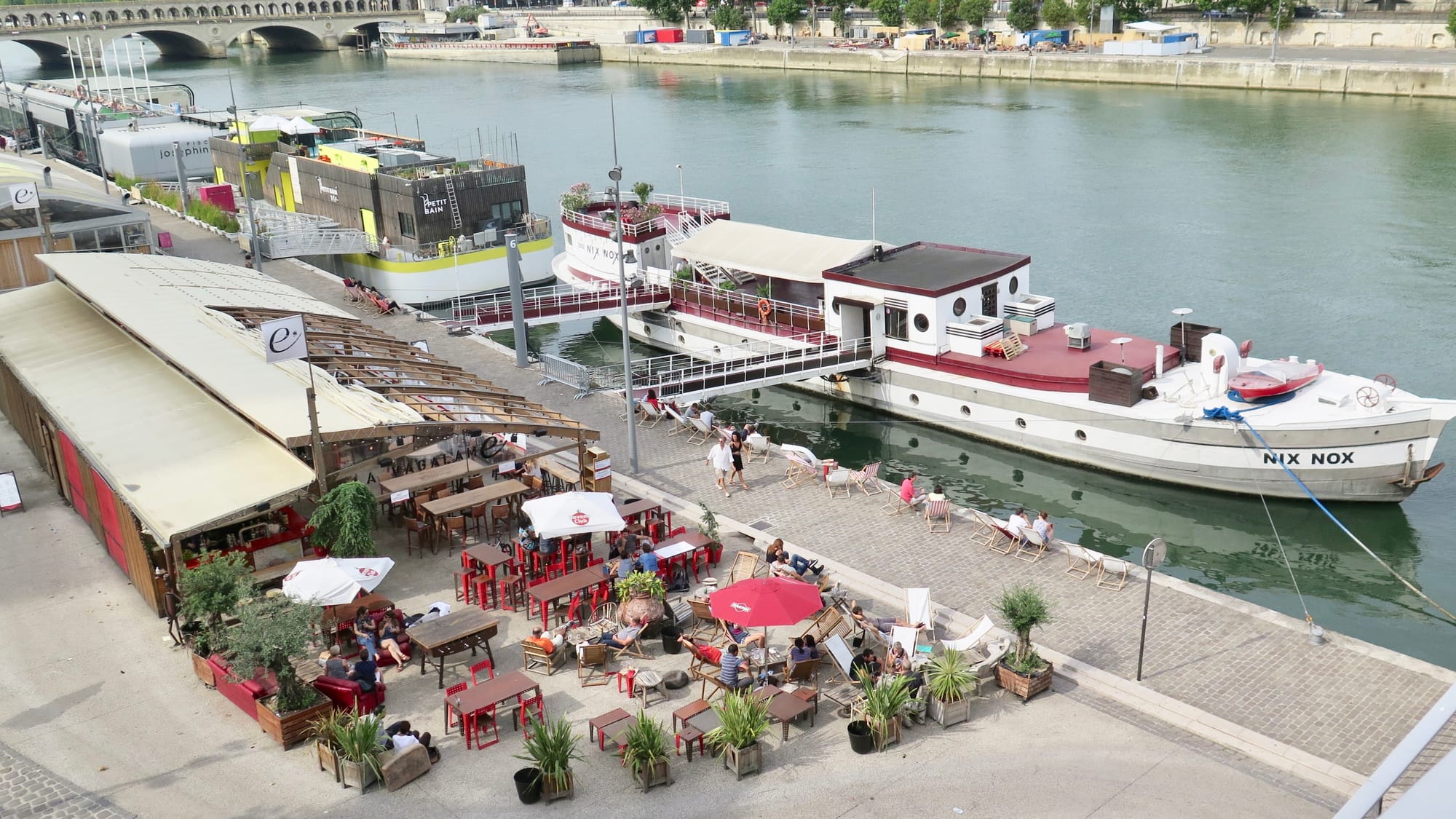
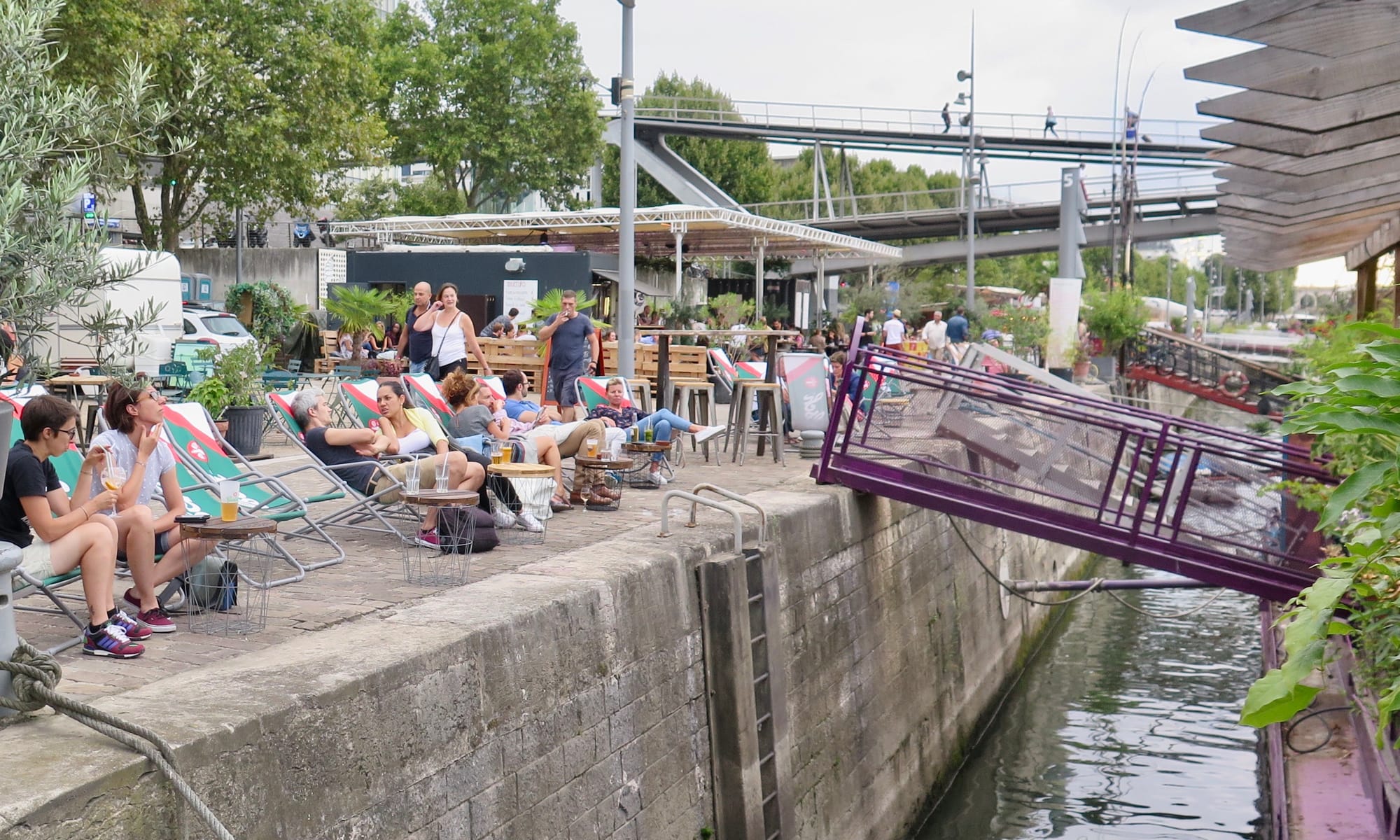
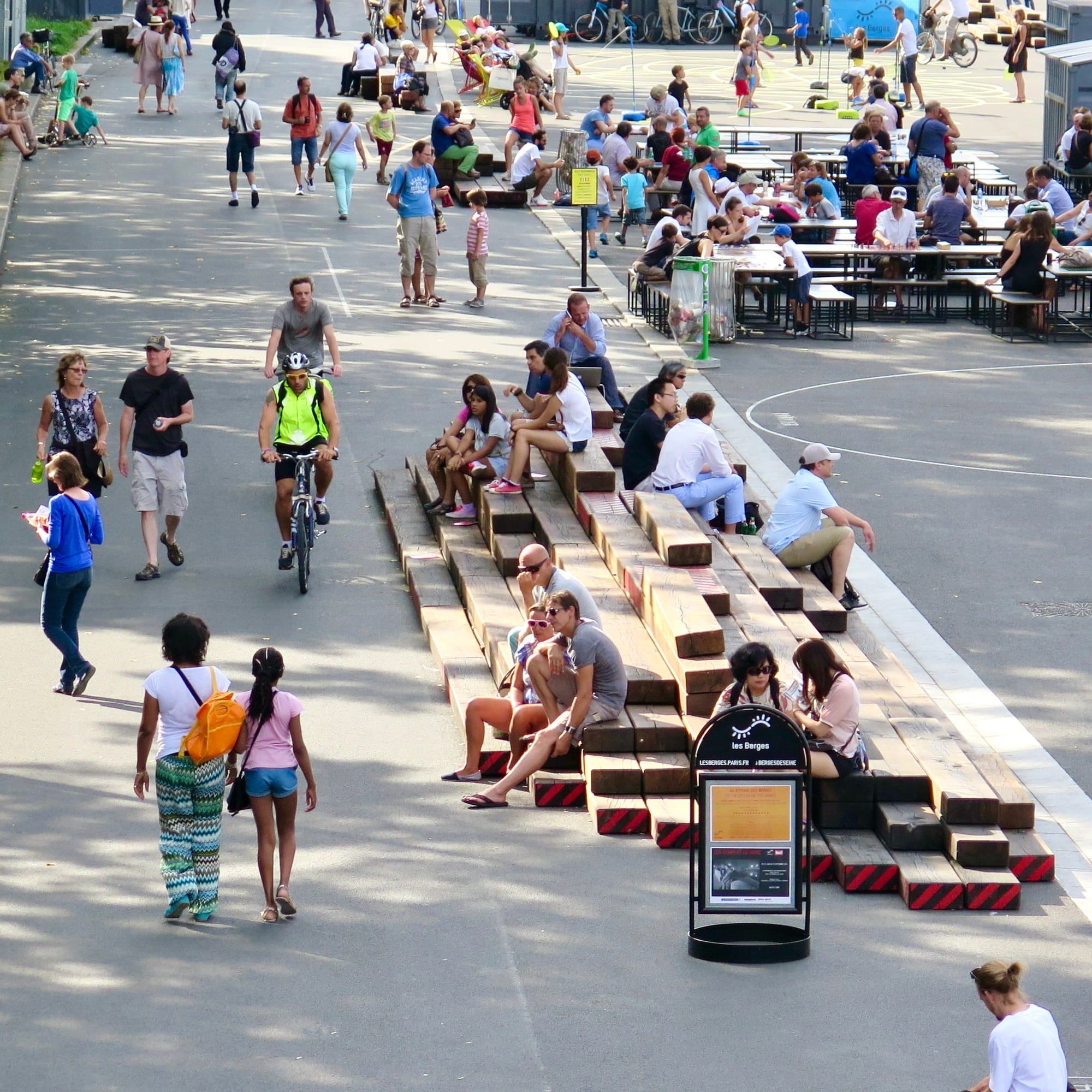
In Bassin de la Villette, many of the uses are seasonal and temporary, making the area dynamic and always changing and improving.
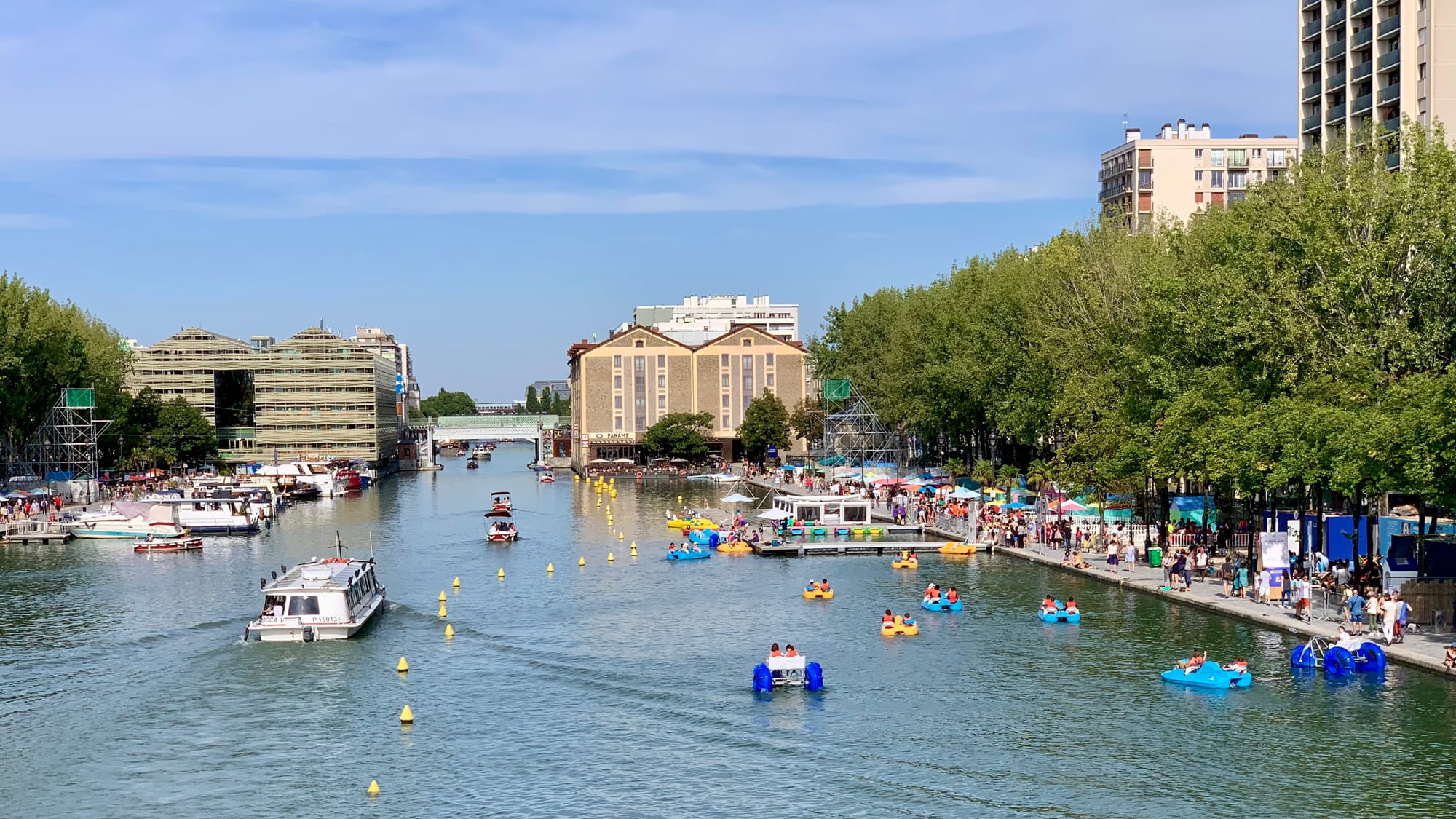
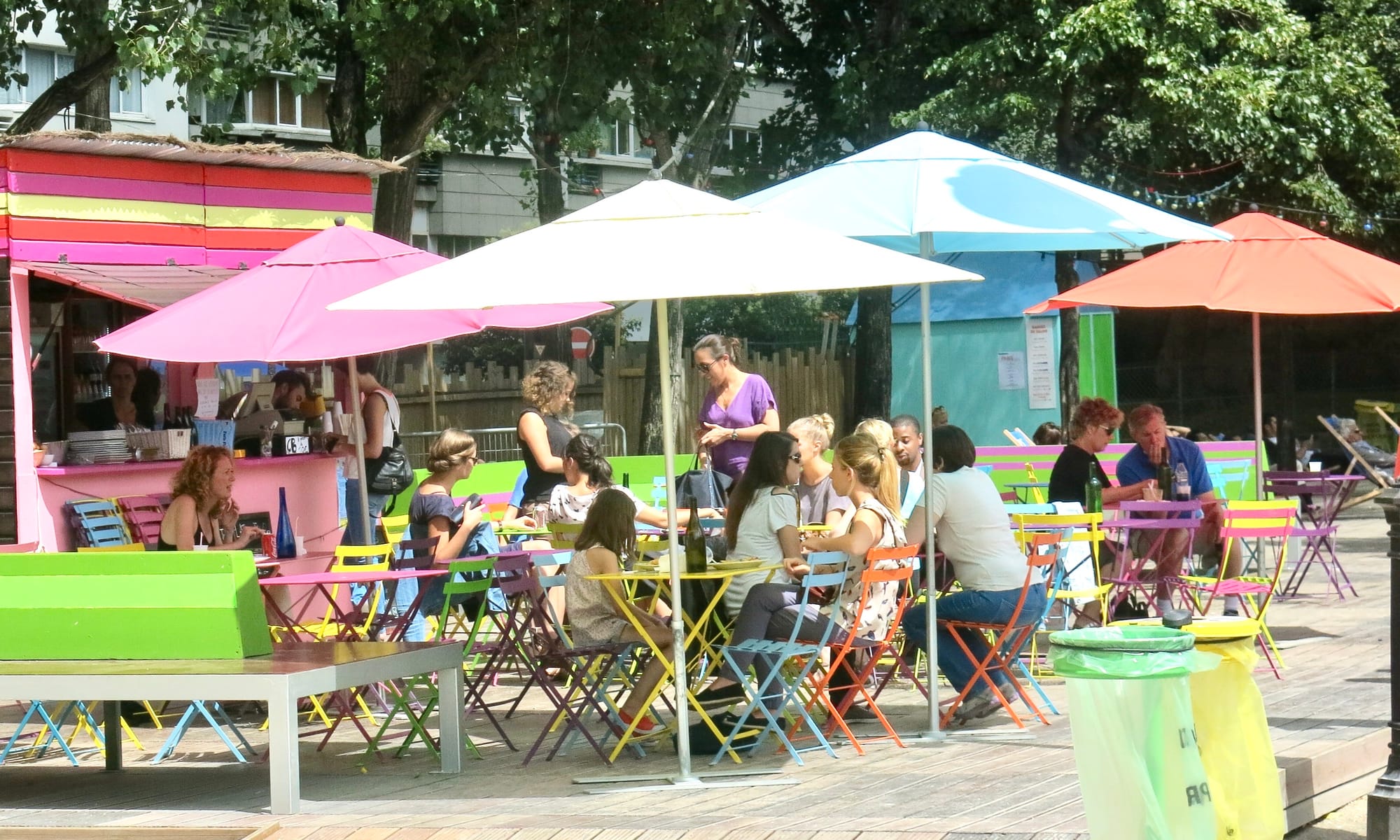
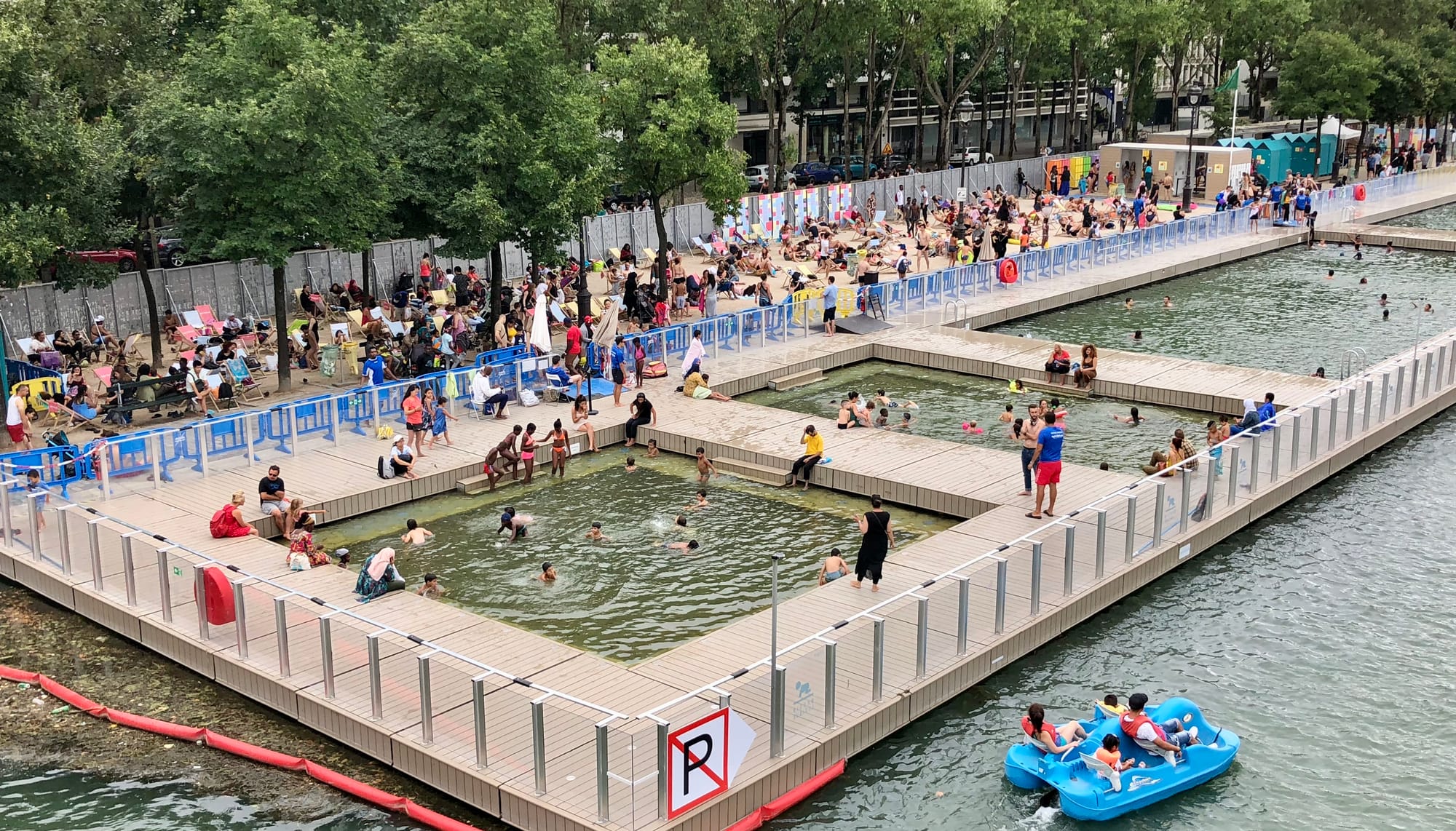
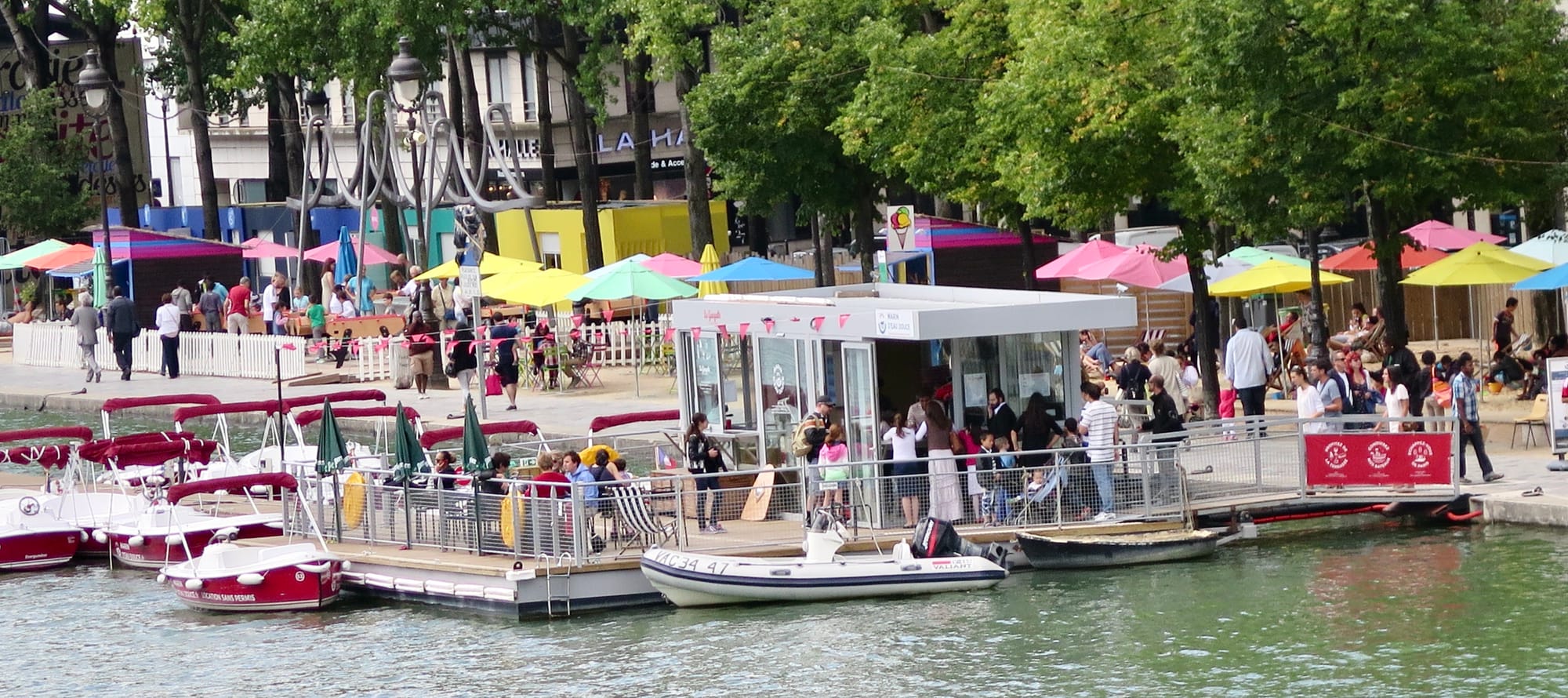
Bassin de la Villette
The City Council manages the entire activity and development along the Seine and the Bassin de la Villette into a temporary public "beach resort" each July and August. City agencies have different responsibilities:
- Direction de la Voirie et des Déplacements (DVD - Department of Roads and Mobility): Responsible for the physical transformation of the riverbanks, including closing off major roadways (like the Georges Pompidou Expressway) to traffic, installing sand, deckchairs, and other infrastructure.
- Safety & Maintenance: The City of Paris is responsible for water quality testing, security, and daily operations of the site activities.
- Eau de Paris: The public agency responsible for water management and supply in the city. They cooperate closely on water quality monitoring, especially with the recent reintroduction of swimming in the Seine.
- Partnerships: Louvre Museum & Flammarion Publishing: Specific institutions that partner with the city to provide cultural activities, such as pop-up art galleries and libraries, within the Paris Plages sites.
More on Paris:
 Fred Kent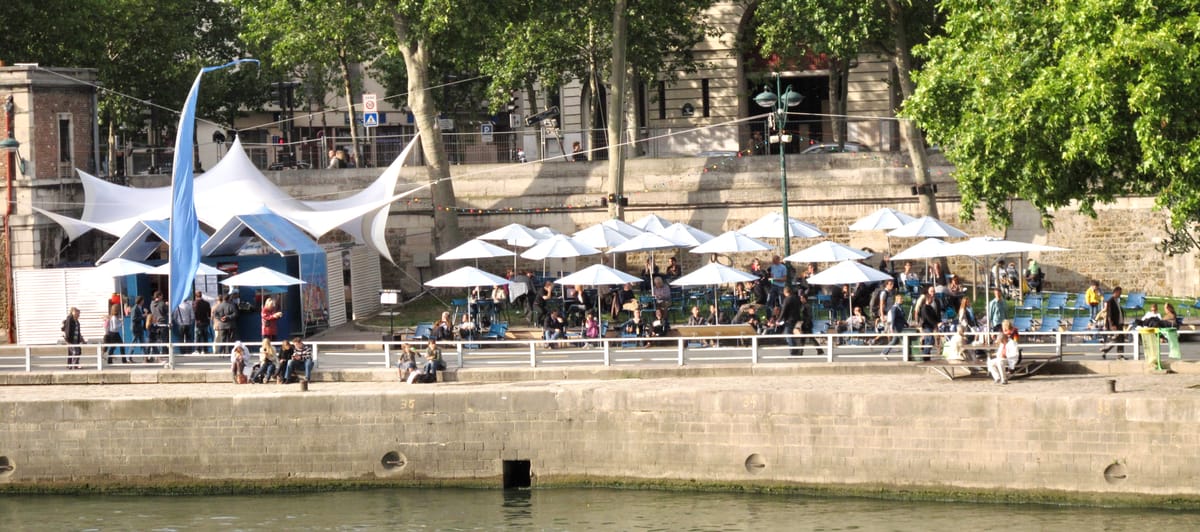
 Fred Kent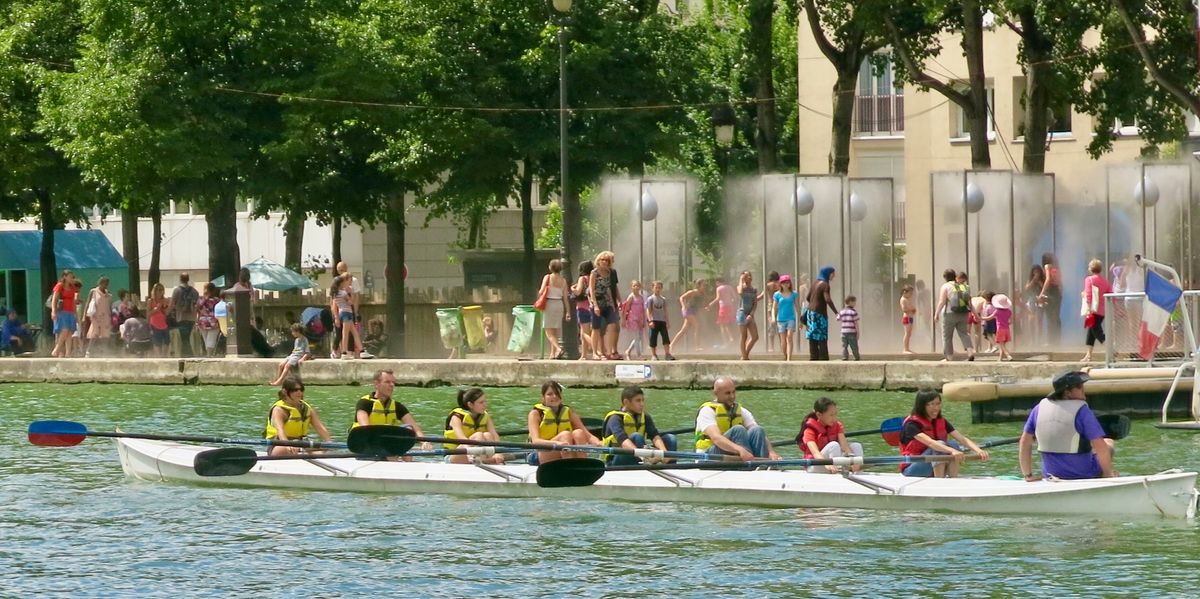
2) San Francisco Waterfront
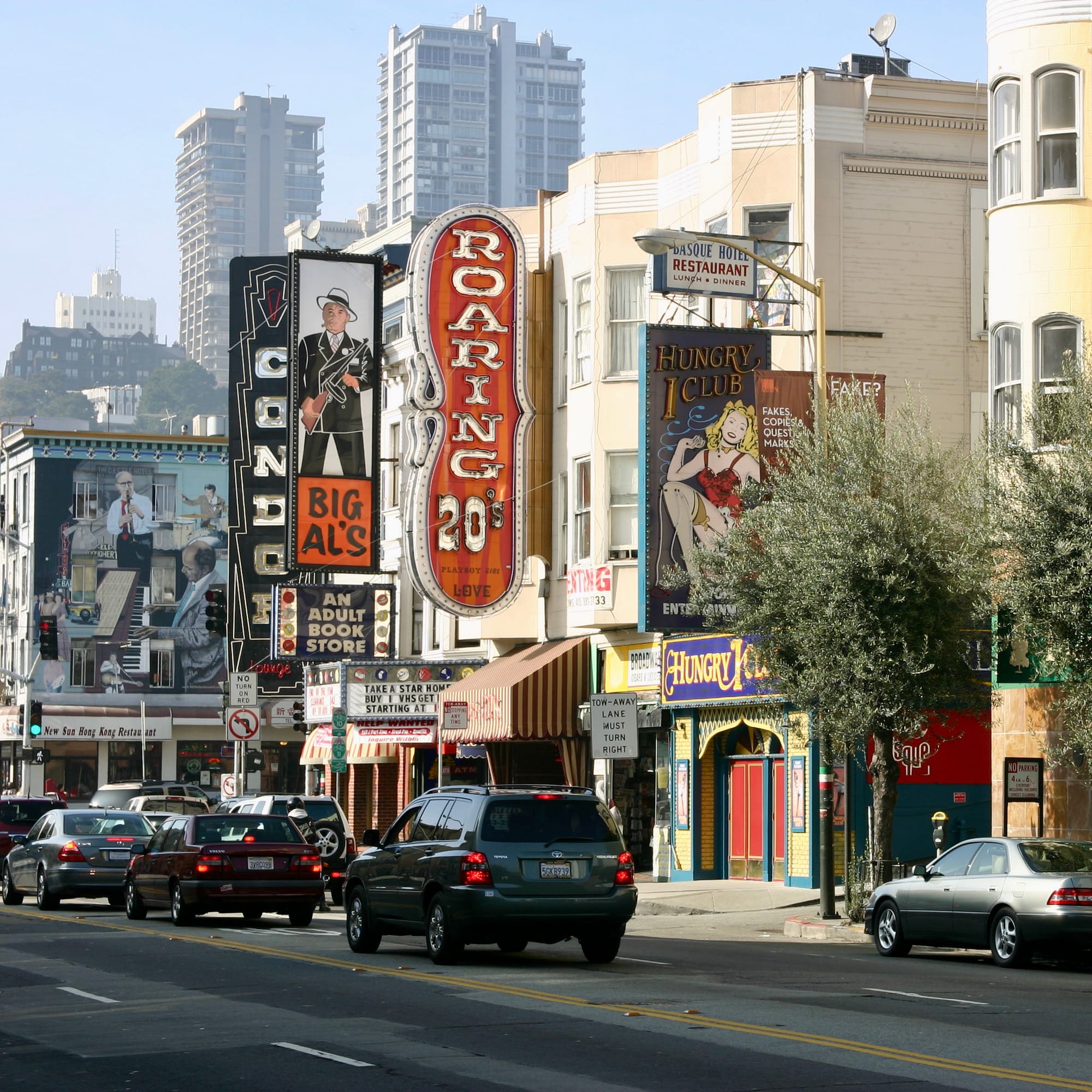
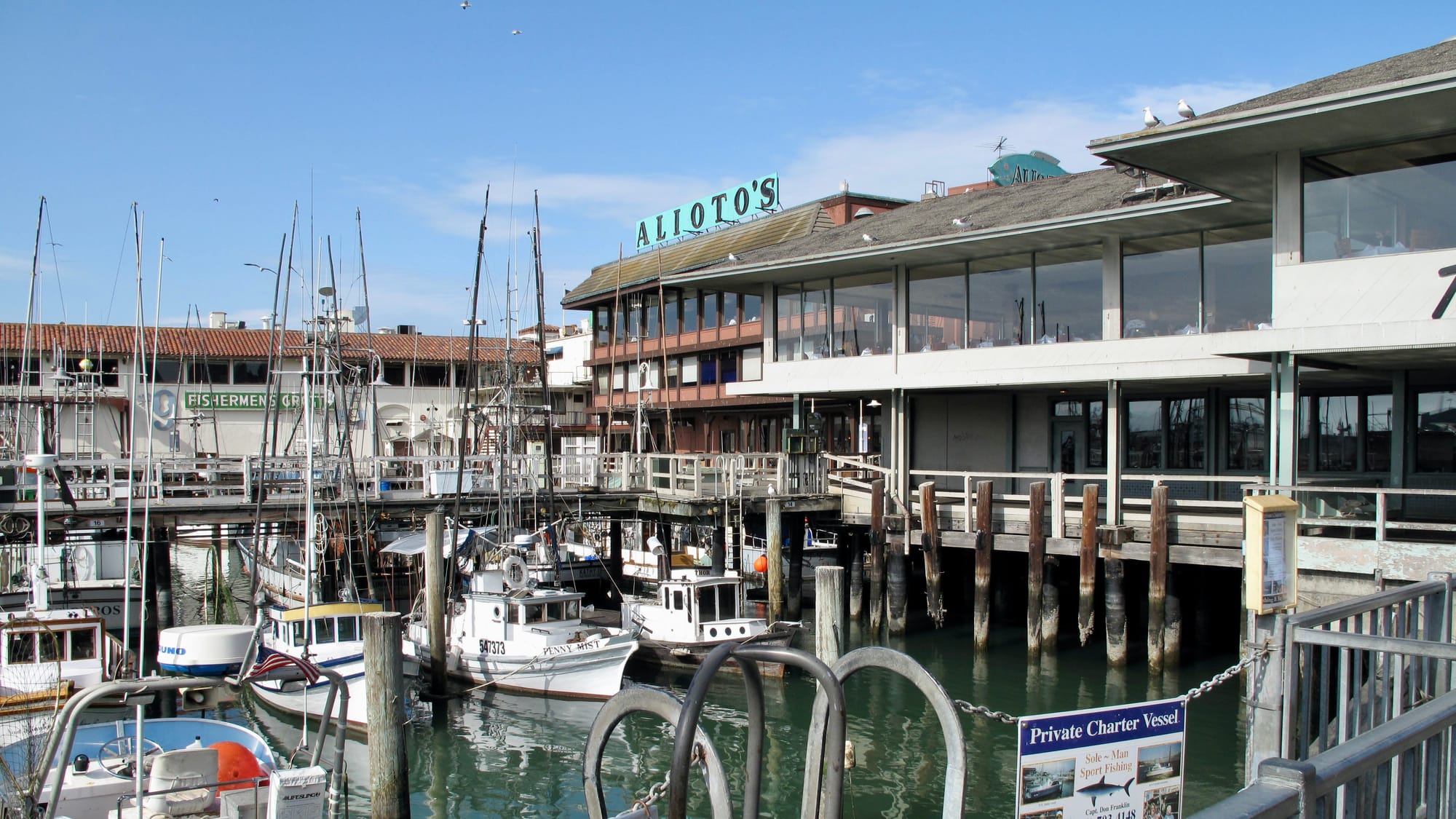
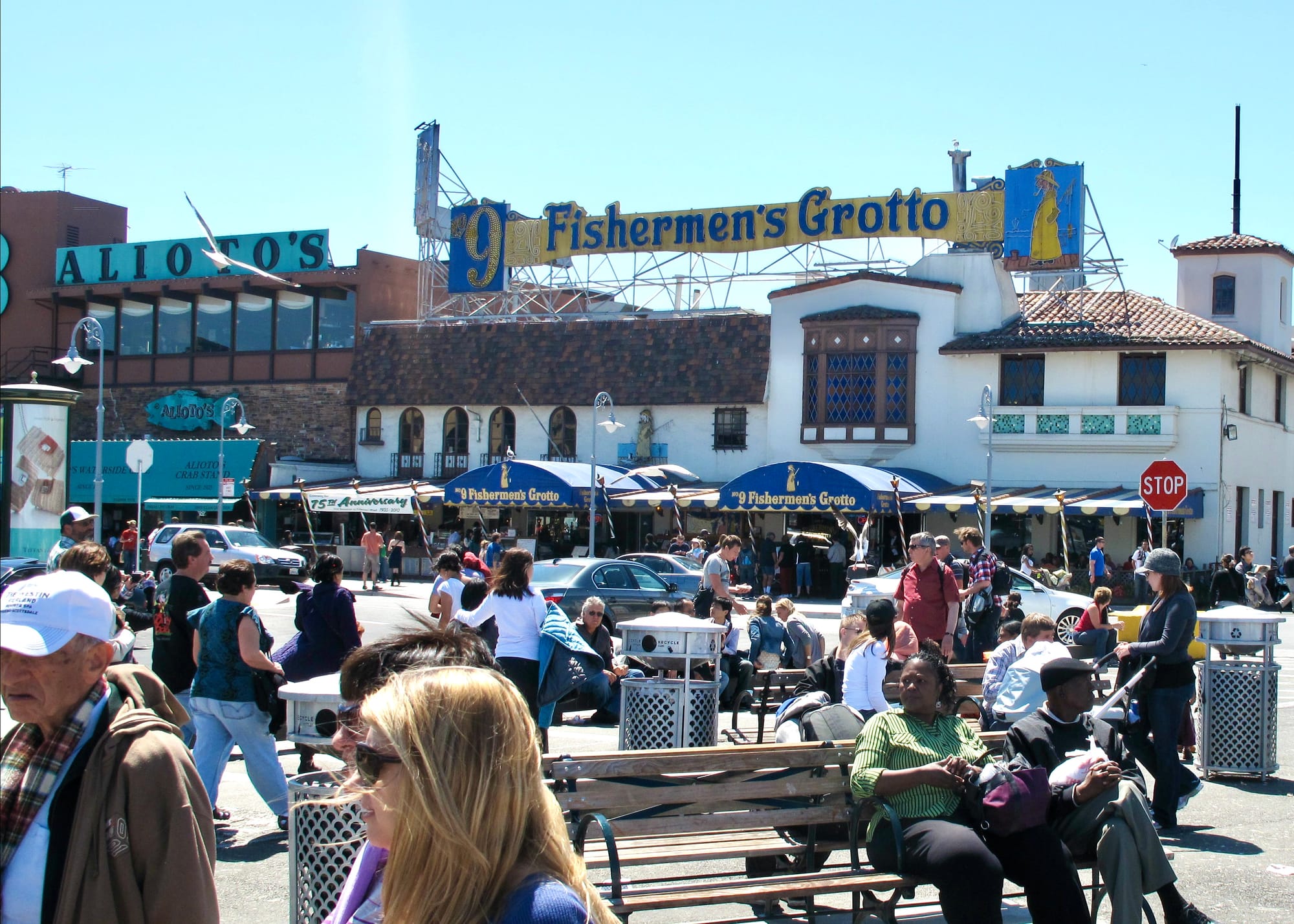
San Francisco's waterfront is one of the best in North America. It is enjoyable, exciting, and unique and it highlights the city's natural treasures, culture, and history. It also offers a great example for how to activate piers successfully.
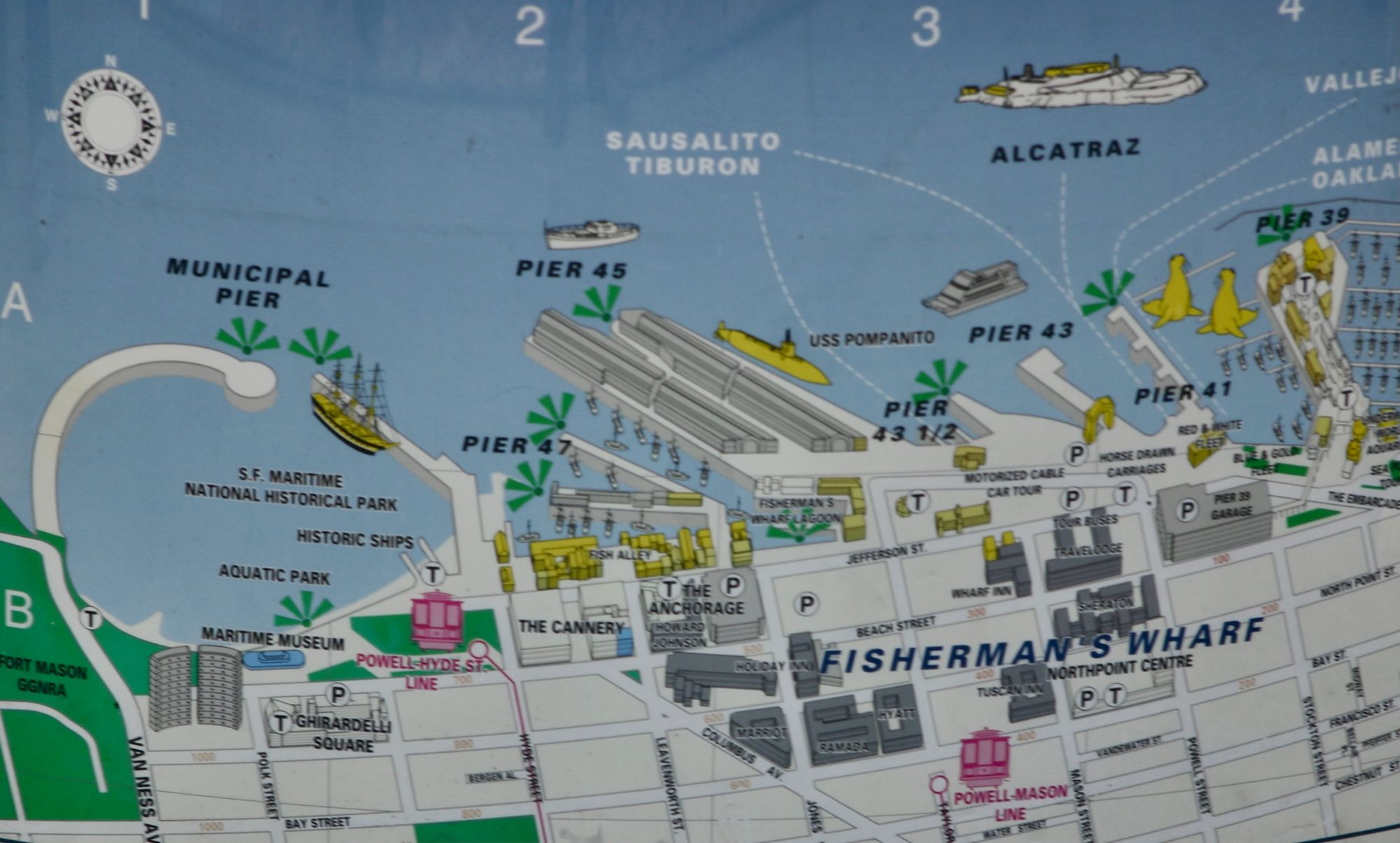
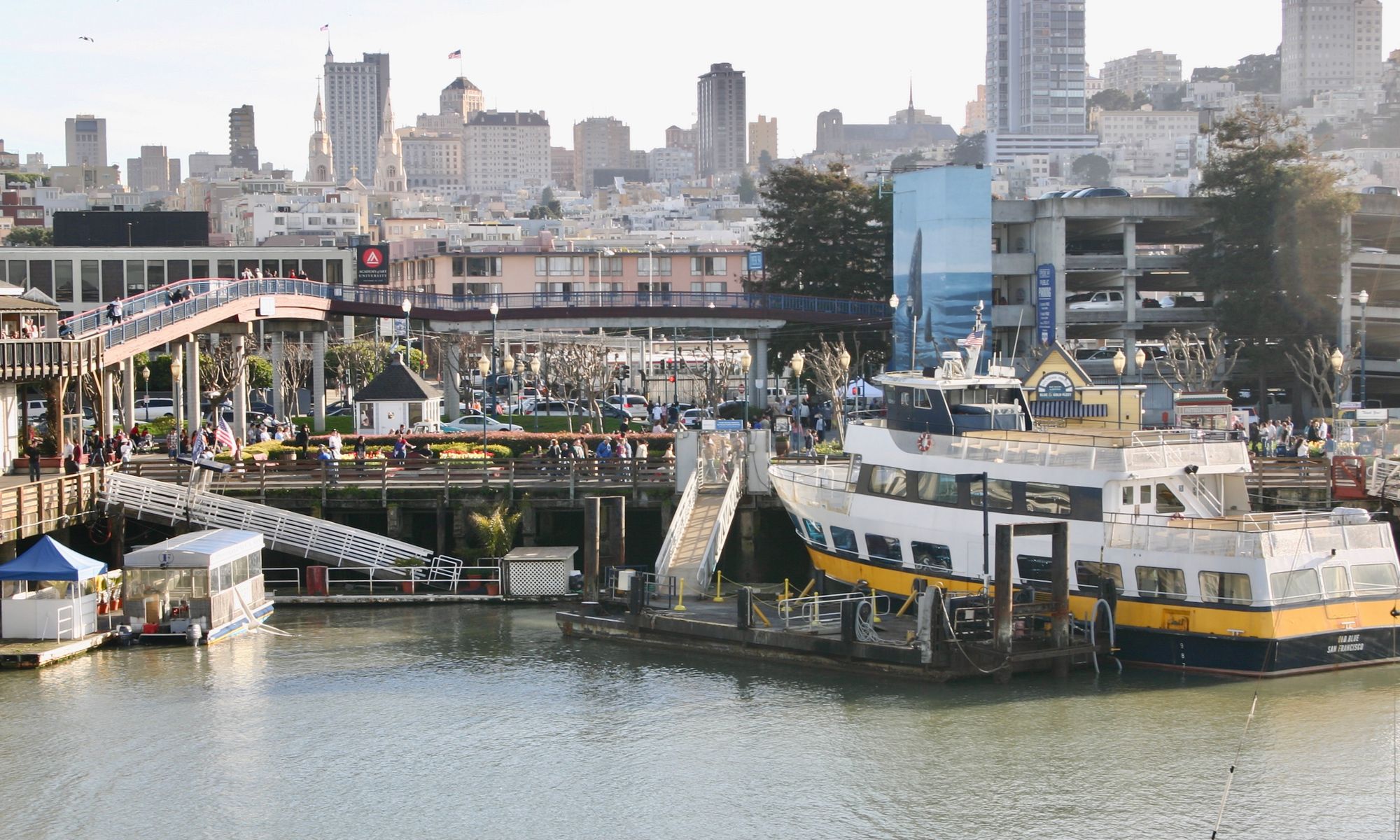
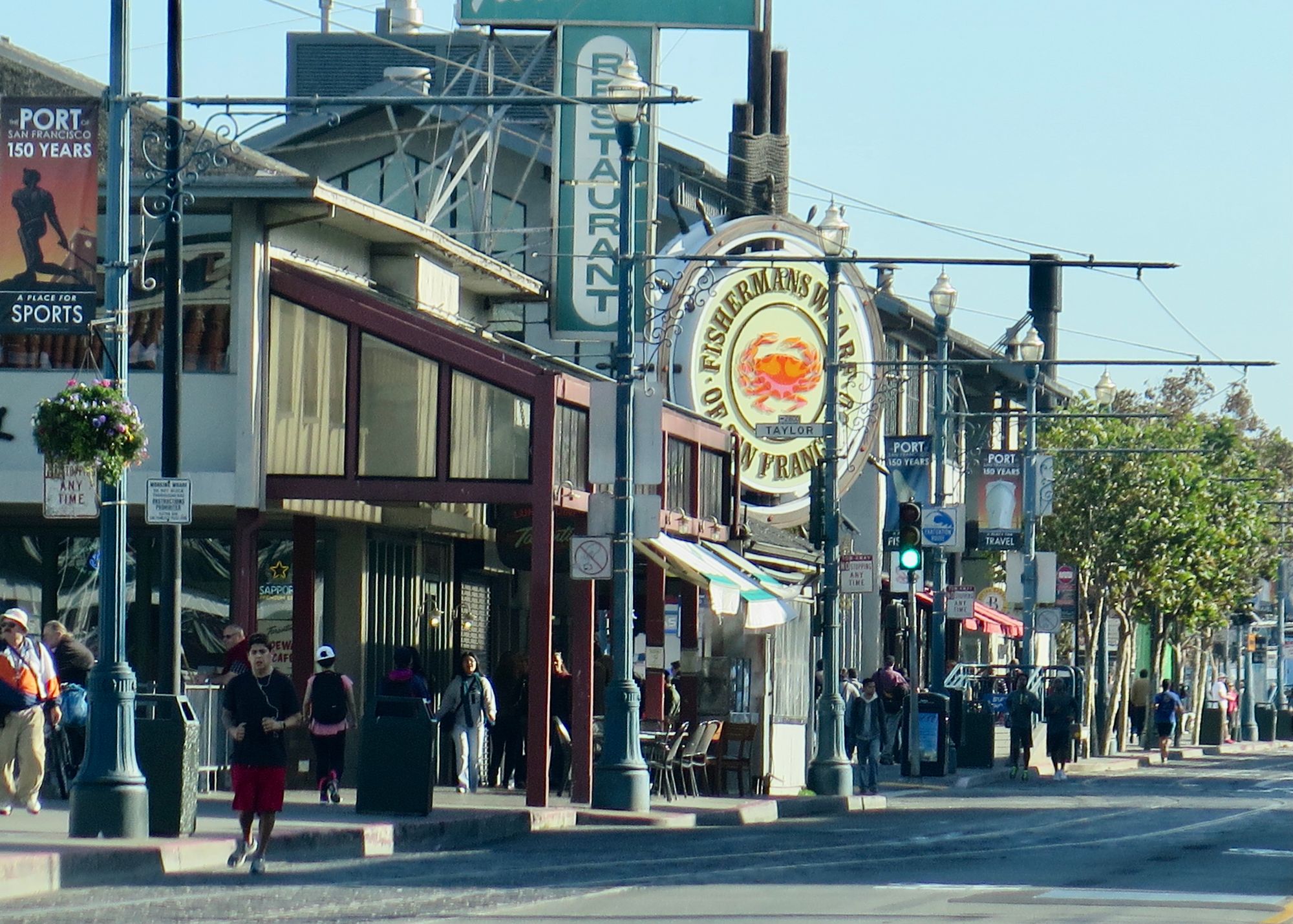
Much of the attractions at the San Francisco waterfront happen in Fisherman's Wharf, Pier 39, and the Ferry Terminal. These areas are alive with energy and foot traffic as people flock from all over the city to enjoy the numerous activities and amenities there. The waterfront is also smoothly connected to its surrounding neighborhoods, encouraging people from all throughout the city to make their way over.
The waterfront core - Fisherman's Wharf

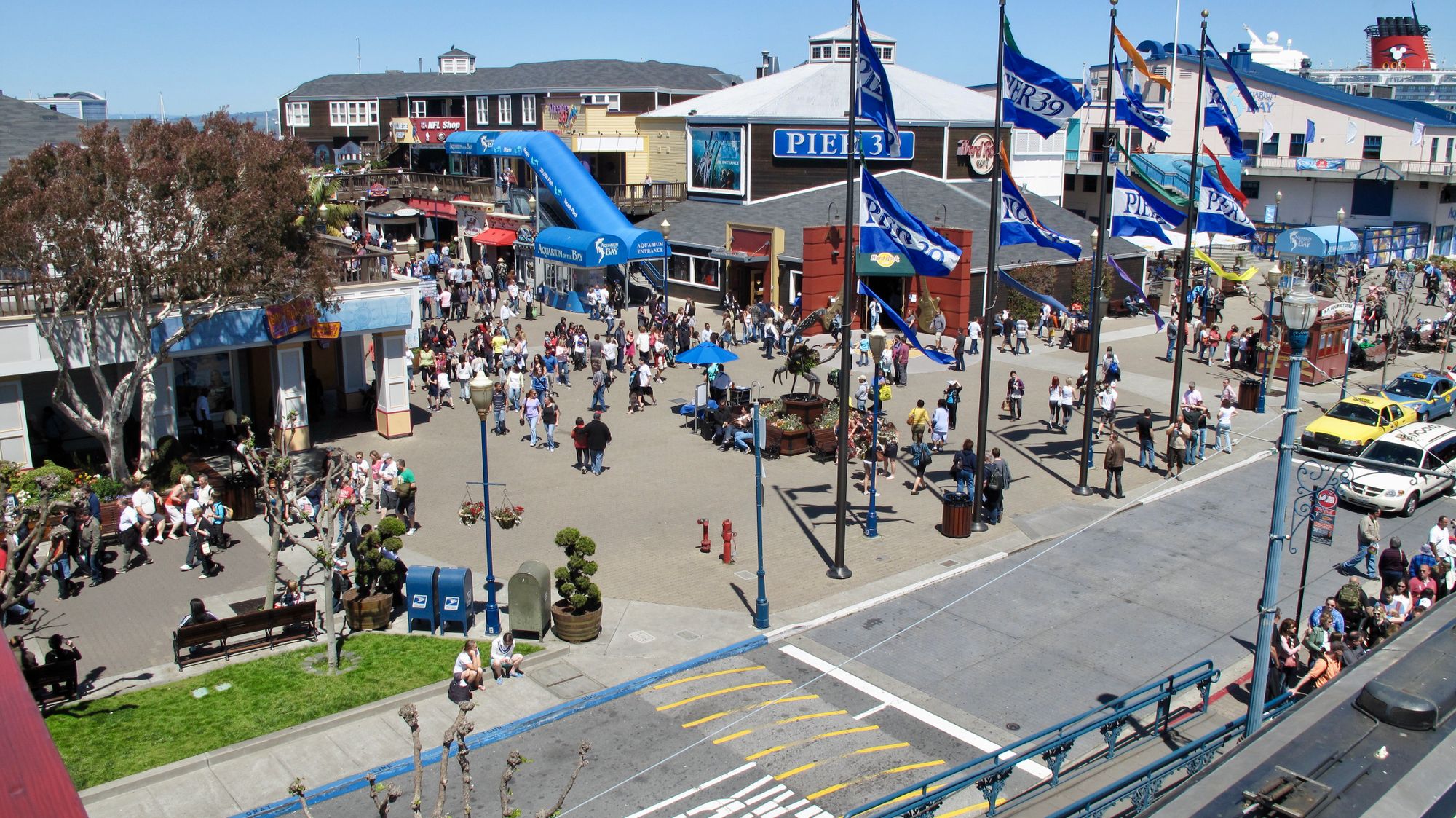
Pier 39
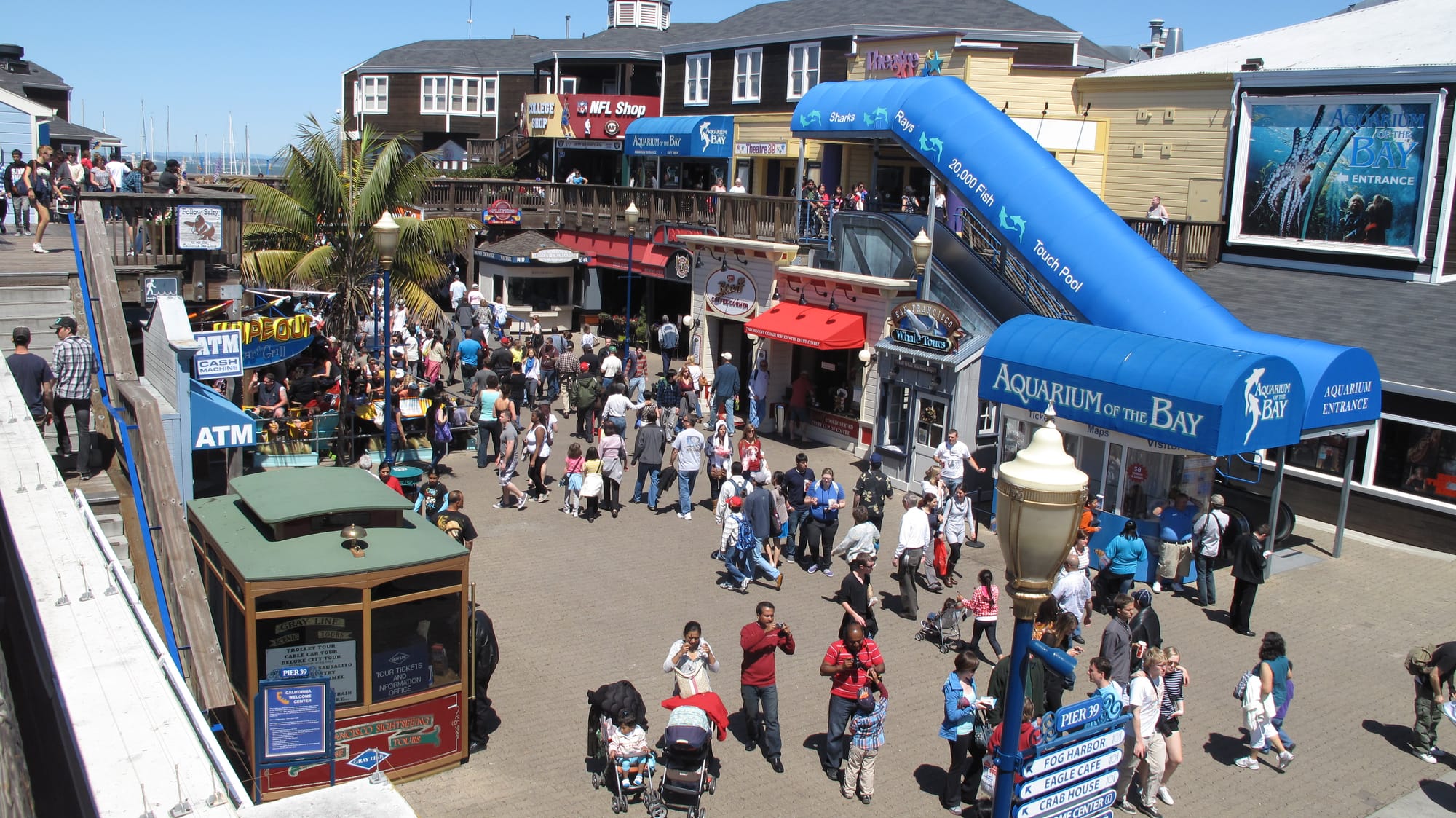
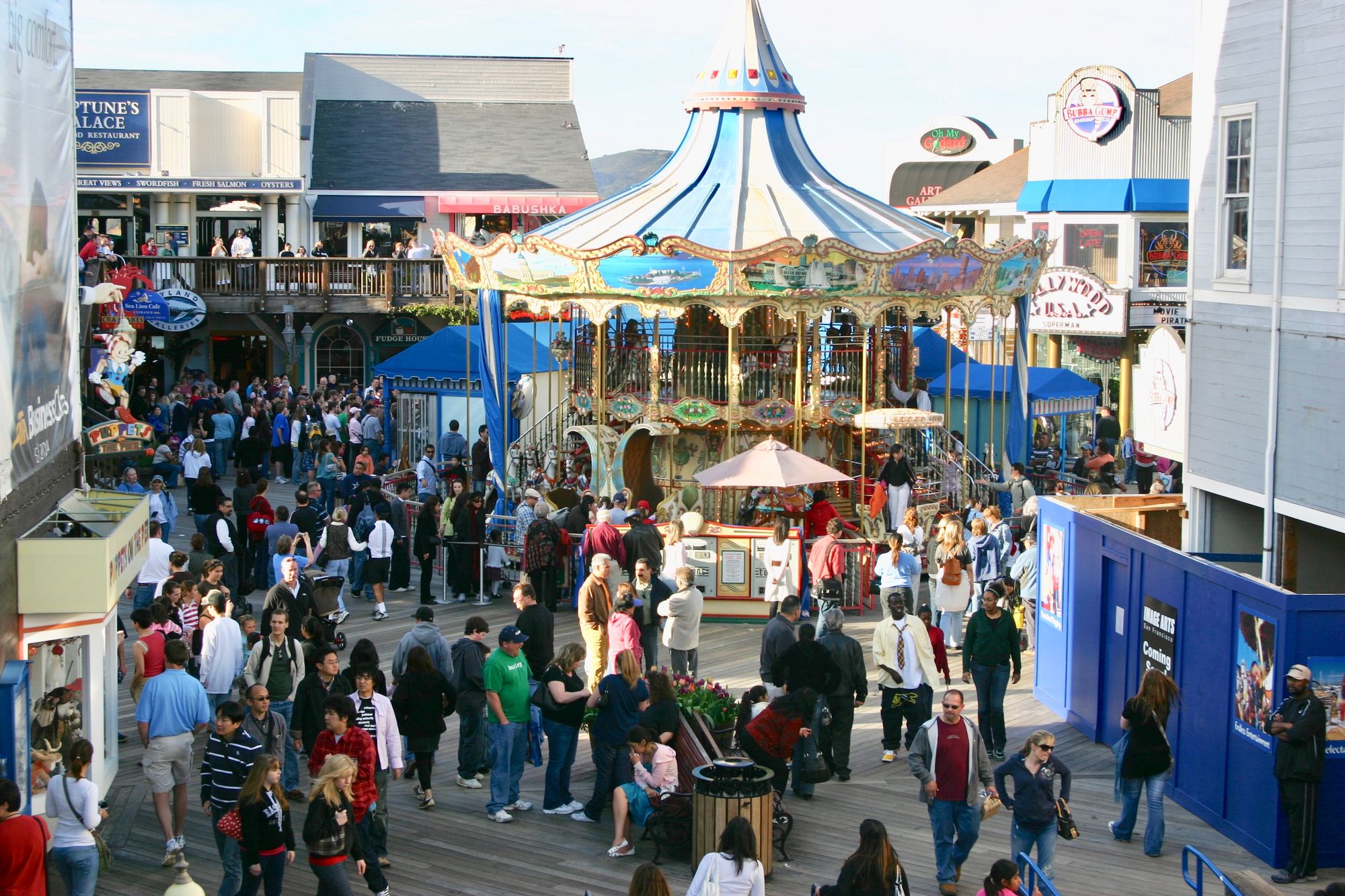
Pier 39 is the standout destination here. It has a great layering of amenities, shops, entertainment options, and eateries. At every step, your senses are engaged with the smells of clam chowder and the ocean, sounds of children laughing on the carousel, music from the shops, chatter from the crowds, and the sight of countless charming shops to explore. The fact that it is on two floors connected by stairways and bridges gives it double the density of things to experience.
The promenade
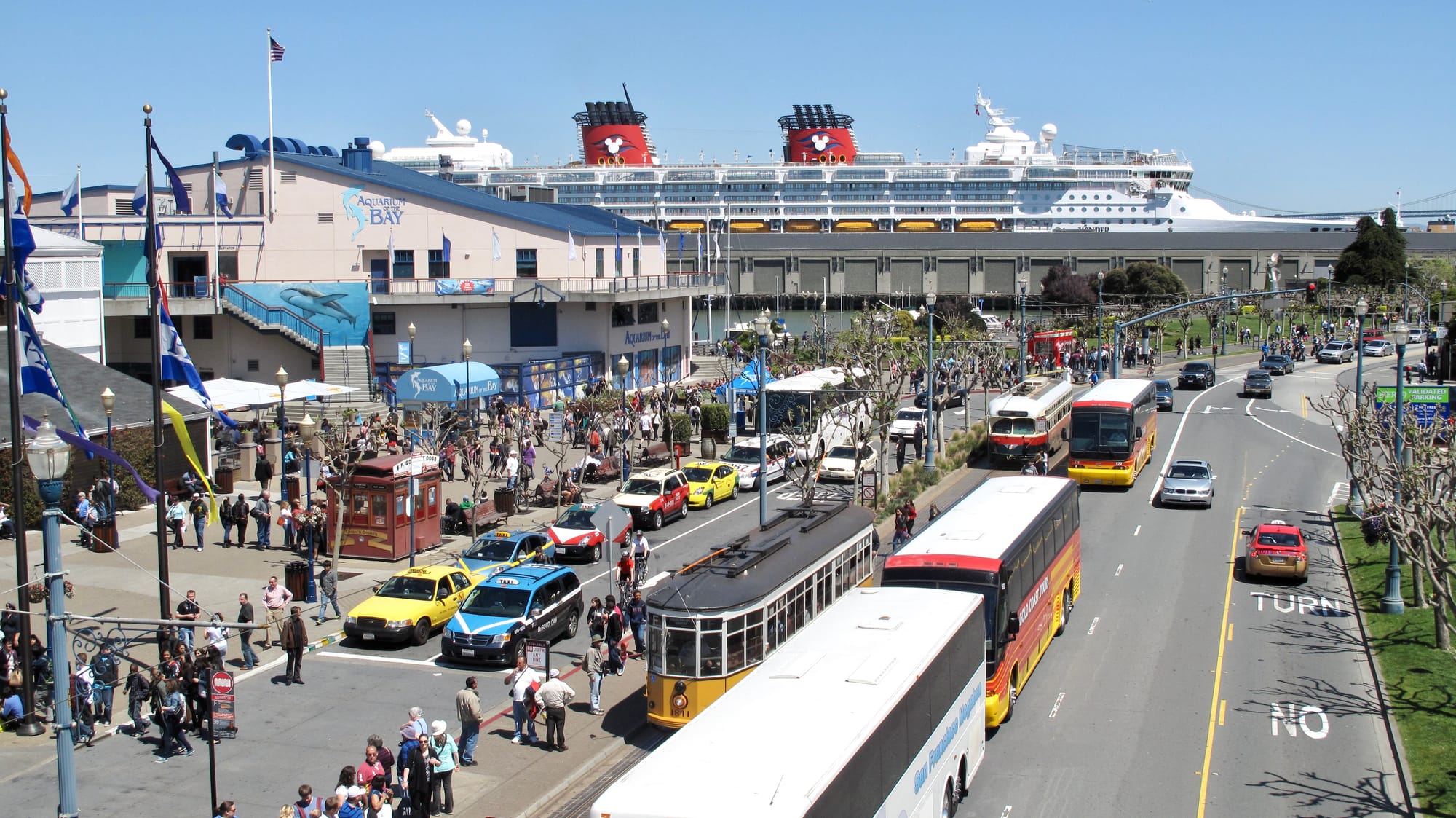
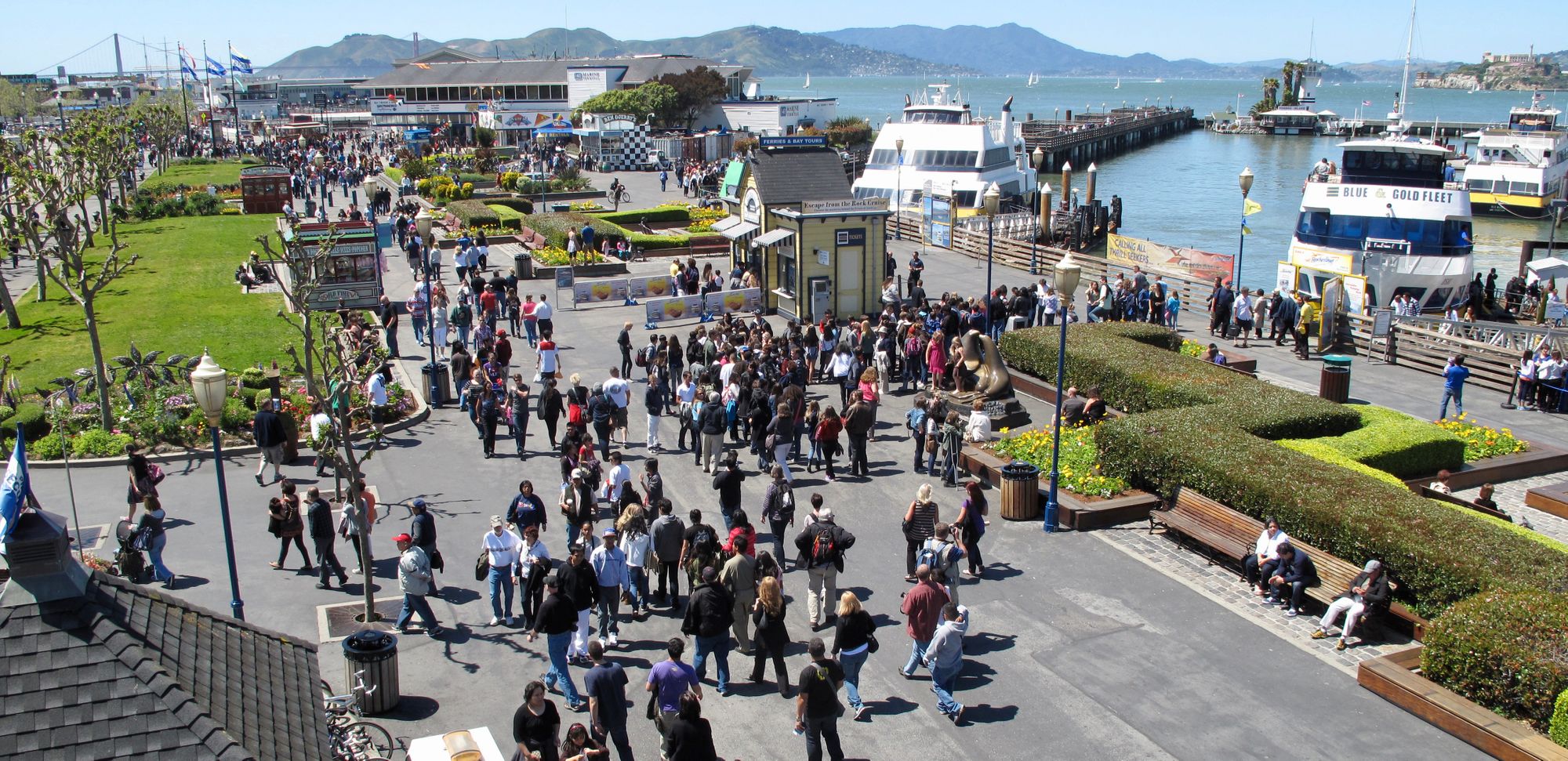
A wide promenade punctuated with kiosks, trees, and sculptures along the waterfront's length leads visitors to the destinations at the piers in a relaxing and enjoyable way. Impressive ships and boats capture attention from various vantage points. Wide sidewalks create a relaxed walking experience where pedestrians don't feel like they're right up against traffic.
Working waterfront
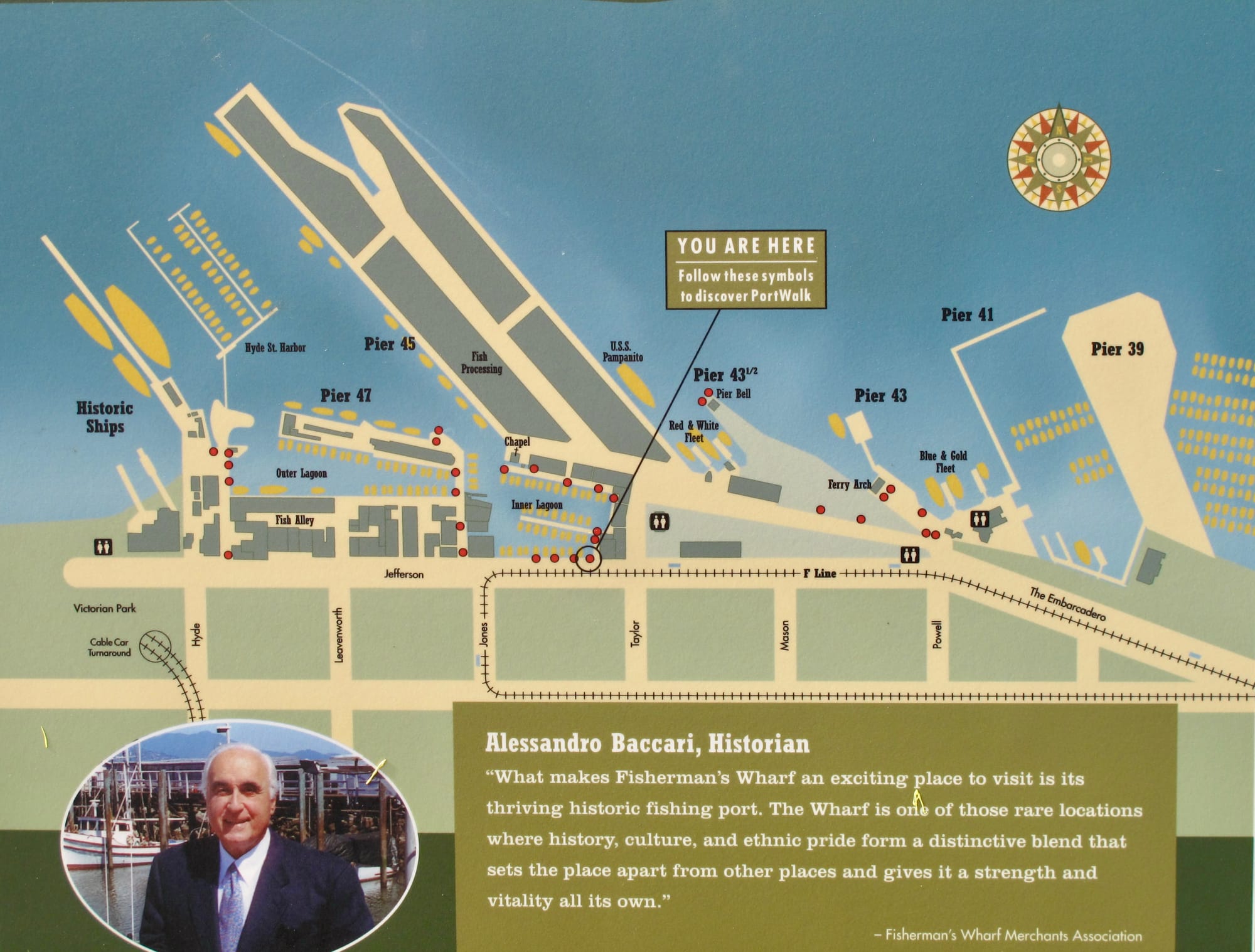
Fisherman's Wharf's combination of history, culture, great eateries and entertainment options make it one of the city's biggest treasures and most popular destinations. The connections between its key areas are made of pleasant pedestrian walkways with great views of the water.
Water-based activities
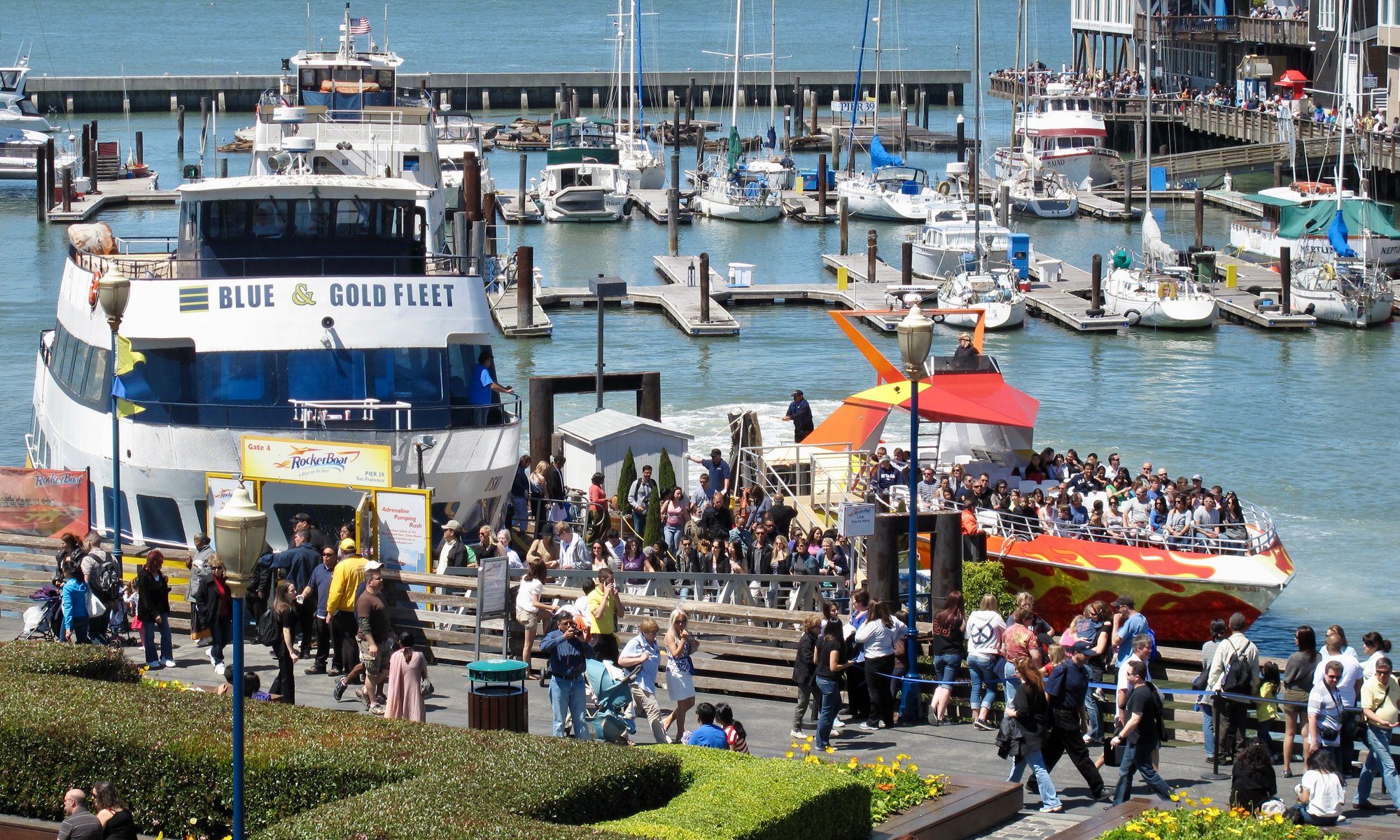
As any good waterfront should, San Francisco's offers a variety of water-based activities like boat tours and cruises. The beautiful views over the water with the rolling house-speckled hills in the distance make activities on the water even more attractive.
Access
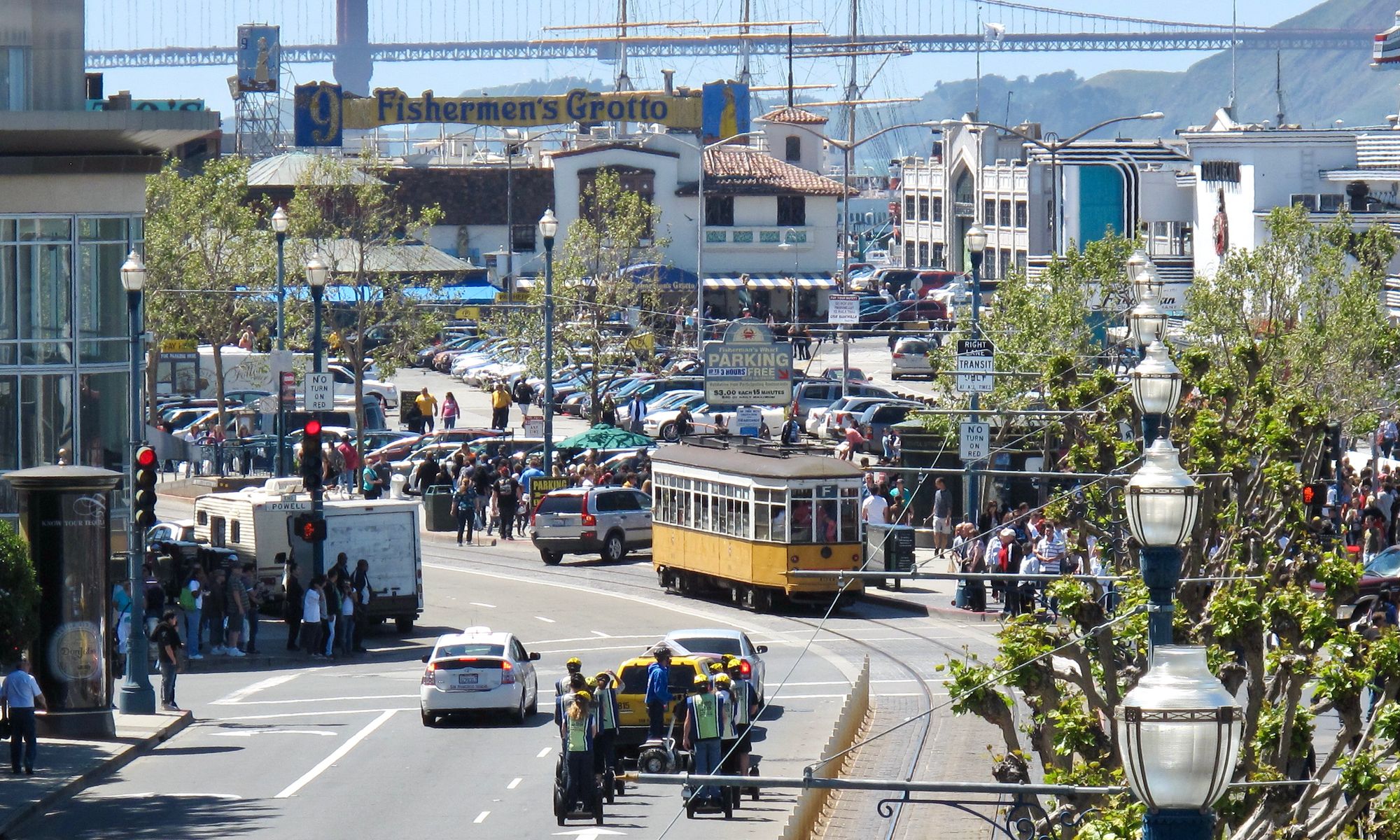
Accessibility is essential for great public places. People can't enjoy a place if they can't reach it. In San Francisco, accessibility is an attraction in itself as historic streetcars transport people to and fro. Traditional buses are also an option.
 Fred Kent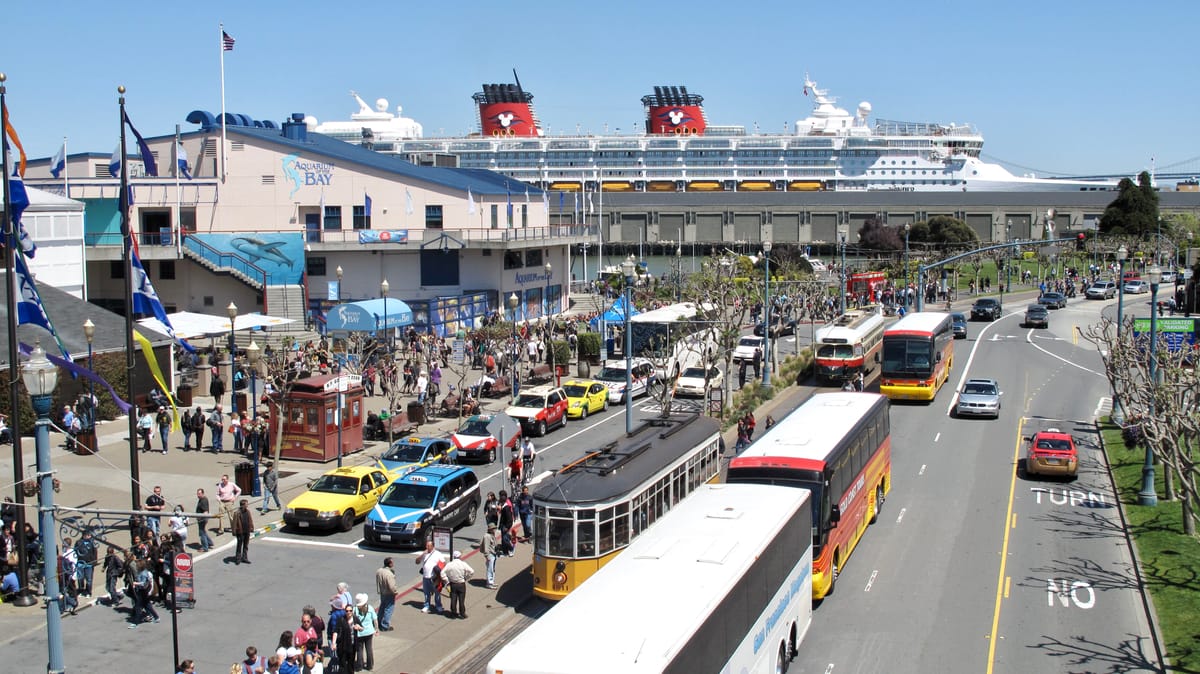
3) London - South Bank Waterfront
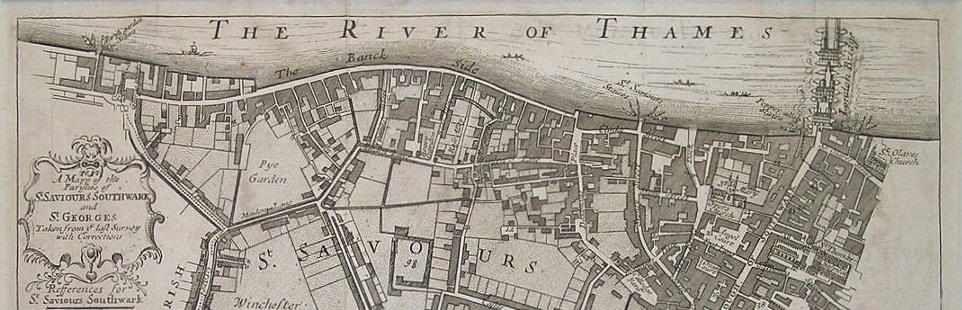
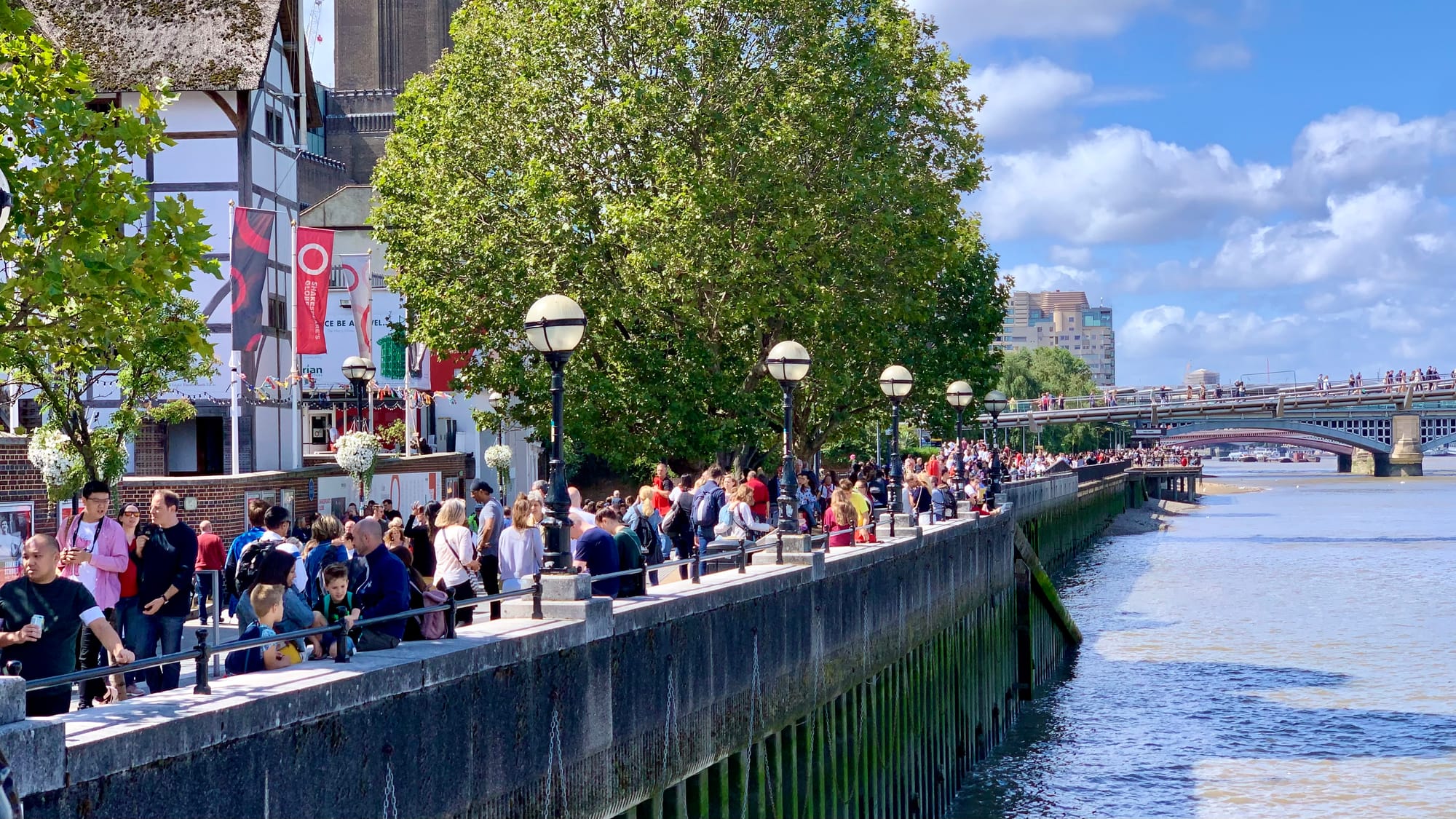
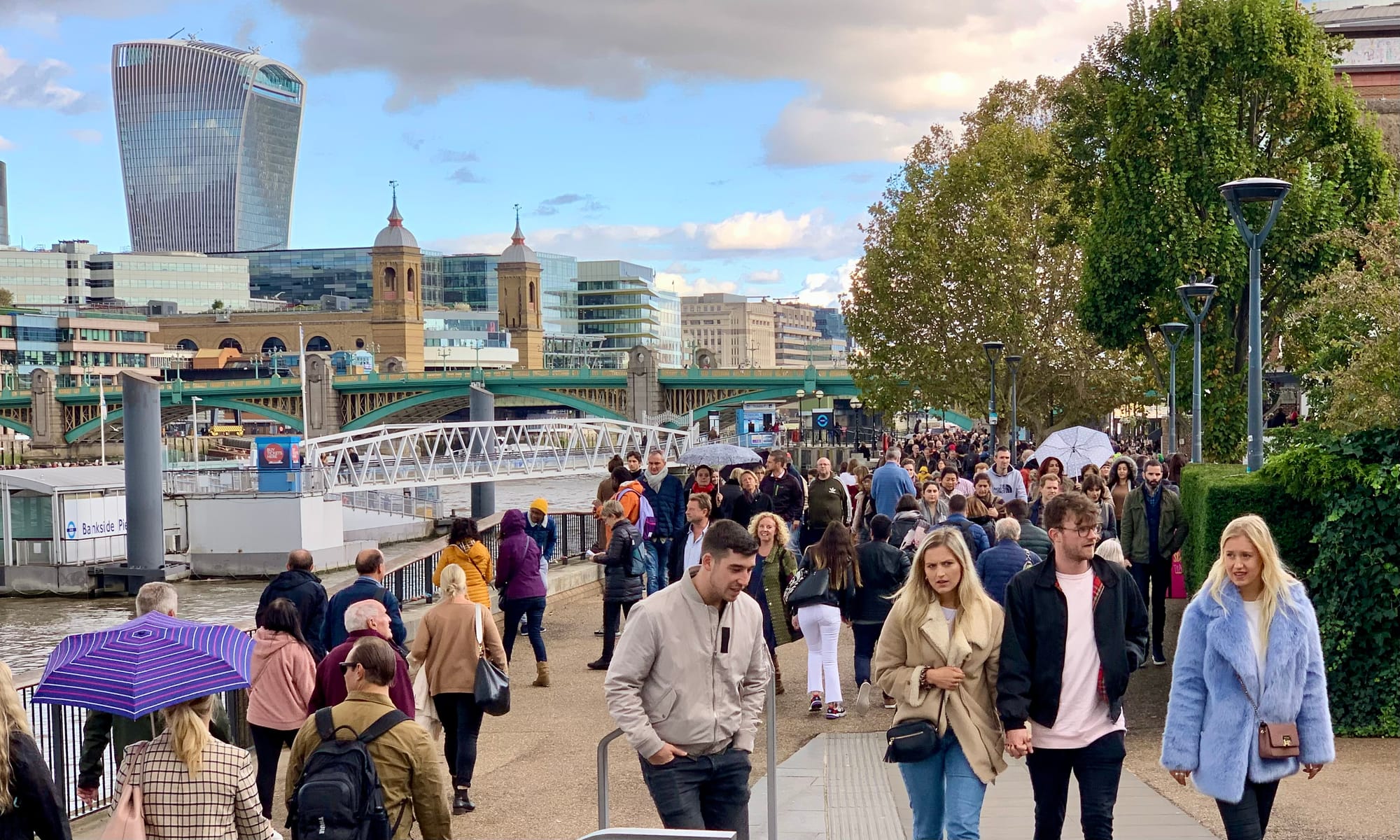
London's South Bank demonstrates the "series of rooms" design where a waterfront is enriched with a variety of distinct destinations.
The promenade
London's southern waterfront has one of the great promenades of the world. It is spontaneous, organic, and constantly changing, which makes it a place that people want to be. There are musical acts, food kiosks, seating areas, cultural institutions, and more. With so many people and so much going on, it feels like a moving stage that embraces you as you travel along it.
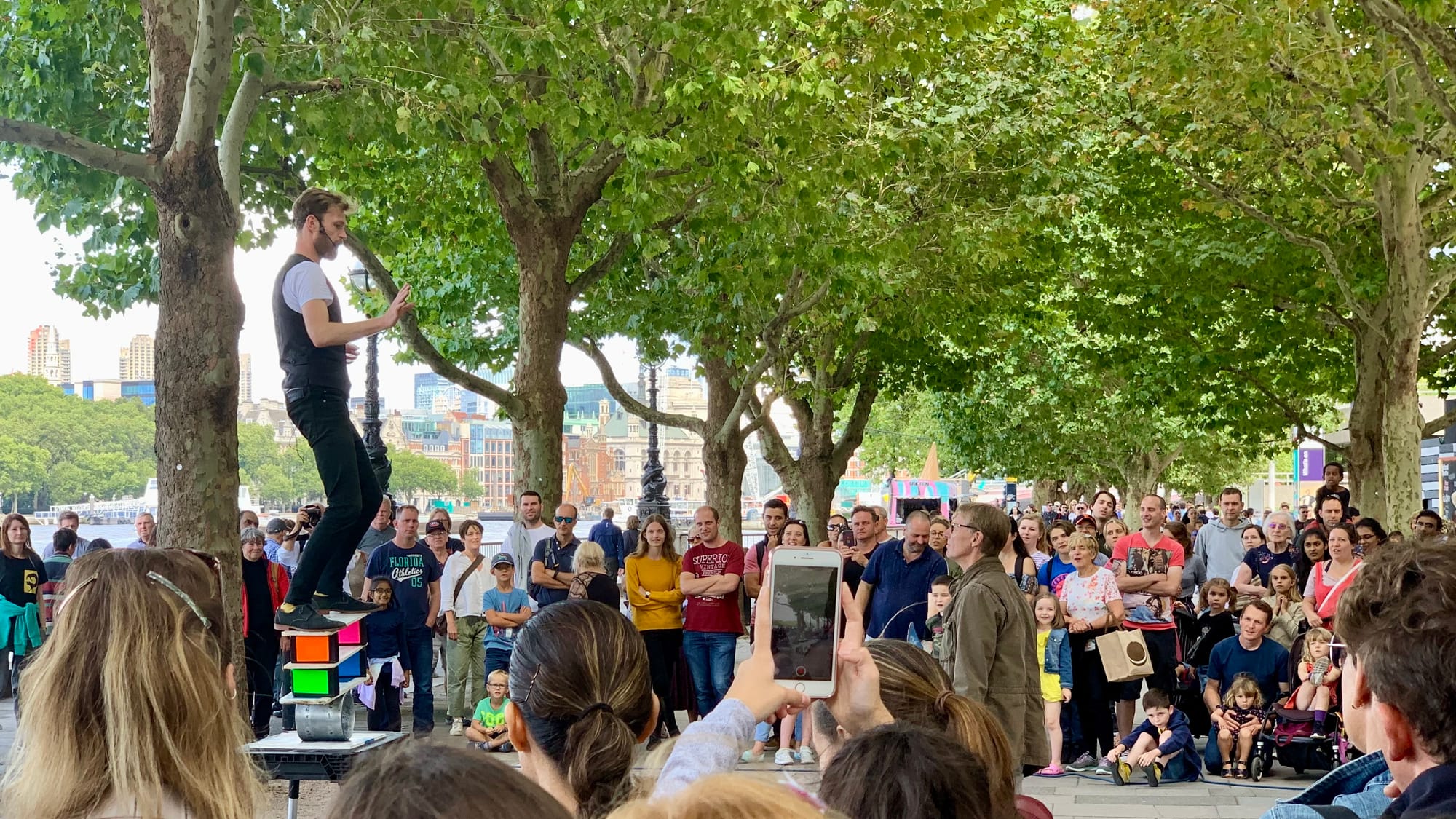
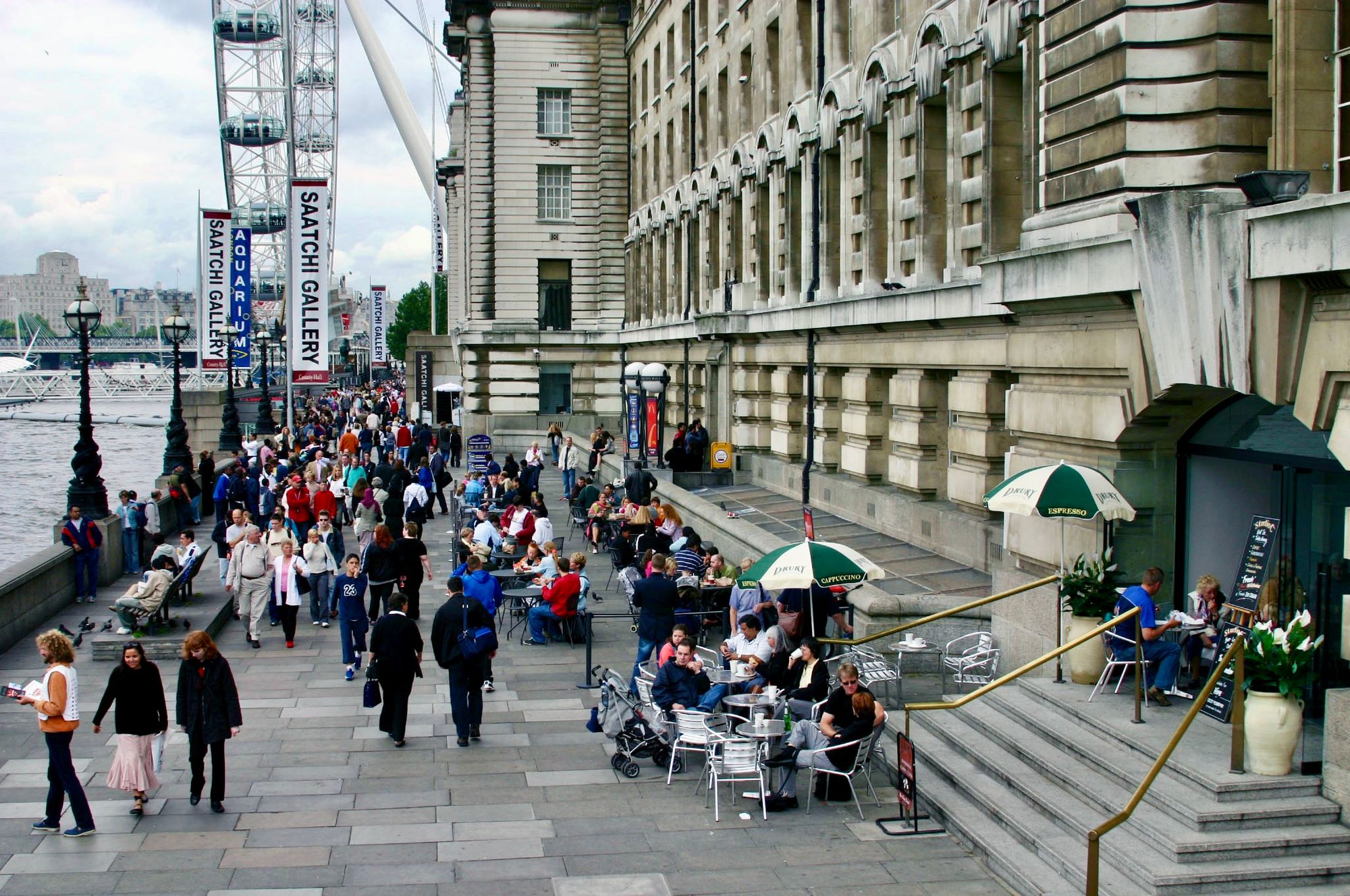
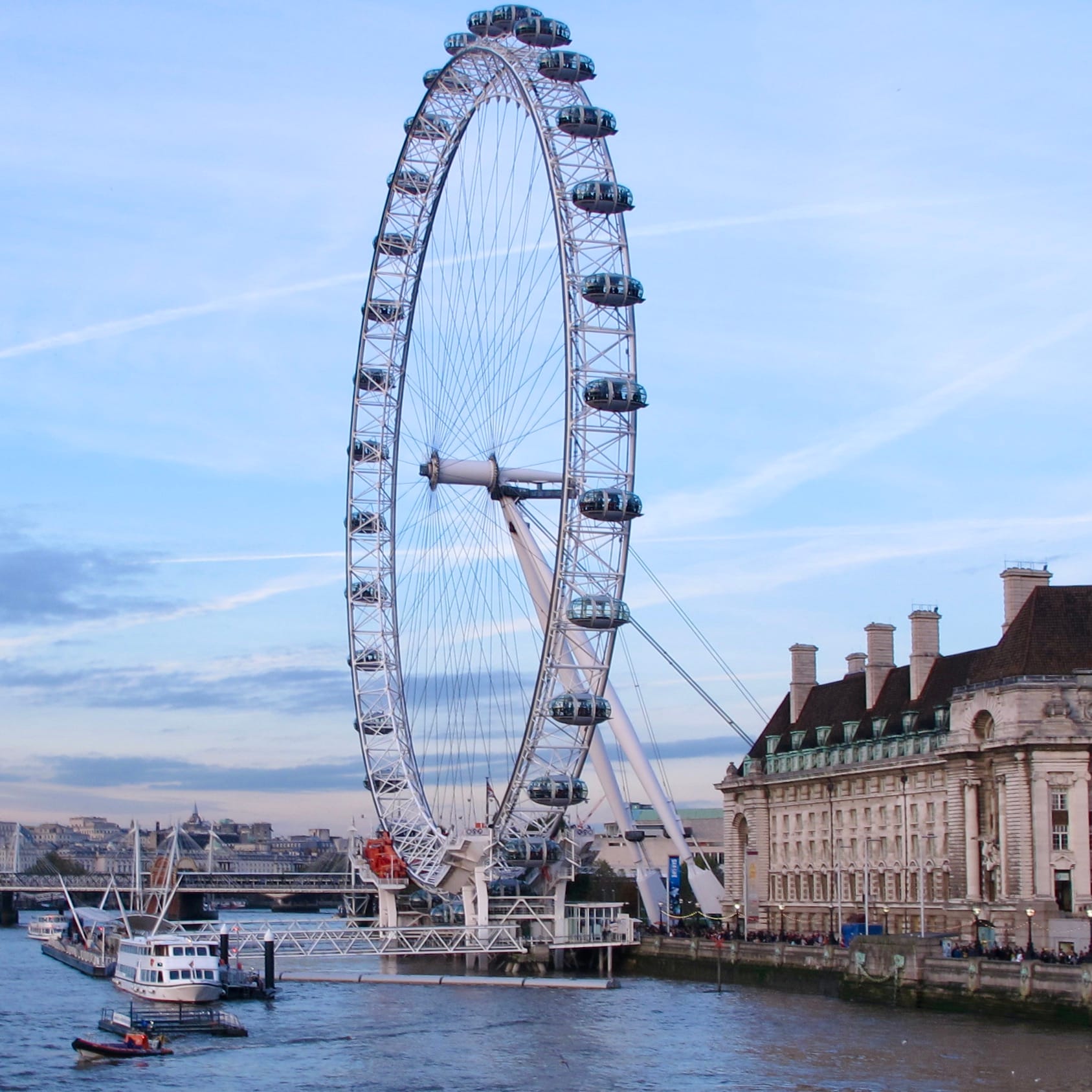
Destinations on the London waterfront
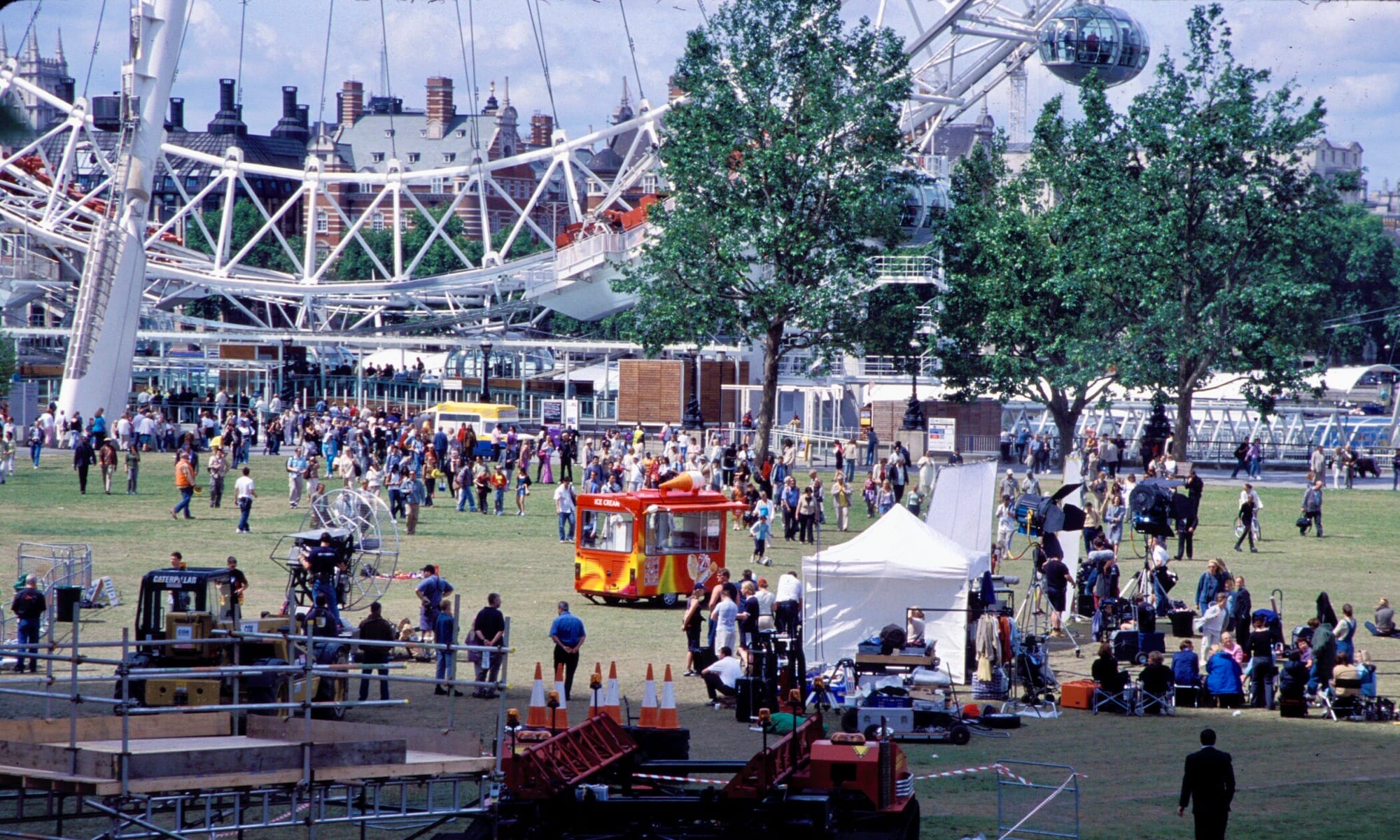
One of the world's most recognizable modern landmarks, the London eye, is an amazing focal point along the south of the Thames river. The elegant way it looms over the skyline gives people a destination to walk toward as they stroll along the promenade, holding the promise of incredible views and an unforgettable experience.
Gabriel's Wharf
Gabriel's Wharf is a wonderful square and shopping area by the water and an excellent example of Lighter, Quicker, Cheaper destination building. Transformed from a once empty lot, Gabriel's Wharf is now home to numerous vendors and cafes, an arts presence, and great gathering places. Its transformation was implemented in 1988 and kicked off over the span of only three months. It is incredible to see how such a short period of time led to a lasting example of a thriving waterfront destination.
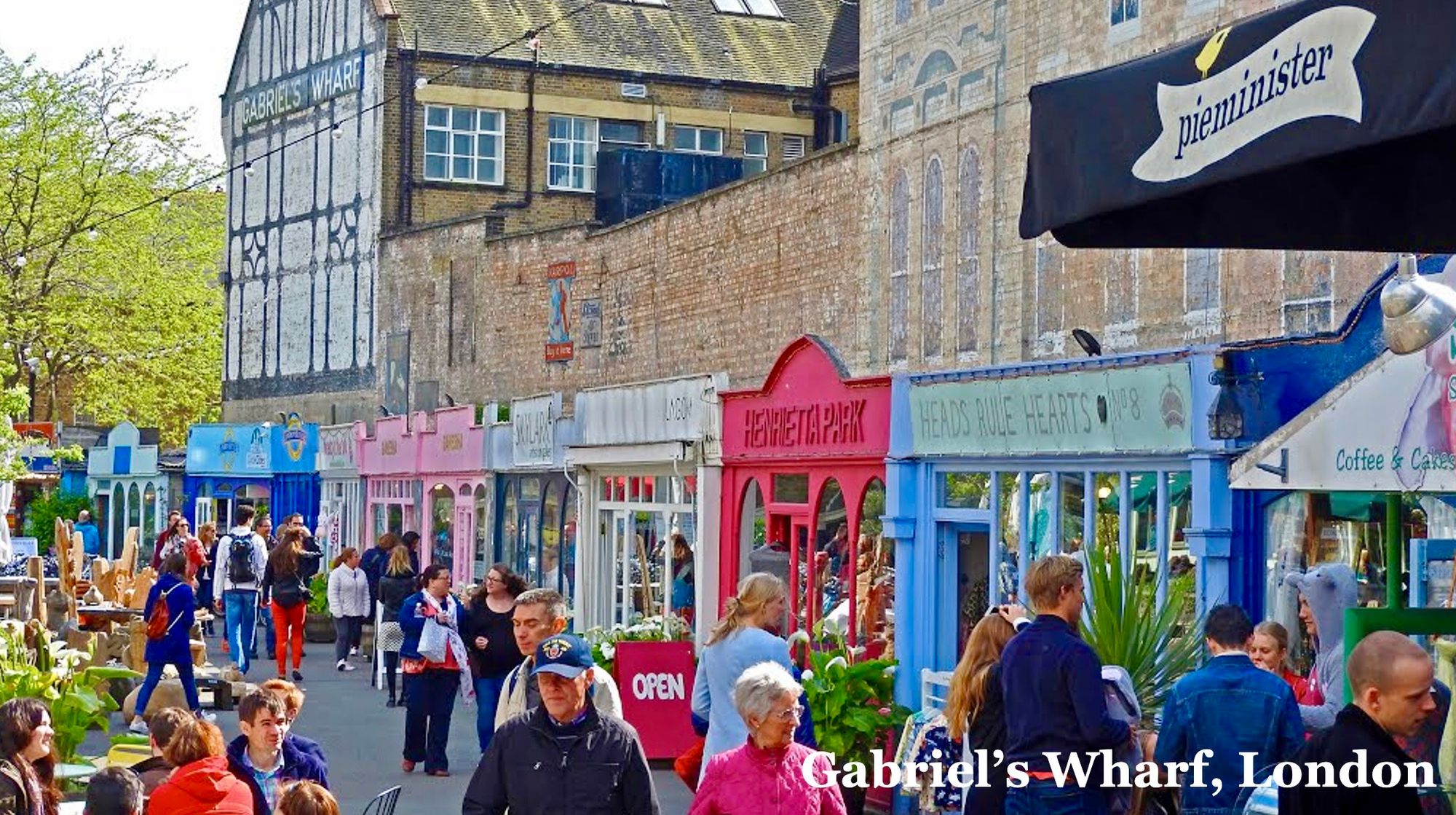
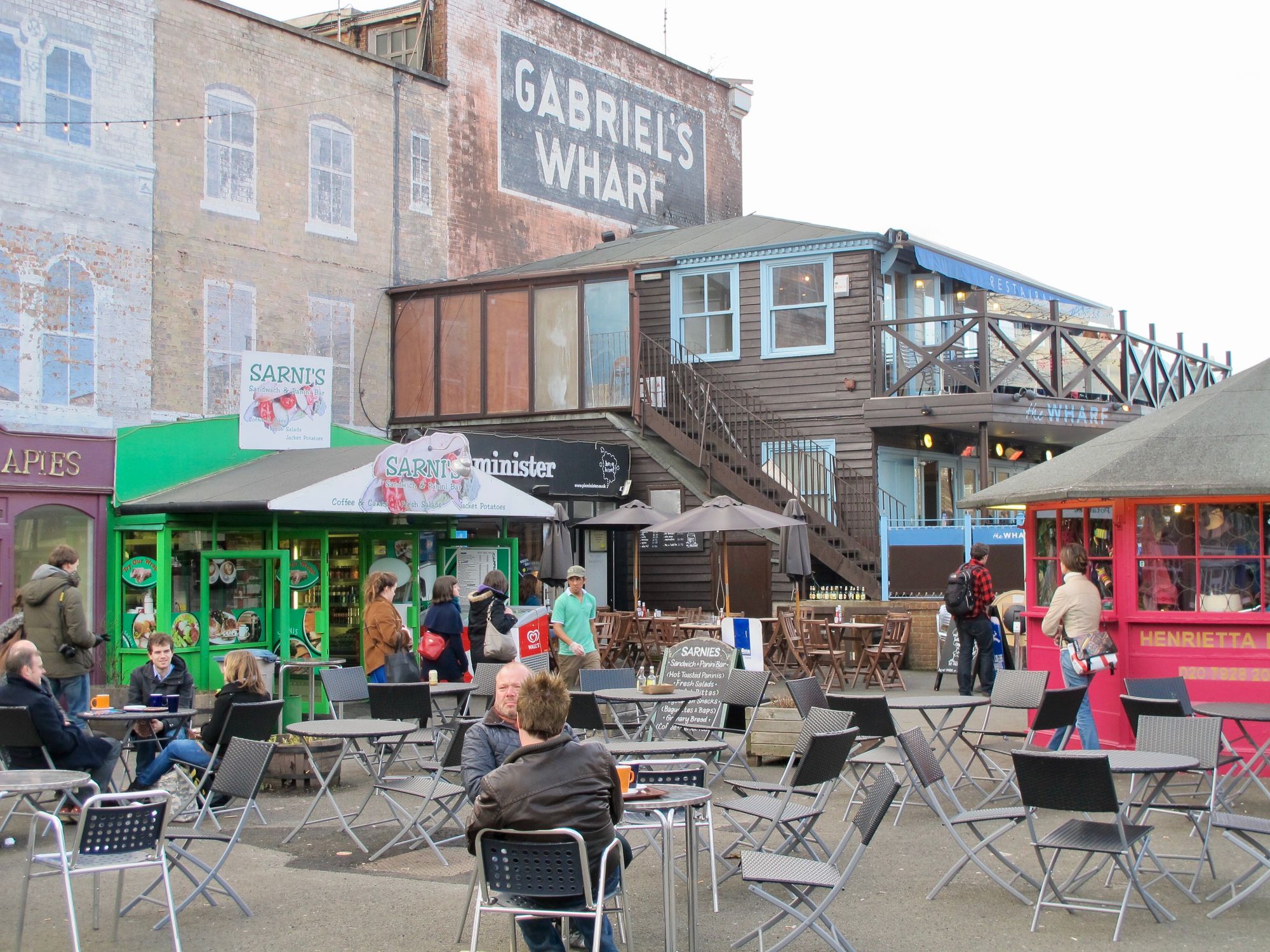
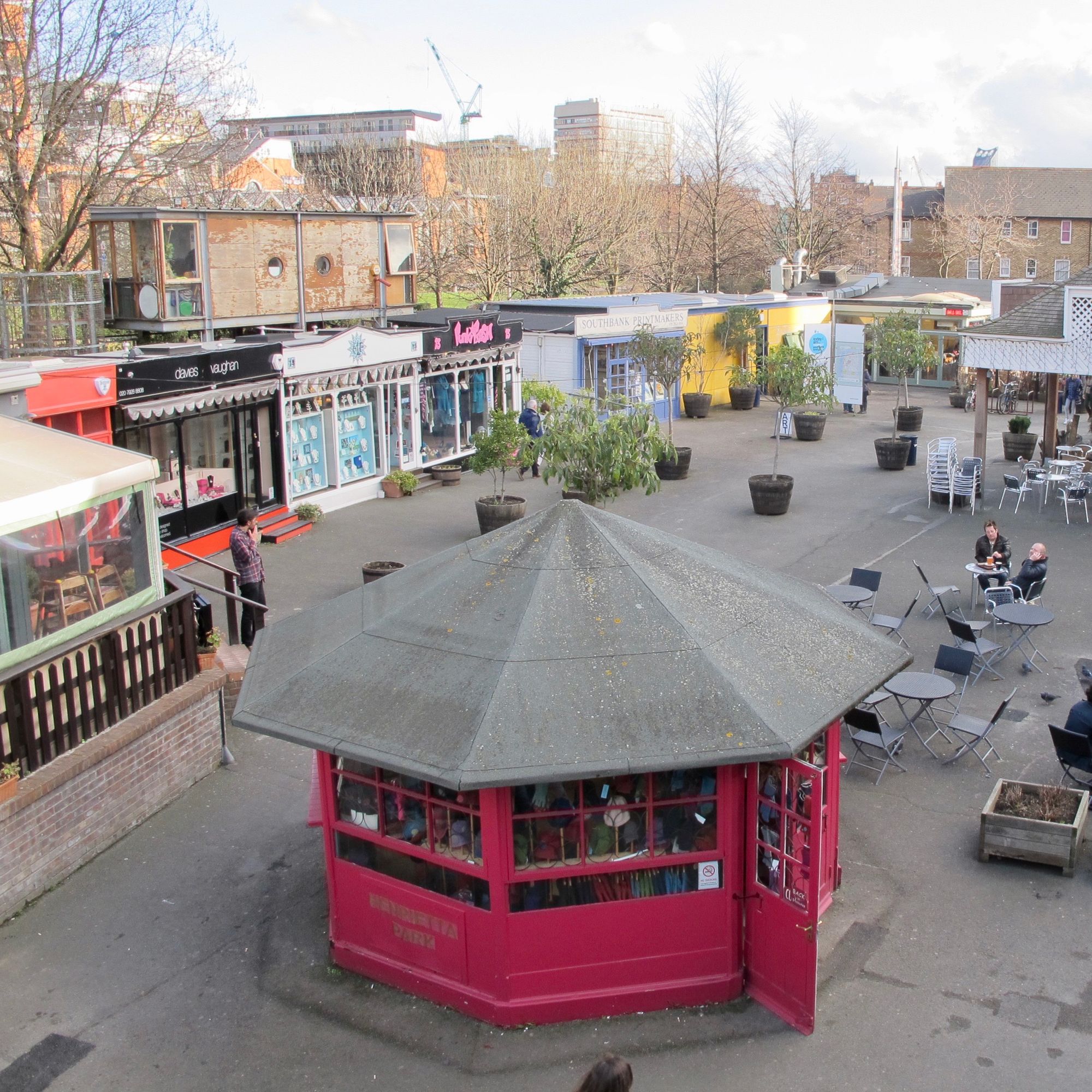
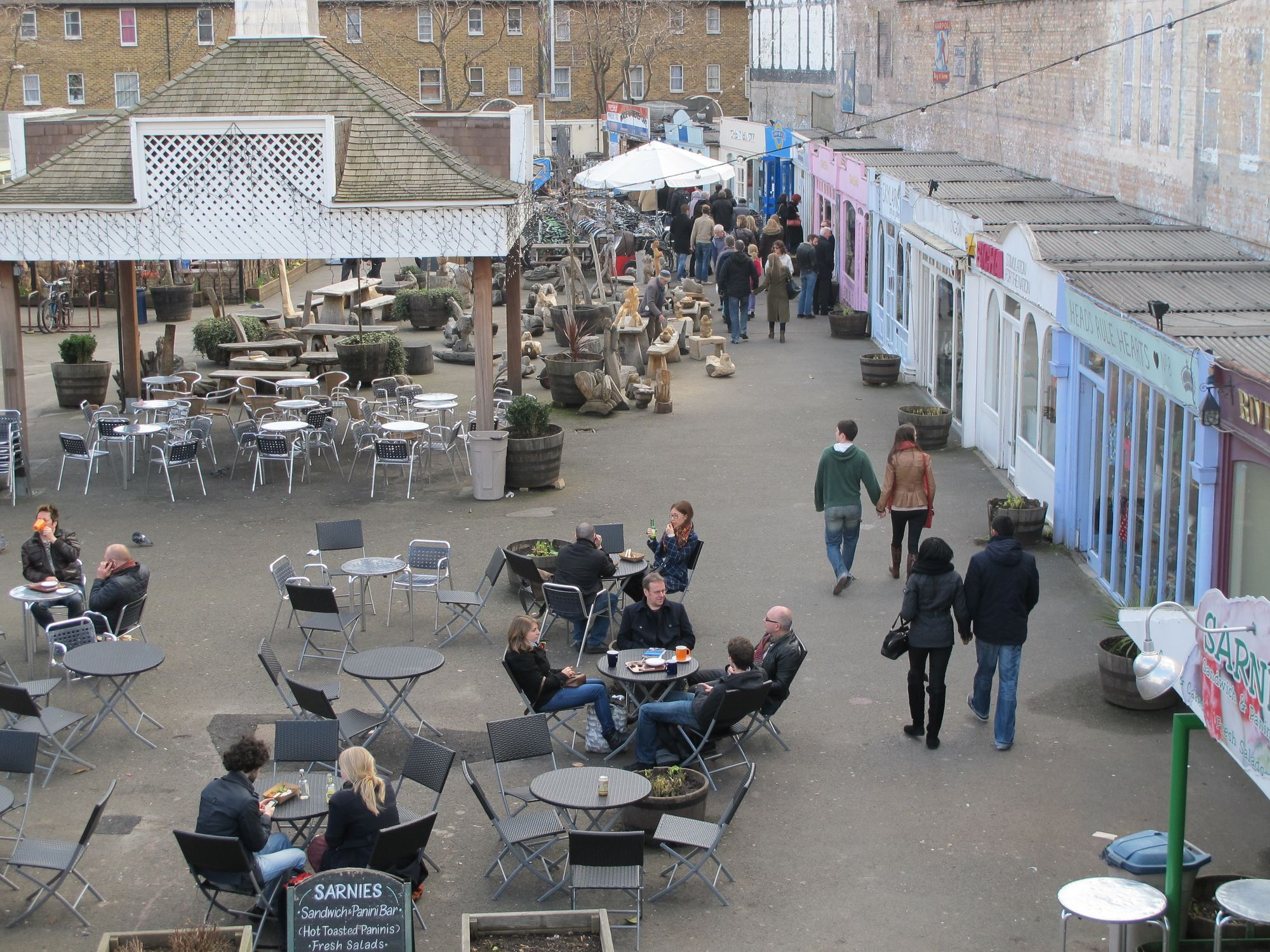
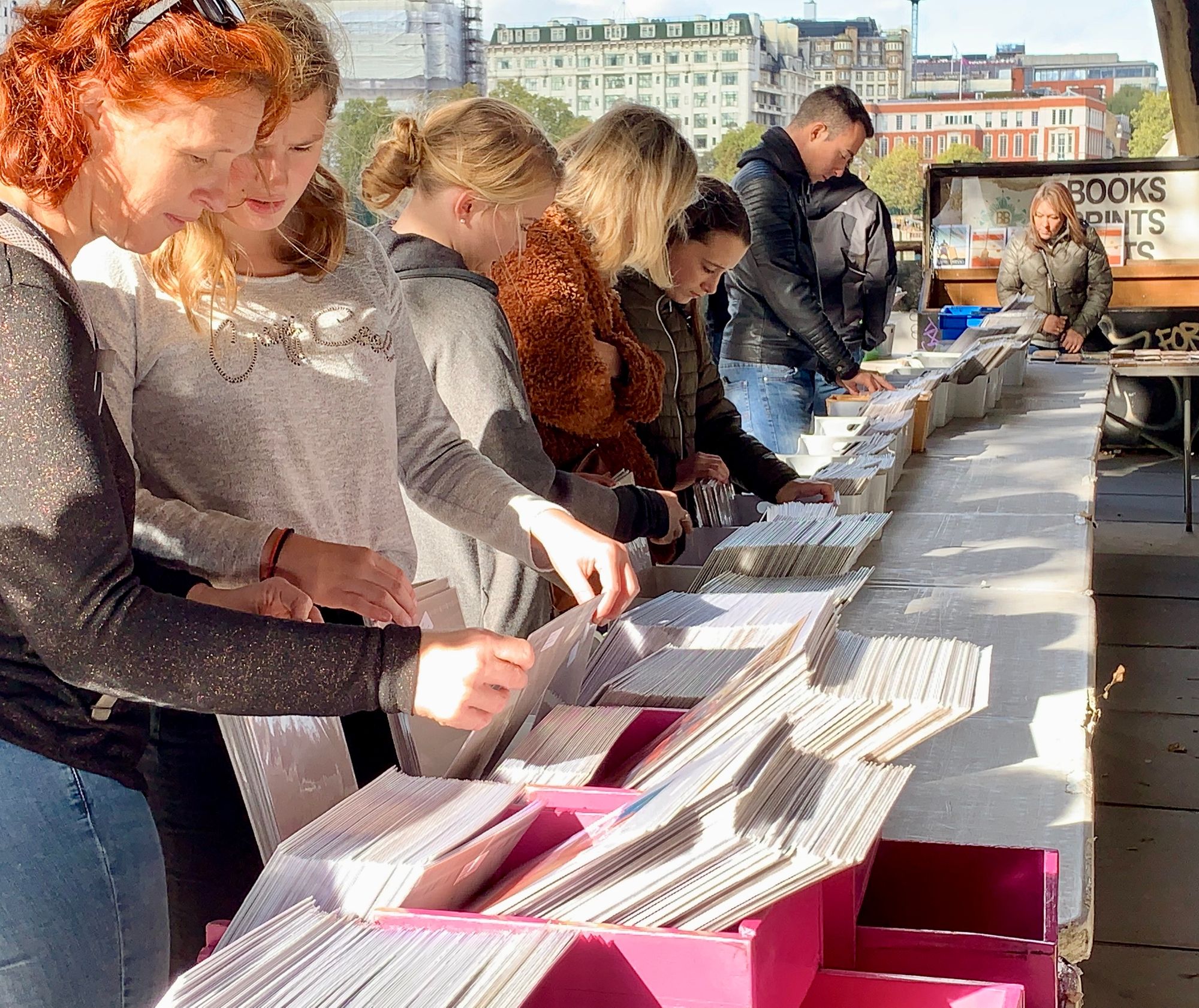
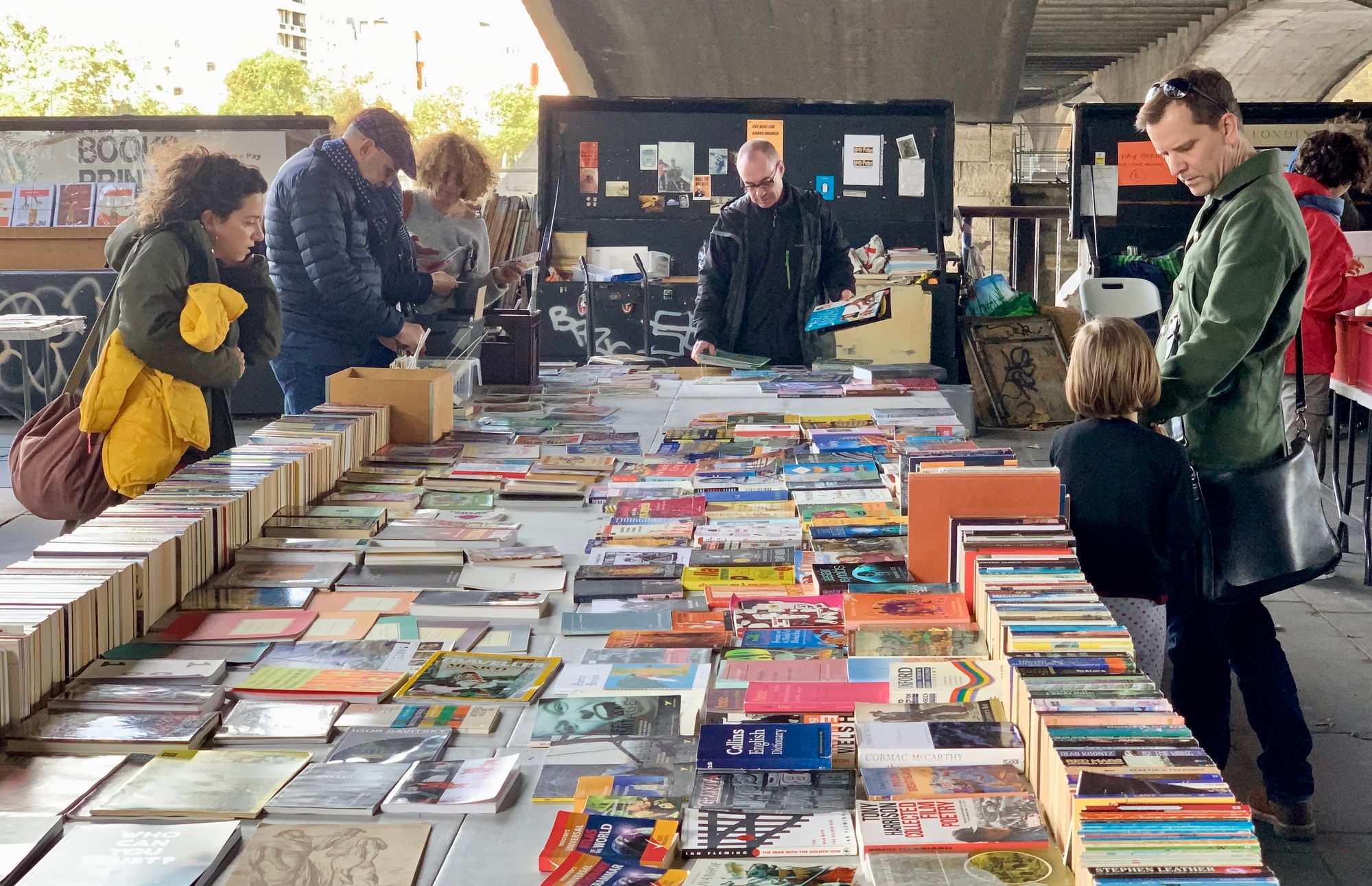
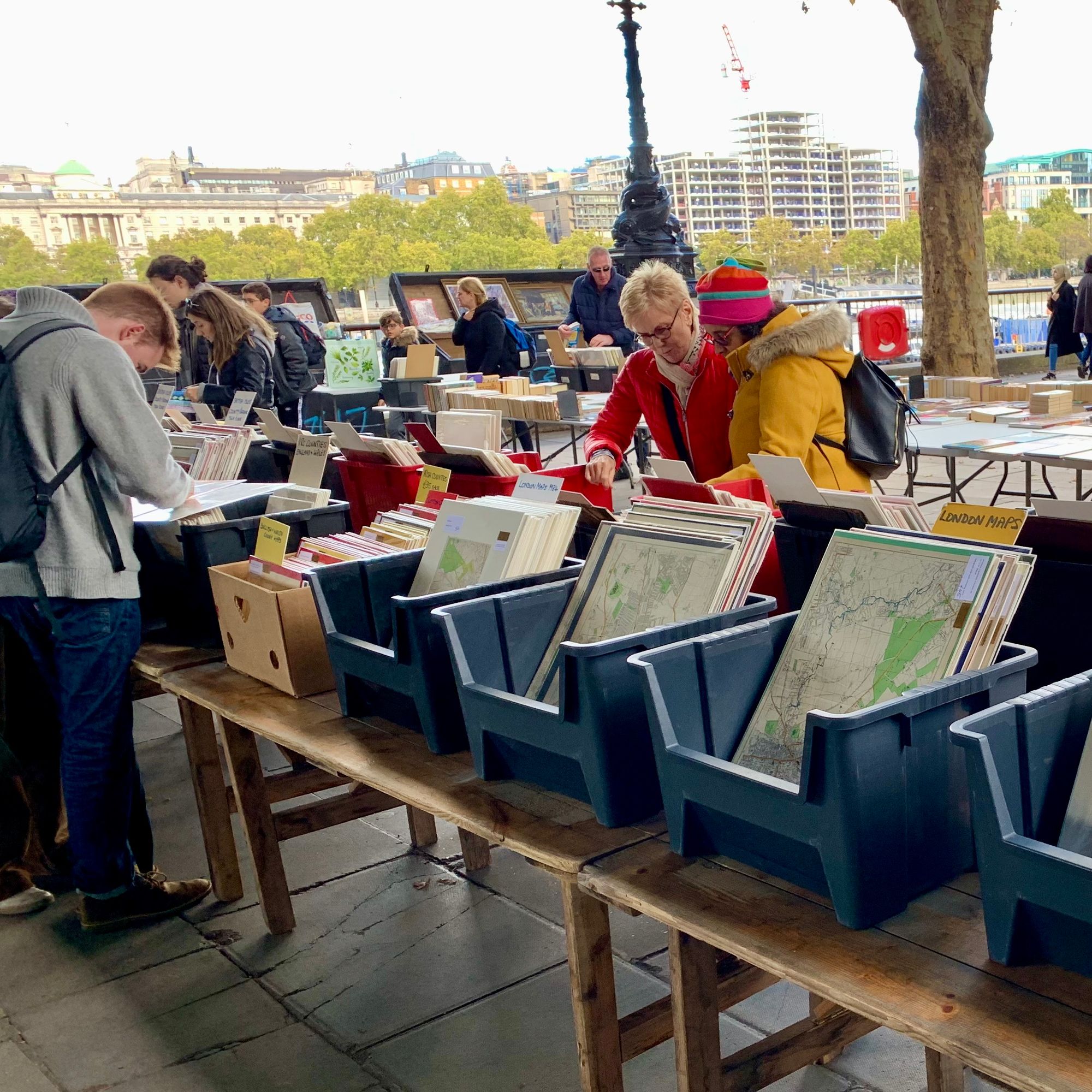
The Promenade's Southbank Book Market
The Book Market on London's South Bank is a treasure trove of prints, maps, and new reading material. Through its outdoor presence, this colorful market draws in passersby to take a closer look at its vibrant titles as they stroll along the water.
Borough Market
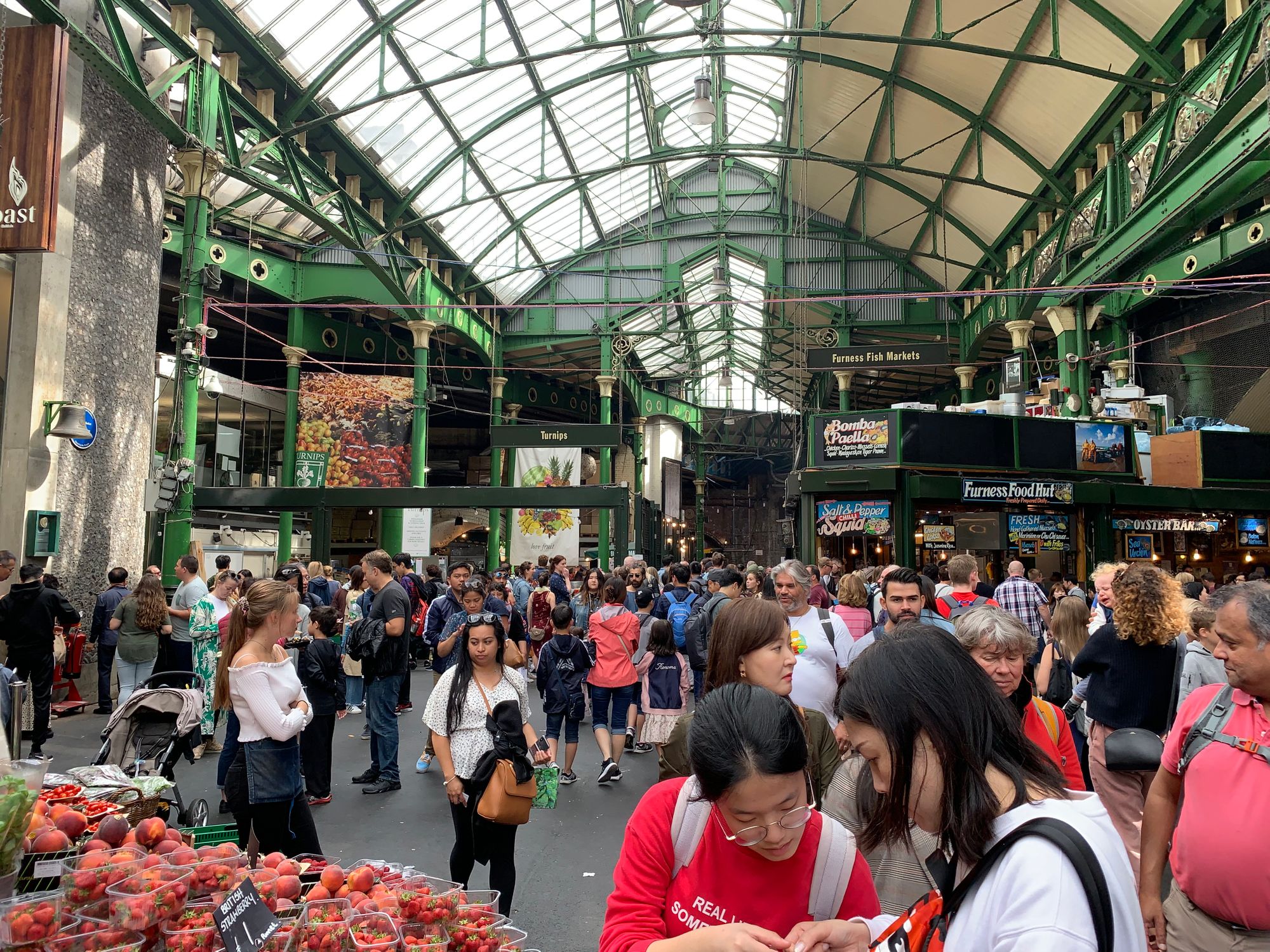
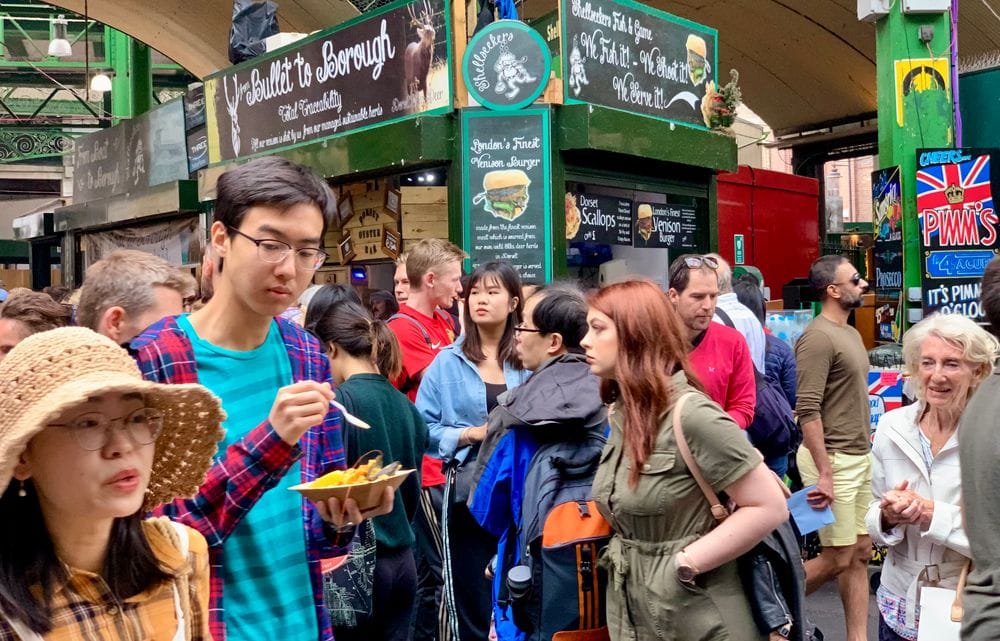
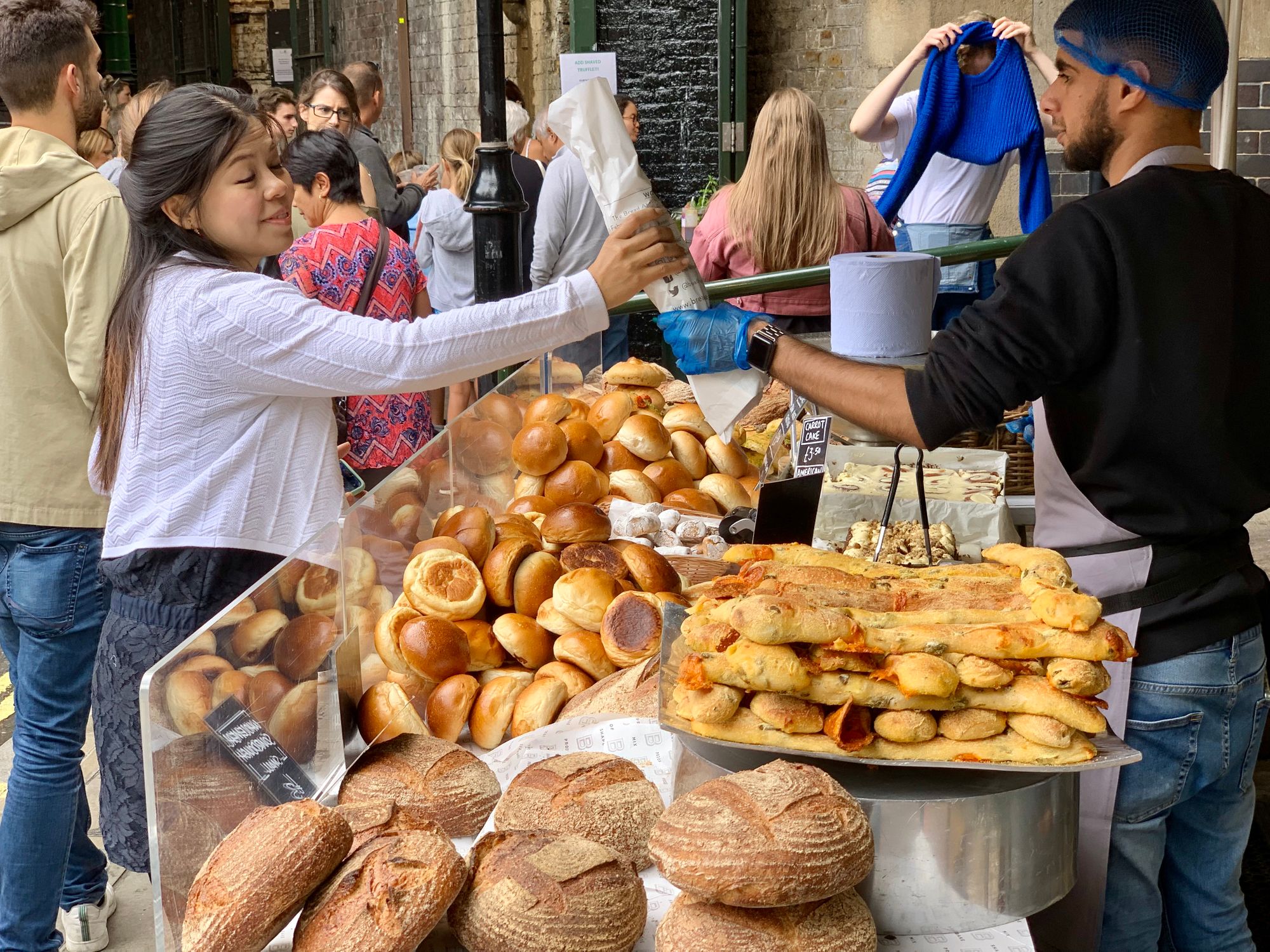
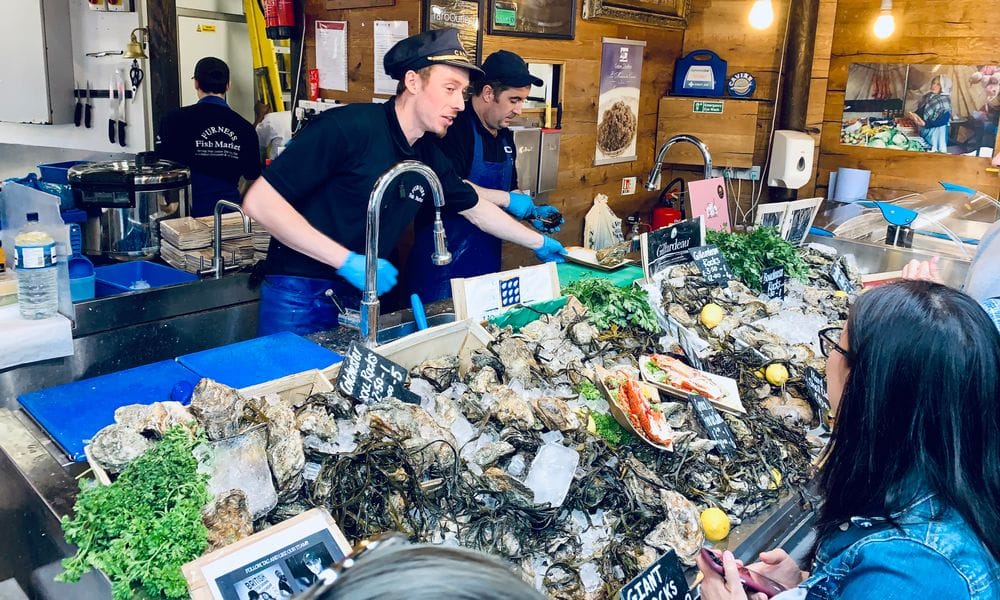
Borough Market is a delight for the senses, and has been for centuries. This permanent, sprawling food market is well-connected to its surroundings and boasts a dynamic mix of both indoor and outdoor areas with hundreds of stalls and thousands of offerings. Borough Market is one of the most visited destinations in London, and a major attraction along the south of the river.
 Fred Kent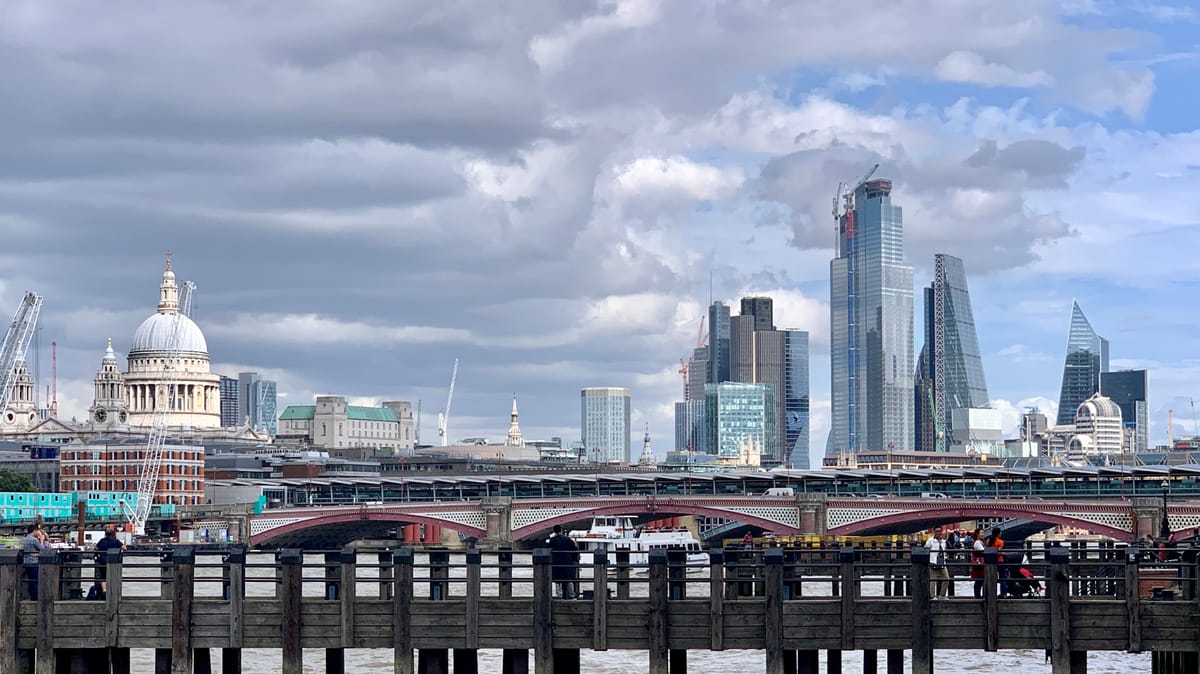
4) Stockholm, Sweden
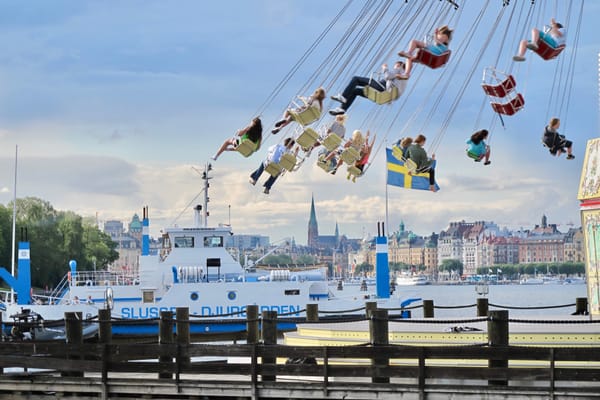
Only historic boats are allowed to berth on the promenade of Stockholm's waterfront, meaning it is always a visual delight. This is further enhanced by the beautiful architecture flanking the other side of the pedestrian walkway. Making sure the views at a waterfront are not only protected but enhanced and highlighted is essential to waterfront streets since the main appeal of being by the water is its beauty.
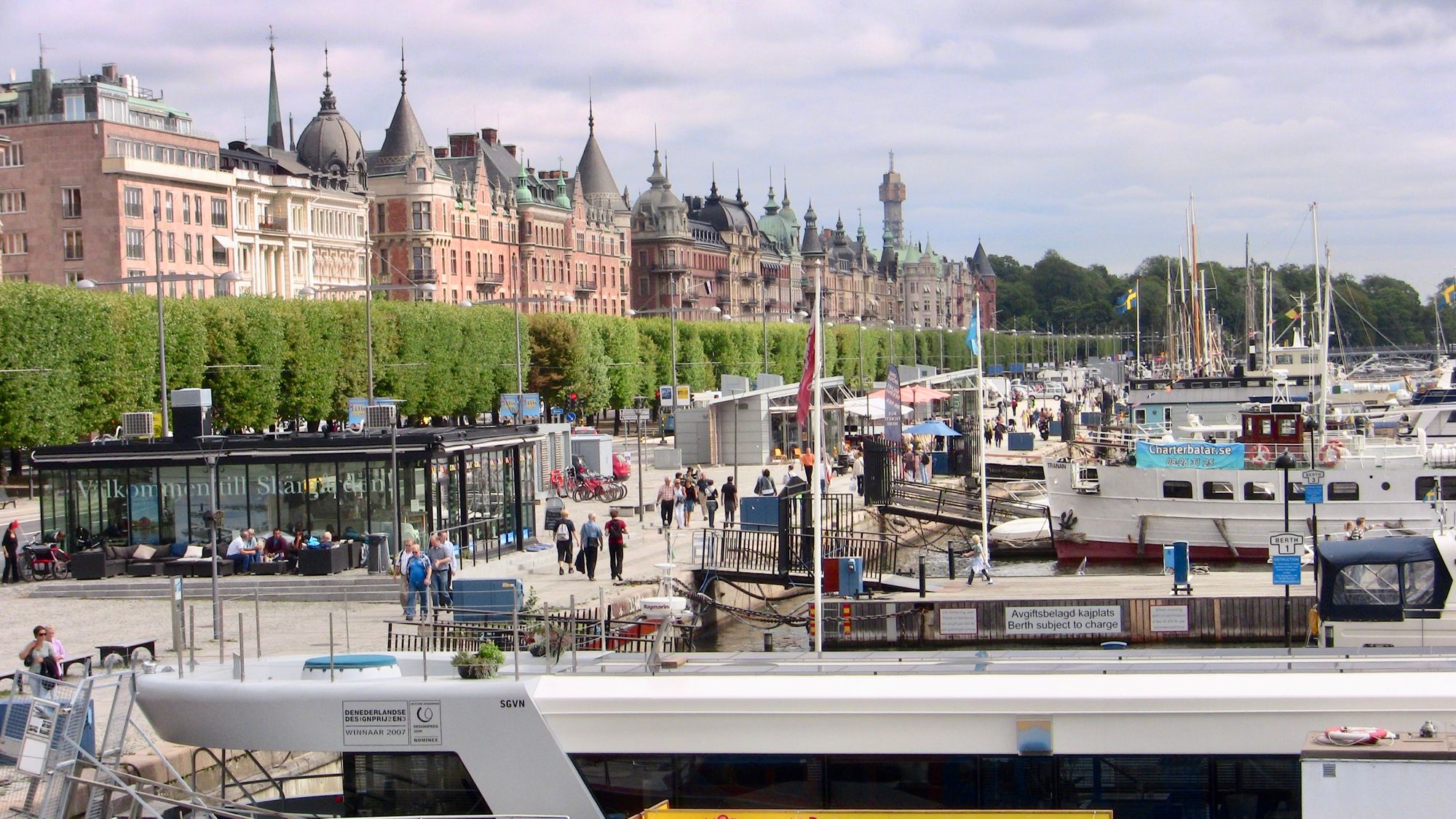
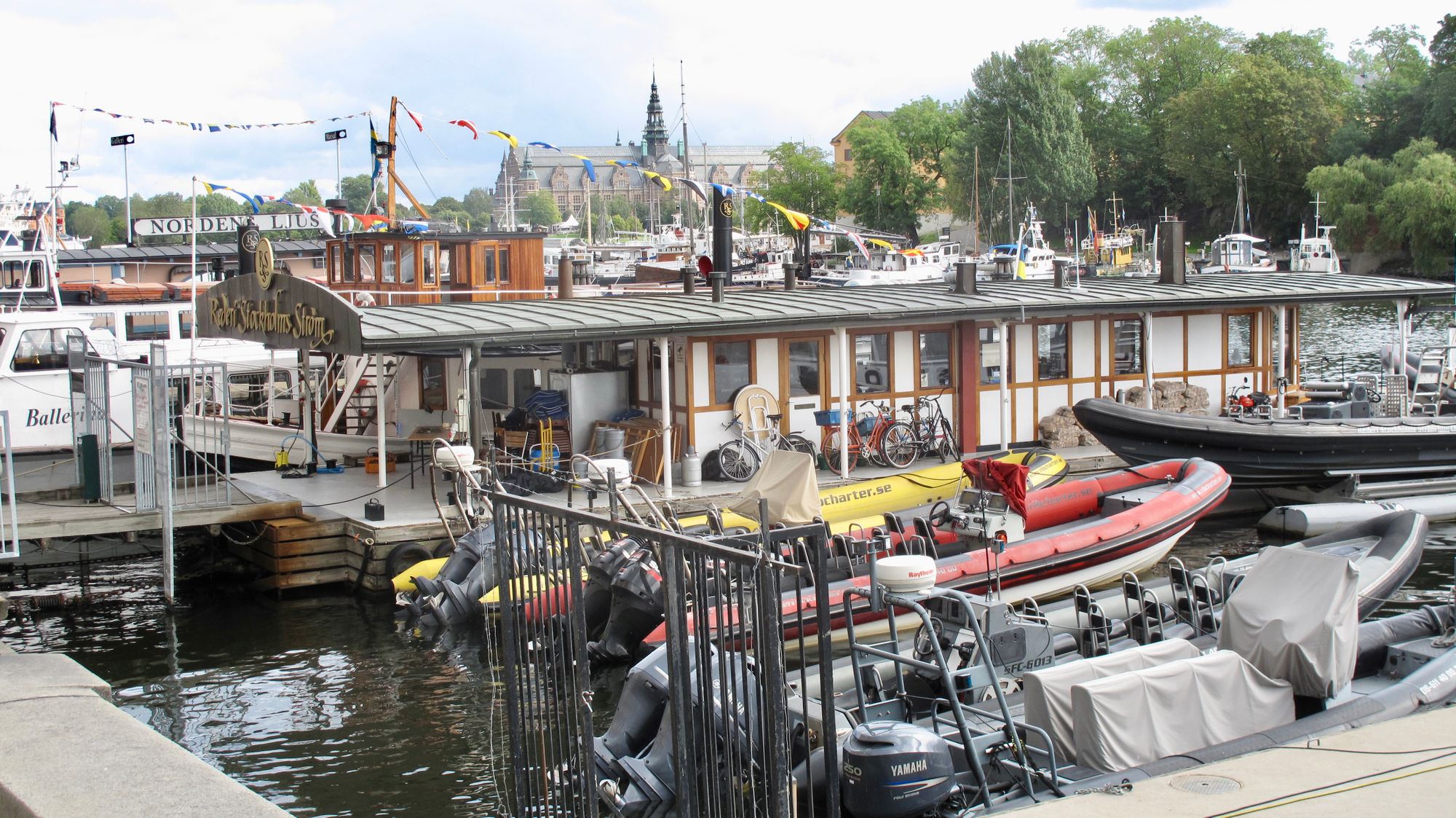
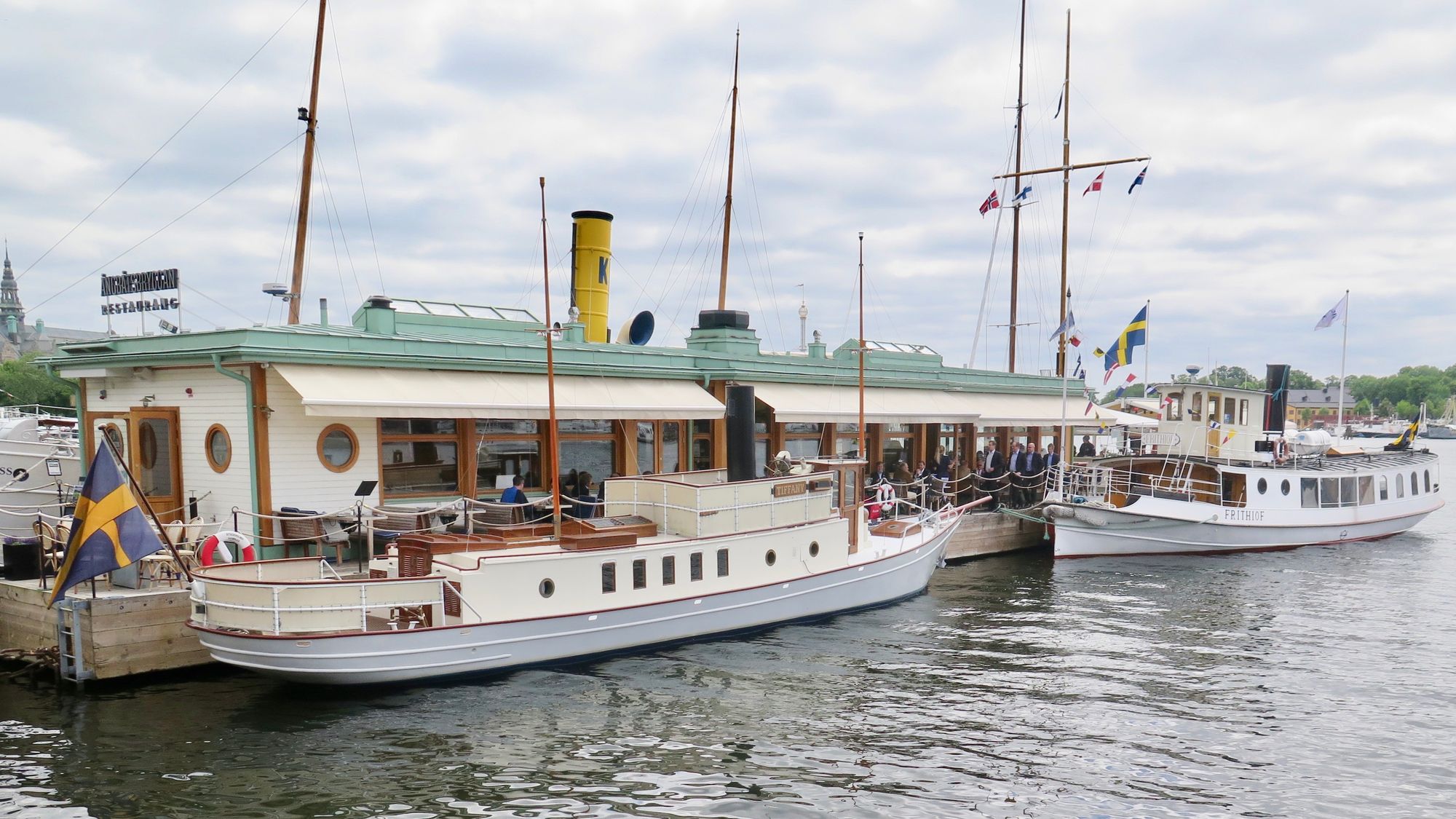
Stockholm's waterfront is full of restaurants and is uniquely well-connected, with esplanades leading to other beloved public spaces like the Kungsträdgården.
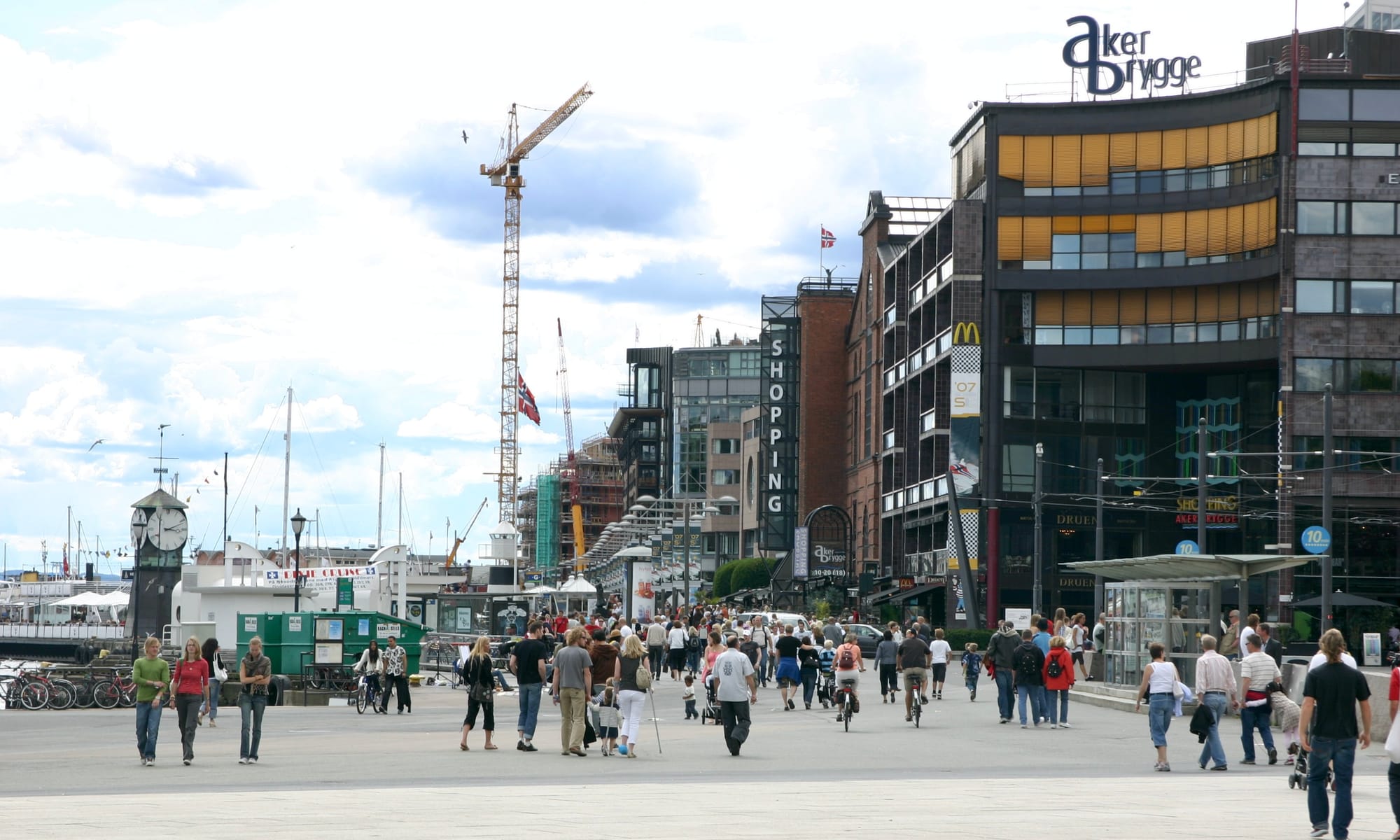
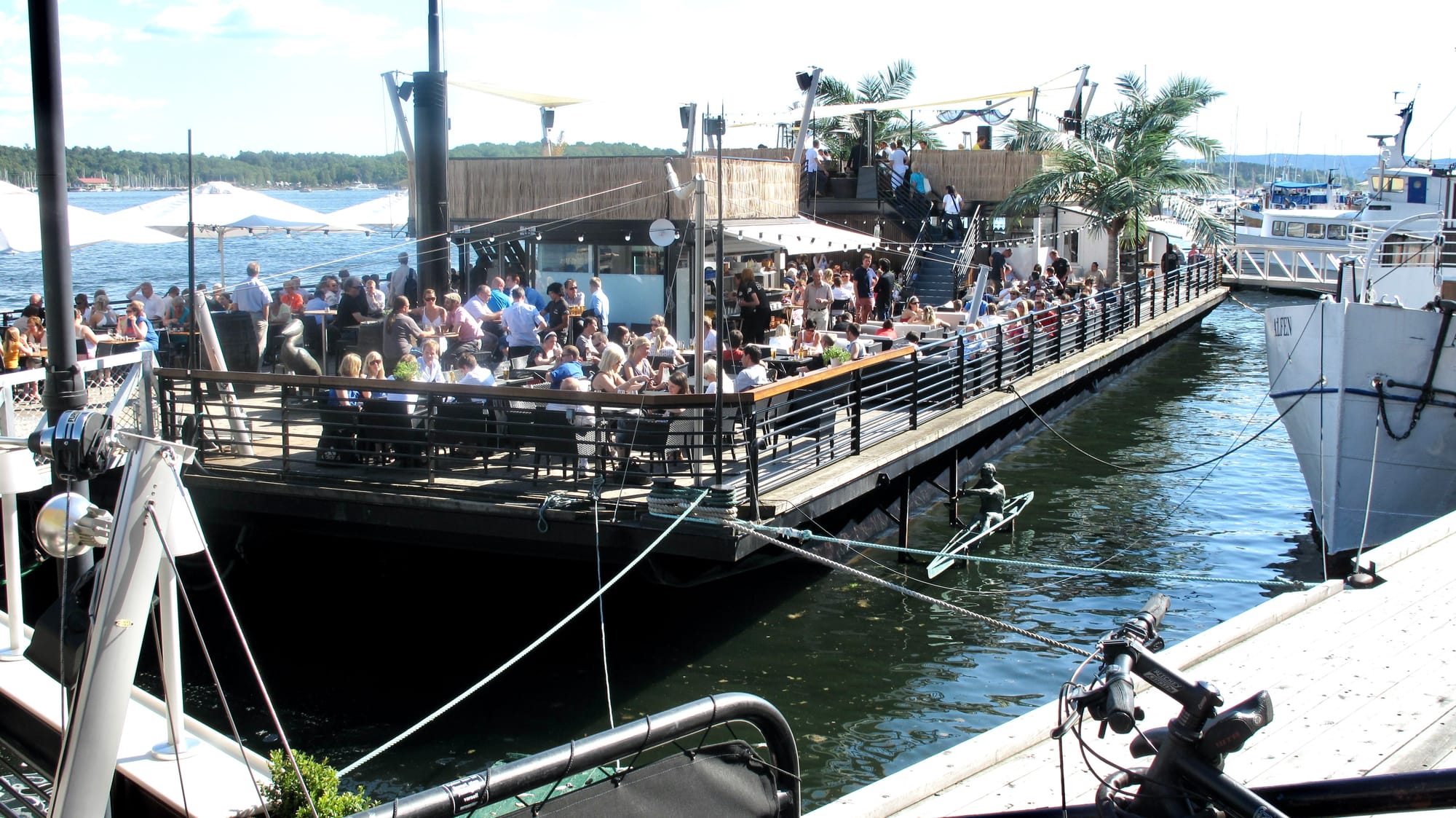
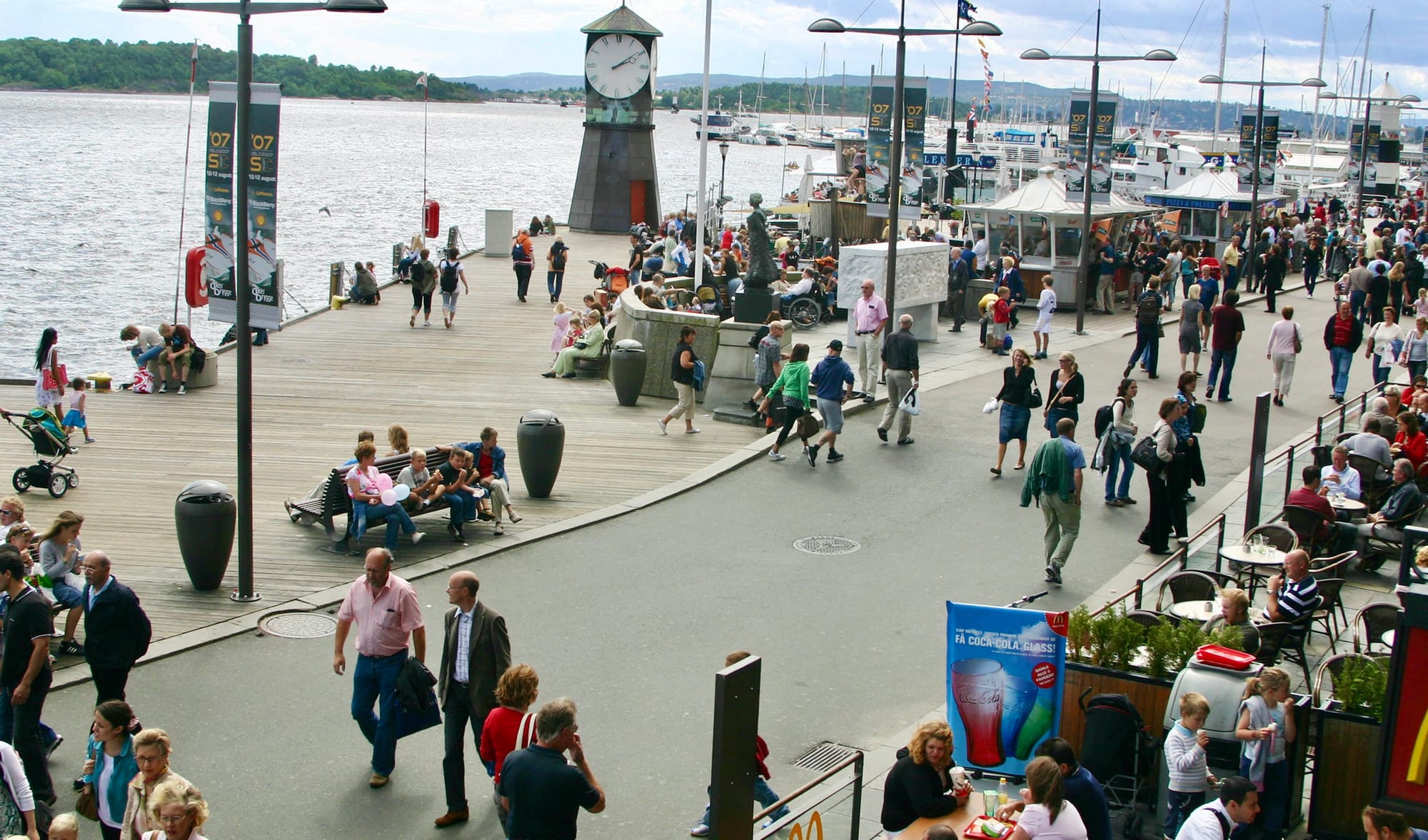
5) Aker Brygge, Oslo, Norway
In Aker Brygge, the waterfront promenade is wide and lined with seating areas, restaurants and kiosks. This makes it a place that people love to spend time as they stroll leisurely along the water.
6) Newport, Rhode Island
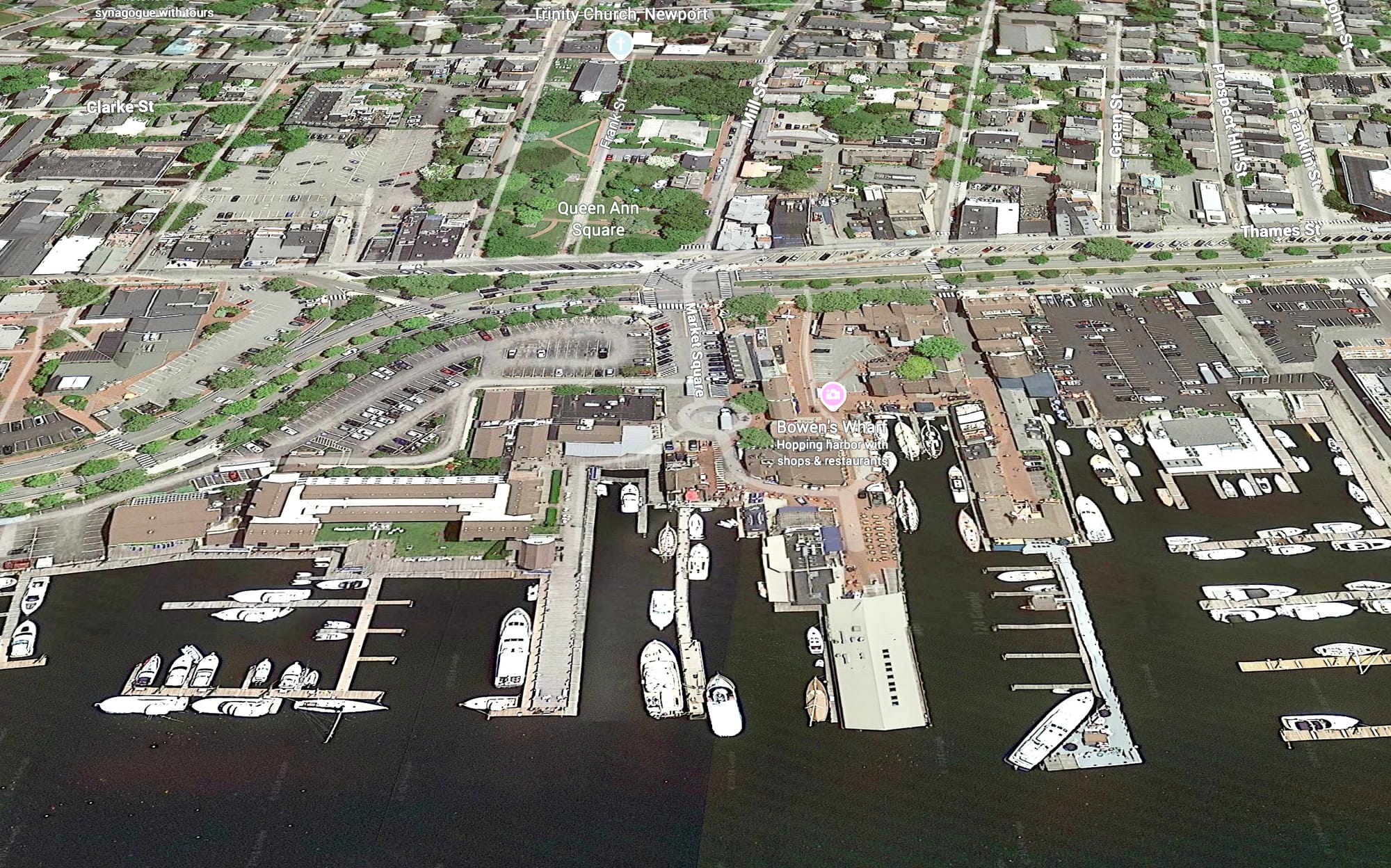
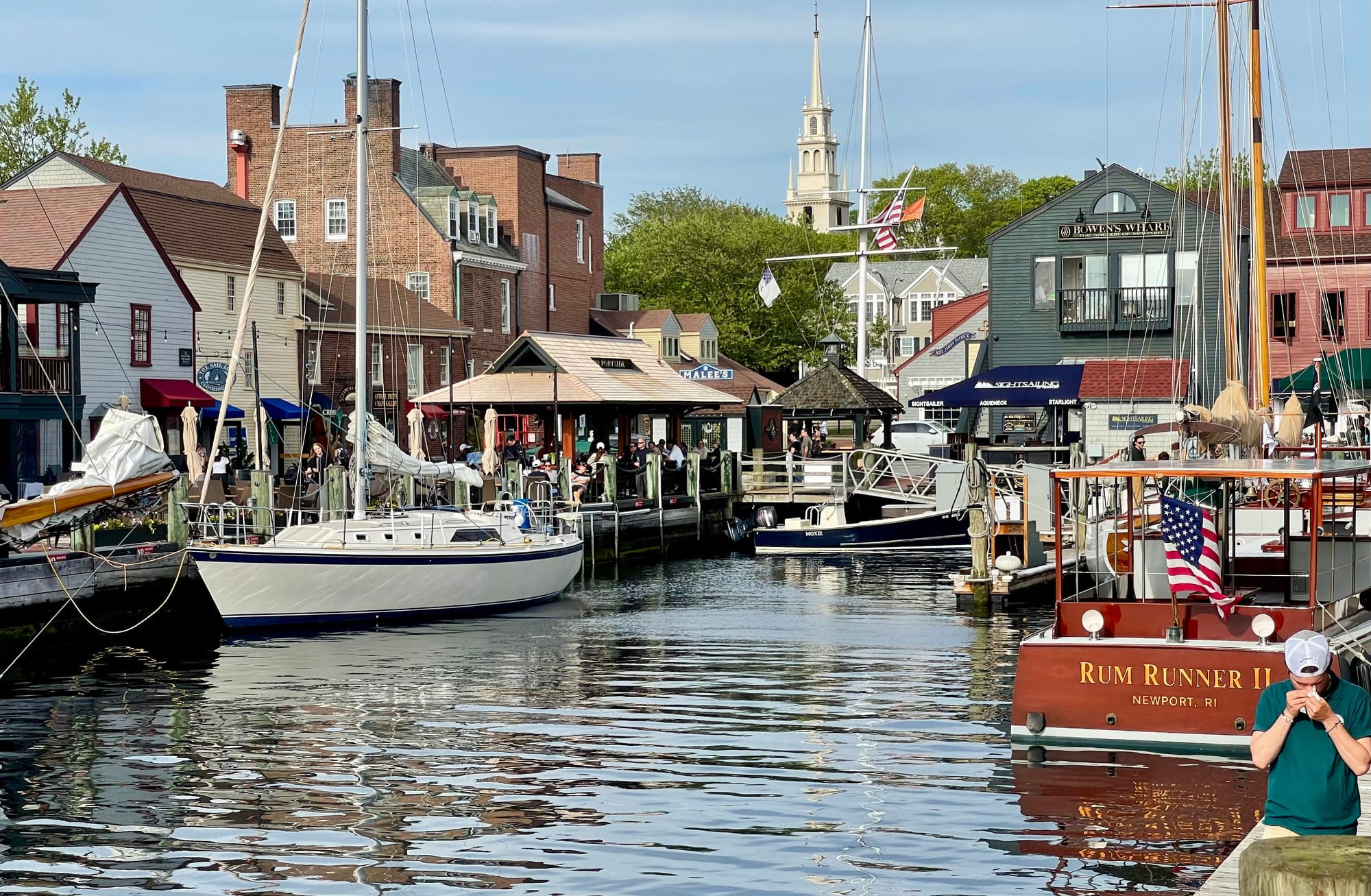
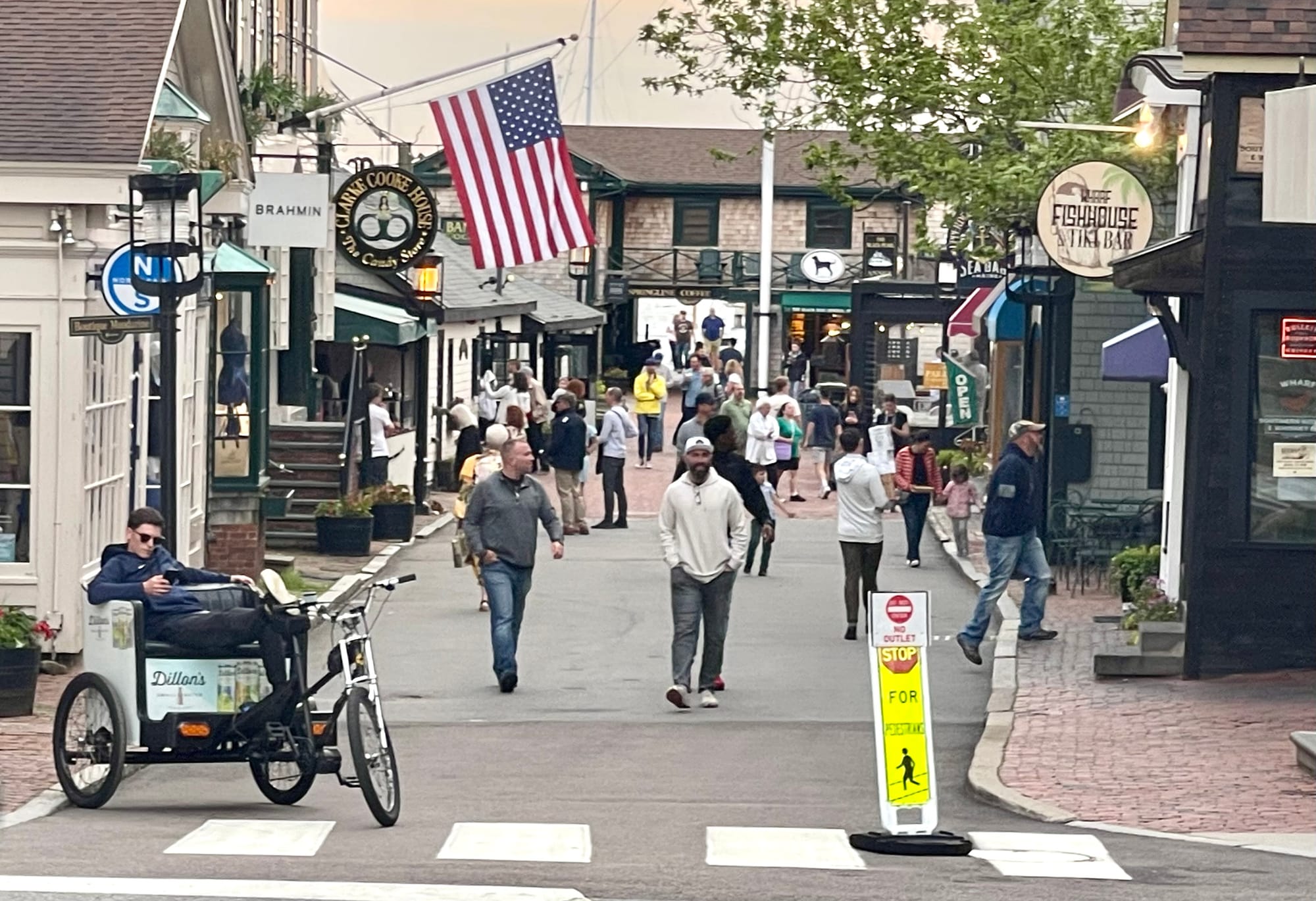
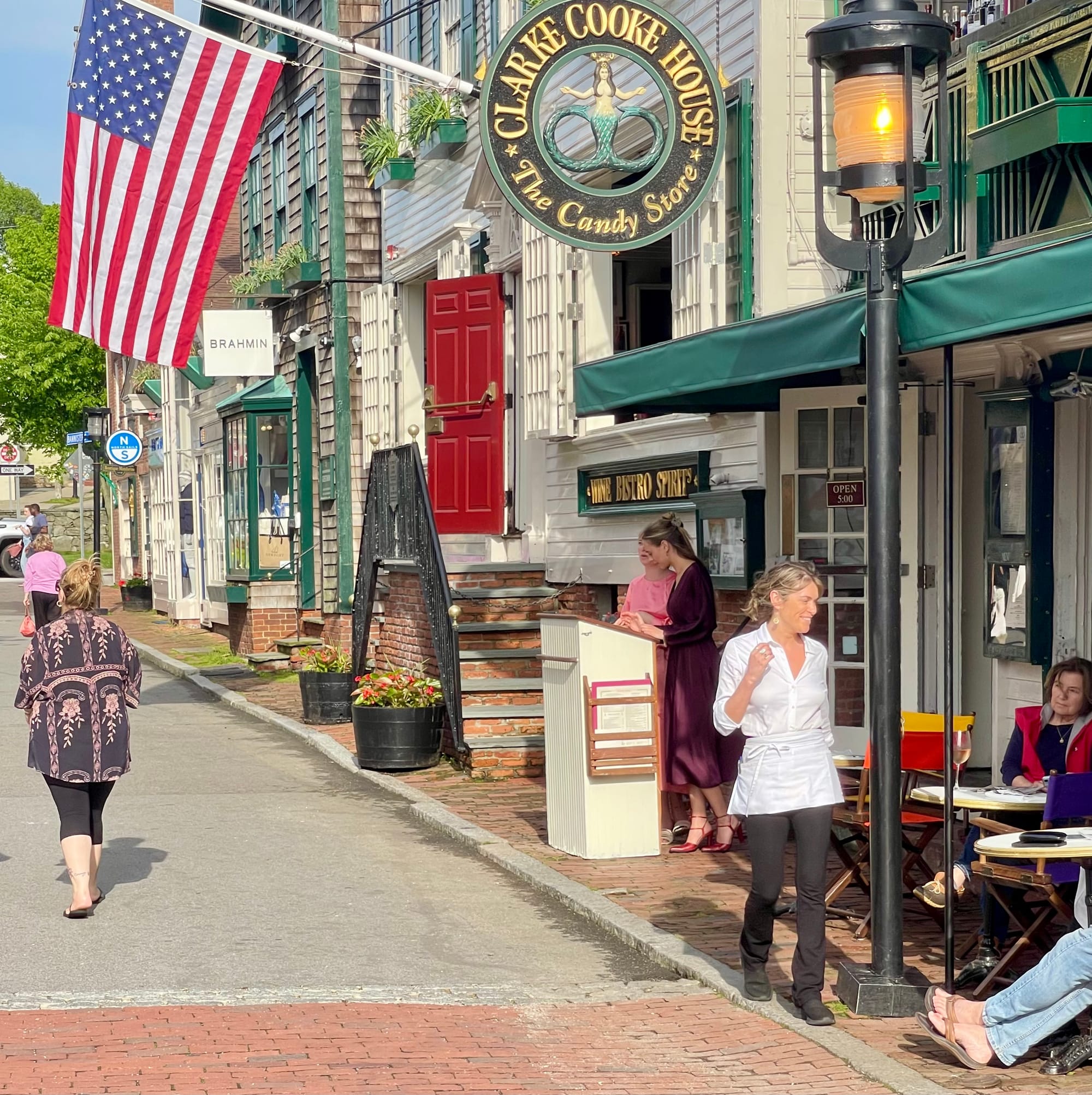
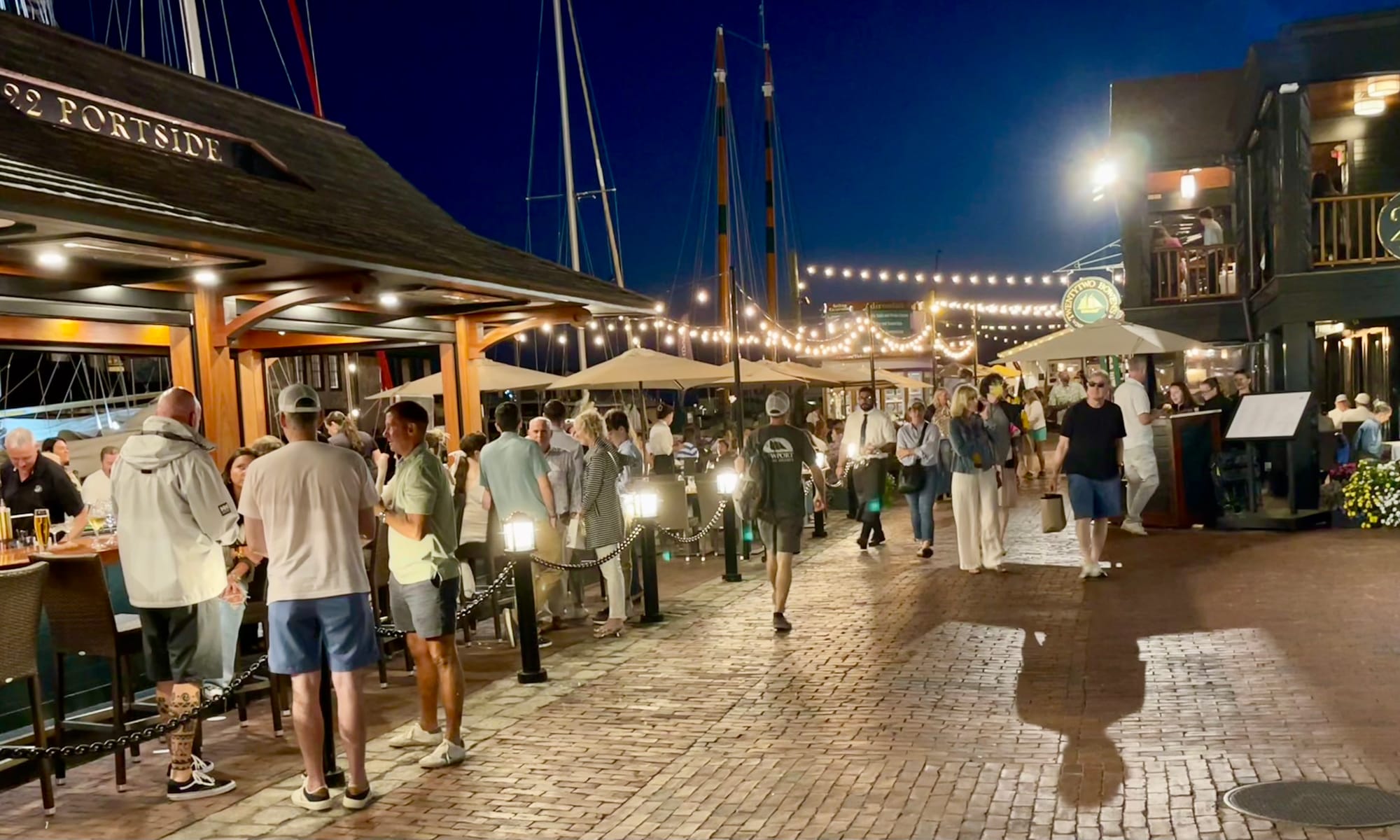
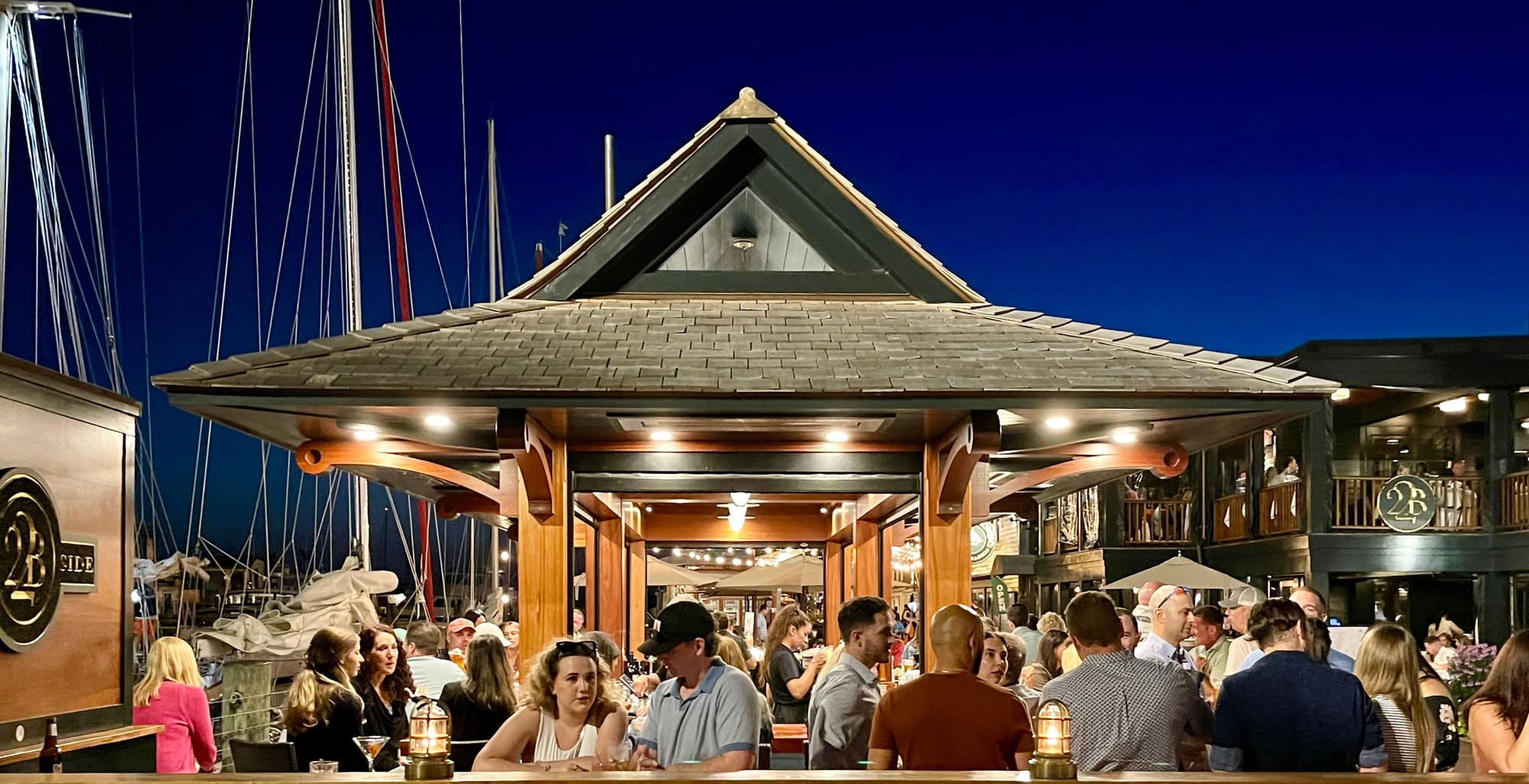
Newport is an example of a smaller but still well activated and thriving waterfront. There is a hub of maritime activities and some of the top destination for visitors in the city. The piers are busy creating a strong economy along the waterfront. Neighborhoods link directly to the water. Charming businesses abound.
More on great waterfronts of the world:
 Fred Kent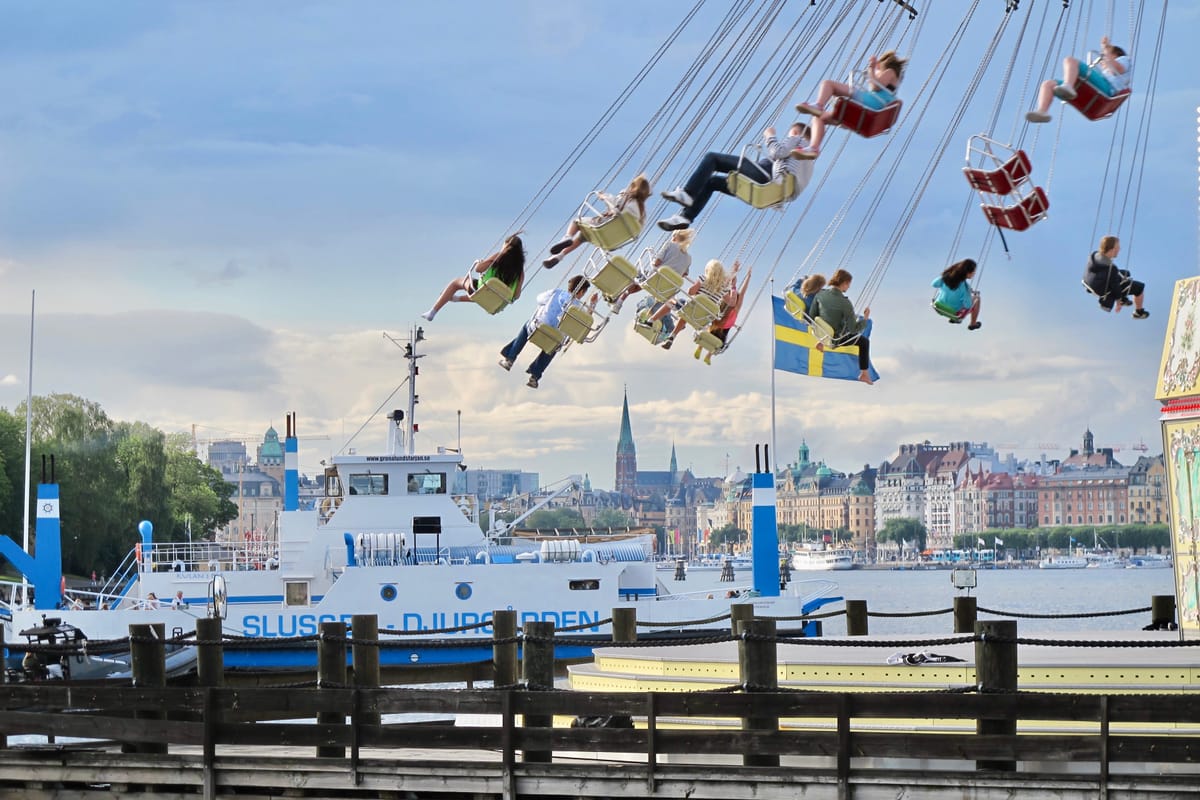
 Tayana Panova
What we have to work with
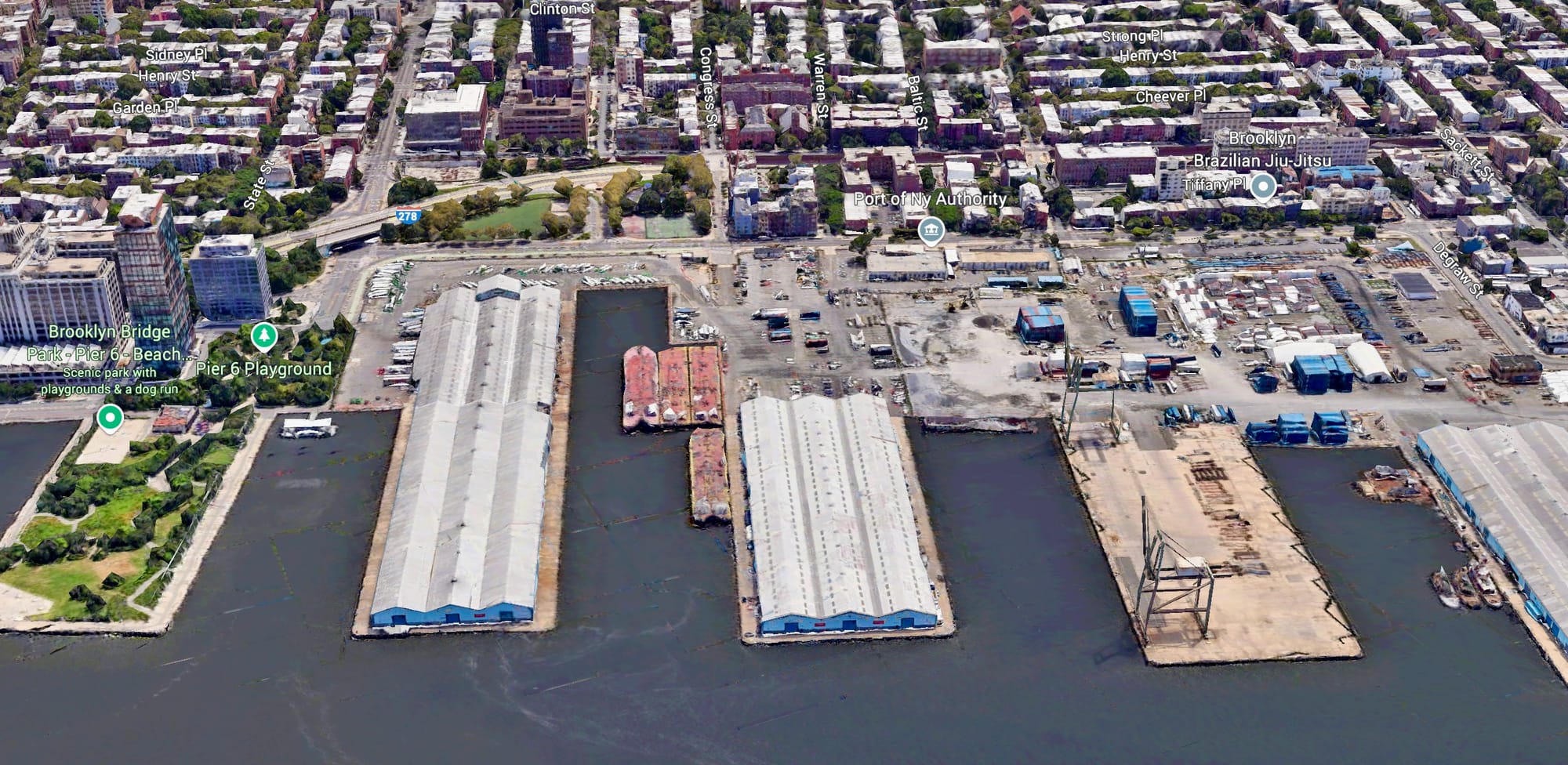
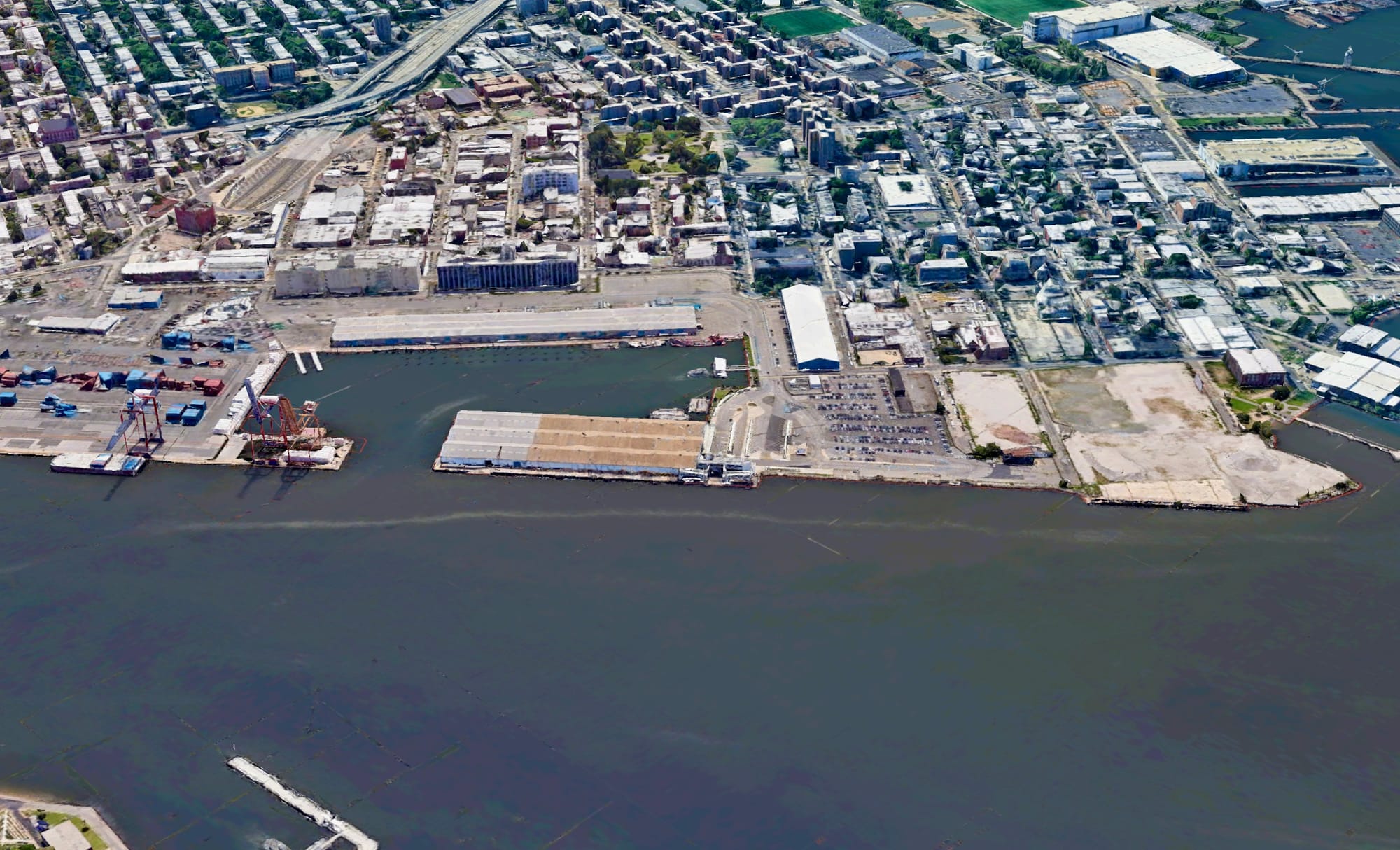
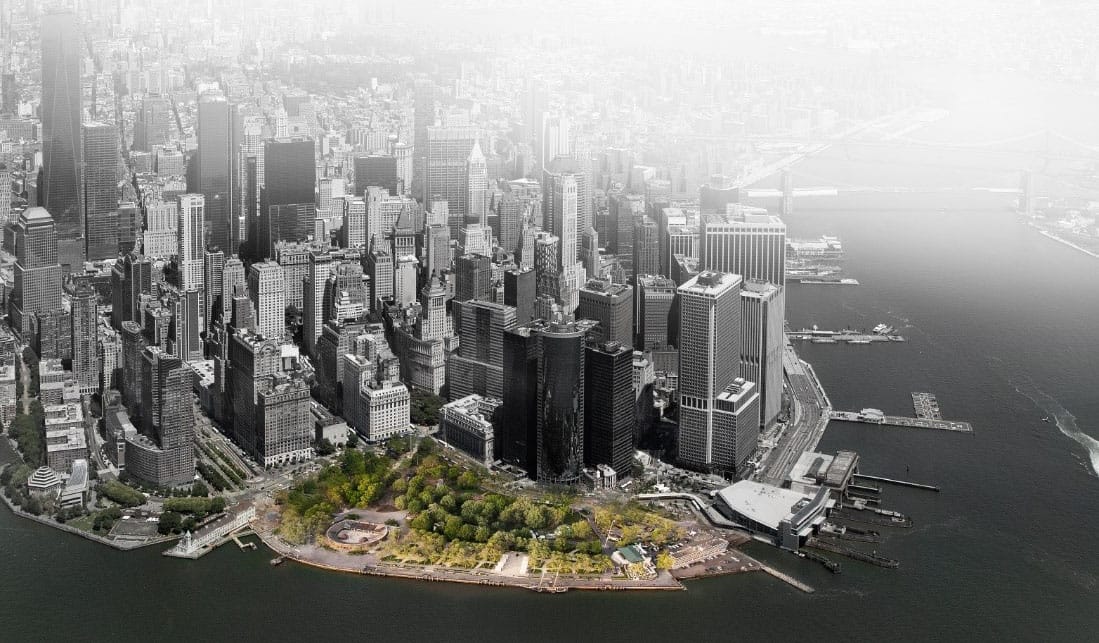
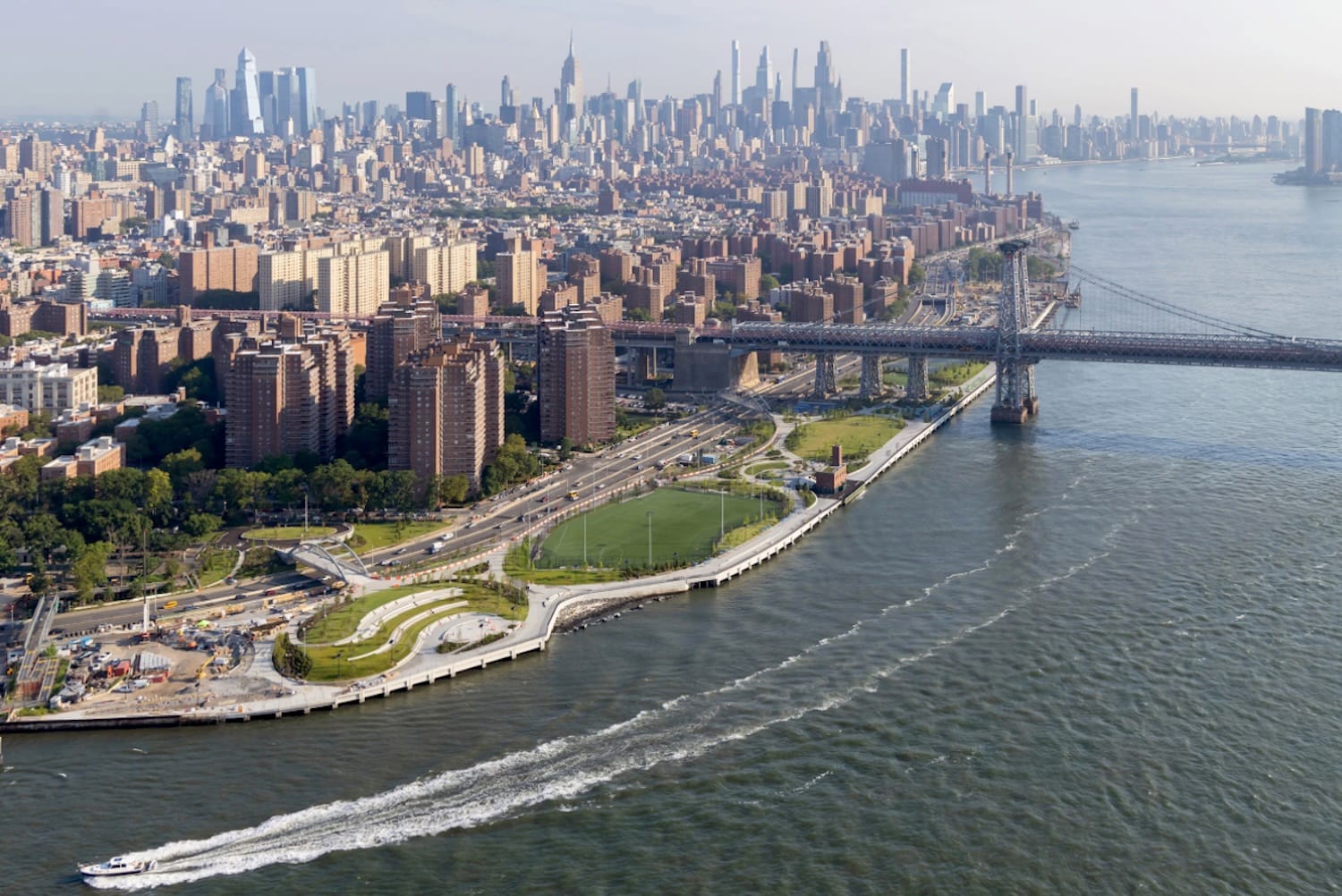
There is a lot of untapped potential in the Brooklyn and Manhattan waterfronts and much to work with – their bones are as good as any of the most amazing waterfronts in the world. But in order for this potential to be successfully developed, we must reimagine these waterfronts as places that people enjoy spending time in, not just passing through. We must have a vision for these areas that highlights their assets and focuses on community development, social life, and joy. Only then can we create something truly spectacular that everyone will treasure.
Brooklyn Waterfront
Satelite photos via Google Earth
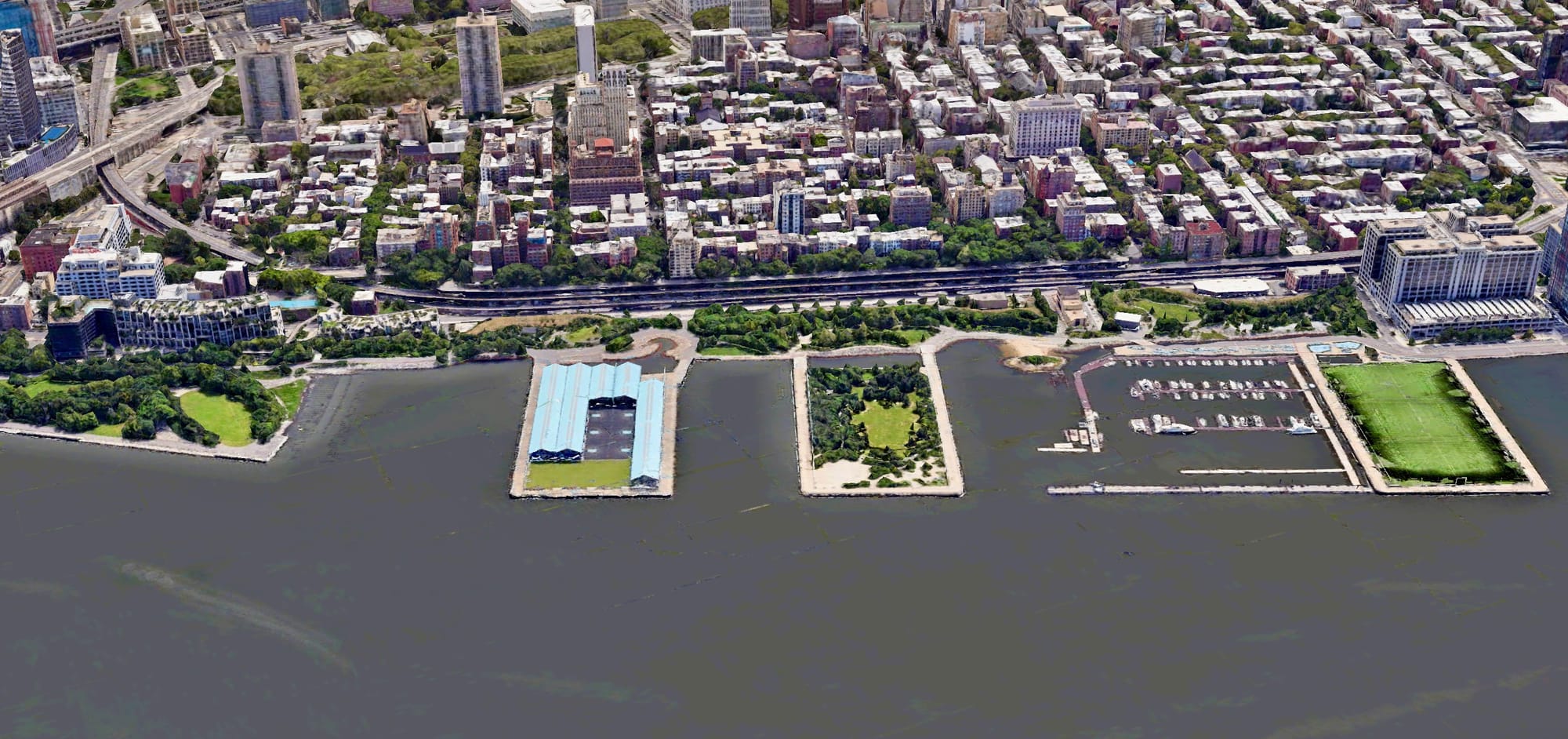
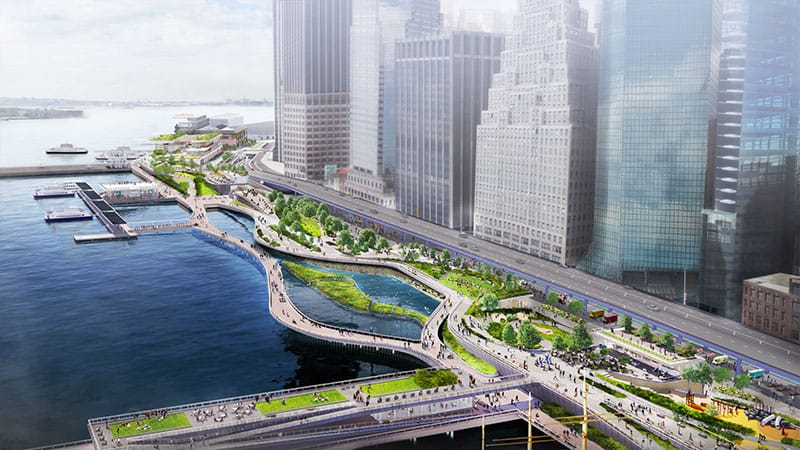
Manhattan Waterfront
Renders from ongoing projects via NYCEDC
Principles from great waterfronts to apply to Brooklyn
Here are some takeaways about how to make waterfronts great, gleaned from the best waterfronts around the world. We can and should apply these principles to the Brooklyn waterfront if we want it to become great as well:
1) A waterfront for everyone
2) Multi-use destination piers
3) Connect with a promenade
4) Connect to the neighborhoods
5) Start Lighter, Quicker, Cheaper
6) A wide range of engaging features
Right now, we don’t have a thriving, multicultural public life along the water in Brooklyn, which is disappointing since Brooklyn has the reputation of being one of the most creative and diverse places in the world. Unfortunately, we’ve become a city dominated by cars and much of the richness of the public realm has been sacrificed to cater to them. The designs that are being presented for Brooklyn's waterfront do not compare to those we see in the great waterfronts of the world because they focus too much on private development, industrial uses, and cars instead of on how the waterfront can be shaped to nurture vibrant public life. But a great waterfront is a public place, and as such it must prioritize creating joy, connection, and community for the public.
Standout waterfronts around the world achieve this by being studded with amenities, activities, and programs all along their length that allow people to enjoy themselves there with their neighbors from different ages, backgrounds, and cultures. In this way, the waterfronts become a series of outdoor "rooms" – destinations with a variety of different things to do, see, and experience there, ideally ones that reflect the population and the cultural context – strung together by the "corridor" of a car-free pedestrian promenade. The current and proposed waterfronts do not offer this kind of experience, or anything that is particularly appealing to the public, and as such are are deeply underwhelming. We know Brooklyn can do better. We hope the suggestions in this article can seed a new vision.
Who We Are
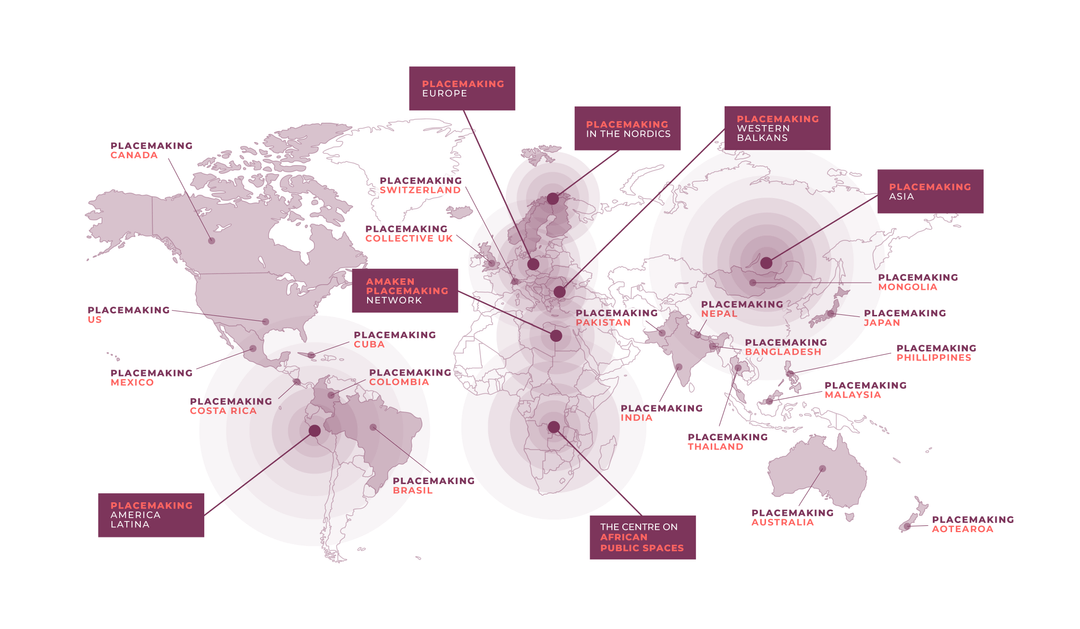
We have spent over 50 years building a "Placemaking Movement" globally that is now in over 30 countries and led by a growing group of community activists.
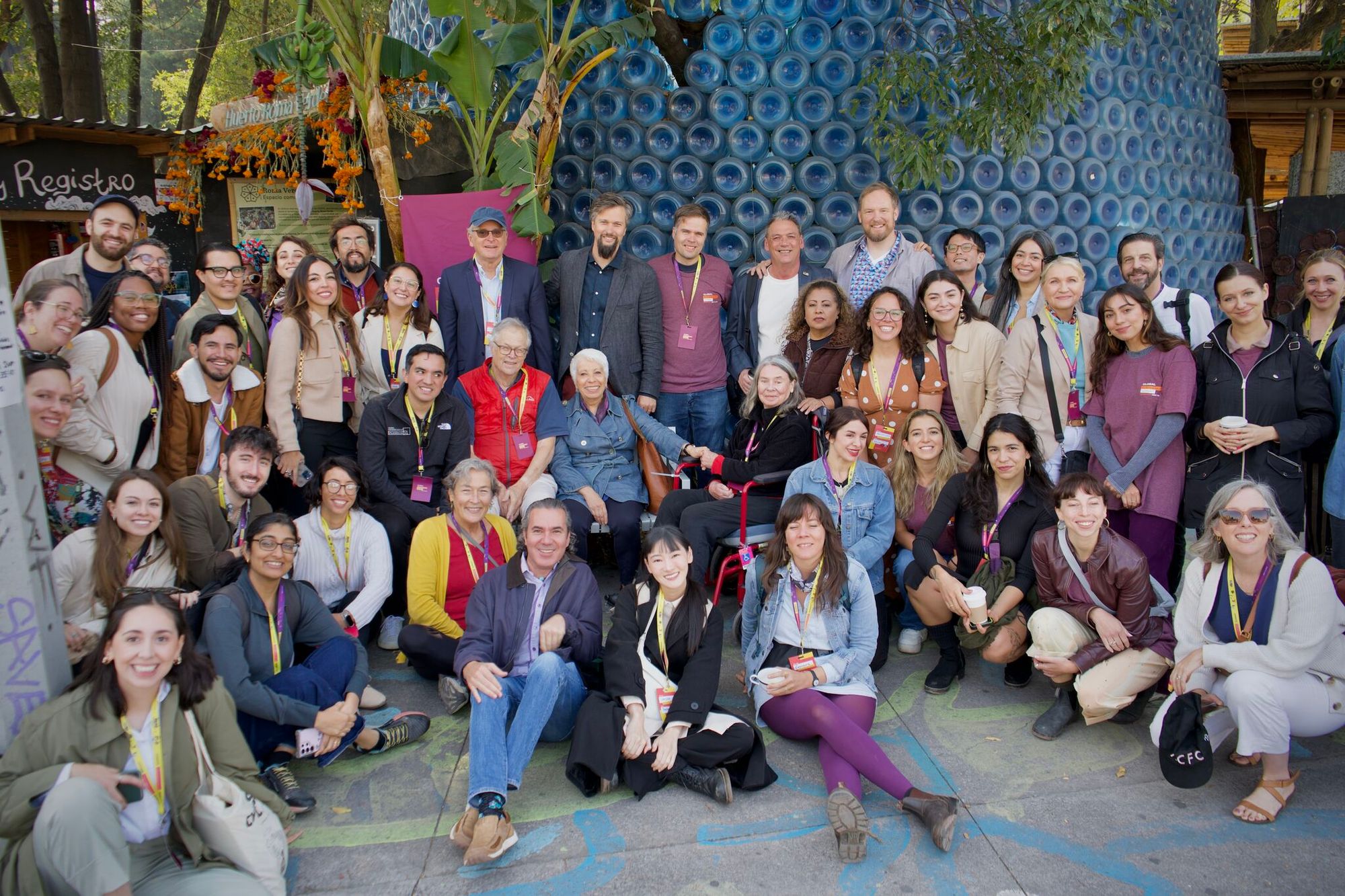
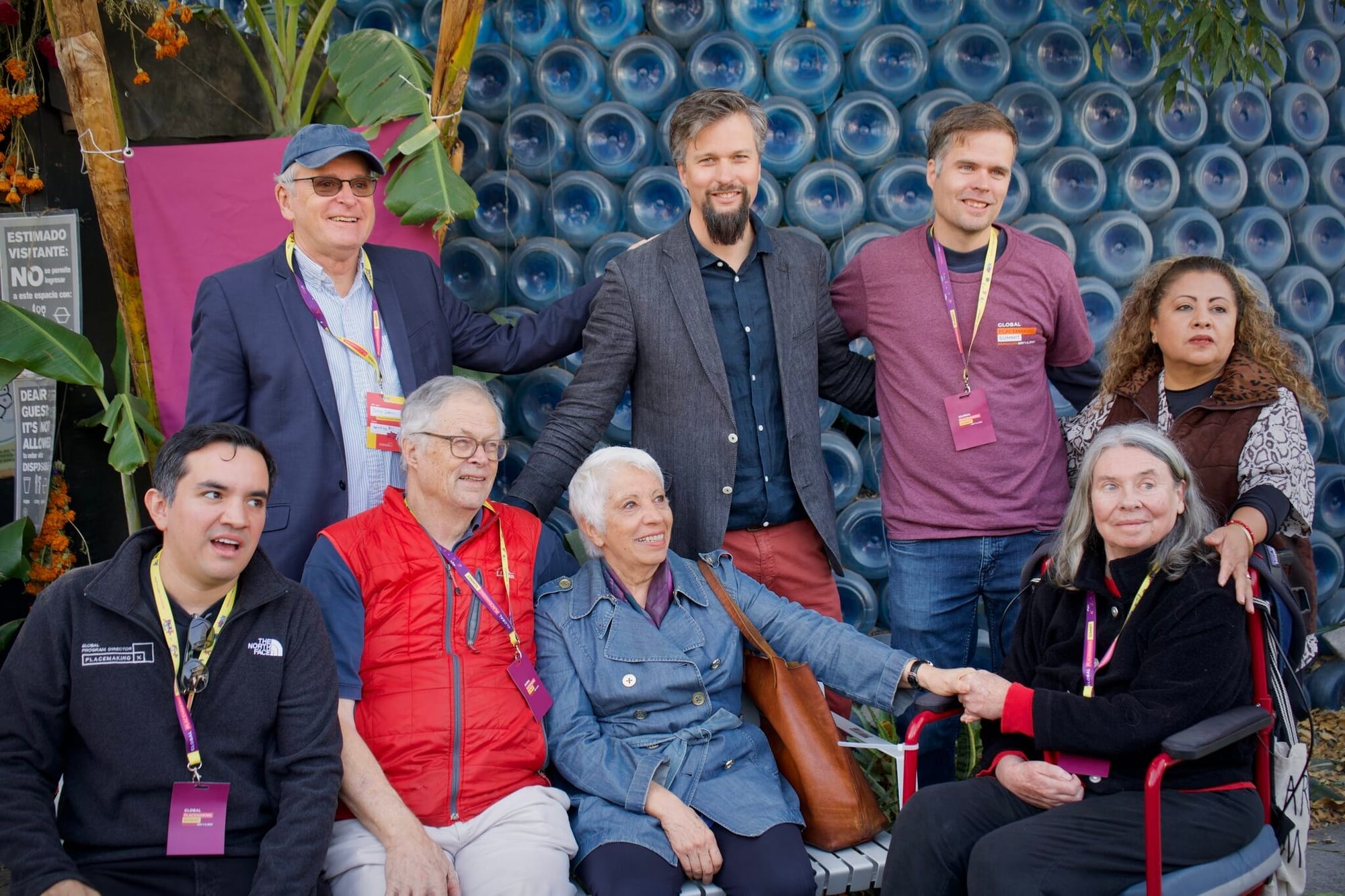
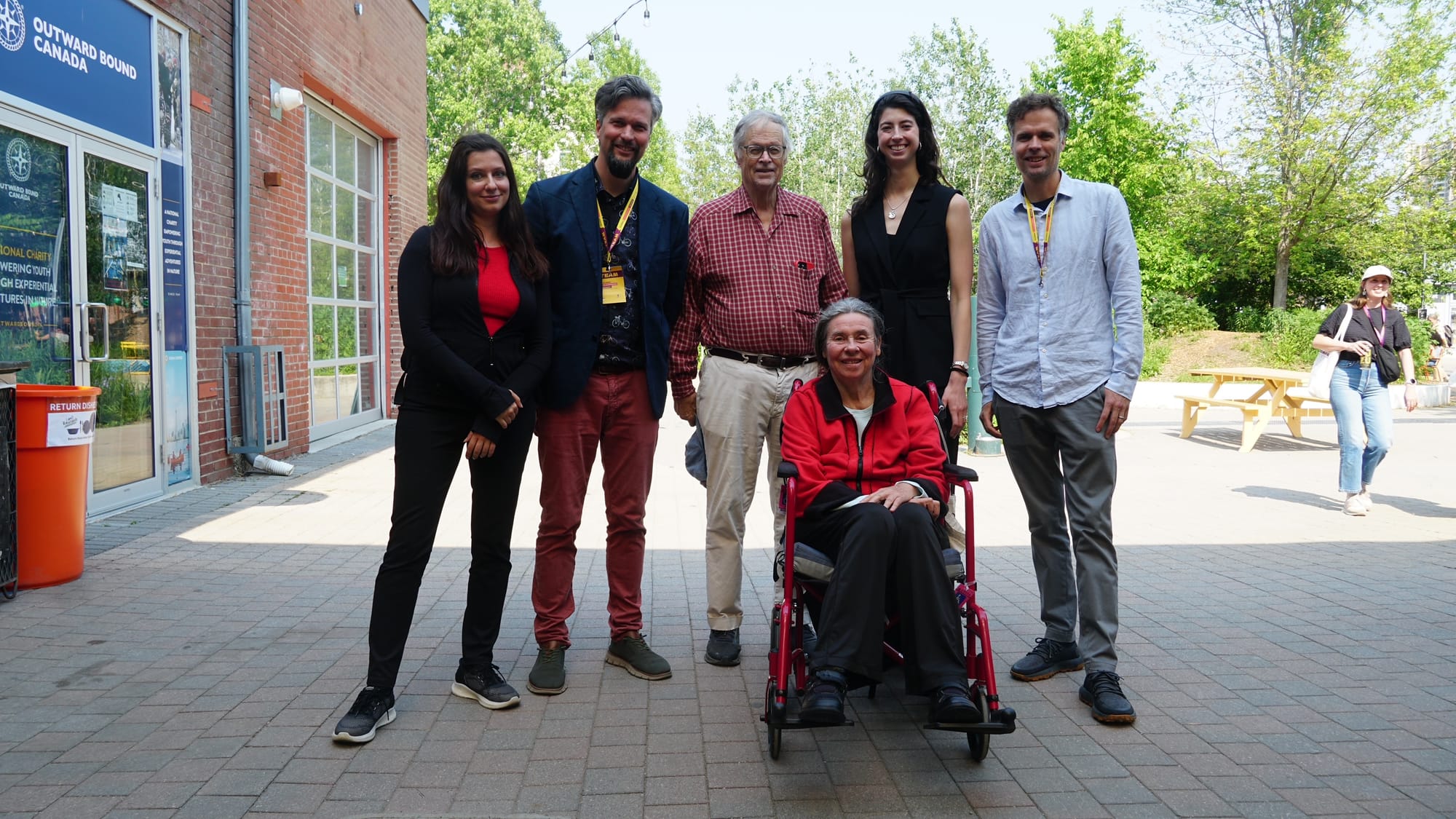
PlacemakingX and Social Life Project Team
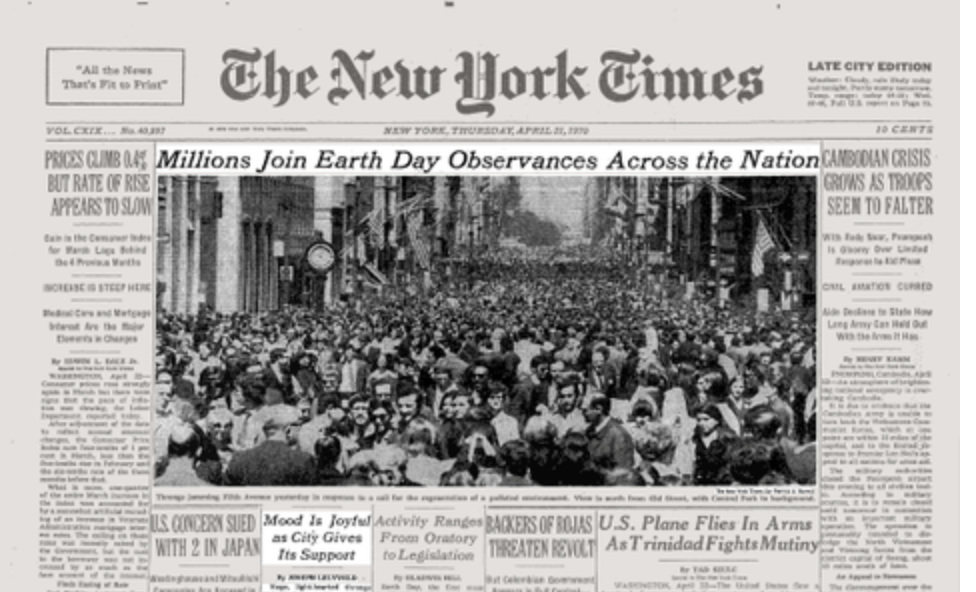
The birth of the "Placemaking Movement" - Earth Day in April 1970
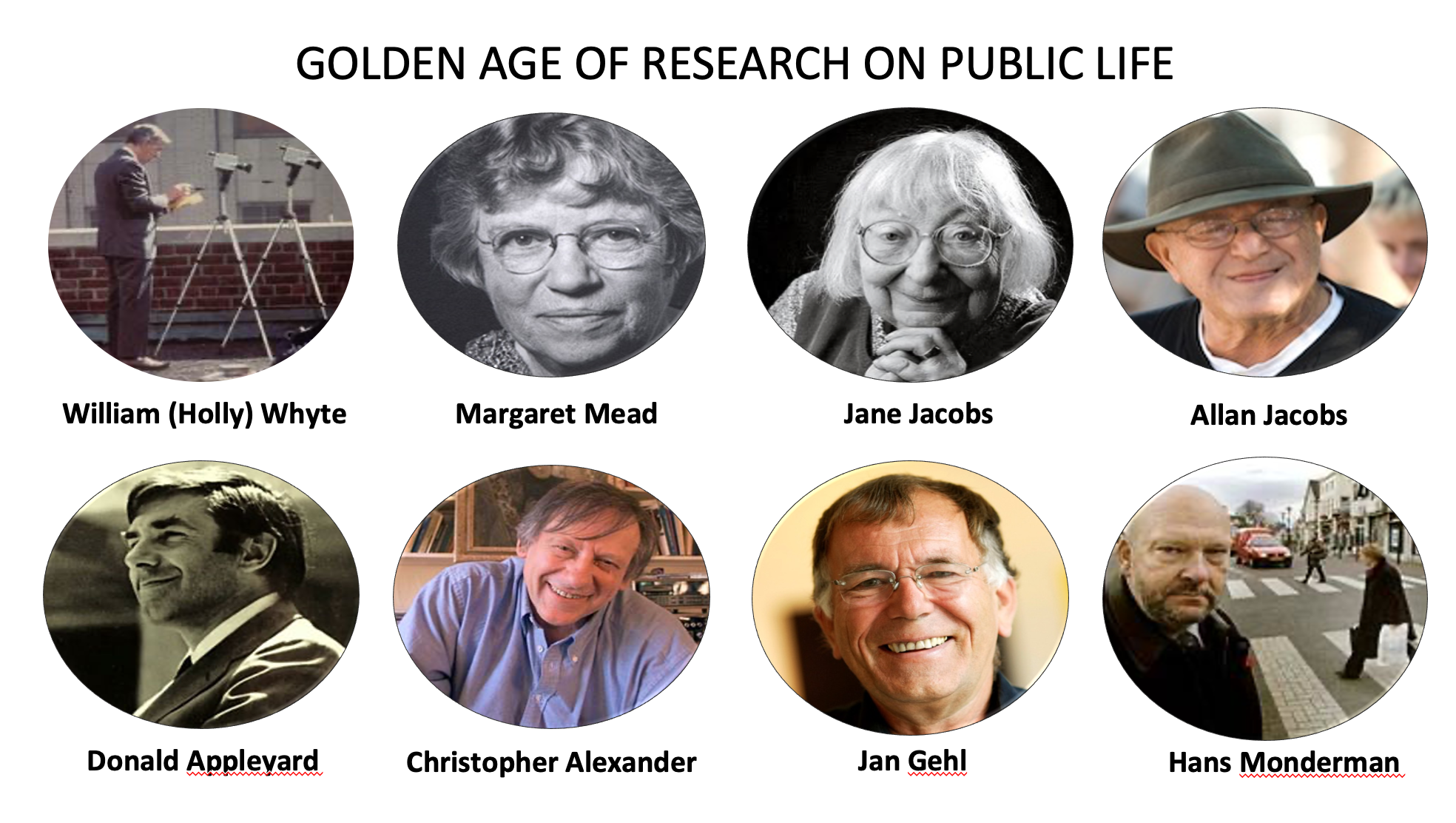
"The radical energy of placemaking is that the authority to catalyze change comes not from credentials, but rather from proximity, lived experience, and a deep commitment to place. Placemaking knows no party, but most importantly, placemaking comes from a place of love—a combination of affection and respect that we believe precedes other aspects of expertise or power." – Tracy Hadden Loh and Hanna Love
Brookings Metro's Anne T. and Robert M. Bass Center for Transformative Placemaking