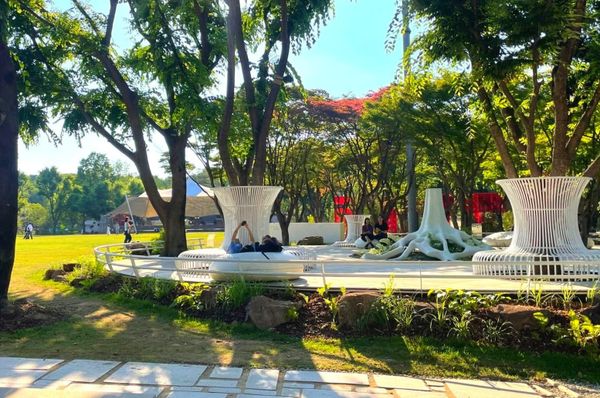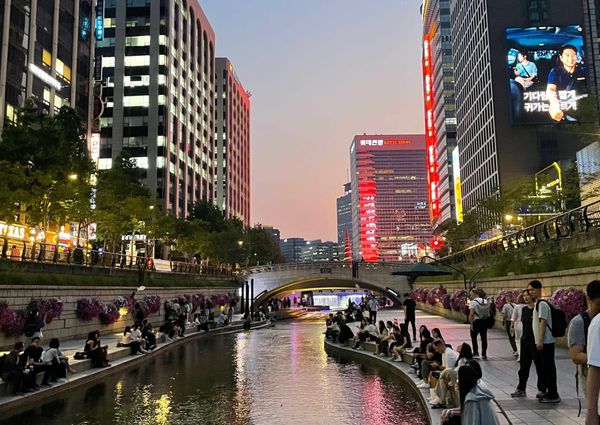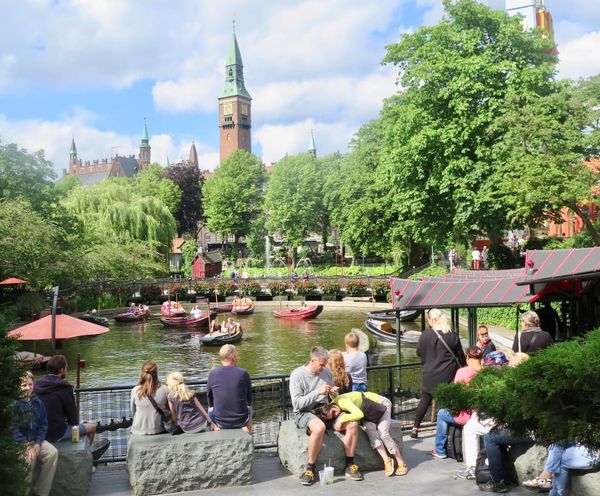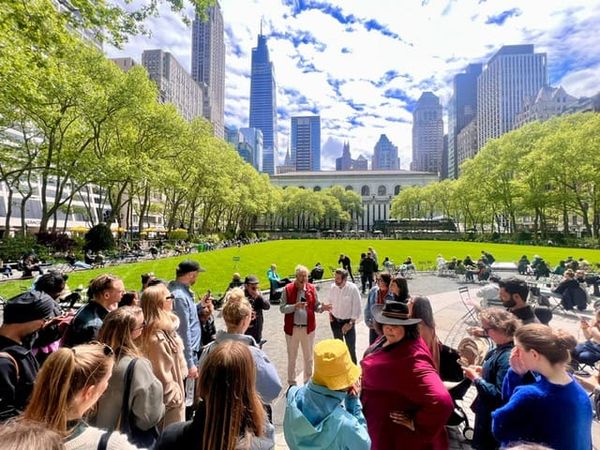

People playing and relaxing together creates community
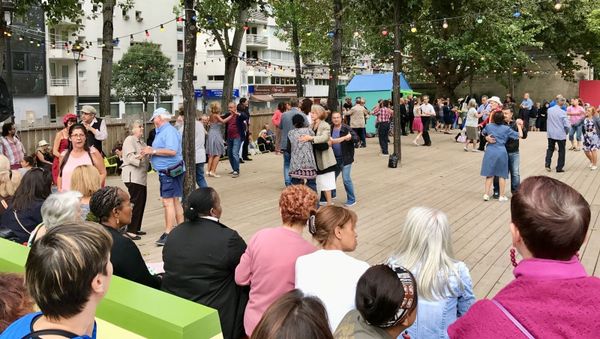
The Kungsträdgården in Stockholm is a fantastic example of how a great public place is one that is designed to be fun and welcoming for everyone. It is not meant to be merely something beautiful to look at – a series of monuments tied together by designer landscaping. Instead, its focus should be on the people – how they experience and enjoy the place, and what keeps them coming back.
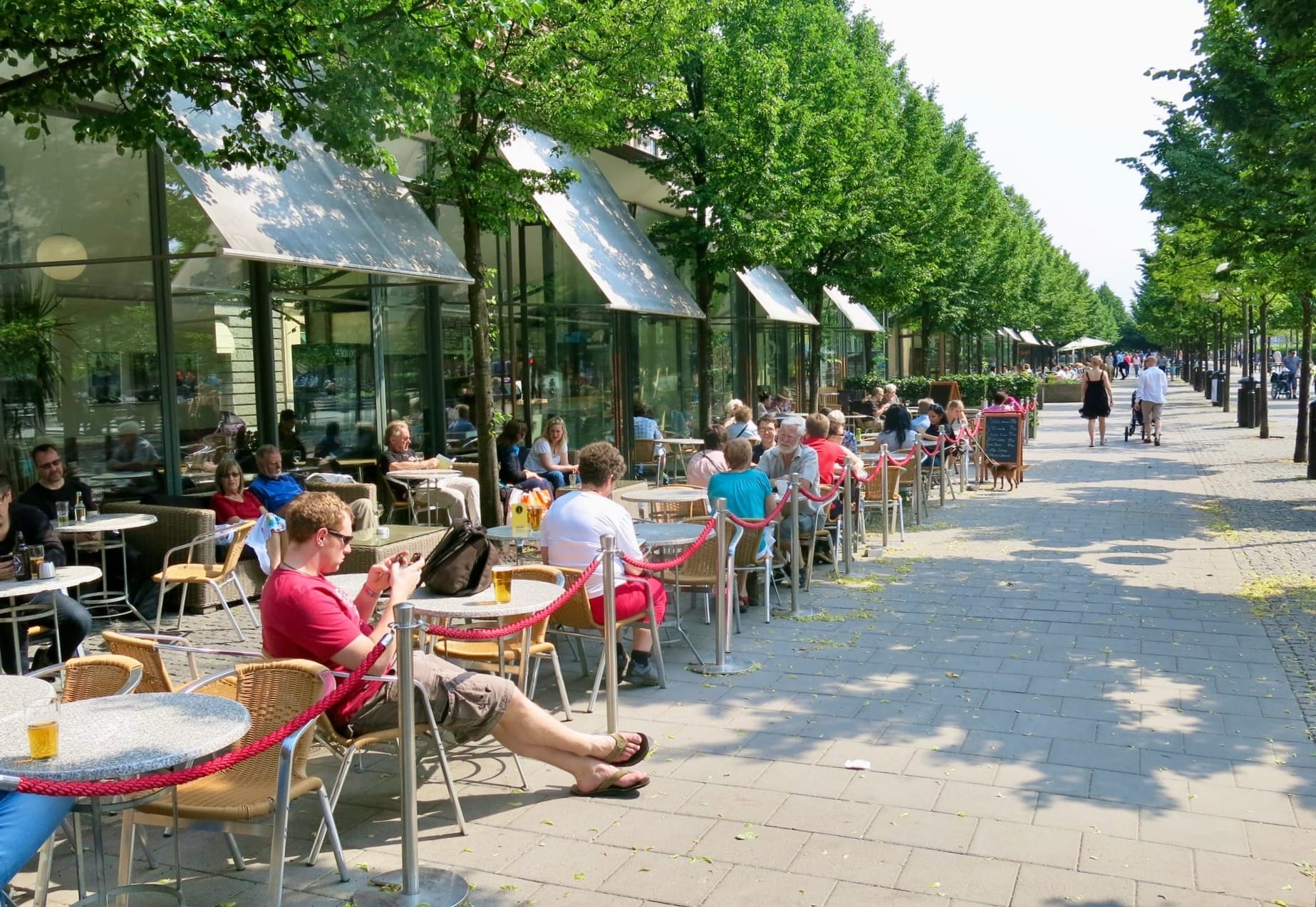
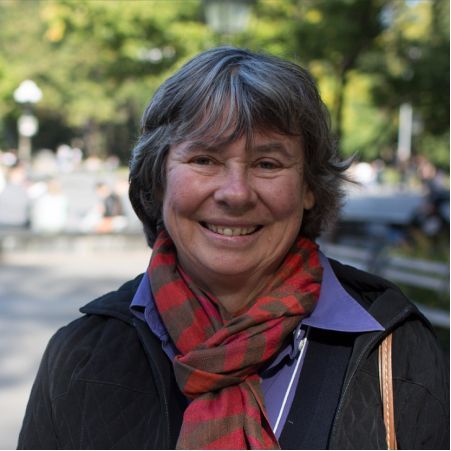
The work of Sam Carlquist – a landscape architect and former director of Kungsträdgården – transformed it from a decorative element in the city into a true social center that people flock to. Kungsträdgården became not just a green space, but a multi-layered platform for meetings, events, and everyday activity.
Carlquist wanted to turn Kungsträdgården into a living urban environment – a place where people don’t just pass through, but choose to stay, spend time, and make memories. He supported the development of public events there, enabled a diversity of activities, and paid close attention to the small elements that shape human behavior: seating, open spaces, and movement patterns. His approach was based on a simple yet profound idea – a park does not exist on its own, it is shaped by the people who use it and the way they engage with it.
He believes that a great place is not about architecture, it's not about monuments, it's not about leaving a legacy; it's about people. About what they do, how they feel, and how they connect. That is what makes a place alive.
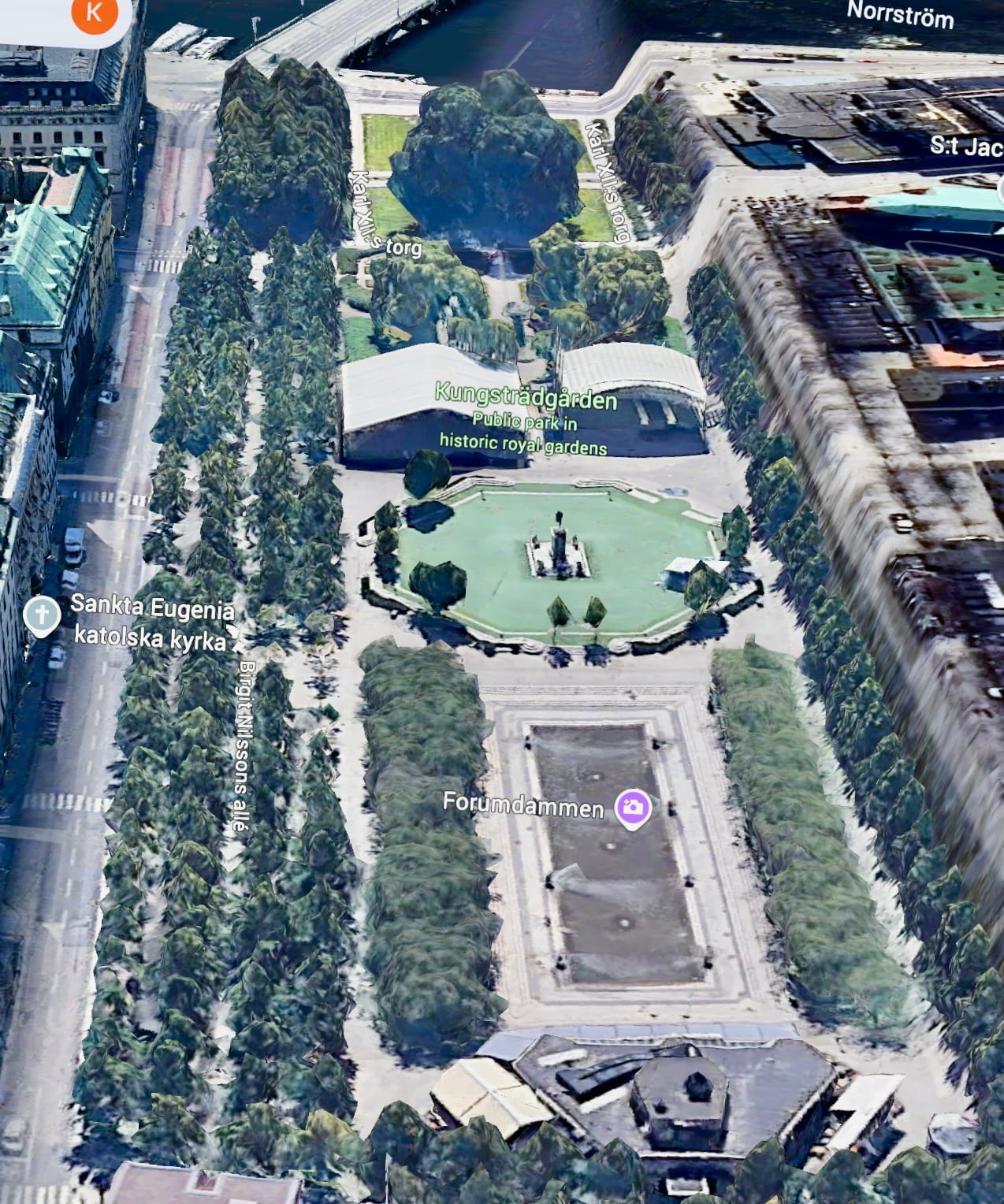
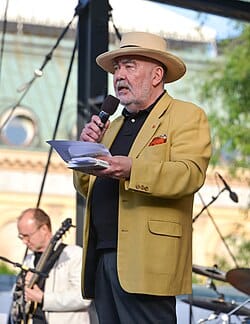
Sam Carlquist and the experience of a living park
 Fred Kent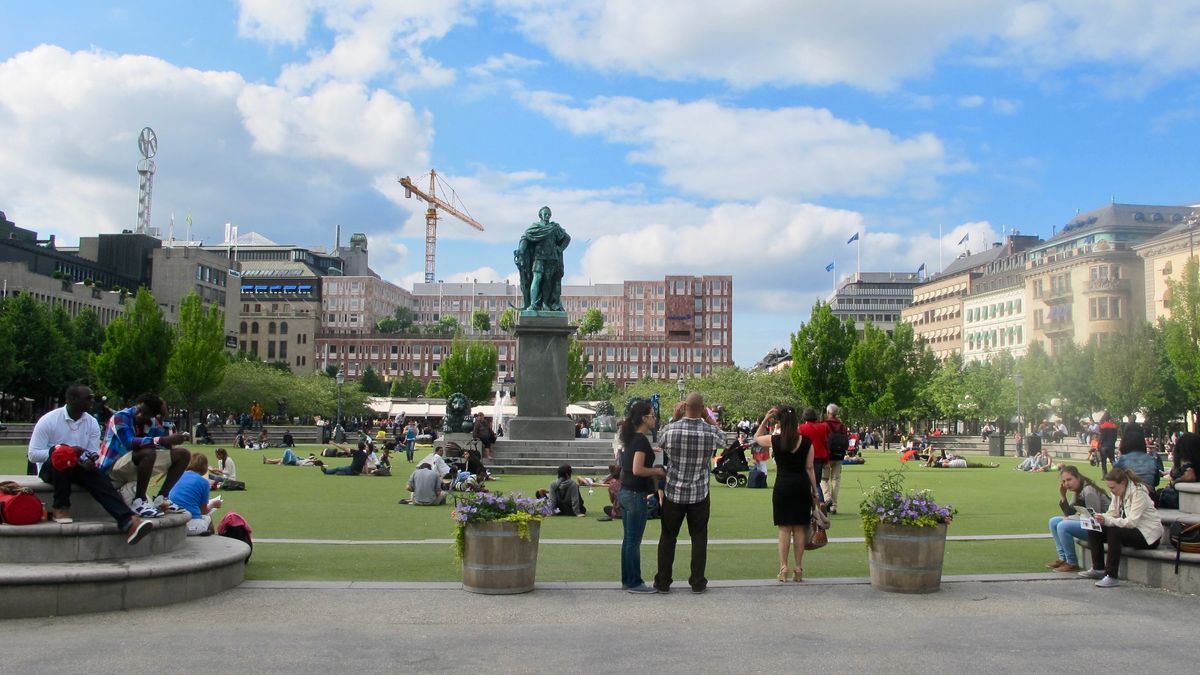
A playground for everyone
Many years ago, Carlquist would organize a temporary playground in the park every year. It was a big success with the community. Companies that designed playground equipment used the park as an exhibition space – they paid to install the playground in May, and in September, they removed it and sold it to schools at a lower price. Each year, there was a new playground design, and children would come with their parents to see it and play. It became something people looked forward to.
Then, the city architects said there would be no more playgrounds because, according to them, they looked cheap, and a playground in a central park like this should be designed by an artist. Carl replied that anyone is welcome to design the playground as long as the children love it. Because it is not a monument to be looked at, it’s something children should have fun playing with. Otherwise, there's no point in making it. Later, when the park reopened without a playground, hundreds of parents called City Hall to ask where it was.
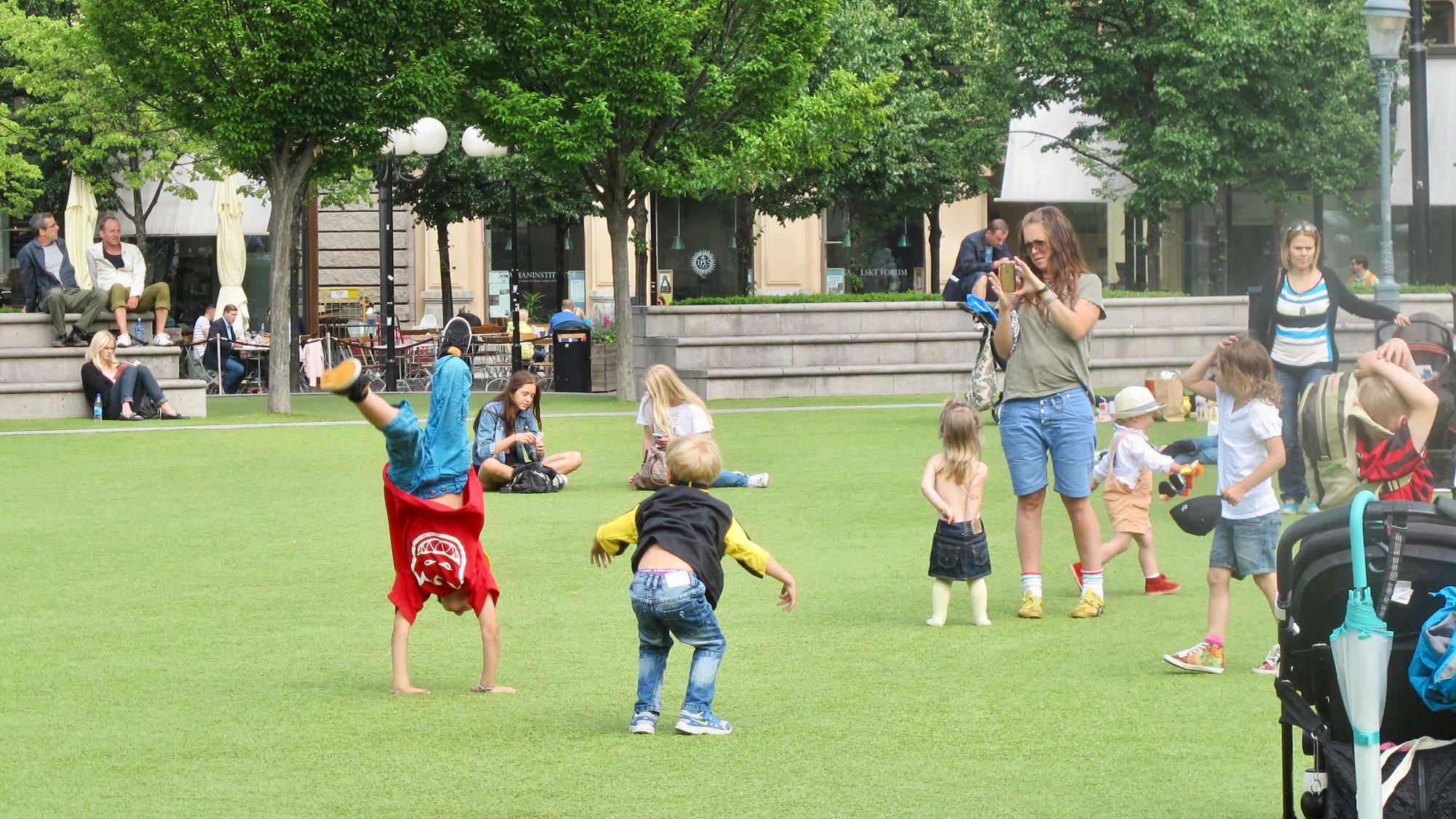
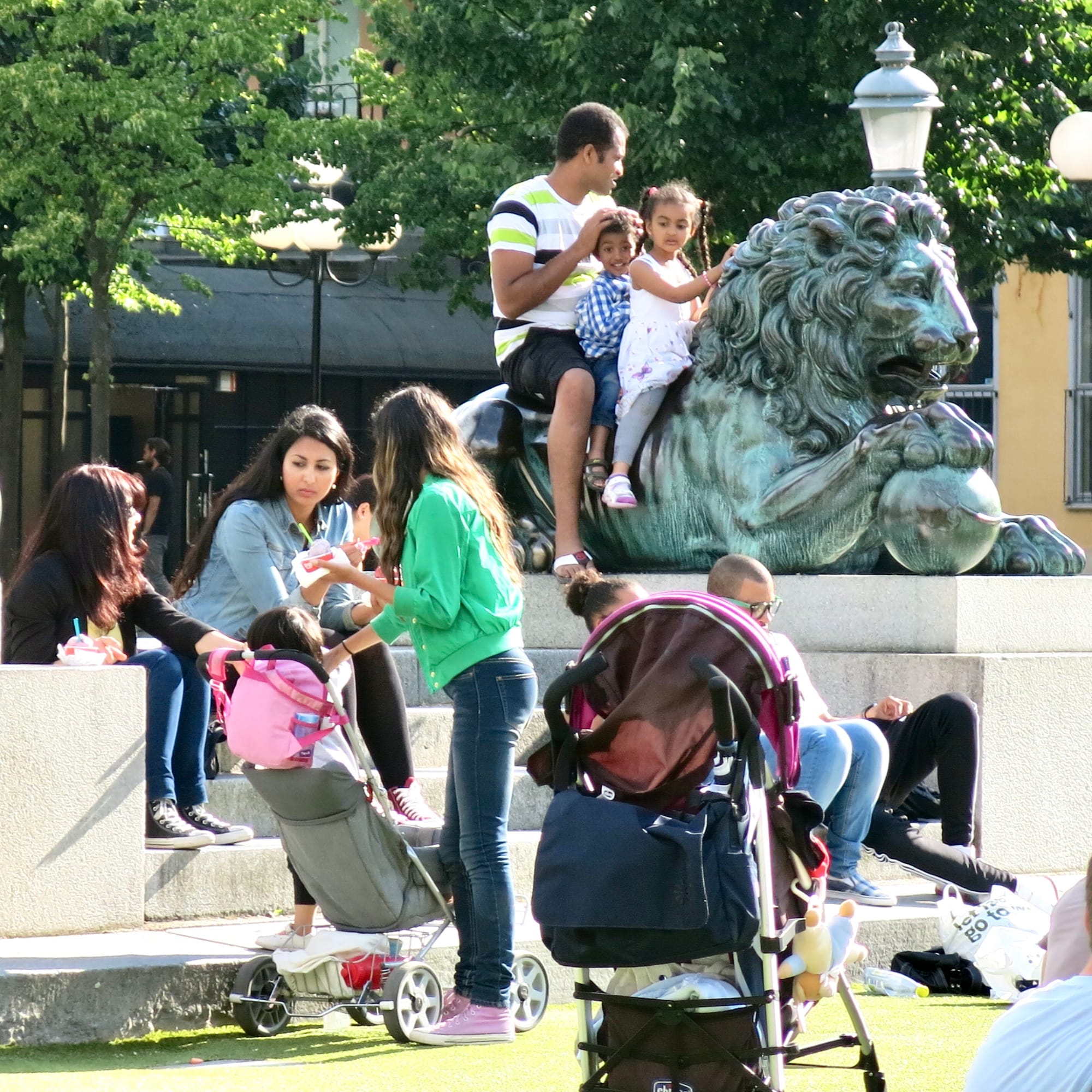
Carlquist also explains that we often create “playgrounds without life” – isolated, separated, designed exclusively for children. But in doing so, we limit the potential of the space. He proposes a different approach: a playground should be a place not only for children, but for everyone. When there is space for adults nearby – to sit, talk, have a coffee, observe – the whole place begins to come alive. Children play, adults hang out, and a natural interaction emerges between everyone. Without these kinds of overlapping uses, a playground is a very limited destination. With it, it becomes part of the life of the city.
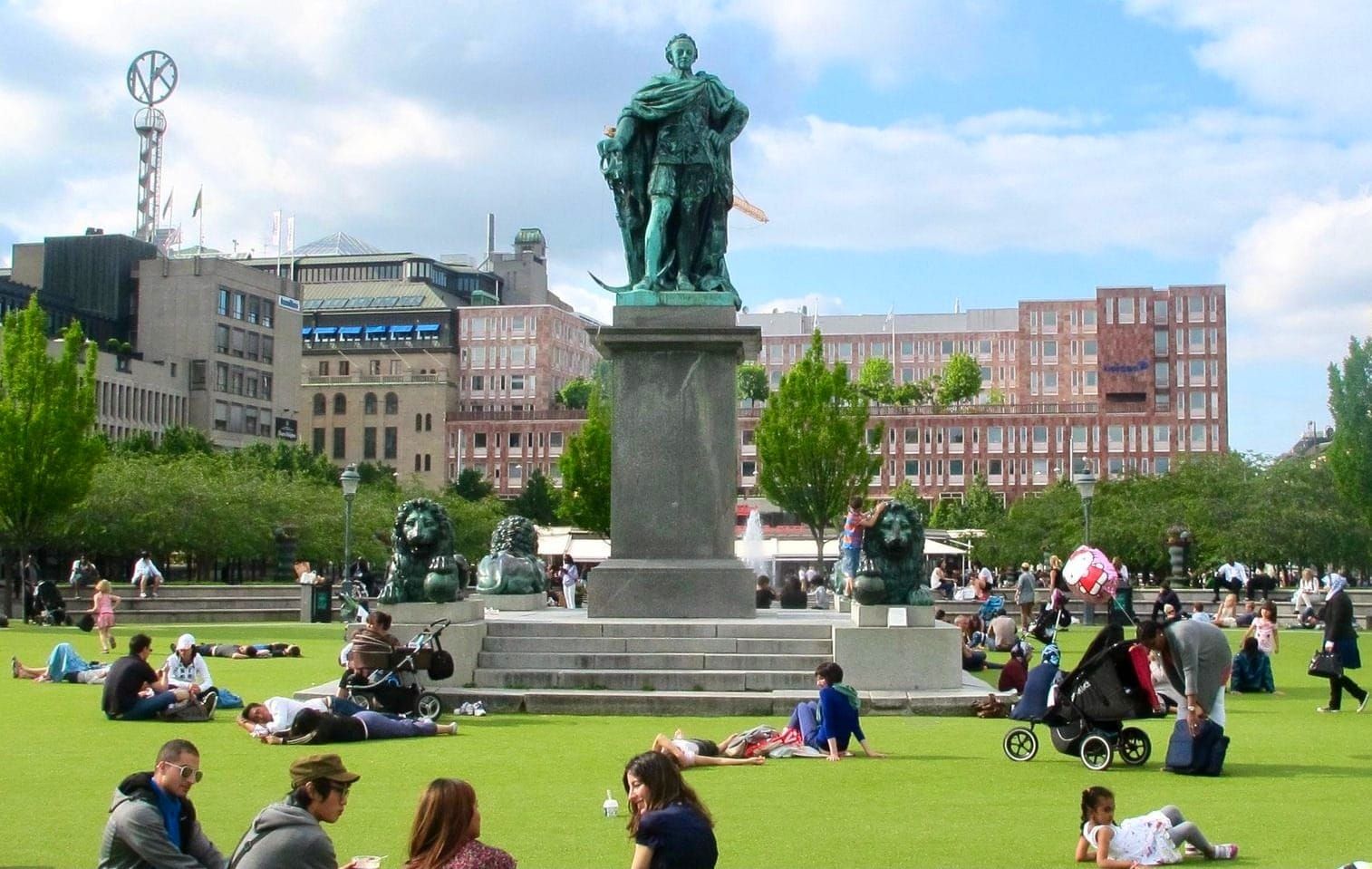
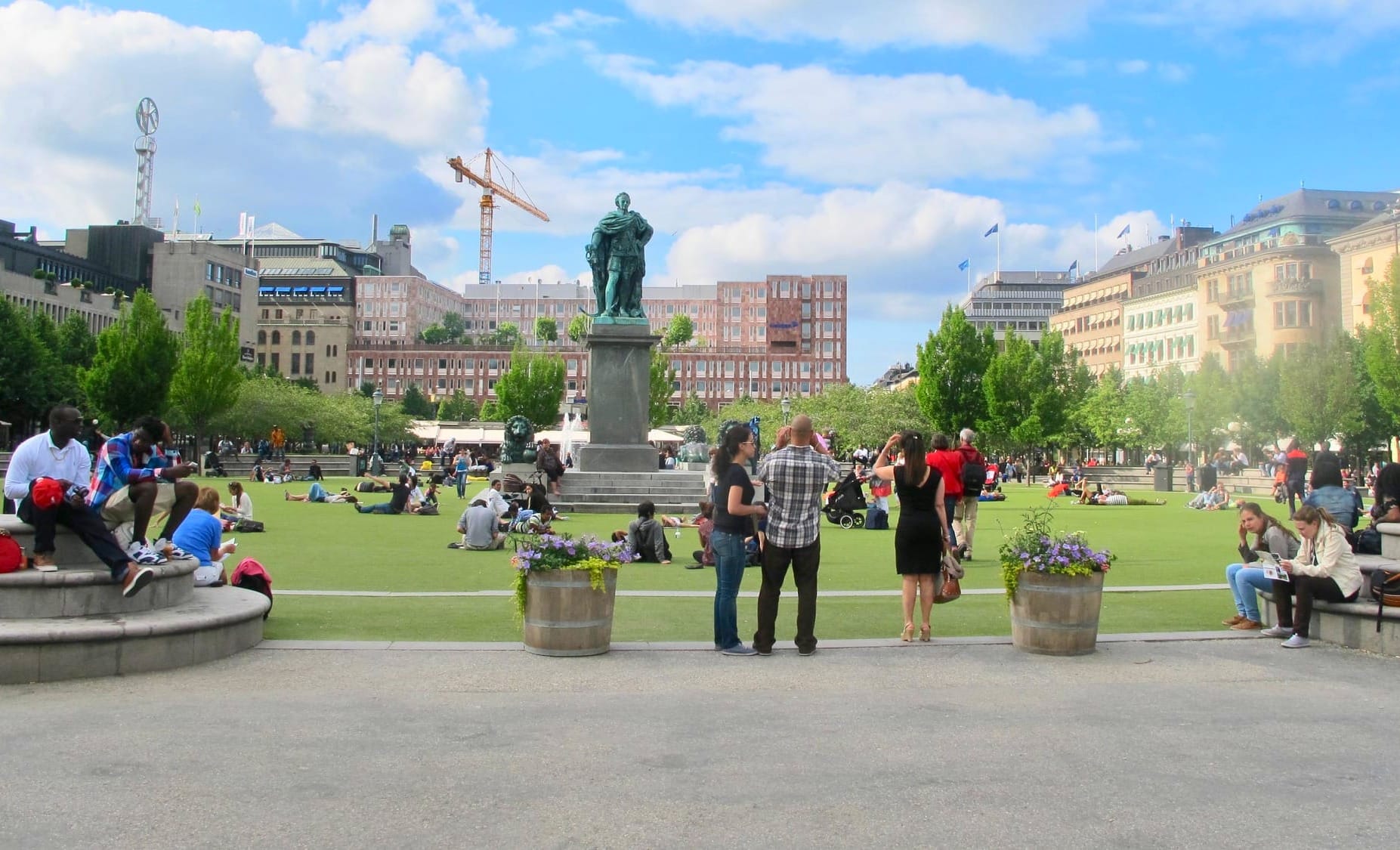
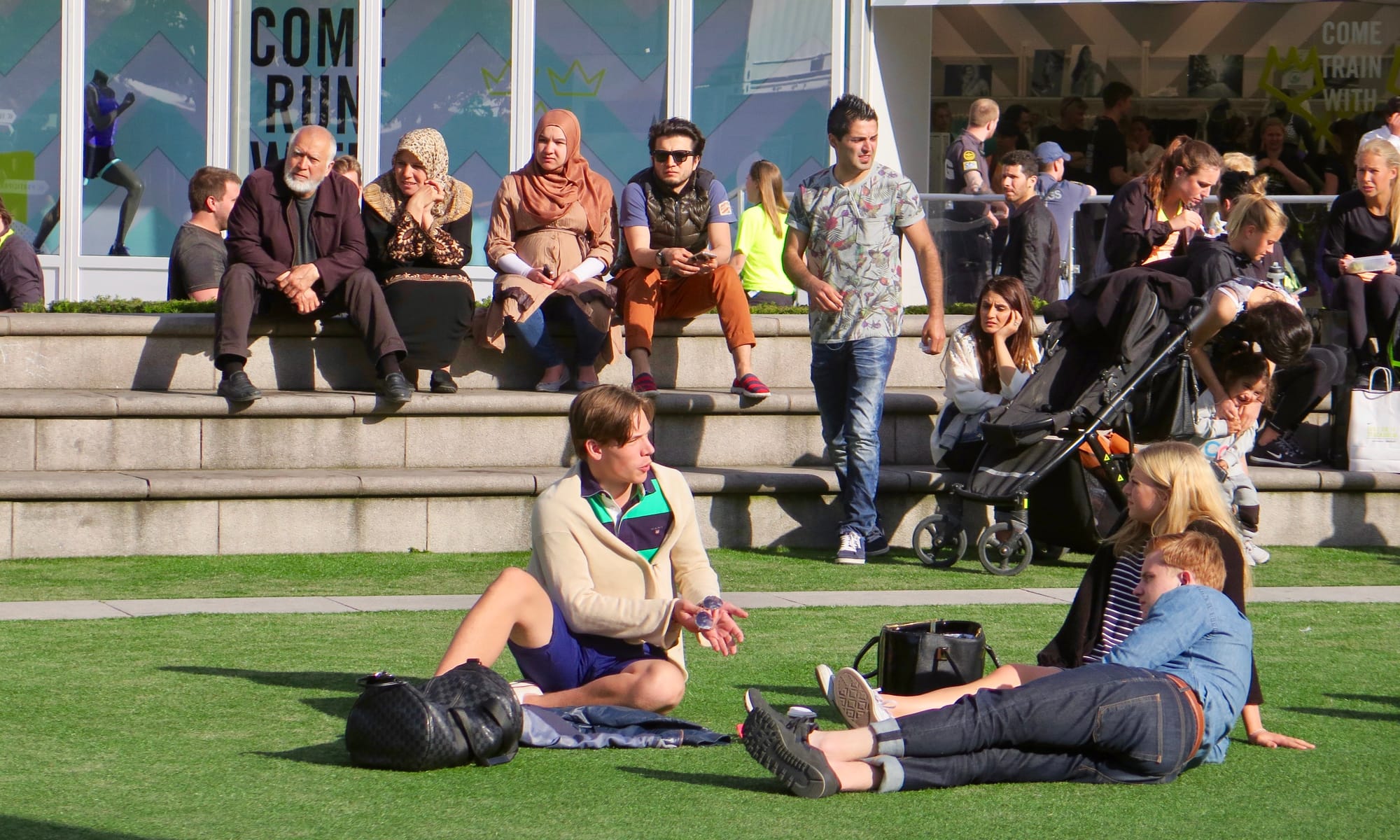
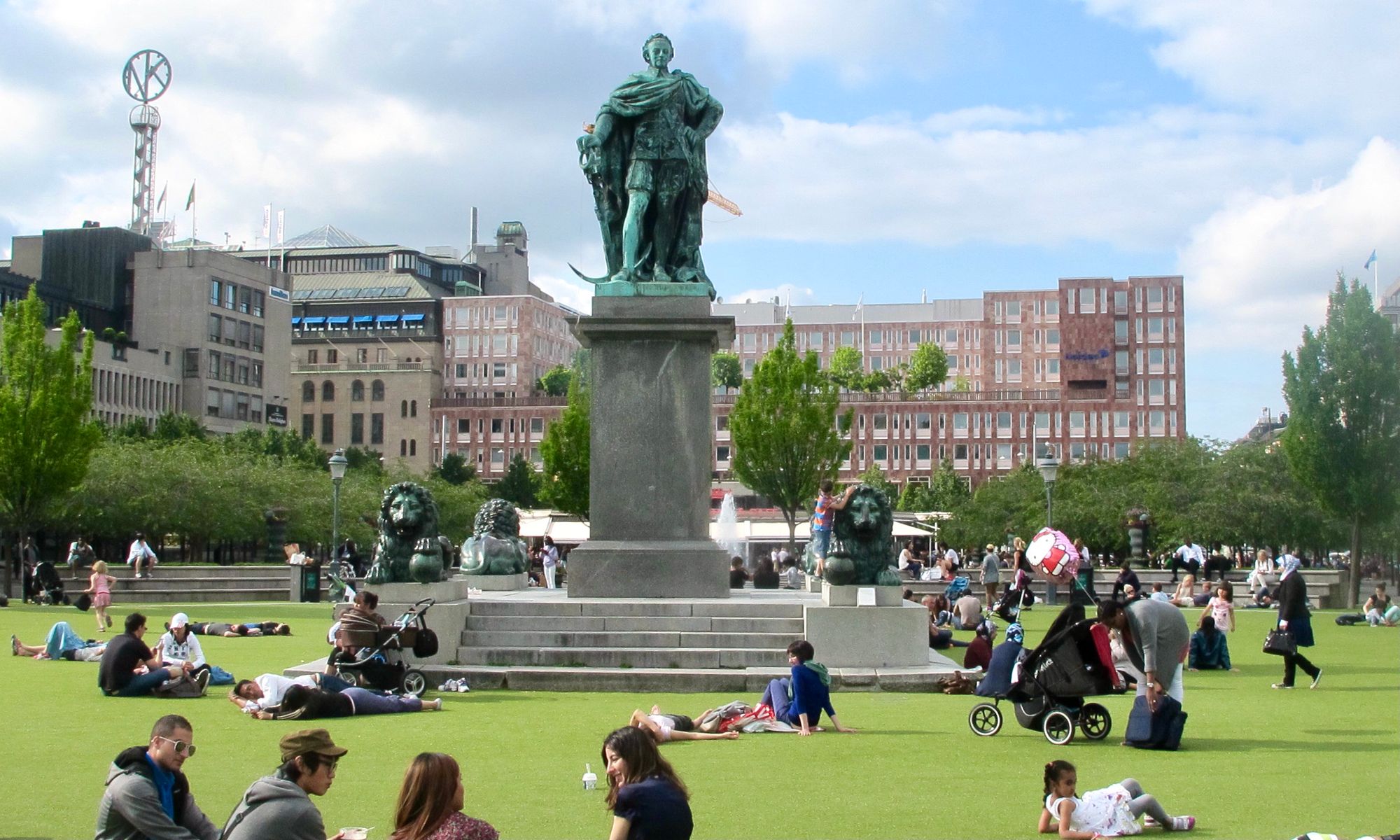
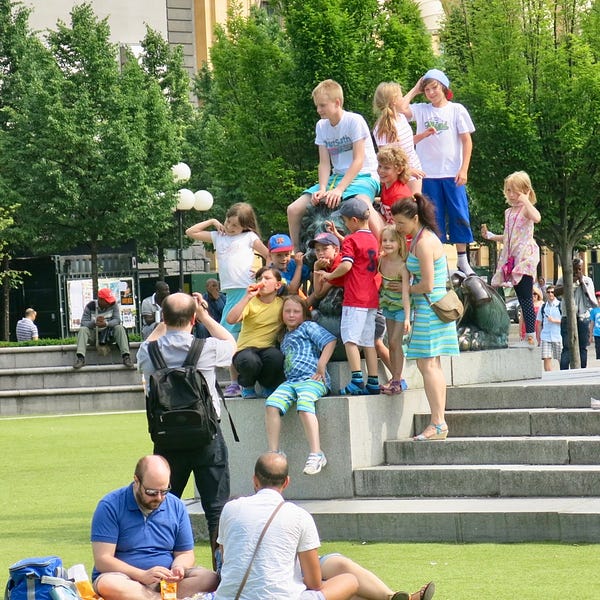
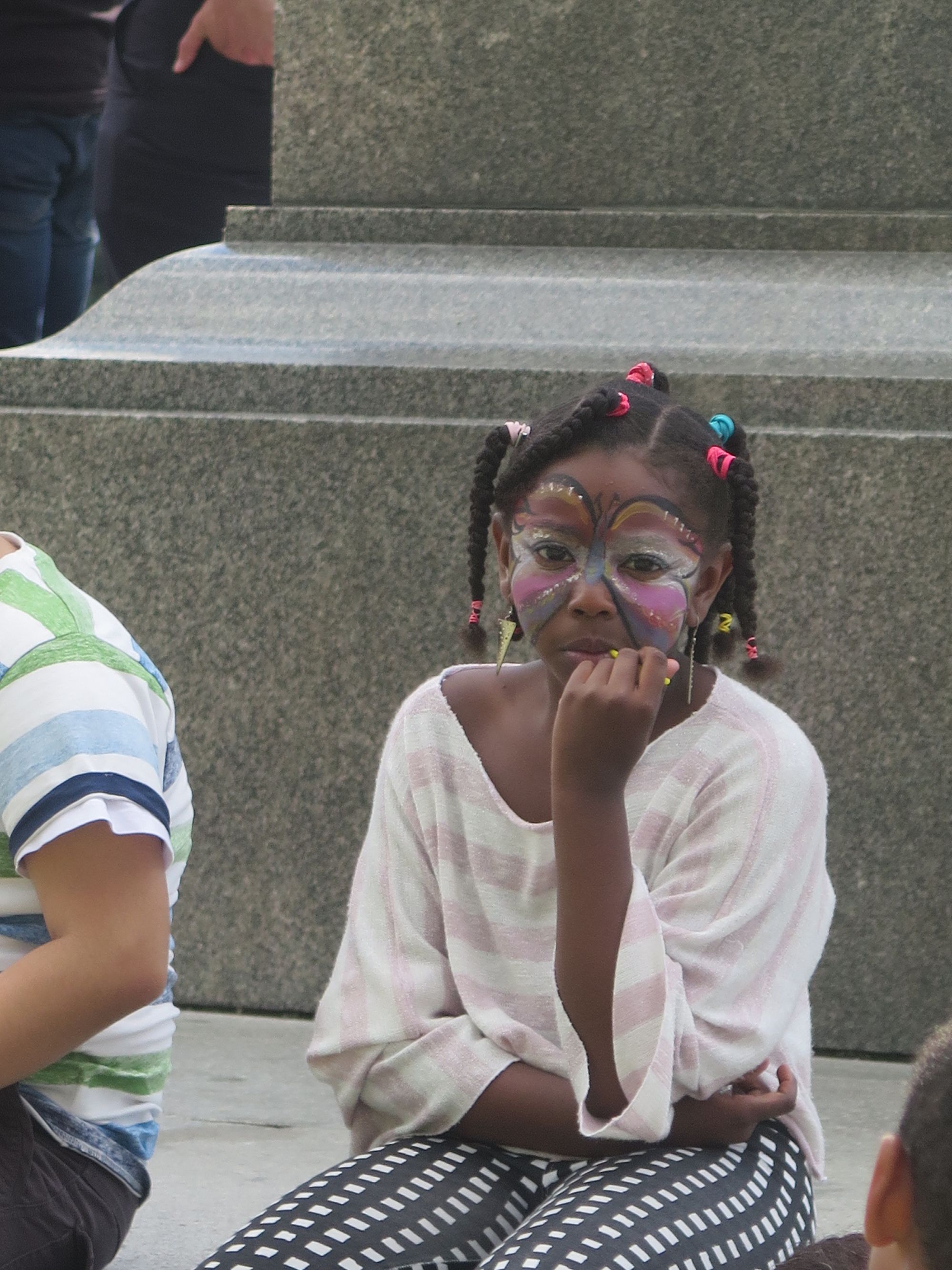
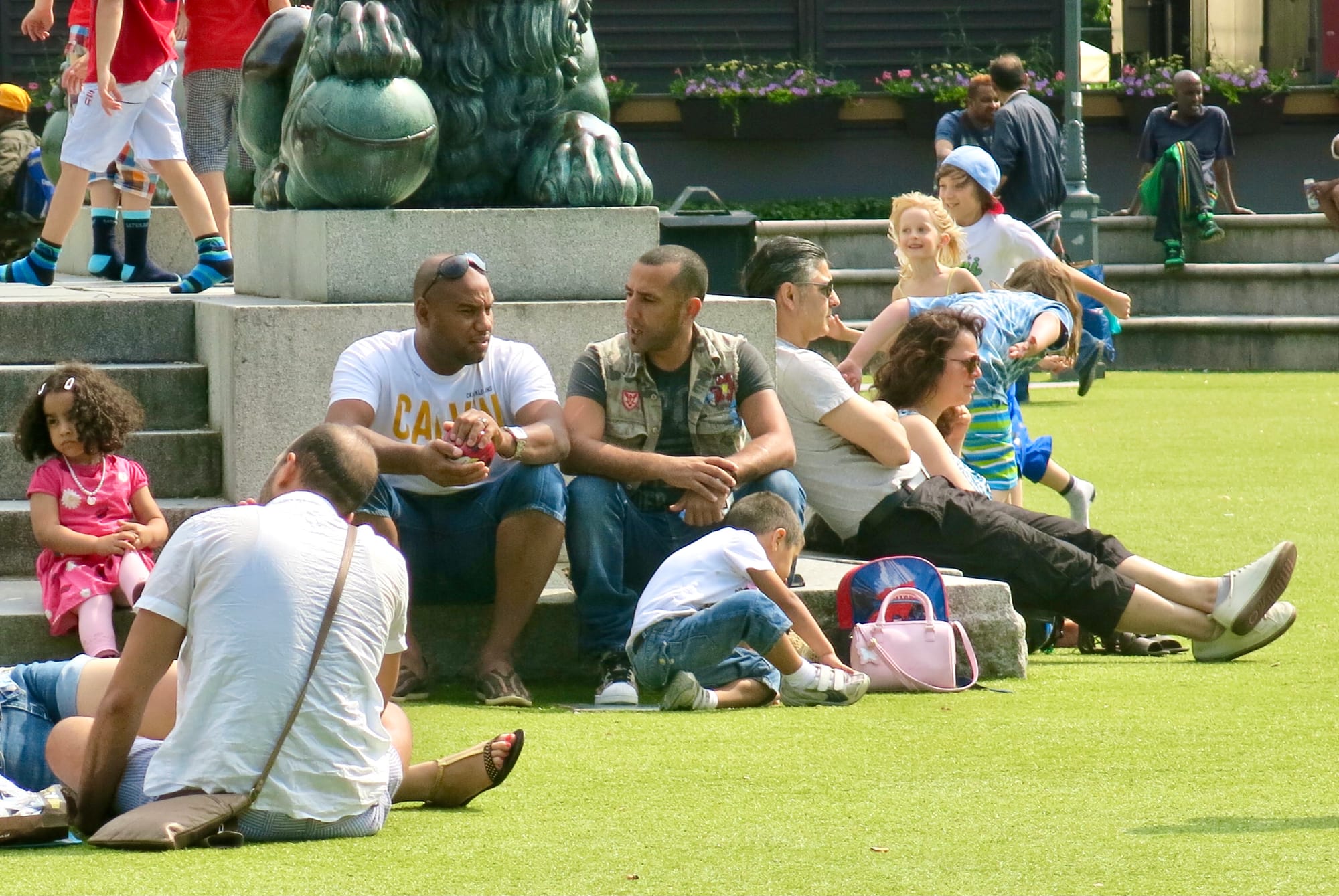
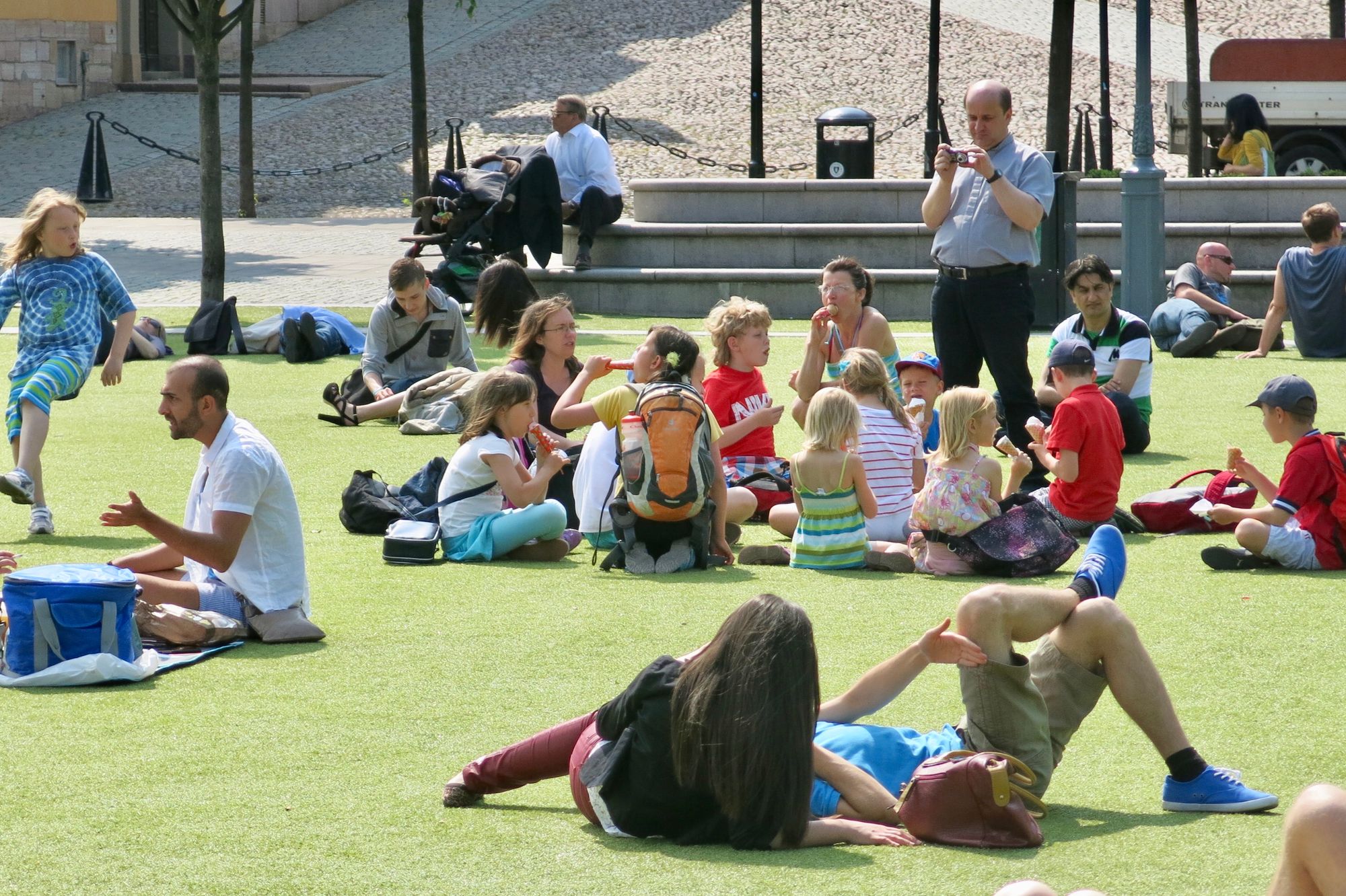
Today, the whole central lawn of Kungsträdgården feels like a playground. And not one specifically for kids, but for everybody. It's not just a construction built for children to play on like a jungle gym, or a series of cafés and eateries meant for adults. It's a combination of features that everyone enjoys, anchored by the central sculpture which acts as a key gathering spot and focal point.
The surrounding steps
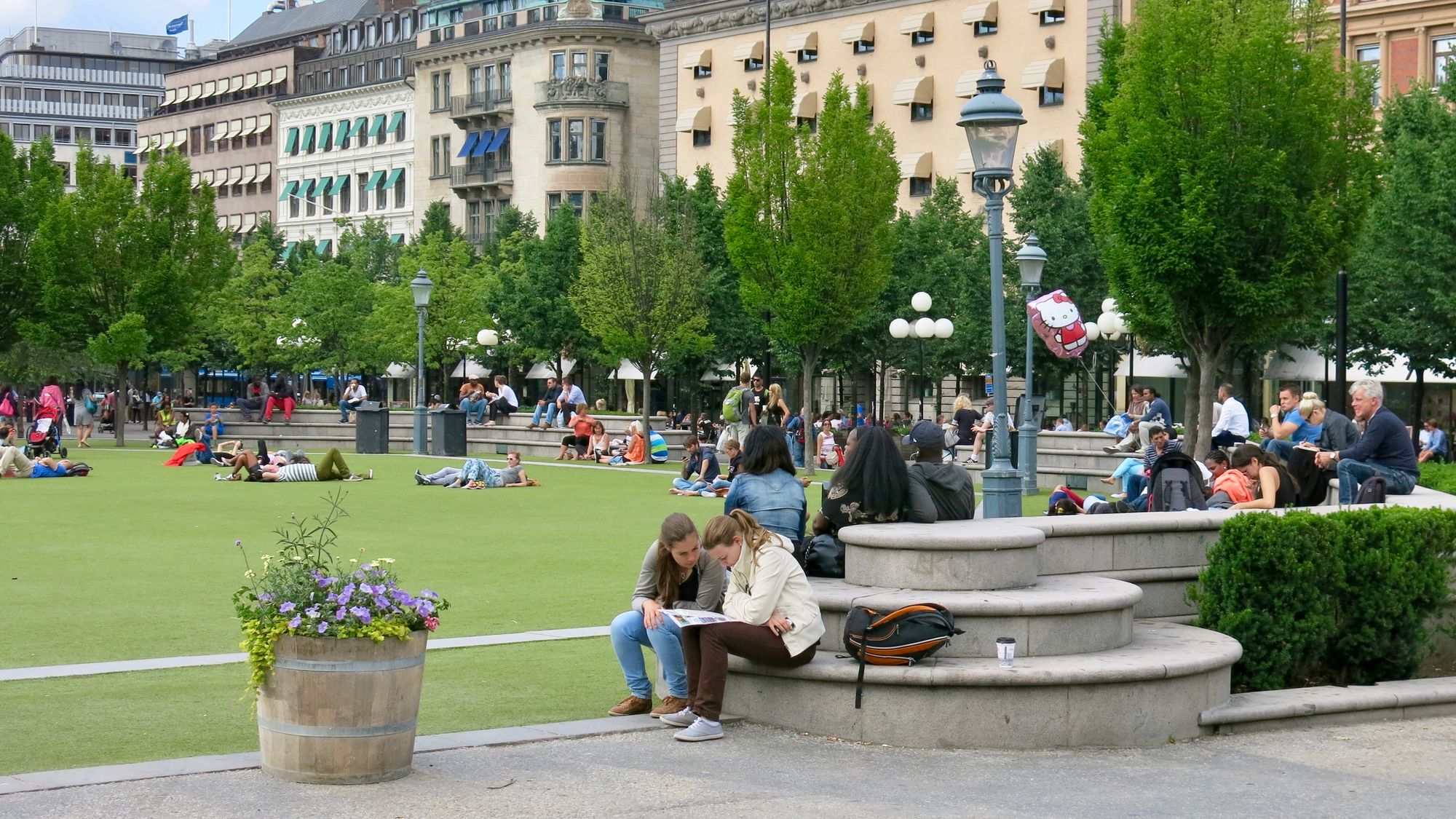
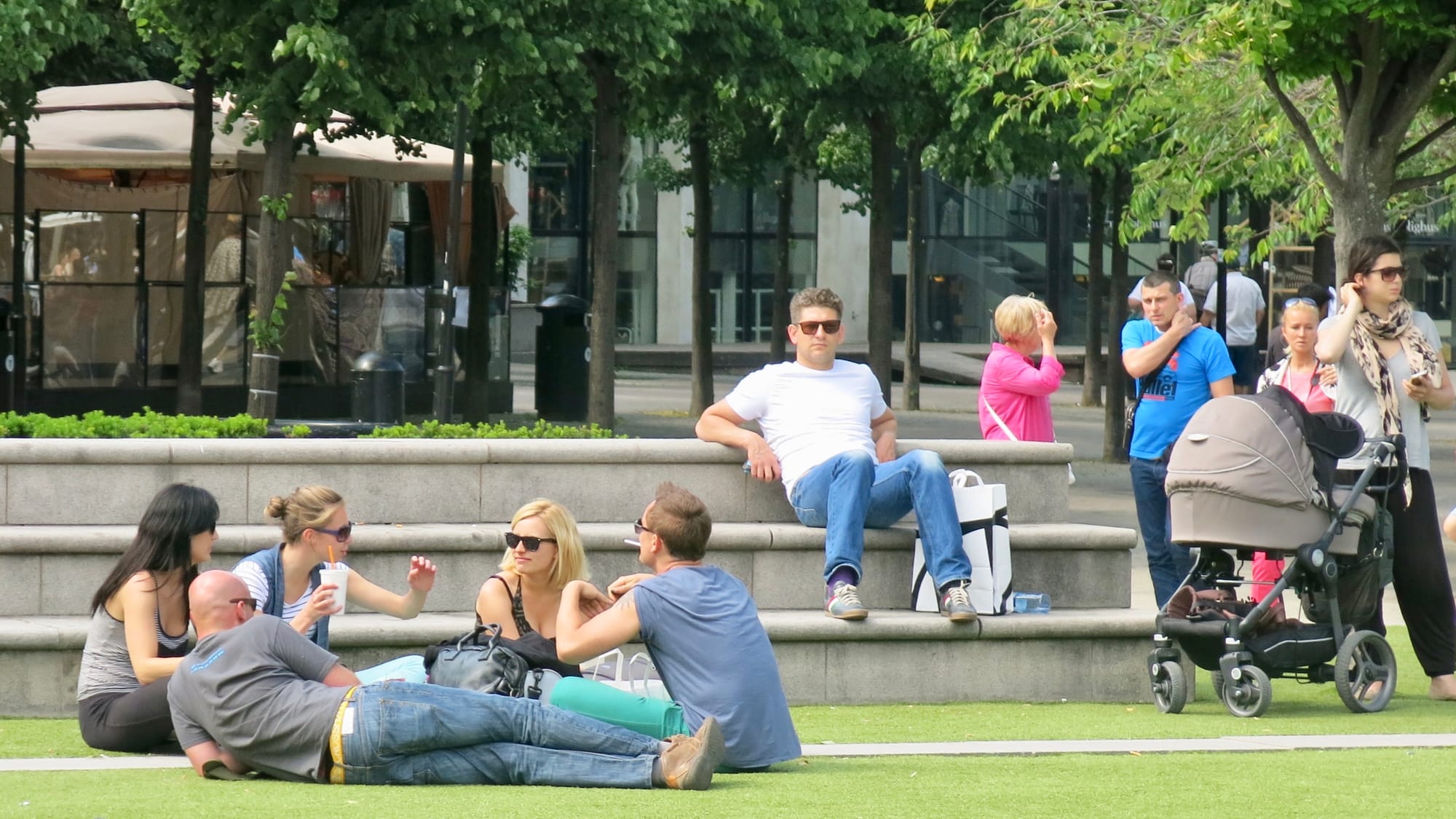
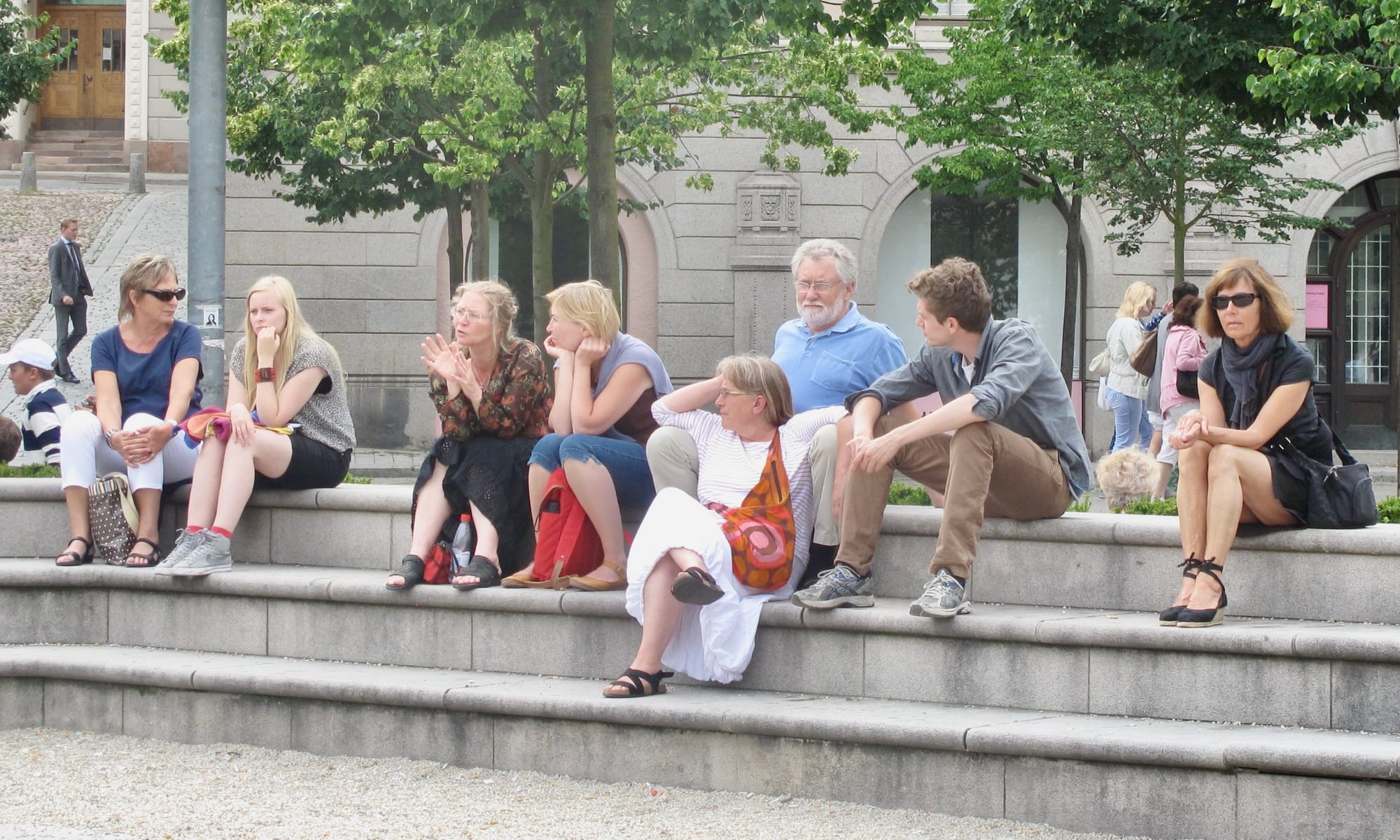
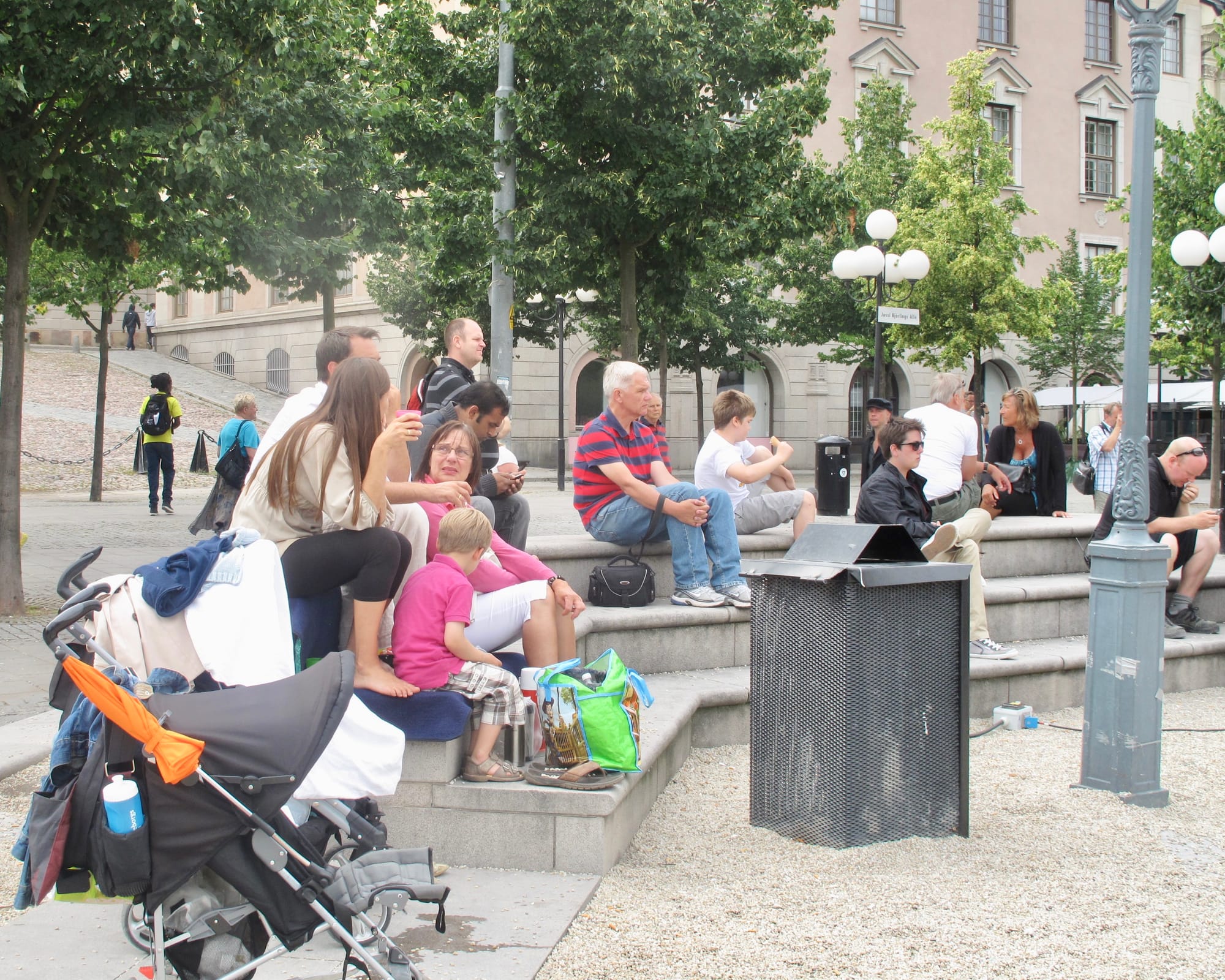
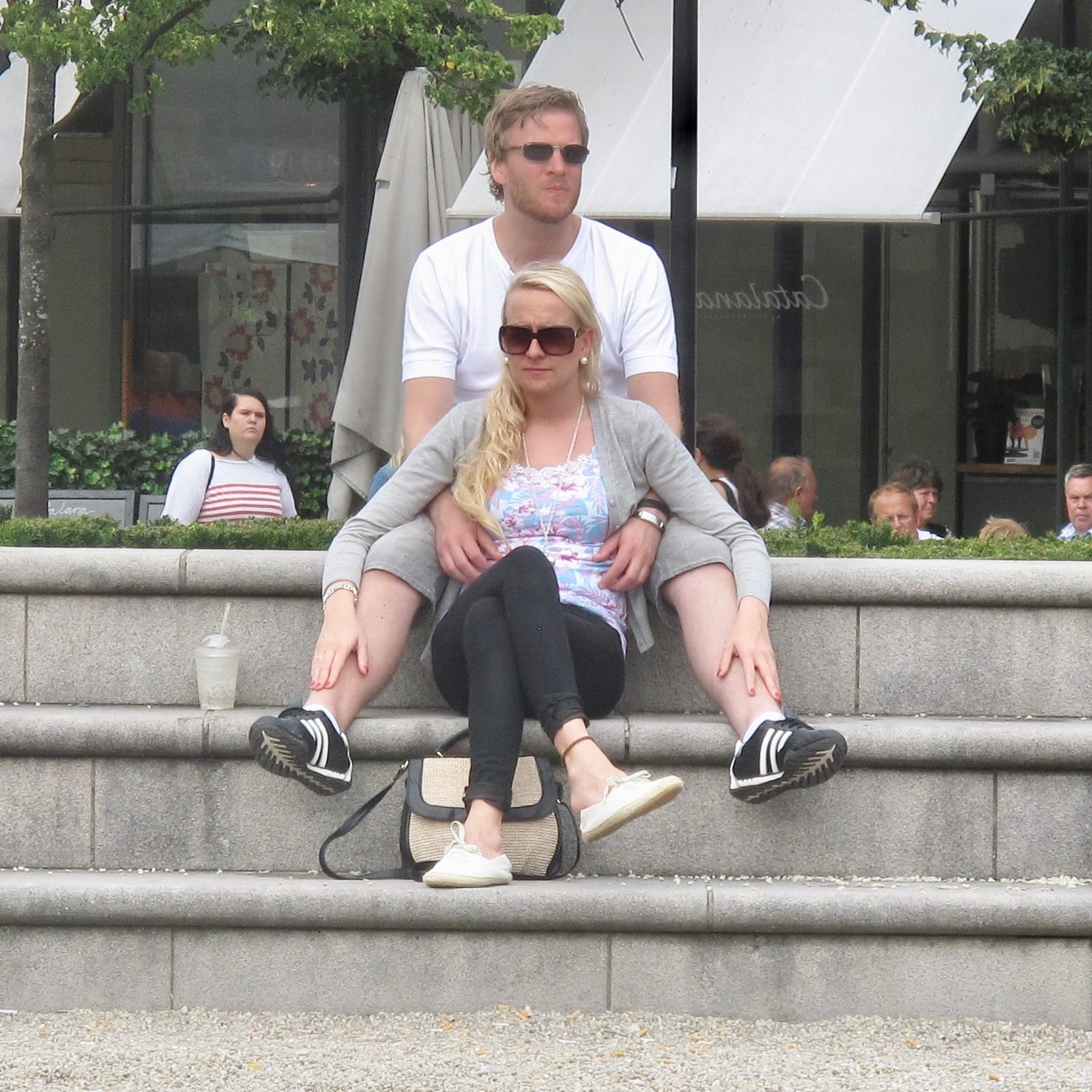
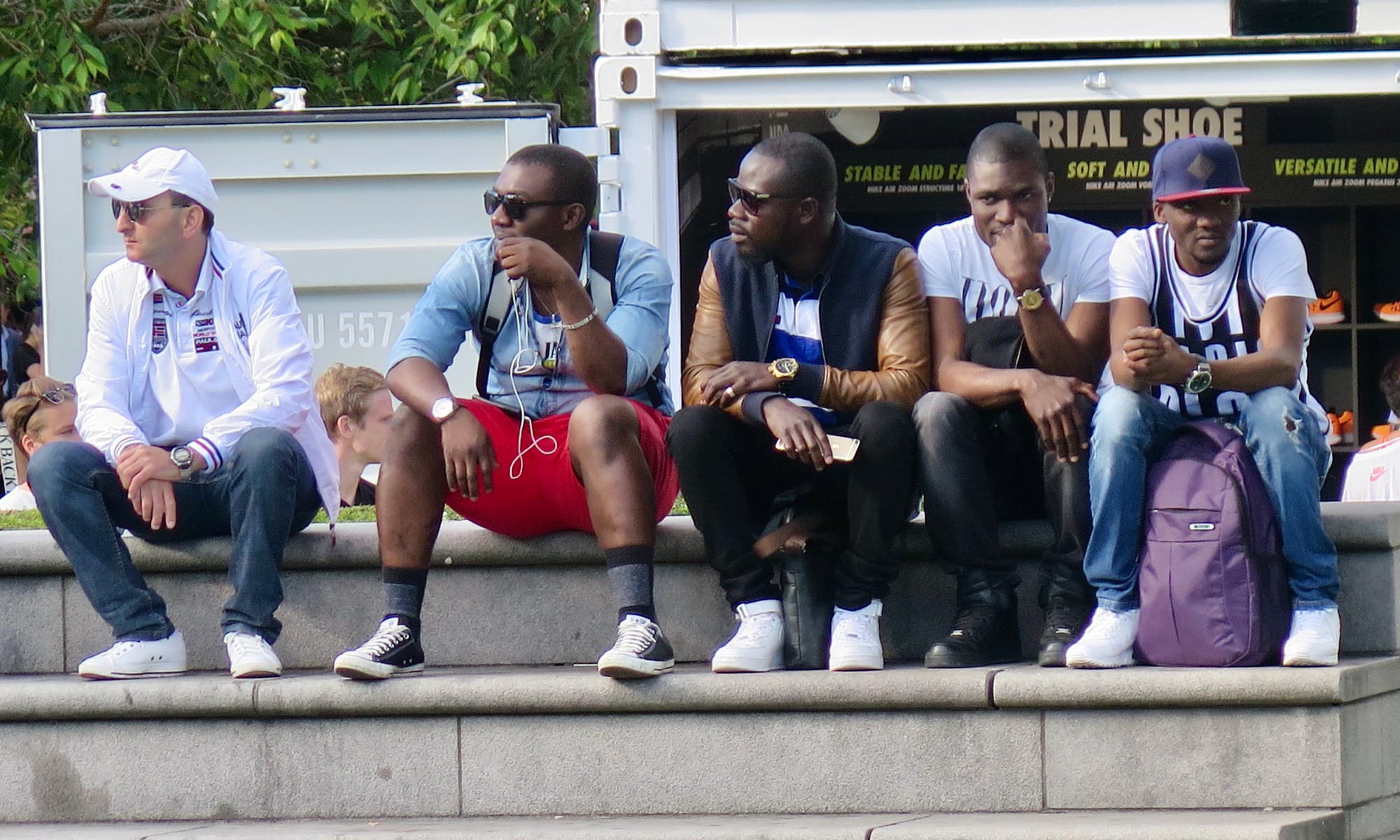
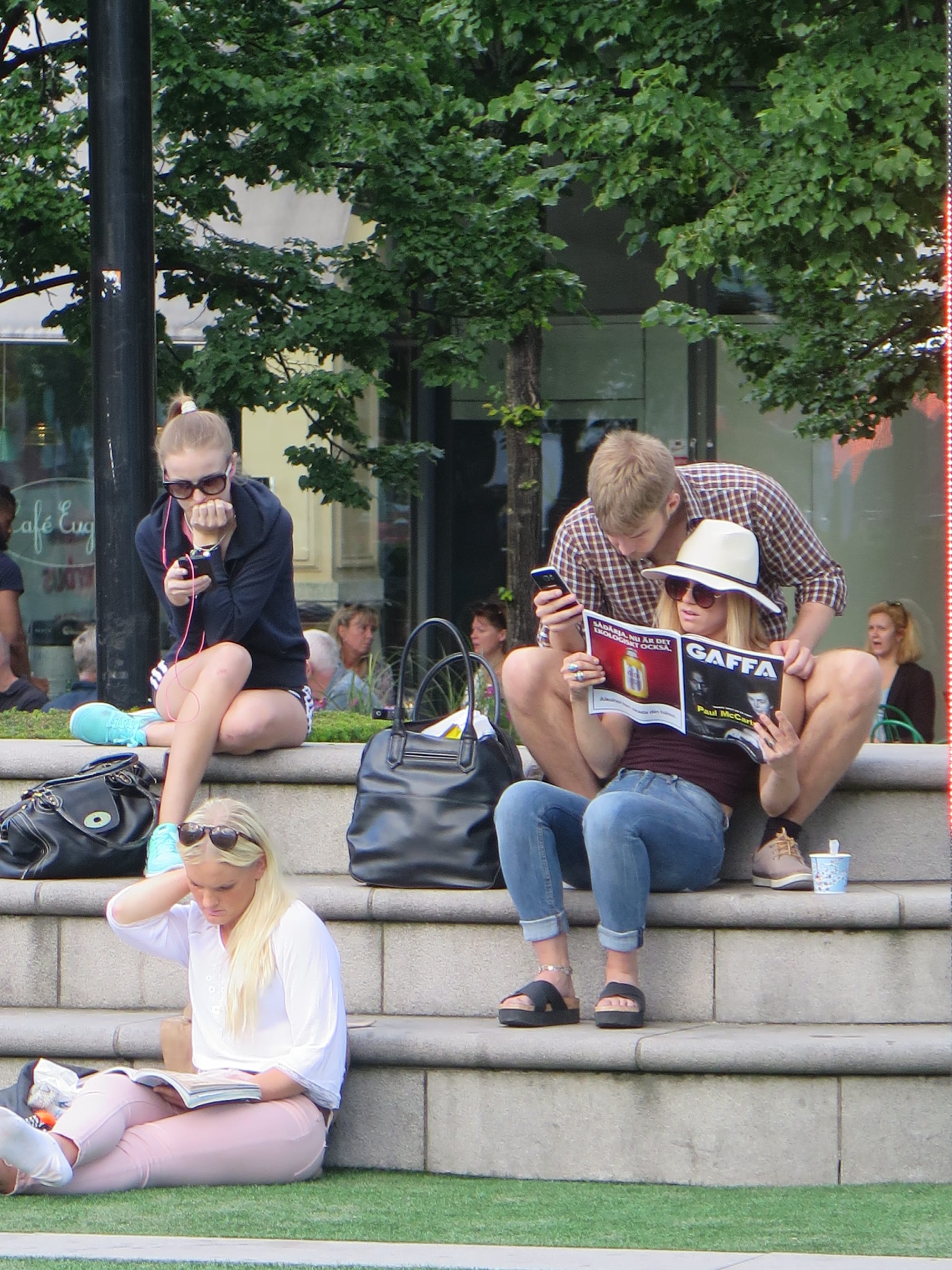
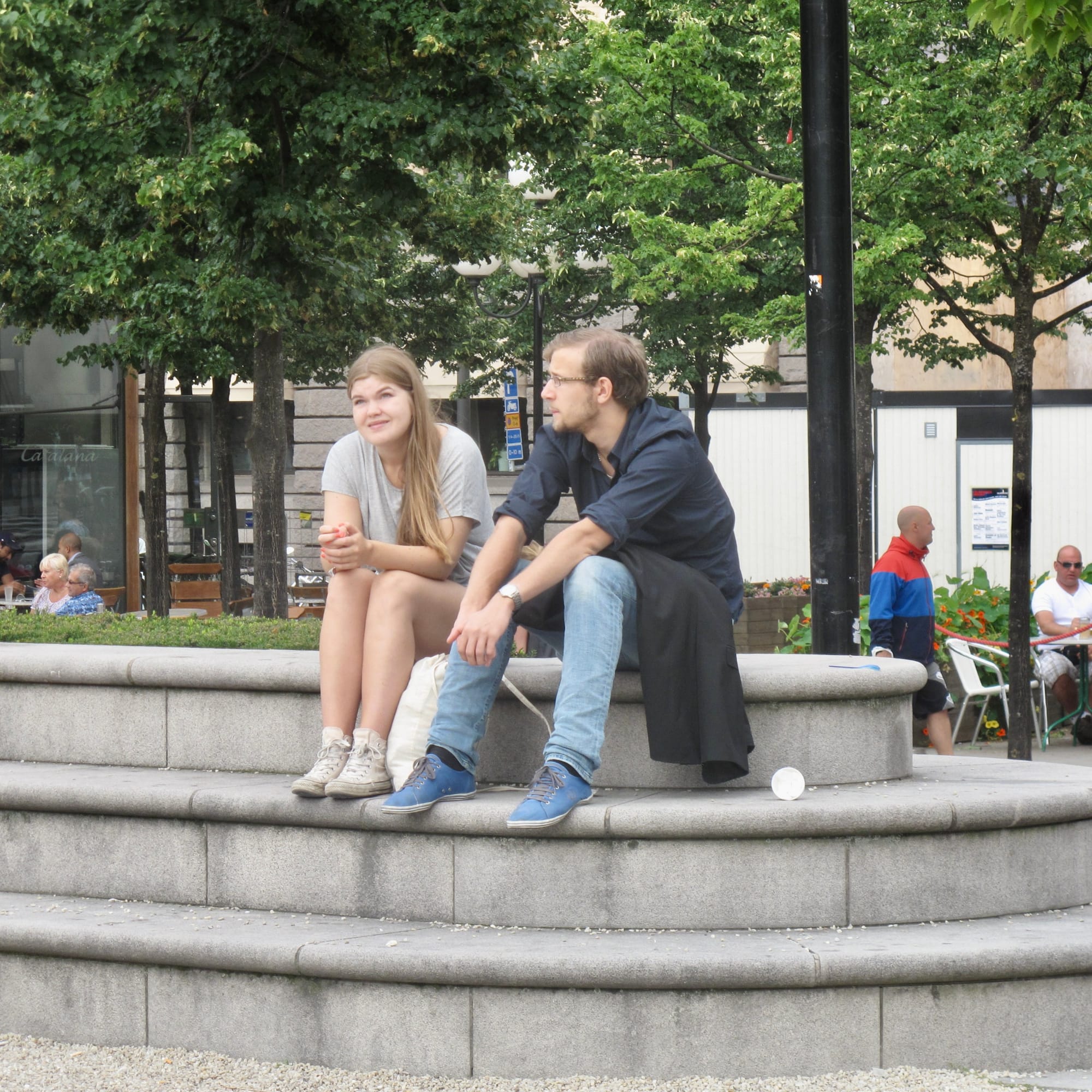
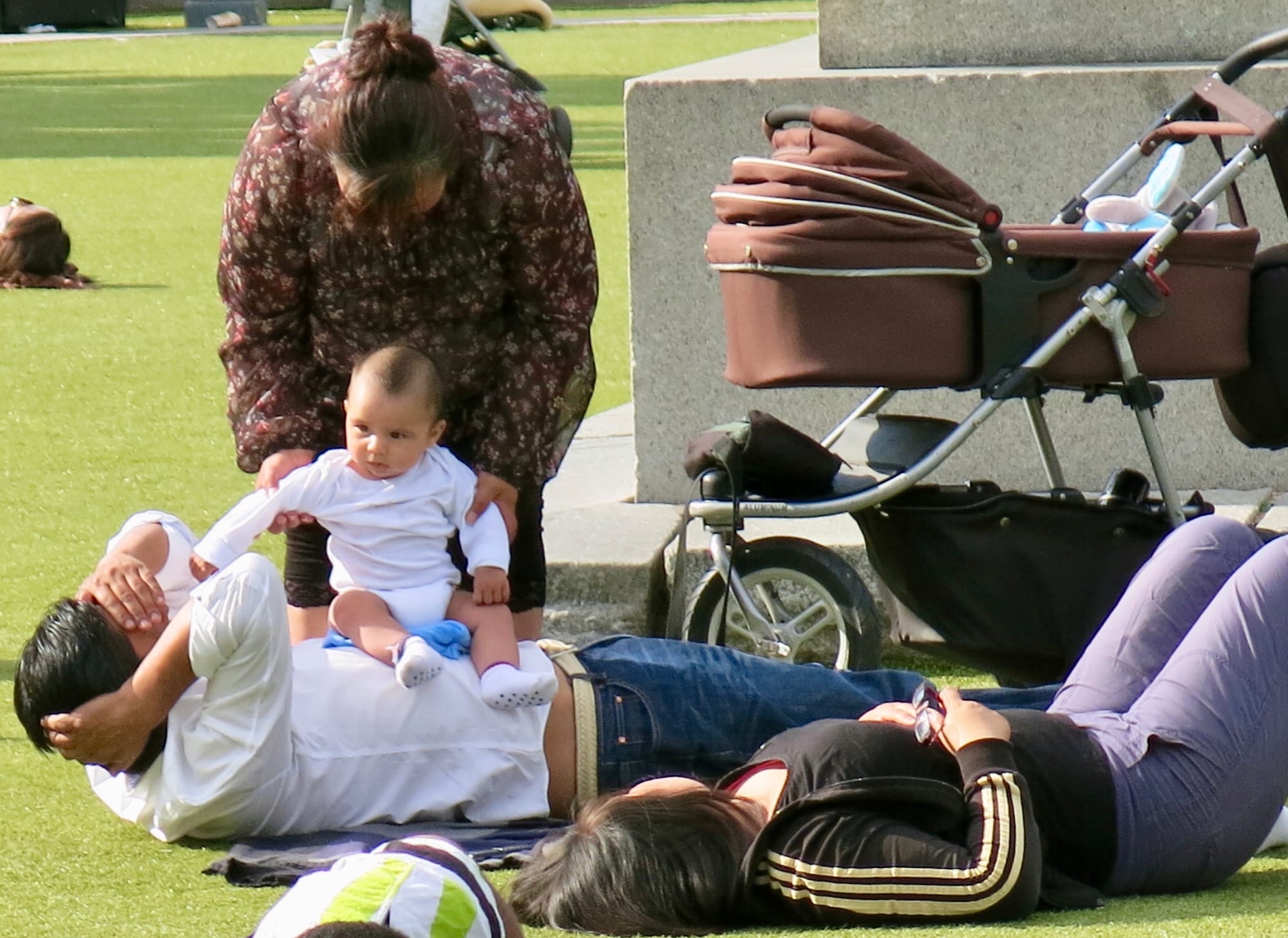
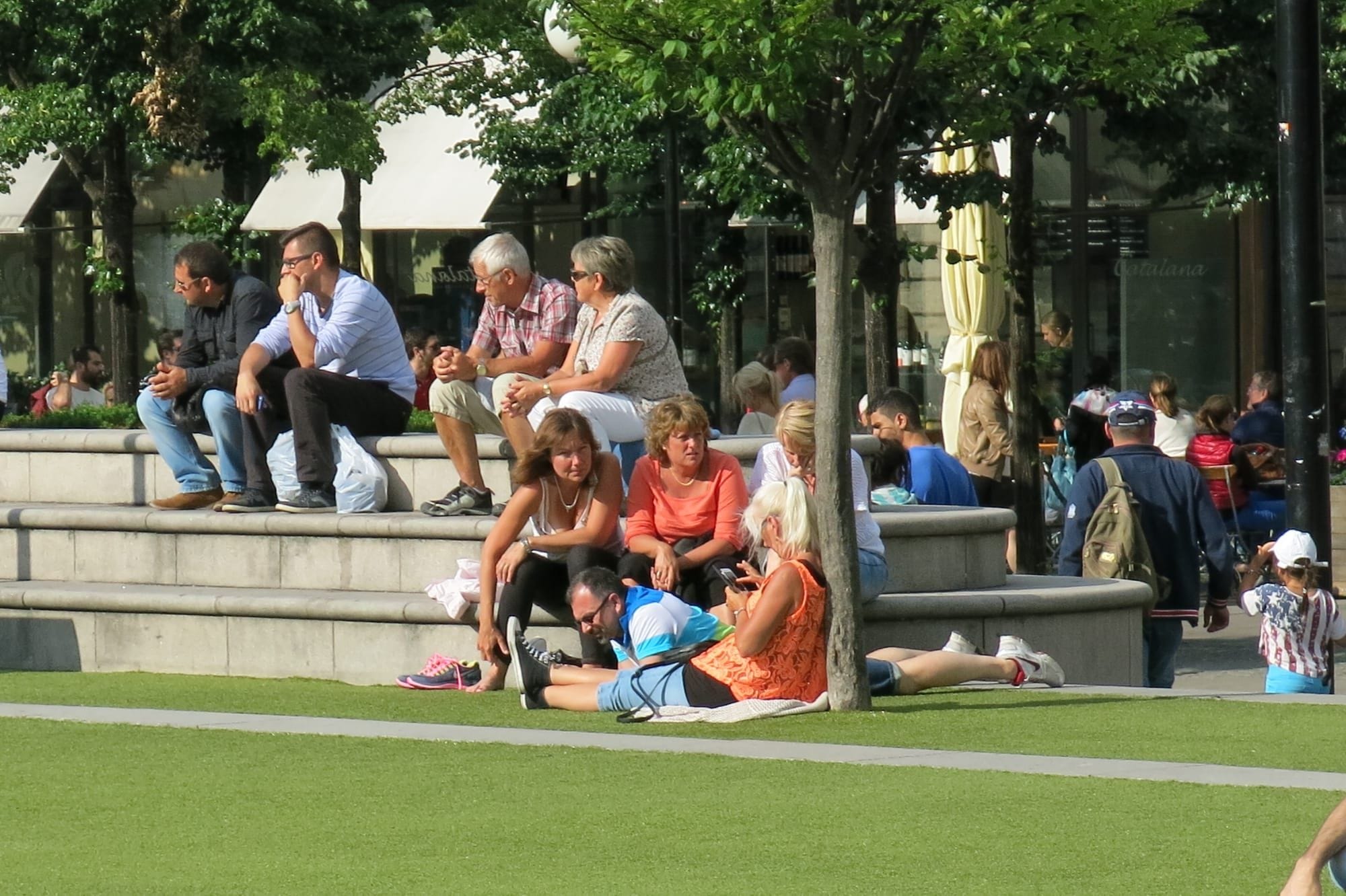
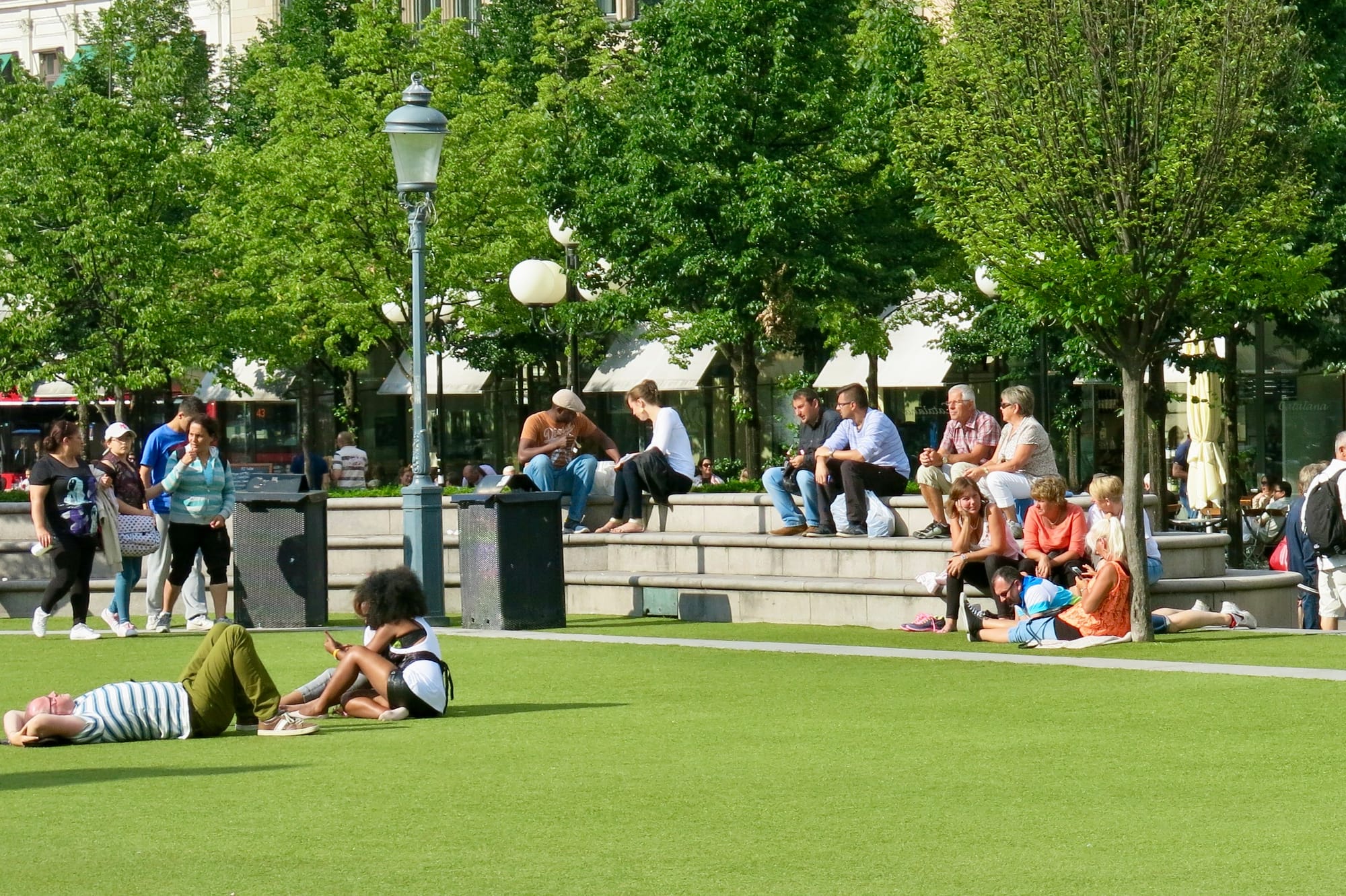
The central lawn is encircled by low steps, giving it a cozy enclosed feeling that further creates a sense of comfort, relaxation, and security. The low seating wall creates something of a viewing platform for people to watch "the show" of social life play out in the park. From the steps and surrounding cafés, adults can keep an eye on their children as they play freely on the grass while enjoying their own time chatting, reading, or relaxing. They can also lie comfortably on the ground and enjoy some sunbathing as the little ones run around.
The additional perch of the seating ledge also complements the benches set up for events. Because the square is so well-programmed, it is crucial to have ample seating for those who want to watch or participate.
The central focal point – the monument and lion sculptures
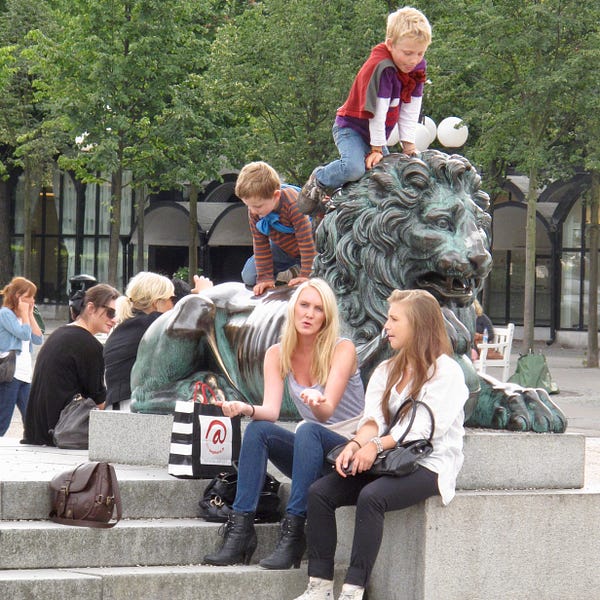
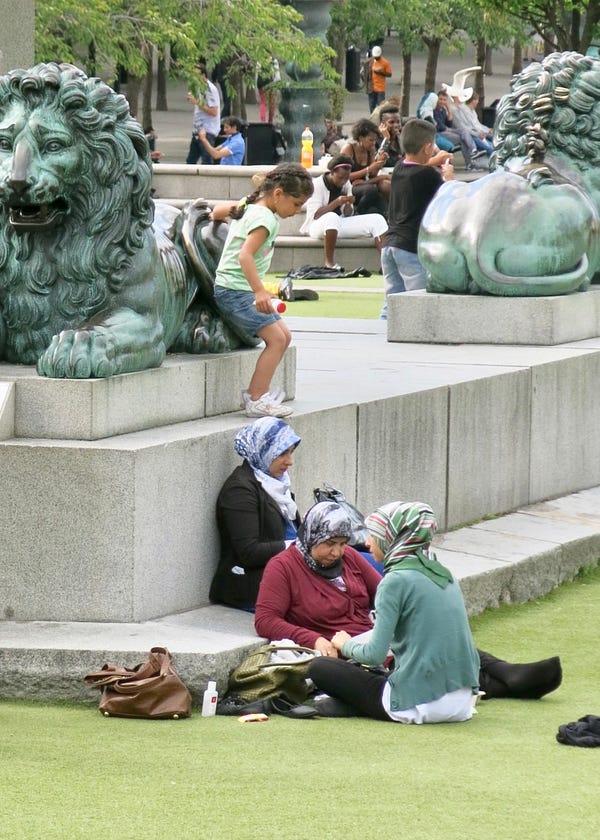
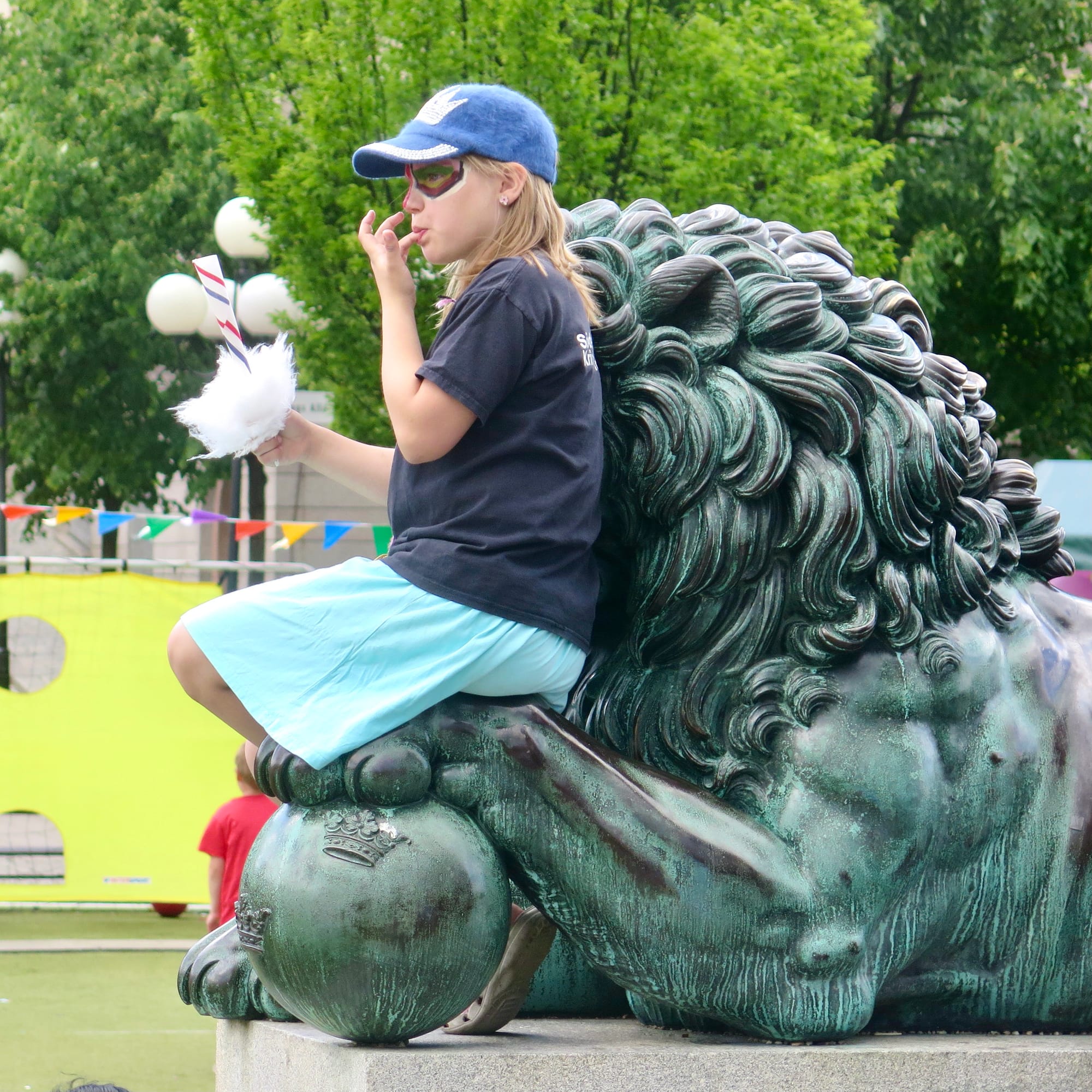
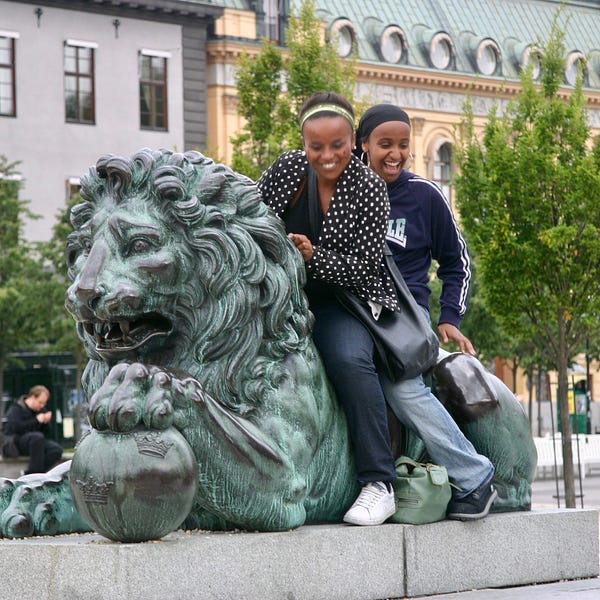
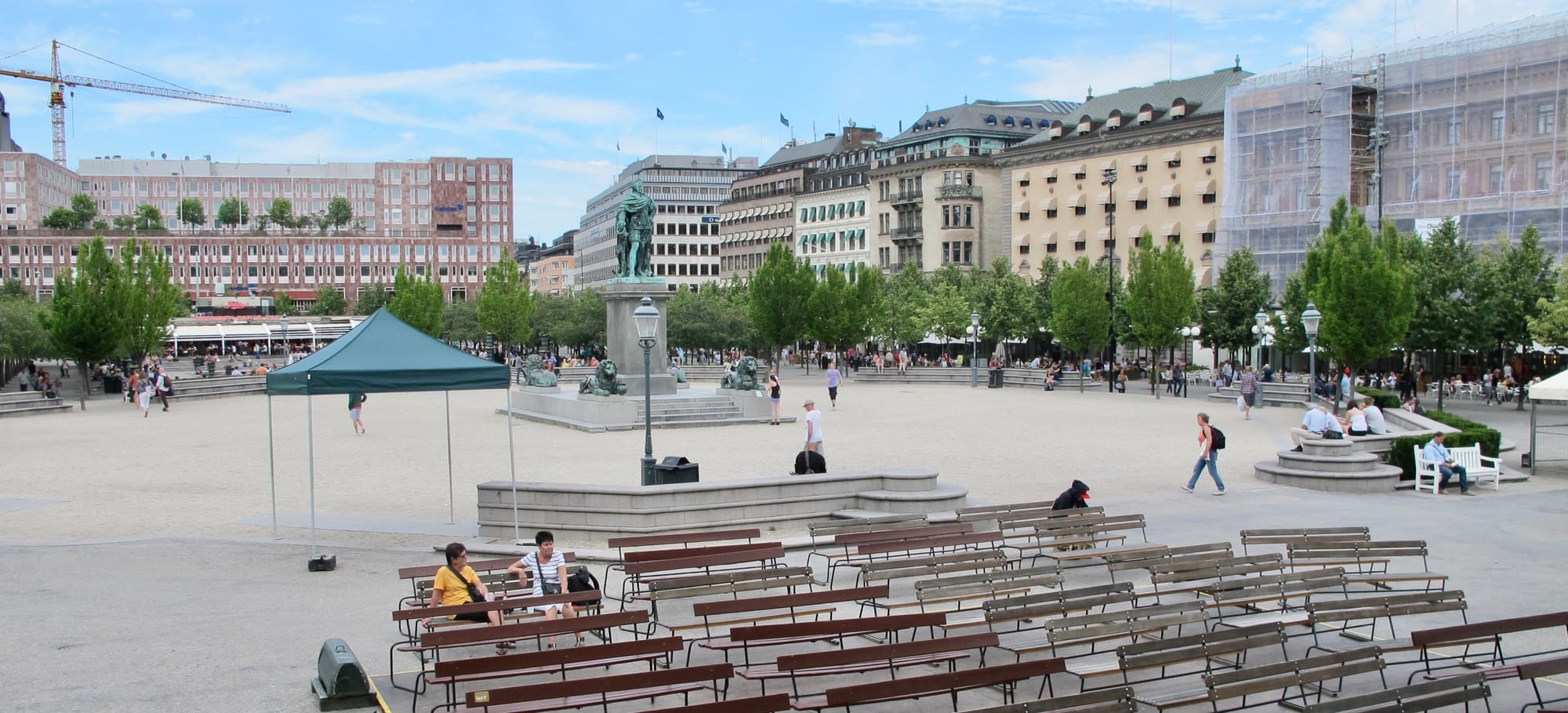
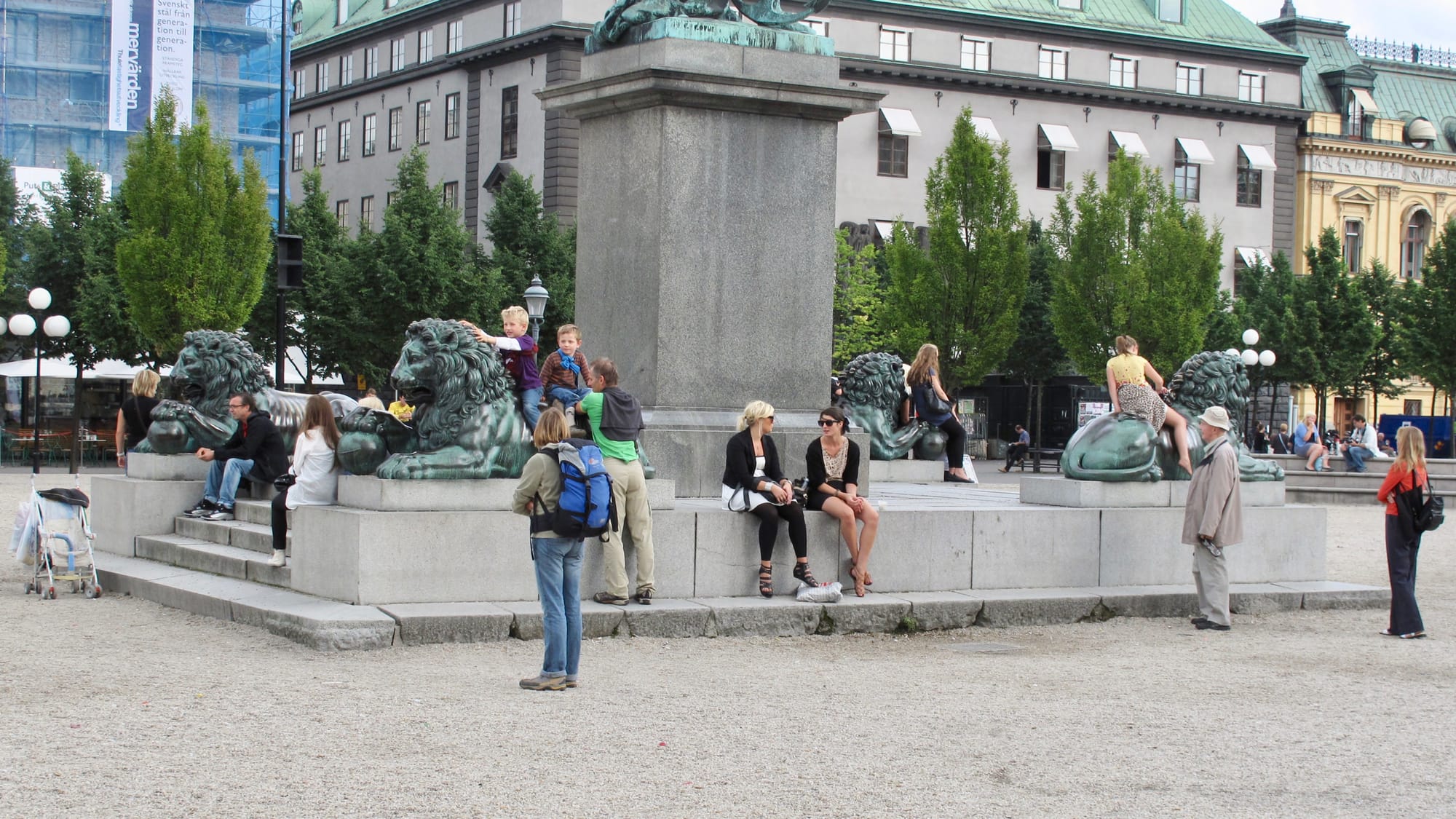
Always a draw, the iconic statues at the center of the lawn are central to the identity of the Kungsträdgården. They invite all sorts of seating, gathering, and play. Climbing onto the lion statues is a particularly strong draw. In a way, they're the "jungle gym" in the playground that is the whole central lawn.
An important change – from pea gravel to turf
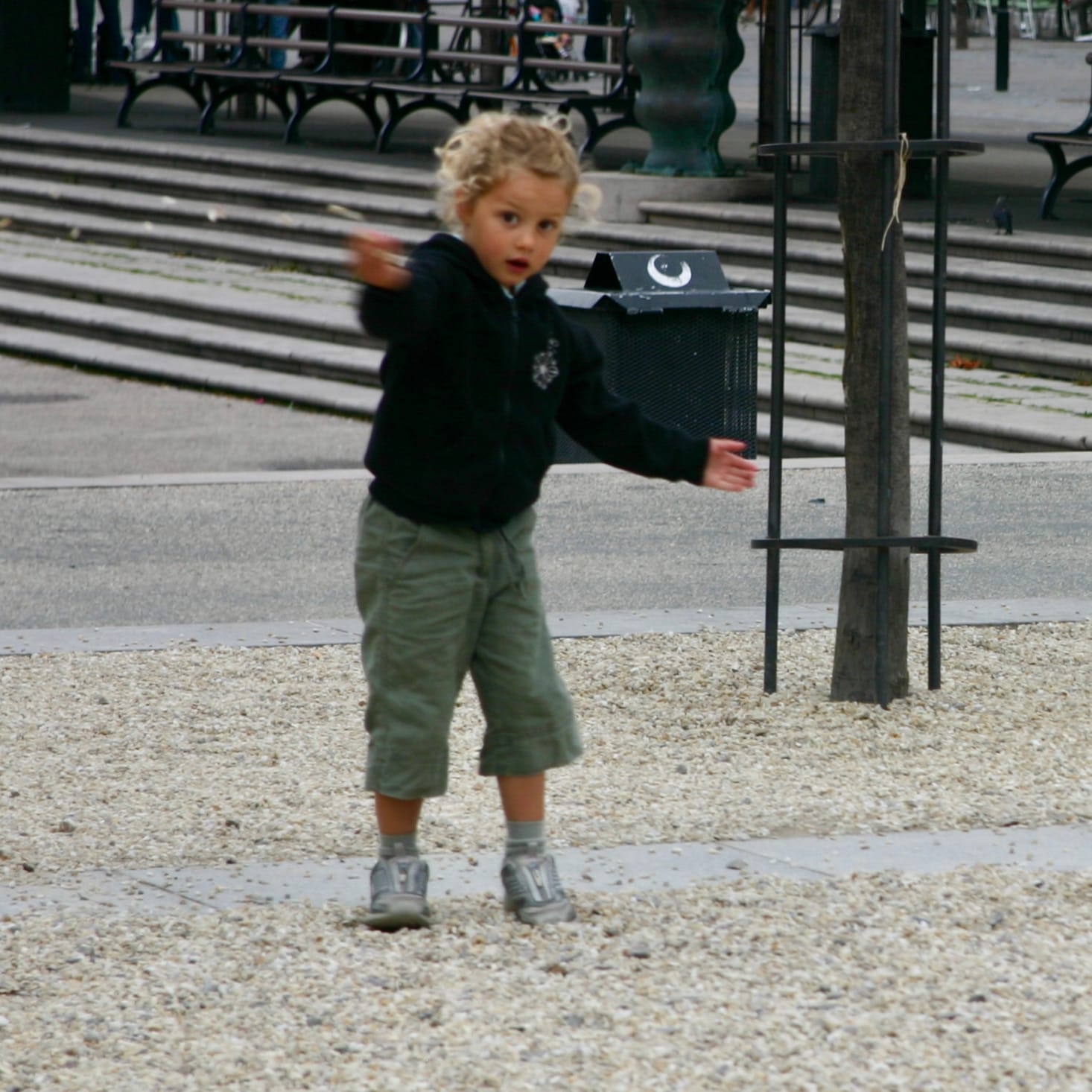
Exchanging turf for pea gravel totally transformed the center of Kungsträdgården into a major center of activity. While pea gravel is a material that's only good for walking on, turf is perfect for laying, tumbling, and lounging on. You can't roll around in pea gravel and falling on it hurts, but a cover of grass is suitable for every activity from rest to play. Not only that, but its greenness and softness makes the area more beautiful, vibrant, and inviting. It may seem like a small change but it has a huge impact on the experience of the place.

Pea gravel
Turf
Setting
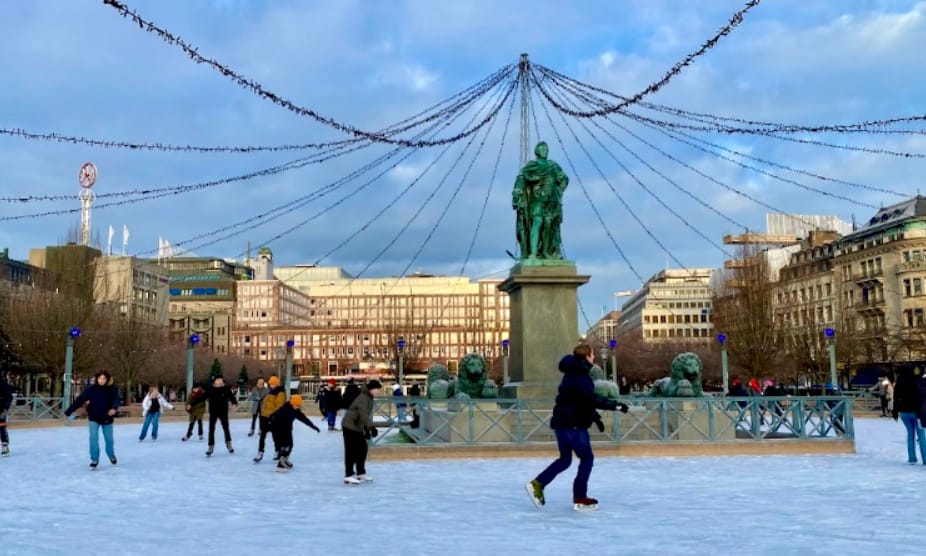
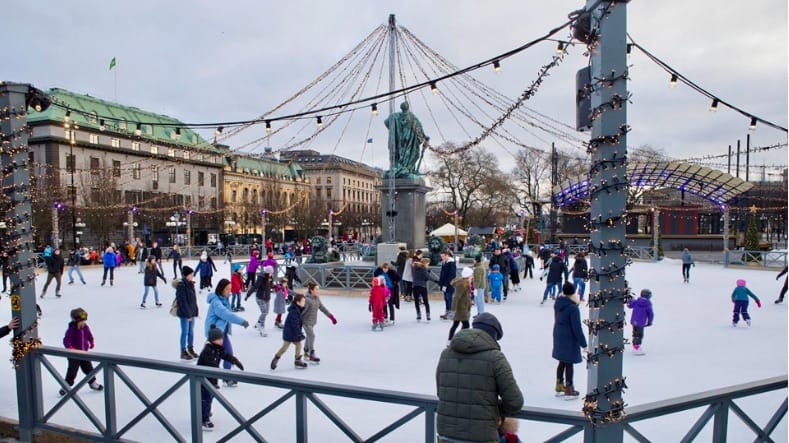
Seasonal programming – the winter skating rink
What makes the Kungsträdgården such a beloved public place is also the programming it plays host to. One of its most popular seasonal activations is the ice skating rink that brings joy and whimsy to the colder months.
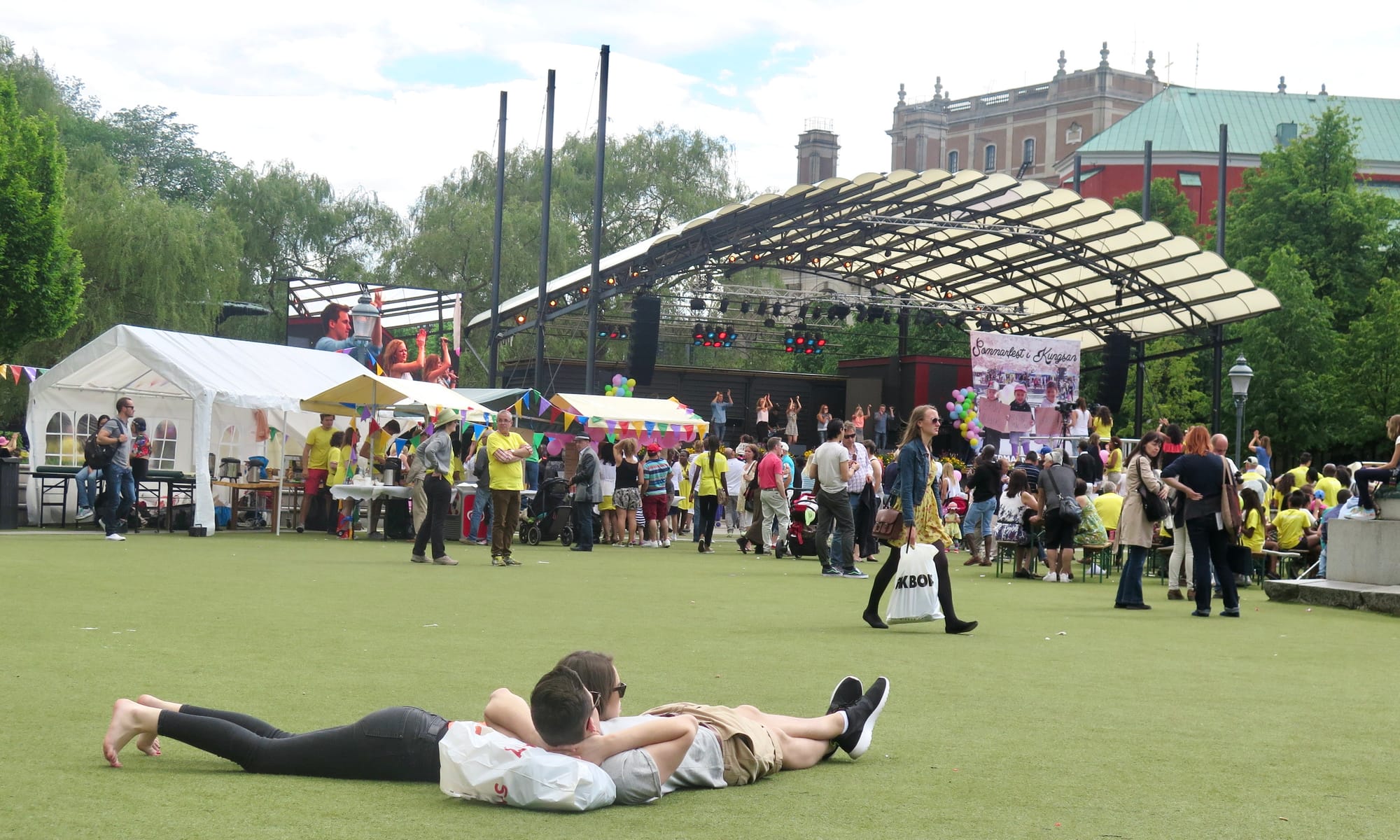
Sam Carlquist believes that a great park should work in layers that incorporate special events, daily life experiences, and activations for the different seasons. It's important to understand how a place works over time, how it adapts, how it stays alive and evolves. Things needs to be happening there or it will lose vitality. Dynamic programming is key to keeping the place interesting and engaging, so people return to it again and again.
Sam Carlquist on the experience of a living park
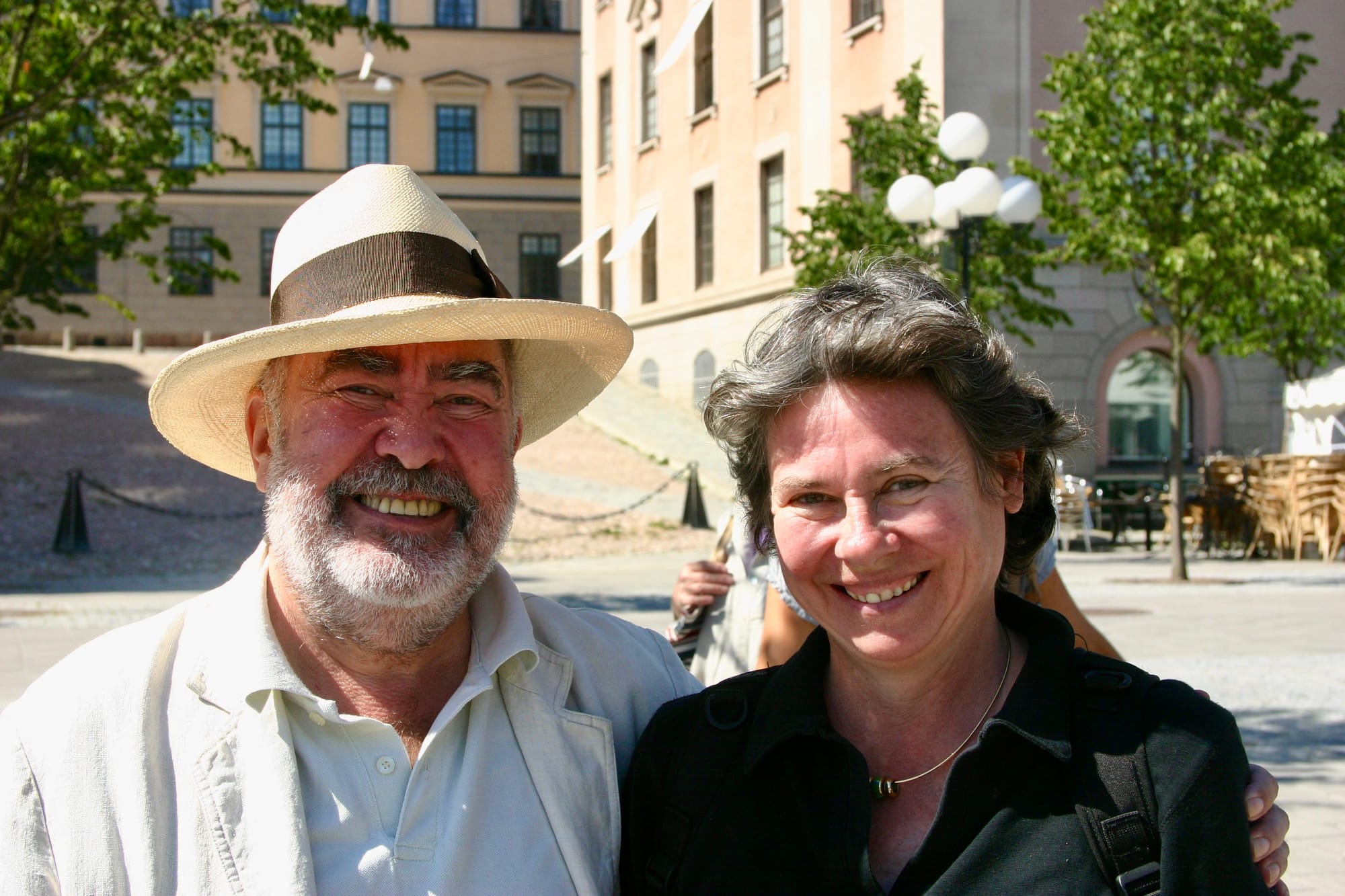
Several years ago, Sam Carlquist shared his perspective with us in a conversation about public spaces. He spoke about how the primary purpose of a park is not function, but experience.
Many urban spaces, he noted, are designed as responses to specific needs – playgrounds for children, paths for running, zones for sports. But life does not operate within such rigid categories. People come to a place not only to do some specific thing, but to simply be. And this ability – to be, to observe, to connect – is often missing in contemporary design. He emphasized the importance of mixed-use spaces, where different groups of people can coexist, see one another, and create a sense of a living city. That is what creates community and elevates a mere green space into a beloved destination and a heart of urban life. That is what we need more of in our cities.
Related Articles
 Fred Kent
 Fred Kent
 Fred Kent
 Fred Kent
 Kathy Madden
 Fred Kent
If you are interested in collaborating (articles, presentations, exhibits, projects, and more) or supporting the cause contact us.