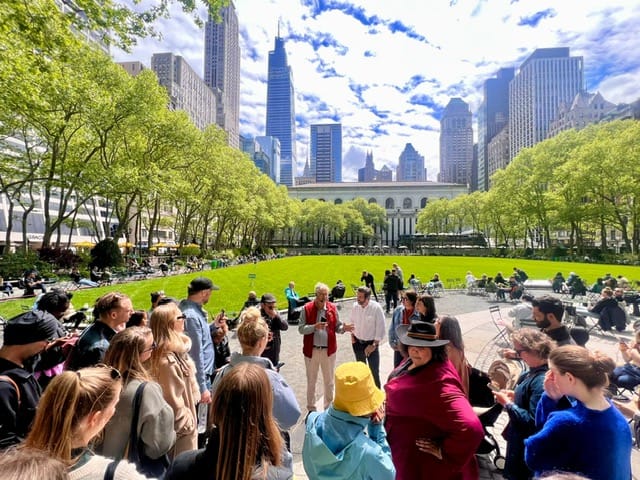
Bryant Park was transformed from a place people avoided to a destination people flocked to and has since become the gold standard for a great public space.
Bryant Park sits at the epicenter of Midtown Manhattan on a block that also includes the iconic New York Public Library. Its transformation, unveiled in 1992, is an important story of a public space given a new lease on life through placemaking. The park has continued to evolve and improve over the decades since and has been foundational to the spread of the Placemaking Movement. Its journey from an undesirable space to the thriving heart of Midtown has inspired cities around the world.
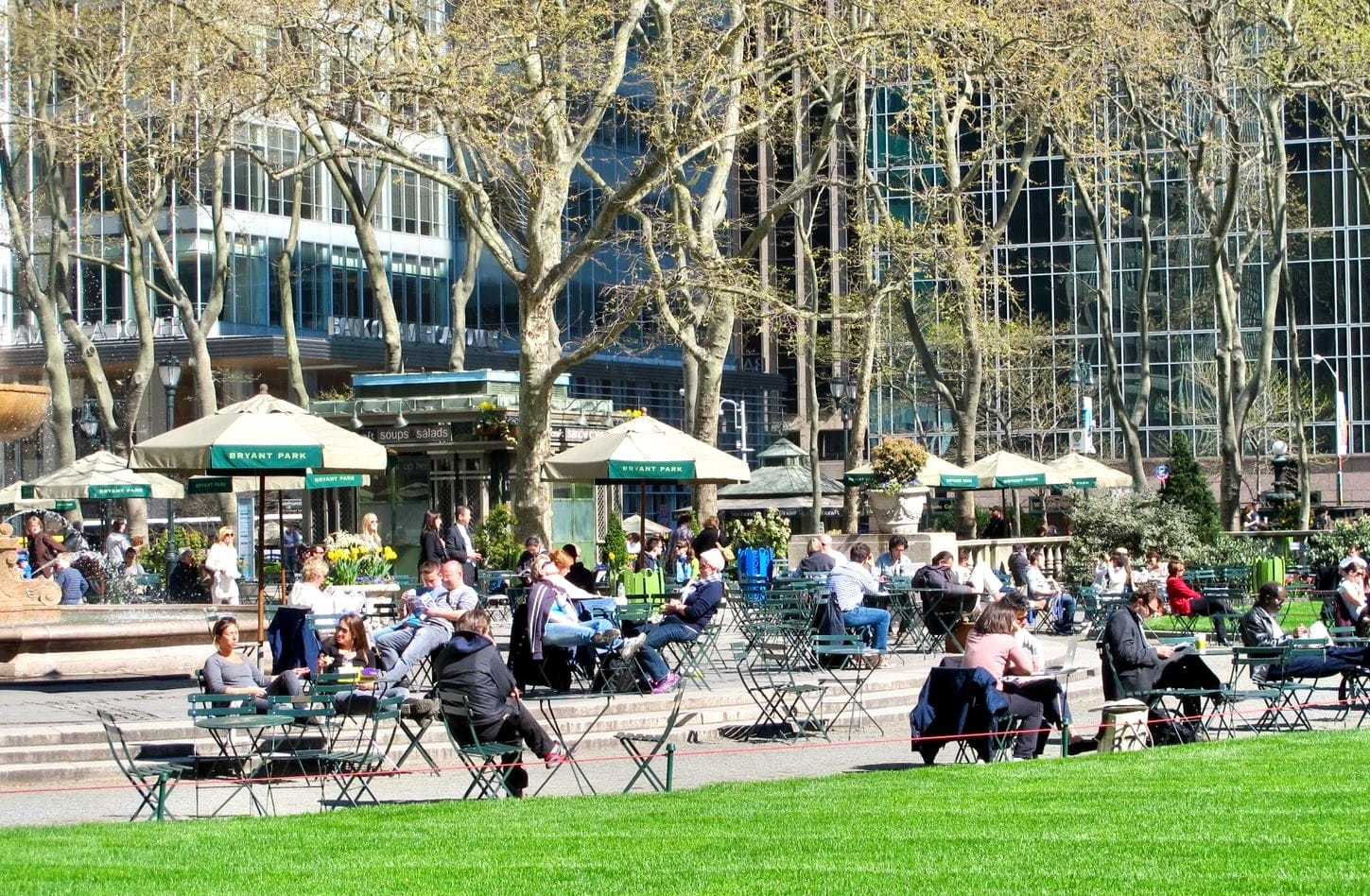
Bryant Park is a powerful case study of how an unsafe and underused public space can become a beloved destination by enhancing access and visibility from the street, adding public amenities, and providing dynamic, regular programming, including Lighter Quicker Cheaper (LQC) activations.
Background
By the 1970s, Bryant Park – a city park since 1847 – was a deserted patch of grass, albeit surrounded by stately London Plane trees, with few amenities to attract visitors. Because of the lack of people and wholesome goings-on, as well as poor visibility from the outside in, the park became a hotbed of unsavory and illegal activity. At one point, it even earned the nickname "Needle Park" because of the drug presence. In 1976, the New York Times reported that there were 43 muggings in the park during the first six months of the year.
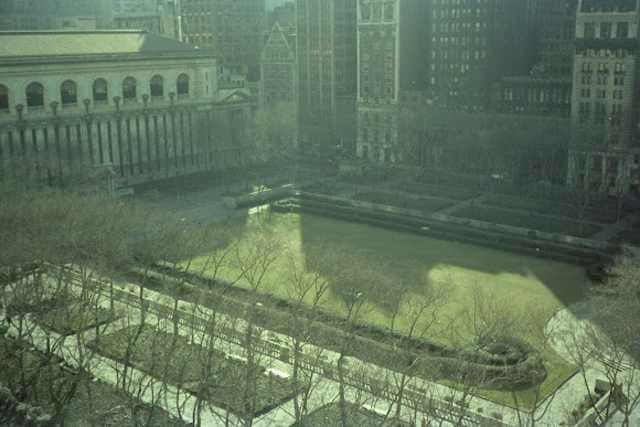
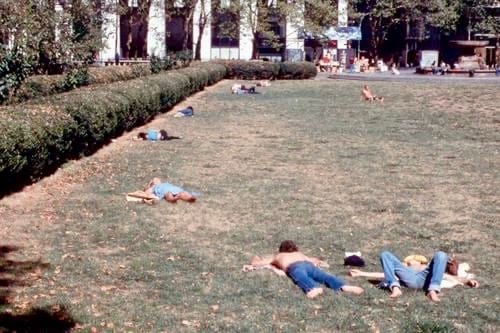
Historic view pre-1970. Note the hedges that reduced visibility and accessibility in the park. Left photo source: Gothamist Right photo source: PPS (c.1979)
William H. ("Holly") Whyte and the Street Life Project had analyzed Bryant Park in the early 1970's and it is briefly featured in his film The Social Life of Small Urban Spaces as a particularly unsafe place. In an insightful 1979 memo to the Rockefeller Brothers Fund, Holly wrote that the drug dealers are not the cause of the problem, and that "the basic problem is under-use."
Also in 1979, with funding from the Rockefeller Foundation, the Bryant Park Restoration Corporation (now the Bryant Park Corporation) under the innovative leadership of Dan Biederman, invited Project for Public Spaces to analyze park use by interviewing police and park maintenance staff, surveying park users (including dealers), and mapping how people were using the park. PPS then recommended how the park could be redesigned and programmed to turn it into a true heart of the city where everyone could feel welcome, relaxed, safe, and joyful.
Project for Public Spaces' Report for Bryant Park
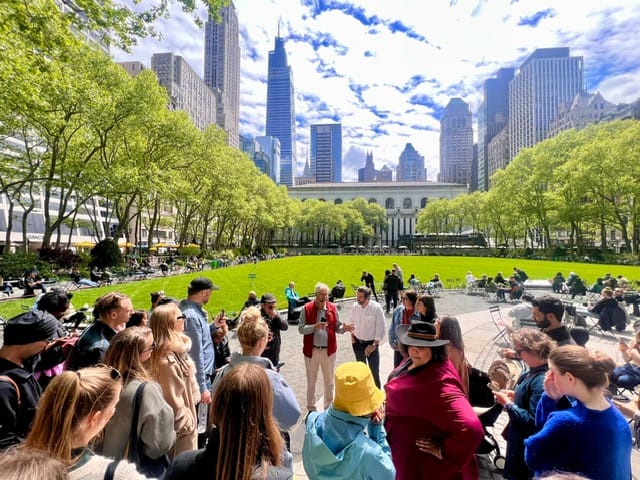
For more information on the history and planning of the park in the 1970's, see the Additional Resource section below.
Here are the building blocks of Bryant Park's rebirth:
Park Design
We did not think of ourselves as "designers" but rather as a kind of repair crew. The park's design had been designated a New York City landmark, but within that constraint, there was still much that could be changed and improved without diminishing the historic design. Indeed, Bryant Park is a testament to how a place doesn't have to change structurally to be completely and wonderfully transformed.
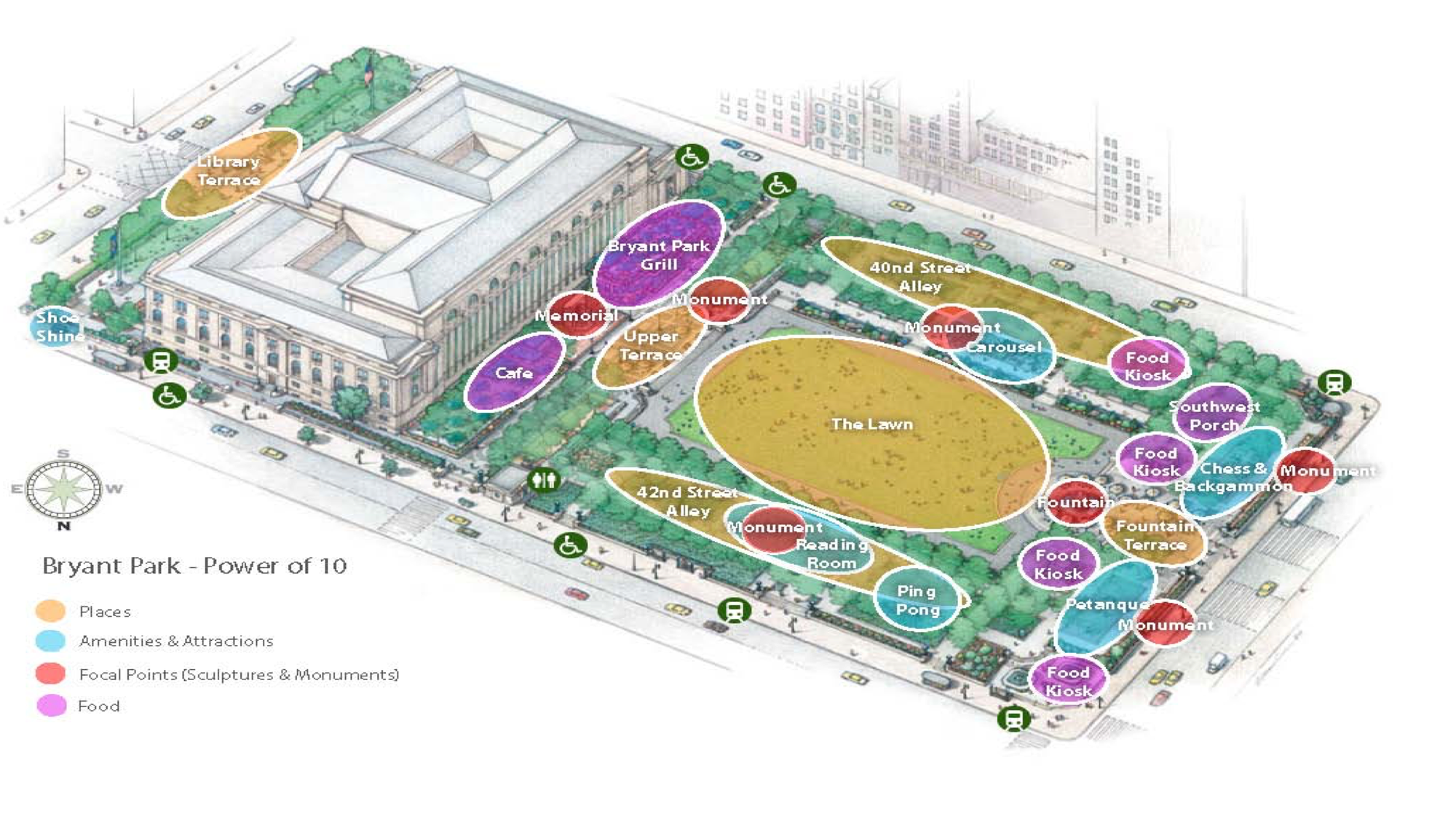
Fortunately, Bryant Park has a simple, classic design that has remained much the same for nearly the past century. It has a large main lawn (perfect for events and picnics), alleys lined with shade-throwing trees (perfect for seating and cafés), a fountain (perfect for meeting up with friends), and various gardens and monuments to marvel at. The park's design just needed a bit of tweaking — mainly its landscaping and perimeter — to make the space significantly more functional and appealing.
Enhancing Visibility into the Park
Bryant Park is surrounded by low walls and iron fencing, which cannot be significantly altered under New York City landmark law. By the 1970's, hedges and landscaping had matured, further obstructing views of what was happening inside the park, making it feel unwelcoming to passersby (hedges also reduced visibility and accessibility inside the park). The PPS diagram below shows the obstructed views around the entire park:
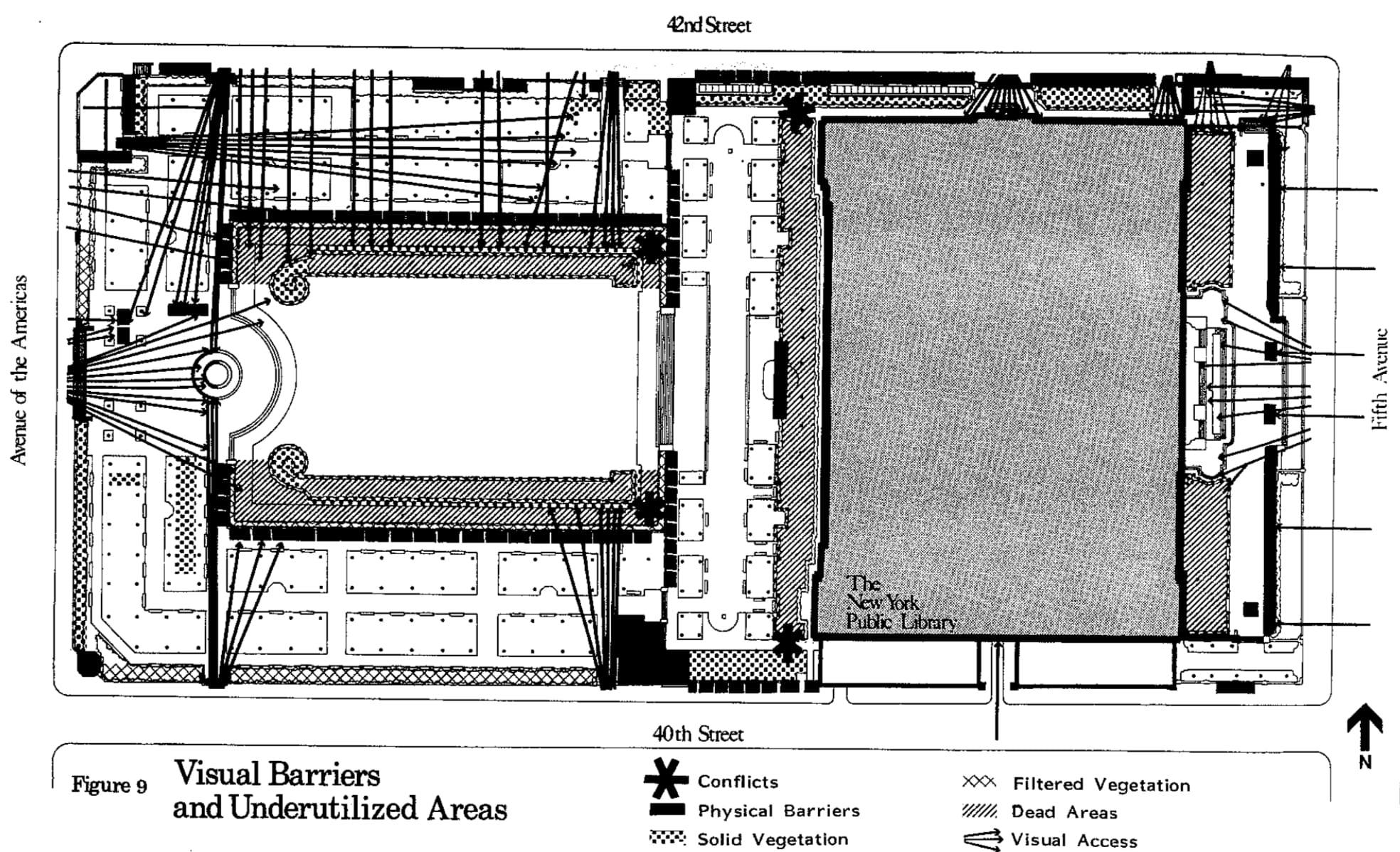
While the perimeter wall and fence could not be altered, the hedges behind the fences could be removed and low ivy planting beds added, so that passersby today can easily see into the park from the street. Entrance stairs were also permitted to be modestly widened and made more gracious and welcoming, while removing the dark, hidden corners that fostered the right conditions for illicit activities like drug dealing. Removing landscaping and redesigning the entrances has made the entire park more open and inviting.
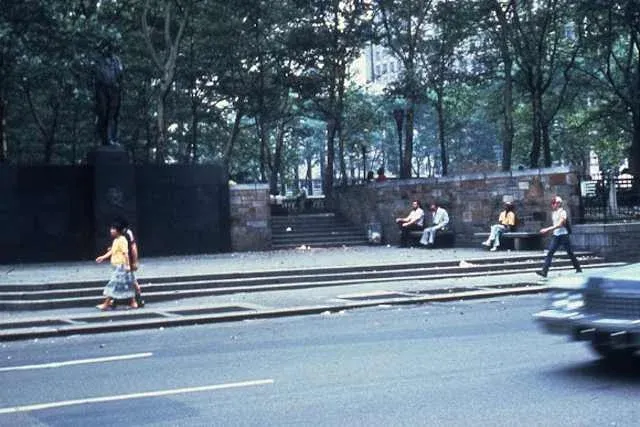
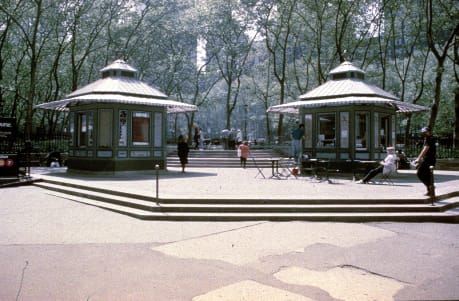
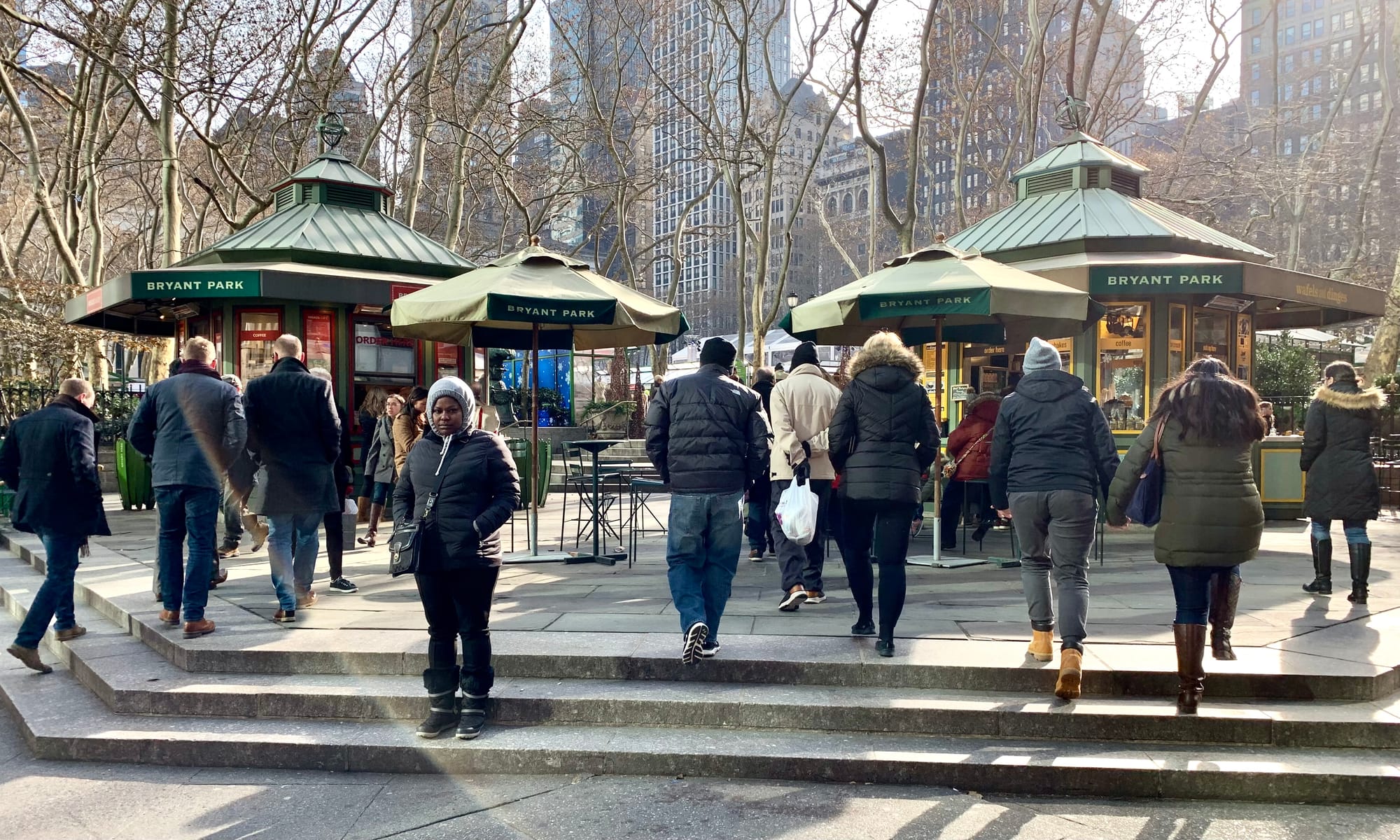
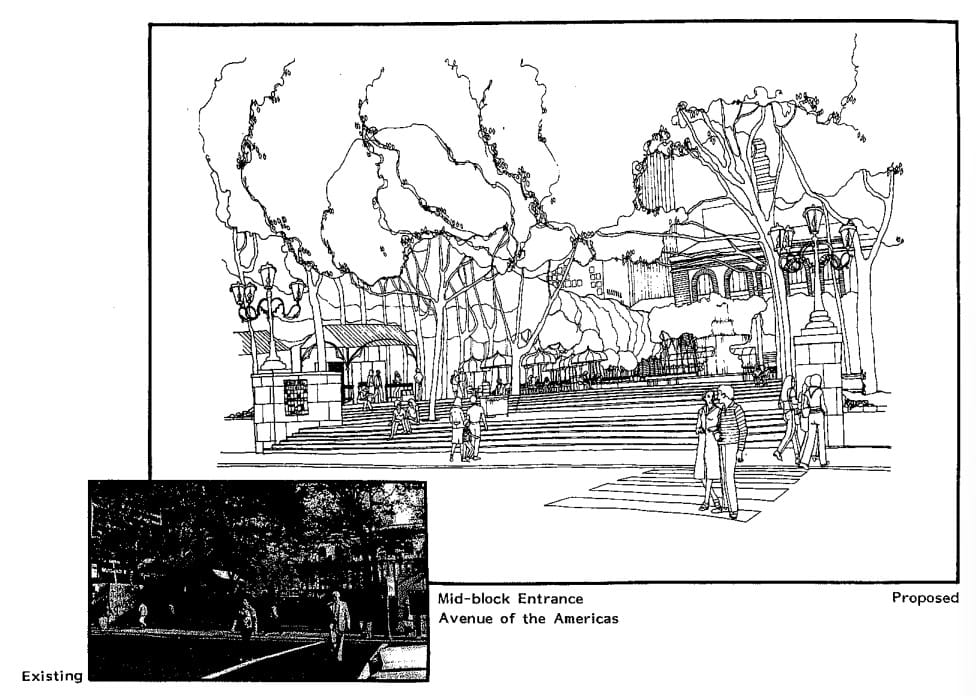
A new entrance at the corner of 42nd Street and Avenue of the Americas was one of the most dramatic design changes. In addition to widening this entrance and taking down walls, food kiosks and cafe seating were added. These activities "reach out" to people on the street and invite them in, while also creating an informal security presence at a key location where drug dealing once flourished.
Entrance at 42nd Street and Avenue of the Americas before:
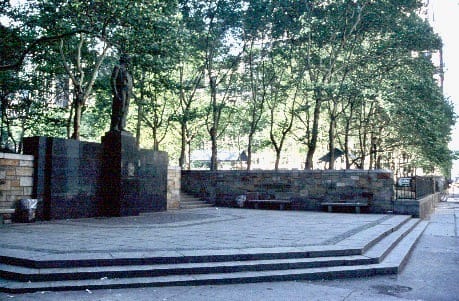
Entrance at 42nd Street and Avenue of the Americas after:
Focal Points
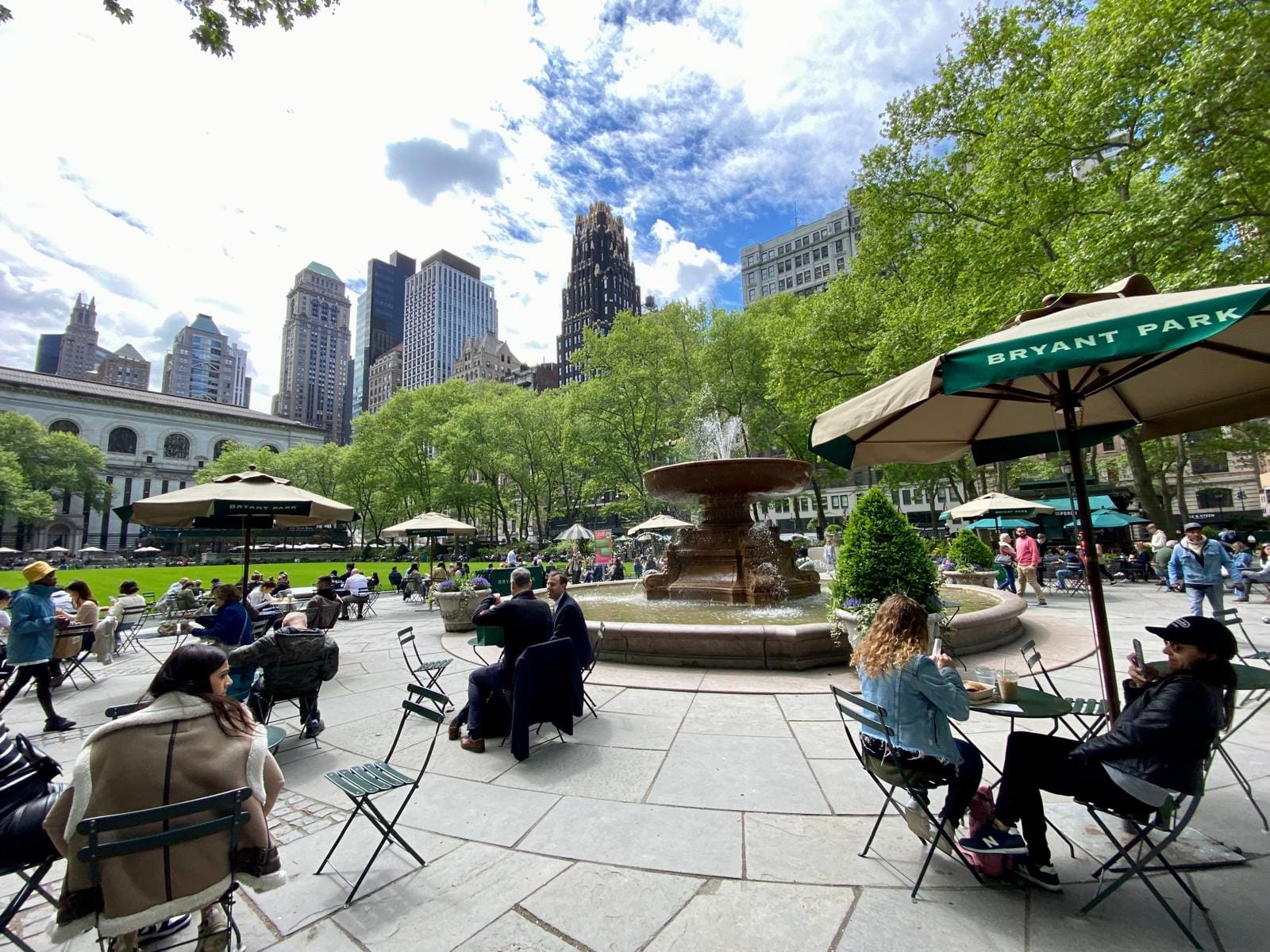
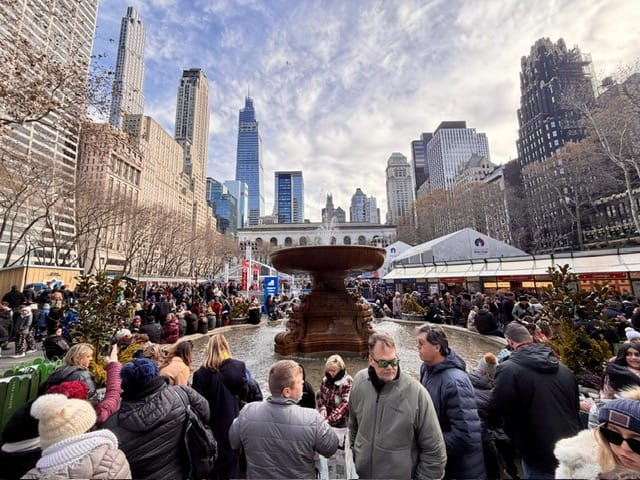
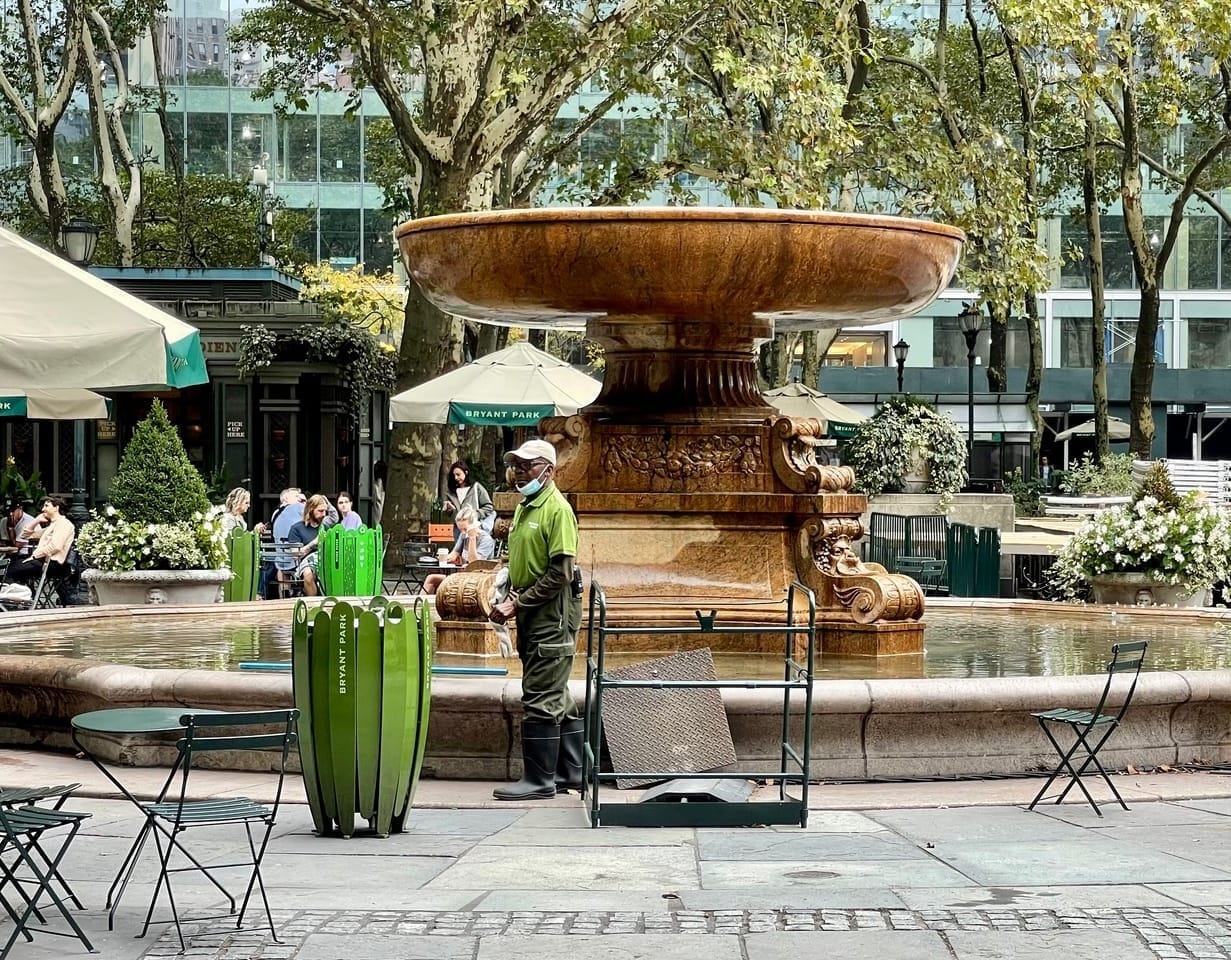
Highlighting the park's existing focal points and adding more of them was another important change to make the park more visitor-friendly. The fountain has been in Bryant Park since the beginning and naturally attracts people, as such landmarks – especially water features – always do. But without places to sit in its vicinity, it was just something to take a photo of and move along. Once seating and refreshment areas were added around it, the fountain became a true destination, gathering point, and a defining feature of the park.
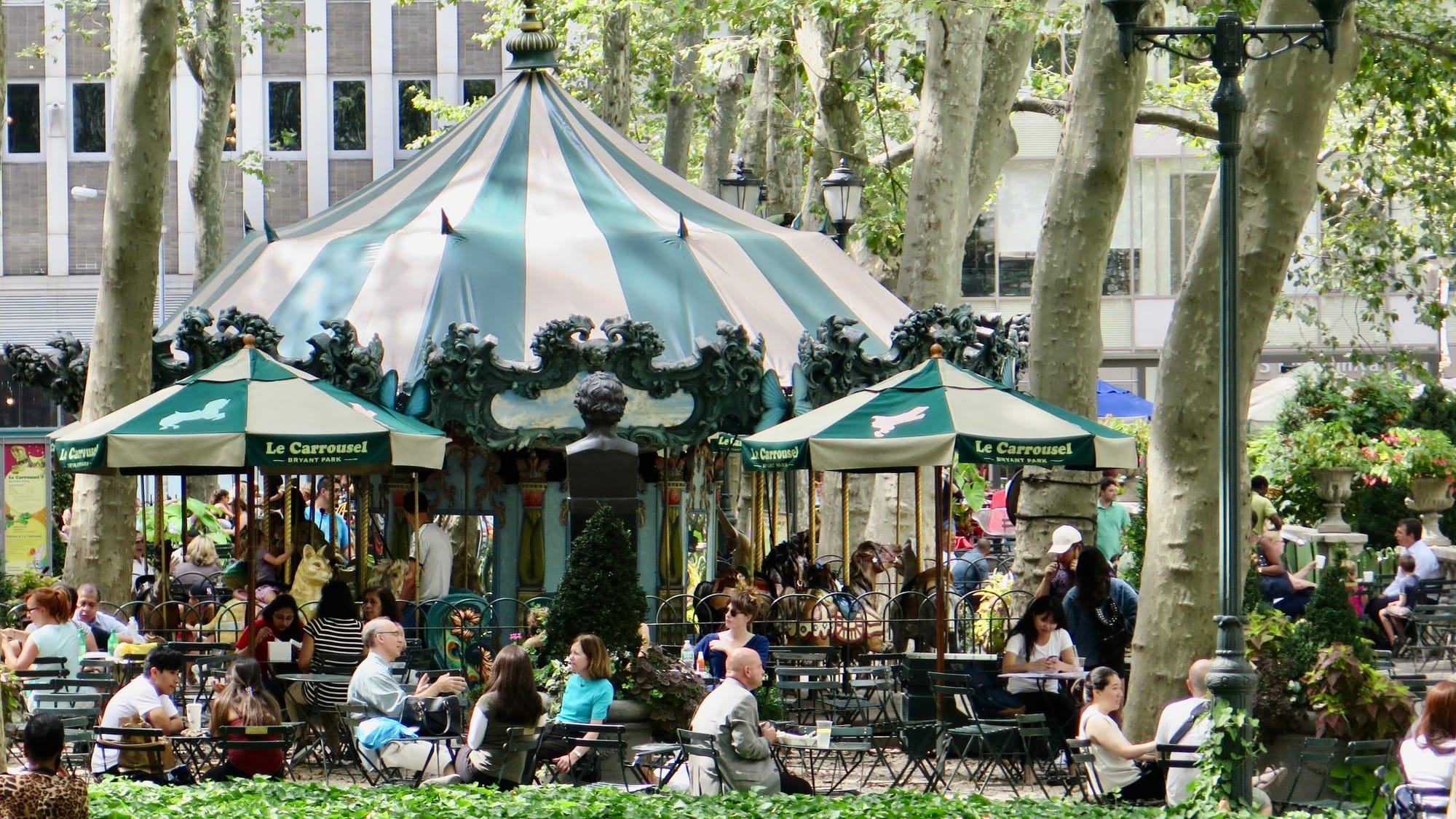
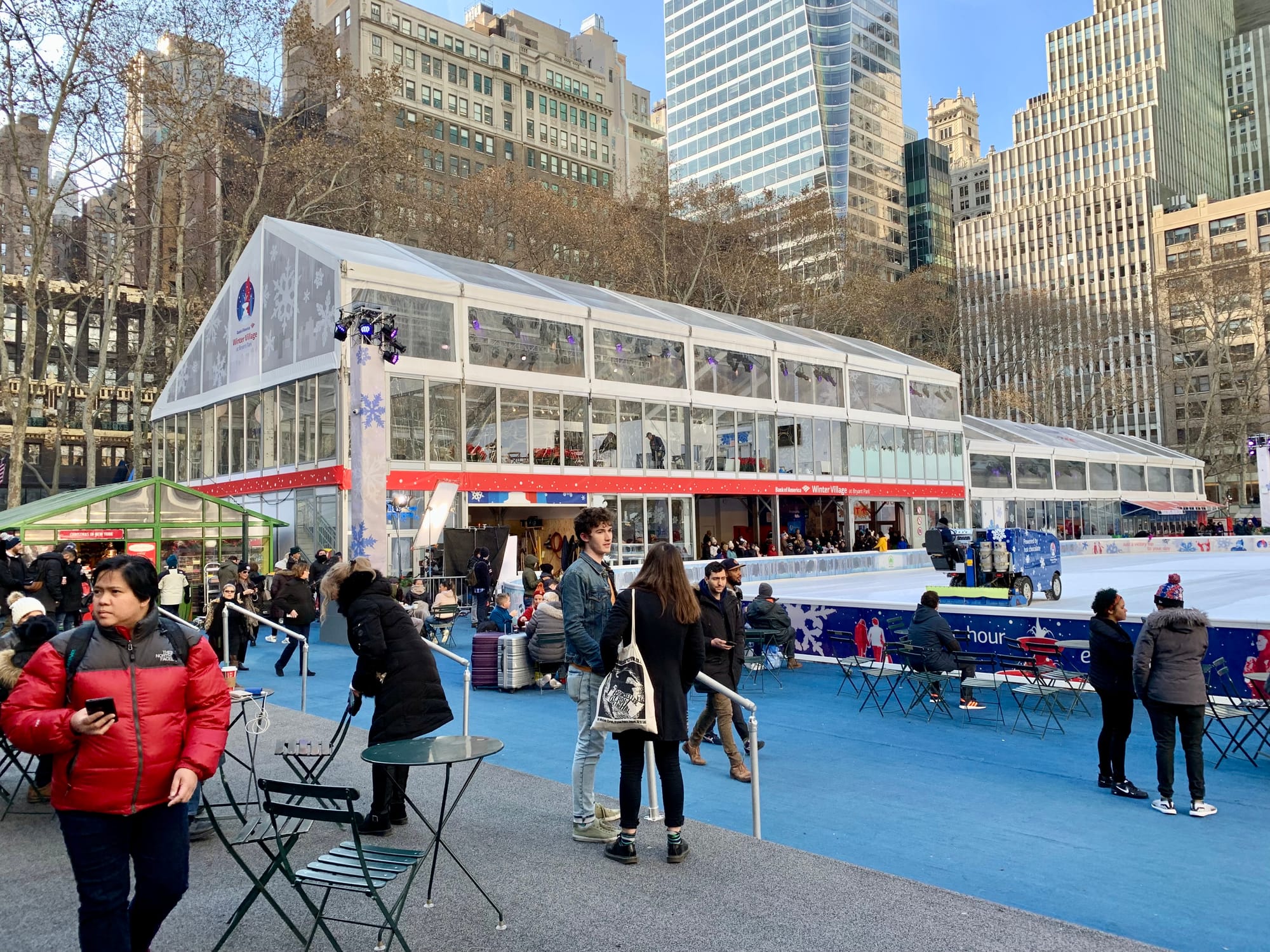
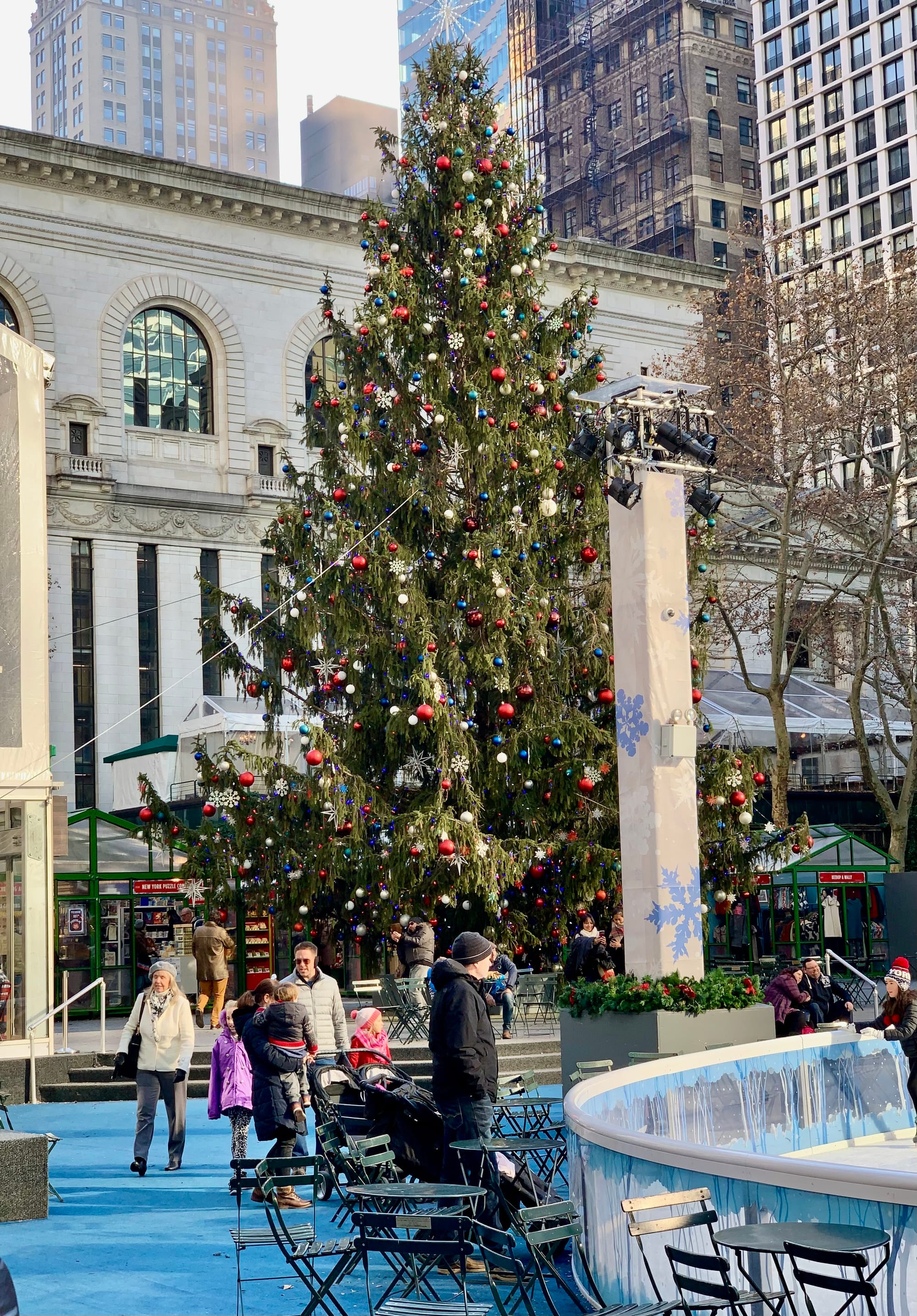
Other focal points in the park include the picturesque carousel that people of all ages love to hop on year-round, the monument by the library, and temporary focal points like the Winter Lounge and Christmas tree during ice skating season.
Amenities
The key to making places great is to fill them with amenities that make people want to be there. Amenities add comfort, pleasure, convenience, safety, and joy to a place. If a public space is just a field, as Bryant Park initially was and as so many parks today still are, then it offers nothing that makes people want to go and spend time there. Amenities are what draw us into a space and inspire us to stick around. Bryant Park has many.
Seating
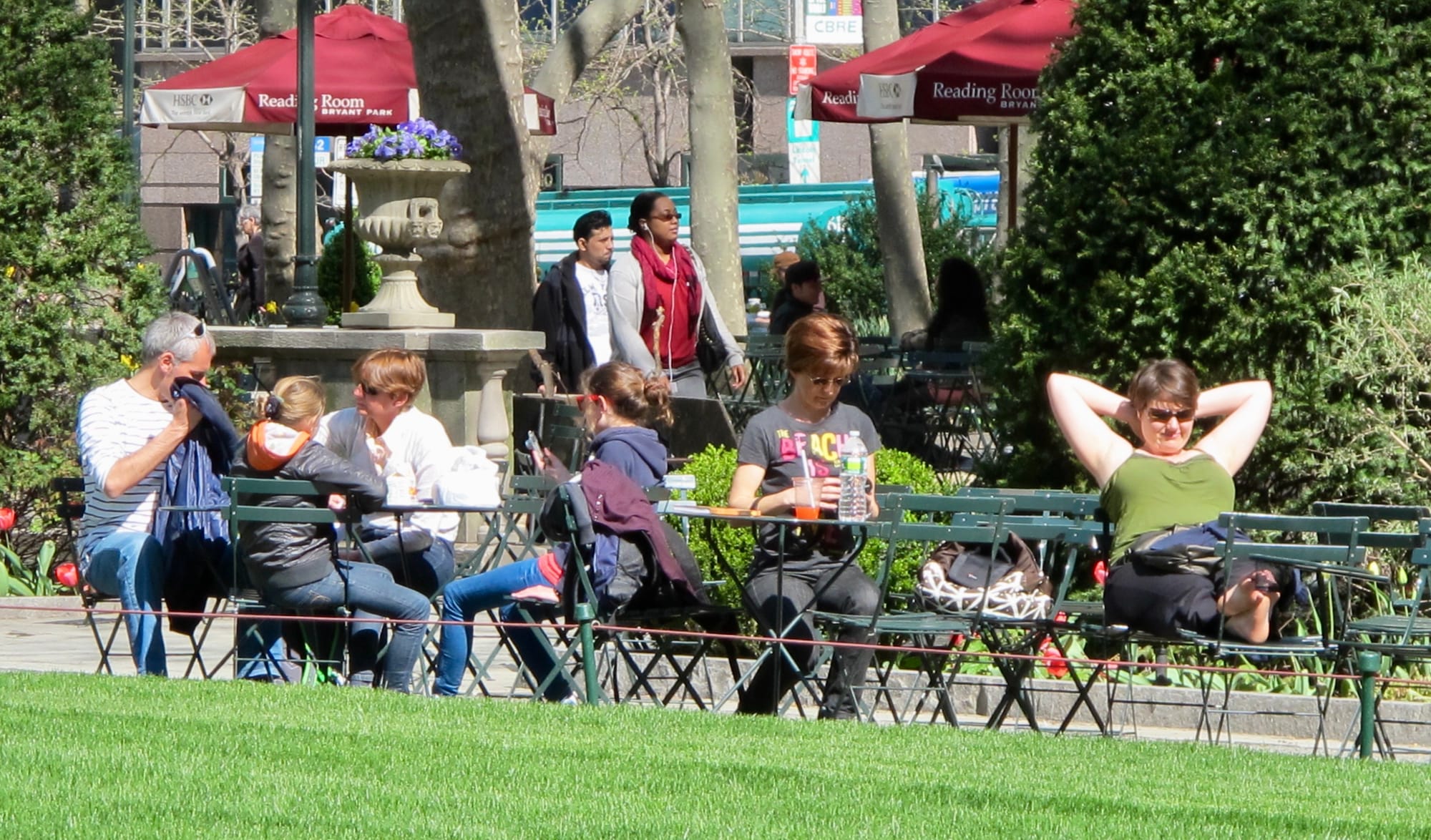
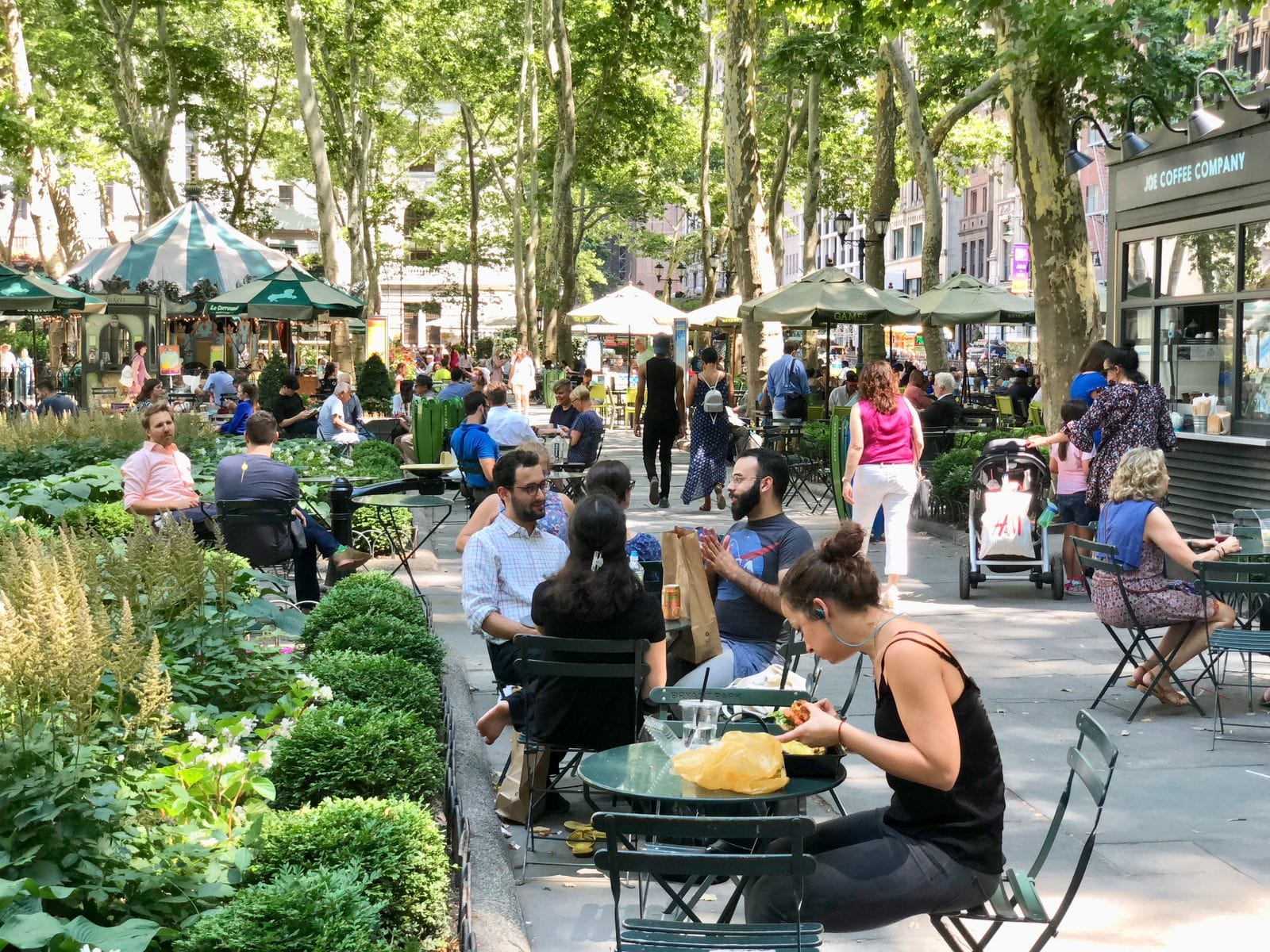
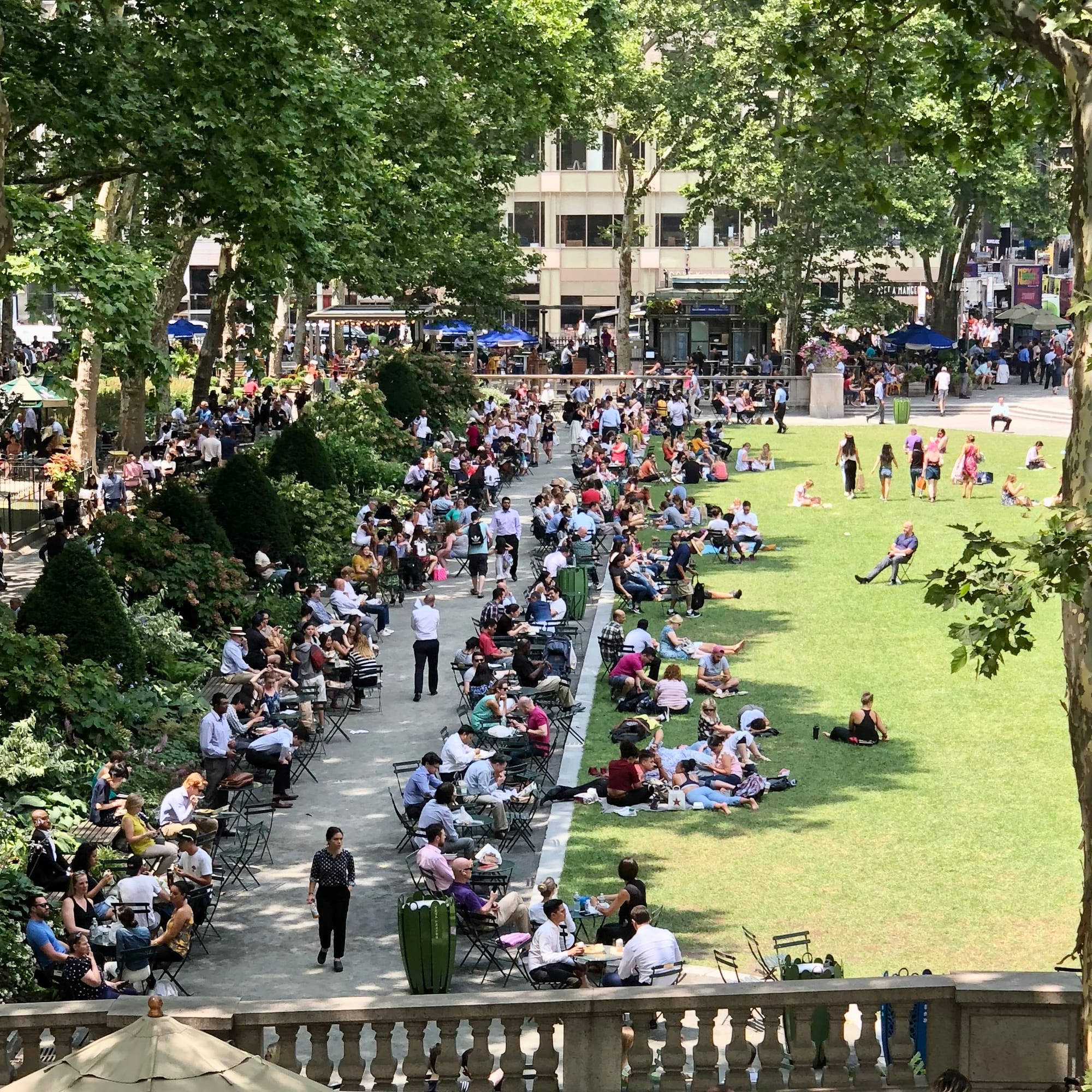
Inspired in part by Luxembourg Gardens in Paris, Bryant Park's movable seating is one of its most iconic and beloved amenities. The park chairs, because they are lightweight and easily movable, give people the flexibility to sit wherever and however they want. Their green color blends in nicely with the greenery of the park, and their design is aesthetically pleasing and comfortable. The chairs have transformed the park from a place to walk through into a place to linger and meet in.
Cafés, bars, and restaurants
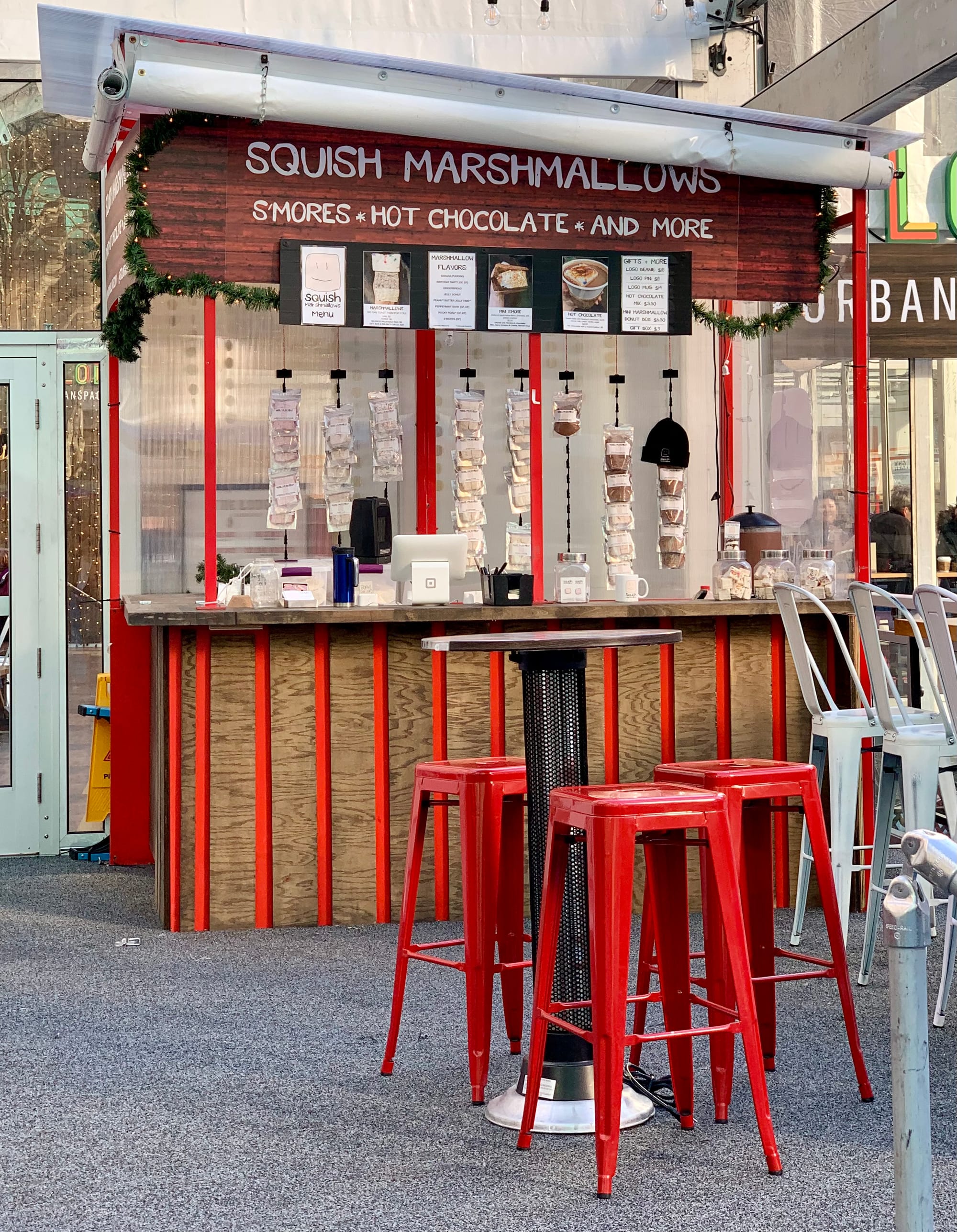
One of the things people most like to do when they are out and about is get a treat to eat or drink. What's more enjoyable than getting a hot cocoa on a cold day or an ice cream on a hot one? When you add food and refreshment options to a public place, you almost always attract visitors.
In Bryant Park, a variety of cafés, bars, kiosks, and restaurants have been set up for every mood and season. These spots are located in places that in the 1970's were abused and underused spaces; the goal was to animate and draw positive activity to these areas. PPS sometimes joked that the drug dealers identified the good locations for retail, we just changed the mix.
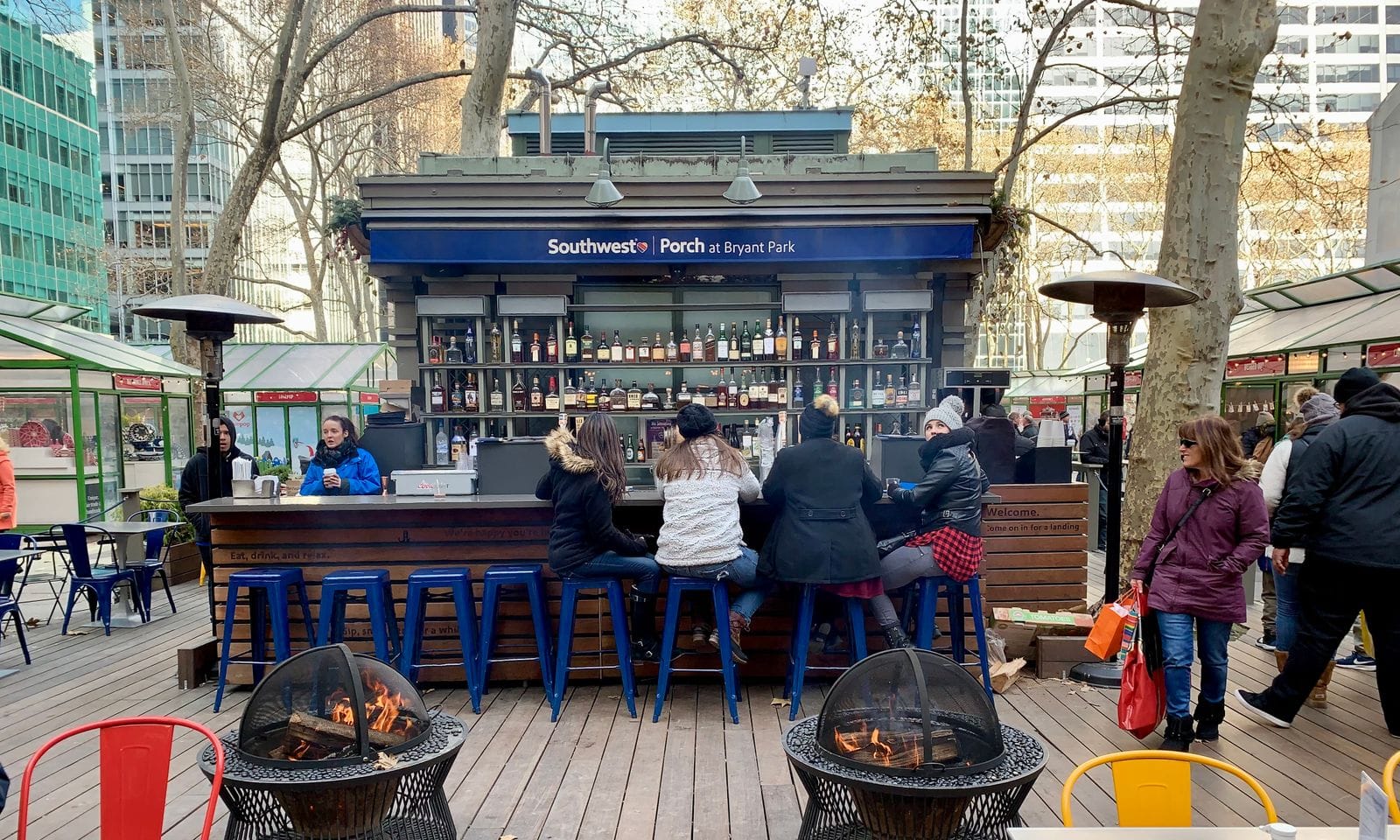
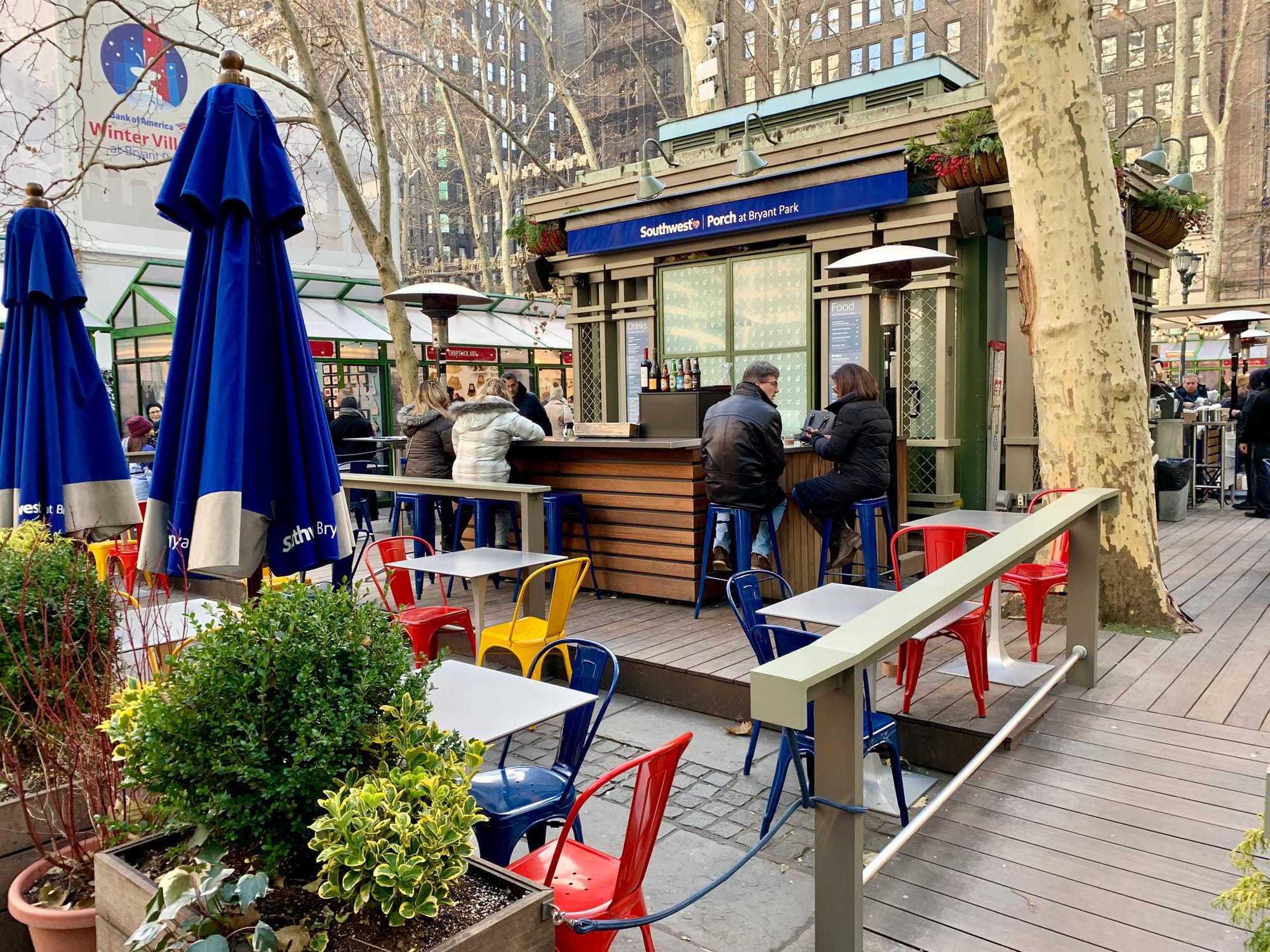
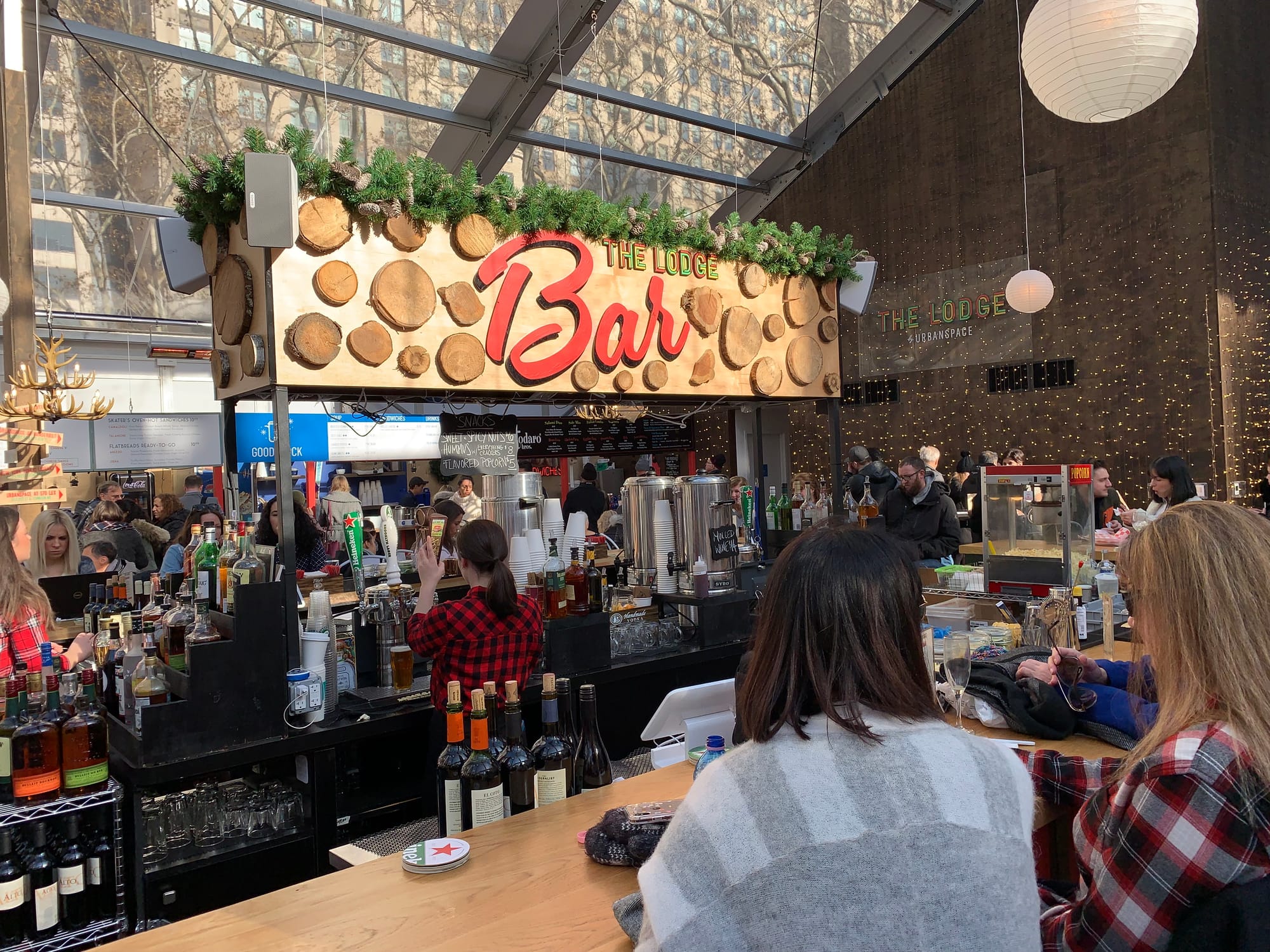
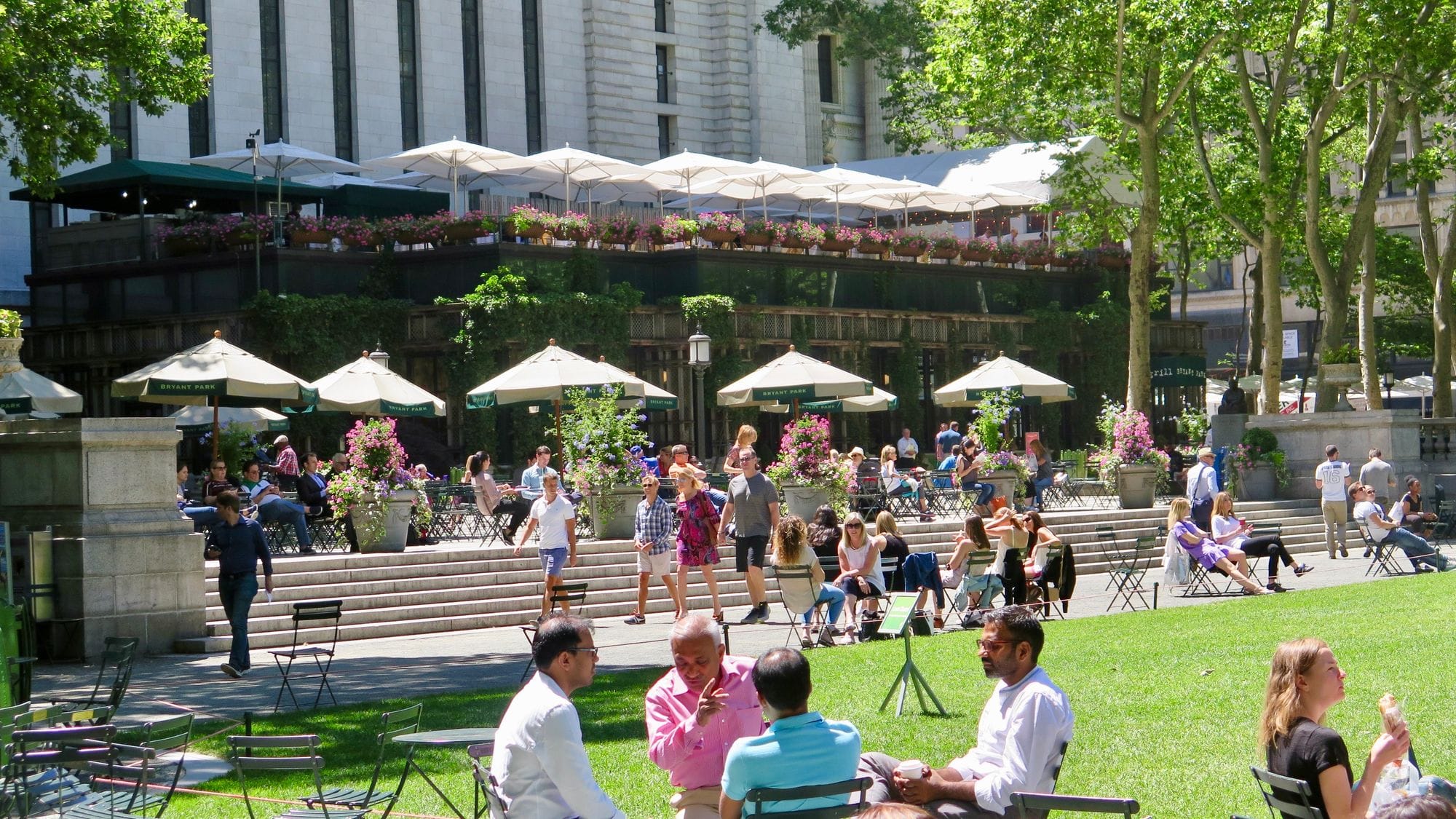
The restaurant by the rear of the library is a key anchor and one of the park's major focal points. What's more, a portion of its profits (as with all concessions in the park) goes toward managing and maintaining the space. This is a great strategy to fund the upkeep of a public place and create a symbiotic relationship between the public and private realms, both of which benefit from increased visitation.
Shade
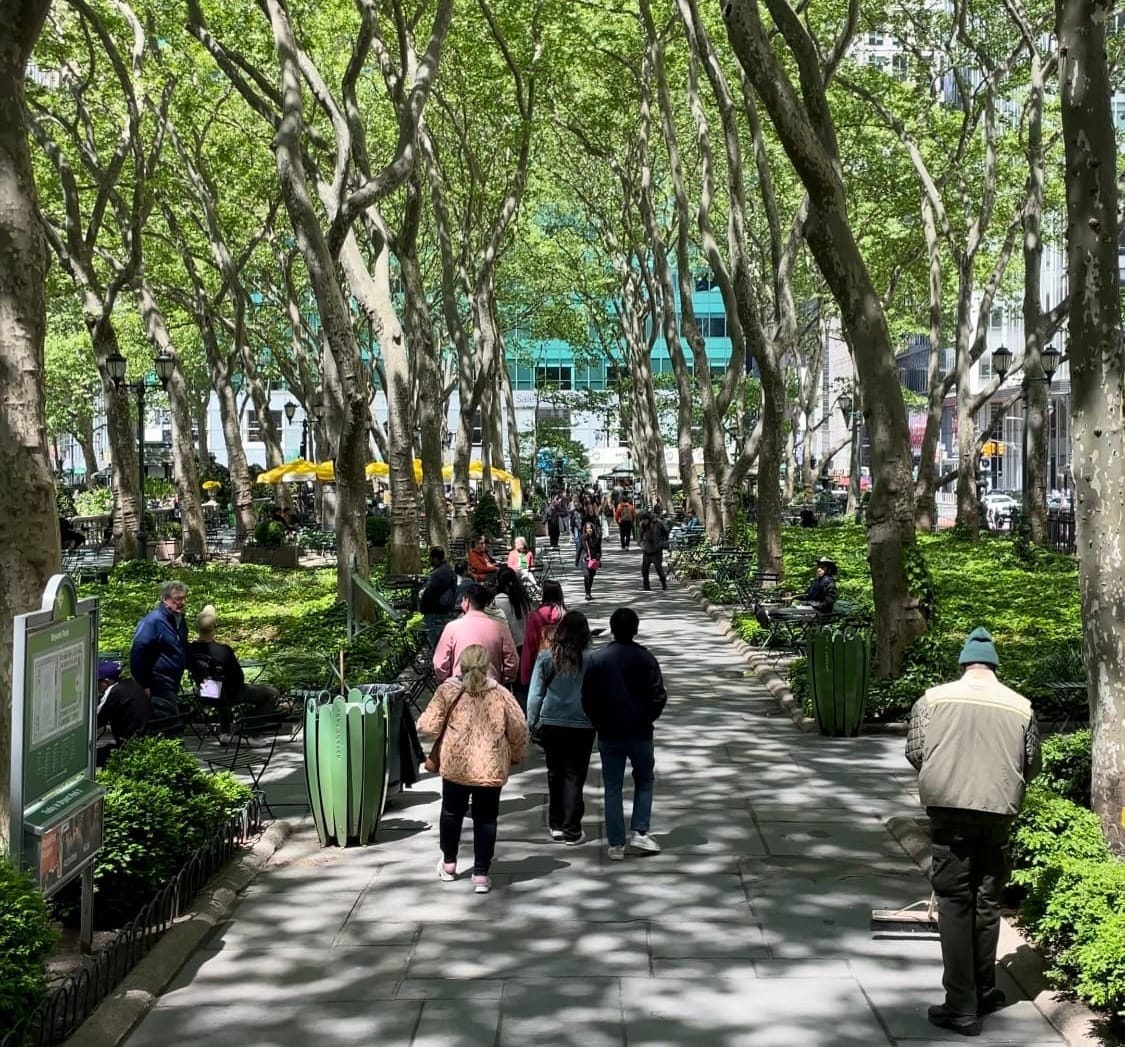
Bryant Park's ample trees create a refreshing and enjoyable atmosphere. Without them, the sun would relentlessly beat down on visitors, discouraging people from spending time outside. Movable chairs and tables under the trees along the alleys let people choose whether to sit in the sun or shade, so they can feel comfortable enjoying the park from morning to evening, summer to winter.
"The" Bathroom
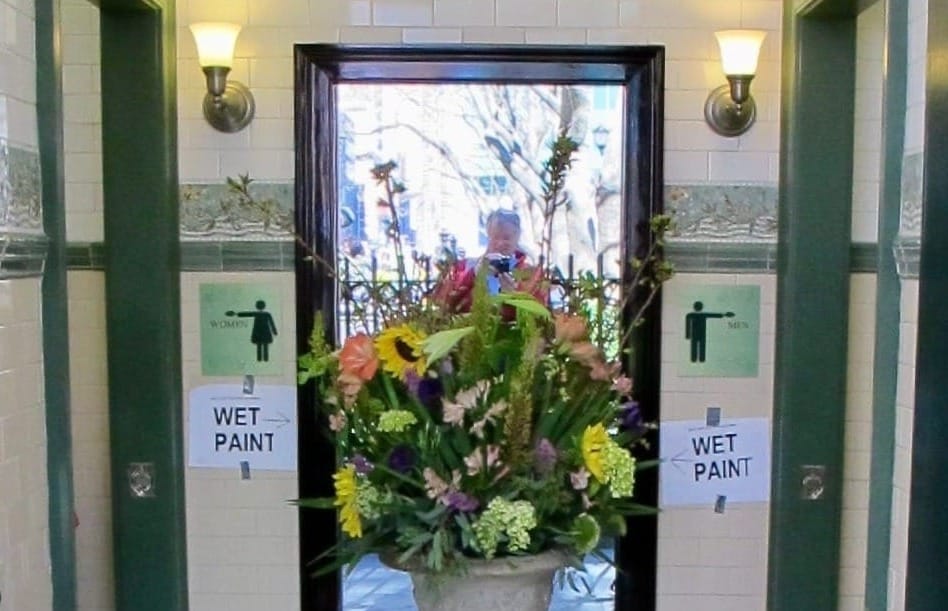
An often-overlooked but incredibly important amenity in public spaces is the bathroom which makes it possible and comfortable for people of all ages to spend a longer time in a place. Bryant Park's bathrooms are incredibly clean and pleasant and are widely known as the best public bathrooms in the city, for good reason.
Park Programming
At the heart of a great public space is programming. People don't only want to look at things like a fountain or consume things like coffee, they want to experience things, especially together with other people. Concerts, competitions, dance classes, festivals, markets, etc. are all events that attract crowds. Activities are what bring people to a place and get them to return again and again. Programming year-round keeps a place busy and buzzing.
Bryant Park is one of the best examples of this principle in action. Today, Bryant Park is a flourishing public space, largely because it is programmed year-round from top to bottom.
The Bryant Park Corporation experimented with Lighter, Quicker, Cheaper programming early on, discovering that it was possible to displace bad uses with good ones, such as eating ice cream, reading books, and relaxing with friends (a lesson we were learning at the same time in Exxon Mini-Park, just a few blocks away, which was a similarly abused space that was transformed with LQCs). Book stalls, food vendors, games, and various events such as concerts transformed Bryant Park from a place dominated by drug dealing into a hub of positive activity. In the beginning, the effect was only temporary, but these early interventions nurtured and informed the park's ultimate transformation.
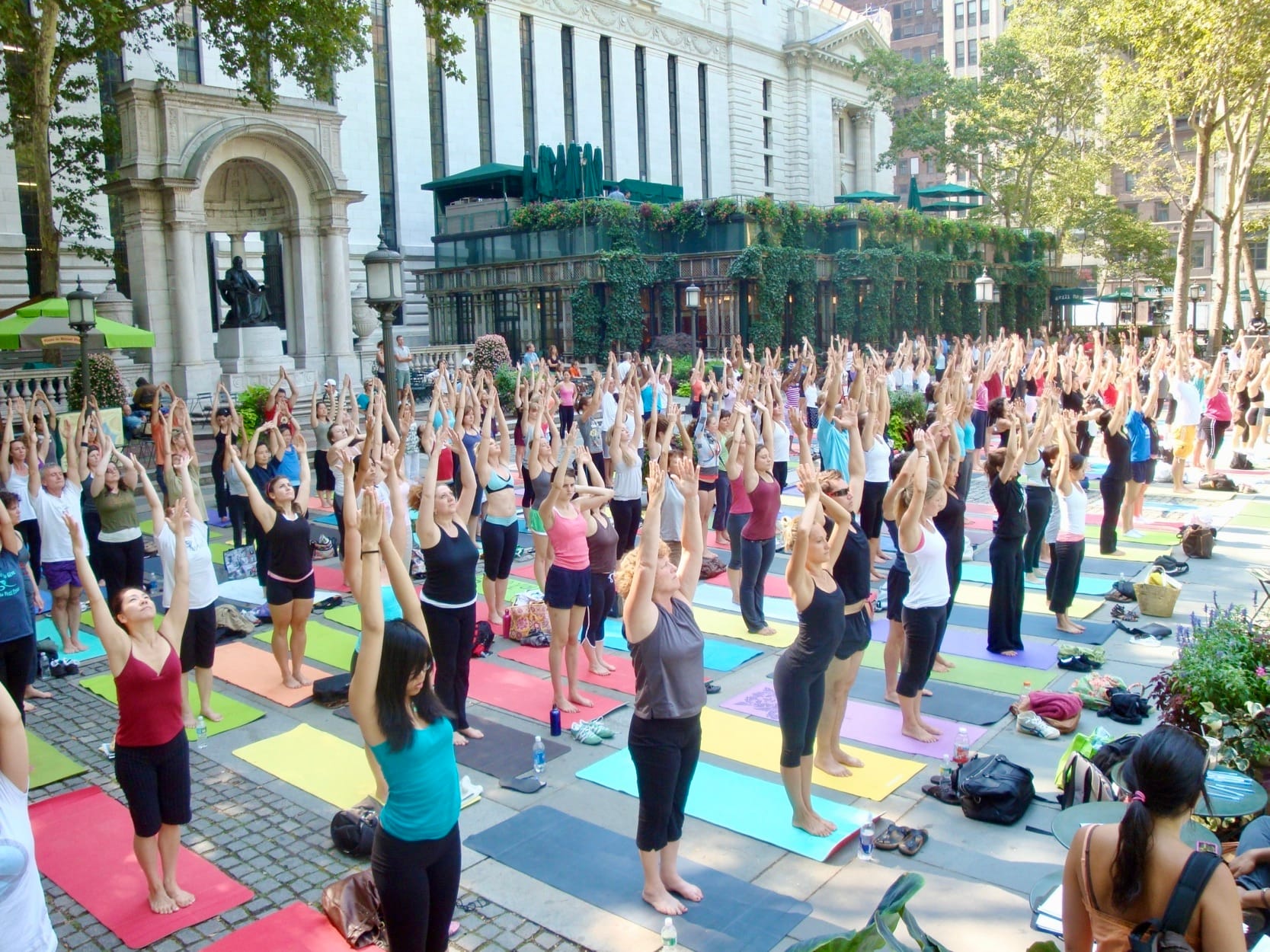
Concerts
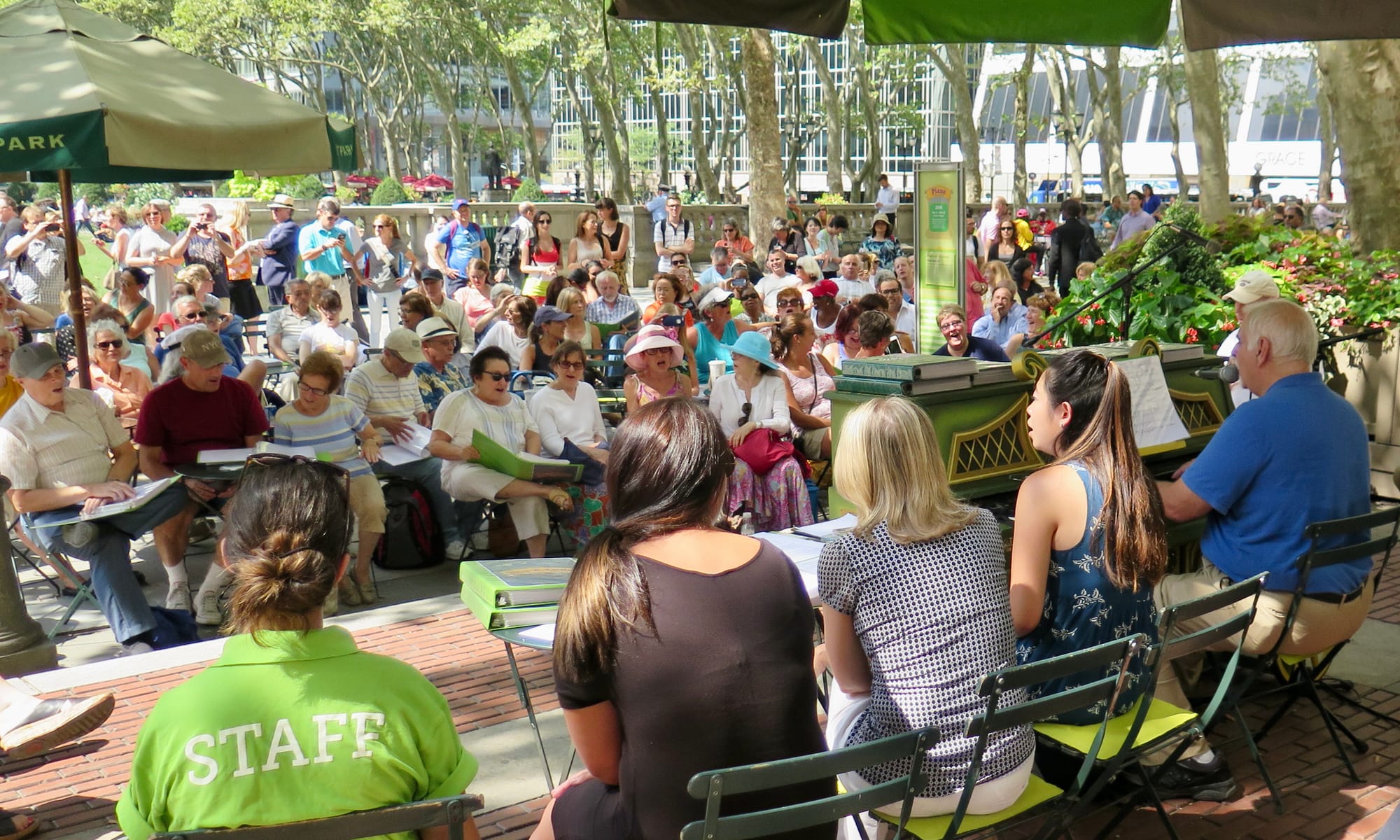
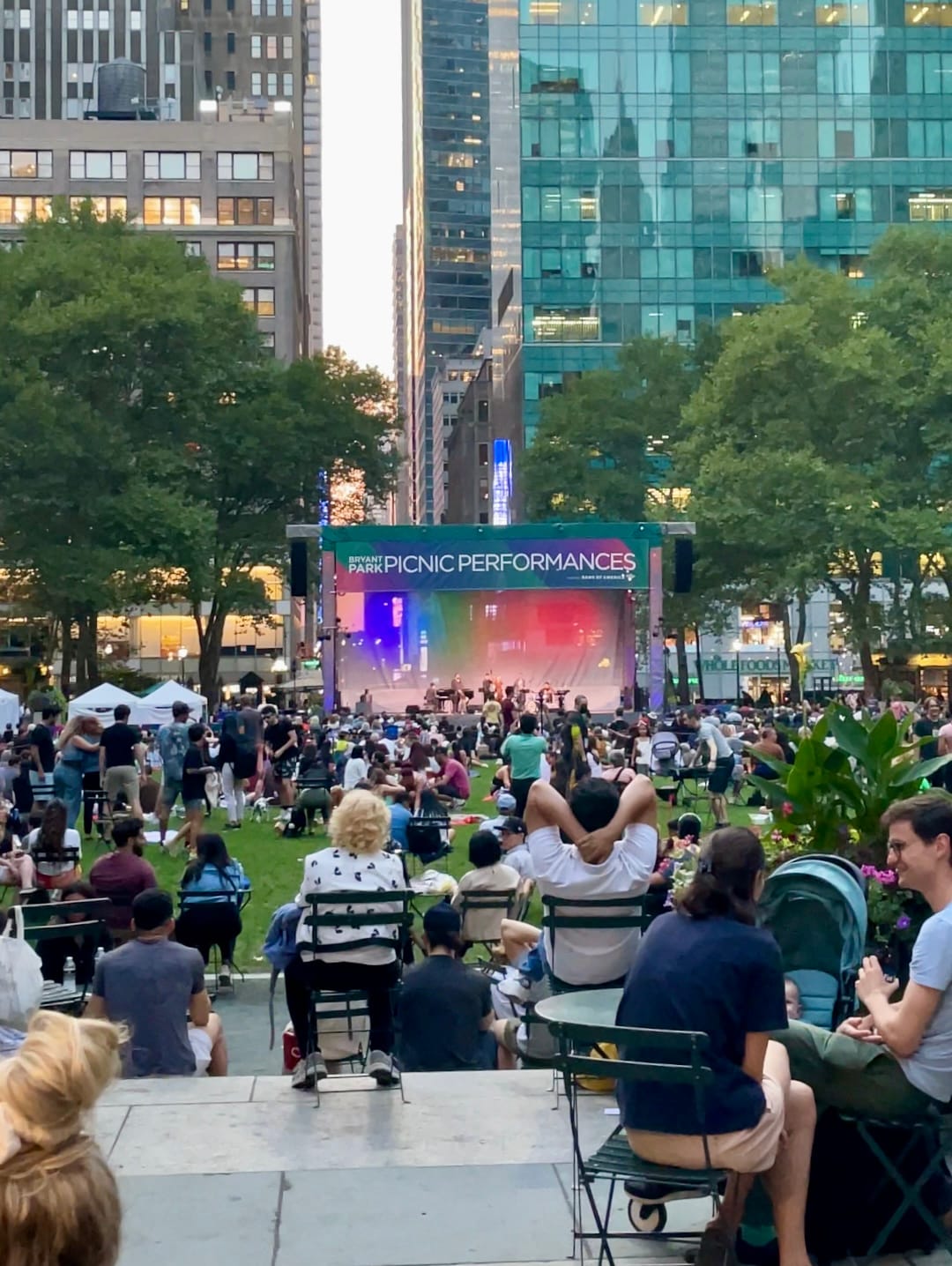
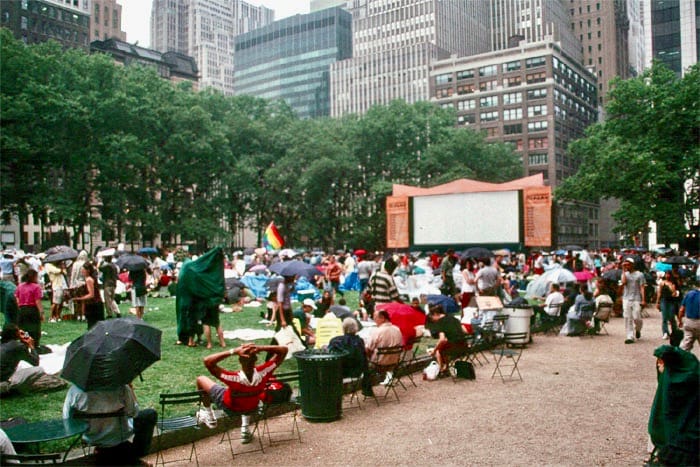
The summer marks movie and concert season in Bryant Park. A huge stage is set up on the great lawn, and signs display a packed schedule of screenings and performances. When the weather is nice (and even when it isn't), the park is packed with excited attendees. People bring picnic blankets and snacks and enjoy a memorable show among friends, family, and neighbors.
Holiday market
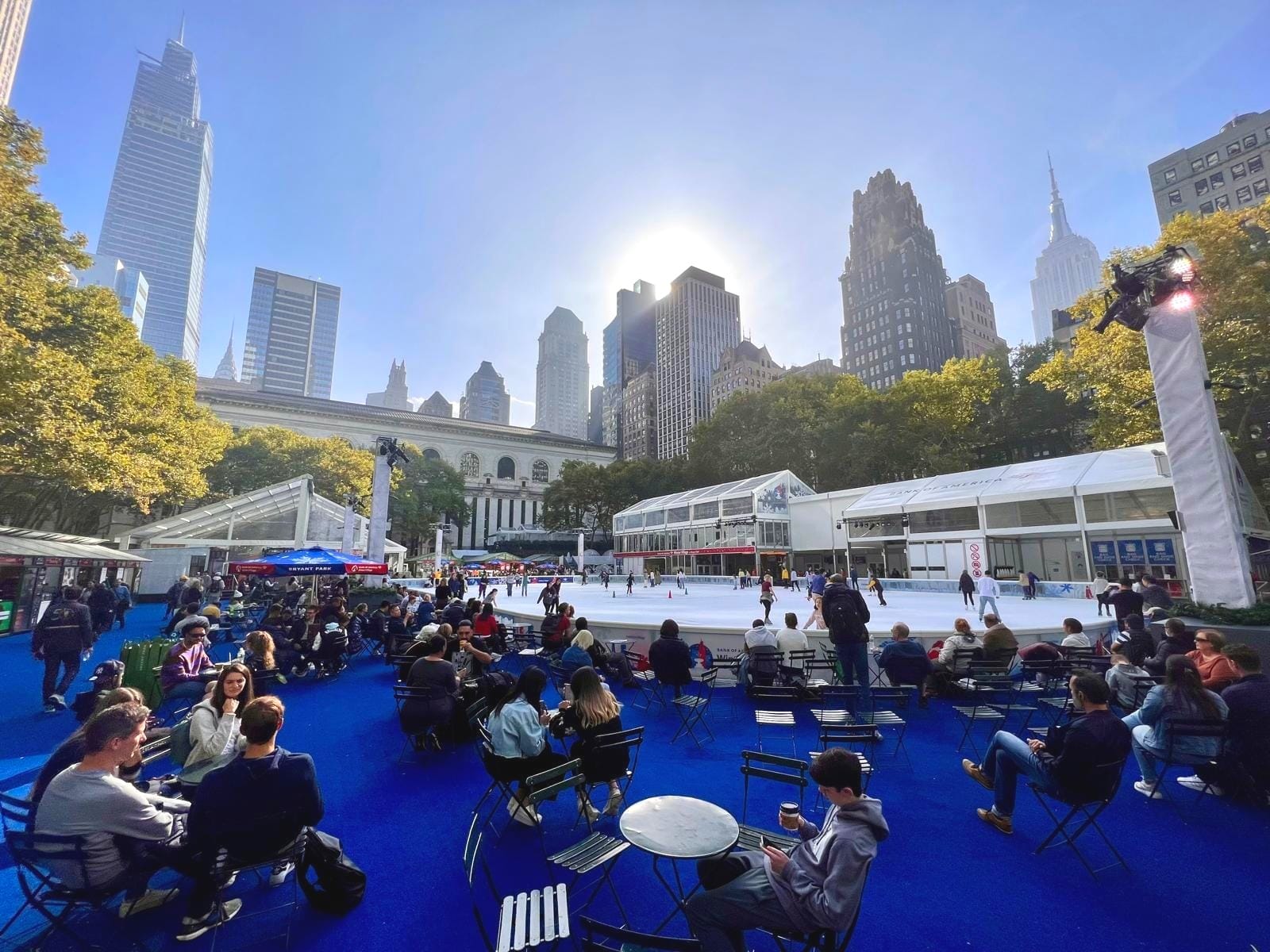
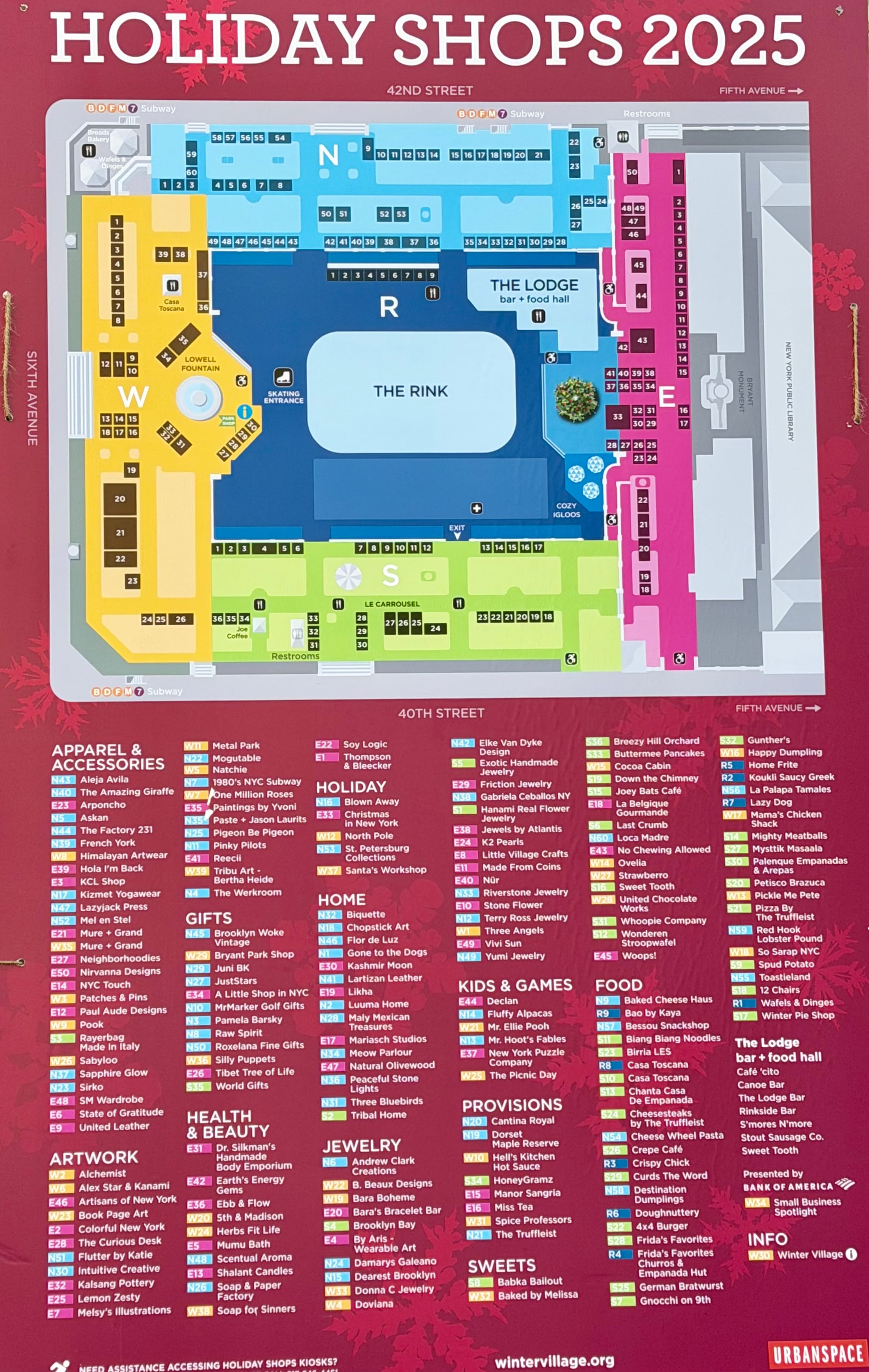
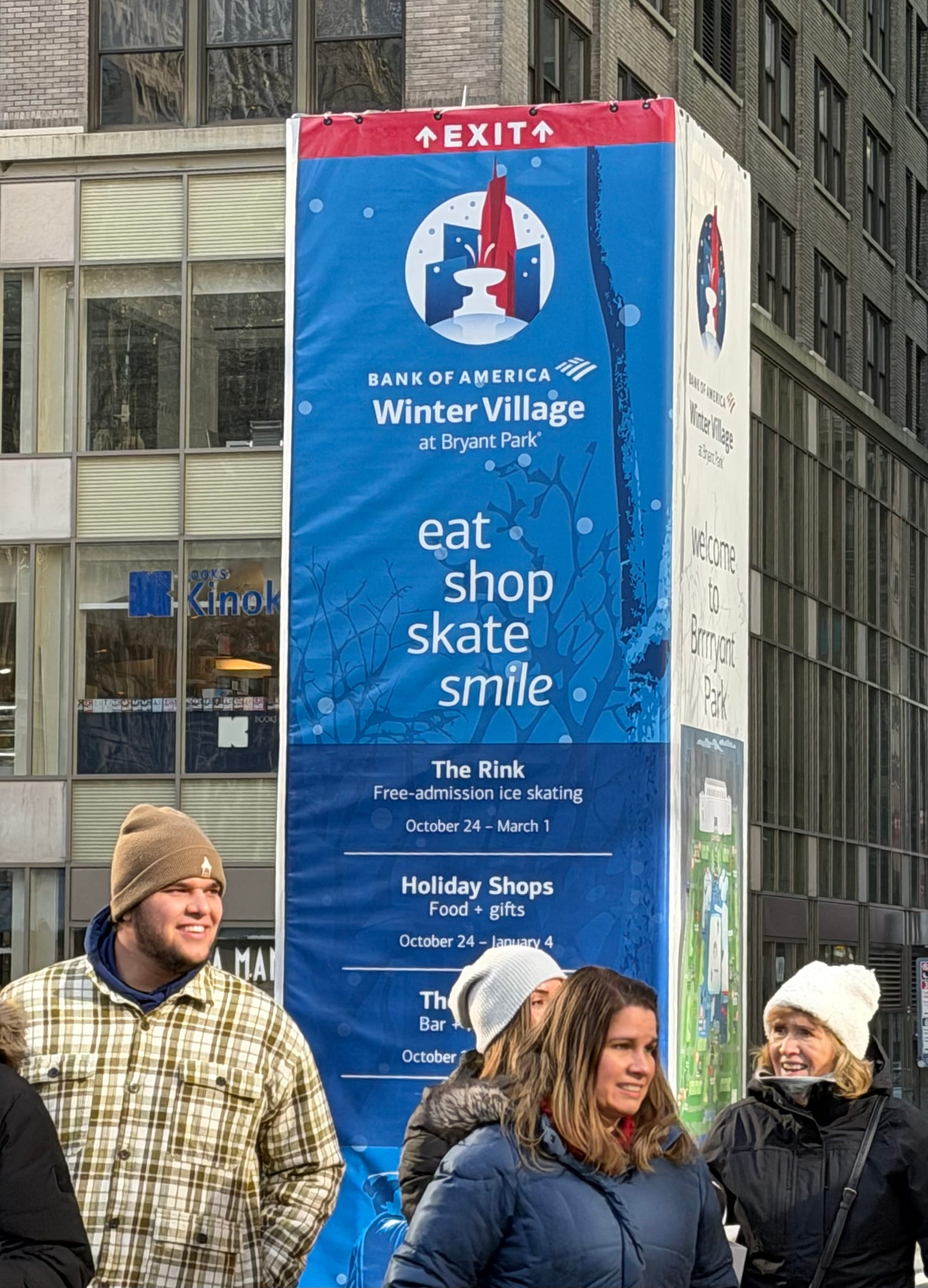
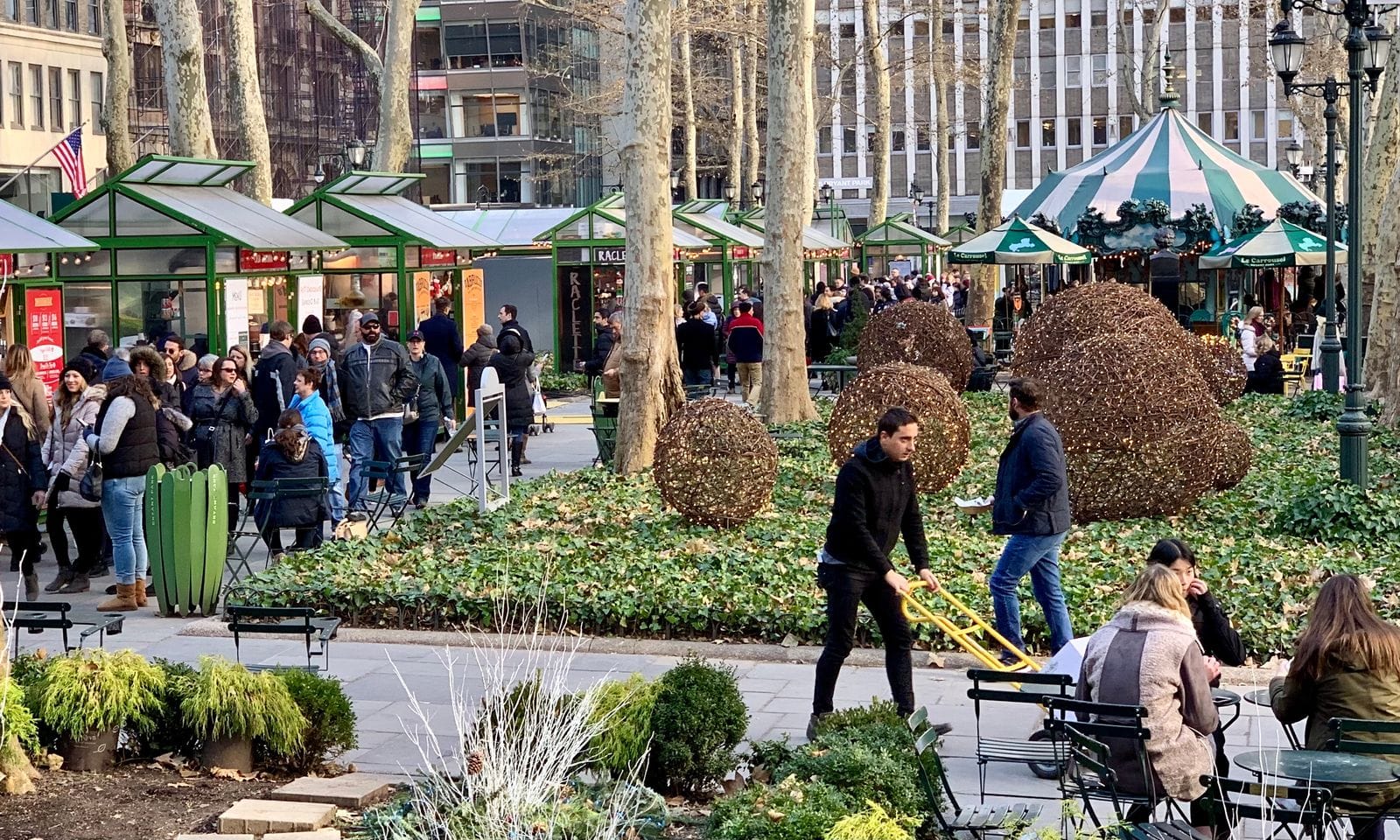
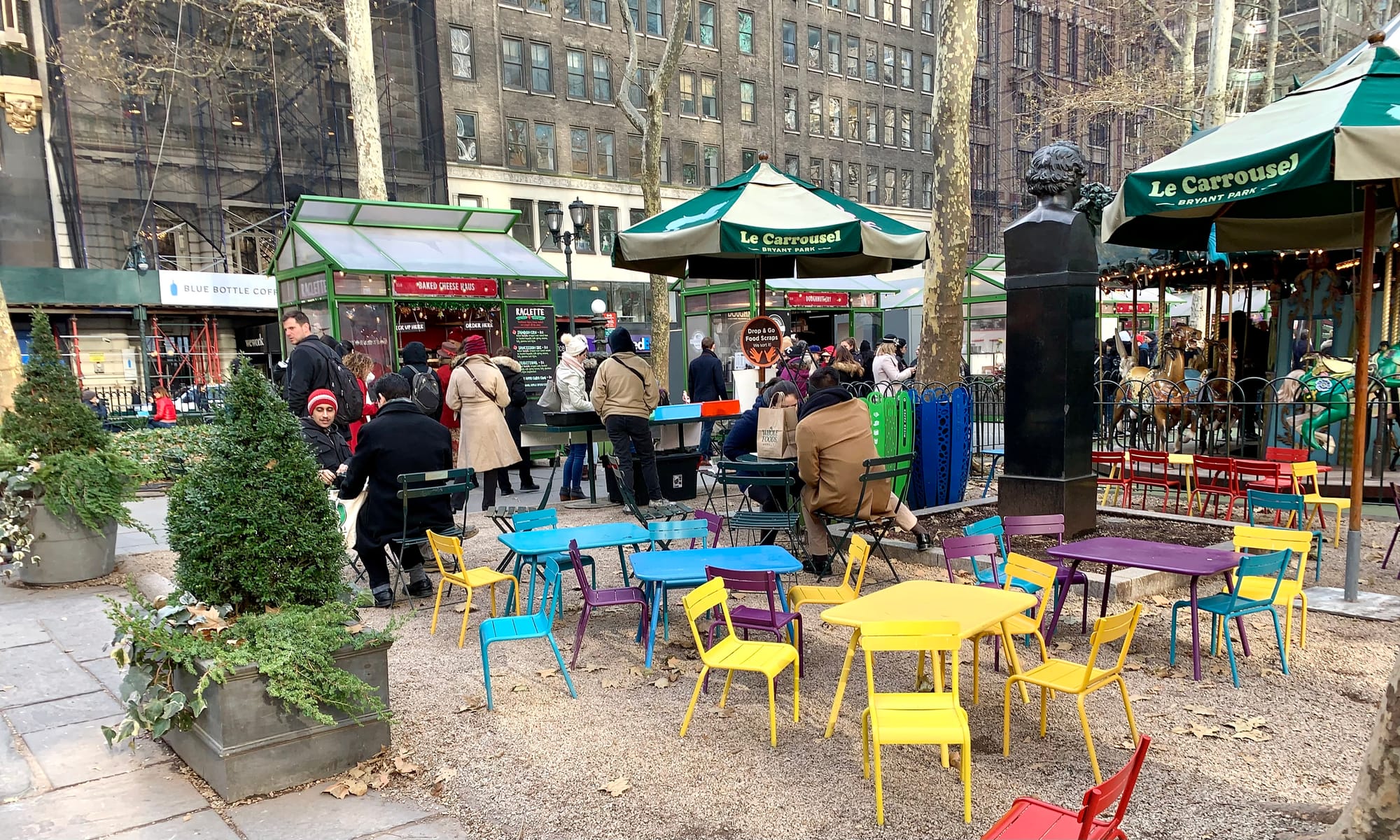
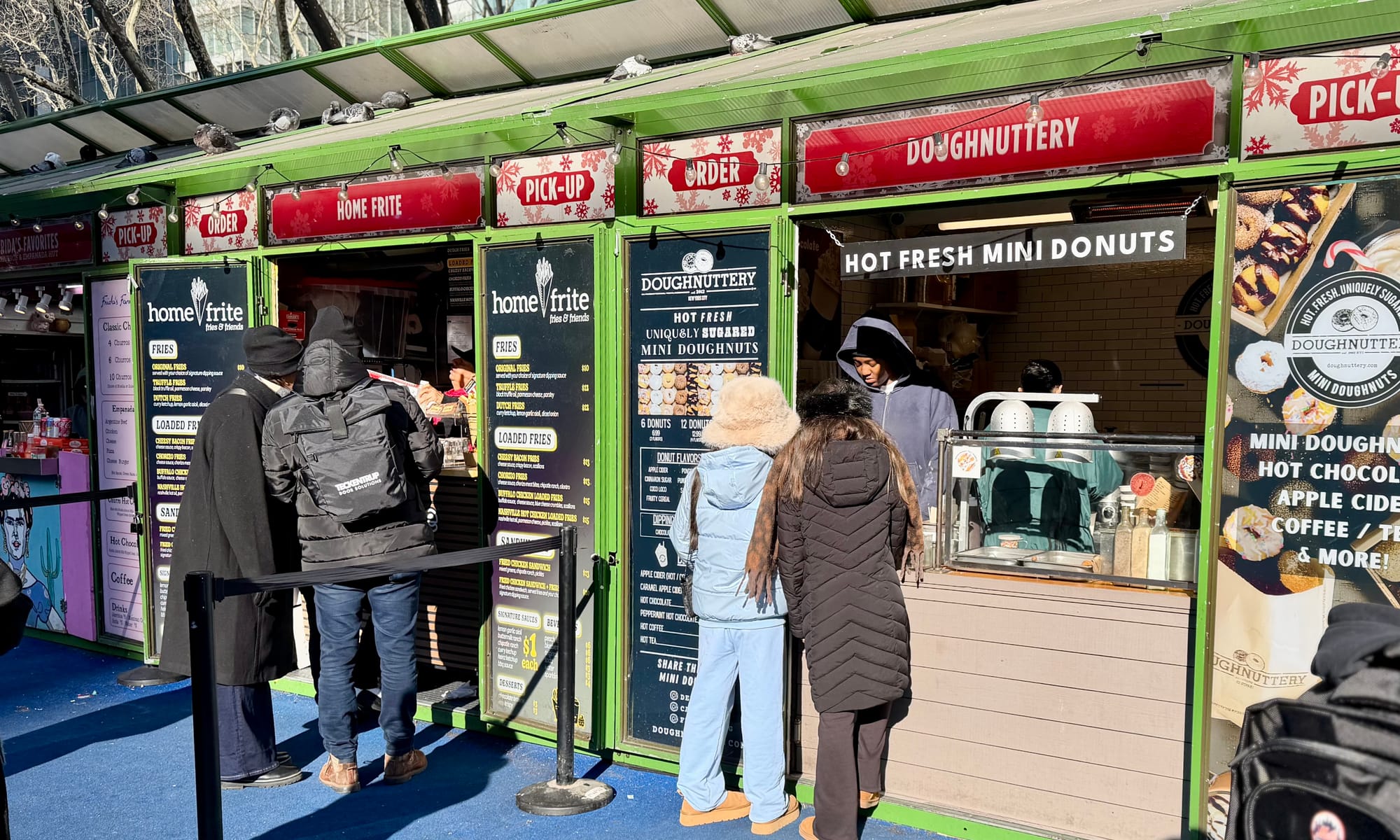
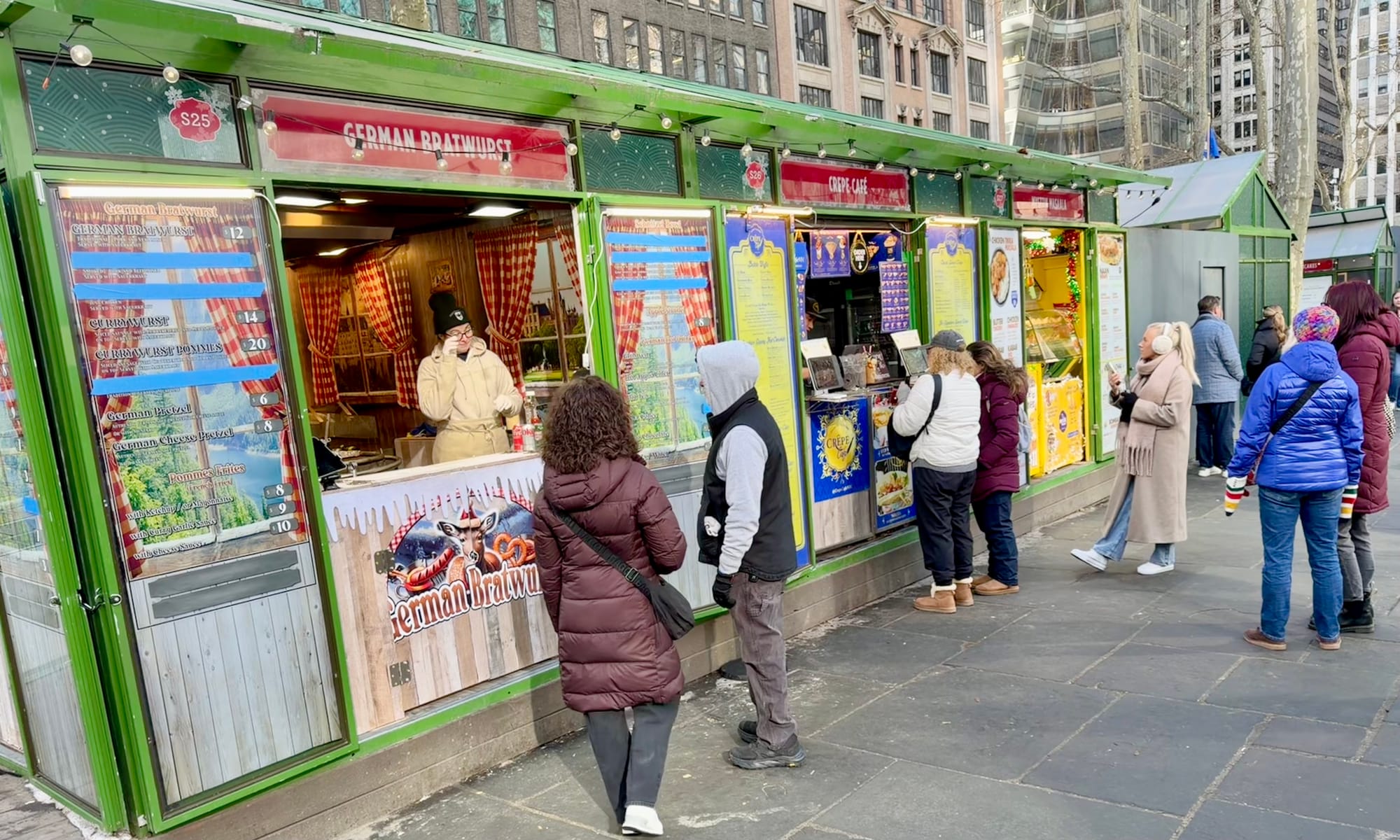
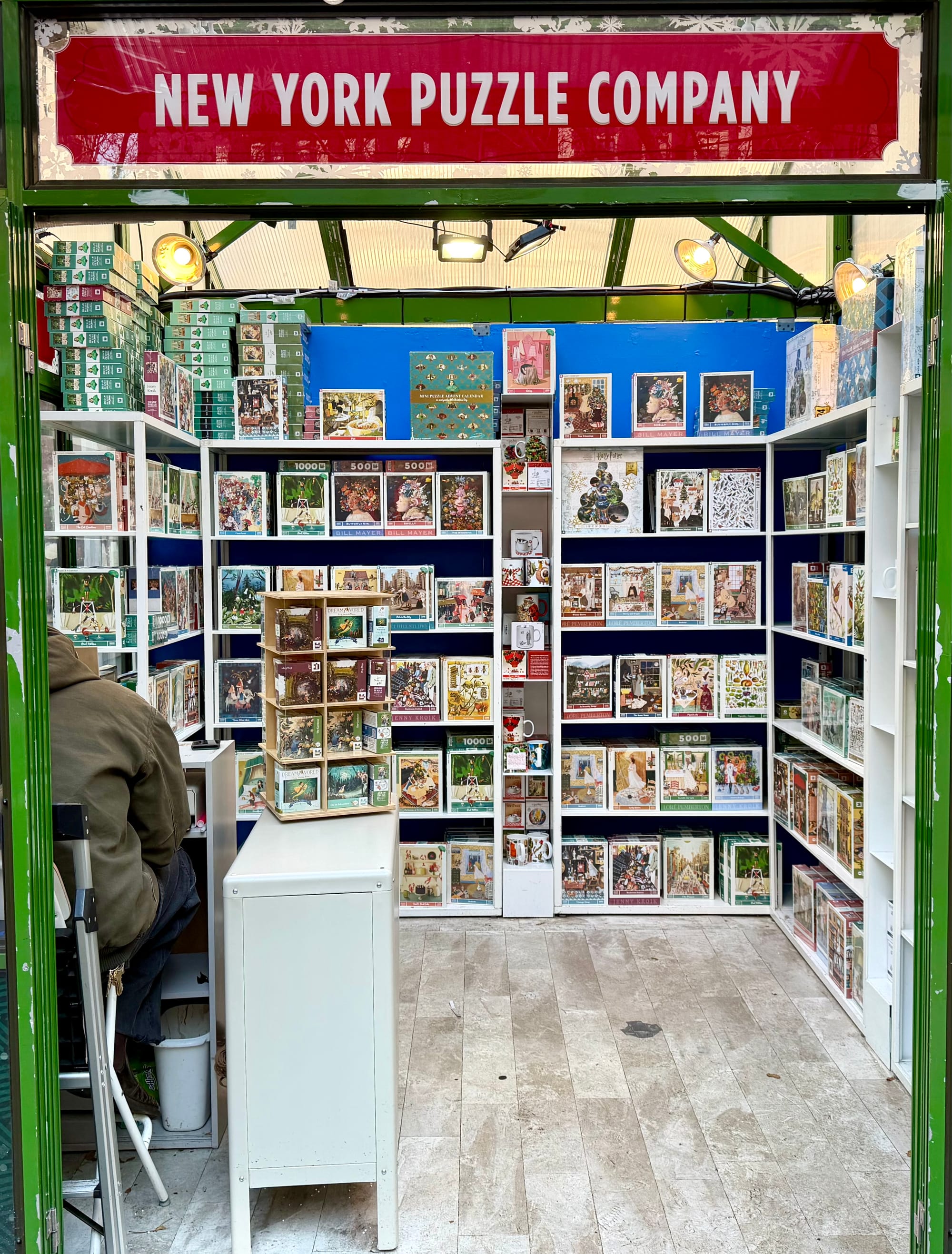
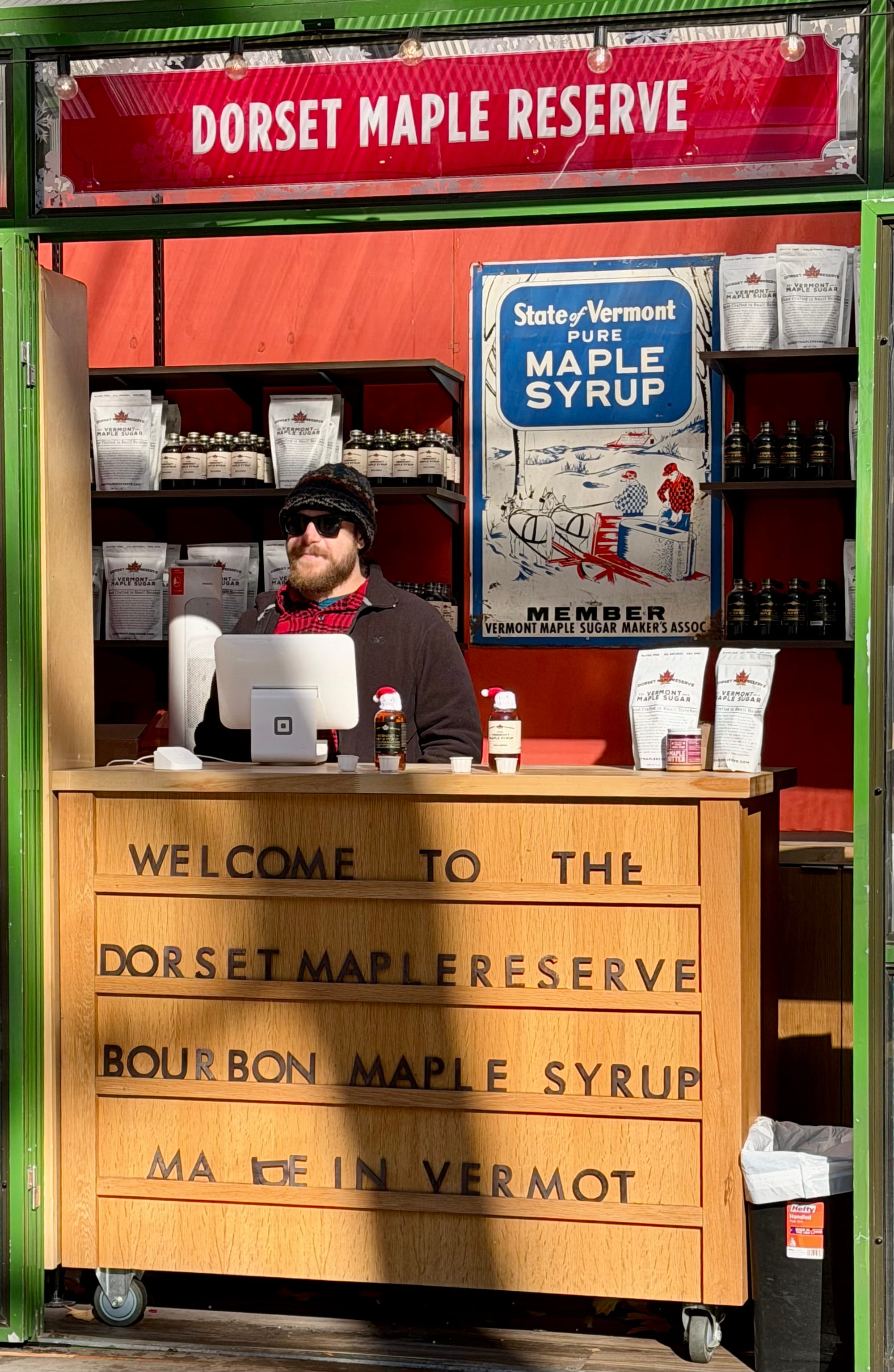
Bryant Park's Winter Village is one of NYC's holiday highlights. With its charming booths full of artisan crafts, souvenirs, and festive treats, it brings a wave of joy and energy to the park every year, while supporting small businesses. The market weaves through various parts of the park and surrounds the main attraction – the ice skating rink – so that foot traffic flows in all directions.
Ice skating rink
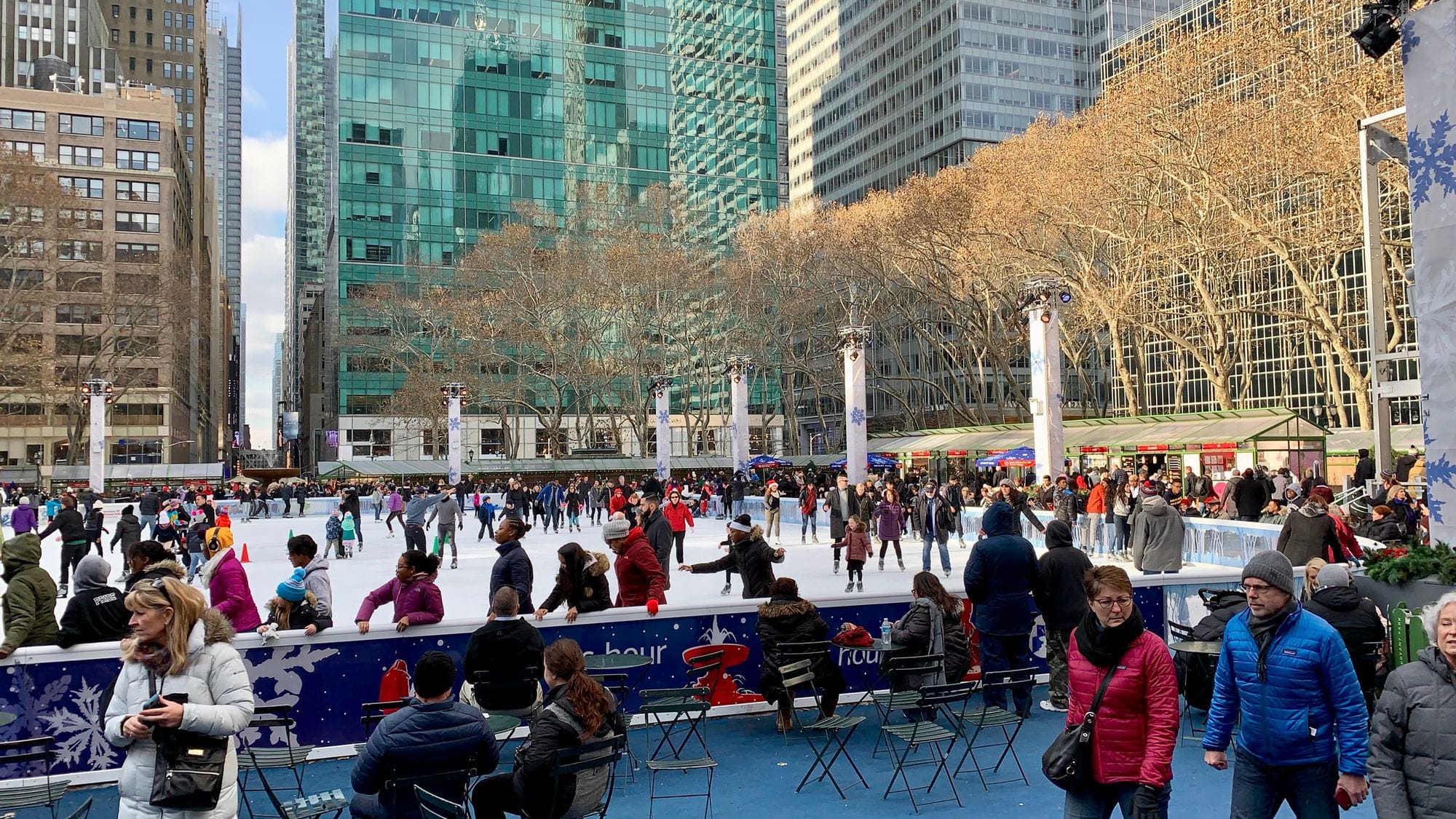
In the winter months, the grass lawn is replaced by an ice skating rink, which takes the edge off the cold and gives people something to look forward to even during the gloomy season. Skaters laugh, glide, and fall, then take well-earned breaks at the adjacent lodge where hot cocoa can be found. The rink and Winter Market, plus the central location of it all, make Bryant Park the epicenter of New York's holiday celebrations.
Reading room
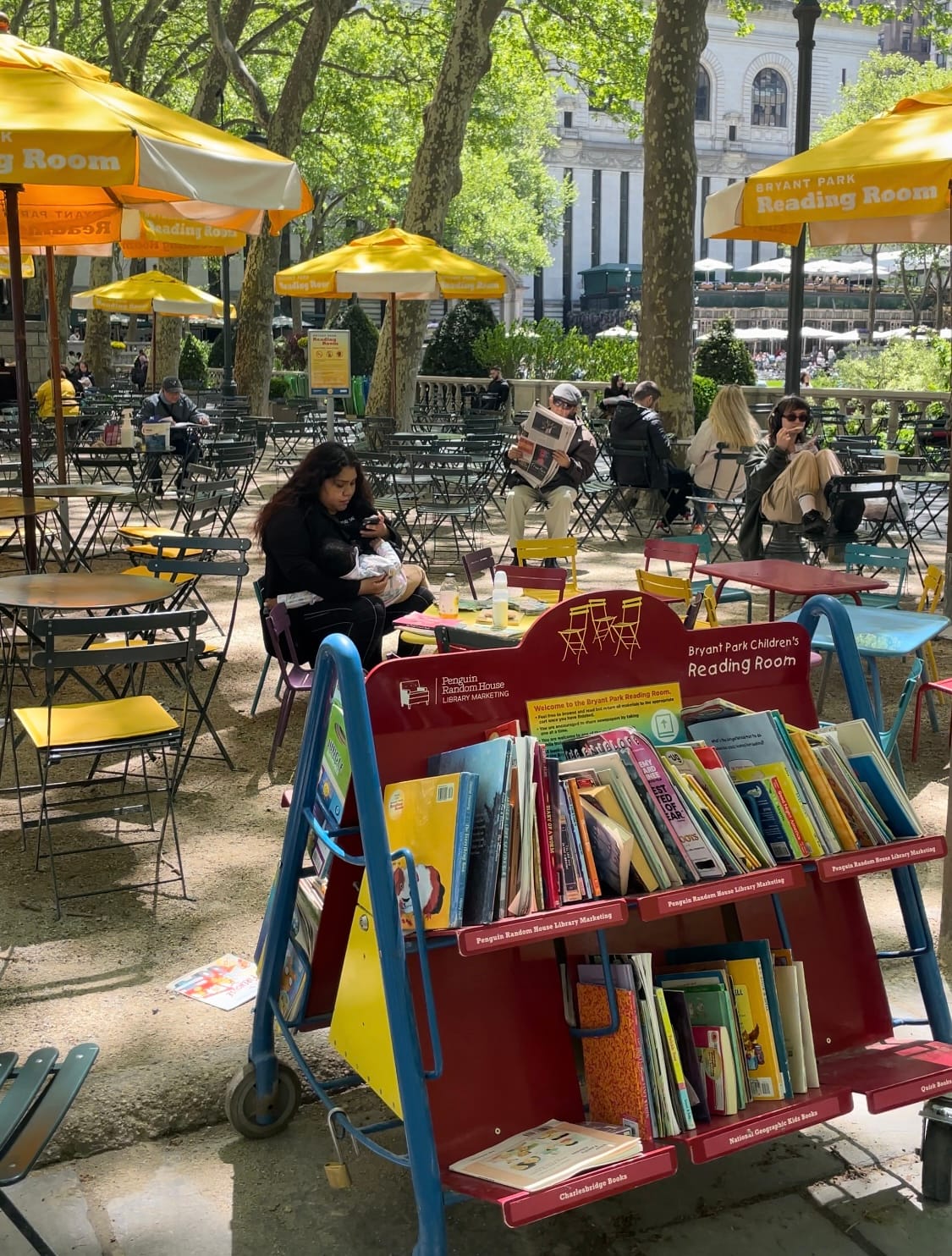
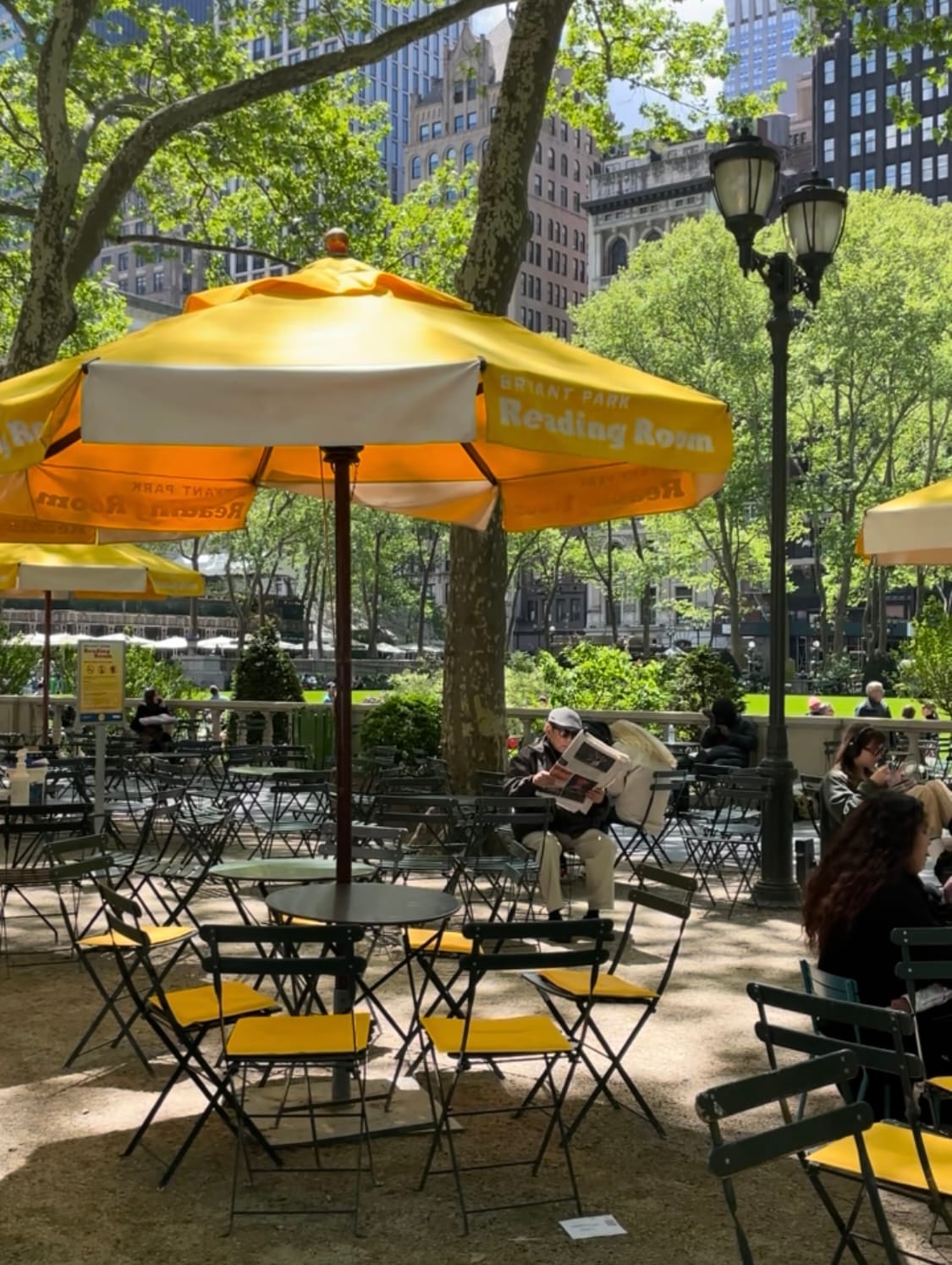
Colorful bookshelves on wheels and seating areas under umbrellas in this part of the park offer a wonderful activity for people of all ages – reading. This outdoor "reading room" encourages learning, connecting, and spending time in the fresh air while catching up on the news or poring over an enthralling story. The space is welcoming for reading alone, with a friend, or in a group.
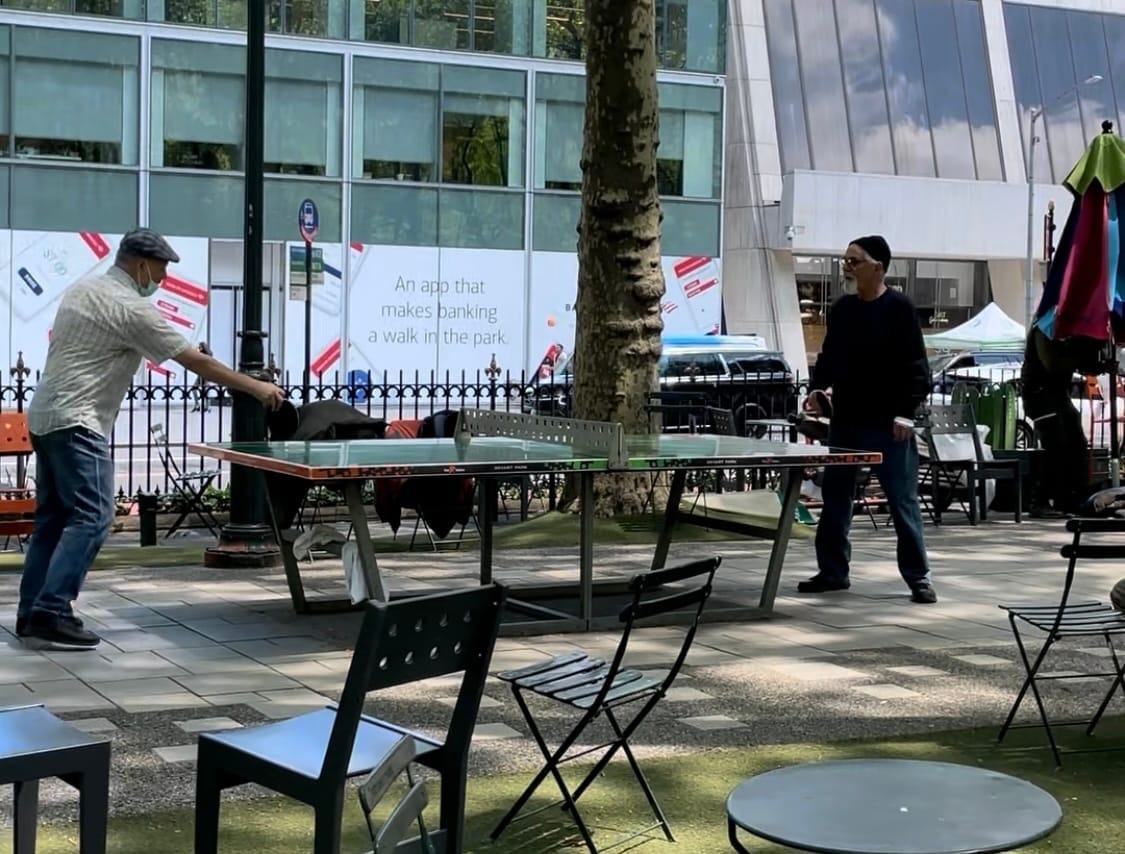
Ping pong tables
One of Bryant Park's staples is its ping pong tables. Here, you can see people of every age and background facing off against each other in friendly competition. Ping pong is a great activity for a public space because it is safe, simple to play, and welcoming for people of all ability levels.
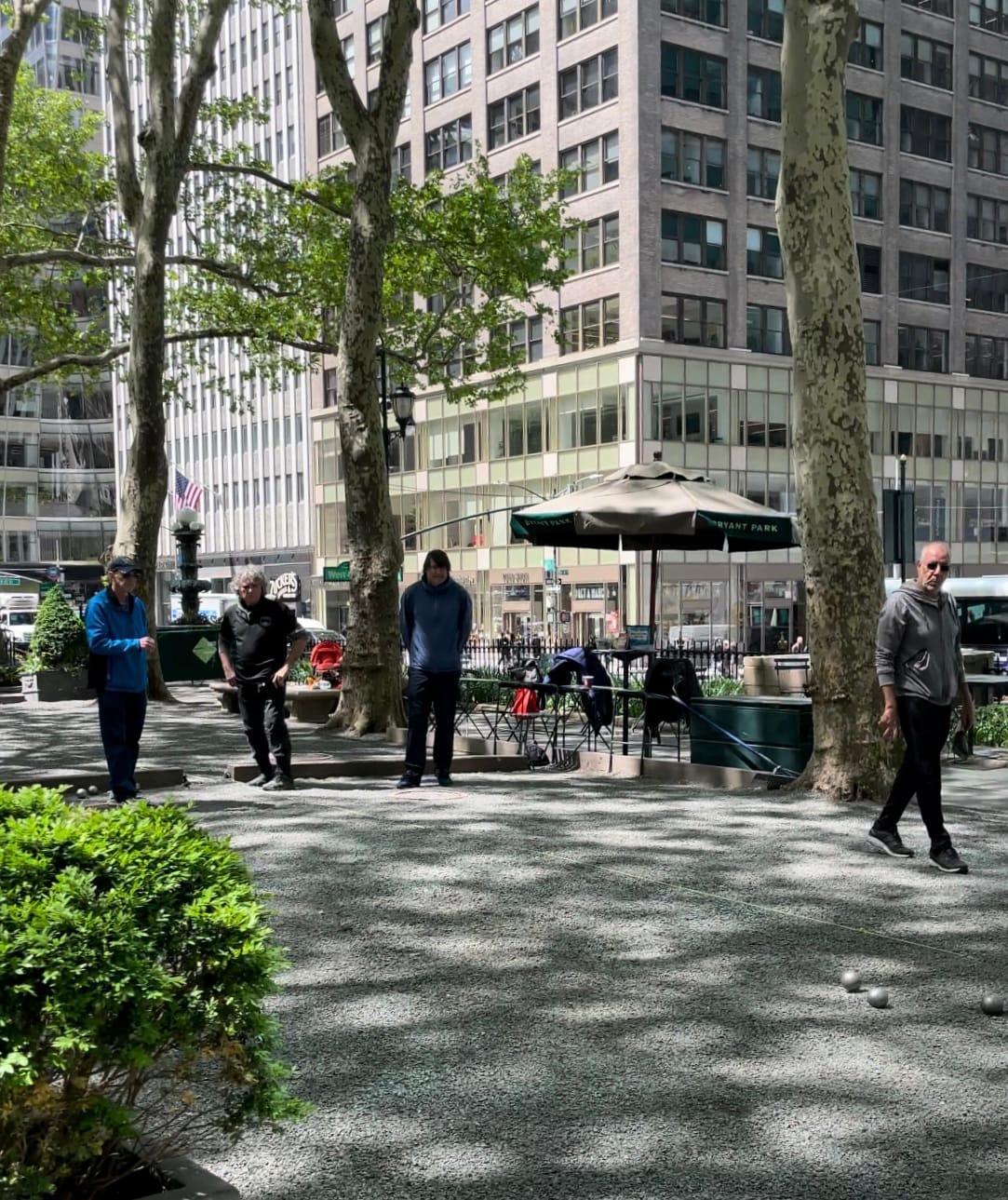
Petanque and juggling
A great public place needs to offer activities for every segment of the population. Too often, elderly people are overlooked when activities and play areas are introduced. Games like petanque are fun and accessible for people at every age. The petanque courts in Bryant Park are always in full swing.
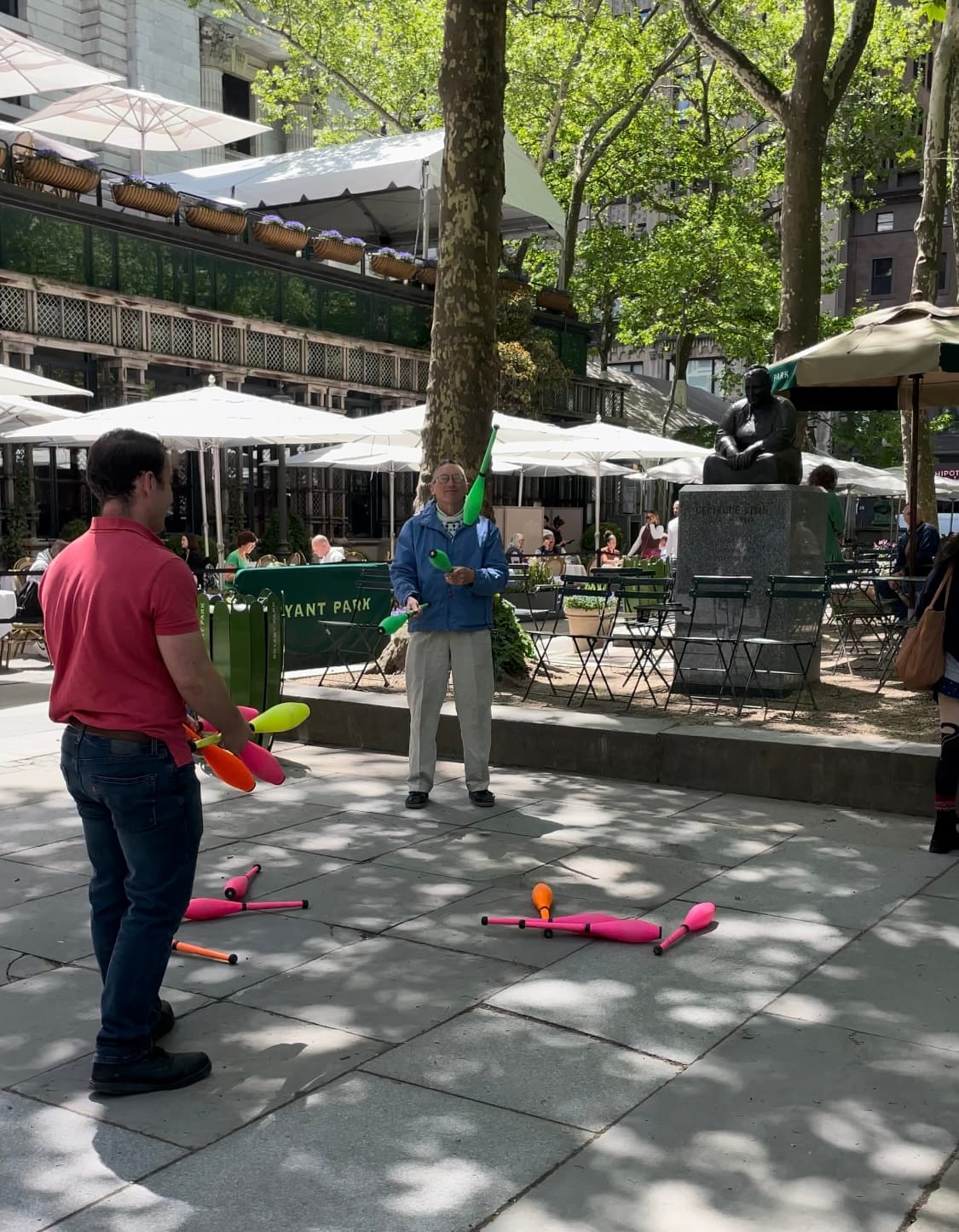
Another of Bryant Park's popular offerings is its juggling classes. You can often catch people spinning and twirling colorful batons throughout the year as they learn to master their juggling skills and fascinate onlookers.
Game corner
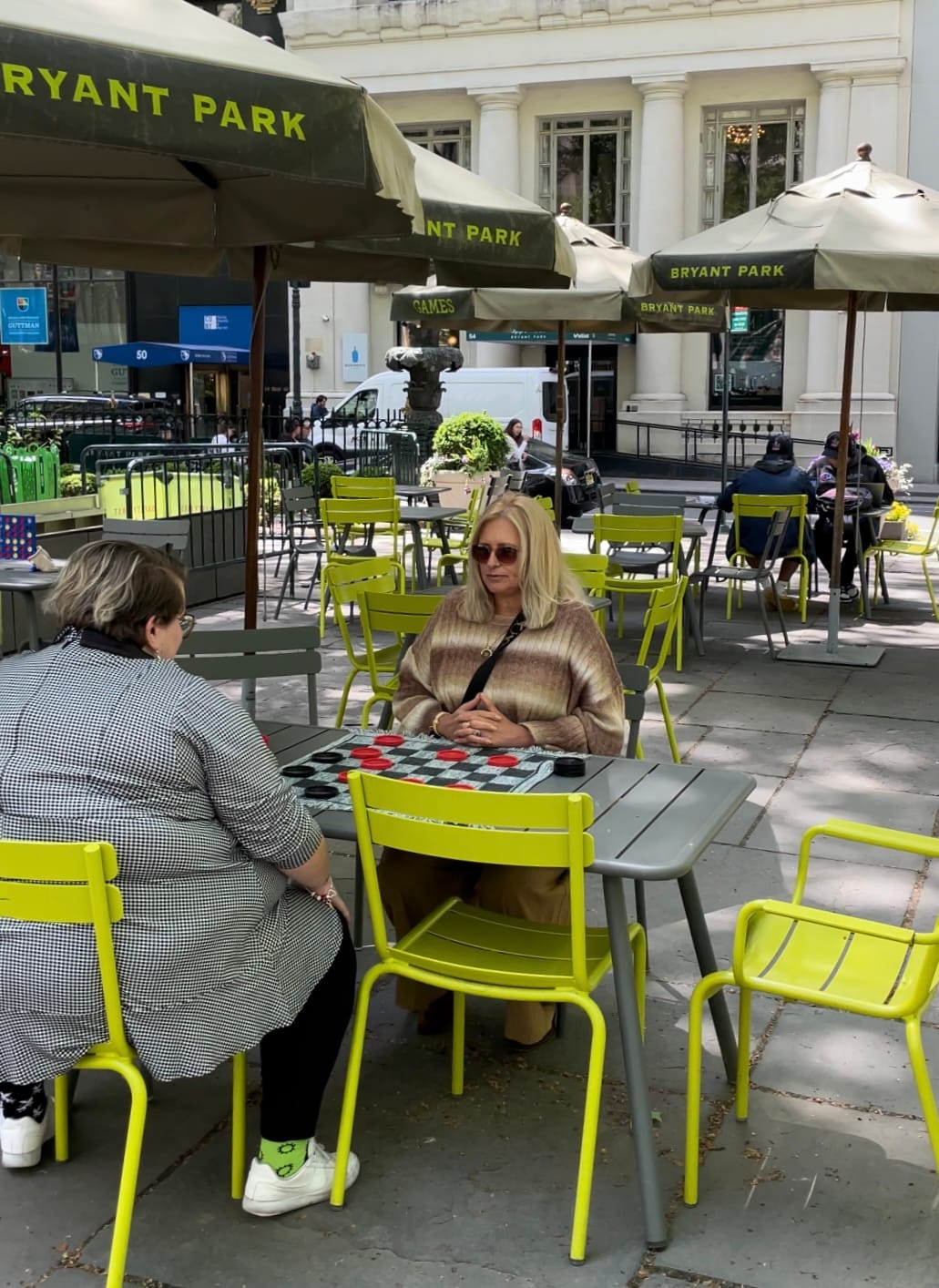
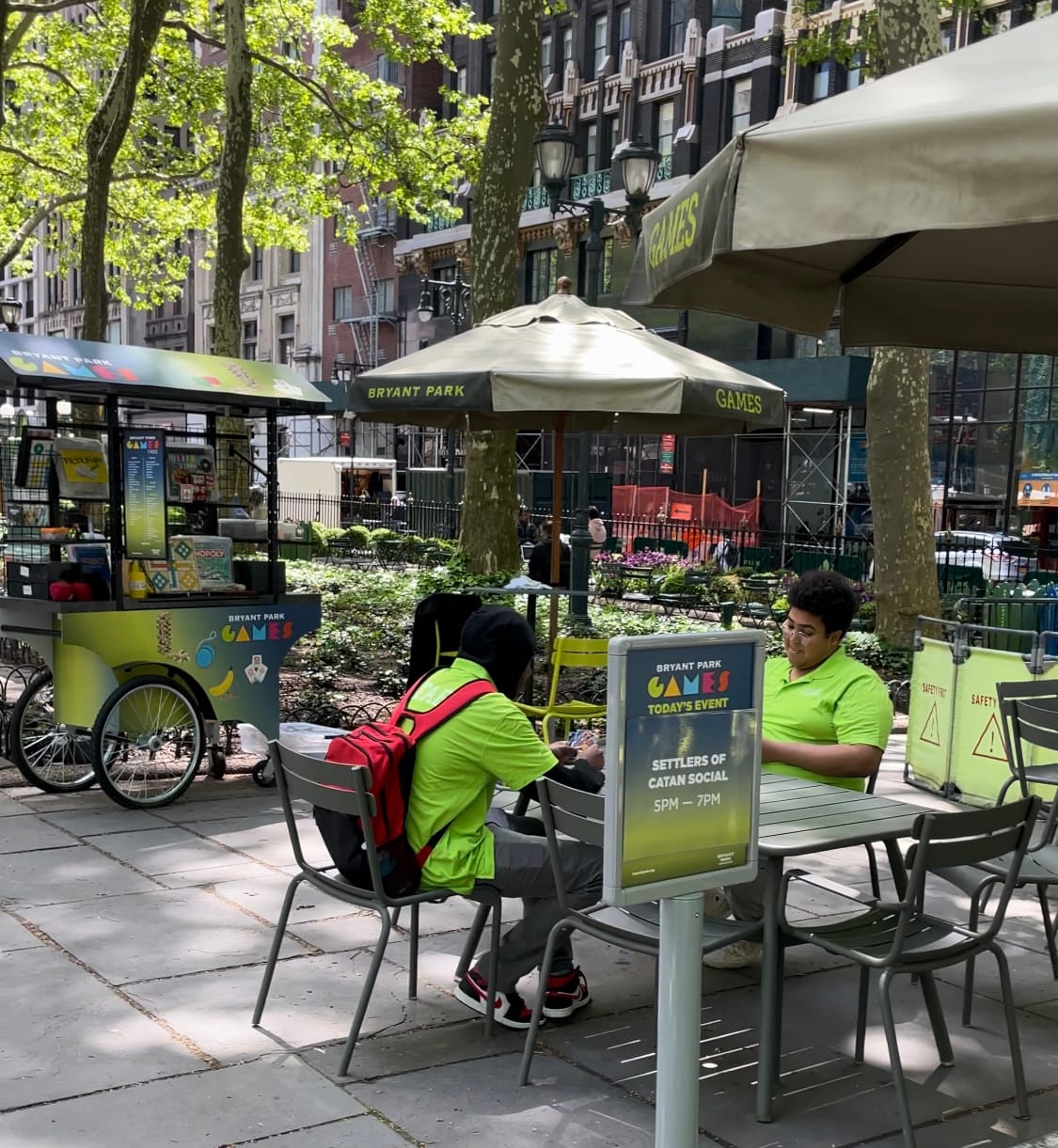
The Game Corner is where all kinds of board and card games are offered for people to play together. What's more, the park regularly hosts game socials to encourage people to connect and make friends with other board game enthusiasts.
Place-Led Development
In the 1970's, the district around the park was considered a "subprime" area because tenants were put off by park activities. Bryant Park's transformation has made it a premier Manhattan location, the gem in the crown of Midtown where the park name is even used to brand the office towers around it.
After its revitalization, being close to Bryant Park has become a rare and desirable privilege – it is among the most valuable and coveted real estate in the city. Studies show significantly higher rental rates for buildings near the park compared to the general Midtown area.
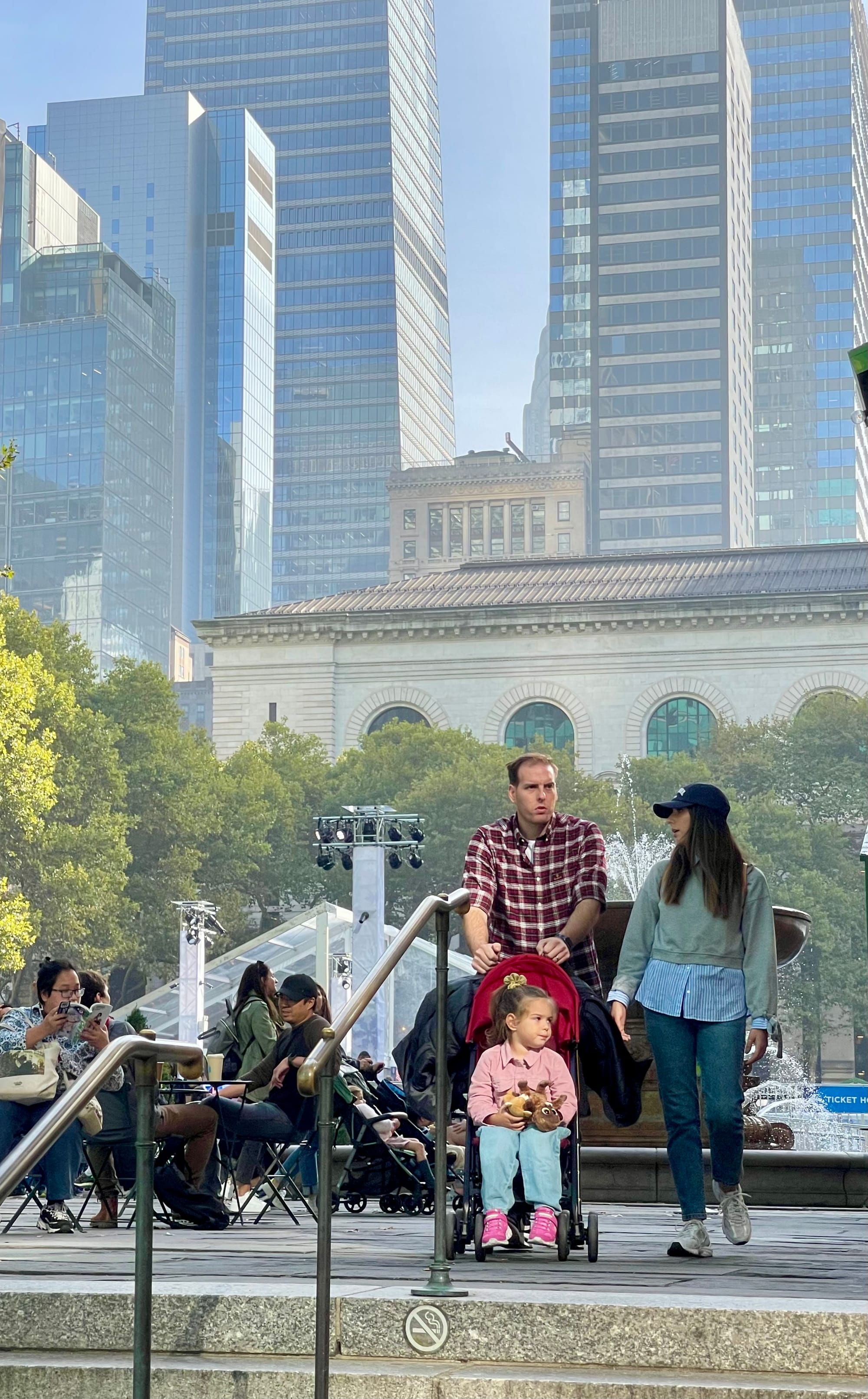
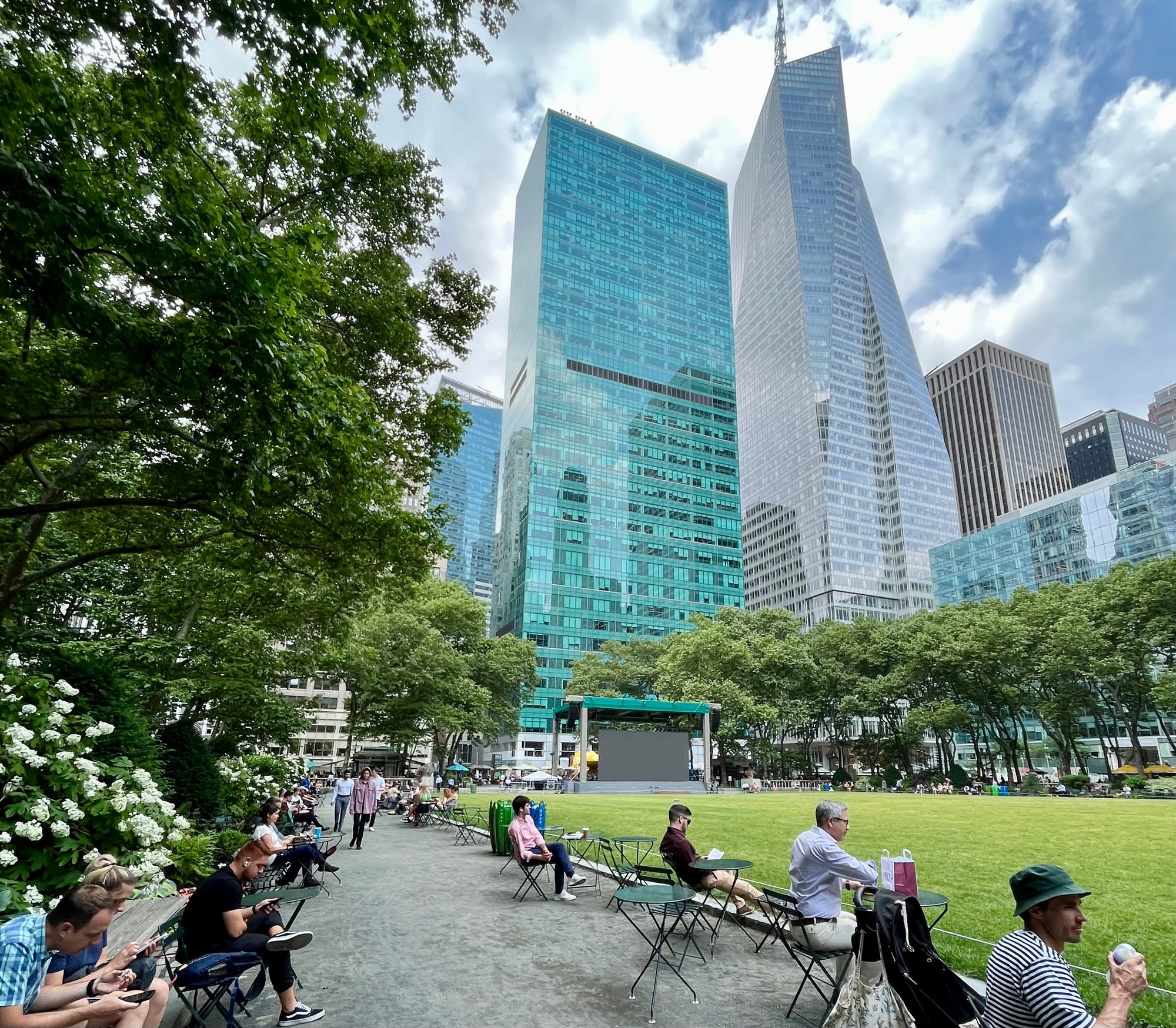
Bryant Park has spurred hundreds of millions of dollars in new investment in its immediate surroundings. The Durst Organization's One Bryant Park replaced low-scale retail and commercial uses with one of the most sought-after office buildings in Midtown. Two and Three Bryant Park were older office towers that were reclad at great cost with new facades and complete renovations. Four and Five Bryant Park are pre-war buildings that have been completely renovated.
Bryant Park is also the center of a Business Improvement District, where surrounding property owners pay an additional tax that goes toward management and maintenance of the park and the surrounding district. As property values have increased, so have the assessments that support the park, enabling it to "capture" the value its transformation has created.
Takeaways
Bryant Park is the beating heart of Midtown Manhattan and is recognized as one of the world's best public spaces. It has demonstrated that the path toward greatness is paved with placemaking and programming — not with regimented design. It shows how places – like people – can grow, change, and evolve. Improvisation, change, and freedom are what make "the magic" happen.
Bryant Park is also a wonderful example of what happens when you shift your focus away from what a public space should look like and toward what it should feel like: the behaviors it encourages, the activities it hosts, and how it invites people to engage with it. People fall in love with the park for those reasons.
Bryant Park shows us how a great public place can enhance the value of its surroundings in every way. It makes a great case for place-led development, where developing or revitalizing an area starts with creating places of value. The lessons of Bryant Park should be expanded to all of Midtown and beyond.
Additional Resource: 1970's Bryant Park Planning Overview
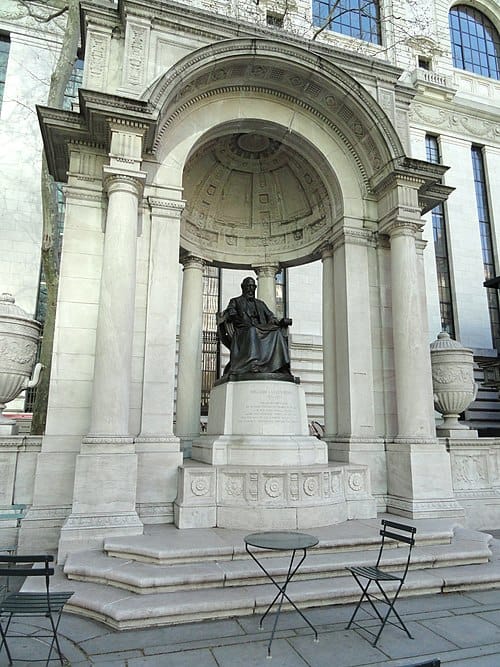
The land which Bryant Park occupies today has been a park since 1847, and the basic design of the park we know today dates from 1934. It is named for poet and newspaper editor, William Cullen Bryant, who is also celebrated in a statue in the park erected in 1911. Despite its central location, it was never a very busy park, and, as news reports put it, it was often frequented by "drunks and loiterers."
By the 1970's, multiple drug-dealing groups worked in different parts of the 9.6-acre park, discouraging people from entering or visiting. Litter was strewn across the grass and graffiti marred the monuments. This diagram, created by PPS, shows the park area with the highest levels of abusive behavior:
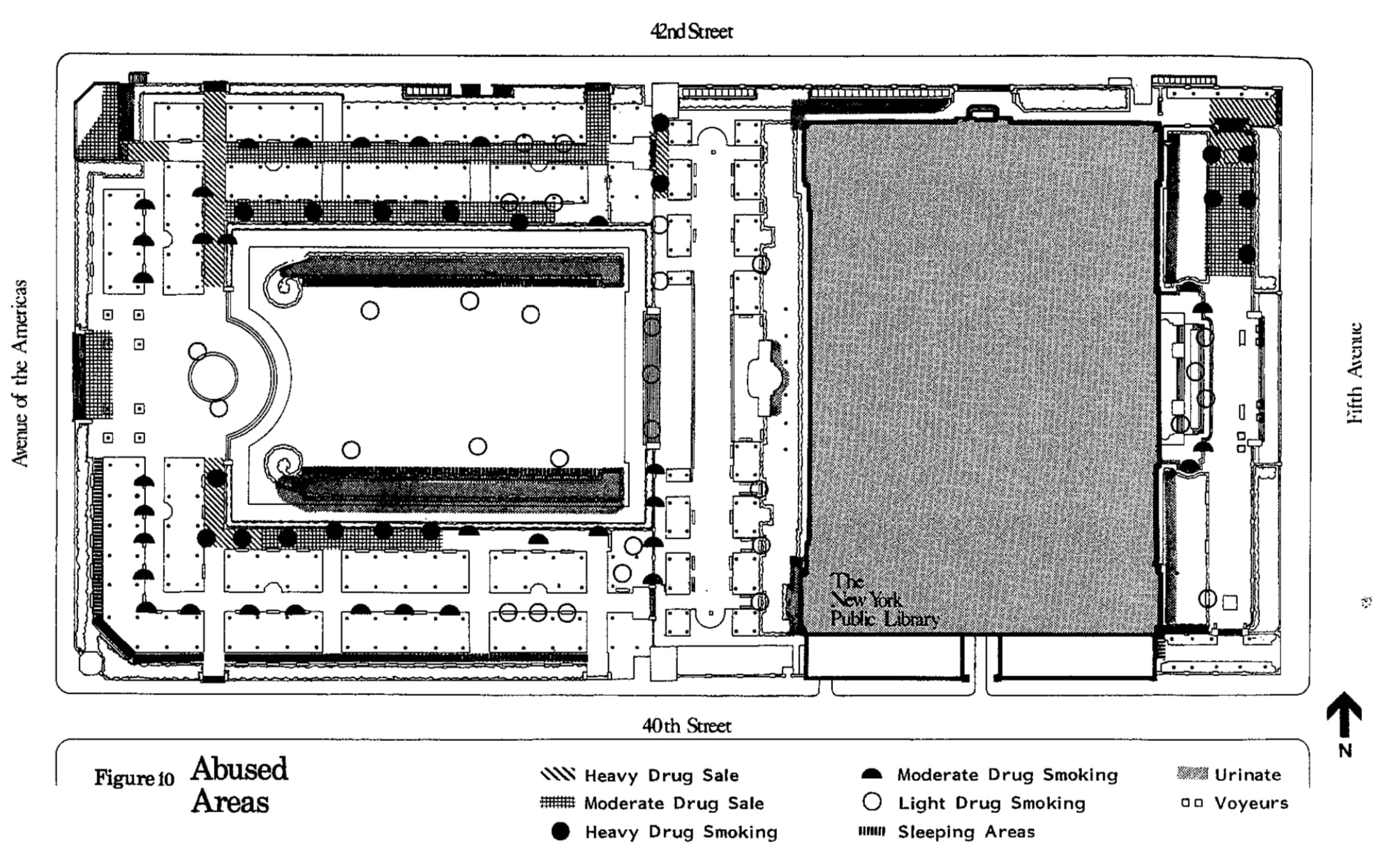
William H. ("Holly") Whyte and the Street Life Project had analyzed Bryant Park in the early 1970's. In his 1979 memo to the Rockefeller Brothers Fund, Holly outlined a comprehensive approach to improving programming, maintenance, security, and visibility into the park. He also wrote of the timeliness and urgency of this effort:
"So many things are in place. Even the dope dealers are helping. If you went out and hired them, you couldn't get a more villainous crew to show the urgency of the situation. Most importantly, by a fortuitous set of circumstances, some very good people are in most of the key spots, a constellation that was not in place several years ago. They understand the breadth of the problem, and they are keen for action. It is a great moment to be seized."
One of the "good people in key spots" was Dan Biederman, still head of the Bryant Park Corporation today, who was the "Master Re-builder" behind the park's phenomenal transformation. A Harvard Business School graduate, even without formal design training, he had a brilliant vision for what the park could become and how to make it a reality.
Also in 1979, the Bryant Park Restoration Corporation, with the support of the Rockefeller Foundation, asked Project for Public Spaces for assistance. Following its founding in 1975, Project for Public Spaces (PPS) examined a variety of public spaces across Midtown Manhattan to identify what made them succeed or fail – continuing the work of the Street Life Project.
As Holly completed his film and book, The Social Life of Small Urban Spaces (1980), PPS analyzed and developed improvement plans for Exxon Mini-Park and other plaza spaces in Rockefeller Center, Restaurant Row on West 46th Street, and Fifth Avenue between 34th Street and 59th Street. Later, PPS took on spaces in Times Square, including the Port Authority Bus Terminal.
But it was Bryant Park – dangerous turf for drug dealing in the heart of the city – that quickly became a focal point for PPS's work. Because of its central location, Bryant Park had a major influence on the character and life of all of Midtown, for better or worse.
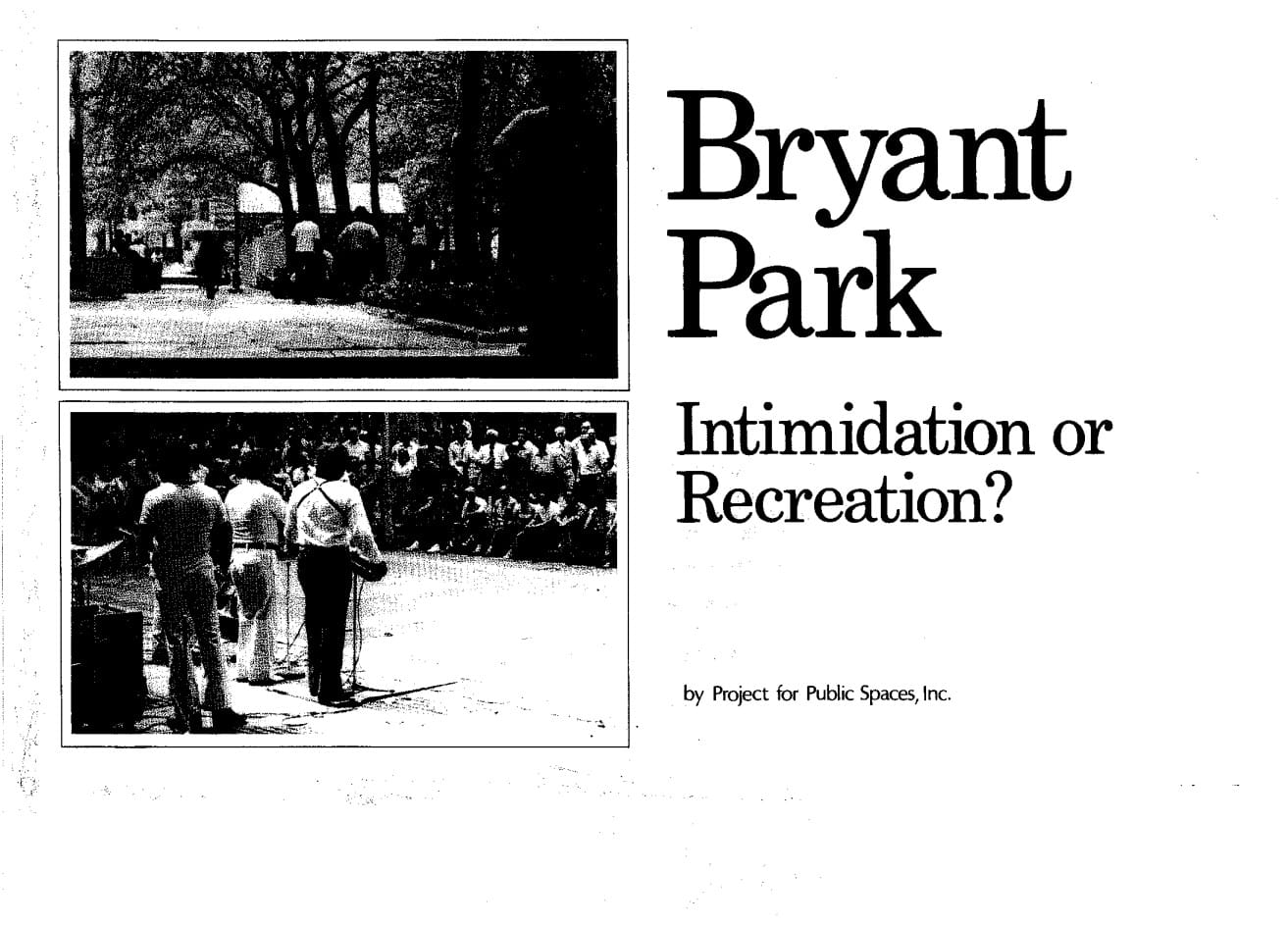
PPS's report for Bryant Park (1980)
Project for Public Spaces' Report for Bryant Park was released in 1980. It presents a comprehensive analysis of the park's use. Building and expanding upon Holly's ideas, the PPS team – led by the late Doug Ferguson – developed a "concept framework" with very specific design and programming recommendations for nearly every corner of the park to make it safer, more comfortable, and attractive.
Other Great Public Places
 Fred Kent
 Fred Kent
 Fred Kent
 Kathy Madden